Our MSc Health Policy Programme aims to equip students with the skills to critically evaluate existing and emerging health policies and nurture future health policymakers, both in the UK and internationally. This year, we have digitised and refreshed our course to provide students with a more flexible and engaged learning approach.
We’re pleased to have three students share their stories with us. They talk about their motivations to apply, enjoyable module experiences and how they use the knowledge they gained in their current work. Read their stories below and get a flavour of what it’s like to study with us.(more…)
Last year, our Institute launched a new fully online MSc Patient Safety Programme. Developed in partnership with Bayer Pharmaceuticals, the course aims to develop global leaders and changemakers in patient safety who can catalyse improvements and innovation in healthcare practice across the globe. As we open applications for its second year, we’re delighted to have a student from our first cohort, Charlotte Parsley, share her experience of the course with us.
“I have a clinical background in midwifery, specifically in patient safety and clinical governance. I chose to further my education with Imperial due to my strong interest in patient safety and Imperial’s academic reputation.”
The Imperial Breast Unit is an internationally renowned breast research centre and one of the largest breast units in the UK. The unit receives 150 new patients per week and around 400 to 450 new breast cancer cases are diagnosed each year. According to the National Cancer Patient Experience Survey (2011/2012), nine out of ten of the lowest-rated cancer patient experiences are at large London NHS Trusts.
Mr Daniel Leff, consultant breast surgeon at Imperial College Healthcare NHS Trust and programme lead for IGHI’s MSc Healthcare and Design, worked with postgraduate students from a range of healthcare and design backgrounds on the course using human-centred design to improve the patient experience at the Imperial Breast Unit. Read on as Mr Leff takes us through this innovative journey of redesign.
“In the MSc Healthcare and Design course, the education team introduces a healthcare design challenge to students. For this project, we embedded students in the breast unit to discover the potential challenges there with respect to patient experience. It was interesting that after the field trips our students identified a few major challenges.”
Challenges with the current design of the Imperial Breast Unit
“The waiting room experience was found to be poor. Every patient was lined up, facing each other, so that everybody could see each other. This created an anxious and stressful environment in the waiting room.
“The one-way patient flow also contributed to negative emotions among patients. Patients exited the counselling areas through the waiting room, which was the same route for them to enter the counselling areas. For those who received bad news, their facial expressions could be visibly distressed, and that made the waiting room experience more stressful for other patients. Worst still is that patients receiving bad news or a cancer diagnosis could feel very uncomfortable and self-conscious.”
What has been done so far?
“Students provided the course team with their very detailed patient feedback and qualitative research findings. They presented their findings to the external examiners, the Imperial charity, unit managers, and other key unit staff and brainstormed solutions.
“Working with the course team including leaders in design innovation at the Royal College of Art (Prof Ashley Hall and Anna Wojdecka), we then worked to further mature the initial ideas and then pitched the final design brief to the Imperial charity, and they decided to fund the final re-design.
“Based on the students’ findings, several changes have been implemented so far and there and there is more to come.”
Lucie’s Room
“They created ‘Lucie’s room’ which is a quiet place for patients behind the waiting room. Rather than going back through the waiting room, patients can exit the unit through a separate route via Lucie’s room, which provides a calming place for patients to process the information they received in their consultation and counselling sessions. There is a small kitchenette with a fridge and coffee making facilities in Lucie’s room for both the patients and staff to talk in a more relaxed, less clinical and more domestic and calming surrounding.
“The table in Lucie’s room is designed to split into two sections whereby two different conversations can be happening simultaneously. When Lucie’s room is used for meetings, the staff can connect the two pieces of the table, and everyone can sit around it, much like a boardroom configuration. The ideas behind Lucie’s room are therefore multifactorial, including escape route for patients with high expressed emotions, quiet calm space for nursing-patient discussions and modular design flexibility to facilitate staff multidisciplinary team meetings.”
New patient exit route through Lucie’s room
Dynamic art installation
“A prismatic dynamic art installation has been designed for the waiting room’s window. The idea behind the installation is that this acts as a distractor to alleviate anxiety. When the light hits the glass prisms, different ‘rainbows’ form on the waiting room. There is good evidence that positive distraction alleviates anxiety. Students also redesigned how patients are seated and where to put the reception desk to provide more space in the unit.”
Prismatic dynamic art installation for the waiting room at Imperial Breast Unit.
Hopes for a better patient experience
“The project team has almost finished the redesign. After its completion, researchers will follow up on this project and collect data to see if our work improves the unit environment and patient experience.”
Mobile messaging has now become an essential tool to help healthcare services communicate and connect with patients. In a recent US study, 70.5% of patients surveyed used a form of text messaging to manage their general health. Not only are these messages a cost-effective, and convenient way of communicating, but they are also extremely versatile. In addition to reminding patients about upcoming appointments, they can be used to give endorsement, by highlighting your GP “recommends regular screening as an important health check” or to give medical updates. The latter was crucial during COVID-19 when access to physical services was limited.
Unique problems with population screening
It would seem that all aspects of healthcare should be making free use of mobile messaging, and by in large that is true. However, population screening programmes bring about some unique challenges. The aim of screening is to find a condition at an early stage before symptoms are noticed, meaning treatment is more likely to be successful. Unlike GP or hospital appointments, people may therefore not necessarily be expecting to be contacted. As not all screening services are run through GPs, invited individuals may also be contacted by a service they do not know or have never been involved with beforehand.
Screening services must also send messages to thousands of people, each with different communication needs and expectations. Finally, attending screening is an individual’s choice, so it’s important that services respect this and do not come across pushy or coercive when contacting the public. In fact, in one of the patient and public groups I spoke at, one of the participants said, “that’s the reason I didn’t go – it seemed like they were ordering me to go”.
An old technique but new directions
To help screening services overcome these issues, in September 2020 Public Health England (PHE) published their first guidance piece: Screening text message principles. This work used the available evidence to provide initial recommendations on how screening services could implement mobile messaging. However, SMS is a 30-year-old technology and new messaging tools including apps, which offer a wider range of features, are becoming more common.
While it’s important to consider some of these features, so too is it necessary to consider less thought about areas such as how research in this area should be conducted. Working with PHE, our IGHI team led by Professor Darzi including myself, Viknesh Sounderajah, Gaby Judah and Hutan Ashrafian, updated this guidance from PHE to include new directions and research areas.
Our project: The SMS and mobile messaging In Population Screening (SIPS) study
Much of the focus of mobile messaging in healthcare is on wording. But there is a lot more to consider. We were also conscious when designing this project that each screening programme (there are 11 adult programmes currently running), will have its own needs and specifications.
To address these issues we invited experts from a range of different but related fields including screening services, public health, academia, and industry to help create recommendations for NHS screening services in six key areas:
These experts considered over 100 potential recommendations, which were designed with the help of a large public involvement group, specialist government departments (e.g. National Cyber Security Centre) and their own experiences. By repeatedly voting on what experts felt was important while considering the evidence provided to them, and then discussing this voting, we created a list of core items we recommend for screening services. These include keeping messages at a reading level of 9 years old, and ensuring messages are as close to 320 characters in length as possible. In addition, we also developed a list of desirable items which screening programmes may look to in the future, including the availability of translations for those who do not have English as a first language.
How does this affect patient care?
The public are essential stakeholders in projects like ours, as ultimately they are the ones who receive these messages. Our project started with a large patient group and considered what is important to them. From there, with experts we began developing the recommendations. We hope through this process, we will be able to improve communication between screening services and the public. This will ensure that services develop messaging that can facilitate the screening process, which can be daunting sometimes. In this way they potentially may better meet the needs of the patients they invite now and as technologies advance.
Last year, we proudly launched our Julia Anderson Training Programme, a paid internship scheme for people who have little or no work experience, as we know how difficult it can be for people to get that first foot in the door. This programme is the first of its kind at Imperial, giving people the opportunity to boost their skills while working on an impactful programme of work at IGHI. Our first trainees, who you can read about on our website, worked on a range of topics including education, digital health, and data science.
Now open for its second round of applications, Clarissa Gardner, Research Assistant at the Institute Global Health Innovation, who led the creation of the programme, gives her thoughts on why now, more than ever, these placements are needed.
I usually say that as a research topic ‘Long Covid’ found me.
In March 2020 I was busy with my research in cancer early diagnosis, learning health systems and artificial intelligence for improving diagnosis in primary care. I caught COVID-19 in mid-March, just before the first lockdown, with moderate symptoms; cough, fever, but my blood oxygen levels were fine.
Environmental issues like climate change can bring up a wide range of feelings for people at different times. The feelings that arise are typically (though not always) uncomfortable ones, related both to the impacts of climate change and our sense of how they are being handled by people in positions of power. (more…)
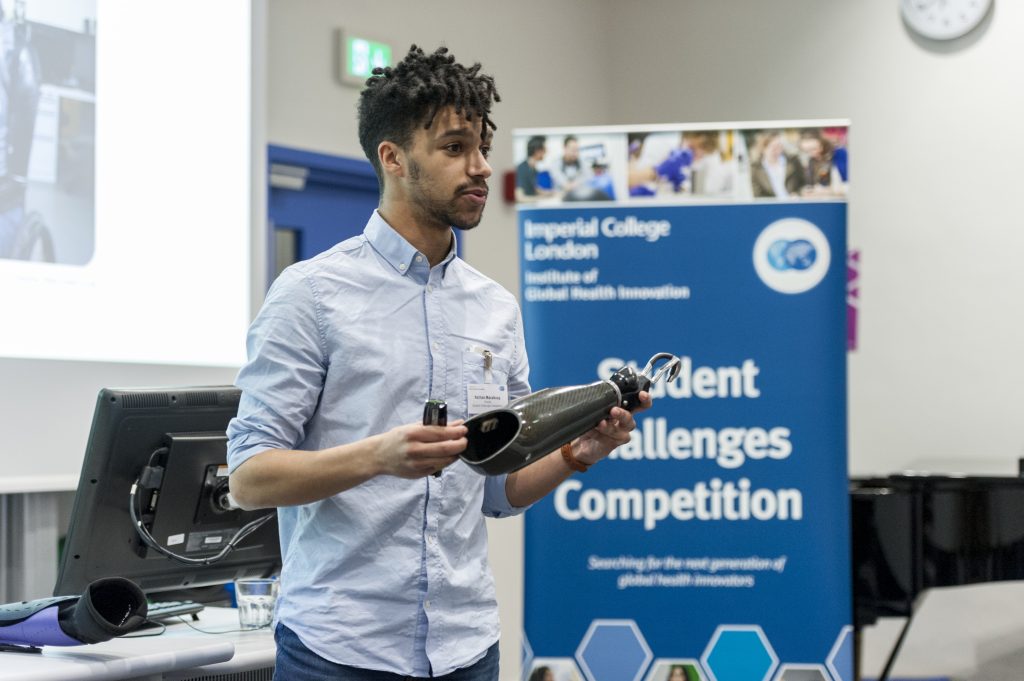
A decade ago, Imperial medical student John Chetwood darted from his Varsity hockey match to try his hand at another competition, with a different prize at stake. It was the inaugural IGHI Health Innovation Prize, giving UK university students the opportunity to win cash towards their global health idea.
John was one of five finalists to face our panel of judges at the Dragon’s Den-style final, and took home the top prize of £2,000 towards his new diagnostic tool for an aggressive type of bile duct cancer.
As we launch this year’s event, a decade after it all began as the ‘Student Challenges Competition’, we caught up with some of our winners to find out their journeys since taking home the prize. If you want the chance to win £10,000 towards your global health idea, click here to find out more and apply now.
Spreading SMILE across the world
Kitty and Abellona, 2017 winners
“Our innovation, the SMILE (SMart-last mILE) vaccine cooling system, is the only last-mile solution that reduces human error and vaccination spoilage. It’s patented, low-tech (freeze-free) and fail-proof. SMILE can last for three to six days without power while monitoring and displaying the remaining cool-life of temperature-sensitive products, like vaccines.
“We have made a tremendous amount of progress since we won the IGHI competition. SMILE has been iterated, lab tested and field-proven. We conducted a successful field trial in remote villages in Madagascar at the end of 2019. We are entering the manufacturing and commercialisation stage. We are also working on an upgrade for a second version with extended features.
“SMILE’s help is not limited to developing countries. It will also help in biomedical research and cold-chain applications in the developed world. We are looking for trial partners in the UK and are keen to work with institutions to improve their work efficiency with SMILE.
“Winning IGHI has helped with running our IDEABATIC platform and helped raise awareness of the last-mile cold-chain challenges. After winning the competition, we won funding from the Expo 2020 Dubai, Royal Academy of Engineering and InnovateUK which also helped in this journey. We were also selected as finalists for the MIT-Solve global challenges.
“We encourage everyone who has a passion to solve important issues to take part. Make sure you tell people the story behind the innovation and share your passion with them. Good luck!”
Getting smart with parasitic worms
Laura and Kai, 2019 winners
Capta is a smart, low-cost tool to accurately and rapidly diagnose parasitic worm infections, which are responsible for soil-
Laura and Kai
transmitted helminth infections and diseases such as schistosomiasis. Compared to current labour-intensive testing, their handheld microscope uses machine learning and automatic imaging to analyse samples. The device also records data to provide real-time statistics on global disease burden. Team Capta hope that their tool will allow for faster diagnosis of these infections, and help target treatment to areas that need it the most.
“Winning the IGHI student challenge competition provided a huge opportunity for Capta. Shortly after the competition we expanded our team and used the funding to prototype the diagnostic tool. This was crucial to demonstrate to future partners and investors that we do have the capability and expertise to develop this tool. We have recently won a grant that will support our data collection in sub-Saharan Africa, and are excited to make progress following a break throughout lockdown.
“We couldn’t recommend the IGHI competition highly enough – it is a friendly pitching competition that provides a fantastic opportunity to network and meet fellow health-tech start-ups.”
Third Eye Intelligence: Buying time for people with organ failure
Sam Tukra, 2020 winner
Third Eye Intelligence is an artificial intelligence-driven platform that brings together a vast array of patient data to predicts their risk of organ failure, acting as an early warning system for doctors working in intensive care.
The platform design
“Ever since we won the Health Innovation Prize our development speed increased significantly. Following the award, we were able to hire bright engineers from Imperial College who were hungry to grow and implement their machine learning skills in a real clinical problem case. To wit, we completed our prototype of our early warning system for organ failure software to a presentable state. Using this new developed system we were able to present to 2 hospital partners whom we will be collaborating with for a clinical trial of our system in an intensive care unit.
“Currently, we are in the process of raising our seed round to fund this multi-centre trial to continue our development for market entry with product v1. Hence, the initial winnings from the health innovation prize really helped us to accelerate our growth not only from the technology development perspective but also from the commercial perspective. Additionally, the network effects from the pitching event, lead to attracting bright minds that joined our team and helped us grow Third Eye organically.
“My advice to student innovators would be, that Imperial is full of resources to accelerate their commercial journey that goes beyond R&D. Hence, just go out there and utilise all resources at your disposal, this includes competitions, events and more importantly people, that share your mission and can join your team to help you grow and reach the next stage.”
Could you be the next Health Innovation Prize winner?
Our annual student competition is open for applications, open to students at any UK university. Click here to find out more and apply for your chance to win £10,000 towards your global health idea.
Former winner Nate Macabuag presenting his project to the 2018 judging panel.
Having access to a healthy environment is important for our health and wellbeing. Yet what a healthy environment means to people varies. Everyone’s unique situation and past experiences will influence their views.
In addition, when it comes to supporting healthy environments, what may be a priority for policymakers might not be important to the public. Research funders therefore face difficult decisions when deciding how to focus their work in this area. (more…)
The Institute of Global Health Innovation hosted their third World Patient Safety Day event on the 17th September, with the theme of safer maternal and newborn care. The aim of this year’s World Patient Safety Day was to raise awareness of maternal and newborn safety and engage different stakeholders – from healthcare professionals to decision-makers – in adopting strategies to improve them. This virtual event was chaired by Dr Mike Durkin, IGHI’s Senior Advisor on Patient Safety Policy and Leadership, and included a range of speakers and panellists. Throughout the event a graphic artist created a live illustration that captured key messages, displayed above. On this third World Patient Safety Day, Dr Durkin recognised the thousands of events taking place across the globe as a testament to the commitment of patient safety champions, but most of all patients and their affected families.
The event was opened by Professor the Lord Ara Darzi, IGHI’s co-director, who stated that maternity is a key focus of patient safety, yet he acknowledged that the pandemic had had adverse consequences on maternity staff and patients. The Rt Hon. Jeremy Hunt MP emphasised that there are around 150 avoidable deaths a week, which are wrongfully seen as a “cost of doing business”.
Providing safe maternal care during a pandemic
The safety of maternal and newborn care has seen incredible progress but many challenges remain. To gain a greater understanding of these, a team from the IGHI’s NIHR Imperial Patient Safety Translational Research Centre held focus groups with people who have recently used these services. Participants discussed their experience of childbirth and access to services, both before and during the pandemic, to inform the event’s panel discussion. The focus groups also discussed how women could be given holistic support in a remote context, given their feelings of anxiety and partners’ absence from appointments due to restrictions.
The challenges of remote maternal care were explored further in the event’s live panel discussion by Mandy Forrester, midwife advisor at the International Confederation of Midwives, who reported that maternal health services were not regarded as essential during the pandemic. She labelled this lack of recognition as a “human rights issue” and stated that systems designed to uphold the rights and safety of women have been forgotten.
Both Dr Aidan Fowler, national director of NHS patient safety, and Professor Jacqueline Dunkley-Bent, chief NHS midwifery officer, recognised the inequality in maternal and neonatal health outcomes experienced by Black, Asian and Minority Ethnic groups. Professor Darzi supported this notion in his keynote speech, where he pointed out people from minority ethnic backgrounds and those in socially deprived or other disadvantaged groups have higher stillbirth and maternal mortality rates.
Addressing the burden on healthcare staff
The pandemic has placed a heavy burden on healthcare workers, particularly in the field of maternal and neonatal healthcare. Professor TG Teoh, Director of Women’s & Children’s Services at Imperial College NHS Healthcare Trust, commented that if we do not care for our own staff, then we cannot provide effective care for patients. His biggest struggle in the pandemic was communicating continuously changing protocols and restrictions to staff, while operating in an already entirely new context. Forrester added that since in some contexts midwives were not recognised as essential workers, they were not always entitled to personal protective equipment (PPE).
Midwives were redeployed, which further deteriorated their pre-existing shortage, resulting in unsafe and unsupervised care. Combined with the fact that many women faced the absence of their partners, Professor Teoh stated that midwives and doctors had to balance remaining a caring professional with the added element of support for their patients. The pressure of the additional workload on healthcare professionals exacerbates what is known as the “second victim” concept, mentioned by Hunt. This concept, originally introduced by Professor Albert Wu, addresses the blame felt by doctors and nurses when their care leads to harm. The second victim causes a fight or flight response, which prevents a learning culture and breaks the bond between patient and clinician. These pressures of the pandemic have highlighted the importance of caring for those who care.
Global perspectives on the pandemic
The event considered how the pandemic has been experienced differently across the globe. Darren Welch, Director of Global Health for the Foreign, Commonwealth and Development Office, described how their work was made increasingly difficult in countries where health systems were already strained and under-resourced. It is estimated that the pandemic has forced over 150 million back into extreme poverty, which has inevitable impacts on their access to healthcare.
Discussions suggested that racial disparity in childbirth is faced across the world. Professor Dunkley-Bent proposed the Michael Marmot principle of proportionate universalism as a future approach for equity in maternal and neonatal care. This states that healthcare must be applied at a scale and intensity that is equal to the level of need. In other words, disadvantaged groups have the greatest need in healthcare, so they must be prioritised to progress towards equity.
Towards safe and equitable maternal care
Speakers and panellists considered the next steps for safe and equitable maternal and neonatal care. Professor Darzi was first to mention the importance of vaccinating all pregnant women. The need to learn from past mistakes was emphasised, as TG Teoh suggested vaccine hesitancy in pregnant women may have been, in part, due to them being excluded in research and clinical trials from the beginning.
Although the pandemic has had a negative impact on the mental health of healthcare workers, it has also provided an opportunity for positive change and comradery. Dr Suzanna Sulaiman, Head Consultant in Obstetrics and Gynaecology at KK Women’s and Children’s Hospital in Singapore, saw her hospital employ social workers for staff to voice their concerns. Hospital leadership was therefore able to effectively understand how to help their team. Such initiatives can serve to build the foundations for future progress.
A key recurring theme was shifting from a blame culture to a learning culture. Dr Fowler discussed the importance of this in addressing inequality; he stated that we must seek to understand why harm is experienced more by certain groups and the cultural competencies of staff. This is a vital first step, he said, in developing communication techniques agnostic of background.
An important quote from the event was one from Dr Henry Kessinger, who described diplomacy as the ‘patient accumulation of partial victories’, which Jeremy Hunt suggested was a great way to describe progress in patient safety. Not to be disappointed by a partial victory, and not to be put off by the patience involved.