This blog post is written by Ishan Kaur Khalsa, Policy Fellow in Healthcare Data, Chris Agape Ajah, Policy Fellow in Digital Health, and Peter Howitt, Managing Director of the Centre for Health Policy.
On 1 April the Centre for Health Policy at the Institute of Global Health Innovation (IGHI) hosted a delegation from Ghana’s National Health Insurance Scheme (NHIS). The dozen-strong delegation worked across partnerships, research, policy, monitoring and evaluation, health purchasing, ICT, financing, and health services in Ghana.
Ghanian health policy makers with IGHI colleagues
The visit to the Institute by the delegation was part of a fact-finding mission to the UK organised by the NHS Consortium for Global Health with the goal of understanding the UK health financing and payment systems. Peter Howitt, Managing Director of the Centre for Health Policy, shared his expertise on NHS financing and the strengths and weaknesses of the UK model.In addition, his presentation expatiated hospital supply and procurement decisions, which resonated with the Ghanaian delegation.(more…)
The Health Policy MSc at Imperial College London is led by the Institute of Global Health Innovation. Adriana Lopez is a Health Policy Master’s student and part of the Imperial College London Sports Scholarship Programme. She shares her experience of the programme, which she manages alongside high-level sport and a full-time job.
What’s your background? What did you study for your undergraduate degree?
Adriana Lopez (AL): I studied for a BSc in Biomedical Sciences with a Placement Year at the University of Warwick. As part of my degree, I was a Medical Operations Industrial Placement student at ViiV Healthcare within GlaxoSmithKline.
Why did you apply for the Health Policy MSc at Imperial?
AL: During my undergraduate degree in Biomedical Sciences, I realised that I was more interested in the health, community, and public health modules rather than the research-focused ones. Attending university during the COVID-19 pandemic also made me think about how different countries handled the pandemic and the science and economics behind their decisions. This inspired me to gain hands-on experience to help improve health outcomes through effective policies.
Photo from the London Philanthropic Forum Dinner including Simon Weston CBE, DEBRA President (left); Louise Murray (second from the left; Stuart Procter, COO of The Stafford London and DEBRA Vice President (second from the right); and Lenore England (right).
In this blog our Managing Director for the Centre for Health Policy, Peter Howitt reflects on his experience attending the London Philanthropic Forum.
Mobile messaging has now become an essential tool to help healthcare services communicate and connect with patients. In a recent US study, 70.5% of patients surveyed used a form of text messaging to manage their general health. Not only are these messages a cost-effective, and convenient way of communicating, but they are also extremely versatile. In addition to reminding patients about upcoming appointments, they can be used to give endorsement, by highlighting your GP “recommends regular screening as an important health check” or to give medical updates. The latter was crucial during COVID-19 when access to physical services was limited.
Unique problems with population screening
It would seem that all aspects of healthcare should be making free use of mobile messaging, and by in large that is true. However, population screening programmes bring about some unique challenges. The aim of screening is to find a condition at an early stage before symptoms are noticed, meaning treatment is more likely to be successful. Unlike GP or hospital appointments, people may therefore not necessarily be expecting to be contacted. As not all screening services are run through GPs, invited individuals may also be contacted by a service they do not know or have never been involved with beforehand.
Screening services must also send messages to thousands of people, each with different communication needs and expectations. Finally, attending screening is an individual’s choice, so it’s important that services respect this and do not come across pushy or coercive when contacting the public. In fact, in one of the patient and public groups I spoke at, one of the participants said, “that’s the reason I didn’t go – it seemed like they were ordering me to go”.
An old technique but new directions
To help screening services overcome these issues, in September 2020 Public Health England (PHE) published their first guidance piece: Screening text message principles. This work used the available evidence to provide initial recommendations on how screening services could implement mobile messaging. However, SMS is a 30-year-old technology and new messaging tools including apps, which offer a wider range of features, are becoming more common.
While it’s important to consider some of these features, so too is it necessary to consider less thought about areas such as how research in this area should be conducted. Working with PHE, our IGHI team led by Professor Darzi including myself, Viknesh Sounderajah, Gaby Judah and Hutan Ashrafian, updated this guidance from PHE to include new directions and research areas.
Our project: The SMS and mobile messaging In Population Screening (SIPS) study
Much of the focus of mobile messaging in healthcare is on wording. But there is a lot more to consider. We were also conscious when designing this project that each screening programme (there are 11 adult programmes currently running), will have its own needs and specifications.
To address these issues we invited experts from a range of different but related fields including screening services, public health, academia, and industry to help create recommendations for NHS screening services in six key areas:
These experts considered over 100 potential recommendations, which were designed with the help of a large public involvement group, specialist government departments (e.g. National Cyber Security Centre) and their own experiences. By repeatedly voting on what experts felt was important while considering the evidence provided to them, and then discussing this voting, we created a list of core items we recommend for screening services. These include keeping messages at a reading level of 9 years old, and ensuring messages are as close to 320 characters in length as possible. In addition, we also developed a list of desirable items which screening programmes may look to in the future, including the availability of translations for those who do not have English as a first language.
How does this affect patient care?
The public are essential stakeholders in projects like ours, as ultimately they are the ones who receive these messages. Our project started with a large patient group and considered what is important to them. From there, with experts we began developing the recommendations. We hope through this process, we will be able to improve communication between screening services and the public. This will ensure that services develop messaging that can facilitate the screening process, which can be daunting sometimes. In this way they potentially may better meet the needs of the patients they invite now and as technologies advance.
A decade ago, Imperial medical student John Chetwood darted from his Varsity hockey match to try his hand at another competition, with a different prize at stake. It was the inaugural IGHI Health Innovation Prize, giving UK university students the opportunity to win cash towards their global health idea.
John was one of five finalists to face our panel of judges at the Dragon’s Den-style final, and took home the top prize of £2,000 towards his new diagnostic tool for an aggressive type of bile duct cancer.
As we launch this year’s event, a decade after it all began as the ‘Student Challenges Competition’, we caught up with some of our winners to find out their journeys since taking home the prize. If you want the chance to win £10,000 towards your global health idea, click here to find out more and apply now.
Spreading SMILE across the world
Kitty and Abellona, 2017 winners
“Our innovation, the SMILE (SMart-last mILE) vaccine cooling system, is the only last-mile solution that reduces human error and vaccination spoilage. It’s patented, low-tech (freeze-free) and fail-proof. SMILE can last for three to six days without power while monitoring and displaying the remaining cool-life of temperature-sensitive products, like vaccines.
“We have made a tremendous amount of progress since we won the IGHI competition. SMILE has been iterated, lab tested and field-proven. We conducted a successful field trial in remote villages in Madagascar at the end of 2019. We are entering the manufacturing and commercialisation stage. We are also working on an upgrade for a second version with extended features.
“SMILE’s help is not limited to developing countries. It will also help in biomedical research and cold-chain applications in the developed world. We are looking for trial partners in the UK and are keen to work with institutions to improve their work efficiency with SMILE.
“Winning IGHI has helped with running our IDEABATIC platform and helped raise awareness of the last-mile cold-chain challenges. After winning the competition, we won funding from the Expo 2020 Dubai, Royal Academy of Engineering and InnovateUK which also helped in this journey. We were also selected as finalists for the MIT-Solve global challenges.
“We encourage everyone who has a passion to solve important issues to take part. Make sure you tell people the story behind the innovation and share your passion with them. Good luck!”
Getting smart with parasitic worms
Laura and Kai, 2019 winners
Capta is a smart, low-cost tool to accurately and rapidly diagnose parasitic worm infections, which are responsible for soil-
Laura and Kai
transmitted helminth infections and diseases such as schistosomiasis. Compared to current labour-intensive testing, their handheld microscope uses machine learning and automatic imaging to analyse samples. The device also records data to provide real-time statistics on global disease burden. Team Capta hope that their tool will allow for faster diagnosis of these infections, and help target treatment to areas that need it the most.
“Winning the IGHI student challenge competition provided a huge opportunity for Capta. Shortly after the competition we expanded our team and used the funding to prototype the diagnostic tool. This was crucial to demonstrate to future partners and investors that we do have the capability and expertise to develop this tool. We have recently won a grant that will support our data collection in sub-Saharan Africa, and are excited to make progress following a break throughout lockdown.
“We couldn’t recommend the IGHI competition highly enough – it is a friendly pitching competition that provides a fantastic opportunity to network and meet fellow health-tech start-ups.”
Third Eye Intelligence: Buying time for people with organ failure
Sam Tukra, 2020 winner
Third Eye Intelligence is an artificial intelligence-driven platform that brings together a vast array of patient data to predicts their risk of organ failure, acting as an early warning system for doctors working in intensive care.
The platform design
“Ever since we won the Health Innovation Prize our development speed increased significantly. Following the award, we were able to hire bright engineers from Imperial College who were hungry to grow and implement their machine learning skills in a real clinical problem case. To wit, we completed our prototype of our early warning system for organ failure software to a presentable state. Using this new developed system we were able to present to 2 hospital partners whom we will be collaborating with for a clinical trial of our system in an intensive care unit.
“Currently, we are in the process of raising our seed round to fund this multi-centre trial to continue our development for market entry with product v1. Hence, the initial winnings from the health innovation prize really helped us to accelerate our growth not only from the technology development perspective but also from the commercial perspective. Additionally, the network effects from the pitching event, lead to attracting bright minds that joined our team and helped us grow Third Eye organically.
“My advice to student innovators would be, that Imperial is full of resources to accelerate their commercial journey that goes beyond R&D. Hence, just go out there and utilise all resources at your disposal, this includes competitions, events and more importantly people, that share your mission and can join your team to help you grow and reach the next stage.”
Could you be the next Health Innovation Prize winner?
Our annual student competition is open for applications, open to students at any UK university. Click here to find out more and apply for your chance to win £10,000 towards your global health idea.
Former winner Nate Macabuag presenting his project to the 2018 judging panel.
IGHI is home to a team of staff who are skilled and passionate about their roles. Our talented people are the reason we’re able to tackle some of the most pressing global health challenges through cutting-edge innovation.
We’re giving you the chance to get to know our staff a little better and learn about what motivates them in their roles, who inspires them and what they like to get up to outside of IGHI.
Meet Ferdinando Rodriguez y Baena, co-director of IGHI’s Hamlyn Centre and Professor of Medical Robotics. Find out more about Ferdinando’s passion for engineering and medicine and his love for food!
What does your role involve?
As the engineering co-director of the Hamlyn Centre, I work with Professor Ara Darzi to deliver the strategy we have set out, keep our finances in check, and look for new ways to expand our remit, reach and impact.
What attracted you to the role?
The opportunity to influence a research field that is close to my heart. I was also attracted by the chance to build tighter links between engineering and medicine, which I think are key to understanding what is needed to translate research successfully and achieve clinical impact.
How would your colleagues describe you in three words?
Caring, funny, and with integrity.
What’s your biggest achievement to date – personal or professional?
The impossible question… remaining sane while juggling family life and career in a working couple household!
Who inspires you?
Amazing people that no one knows about.
If you had a superpower, what would it be?
Definitely teletransportation!
What’s your guilty pleasure?
Definitely food! Mrs and I are definitely foodies. Was it not for my discipline and self-control, I would most definitely be rolling into work!
Health and care organisations have historically lagged behind those in other industries in making the most of digital technologies and data solutions. Yet the rapid onset and escalation of the COVID-19 pandemic has essentially forced organisations to embrace these tools to quickly adapt to new ways of working and delivering their services.
This overhaul of industry norms has led to a number of key questions: how widespread has this adoption been? Which tools and technologies have been implemented, and how have these solutions affected staff productivity and service delivery? What will ‘stick’ after the pandemic ends and we return to some semblance of pre-COVID normality?
Our new report, Embracing digital: is COVID-19 the lasting catalyst for change?, delves into these questions and more. The bulk of this paper centres on a multi-country survey by YouGov of over 2,200 people working in health and human services (HHS). The survey was conducted in September of last year, approximately 6 months after many countries had implemented lockdown measures and other restrictions aimed at curbing the spread of the pandemic. We also carried out expert interviews to flesh out additional insights.
The rise of digital health technologies
Unsurprisingly, we found that nearly two-thirds of survey respondents reported an increase in the use of digital and data solutions since the onset of the pandemic. Use of phone and video consultations was most common, with phone consultations offered by 81% of respondents (compared to 39% pre-pandemic) and video consultations offered by 71% of organisations (compared to 22% pre-pandemic). While less widespread, the use of AI-powered diagnostic tools also more than doubled among our sample (38% compared to 18% pre-COVID).
Encouragingly, our survey suggests that adoption of data solutions and digital technologies has led to a number of positive effects. 63% of respondents agreed that the use of these tools has improved staff productivity since the onset of the pandemic. A similar number reported that the use of these solutions has been effective in improving access to care when and where people need it; and 62% cited an improvement in the quality of care experience for citizens.
Short-term solution or long-term shift?
With coronavirus vaccines being rolled out across the globe, many organisations are beginning to plan for post-pandemic operations. So the question remains: was the use of many of these digital solutions a temporary measure, or will we see lasting, transformative change?
The picture is mixed among our respondents, with almost half agreeing that the introduction of data solutions and digital technologies was a temporary measure to help their organisation get through the pandemic period. Yet a third neither agreed nor disagreed, highlighting a number of uncertainties in the industry over future strategies.
Continued use, broader adoption, and sustainability of these tools will depend on a number of factors. While emergency funding and temporary reimbursement fuelled an uptake in digital/remote delivery of care, permanent changes to incentives and reimbursement will be necessary to sustain these services. Similarly, hastily developed and implemented tools may need updating to comply with standard privacy and data regulations, which may have been relaxed during the pandemic.
Additionally, once the acute need for these solutions ebbs, health and care providers may be hesitant to continue using clunky tools that lack interoperability and contribute to additional administrative burden. This highlights the need for organisations to invest in coordinated strategies and infrastructures across these solutions, as well as ensuring that all tools are user-friendly. People’s preferences may also play a role, with many now becoming accustomed to tech-enabled services that offer speed and convenience.
Maintaining momentum
We are at a unique crossroads with the opportunity to use the traction gained for these solutions to drive further improvements in care delivery and outcomes for citizens across the globe. To achieve this, all stakeholders – payers, regulators, vendors, and providers – must each do their part to ensure that we move forward and do not lose momentum.
The report, ‘Embracing digital: is COVID-19 the lasting catalyst for change?’ was led by the Institute of Global Health Innovation and commissioned by our partners, EY. Download the report here.
Didi Thompson is a Policy Fellow at the Institute of Global Health Innovation
Much research has moved online during COVID-19, but that hasn’t stopped Lindsay and her co-researchers
World Mental Health Day is an opportunity to reflect on what needs to change, but also to celebrate the people who are working to make sure positive change happens. Like Dr Lindsay Dewa, IGHI Research Fellow and mental health expert.
We caught up with Lindsay to find out about her mental health research, her path into academia, and why she’s excited about what the future might hold. (more…)
Grappling with a novel virus that reared its ugly head barely six months ago, the world is facing many uncertainties. The SARS-CoV-2 virus is proving unpredictable and the pandemic is fast-moving. But one thing we do know is that older people bear the brunt of the impacts of COVID-19. The elderly are disproportionately affected, with those over 65 accounting for some 80% of hospitalisations due to the disease. And one in five over-80s with COVID-19 will need to go to hospital, compared with one in 100 individuals under 30. (more…)
“Please indicate whether your research will include patient and public involvement.” Ticks box.
Rapidly fading are the days when involving patients and the public in research is merely a tokenistic gesture, in favour of meaningful involvement and co-production.
Patient and public involvement (PPI) is research that’s carried out with and by patients, carers and public members, rather than to, for or about them. Co-production takes this one step further; here, researchers work with these individuals throughout the entire project – from start to finish. (more…)


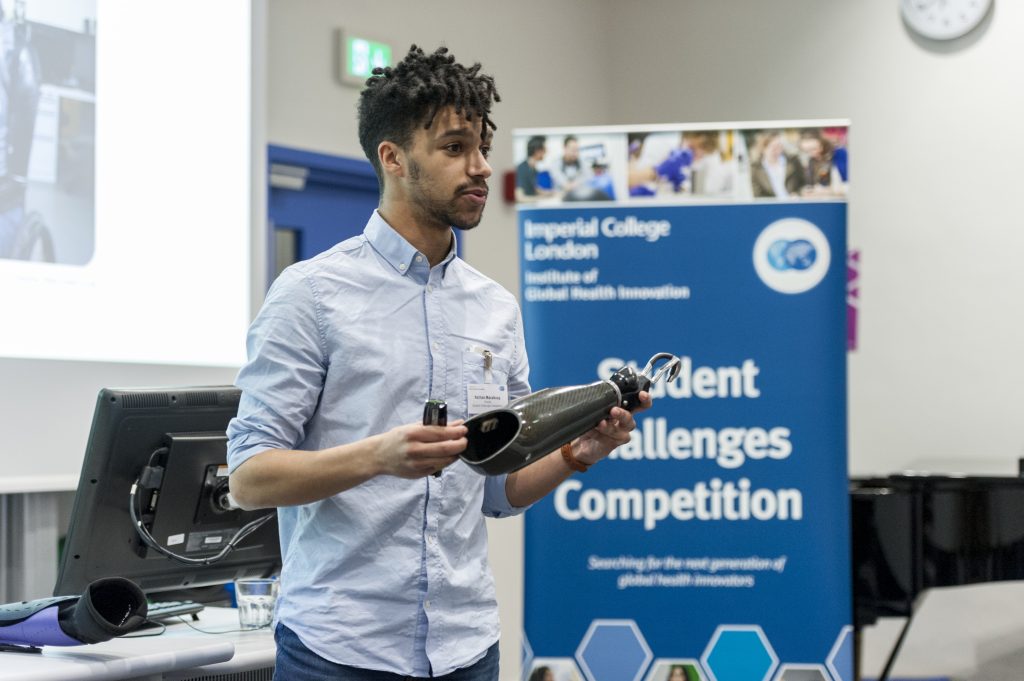
 IGHI is home to a team of staff who are skilled and passionate about their roles. Our talented people are the reason we’re able to tackle some of the most pressing global health challenges through cutting-edge innovation.