Author: Justine Alford

Putting people at the heart of dementia research

People drawing on coloured paper at a design workshop
Credit: Helix Centre

All around us, technology is making our lives easier. Google Maps has allowed us to ditch the A-Z; apps can bring you everything from takeaways to taxis; Alexa won’t let you forget your anniversary again; the World Wide Web is your never-ending guide to everything on this planet and beyond; the list is seemingly endless.

Yet while many of us may be most familiar with the convenience and shortcuts that everyday technology bestows us, its potential to positively impact our lives stretches far beyond this. Arguably one of technology’s greatest assets is that it is an enabler, allowing ordinary people to do more. And for people with dementia, it could enable greater independence, helping more people to stay at home, reducing hospital visits and delaying the need to move to a care home.

That is the foundation upon which Imperial College London’s new dementia research centre – part of the UK Dementia Research Institute (DRI) – was built. Led by Professor David Sharp, the Centre’s goal is to develop new technologies for a “Healthy Home environment”, a smart system that monitors people with dementia in a number of ways and enables early identification of health problems, leading to swift intervention and support. And our Helix Centre has partnered with this new research centre to make sure that people are put at the heart of these emerging technologies.

“People are becoming jaded that research in the lab won’t make a difference in the real world,” says Matt Harrison, designer working in the Helix team.

“What’s unique about this work is that it marries what happens at an academic institution with the expectations of the eventual users of the service and their loved ones. We’re really excited to help close the gap between research and the lives of people with dementia.”

An extra pair of hands

Dementia is major public health concern. There are around 850,000 people living with dementia in the UK, but that number is expected to rise to more than a million by 2025. And with dementia patients occupying a quarter of NHS hospital beds, and accounting for almost 70% of people in care homes, we urgently need ways to help our systems cope with the increasing strain on services.

With effective treatments yet to appear on the horizon, one way to alleviate the burden is to keep people at home. But rather than simply diverting resources from one environment to another, the new centre for Care Research and Technology (CRT) wants to create a smart system that will help people with dementia to become more independent at home.

A man cooking with a smart home device behind him on the kitchen counter
A smart speaker device like a Google Home Hub could support the work by creating a dementia-friendly interface between the person with dementia, the technology and the clinical and technical teams looking after them. Credit: Matthew Harrison

“What’s being developed is a smart home service integrated with a clinical dashboard that enables health professionals to keep track of how people are doing,” Matt says.

“The aim is for most of the technology to be passive within the home, so that people don’t have to actively engage with it. These parts will monitor people in a number of ways, such as looking at their sleep and movement patterns and detecting urinary infections. While others will offer a friendly helping hand, such as giving reminders for appointments.”

This system isn’t being developed entirely from scratch. Rather it’s being built on foundations already developed by the CRT’s collaborators, the University of Surrey. Having an existing model to augment will hopefully mean that the technologies can reach people sooner.

Design for dementia

A key part of this research endeavour is to make sure that what’s being developed truly meets the needs of those that it is designed to benefit – people with dementia, their carers, and healthcare professionals. That’s where Helix comes in.

Over the years researchers have begun to realise more and more the value that input from end-users adds to research. Whether this is patients, the public, people working on the frontline or all of the above, these individuals offer a unique insight into people’s needs and expectations. This helps make research more meaningful and more likely to succeed when applied to the real world.

Traditionally this kind of input has come through involvement practices. Researchers might send out surveys, or hold focus groups and workshops to consult target users and feed their thoughts back into the work.

“What we’re doing is taking involvement to the next level,” says Pip Batey, designer at Helix. “Bringing in human-centred design adds in an additional perspective to patient and public involvement. They both have the same ethos – ensuring that research is carried out with, not for people – but they use different approaches.”

A winding path of discovery

Human-centred design is rooted in a deep understanding of how people live their lives. Thus people, in this case users of the technology, aren’t merely consultants or sounding boards for a project – but are the core around which the research blooms.

“We’ll be illustrating the technology concepts to people in their homes, so that they can input on the direction and form that these innovations take,” says Alice Blencowe, Helix designer. “And we’ll also be doing the opposite: illustrating the lives of people with dementia and their home environments to researchers, helping them to have greater empathy with the people that the technologies are designed to help.”

“It’s a bridge between these two groups of people,” adds Pip. “We’re creating a link, rather than simply telling researchers that this is a person’s perspective, and vice versa.”

The way this works in practice is that designers – in this case, from Helix – will work closely with different users, from people with dementia and their carers to researchers and clinicians. This will inform the team about their unique needs and situations, and give them an understanding of the problem that the research is trying to solve. These insights will then feed into the design of different prototypes, which are then brought back to the users for testing and critiquing.

“It’s an iterative process, not just an output,” Alice says. “We’ll create deliberately provocative designs to provoke reactions from our users, so that people meaningfully engage with the design process,” adds Matt.

A photograph of people at a workshop at the Helix Centre
A Helix workshop with researchers in the DRI CRT to map technologies within the programme against the needs of people with dementia. Credit: Pip Batey.

“Dementia brings a unique set of challenges so for technology to really change lives, the experts in dementia – people living with the condition and carers – must be involved in every stage of design and development,” says Dr James Pickett, Head of Research at Alzheimer’s Society. “This ensures the solutions we create are acceptable, practical and will bring real benefits.

“At Alzheimer’s Society we involve the people affected by dementia in every aspect of our work. As a founding funder of the UK DRI we are delighted to see a co-design approach being championed in the Care Research and Technology Centre to develop technologies that will help people with dementia to remain independent for longer.”

The journey towards the unknown

So far, the Helix team has been immersing themselves as much as possible with people with dementia, carers, researchers, clinicians and therapists. Through interviews, workshops and shadowing, the group has been documenting their needs in granular detail, so that they are primed to translate these insights into early prototypes.

The first technology that the team will work on is the clinical monitoring platform, which coalesces and interprets all of the data from the smart home.

“It’s one thing getting all of this data, but it’s knowing what to do with it to make it useful,” says Matt.

“If the system picks up that there could be a problem, we need to make sure that is the case, and then work out the best way to intervene.”

The next phase of their work will be on the interface for the people at home, whether that’s people with dementia, their carers or family members. This interface is the window between these users and the smart home itself, and it could take a number of different forms based on user research, such as touchscreens or voice control.

A smart home device next to a mug on a kitchen counter
Smart home devices could help people with dementia by giving reminders, or combating loneliness. Credit: Matthew Harrison.

“We’re really excited about this part,” Matt says. “It could do things like nudge people to weigh themselves if the system spots that their eating habits have changed, remind them to take their pills, or even ask them how they’re feeling to help address loneliness and isolation.

“There are loads of possibilities.”

That means that right now, it’s impossible to know what the end result of this research will look like. But it’s an exciting unknown that Helix is proud to be part of.

“For me, the Care Research and Technology Centre at Imperial, who work closely with the Helix centre, is the jewel in the crown of the UK DRI,” says Prof Bart De Strooper, UK DRI Director.

“It brings people affected by dementia closer to the basic science that is taking place, and will change the conversation and thinking of the Institute as a whole.”
How wearables could help tackle sepsis

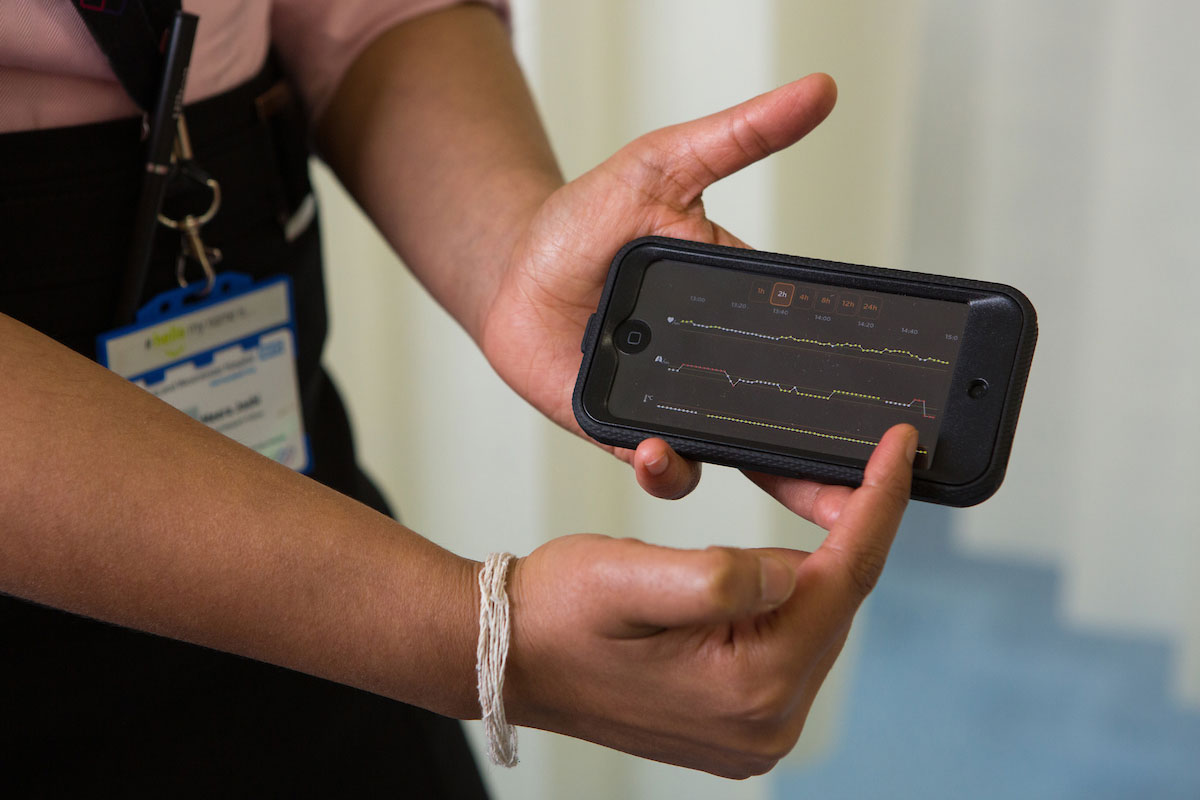
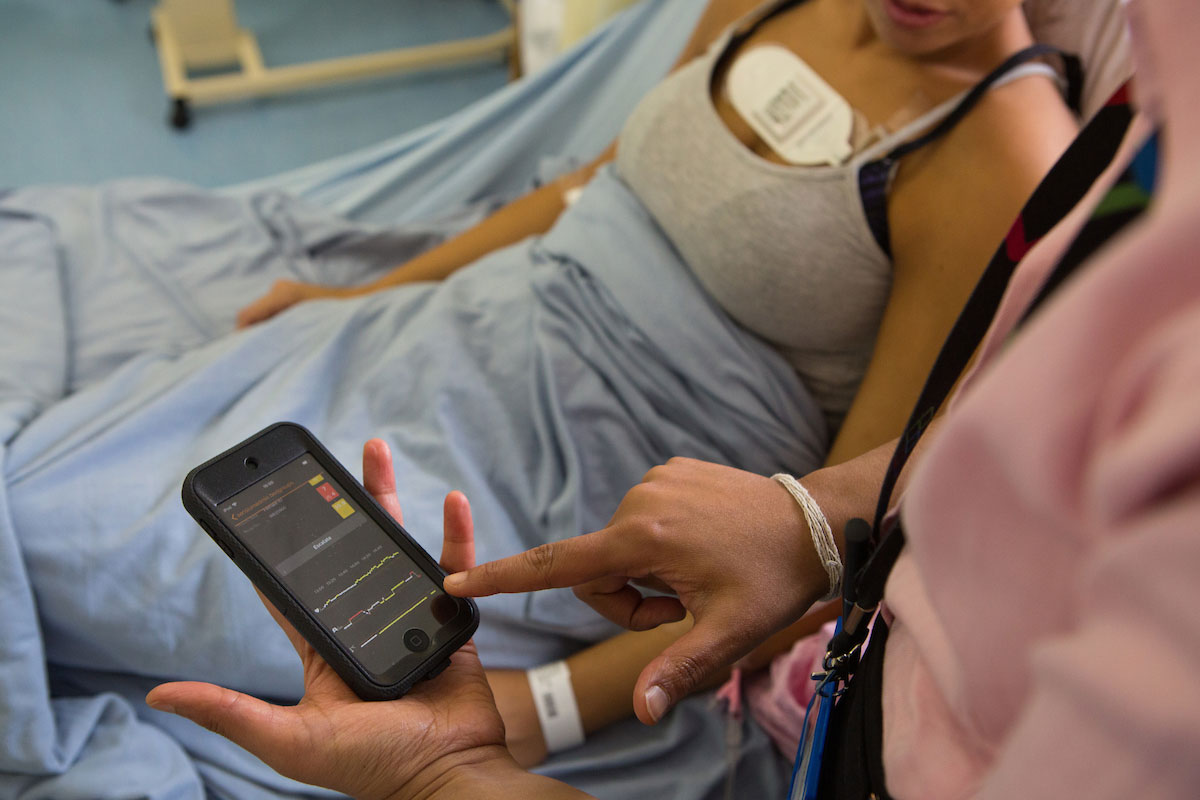
A doctor showing a patient vital signs on a smartphone
Image credit: CW+ and Mile91/Ben Langdon

Our immune system serves to protect our bodies from threats, such as rogue cells that could turn cancerous, or infections that could harm our health. But the immune system can also go wrong, and do more harm than good.

This is what happens in sepsis, or “blood poisoning”, where the immune system goes into overdrive while attempting to clear an invader, such as harmful bacteria, and inadvertently attacks person’s tissues and organs. This life-threatening reaction is estimated to affect close to 150,000 people each year in the UK alone.

World Sepsis Day, on September 13th, seeks to raise awareness of this serious condition, which could take as many as 6 million lives across the globe each year. It’s also an opportunity to celebrate those who have made it their mission to tackle sepsis. We caught up with IGHI researcher, Meera Joshi, who is doing exactly that.

Why is sepsis such a major concern in healthcare?

“Sepsis remains a massive problem, not only in the UK but globally. You only need to pick up a newspaper to spot recurring headlines; it’s a huge killer; as many as 1 in 4 people with sepsis will unfortunately die from the condition. And there’s been evidence to suggest that for every hour delay in diagnosis, the mortality rate goes up by 8%. Data show that if you pick sepsis up earlier, people are much more likely to have better outcomes.”

Why is sepsis tricky to diagnose?

“One of the main problems is that it’s hard to spot. There’s no established molecular marker that can be used to pick up sepsis to date; there’s no single blood test for diagnosis, either. There are markers that are sometimes used, but they lack specificity. Patients also often have vague symptoms that could be attributed to something else, meaning it can go undetected.”

What’s the aim of your research?

“One of the things we’re looking at doing is seeing if novel technology can help identify patients with sepsis sooner. One of the ways that healthcare professionals can check for deterioration of a patient’s condition on hospital wards is to measure their vital signs. Currently, nurses do this on wards around every 4-6 hours, checking things like heart rate, blood pressure, temperature, etc. But we know delays can happen in making these observation rounds. So there could be an opportunity for us to detect sepsis, and deterioration more broadly, quicker.

“We’re looking at new wearable technology, originally developed at the College, which can measure a patient’s vital signs more often, up to every two minutes instead of hours apart. We want to see if this can speed up the detection of clinical deterioration.”

How does the wearable work?

A woman having the wearable sensor attached to her chest.
Image credit: CW+ and Mile91/Ben Langdon

“It’s a lightweight wearable device that attaches to a patient’s chest via electrodes. The sensor, provided by Sensium, records heart rate, respiratory rate and temperature every two minutes. Packets of data are then uploaded to the server before notifications can be sent to desktop computers or handheld devices used by clinical staff.

“We’ve been developing computer algorithms that will generate alerts when this data detects there is a problem. Through these, we’re identifying the best ones for nursing staff, so that the alert can be raised to nurses in real-time, as a patient’s condition is deteriorating.”

Could this sensor have other applications?

“At the moment our focus is on sepsis, but we are looking at any patient deterioration more broadly on hospital wards.

“We’ve just completed a study involving 500 patients at a North West London hospital, where we looked at all sorts of patients with a host of different conditions. Some patients deteriorated for reasons other than sepsis, so we want to see if we can apply this technology and algorithm for other causes.”

How have you involved patients and professionals in this work?

“We’ve been working closely with patients and healthcare professionals throughout all of this research. Out of the 500 patients in our trial so far, we’ve got questionnaire data for around 450 patients, to find out their opinions on the technology and whether they find them acceptable to use. We’ve also done in-depth interviews with both patients and staff, speaking to junior nurses, junior doctors, senior nurses and consultants, among others, who are all shaping our work for the better.”

What stage is your research project at?

“I’m coming towards end of my PhD now, for which I’m hugely grateful to my funders – the NIHR Imperial PSTRC, Royal College of Surgeons and CW+.

“Largely at West Middlesex University Hospital, so far we’ve looked at the reliability of the sensor, its potential for earlier detection, and lot of work with our patient and staff cohort to explore their opinion about device and the use of technology in healthcare.”

What do you hope to achieve with this work?

“I’m hoping we can use wearable technology in the future to help detect sepsis and patient deterioration quicker than is currently possible. And ultimately improve patient outcomes and survival; that’s the next step, to see how this can make a real difference to patients in practice.”

Image credit: CW+ and Mile91/Ben Langdon

Meera Joshi is a Clinical Research Fellow at the Institute of Global Health Innovation’s NIHR Imperial Patient Safety Translational Research Centre

What’s co-production in research?

A photograph of a woman and a man at an exhibition.
Image credit: James Retief

Imagine this hypothetical scenario: a group of researchers are working on novel ways to detect early warning signs that a patient’s condition is getting worse. They think a wearable device that automatically alerts both patients and healthcare professionals to potential problems would be an innovative solution to enable earlier detection.

(more…)

What’s co-production in research?

A photograph of a woman and a man at an exhibition.
Image credit: James Retief

Imagine this hypothetical scenario: a group of researchers are working on novel ways to detect early warning signs that a patient’s condition is getting worse. They think a wearable device that automatically alerts both patients and healthcare professionals to potential problems would be an innovative solution to enable earlier detection.

So the team members put their heads together and come up with a new wearable sensor that they think would greatly benefit patients and professionals alike. But when they test it with patients for the first time, they don’t get the feedback they’d hoped for. Users find it awkward, difficult to set up, clunky and uncomfortable. So much so that most people stopped using it within a day, leaving the researchers with no choice but to go back to the drawing board.

How could this costly situation have been avoided? By better involving the people who this work was designed to benefit in the first place. More and more researchers are realising the value of involving patients and the public in their research because of the unique insight and relevant experience they can offer. But co-production is about more than simply involving patients and the public. In true co-production, researchers work with these individuals throughout the entire project – from start to finish. And for research like the above, they’d work with healthcare professionals, too. They make a team that’s truly equal and collaborative.

The key difference between co-production and more traditional forms of patient and public involvement is that hierarchy is stripped away entirely – power is shared and decisions are made collectively. Everyone listens and respects each other’s expertise, and all members gain something from the experience.

What have we done in a co-produced way?

One of our major co-production journeys has resulted from an innovation event that we helped deliver. This workshop brought together lots of different people including people with experience of hearing loss, designers, clinicians, researchers and charity workers, to come up with innovative research ideas around hearing loss.

This event was different to more traditional meetings in many ways. We shared a creative space, used interactive activities and had strong facilitators to ensure all voices were heard. Everyone worked together, listened to each other and fed in to all of the ideas, so there was joint ownership of all the concepts.

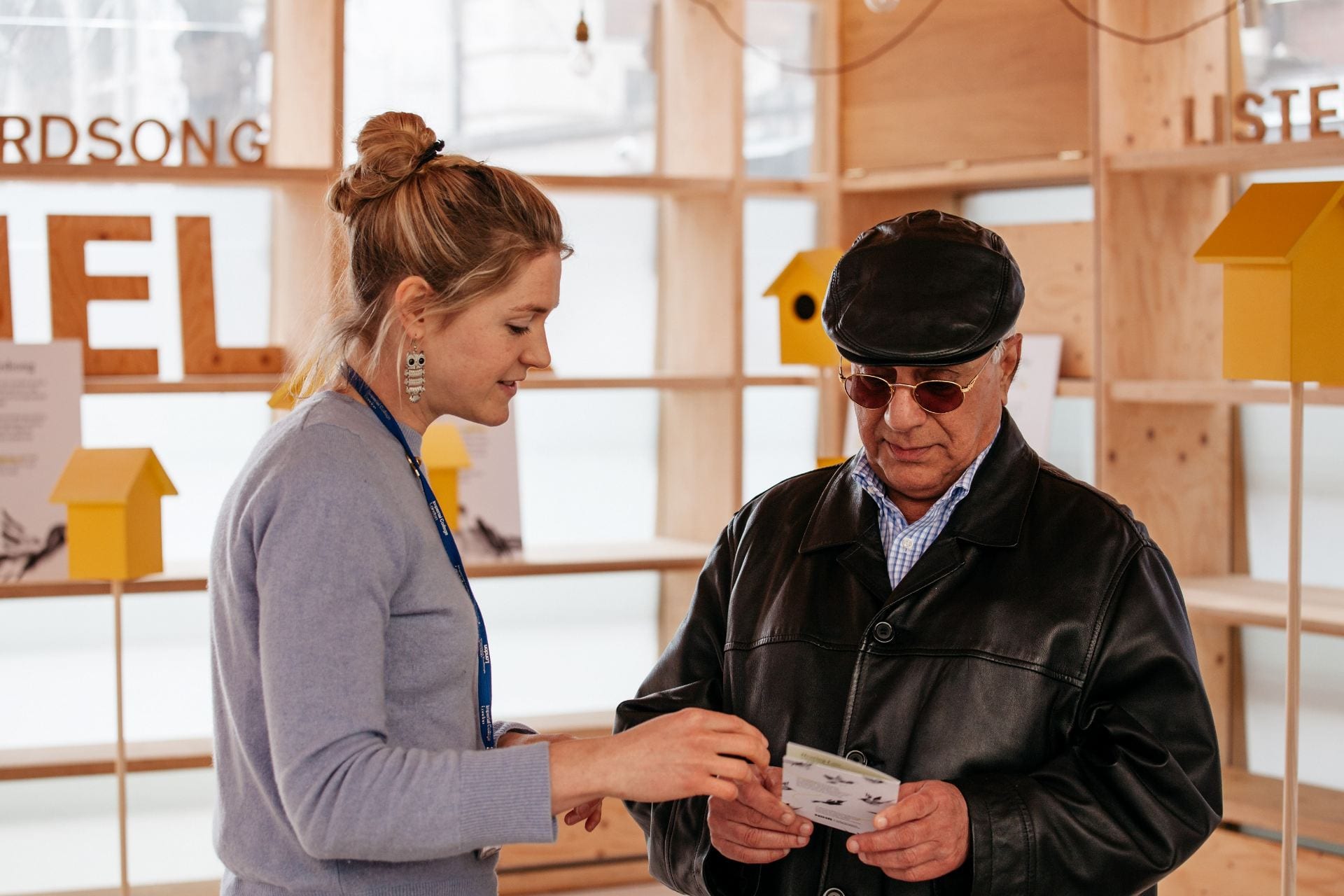
A photograph of the hearing birdsong installation, showing the yellow bird boxes
The Hearing Birdsong installation. Credit: James Retief.

Since then, we’ve been working with a diverse team, brought together at the workshop, to develop one of the ideas: Hearing Birdsong, which is looking to raise awareness of hearing loss. We created an enjoyable and interactive experience for the public, with an installation of bird boxes that emit birdsongs at different frequencies that you might lose if you are experiencing hearing loss. This inviting space ultimately aimed to raise awareness of hearing loss.

Helpers were on hand to give visitors information about hearing loss, so they could seek further advice if needed or sign up for a test with an audiologist. We’re now looking to continue this work in a co-produced way to reach less-often heard voices in London, and begin to help the millions of individuals in the UK with unaddressed hearing loss.

What other projects have we co-produced?

Digital tools like social media, wearables and smartphone apps could be a great way to help address growing mental health needs, but there is still a concern that technologies are being developed without substantial evidence or input from the people they aim to help. One of our projects is looking to understand the acceptability and feasibility of using technologies to detect deterioration of mental health in young people, through working with young people with lived experience of mental health difficulties throughout the project.

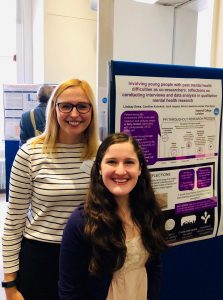
A photograph of Lindsay presenting a poster of her research with one of the young people she worked with.
Research leader Lindsay, left, presenting her work with one of the individuals she involved in her research.

For this work, the young people were trained to carry out interviews with young participants who have current mental health problems, and to analyse the resulting data. They built a good rapport with the participants and, in some instances, understood the data in a deeper way (compared to a researcher) due to their relevant lived experience.

Not only has their involvement clearly added to the results, but the young people also gained new skills in data collection, analysis and team working. They’ve since co-authored two papers and spoken at conferences about the research; other groups are also now using this model of co-production for their own research projects.

What have we learned about co-production?

Our experiences of co-produced projects have unravelled numerous benefits, including positive impacts on society or health. It is indeed a journey and people learn by doing along the way. As with any research endeavour, there were, of course, bumps in the road. We’ve found that co-producing research takes time, because trust and relationships need to be built between new people, who might have different backgrounds and skills.

Individuals might bring an agenda or have different goals, but raising those differences and allowing a safe space to discuss them helped to ensure everyone was on the same page. Having face-to-face meetings and allowing time for people to bond socially, for example over coffee and cake, helped grow relationships and increase team morale. Regular communication was key to help keep up the momentum and ensure that everyone had the chance to voice their opinions.

While we found that there doesn’t need to be a specific leader, one person still needs to take the driver’s seat. This person is crucial to help coordinate group members and meetings, push the project forward and ensure tasks are completed.

Overall, we’ve found co-production is a rewarding experience, can generate impactful results and creates a group of passionate people that can make greater progress than the individuals alone.

Why sharing leadership in healthcare matters

Hands together in a circle

By Dr Lisa Aufegger, Research Associate

Alongside the inherent challenges of the job itself, working in acute healthcare teams comes with another layer of complexity.

On a regular basis, staff will interact with highly specialised professionals from across different disciplines. This means that team members such as anaesthetists, nurses and surgeons need a high level of shared understanding, not only in relation to their main objective but their roles and responsibilities, too.

Shared leadership (SL) – where leadership working relationships are distributed and team members’ unique roles defined – has been proposed as a way to foster effective team performance in such situations. And it’s the focus of my latest research. (more…)

Experiences of Shout-ing for Mental Health

A girl at an apple mac laptop on a sofa with earphones in

By Lily Roberts, NHS Digital Academy Teaching Fellow

“I’m really struggling, is someone there?”

“Hi there, my name is Sophie and I’m here for you tonight. Tell me a bit about what’s on your mind.”

“I can’t cope anymore, I just want to end it all…”

While this exchange is fictional, it is a representation of a very real problem. (more…)

A Shout out for mental health

A young man wearing a hoody and shouting

By Dr Emma Lawrance, Mental Health Innovations Fellow

These are hyper-connected times. We’re told we can get what we want – from dinner to a date – at the tap of a phone screen. And yet, even with the world seemingly at our fingertips, when we are in an emotional crisis or struggling with our mental health, it can be hard to know where to go. And hard to know what to say, when one of our loved ones is brave enough to express what’s truly on their mind. (more…)

Project SAPPHIRE: Making the most of precious health data

AN image of a sapphire gemstone

By Joshua Symons, Director of the Institute of Global Health Innovation’s Big Data Analytical Unit

Patient data is precious. It’s a resource that many researchers and clinicians use to improve healthcare and therefore the lives of patients and health professionals. That’s why we want to make sure it’s used in a way that’s both effective and safe. (more…)

How nurses and midwives are essential to achieving universal health coverage

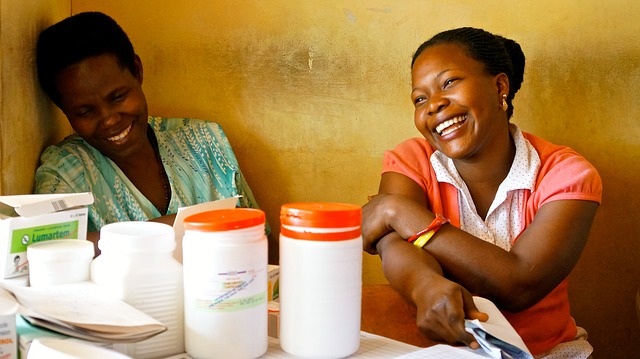
Two female nurses laughing and smiling.

By Nicolette Davies, IGHI’s Head of Operations

Universal Health Coverage (UHC) is a basic human right. The WHO’s Director-General, Dr Tedros Adhanom, continues to highlight the importance of UHC by focusing its World Health Day on this topic. Dr Tedros’ top priority is equity for health for all, but how will we achieve the World Health Assembly’s ambitious target of 1 billion more people benefiting from UHC within five years? (more…)

Where are the ‘Toyotas of healthcare’ we need for universal health coverage?

A globe surrounded by a stethoscope.

By Jonty Roland, IGHI Honorary Research Fellow and Independent Health Systems Consultant.

By dedicating this World Health Day to universal health coverage (UHC), the WHO is continuing to relentlessly bang the drum for ‘health for all’ under its charismatic Director-General. This is a beat that more and more countries are now marching to, with dozens of governments having announced UHC-inspired reforms since Dr Tedros took office two years ago. (more…)