Author: Justine Alford

Remote care: is digital health tech here to stay post-COVID-19?

An ipad and stethoscope representing digital health technology

Digital technology has been poised to transform the way that healthcare is delivered. Yet uptake and implementation has been slow; in the UK alone for example, almost a quarter of hospitals still use paper rather than electronic records.

But when COVID-19 hit, health systems were forced to rapidly adapt and use technology to deliver care remotely, where face to face appointments were no longer possible. While it’s impossible to predict when the COVID crisis will be over, will remote care become the ‘new normal’ post-pandemic? And if digital-first health technologies are here to stay, what are the implications for patients?

Newly launched IGHI research, supported by Imperial’s COVID-19 Response Fund, will explore these important questions. We caught up with project lead, IGHI Research Fellow Dr Ana Luisa Neves, to find out more about the work and what it hopes to achieve.

What are digital-first health technologies?

“These are all means in which the patient’s first point of contact is through a digital channel, rather than face-to-face. For example, phone and video consultations, online services, and mobile apps.”

Why are you interested in these?

“Our idea is that digital technology can help tackle challenges that we had before COVID hit. Like making care more accessible and affordable, and reaching groups of people who may not be confident going to a doctor or nurse.

“Right now we’re in the middle of a massive real-life experiment, which has pushed this closer to reality. We will resume normality at some stage, however it may look. But what can we take from this experience so that we can continue using these models in a better way?”

What are you hoping to find out about these technologies?

“We want to understand the patient experience. In principle these technologies should improve accessibility, but that may not turn out to be true – or at least not true for everyone. So we’ll explore the potential barriers to healthcare access, whether some individuals or groups are somehow excluded from these technologies.

“We also want to look at patients’ attitudes and perceptions. In what circumstances do they want to use digital technologies? How do patients want these to move forward? When do they think that digital tech may work better than more traditional models of care, and how can we create conditions for that to happen?”

And how are you going to answer those questions?

“This work sits within a broader program of work that’s also looking at GPs’ views of these technologies. That’s using a global survey and focus groups, involving 18 countries. We’ll be replicating this method but looking at patients’ perspectives instead.

“We want to make sure we get nationally-representative samples from countries and information about demographics, as well as ‘digital literacy’. Part of digital literacy covers technical aspects, such as Internet access, but also individuals’ ability and experience using digital tools.”

Do you have any assumptions about what you might find?

“I expect we’ll find that certain groups feel excluded. Evidence has shown that elderly individuals, for example, or those with lower digital literacy are less likely to use these technologies. We want to understand what we can do to make it easier for them.”

How will you apply your findings to healthcare settings?

“We’re hoping to bring together the findings from both GPs and patients, and then consider how we can make these technologies better for the future. We’ll then develop a framework for recommendations, a ‘toolkit’ that healthcare professionals can use to support decision-making. For example, when triaging patients, the framework could help doctors identify when digital technologies may be useful and appropriate. This could help doctors decide whether to offer digital solutions as part of patient care, post-COVID-19.”


Older people are no more COVID cautious

Elderly people crossing the road during COVID-19

Grappling with a novel virus that reared its ugly head barely six months ago, the world is facing many uncertainties. The SARS-CoV-2 virus is proving unpredictable and the pandemic is fast-moving. But one thing we do know is that older people bear the brunt of the impacts of COVID-19. The elderly are disproportionately affected, with those over 65 accounting for some 80% of hospitalisations due to the disease. And one in five over-80s with COVID-19 will need to go to hospital, compared with one in 100 individuals under 30. (more…)

It’s people who shape our research – here’s how

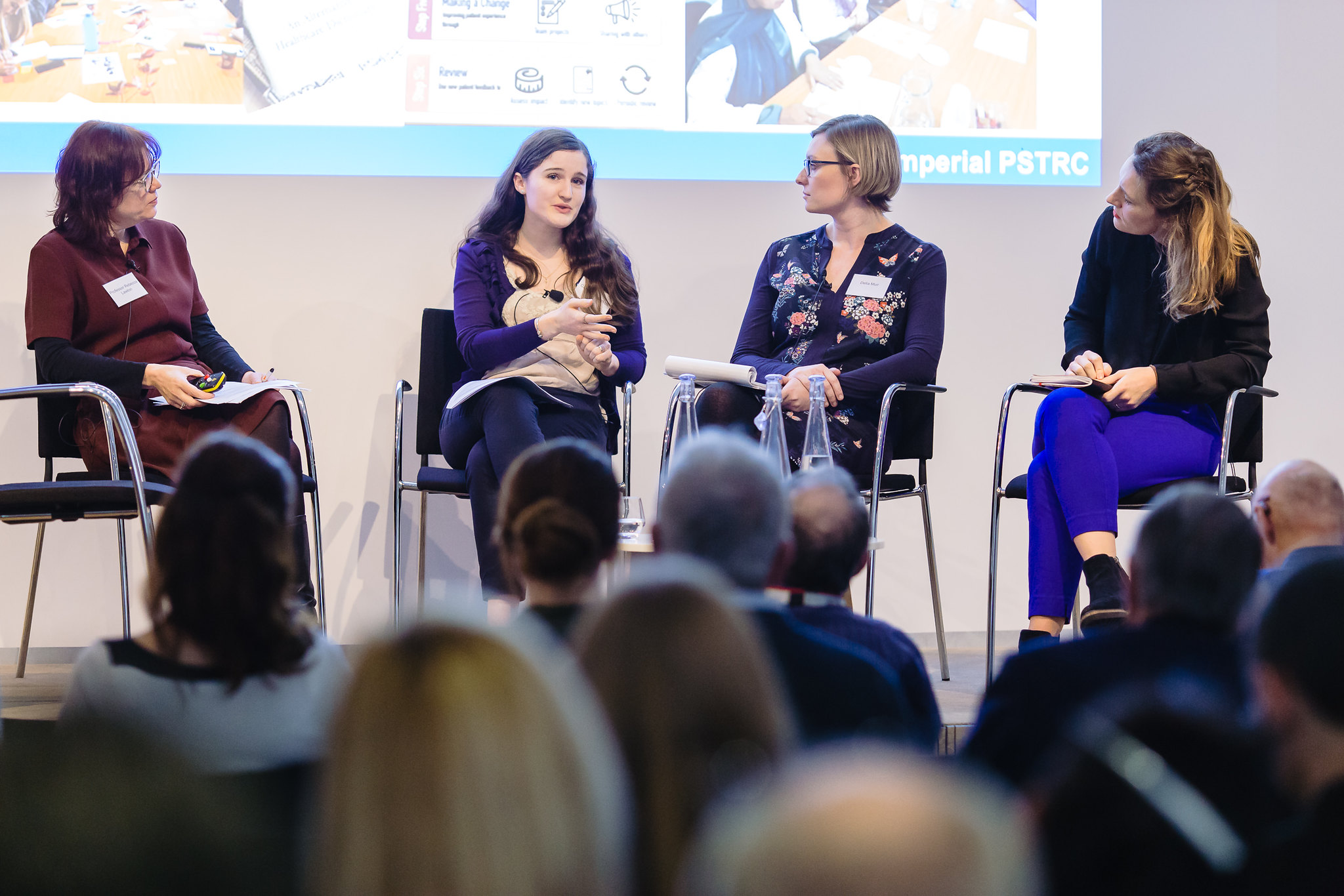
A photograph of an all-female panel discussing research involvement at a conference
Caroline, second from the left, talks about her experience of being involved in our research at a symposium on patient safety.

Research is our bread and butter at IGHI. It lets us explore problems, ask questions, test ideas, make mistakes and learn from them. And after all that, find the right solutions to the issues we’re trying to address in healthcare.

None of this would be possible without people. But not only the brilliant researchers who are the driving force behind our progress. The patients, carers, public and healthcare professionals who devote their time to get involved and be part of our research play an invaluable role in what we do, too. It is through their knowledge and lived experience that we know we’re asking the right questions and chasing the right solutions.

This International Clinical Trials Day, we want to highlight why being involved in research is vital to make progress in healthcare, and shine a light on some of the people who are doing just that.

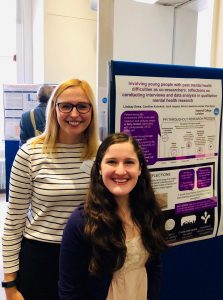
A photograph of Lindsay presenting a poster of her research with one of the young people she worked with.
Caroline, right, presenting findings of the research she carried out with Lindsay, left

Caroline’s story

“I was studying social sciences in London when I first got involved in research at IGHI. I’d been wanting to gain some experience in carrying out research, beyond filling out forms and surveys. I’m really interested in mental health and try to keep my finger on the pulse with what’s out there. So when this opportunity landed in my inbox, looking for young people with lived experience of mental health difficulties to take part in a project as co-researchers, it immediately struck my interest.

“The study was exploring the use of technology to detect deteriorating mental health in young people. We were involved in every stage of the project, helping to shape the work in a way that was meaningful. Sometimes it can feel like involvement is a bit of a tokenistic gesture to fulfil the criteria of a grant, but Lindsay and Anna, the research lead and involvement manager, never gave me that impression. By involving us, they wanted to make sure that the research was asking the right questions, and that it was relevant and of interest to the young people she’s seeking to help through her work.

“After helping to guide the direction of the research, we were trained to carry out interviews with young people with mental health difficulties, and then to code the transcripts and help analyse them. We even attended conferences and shared our findings at various events, so we really got to take part from start to finish. That meant I could really see the impact of the work and how everything fits together.

“It also really impacted me; knowing you’ve played a part in something that will likely affect others going through what you’ve been through is a really rewarding experience. And off the back of this project, I’ve actually started computer coding and will be starting a master’s in computer science.

“Before I joined this research project, I wasn’t really sure of the difference I could make. But I was so wrong! I worried my contributions would be the obvious thing to say, but I realised having that lived experience really does add another perspective that’s needed in research. I would definitely do it again and encourage others to do so – you really can make a difference.”

Anna’s story

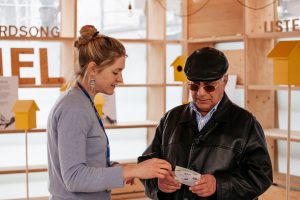
A photograph of a woman and a man at an exhibition.
Anna engaging with the public at one of our pop-up events. Credit: James Retief

“I’m the Patient and Public Involvement and Engagement (PPIE) Lead at IGHI. My role is to support the meaningful involvement of patients, carers and the public in research.

“It’s great to see how people like Caroline have not only impacted the research, but also gained from the experience, including learning new skills and growing in confidence. That’s why it’s so important that engagement and involvement in research continues despite the current crisis. Although COVID-19 has meant that we’ve had to change the way that we do this, we’re learning a lot and finding that involving people virtually can still be a really valuable and successful process.

“For online meetings, for example, we use ice breakers like “What’s your favourite lockdown TV show or book?” to help remove hierarchy and find some common ground, before we get the group to work on a task together. We’re using live captioning on our online platforms so people can read what is being said as well as listen, which has not only been useful for those with hearing loss, but also helps visual learners to reflect more on what is being said.

“Due to not being in person to read body language or take people outside for a chat, there is a greater need to ensure appropriate safeguarding. For example, we offer to chat to people individually before the meeting and introduce them to the online platform, so they will be familiar with at least one person. For sensitive topics or with vulnerable people, we have clinicians either in the meeting or on-call (to support people, as needed). We also ask individuals to provide a friend/family member’s contact details and signpost to appropriate support services (e.g. SHOUT crisis textline).

“We’re also thinking about ways to involve seldom heard groups during COVID-19, for example by providing dongles, as people might not have access to WiFi or unlimited data. We recognise not everyone wants to, or is able to, interact online. We want to build on existing community groups (e.g. through a buddy scheme or phoning rotas), but we also understand people might have more immediate needs to tend to.

“My colleagues and I are very grateful to the amazing, altruistic people who, although some of their situations might not improve, want to be involved in research to help others. We’re glad to hear people enjoy the experience of giving something back to the NHS. I enjoy seeing researchers, clinicians and public members learning from each other and, particularly now, learning together during this pandemic.”

Food security during COVID-19: “We must respect farmers as we do health workers”

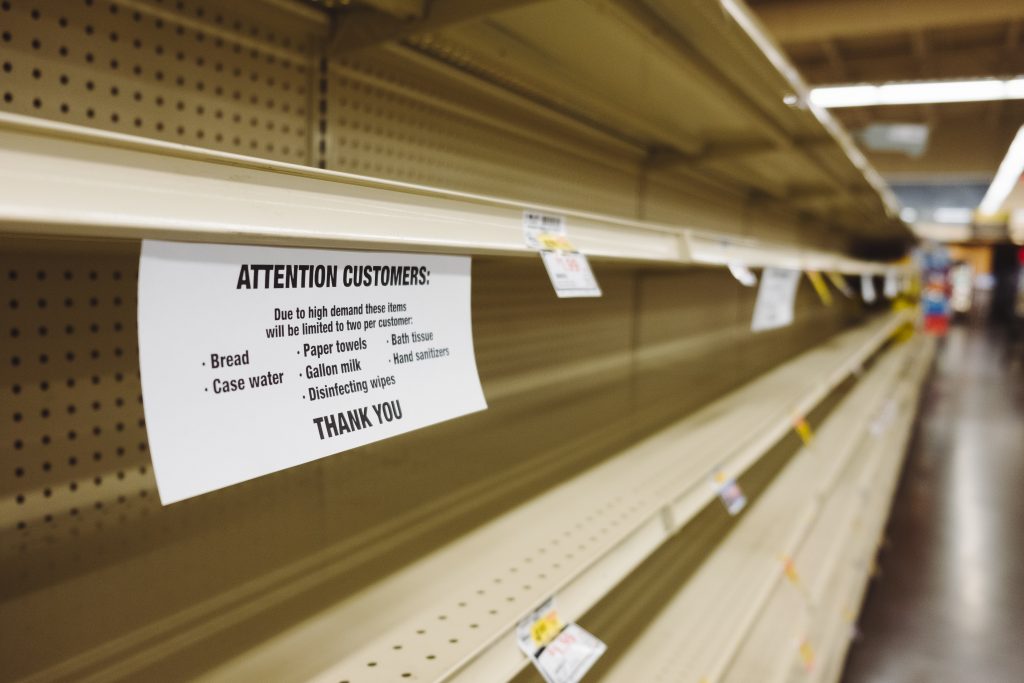
A photograph of empty supermarket food insecurity
Wesley Tingey on Unsplash

Empty supermarket shelves have become synonymous with life amid coronavirus.

But the impact of the pandemic on food security goes far beyond the common frustrations of stockpiling driven by fear and a scarcity of pasta.

Restaurants and catering outlets have closed, food markets have drawn their shutters, social distancing and sickness have massively burdened workforces, and restrictions on movement have created a chink in the supply chain. All of this has created immense pressure on supermarkets that are having to cope with the ever-increasing demands, on farmers who are losing their clientele and are unable to distribute their produce, and on families who struggle to put food on their plates.

With food, nutrition and health inextricably linked, we spoke with Dr David Nabarro, IGHI Co-Director and food systems expert, to explore this complex and pressing situation further and find out what it could mean for individuals, communities and governments across the world.

Is food security amid coronavirus being given due attention?

A photograph of Dr Nabarro
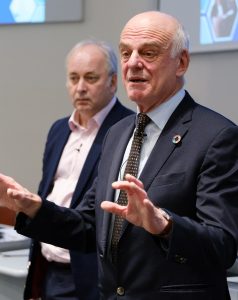
Dr Nabarro, WHO Special Envoy on COVID-19. Photo by Owen Billcliffe

“Every community needs to focus on food and other essential requirements that are becoming harder to access as a result of both the pandemic itself, and the containment measures that countries are having to adopt.

“These containment measures are not optional and are the only way to get on top of this pandemic. But they will interrupt the economy. And they are also driving a rapid increase in hunger in all regions across the world, particularly in developing countries, as poor people on daily wages or working in the informal sector are unable to collect the cash they need to buy their essentials for life.

“This is being exacerbated by anxiety-driven stockpiling that is causing prices of food to rise; in some areas we’ve witnessed a 5 or 6-fold increase in the rise of essential products like cooking oil and flour.

“This is a global issue, but it’s worse in poor settings, and it’s occurring with great speed. This is putting even more urgency on the need to establish public health defences everywhere, so that life can restart.”

What about other vulnerable groups?

“Many school children get essential food intake from their school meals. With schools closed, these children are not receiving this valuable nutrition. This also means that households dependent on this free food are having to find the resources they need to feed their children.

“The same applies to old people receiving food support, such as ‘meals on wheels’, which may have stopped. So households are again having to find the extra cash to feed older people, too.”

A child eating
Photo by Tra Tran on Unsplash

With governments fighting to prevent their economies from collapsing, is the onus being passed on to charities?

“In the past, many poorer people received a lot of support from NGOs, but these organisations are reporting a massive drop in their income. This is coming at a time when the world is going to depend on them more and more, and their capacity to respond will be limited. This is adding to an already massive problem.

“We are seeing huge increases in food insecurity and hunger, and they are only anticipated to worsen. If people can’t get food they will get frustrated, and they will move to places where they can find food. If they are prevented from doing so because of lockdowns, then this could cause unrest.

“There is therefore an urgency to sort this out, and I am engaging with people who are very focussed on this.”

And what about the farmers producing this food, how will they cope?

“Farmers will likely have difficulties accessing the things they need to produce food – seeds, fertilisers, etc. Farmers also need labour on their land, but worldwide restrictions on movement are creating problems sourcing workers. Looking ahead, this will generate supply issues.

“Farmers are also coping with a sudden crash in their markets due to restaurant closures, and with distribution issues due to restrictions on movement across and between countries, meaning perishable goods like fruits and vegetables are left to rot.

“All of these factors individually can make massive shocks to food systems. But taken together, this problem is huge, and it’s global. It is urgent we do something about it. And the only way we can get out of this is by concerted action and ensuring good quality public health in all communities.”

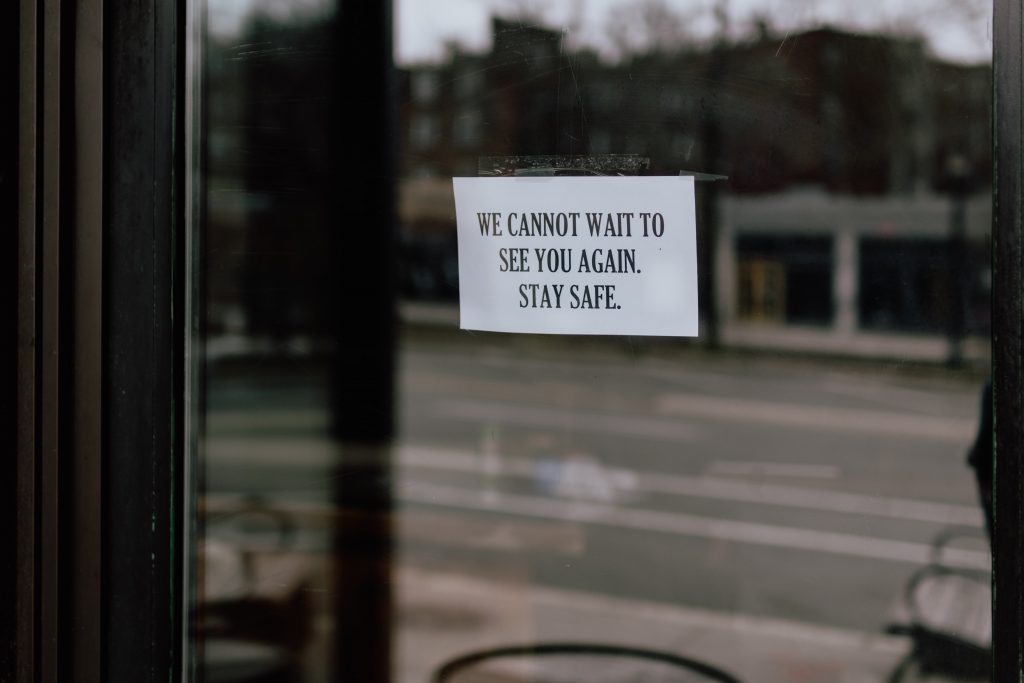
A closed restaurant
Photo by Kelly Sikkema on Unsplash

Who needs to take action to improve food security?

“Everybody has a role. Local authorities need to identify where there is hunger and provide targeted cash support. To prevent profiteering, local governments must also ensure that increases in the price of food are justified.

“Governments also need to make sure that people who work in the food sector are considered essential, like those who work in health. Finally, we must help farmers. Those falling short of cash as they are unable to distribute their food should receive help. We’re already talking to businesses about changing their distribution methods, shifting away from central distribution points to mobile methods that can more easily shift key items.

“But the most important thing is to know where people are hungry or likely to be, and making sure that they get support.”

What about us – what can we as citizens do to help?

“We all need to be prepared and willing to help where we can. Even in the most affluent societies, this kind of crisis can tip people over the edge into poverty. We need to be aware of this. And we need to keep giving to NGOs, who are experiencing a huge income drop. If we trust them, we should contribute, as they are able to get essential resources to people all over the world.

“And when this situation ends, we should revisit how we relate to farmers. They are so vital. Much like health workers, they have not always been treated with the respect that they deserve.”

Dr Nabarro is a WHO Special Envoy on COVID-19. He curates the Food Systems Dialogues and in 2018 won the World Food Prize In recognition of his successful leadership activities to galvanize policy-makers to prioritise food and nutrition.

Life after medicine: improving healthcare away from the frontline

Doctors' scrubs hanging up

Right now, we’ve never been more grateful for the health and care workers who are tirelessly demonstrating their dedication to our health and wellbeing.

Supporting our health system, too, are many unsung heroes working away from the frontline. People who may have hung up their stethoscopes, but with the same determination to improve health and care.

Like Drs Jack Halligan and Natalia Kurek at IGHI, who both left medicine but are staying at the forefront of healthcare in different ways.

We caught up with Jack and Natalia to find out about their careers post-medicine, how they’re applying what they learnt in medical school, and what the COVID-19 crisis means for their roles. (more…)

The show must go on – part 1

The Queen's Tower at Imperial campus

In a matter of mere months, a new virus has completely changed the world. In the trail of destruction that coronavirus is causing, it has rudely propelled many of us into a new way of working. 

Offices have closed, laboratories shut their doors, classrooms and lecture theatres emptied. But the world has not ground to a halt – the show must go on. At IGHI, our researchers are continuing their endeavour to improve health and care. In this new series, find out how our people are adapting to working life amid coronavirus, and the unique opportunities and challenges this has presented them. (more…)

Empowering stroke survivors in their own recovery

A stroke survivor

It was Christmas time three years ago when Amy experienced a stroke. Amy was enjoying her retirement, having spent her career working in publishing. But the stroke took away her independence, paralysing her left arm such that she needed full-time care. This isn’t an uncommon outcome: some 80% of people experience difficulty using their arms after a stroke.

Amy spent the next four months in hospital, the beginning of a long road to recovery.

“The rehabilitation I received in hospital mainly focused on walking, but it was my hand that I really needed help with,” she says.

“And I wasn’t told that if I didn’t use my hand that I would lose function of it.”

When Amy returned home she needed full-time care and regular rehabilitation sessions. But with an overstretched health system burdened by an ageing population, Amy wasn’t able to access the recovery support she required at home.

“I was glad to get out of hospital, but I couldn’t get the help I needed and felt very hard done by,” she says. “I had to take charge of my own recovery.”

Spotting gaps in stroke services

Amy joined a local network called LEGS (Local Exercise Groups for Stroke), a charity that offers physiotherapy-led rehabilitation for stroke survivors. It was here that she met Ella Gibbs and Gianpaolo Fusari from our Helix Centre, who were working on a solution to help people like Amy.

“Stroke is the leading cause of disability in the UK, so we were really motivated to work in this area and find out where we could use design to make a difference to people’s lives,” says Gianpaolo, senior designer at Helix, an innovation lab for healthcare.

“We wanted to learn more about what happens both in the hospital and in the community, so we shadowed teams of therapists on wards, linked up with various charities and also observed rehabilitation sessions in the home environment.”

It was the latter scenario where Gianpaolo realised there was a major gap to be filled.

“We followed early-support discharge teams, the therapists who go to people’s homes five days a week for 45 minutes to do intensive therapy,” he says.

“It’s a really great service, but only about 20-30% of eligible people receive it because there aren’t enough therapists to go around.”

A numbers game

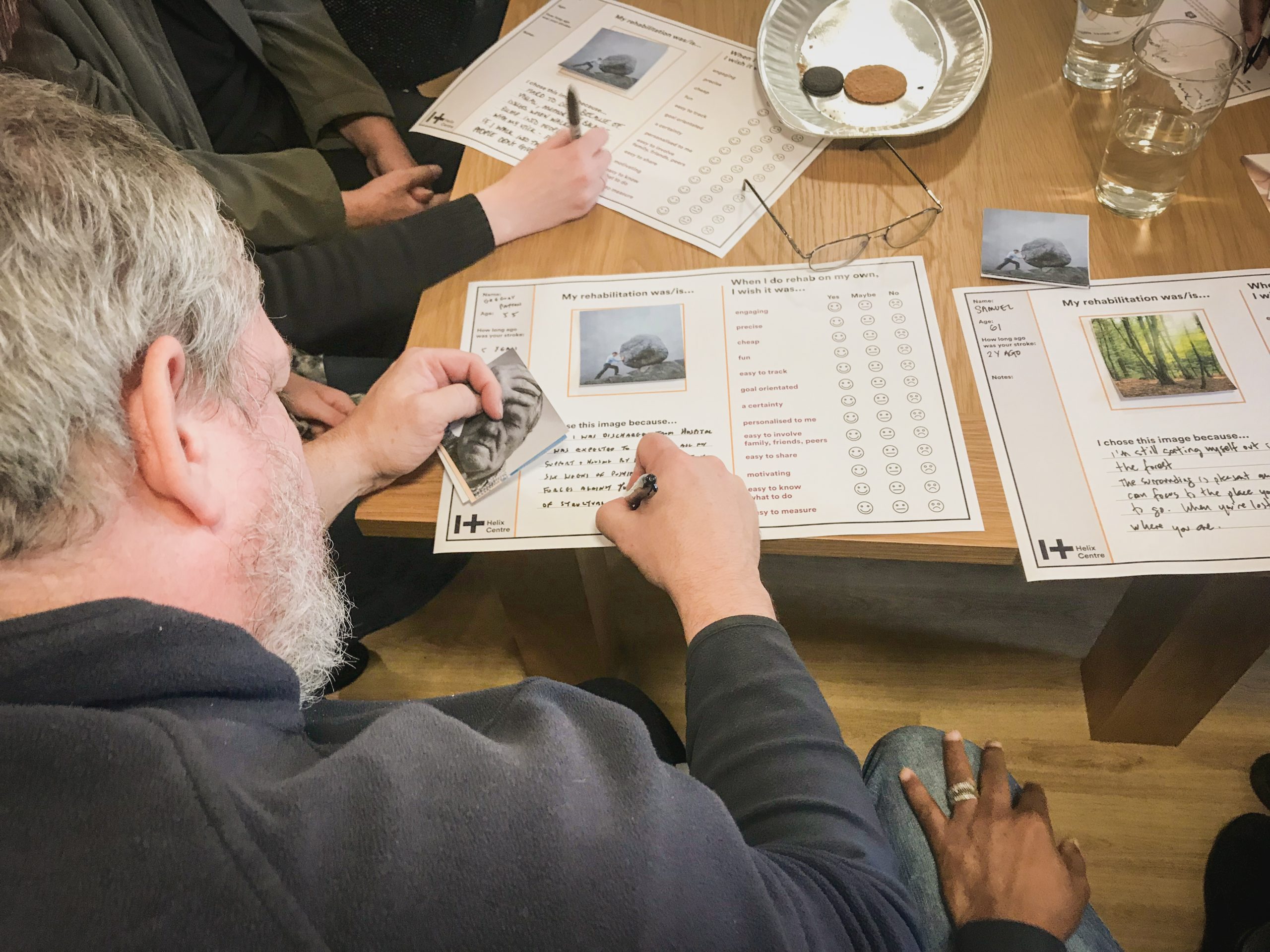
The team ran workshops with patients and healthcare professionals to further flesh out people’s needs after stroke and better understand their feelings. It became clear that the lack of help at home was a real roadblock in people’s recovery.

“People felt unsupported after their formal rehabilitation programmes ended,” says Ella, physiotherapist and clinical researcher. “They were afraid to do some exercises at home for fear of injuring themselves. And they didn’t have any way of monitoring their own progress. The same goes for the therapists, who couldn’t see whether their patients were sticking to their exercises between sessions.”

Evidence suggests that stroke survivors need to perform hundreds of exercise repetitions every day to recover the function of their affected limbs. But even for those fortunate to be eligible for support at home, typical therapy sessions simply aren’t long enough to achieve those kinds of numbers. So rather than looking for an unlikely solution in these narrow windows, the Helix team began to focus on life outside of therapy. They wanted to help people help themselves – empowering them to take charge of their own recovery.

“There’s increasing emphasis on this self-management aspect of treatment for people with longer-term conditions,” says Jennifer Crow, an occupational therapist at Charing Cross Hospital who has been working with Helix on the project.

“Because people aren’t going to get a therapist’s help every time they need to do something. There simply aren’t enough of us. I believe self-management has to be the way of the future.”

A recipe for rehabilitation

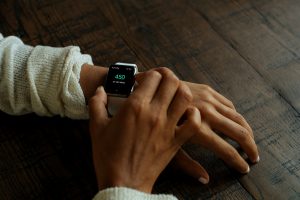
Working with some 200 patients and healthcare professionals like Amy and Jennifer, the Helix team created a digital tool – OnTrack Rehab – that enables self-management of stroke recovery.A person using a smartwatch with the OnTrack app

This platform couples a smartwatch app with tailored coaching to help people own their rehabilitation journey at home. The app works like a step counter. It tracks minutes of arm activity through an algorithm developed specifically for stroke survivors, whose arm movement differs from healthy individuals’.

“That’s the ‘secret sauce’ of our innovation,” says Gianpaolo.

The device displays these minutes to the user, alongside a daily goal and what they achieved the previous day. The app also sends the user tailored messages – depending on how active they are – to motivate and encourage them.

“It’s great – it reminds you to use your hand,” Amy says. “I think you need constant reminding that it’s there and needs to be used. I think it’s helped me to be more aware of that.”

Earlier versions of OnTrack showed users much more information. But testing sessions showed that people found it overwhelming and difficult to make sense of.

“What really struck me was how the Helix team really listened. Not just to us, the therapists, but to the patients as well,” Jennifer says. “Throughout this project they’ve always taken on board our suggestions, so that the next time we see them, they’ve made appropriate iterations. So much other research is done without any prior consideration of patients’ actual needs, which is so important.”

No single silver bullet

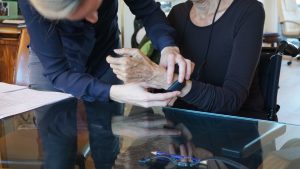
OnTrack shares the activity data it gathers not only with the users themselves, but also with their therapists. This offers a window into what happens between therapy sessions. The OnTrack team also uses this information to provide regular, tailored coaching sessions, which the therapists consult on.A man helping a woman put on her smartwatch

By motivating people to better engage with their rehabilitation at home, OnTrack hopes to complement therapists. And ultimately, reduce the need for therapy sessions, which are in scarce supply.

Results from a pilot study in 2018 with 10 people showed an average increase in activity of 20%, which equates to roughly an extra hour of arm activity per day. While promising, the team can’t be sure that this improvement was due specifically to OnTrack. That’s why they’re now carrying out a more robust feasibility study with a larger number of patients and an independent evaluation.

The road ahead

Despite the years of research and development so far, it’s still early days for OnTrack. The team has more to do to refine the product and its features. They also need to demonstrate its impact on rehabilitation outcomes at scale. But if trials support its use, Gianpaolo has high hopes for the platform.

“In the short term, we want to see how it can integrate with NHS practice, becoming part of the services offered to stroke survivors here and hopefully in other countries in the future,” he says. “We also want to explore whether we can adapt OnTrack for rehabilitation in other areas. For example people living with Parkinson’s disease.”

The OnTrack team is excited for the road ahead and to helping many more people like Amy recover from stroke.

This work has received funding from the NIHR Imperial Biomedical Research Centre. Read about other Helix work here