Blog posts

Hepatitis: Why early screening matters

By Professor Mark Thursz, Professor of Hepatology within the Department of Surgery and Cancer, Imperial College London

Five viruses, hepatitis A – E, specifically infect the liver and cause acute hepatitis or chronic hepatitis.

Over 350 million people worldwide are chronically infected and are therefore at risk of cirrhosis, liver failure and liver cancer. Hepatitis B and Hepatitis C virus are together responsible for over a million deaths per year. The majority of infections and deaths related to these viruses occur in low and middle income countries. In 2010 the United Nations World Health Assembly passed a resolution which recognised the burden of disease imposed by these viruses and initiated a public health response to viral hepatitis which included the inception of World Hepatitis Day.

Chronic viral hepatitis infections rarely cause any symptoms or signs of the disease and therefore patients do not seek help until the final stages of disease when treatment is usually futile. However, if the infections are picked up early then they can be treated (Hepatitis B) or cured (Hepatitis C) in the majority of cases. It is therefore vital that people with viral hepatitis infection are diagnosed in good time which requires active case-finding or screening. Our work in West Africa demonstrated that screening for infection in the community is feasible, acceptable to the public and cost effective. (more…)

World Blood Donor Day: What can you do? Give blood, give now, give often

By Stella Nikolaou, Clinical Research Fellow, The Royal Marsden Hospital and Imperial College London and Shahnawaz Rasheed, Consultant Surgeon, The Royal Marsden Hospital and Senior Lecturer, Imperial College London.

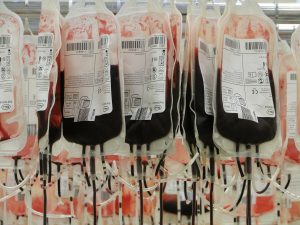
Worldwide, there are more than 5 million people who die from violence and injury1. Uncontrolled bleeding causes more than 40% of trauma-related deaths1. More than 530 000 women die each year during pregnancy, childbirth or post partum and 99% of these women are in low and middle-income countries with severe bleeding being the commonest cause of death1. Safe and affordable surgery, therefore relies on access to a sufficient volume of blood which can be safely transfused2. Unfortunately this is not the case in most of the world2.

Blood donation rates are lowest in nations, which are afflicted with high rates of malnutrition, chronic anaemia and transfusion-transmissible infections (TTIs) which further decrease the blood donor pool2.

The Lancet Commission of Global surgery recommends blood donation of at least 15 units per 1000 people per year3. However according to the WHO data in 2015, the median blood donation in low income countries (LICs) is 3.9 units/1000 people/year and 11.7 units/1000 people/year in Middle Income Countries (MICs) which is a tenth of what high income countries are estimated to have (36.8 units/1000 people/year)4.

These figures are likely to be overestimated as they include blood that is unsafe to use due to TTIs (e.g. AIDS, malaria and syphilis)2. (more…)

Giving blood in Africa to aid medical emergencies, natural disasters and accidents

By guest bloggers Sophie Uyoga and Charles Kamau, Research Scientists in Kilifi, Kenya

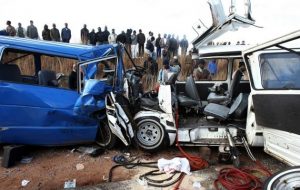
Africa has the highest risk of road traffic accident globally.

Most blood prescribed for transfusion in the developing world is mainly in emergency care. According to the WHO 2015 Report on Road Safety, the African Region has the highest risk of road traffic accident, one of the greatest contributors of emergencies needing blood transfusions. However, hospitals in this region are constantly facing blood stock outs, greatly contributes to the poor outcome all forms of medical emergencies as well as among admissions with severe anaemia. A clinical trial in East Africa by Kiguli et al., demonstrated how timely access reduces the risk of mortality among children with severe anaemia with a high proportion of those not transfused dying within 2.5 hours post admission. This therefore highlights the need to have screened donor blood readily available in the system. (more…)

Supporting midwives in The Gambia to save the lives of mothers and children

5 May 2017 marked the International Day of the Midwife. Recognising the important role that midwives play to families and mothers, the day was first established in 1992. Midwives endure rigorous training to ensure that they can provide quality care for those in need. The level of skills amongst midwives however, can vary across the world.

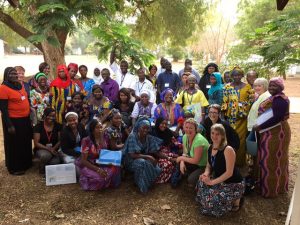
March 2017 saw the arrival of Dr Beverly Donaldson, her midwifery colleagues Maggie Welch and Judith Robbins and paediatrician Dr Anna Battersby from Imperial College London/Imperial NHS Trust to facilitate the third midwifery training programme at the MRC Fajara The Gambia. The aim of the training was to support local midwives in their clinical practice by teaching them the necessary skills to manage basic obstetric emergencies in order to save the lives of mothers and babies in their care. Together, they give their account of the event.

“It was a busy few days following our arrival; preparing all the equipment and teaching materials over the weekend in readiness for the start of the intensive two day training programme on the Monday morning.

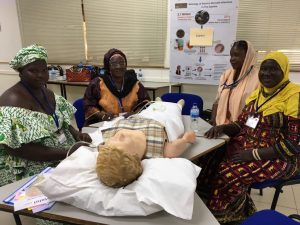
Midwives attended practical emergency skills training in the management of Eclampsia, Postpartum Haemorrhage and blood loss estimation.

The first day began with lectures in maternal and neonatal mortality and the management of high risk pregnancy in The Gambia. The afternoon was dedicated to practical emergency skills training in the management of Eclampsia, Postpartum Haemorrhage and blood loss estimation – the major causes of maternal mortality. Running concurrently to the skills stations was a question and answer session in the library which gave participants the opportunity to openly discuss concerns related to maternal and neonatal care.

The second day focused on helping babies breathe

The second day focused on neonatal wellbeing and ‘Helping Babies Breathe’- an evidence-based educational program to teach neonatal resuscitation techniques in resource-limited countries- an initiative of the American Academy of Pediatrics (AAP) in collaboration with the World Health Organization (WHO). Anna and the team had previously adapted these materials to meet the needs of the Gambian staff and shortened it to make it more accessible to more midwives. We found this to be a simple and effective teaching method which was well received by the lovely midwives in the picture.

Following the formal training sessions, we then visited three participating maternity facilities to evaluate the effectiveness of the training by meeting with the lead midwife from each establishment and then assessing their ability to lead the teaching in their own unit. Consequently, we met with very enthusiastic midwives who were very happy to share the knowledge and skills they had been taught.

It quickly became evident that the midwives were very good at leading the teaching but they lacked the necessary equipment to continue training at their respective units. After discussion with our training faculty it was decided that we would donate the training mannequins with a view to replacing them before we facilitate the next programme.
Overall the training was very successful, was well evaluated and received very positive feedback from  the midwives who attended”.

The training was organised and facilitated by Dr Beverly Donaldson with Dr Anna Battersby and the Centre of International Child Health (CICH) at Imperial, led by Prof Beate Kampmann, who also regularly works at the MRC Unit. Prof Kampmann stated: “I am very pleased that the CICH can support this training effort, as it is an excellent example of our vision to involve a multi-disciplinary group of health care professionals and advocates in our work to improve maternal and child health. Midwives worldwide play such an important role in achieving this goal and I thank the imperial team for their efforts and dedication.”

Peer-delivered mental health interventions – a pragmatic solution to scaling-up access to mental healthcare?

By Dr Kike Olajide, Wellcome Global Health Clinical Research Fellow, Centre for Psychiatry, Imperial College London.

MHAW17 BadgeGlobally, the number of people with depression and anxiety is on the rise – up from 416 million in 1990 to 615 million in 2013. The World Health Organisation estimates that mental illness is now the leading cause of disability worldwide, accounting for over 15% of years lost due to disability (YLD). In addition to disability, common mental illnesses such as depression can lead to suicide. If you are aged 15 to 29 and living in Europe, the thing most likely to kill you, is you – suicide is the leading cause of death in this age group.

(more…)

Mums step up to make vaccines work at all ages – even before their babies are born!

By Dr Beth Holder and Professor Beate Kampmann Paediatrics, Centre for International Child Health, Imperial College London

The great success of vaccination during pregnancy
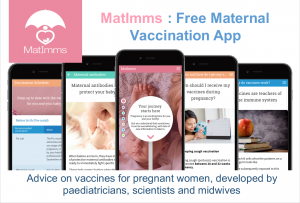
MatImmsPregnancy. For millions of women and their partners, discovering that they are expecting a baby is a very exciting time. However, it can also be a quite stressful time; suddenly there are lots of things to think about. There’s the fun stuff – wondering whether you are having a boy or a girl, thinking about baby names and buying first items of tiny baby clothes. Then there’s the more serious stuff- thinking about a birth plan, and suddenly having to attend several doctor and hospital appointments. One other thing for expectant parents to think about is whether they get vaccinated against specific infections whilst pregnant – this is called maternal immunisation.

This week, we celebrate European Immunisation week with the slogan of “Vaccines work- at all ages”. Pregnant women are a group that might not be on everyone’s radar for vaccinations, which we usually associate with children, right? However, maternal immunisation is a really clever way of enhancing what mother nature already does anyway: passing protective antibody from the mum to her unborn baby across the placenta. Therefore, giving certain vaccines in pregnancy will boost protective antibody in both mum and baby, therefore not only protecting the mothers from the infection, but their child in their first weeks of life.

Maternal immunisation has been a huge success story – initially in countries in the world where a lot of babies used to die from tetanus infection – and now also in Europe. The two most widely used vaccines in pregnant women in Europe protect against influenza (flu) and pertussis (whooping cough). The whooping cough vaccine was introduced in several countries following large-scale outbreaks of the disease. Whooping cough is extremely serious in young infants, and in the UK alone it caused the deaths of 27 babies between 2012 and 2015. The response by public health authorities was decisive; vaccinating mums could help protect these vulnerable children. Following the rollout of maternal pertussis vaccination, large studies have shown that it is safe, and extremely effective at preventing whooping cough in young infants.

But we still have some way to go. Studies in the UK show that despite overall maternal vaccination coverage continuing to rise, it’s still only reaching an average of 60% of the women who should have it. As part of our research at Imperial College London, funded by the NIHR Imperial BRC, we have held detailed interviews with pregnant women to seek their opinions on maternal immunisation and to find out why some chose to decline vaccination whilst pregnant. Their views were diverse, but one key thing we realised that we as researchers could address, was their desire for more information. As a result, we designed an app to fill this need- MatImms.

Developed by a team of scientists, clinicians and midwives, the MatImms app provides reliable information to expectant parents. It includes information about the immune system and how vaccines work, written in a clear and understandable way. It also provides detailed information on the current vaccines available to pregnant women, including how and when women can receive these vaccines. Finally, the app has a personalisable vaccination calendar, based on the woman’s due date, which provides reminders. Currently focused on the UK setting, we hope in the future to extend the app to include country-specific information to cover the rest of Europe.

In line with this year’s motto for European Immunisation week, we know that vaccines in pregnancy work and many mums are already stepping up to help protect their unborn babies from life-threatening infections; now we want to make sure that our research helps and supports as many mums as possible in this decision.

The MatImms app is freely available for iPhones and Android in iTunes and Google Play.

Combining diverse expertise – Imperial College Network of Excellence in Malaria

By Dr Aubrey Cunnington, Clinical Senior Lecturer in Paediatric Infectious Diseases and Dr Jake BaumReader in Parasite Cell Biology, Faculty of Natural SciencesDepartment of Life Sciences, Imperial College London 

WHO/S. Hollyman

World Malaria Day is a good time to reflect on successes in the fight against malaria and the enormous challenges that still lie ahead. Malaria is a mosquito-transmitted parasitic disease, which causes illness ranging from severe flu-like symptoms to coma and death. Those at greatest risk are small children and pregnant women. It is an ancient enemy of mankind, and has exerted a powerful influence on our evolution. Malaria is a cunning foe, the parasites stay one step ahead of our immune systems allowing repeated infections to occur and they have a great capacity to develop resistance to antimalarial drugs.

(more…)

Malaria in 2017 – “It is too soon to be complacent”

By Professor Kathryn MaitlandProfessor of Tropical Paediatric Infectious Diseases, Director of Centre for African Research and Engagement, Imperial College London 

MosquitoApproximately 1200 African children are estimated to die from malaria every day, accounting for the vast majority of the global deaths from this disease. Over the past decade there has been an unprecedented increase in funding for malaria-control activities and vaccine development – the two major tools in ‘Roll back Malaria’ prevention and elimination programme. This has resulted in major scaling-up in the distribution of bed nets treated with long-lasting insecticides and public-private funding for late phase multi-site trials of the most promising anti-malaria vaccine candidate developed to date (RTS,S).

(more…)

SMILE – a smart vaccine cooling system for the last-mile journey in developing countries

By Kitty Liao and Abellona U of Ideabatic, IGHI’s 2017 Student Challenges Competition winners

IdeabaticEach year, there are two to three million children who die of a vaccine-preventable disease and there are 19.4 million who are unable to receive basic immunisation. One of the main reasons behind these figures is that the carrier boxes currently used to carry vaccines during the last miles of the delivery journey are incapable of sustaining the vaccines at the required temperature range for the entire duration of the journey. This is an urgent global health issue and Ideabatic is developing a solution called SMILE— a smart last-mile cooling and delivery system to address these problems. We presented Ideabatic at the IGHI’s Student Challenges Competition in March this year and won the first prize.

(more…)