My move from paediatric intensive care nursing to research nursing was a natural and exciting one. Both roles require excellent communication skills, whether that’s talking to patients and their families, or members of the multidisciplinary team.
IGHI is home to a team of staff who are skilled and passionate about their roles. Our talented people are the reason we’re able to tackle some of the most pressing global health challenges through cutting-edge innovation.
Having a background in economics, I have always cared about improving resource allocation, accountability and making a positive impact in policymaking. Working in health economics helps me to fulfil these goals and improve decision-making in health policy from different standpoints. (more…)
IGHI is home to a team of staff who are skilled and passionate about their roles. Our talented people are the reason we’re able to tackle some of the most pressing global health challenges through cutting-edge innovation.
At IGHI’s NIHR Imperial Patient Safety Translational Research Centre, I lead research projects relating to the role that patients and carers can play in making sure medicines are used safely.
IGHI is home to a team of staff who are skilled and passionate about their roles. Our talented people are the reason we’re able to tackle some of the most pressing global health challenges through cutting-edge innovation.
I started my research on wearable sensors when I was appointed as a researcher in a UK Trade & Investment (now Innovate UK) funded project, while I was working on my PhD on a completely different topic.
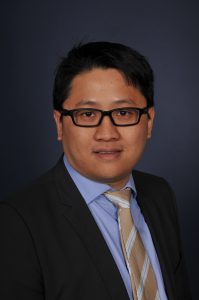
When I first started working on sensor research, the concept of wireless sensor networks had just been introduced. I was one of the first few researchers who started the development of body-worn sensors for healthcare and wellbeing applications. Being one of the pioneers in this emerging field, I have developed a number of novel sensing platforms, and some have been widely used in the research community.
In wearable sensing research, we often have to start from scratch. We build our own sensing hardware, compose the embedded software, design the networking infrastructure, and develop the data analysis algorithms, as well as conducting the clinical validation studies. Basically, we have to start from generating the new ideas, turning the ideas into working prototypes, and then carry out the studies to evaluate the technologies’ potential benefits to patients. Although it is very challenging, I have learnt and gained invaluable experience in multi-disciplinary research. Apart from addressing healthcare challenges in the UK, our work has been extended to address some global health challenges.
Currently, I am leading a Bill & Melinda Gates Foundation funded project with a team of researchers from the UK and US to develop wearable and AI technologies to enable accurate assessment of dietary intake. The project aims to develop the technology to support large-scale nutritional studies, in particular assessing family nutritional intakes in low- and middle-income countries.
We plan to deploy and trial our technologies in rural and urban households in African countries. It is a very ambitious and challenging project, but at the same time,
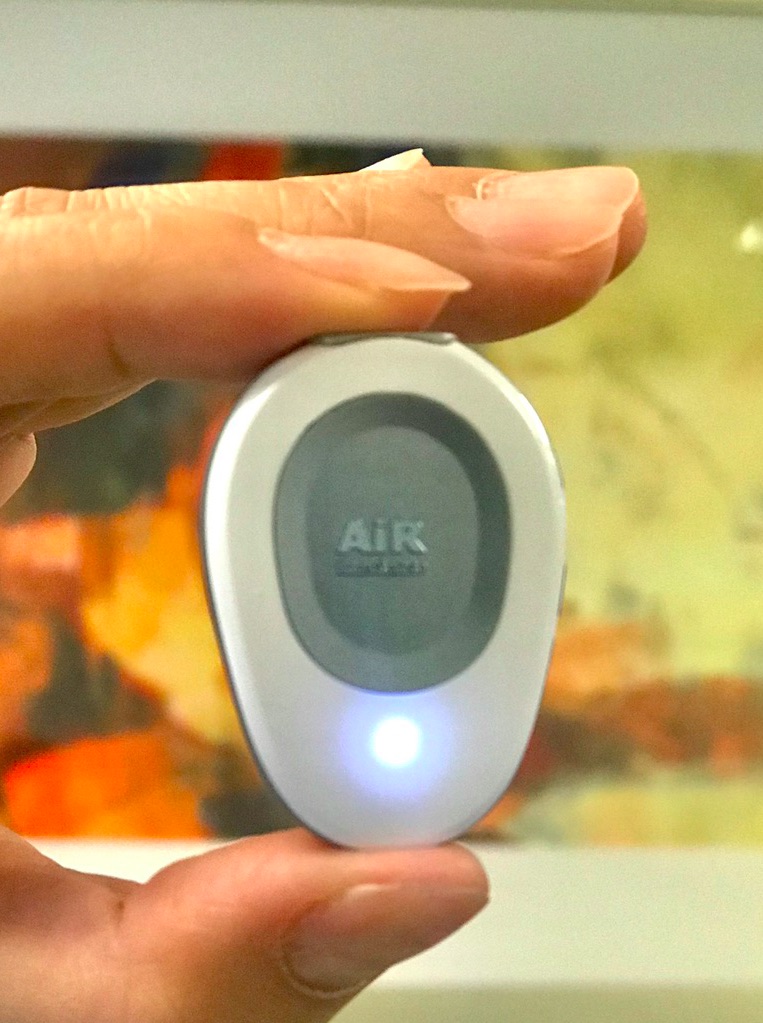
One of the sensors Dr Lo has been working with
it has given us an opportunity to develop technologies which could potentially transform the field of dietary intake analysis.
While tackling the challenges in conducting field studies in Africa, my research group is also working closely with a research partner in Thailand. This project is deploying and testing our low-cost wearable sensors for fall preventions in local hospitals and residential care homes. Apart from healthcare applications, I have also explored the applications of sensing technologies for elite sport training and other applications.
With the advances in 5G mobile networks and Internet of Things (IoT) technologies, we anticipated that sensors will be widely used in supporting the digital transformation of our society. In particular with the current COVID-19 crisis, pervasive and low-cost sensing technologies could help alleviate the pressure on our healthcare services while providing quality care remotely.
As I started my research in this new field at its infancy, it has been a very exciting journey. It has given me opportunities to investigate novel technologies to tackle major healthcare challenges. The most rewarding part of my work is seeing our technologies being deployed and used to help patients.
In the midst of a global pandemic, our people are continuing their endeavour to improve health and care. In this new series, we’re speaking to our IGHI community to find out how they’re adapting to working life amid coronavirus, and the unique opportunities and challenges this has presented them. (more…)
IGHI is home to a team of staff who are skilled and passionate about their roles. Our talented people are the reason we’re able to tackle some of the most pressing global health challenges through cutting-edge innovation.
 My move from paediatric intensive care nursing to research nursing was a natural and exciting one. Both roles require excellent communication skills, whether that’s talking to patients and their families, or members of the multidisciplinary team.
 IGHI is home to a team of staff who are skilled and passionate about their roles. Our talented people are the reason we’re able to tackle some of the most pressing global health challenges through cutting-edge innovation.
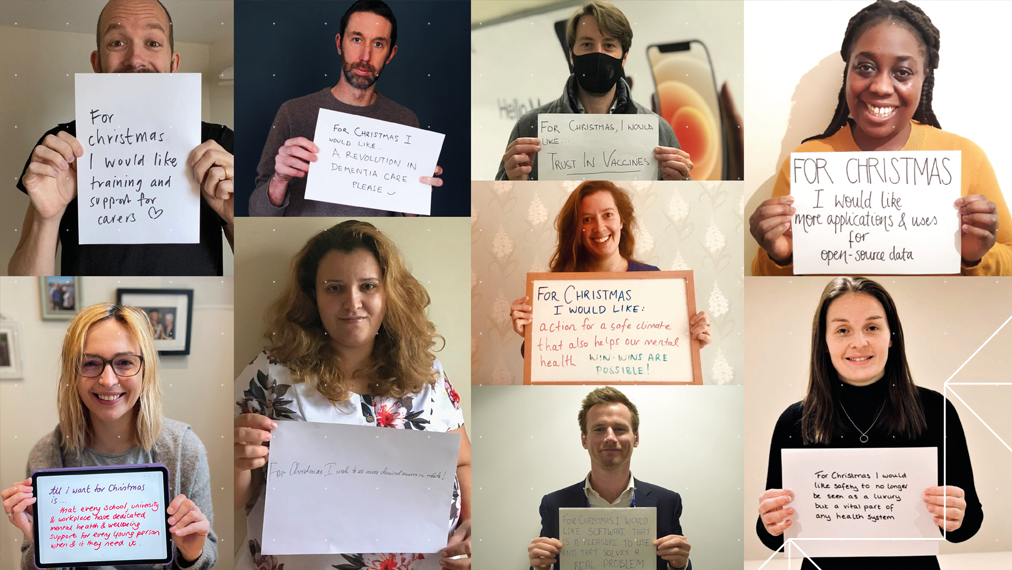 As we approach Christmas and the end of a challenging year, it’s a time to reflect on our progress and the changes we’d like to see.
 By
By 
 By
By 
 By
By