Category: IGHI people

Embracing change – My journey of self-discovery as the Julia Anderson Programme Operations Trainee

In our blog series, we present the captivating stories of the fourth cohort of Julia Anderson trainees. As an impactful initiative at the Institute of Global Health Innovation (IGHI), the Julia Anderson Training Programme (JATP) provides people with little or no prior work experience with paid work experience.

For the first blog post of this series, we will share Rao’s story as the Programme Operations Trainee at IGHI, whose journey is about self-discovery and growth, transforming uncertainties into opportunities.


Rao Fu


About me: A Positive Lover of Life

I’m Rao, a non-typical Virgo with an ENFJ MBTI personality. Coming from Shijiazhuang, a vibrant city in Northern China known by its English nickname of ‘Rock Hometown,’ I’ve been lucky to grow up in a warm family with lots of support and love. My parents, who run two kindergartens catering to ages 3-7 in our hometown, have been my pillars of strength throughout my life. Despite their busy schedules, they never missed a single moment of my growth and always embraced positive parenting to encourage me to pursue my aspirations. The soulful melodies of Flamenco Guitar are my favourite, inspired by my dear dad who is crazy about flamenco. With my camera in hand, I love capturing fleeting moments and sharing my unique perspective with the world. Additionally, making deep connections with diverse people is also something I enjoy. As an active listener, I am inspired by others and love learning different perspectives.

Rao (right) with her mum (middle) and little sister (left), at Beijing Capital International Airport, China, August 2021

My Background as a Former Educator

I studied Preschool Education for my undergraduate degree and achieved a teaching qualification as an Early Years Teacher in China. With a longing for engaging with diverse cultures and wanting to study in the UK, I took the leap in 2019 to study for a Master’s degree in Educational Leadership and Policy at the University of Bristol. After a gap year in China, I flew back to the UK in the summer of 2021 to study the PGCE Primary Programme at UCL and explore the teacher training journey in the UK.

When my other classmates were busy submitting applications and preparing countless interviews to get into teaching, I made a surprising decision – not to be a primary teacher. Well, surprising to some, but clear to me: I was still exploring my other strong interests in other areas to better understand myself and wasn’t prepared to start a long-term career path as a teacher. So, how did I end up as Julia Anderson Programme Operations Trainee at IGHI?

My Application Journey towards the Julia Anderson Training Programme

Having noticed the Julia Anderson Training Programme Operations Trainee opportunity advertised on my university’s career website, I started researching the programme in more detail. I spent many hours looking through the website of IGHI and the JATP and decided that I wanted to be a part of the programme.

As an international graduate with little experience in the UK’s job market, I have gone through difficulties and setbacks in finding a job in the past year. Unlike other graduate schemes, not only does the JATP have a more inclusive, equitable and accessible recruiting system, they also have a strong commitment to supporting individuals in their early career development. For example, using an anonymous application form with three questions instead of uploading a CV helps to remove any potential bias. They also organise informative webinars for prospective applicants and shortlisted candidates. The recruitment team of JATP is also very helpful during the application process. If I had any questions, they always got back to me with helpful answers and advice.

You might be wondering, what attracted me to apply specifically for the Programme Operations role, since it’s not directly related to my studies. You might have guessed somehow – the first reason is the versatility of the role. As a recent international graduate without any extensive experience outside of teaching and education, I knew a career change wouldn’t be easy. At interviews, I was always asked “Why do you want to change careers?” And the only answer I could come up with was “I am not sure…”, so I knew I had to find a work experience that would allow me to engage in various tasks and expand my skillset.

“Perhaps it is only a small initiative for some, however, for a graduate who is struggling to get a first work experience in the UK, it has reignited my passion for the future, bringing me hope, courage and confidence to continue the pursuit of my aspirations.” — Rao


At the same time, I was also eager to kickstart my future in the UK and saw this opportunity as the perfect bridge to help me transition into new career paths. The trainee role would bring me hands-on experience and equip me with a wide range of skills in my interested areas (such as working in an office setting). More importantly, by working with such a multi-disciplinary team with professionals from diverse backgrounds, I could build and develop my networking connections, which would be a very valuable experience for me.

For most people, preparing the application and interview for their dream job is a nerve-wrecking process, and I feel the same. At the beginning, I didn’t put too many expectations on acing this role; instead, I spent my time trying to complete every task to the best of my ability. I focused on the process rather than the result. Therefore, when I received the call to offer me the role, I was completely surprised and couldn’t believe that I was going to embark on this journey.

Thriving in a Dynamic Role

As the Operations Trainee, there are a variety of tasks I will work on during my time at IGHI, and the blog post you are reading at the moment is one of them – as I am planning, writing and promoting a blog series for the JATP myself! In the following weeks, I will mainly be focusing on marketing the JATP, helping to recruit the next cohort and engaging in lots of other tasks related to the programme. I enjoy the work as every day is different. More importantly, I feel very lucky to have an incredibly supportive line manager, Sophie, who cares for me and is always there to offer help. Also, meeting and working with the other two trainees, Beatrice and CJ, has added much joy to my daily life. Overall, every colleague I meet and work with at IGHI has made my day.

I feel very lucky and grateful that I came across the Julia Anderson Training Programme at one of the most uncertain stages of my life. Perhaps it is only a small initiative for some, however, for a graduate who is struggling to get a first work experience in the UK, it has reignited my passion for the future, bringing me hope, courage and confidence to continue the pursuit of my aspirations.

Rao (the right) with the other two Julia Anderson Trainees of the fourth cohort, Beatrice (the left) and CJ (the middle left), as well as her line manager, Sophie (the middle right)

Looking forwards

I have been asked many times why I decided to change career direction after having studied education for many years. On top of that, I often get asked what my future career aspirations are. Truth be told… I can’t give a straight answer and it is something I am lucky enough to explore as part of the training programme. I have many interests, and this role gives me the opportunity to develop these further.

When I was 18, standing at the crossroad of my life for the first time and thinking about which subject I was going to learn at university, I was unsure about my next step. Now, in my mid-twenties, I am at another turning point in my life. I have realised that a brilliant career path is not the destination, but a life-long journey where I can continuously improve myself. It’s all about ourselves – what kind of person do we want to be in the future and to achieve it, how can we get there?


This is the first of an exciting blog series where we’ll be sharing the unique stories of other Julia Anderson Programme trainees. Next week, get ready to be inspired by Beatrice’s extraordinary journey towards becoming the Julia Anderson Helix Centre Trainee. Stay tuned for more captivating stories as the series continues! 

Find out more about the Julia Anderson Training Programme (JATP).


Turning up: increasing cervical cancer screening uptake

woman sitting next to health staff

How do you remember your health appointments? Do you set a reminder on your phone, or wait for a health care provider to send a text? When invited for cancer screening do you book right away, or ignore it or forget as it makes you anxious, or as you have too much else going on?

These are some of the questions Dr Gaby Judah, a psychologist working on behaviour change at the Patient Safety Translational Research Centre at the Institute of Global Health Innovation, considers in her research to encourage people to attend their NHS cancer screening appointments.

(more…)

Making care safer: What’s it like to study our MSc in Patient Safety?

St Mary's Hospital where our MSc Patient Safety team are based

Last year, our Institute launched a new fully online MSc Patient Safety Programme. Developed in partnership with Bayer Pharmaceuticals, the course aims to develop global leaders and changemakers in patient safety who can catalyse improvements and innovation in healthcare practice across the globe. As we open applications for its second year, we’re delighted to have a student from our first cohort, Charlotte Parsley, share her experience of the course with us.

“I have a clinical background in midwifery, specifically in patient safety and clinical governance. I chose to further my education with Imperial due to my strong interest in patient safety and Imperial’s academic reputation.”

(more…)

Breaking down barriers to access academia

Person writing on paper

Last year, we proudly launched our Julia Anderson Training Programme, a paid internship scheme for people who have little or no work experience, as we know how difficult it can be for people to get that first foot in the door. This programme is the first of its kind at Imperial, giving people the opportunity to boost their skills while working on an impactful programme of work at IGHI. Our first trainees, who you can read about on our website, worked on a range of topics including education, digital health, and data science.

Now open for its second round of applications, Clarissa Gardner, Research Assistant at the Institute Global Health Innovation, who led the creation of the programme, gives her thoughts on why now, more than ever, these placements are needed. 

(more…)

What’s it like to…work in mental health research?

By Dr Lindsay Dewa, Advanced Research Fellow, NIHR Imperial Patient Safety Translational Research Centre, IGHI

I have been aware of mental health from an early age. I just didn’t know it was called that at the time! I remember feeling deeply about things and wanting to make sure everyone was okay if they looked sad or down. It was then only natural that I leaned towards getting a degree in psychology – the science of the mind and behaviour. I then completed my MSc in research methods and forensic psychology. This naturally led me to embarking on a PhD studying sleep and mental health in prison populations. I couldn’t wait to get started!

(more…)

One year on – how our researchers have responded to the pandemic

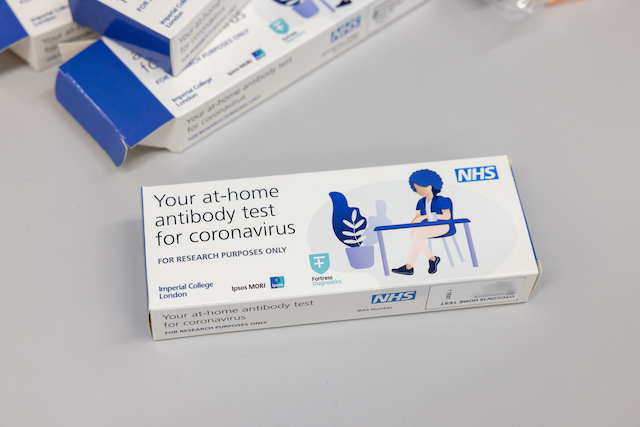
A COVID-19 antibody testing stick

“We’re in this together.” One year ago, on 11th March 2020, the World Health Organization declared COVID-19 a global pandemic.

Back then, little over 100,000 cases had been reported globally. Today that number is 1,000 times greater and growing ceaselessly.

With a barely known virus rippling across the world, so too did fear and uncertainty spread as the WHO Director-General addressed all people and nations to make the declaration. Shifting the focus from COVID-19 to people and unity, Dr Tedros also sparked glimmers of optimism by emphasising that innovation and learning would be integral to saving lives and minimising the impact of the pandemic.

Innovation is the beating heart of IGHI, and we’re proud of our community that has joined this long and winding path of discovery in many different ways. A year on, our people reflect on their COVID-19 response journeys and impart the lessons they’ve learned along the way.

Read their stories below.

Tracking COVID-19 past and present – the REACT study

In April 2020 we launched the biggest and most comprehensive study of home coronavirus testing. With colleagues across the College, Imperial College Healthcare NHS Trust, and Ipsos MORI, the REACT programme has been testing hundreds of thousands of people across England every month to track infections past and present. Alongside understanding how many people are currently infected, REACT is identifying people who are most at risk of infection while offering a range of other important insights, such as antibody responses to vaccination. The programme has also worked closely with members of the public to ensure that the research is guided by people’s needs.

This work has been instrumental in the monitoring of England’s epidemic and offers robust, timely evidence on the evolving situation, which is continuing to shape the government’s response.

“One phrase has dominated Government pronouncements on the roadmap out of lockdown: ‘Data, not dates,’” said Professor Ara Darzi, REACT programme sponsor and co-director of IGHI. “And rightly so. The Covid crisis has caused terrible suffering, wrecking lives and livelihoods. But unless we understand it, we cannot defeat it.

“Among the most pressing questions over the last year have been how many people are currently infected with the virus, and how far has it spread through the population? REACT has been a key element of the effort to answer these questions, providing among the most accurate and up-to-date data on its progression across England.

“By regularly testing 160,000 randomly selected people every month, the study has played a vital role in informing the Government’s decision over when to impose lockdown and when to lift it.

“In doing so it has proved the central importance of accurate data gathering to control this and any future pandemic. We forget this lesson at our peril.”

Man with COVID-19 test
Prof Darzi demonstrating an antibody testing kit

Read more about REACT here.

Designing for dementia – Community Makers

Social distancing measures have helped keep the virus at bay, but not without cost. The loneliness and isolation that come with keeping people apart are negatively impacting people’s wellbeing, particularly so for those who depend on support from others in their everyday lives, such as people with dementia.

In response to this issue, our Helix Centre partnered with collaborators to develop a digital resource to help community groups create online networks as a way to maintain support and connection for people affected by dementia. Called Community Makers, the initiative is also building a toolkit of creative ideas for digital involvement, including how to reach people who may not have access to technology.

“Community Makers was a project that addressed a real-time need we saw in the people we were working with through our dementia research,” said Matt Harrison, senior designer at IGHI’s Helix Centre and project lead at Imperial. “People with dementia were some of the least able to adapt to lockdown measures and keep themselves isolated, yet very vulnerable to COVID.

“Collaborating daily with colleagues I have never met in person, at Alzheimer’s Society and University of Worcester, it has been inspiring to work with community groups across the country and see how they have adapted to using digital tools to support their members, and see how technology has evolved to match the need. However, the need is still not met, and there is much more to be done. The post-COVID world will be made up of the best of in-person and digital connections, and we are now seeking funding to help facilitate that change.”

Read more about Community Makers here.

A graphic representing an online dementia community support group
An illustration of Community Makers

Monitoring people’s changing attitudes and behaviours

Washing our hands regularly, taking public transport, avoiding meeting people outside of our household – many of the things we do affect our risk of COVID-19. Public health measures and campaigns have been designed to encourage people to behave in ways that reduce this risk, but how well are people sticking to them? And how are people’s attitudes in relation to the crisis changing over time?

Launched in March 2020 with YouGov, our ongoing COVID-19 health behaviour study is the largest of its kind, surveying thousands of people across the globe every month – half a million in total to date – to understand how citizens are responding to the pandemic. By making the findings freely available, and collaborating with a range of partners, our work is enabling decision-makers to tailor their response based on evidence.

“The stories that emerged, their common threads and their remarkable differences have helped many scientists, public health authorities, members of the press, government leaders and the public to come to grips with many of the driving forces behind the spread of COVID-19,” said Sarah P Jones, project co-creator and doctoral researcher at IGHI.

“When I look back across the year I’m struck by not the divisions sown between us, but by the overwhelming cooperation the world has generated.

“At the beginning of the pandemic I saw every new announcement as a rule, a constraint or a liberty taken away.

“But starting from the very first time YouGov returned our global survey results, I realised something incredible was happening in the world.

“Every hand washed, every mask worn, every metre of distance we placed between ourselves and others have been a gesture towards each other, a signal of respecting one another’s safety.

“I personally cannot wait to get back to hugging, to hearing stories in person and to caring for those I love who are still far away.

“But as we emerge from this cocoon the question on many peoples’ minds should not be “How can we get back to normal?” but rather “Is there anything we cannot accomplish together?

Find out more about the behaviour tracker here.

Understanding the impact of the COVID-driven digital shift in primary care

Digital technologies have been poised to transform the delivery of health care for some time. When the pandemic hit, their promise was quickly put to the test as health systems were forced to shift much of their care from in-person to remote delivery.

Switching from face-to-face consultations to phone calls and video meetings has enabled services to continue while keeping both patients and healthcare staff safe. But what has been the impact for patients and professionals? Our international InSIGHT study has been working with global collaborators to explore this in primary care, using a survey to gather the perspectives of thousands of GPs across 20 countries.

“We were pleased to hear that GPs identified a range of benefits, including reducing COVID-19 transmission risks, guaranteeing access and continuity of care, greater efficiency, faster access to care, and improved convenience for patients,” said study lead Dr Ana Luisa Neves, Advanced Research Fellow and Associate Director of our NIHR Imperial Patient Safety Translational Research Centre.

“We also learnt about the main challenges of using remote care, faced by both patients and doctors – digital exclusion from lacking access to technology, clinical uncertainty, potential delays in diagnosis and treatment, and unsuitability for certain types of consultations.

“The work also highlighted other challenges such as the lack of formal guidance, higher workloads, and technical difficulties. Unsurprisingly, digital exclusion and the potential to entrench existing health inequities were among the major concerns of the participants.

“We believe that listening to the GPs’ experience during the pandemic is especially valuable to understand how digital remote care can be safely delivered in the future. We hope we can learn together from this massive real-life experiment and use this opportunity to take the best technology has to offer and change primary care for the better.”

Find out more about InSIGHT here.