Month: October 2019

Year 1 PhD student ESA rehearsal & social

With the help of funding from the Graduate School, we put on a seminar and social event for first year PhD students based at the St Mary’s campus. Given that most first year PhD students have their early stage assessments due in June and July, we wanted to create an event where we could share our research and improve our presentation skills in a relaxed and friendly environment. Additionally, we hoped that the event would help us get to know each other and to develop a supportive network of peers throughout our PhDs.

The first part of the event started in the afternoon and consisted of a seminar hosted by Professor Wendy Barclay. All first year students and their supervisors were invited to attend, resulting in a small and friendly group of roughly 20 people. Each student gave a 10-minute talk followed by 5 minutes of questions. Topics ranging from Bioinformatics, diagnostic tools, mechanisms of viral infection and vaccines were covered, stimulating some interesting questions and discussions. Understandably, we were all nervous, however the talks were all fantastic and we found it a very positive experience. It helped everyone to gain confidence in their presenting abilities, which will undoubtedly help our ESAs.

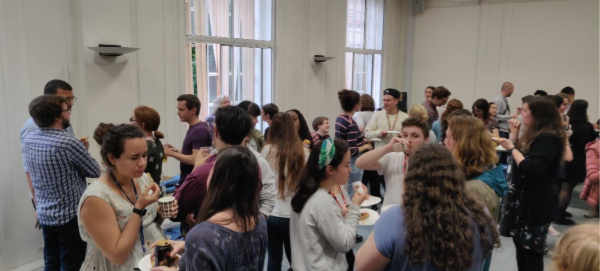
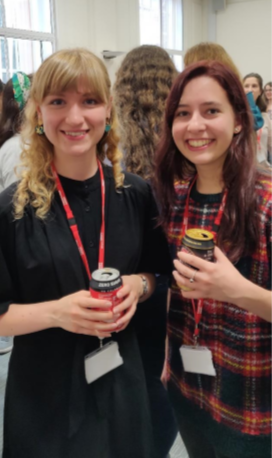
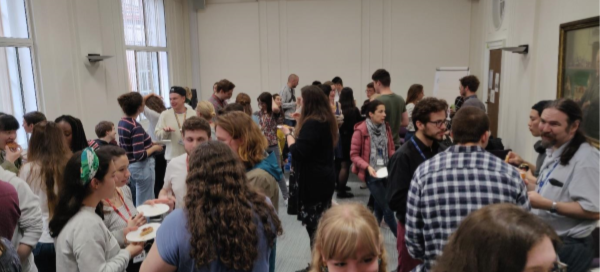
The afternoon seminar was followed by a social event in the evening to which all staff and postgraduates at the campus were invited. The Graduate School funding helped to buy plenty of pizza from Dominos and a selection of drinks and nibbles, which went down well with everyone attending. Everybody mixed, met new people, and chatted around food and drinks; it was an excellent opportunity to meet other people who work within the building, which doesn’t happen often at St Mary’s.

Overall, the event was a big success. As first year PhD students, this was the first time we had all come together and properly talked to the people we had previously just occasionally passed by around the building. The presentations were a great opportunity to share our achievements so far and get a feel for our upcoming ESAs. It is also reassuring to know that we now have a base upon which to build friendships and the supportive relationships that will help us through the PhD experience together. Once the nerves of the presentations were over, it was great to relax and chat over pizza and beer. We are also glad that we extended the social event to all people at St Mary’s: the network of high-security corridors make it difficult to mix on a daily basis, and events like this are a great way to build collaborative relationships between the different sections and groups here.

Thanks to the Graduate School for providing the funding to make such an event possible.

Also, thanks to Wendy Barclay for coming up with the idea for the event and Magda Homa for helping with the organisation.
Summer Derby Day Party

There are many pitfalls that must be navigated as you work towards earning a PhD: one of the biggest is isolation. By its very nature, a PhD requires you to be researching something new and unique and when you’re at your desk trying to work out why the data looks weird, because it always looks weird, it can be easy to forget you’re not alone. That’s why events like the PhD Summer Party are so important. Thanks to the generosity of the Graduate School and the Bioengineering Department, every year, we’re afforded the opportunity to relax, make new friends outside of the lab, and live the student dream of free food and drink. This year was no different.

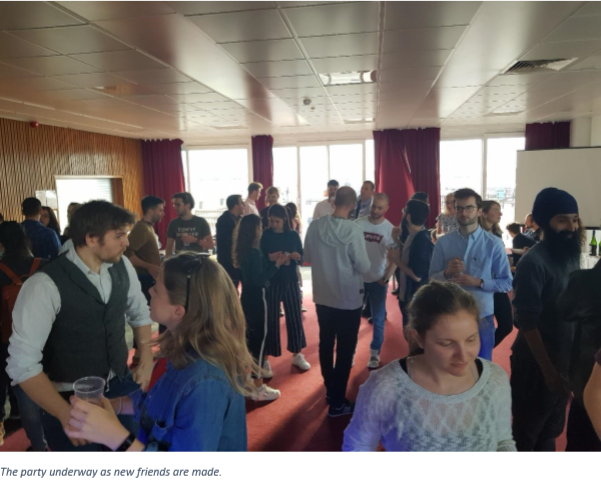
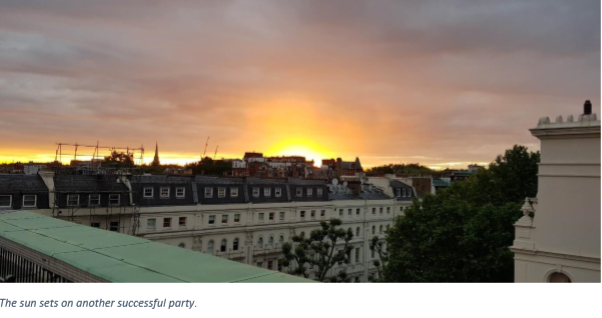
After a solid week of rain, the heavens cleared on the last Thursday as if to bless the oncoming merriment of the evening. We’re fortunate in Bioengineering to have very talented staff who have joined together to form the Gastric Band and, with the help of some volunteers, they relocated and set up in on the 8th floor of the Blackett Building complete with terrace. After some, shall we say, efficient preparations, the room was ready for the party to begin promptly at 5:30pm. By 5:45, the food was gone; at least that’s how I remember it. It wasn’t long before the room was full of clusters of people chatting, their plates laden with delicious BBQ all being washed down with a selection of delicious drinks. The warm weather meant we could venture out on to the terrace and look over the city as the sun slowly set over the capital. With everyone fed and watered, the band took centre stage and the party began in earnest.

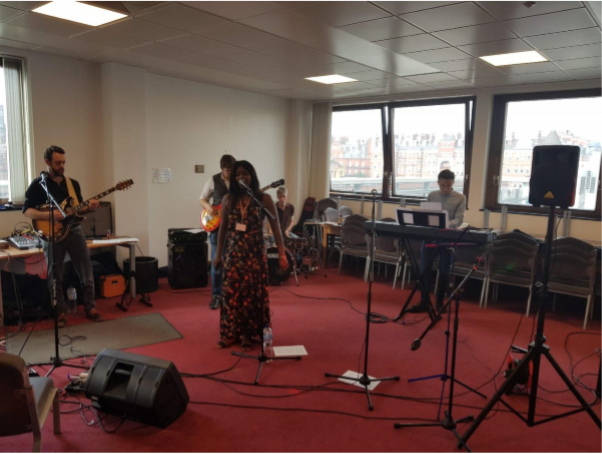
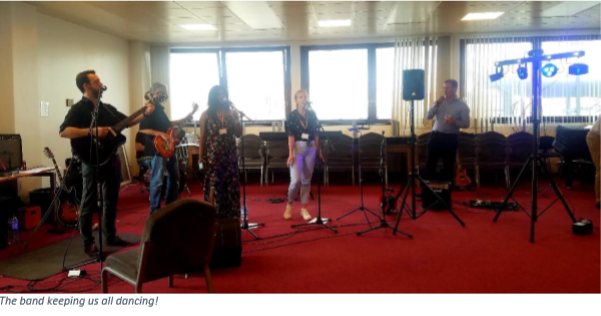
The band astounded with renditions with their covers of rock classics, like “Johnny Be Good”, to pop hits, like Cee-lo Green’s “Forget You”, and everything in between. Though reluctant at first, 6:30pm is a bit early to boogie, it wasn’t long before the dancefloor was established and all manner of shapes were being thrown. Each member of the band shone with spectacular solos but the mellifluous voices of Kemi Aofolaju and Melanie Albright really got people cheering. Even Professor Bull got on the stage and had us bopping along to “Hit the Road Jack”. If you ever get a chance, see the Gastric Band: I guarantee you will not regret it.

9pm came, and with it the end of our booking. The band packed up, the reps and volunteers cleaned up, and my colleagues grabbed their “one for the road” and made their way to the Union Bar to continue the festivities. It would be easy to see the Summer party as just a time to blow off some steam and a waste of money for various departments but I believe it plays a vital role in making the PhD experience just that bit easier and more enjoyable. Whether it’s new friendships that you help you expand your research and build your career or just a friendly face to say hi to by the coffee machine. Every year the party gives us the opportunity to hop over the pitfall of isolation all to the tune of Toto’s “Hold the Line”. If you ask me, that’s worth every penny.

MRC LMS PhD Student Retreat 2019

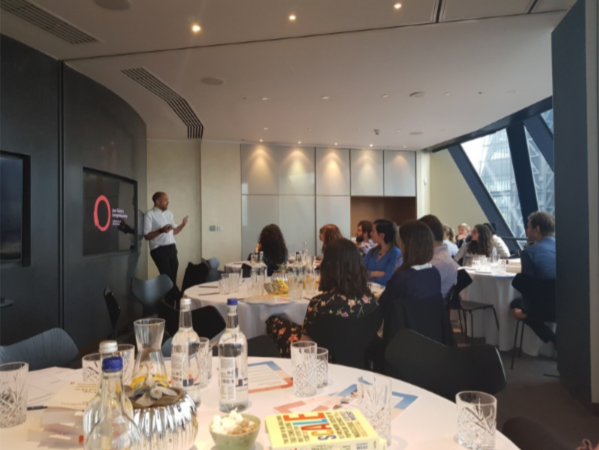
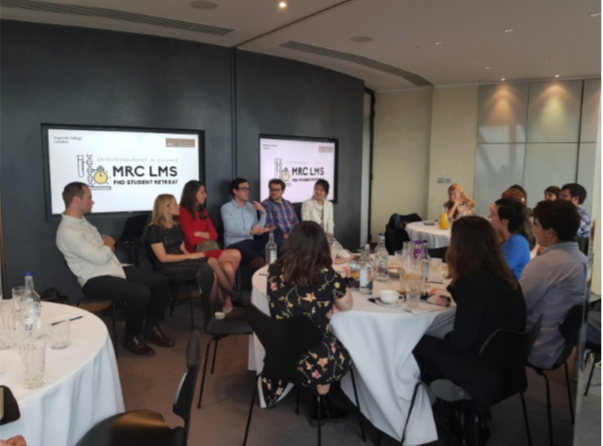
On the morning of Friday June 14, unusually, we found ourselves amidst the Liverpool Street commuters’ rush as we headed into the heart of the financial district for the 2019 LMS PhD Student Retreat. Our destination was the imposing figure of the Gherkin. Going up to just beneath the top of the building, we took a few minutes to marvel at the panoramic views before the retreat’s ‘entrepreneurship’ theme was brought sharply into focus.

“What does it mean to be an entrepreneur?” Ben Mumby-Croft asked, as we began the morning workshop. Ben is director of the Imperial Enterprise Lab, which works to help students at Imperial College London innovate and launch new ideas for the market. Is having ideas enough? Ben explained through the ‘Lean Startup’ approach, that what separates a successful entrepreneur from your ordinary “ideas man” is the need to take initiative with the groundwork and minimising assumptions about your potential customers. Although at the start only a handful of students announced themselves as entrepreneurs, by the end of the pitch training session each table developed a rough business model for an intriguing idea with potential for the market. One of our PhD students, Vas, said about the workshop “Hearing the Lean Startup idea explained by Ben was a great way to formalise and make us aware of the common pitfalls of being a new entrepreneur.”


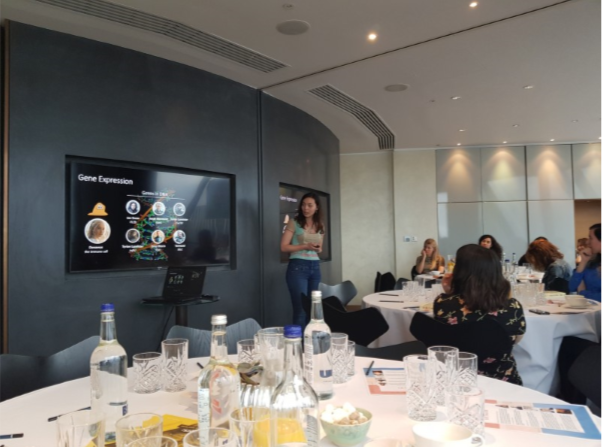
Next was the short talk session, aimed at increasing student collaboration and conversation. Sophie Arthur from the Grants Engagement and Communications (GECo) team discussed the importance of communication and engagement, highlighting the wide-ranging opportunities at the LMS. We also heard from Greening LMS founder Rebeca Fiadeiro (2nd year PhD student), who presented her valuable work increasing sustainability at the LMS. 3rd year PhD students Chiara Prodani and Irene Robles Rebollo ended the session with engaging presentations, deconstructing their research on epigenetic imprinting and genome organisation respectively.


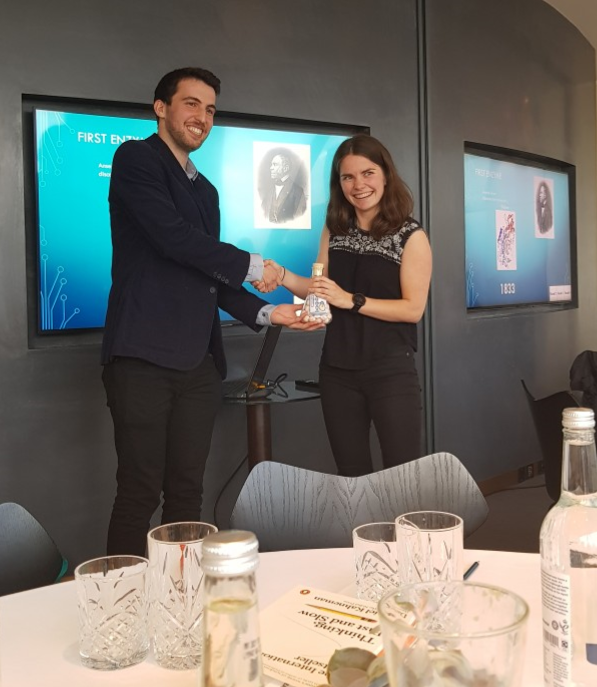
To round out the first half of the day, 2nd year PhD student Eren Akademir hosted the inaugural ‘Whose Year Is It Anyway?’ quiz. Members from each team were asked to give the year of landmark discoveries, distinguishing themselves as scholars of scientific history. It went down to the wire, with a tiebreaker required after five rounds. In the end, team CMoC captained by Helen Paterson emerged victorious.

After lunch, we returned to our theme with a Q&A panel of young science entrepreneurs panel chaired by 1st year PhD student Sijia Yu. John Simpson and Alexander Bond shared their experience going from co-workers at Imperial College London to co-founders of their start-up company Fresh Check. John and Alex were quick to highlight the support that Imperial College provides for prospective entrepreneurs. We also heard from Momoby co founder Andrea Rodriguez-Martinez, and Laura Towart, founder and CEO of My Personal Therapeutics who gave their insight into opportunities for women in the business world. Also present, Co-founder of techspert.io Graham Mills, who led us through his entrepreneurship journey starting at Cambridge and what he does to instill an effective business culture in a large company. A number of other informative answers were given to audience questions relating to funding, time-management and productivity.

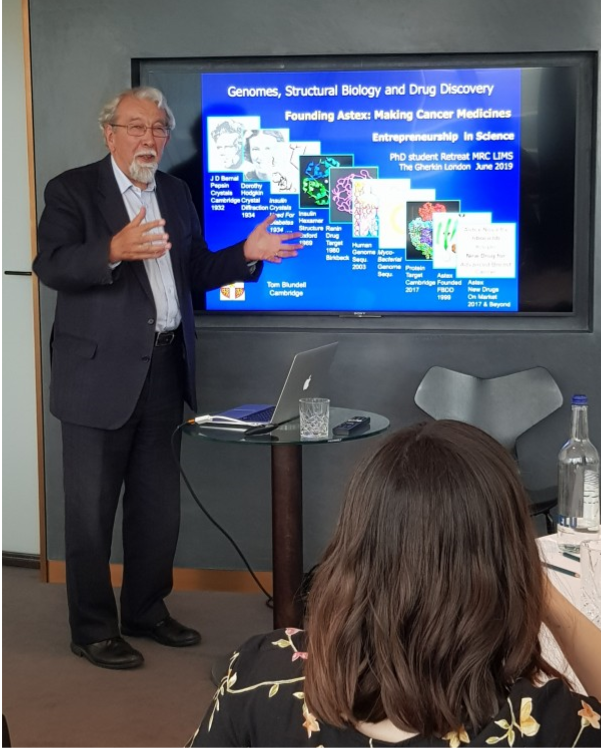
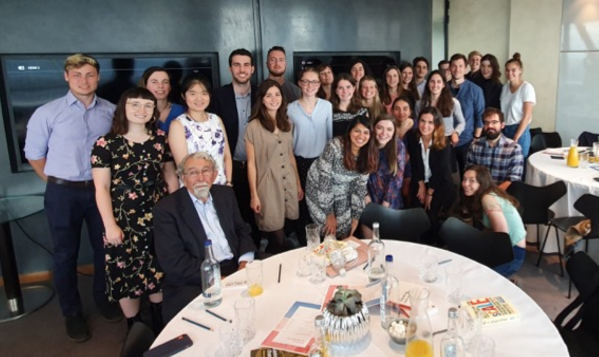
We drew to a close with an enthralling keynote speech delivered by Sir Tom Blundell, Emeritus Professor of Biochemistry at the University of Cambridge. Sir Tom took us steadily through his rollercoaster life in science, politics, business and even music – from discovering the structure of insulin with Dorothy Hodgkin in 1969, to co-founding multi-million pound oncology pharmaceuticals company Astex in 1999 – extracting the important lessons for success along the way.

Thus concluded a triumphant student retreat organised by the tireless LMS PhD Student Committee. We would like to express our sincere gratitude to the Imperial Graduate School and Medical Research Council for the generous funding, without which these events would not be possible.

Strengthening links among Imperial College London Researchers and Alumni interested in the Latin America Region

The 3rd Symposium: Sustainable Development in Latin America, organised by the Latin American Society of Imperial College London (Lat-Imperial), took place on the 20th and 21st of May 2019 at the Skempton Building. This symposium aimed to present Imperial and UK/Europe based research that directly impacts the sustainable development and future of the Latin America (LATAM) Region. Researchers from several nationalities with interest in Latin America presented their work, selected after a rigorous peer-review process, on topics such as the role of natural resources, climate change policy, waste management and innovation, water use and urban planning, energy transition and bioinformatics for a sustainable future of the LATAM Region. The symposium has now been positioned as a forum for scientific and political discussion that enables academics, policy-makers and industry getting together around their common interest in Latin America and its sustainable development.

A significant number of Imperial’s PhD researchers are conducting their research in the LATAM Region. Two third of the publications of Imperial are in collaboration with international institutions around the World. Imperial College London collaborates with Latin America and publications with partners in the region include research in the Andes Mountains, the Galapagos Islands, volcanoes across LATAM, the Amazon region, and the Pacific and Atlantic coasts. Thus, it is paramount to stay connected and show the impact of Imperial researchers’ work to promote potential new collaborations within the LATAM region. With this in mind, the Lat-Imperial launched the 3rd Symposium along with the Latin America Alumni Network of Imperial College London.

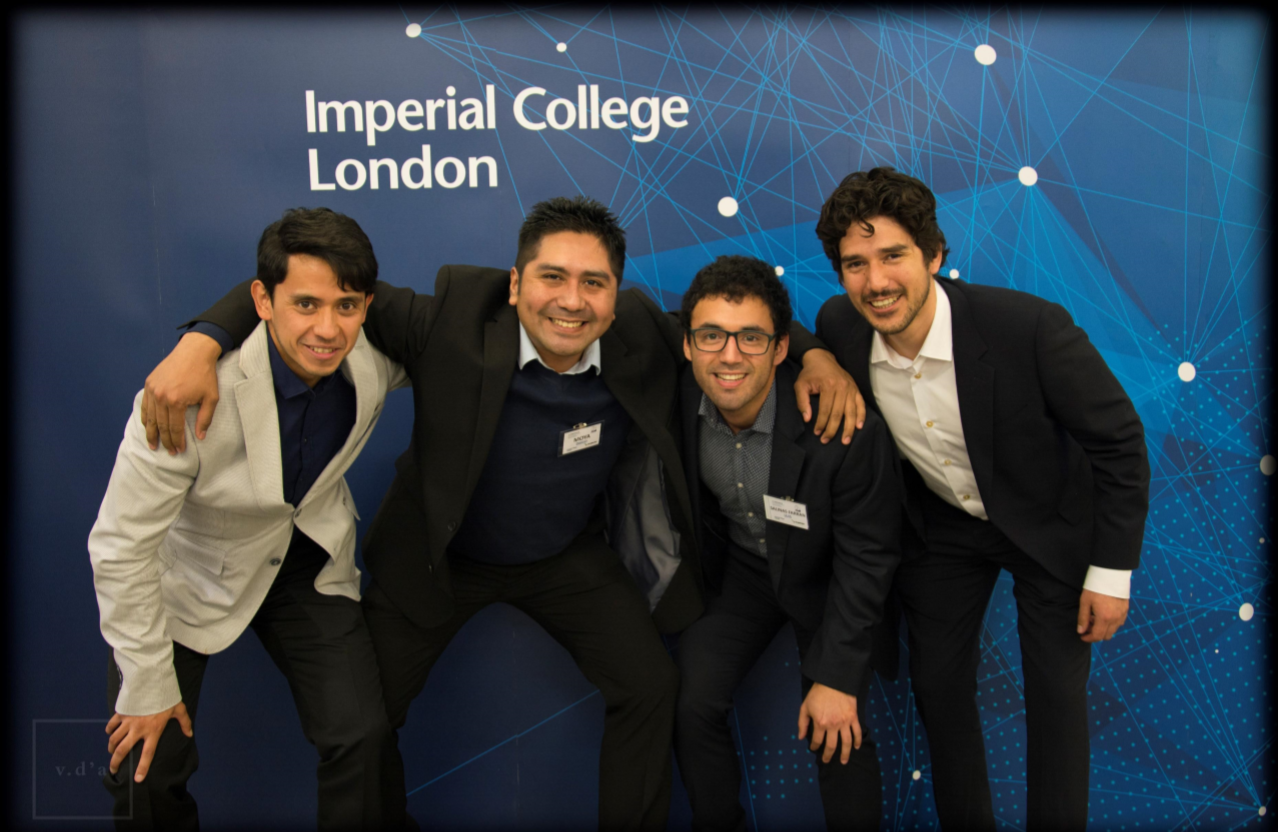
A networking event on the evening of the symposium’s first day was organised to bring together Imperial researchers, students and alumni. Because of this, the symposium was selected for the kick off of the Alumni Regional Group for Latin America including alumni and current PhD researchers. The Director of the Alumni Relations Office, Ms Nicola Pogson, gave a warm welcome, remarking the importance of being connected beyond graduation. Ms Pogson reminded the Alumni not only the benefits of being Imperial Alumni but also mentioned some examples of how Imperial Alumni networks in some regional groups have collaborated towards addressing local challenges and invited the community to join the online platform Plexus.

Dr Camilo A. Mesa, current research associate at the Department of Chemistry, was elected as the first Chair of the Imperial College London Latin American Alumni Network. Camilo said “Consolidating our Network will involve sharing insights and knowledge from that ‘next step’ upon finishing the PhD to getting funding or following an academic career, or discussing job opportunities amongst our distinguished Imperial alumni”.

“Regardless the subject we graduate of, or the topics we are experts in, our network will promote values of unity and collaboration amongst Latin American professionals and researchers carrying on their investigations in Latin America”.

On Monday, the 20th of May 2019, the Latin American Alumni Network of Imperial College London was officially established. Dr Camilo Mesa, PhD in Chemistry graduated in 2019, has been elected Chair of the Alumni Network for the period 2019-2020. The mission of this organisation is to serve as a platform for official interaction among Imperial College Alumni that either are nationals of Latin American countries or have a professional interest in the development of the Latin American region. To this end, the Latin American Alumni Network aims to organise periodical and frequent meetings at Imperial College London and within the countries of its members.

The Latin American Society of Imperial College London acknowledges the support and guidance of the Graduate School and the Alumni Relations.

We also acknowledge all the team, sponsors, embassies, and collaborators that work for the success of the symposium and the networking event:

Ernesto Santibanez Borda, Moises Gomez, Diego Moya, Luis Salinas, Miguel Noya Vargas, Irene Escobar, Denis Fraga, Michelle Arellano, Ana Teresa Vargas Frutos, Denis Martins Fraga, Matias Alejandro Lasen Andrade, Paola Alejandra Saenz Cavazos, David Ricardo Pedrero Bastidas, Jaime Alberto Parra Raad, Diego Mesa, María Verónica Ordoñez, Camilo Mesa, Sara Abad, David Terán, Boris Ochoa-Tocachi, Pablo Carvajal, Paulina Quintanilla; The Graduate School, The Alumni Relations, The Energy Futures Lab, The Institute for Molecular Science and Engineering, The Energy Society – Energy Journal, The Institute for Applied Sustainability Research, The Department of Chemical Engineering, The International Relations Office; The Embassies of Peru, El Salvador, Ecuador, Chile, Mexico, Paraguay, Brazil, Nicaragua, Honduras, Colombia y Argentina.