Month: January 2018

Cross-CDT Fair – Pain Relief for Scientific Computing

Did you ever wonder what most of PhD students at the College have in common? They need to compute to finish their degree. The task can be as simple as a quick data analysis or as complex as creating a new software package. Did you also know that most of the students arrive with a minimal background in computing? A lot of them find themselves in a “sink or swim” situation. After experiencing this ourselves, we decided that we don’t want others to suffer the same fate and make the same mistakes. To bring the issue into the spotlight, we decided to organise a Fair that featured exhibits dedicated to essential computing skills that every student should know before they attempt to “swim”.  
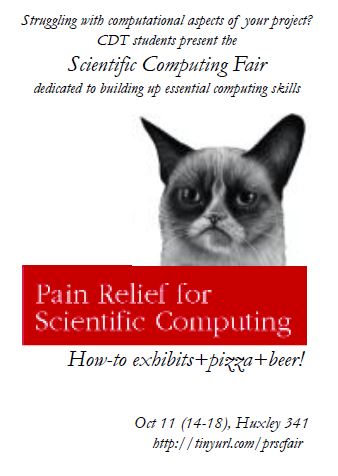
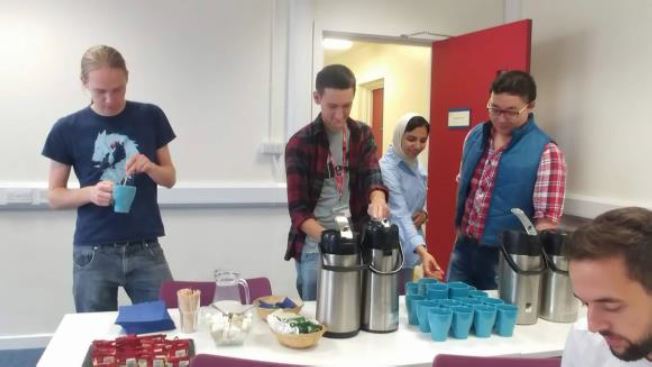
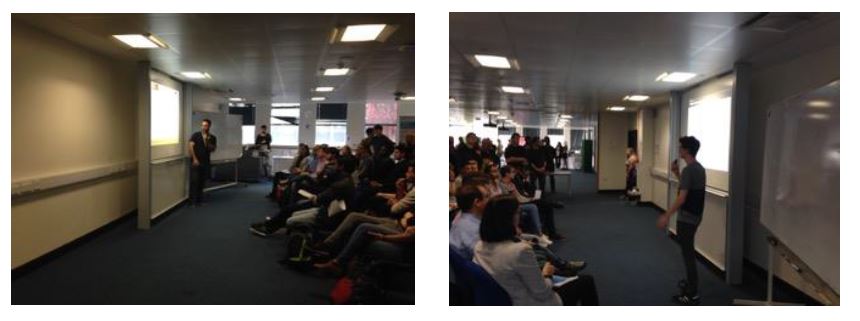
The Fair happened on October 11th, 2017 and it was a success. We had at least 60 visitors – after that we lost count. We invited CDT cohorts as well as PhD students across the College to come, network and pick up useful tips. The event started on a high note, almost everyone showed up right when the door opened. The visitors dispersed around the exhibits and listened to what we had to say. The ones that needed a bit of help with getting enthusiastic got cookies coffee or tea. We had an incredibly busy three hours at the exhibits as well as giving short talks.
After picking up useful computing tips and hints, the audience had a chance to visit a poster session at the Fair. We invited open source software projects from the College to present to the students. Many of these packages can be applied to various types of projects. Who knows, maybe we encouraged future collaborations.

The pizza and beer arrived just in time, one could not keep this pace much longer. The networking part that followed went very smoothly.
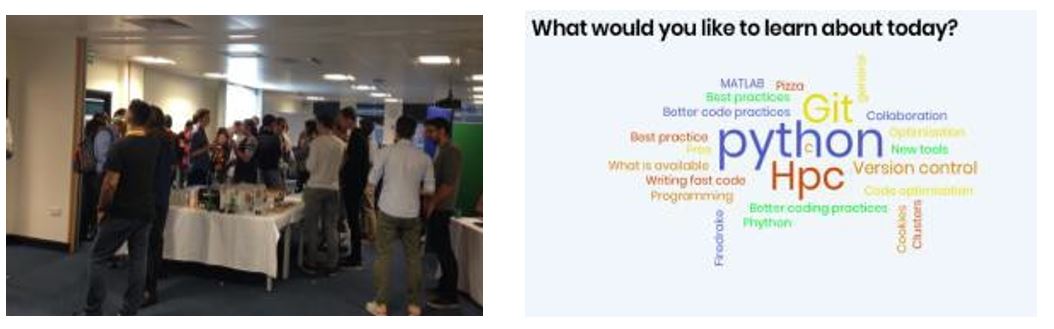
With the Fair out of the way, we intend to continue our effort to educate the cohorts via the Scientific Computing Support Network. There is a good chance that we’ll organise the Fair again. Note to self – keep it simple and order more pizza.

Many thanks to the Graduate School, Platform for Research in Simulation Methods and the Research Computing Service for funding and many thanks to everyone who contributed to the poster session.

Thomas Bendall, MPE
Eduardo Ramos Fernandez, TSM Matthew Garrod, MPE
Thomas Gibson, MPE Michael Haigh, MPE
Hemant Khatri, Math Department Smitha Maretvadakethope, Fluids Josephine Park, MPE
Sergio Perez, Fluids Matthew Taylor, HiPEDS
The Computational Methods Hub
ESE Stress Less Campaign: a resounding success, valuable for all

Abstract
On Thursday 22nd June 2017, Earth Science and Engineering Graduate Society (Grad Soc) begun their Stress Less campaign, made possible by funding received from the Graduate School’s Research Community Fund. A recent Grad Soc survey had highlighted the number of PhD students within the department who felt that work-related stresses had a significant impact on their daily lives. This campaign aimed to foster discussion about such issues and provide activities that introduced coping techniques.

PhD “stress less” lunch
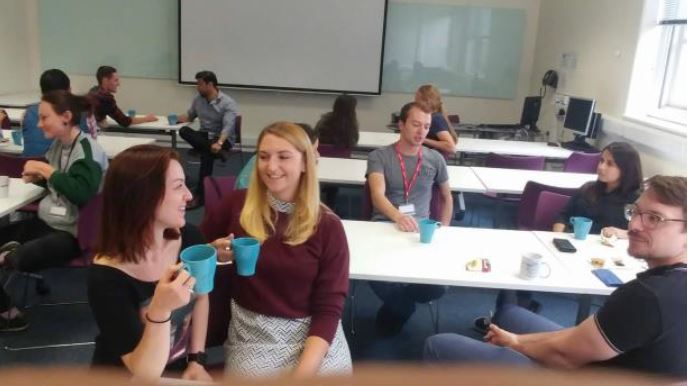
A sandwich lunch was set out informally on picnic blankets and was very well attended, drawing more than 30 PhD students, and providing an opportunity for all to voice concerns relating to any aspect of PhD life. One of the most positive aspects was the number of students present who had not previously attended any Grad Soc event. On the whole the mood was positive but concerns as to finance, demonstrating pay, the tidiness of the department and general organisational issues affecting welfare of students were raised. These issues have now been brought to the attention of staff and the head of department. Lunch also gave time for newer students to integrate into the departmental “social scene”, contributing to a peer support network.

Mindfulness
The mindfulness session though short was enjoyed by attendees. It also gave the opportunity to raise awareness of the regular mindfulness sessions run by the college.

Yoga
Maria provided an excellent introduction to yoga for stress relief. Attendees had varying degrees of experience from complete beginners to experienced yogis. Talking afterwards to those who went, the class was enjoyed and a few people are now considering taking Maria’s regular class at Ethos. A follow up email will go out to students providing details of this.

PhD Coffee
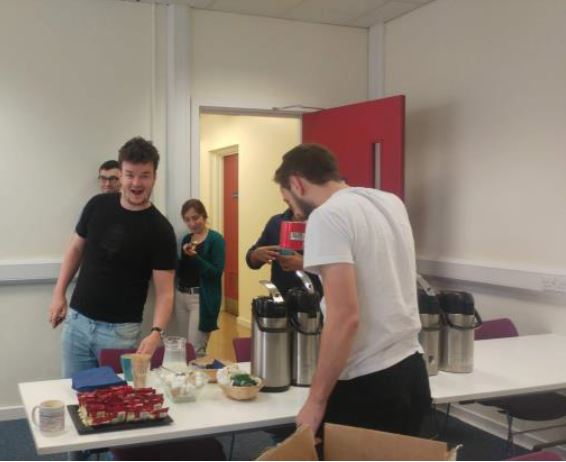
PhD coffee was well attended by around 25 students. Materials for known activities to reduce stress were provided, such as mindfulness adult colouring. It was hoped that by introducing students to these activities some might implement them into their routine as a way to provide stress relief. A comments box was also provided for students to anonymously voice any concerns they were currently having relating to their PhD. Comments were then processed by Grad Soc and referred to the head of department. As we have no common space for PhD students within the department, coffee enabled students a rare chance to talk freely of their concerns.

Massages
All of the massage sessions on the day were booked out, 18 students receiving a 10 minute hand and forearm or neck and shoulder massage each. The feedback from this was extremely positive!

The success of the day is also now to be published in the Departmental Newsletter raising awareness of student welfare and mental health.

Continuation of the Campaign
Within the department, Grad Soc have continued the Stress Less Campaign on a monthly basis by providing an afternoon PhD-only coffee session. During the summer months this has been extremely well attended and enjoyed. As a PhD-only event it provides a safe, friendly environment to voice concerns. We are all realising that stress and difficulties with work-life balance affect many people and there is a more open attitude to discussing this with peers among the PhD Students.

A word of Thanks
Grad Soc would very much like to thank the Graduate School for the funding they provided; without it this campaign would not have happened. Through the discussions facilitated by the Stress Less series, we have seen evidence of the classic statement “a problem shared is a problem halved”. It is refreshing to have a more open attitude to discussing problems that affect so many people, and we hope the mental health of the PhD students will improve as a result of this.