by Daniel Hdidouan, PhD student in the Centre for Environmental Policy
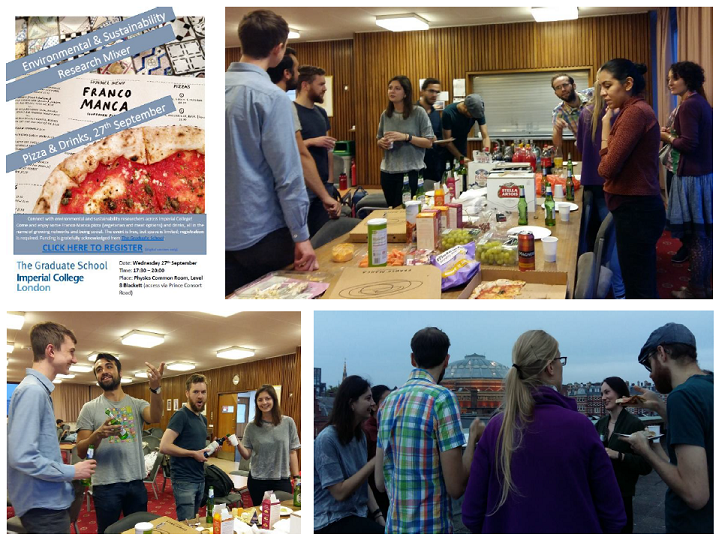
The second annual Environmental and Sustainability Mixer took place on Wednesday 27th of September. The mixer is a cross-departmental initiative, the aim of which is to encourage the postgraduate research student community working in environmental and sustainability research to get to know each other. It was a fantastic event which saw high turnout for the social; students enjoyed pizzas and drinks in the Physics common room on Level 8 of the Blackett Building.
Purpose
The event was devised because students in the past have found it difficult to find informal events for research students to build cross-departmental and cross-College relationships. As such, the event was funded by the Graduate School’s Research Community Fund.
From previous experience shared by the alumni, a College-wide neutral platform (i.e. funded by the Graduate School) with students from other departments was needed to facilitate interaction and foster collaboration at an earlier stage in our careers. A lot of work is done in the environment and sustainability at Imperial but often people don’t realise the wealth of the network until it’s too late.
Numbers
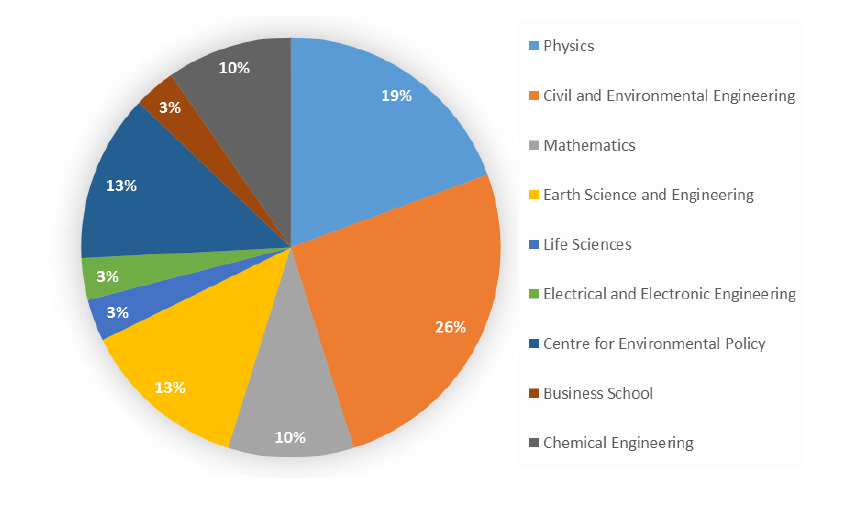
With over 45 registered attendees, and a turnout of 71% (32) we were able to welcome in the new academic year with some familiar and fresh faces to Imperial’s environmental and sustainability research area. The mixer was designed to encourage Imperial’s environmental and sustainability research community to get to know each other and increase awareness of the breadth of research undertaken in this field across all of Imperial’s departments. A total of 9 departments were represented across Imperial’s four faculties, including: the Centre for Environmental Policy, Physics, Mathematics, Business School, Earth Science and Engineering, Public School of Health, and Civil and Environmental Engineering.
Pie chart showing break down of registered attendees’ departments
Outcomes
This cohort building exercise introduced attendees to other departments, topics of research and new friends. We are in contact and are aiming to meet up again in the next few weeks. There is also an initiative to formalise an environmental and sustainability network here at imperial that was further floated at the mixer. We also have some leftovers which we plan to put towards another mixer in the coming weeks! If you would like further information regarding the mixer, or potentially organising your own cohort building activity and would like to learn from our experience, please get in touch: d.hdidouan15@imperial.ac.uk (Daniel Hdidouan).
by Seth Wilson, PhD Student, Mechanical Engineering
After the successful completion of the ICL-TUM Global Fellows’ Programme 2017, entitled Cities of the Future, I was fortunate enough to remain in Munich, Germany for a further three-weeks. During this time, I carried out a short research project within the Lehrstuhl für Nuckleartechnik (Chair for Nuclear Technology) at the Technische Universität München (TUM) under the supervision of Professor Macián-Juan.
Germany has decided to discontinue its use of nuclear energy and will have phased-out its remaining functioning nuclear power plants by the end of 2022. Without wanting to completely abandon nuclear, research within this field has become more general to processes and systems, such as to have a wider range of applications.
During my research internship, I worked with two best-estimate thermal-hydraulics systems codes: TRACE, developed by the Nuclear Regulatory Commission (NRC) in the United States; and ATHLET, developed by the Gesellschaft für Anlagen- und Reaktorsicherheit (GRS), Germany’s central expert organisation in the field of nuclear safety and radioactive waste management.
These computer codes are used to simulate typical pressurised-water (PWR) and boiling-water (BWR) nuclear reactors during normal operation; and more interestingly for the general analysis of abnormal transients and accident situations, in particular the Loss of Coolant Accidents (LOCA). Furthermore, ATHLET couples neutronics and nuclear reactor physics with thermal-hydraulic engineering for a coupled multi-physics analysis.
At the very best, computer codes provide good approximations; it is therefore necessary to quantify and rank any sources of uncertainty that may propagate through into the output. I performed such uncertainty and sensitivity analysis with SUSA, another piece of software developed by the GRS.
I am very grateful to have had this opportunity to collaborate with researchers from further afield. As a result, I now have a better appreciation for my own work at Imperial College. I have increased my network of engineers and researchers, as well as maintained old contacts; I was pleased to discover an old colleague of mine, from my school in Paris, was working on his PhD in the Nuclear Technology department at TUM.
By Firdous Ul Nazir, PhD Student, Electrical Engineering
I got a chance to participate in the ICL-TUM global fellows programme: Cities of the future, thanks to the Imperial Graduate school. This was a week long course involving 51 participants from 7 globally renowned institutions. The first day of the course was mainly aimed at acquainting the participants of the practical challenges and expected transformations in cities of the future which was aptly conveyed through presentations by experts of the field. In the remaining four days we were involved in a lot of group activities which culminated in a collaborative group project from each group. The groups involved students from different universities and diverse disciplines which helped us to improve our communication, team work, idea generation and collaborative skills. During the course of time the efficiency of each group improved drastically as the group supervisors were constantly helping us to overcome our mistakes in the previous tasks. We also had a guided visit to the Munich city which helped us to understand its digital transformation planning.
I completed my three week research visit in renewable and sustainable energy systems group which is under electrical and computer engineering department TUM, thanks to my host supervisor Prof. Thomas Hamacher. I got to know about the research activities in Prof. Hamacher’s group and had a chance to discuss with his students about their upcoming micro-grid lab in the department which helped me to have a better understanding of micro-grids. I was given the freedom to carry out my own PhD research during the research visit. This was a very unique experience and would certainly like to recommend the course to all the future aspirants.
Finally I feel highly grateful for being given this wonderful opportunity to participate in the global fellows workshop and undertake a three week research visit.
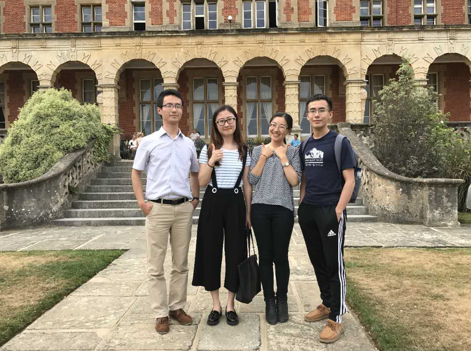
As the Intergovernmental Panel on Climate Change claims, the warming of the climate system is unequivocally supported by scientific evidence. It is a vital task of human beings to work out practical solutions and put them into real effect in this century. This year, the Imperial-Tsinghua Global Fellows Programme, co-organized by Imperial College London and Tsinghua University, focused on climate change and energy, through 5 days of intense communications and collaborations amongst early stage Ph.D. students in multiple disciplines from both universities. As a third year PhD candidate in finance, I was honoured to be part of the programme. It impressed me in three important aspects.
First, highly interactive and inspiring group challenges. We were separated into groups to take part in some well-designed interactive activities. In one, we had a simple collaborative task. It did not take long before all groups figured out an efficient way to achieve it, but suddenly, the coaches made some alterations. We soon started conversations, built up mutual trust and carried on with the task. This challenge put me in deep thought and reminded me of my own experience of joining a new research project two years ago. Such changes had put me under huge pressure but I finally managed to fit into my new surroundings. Positive communications and active adaptations are the keys to successful accommodation in a new research project with new collaborators.
Second, jargon-free academic communications. With the poster fair, we got opportunities to learn about each other’s research while improving our own presentation skills to tell research ideas to a general audience. The students are indeed from a variety of disciplines, from chemistry to electrical engineering to arts and design. I had my doubts at the very beginning over how we should present academic research to someone not in the area. But luckily, the organizers put an emphasis on “no jargon” and everyone followed it. With a finance and economics background, I found little difficulty in understanding presentations about electricity generating systems or ultrasound therapy to cure cancer. Also, I followed the very useful researcher pack provided by the programme to frame a presentation in an academic way: from the question it aims to answer, to the impact it may have, to its methodology and how it is related to climate change.
Third, remarkable collaborative research proposal presentations. For the final presentation on collaborative research, we chose teammates and came up with our own research ideas to offer possible solutions to climate change. In my team, we had one engineer, one policy research expert, one business model analyst and one financial analyst. We set up a research plan to evaluate the economic and political feasibility of substituting coal with natural gas in China’s energy consumption, via a new pipeline system. Shortly after our presentation, on July 12th, the National Development and Reform Commission in China released a report on “medium to long term plan over oil and gas pipeline system”. Although there seems to be not much causality here, we are glad that what we aimed to research into is actually what the government cares about. Other teams’ presentations were also more than great, of which a particularly interesting one was a video game incorporating data simulations about global climate change and providing players with realistic experiences of the catastrophes caused by global warming. I would definitely invest in this game if I were a venture capitalist.
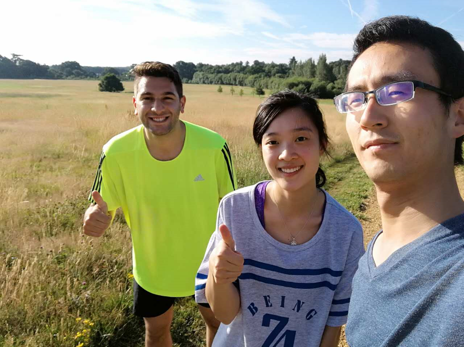
All in all, the 5-day program was a most rewarding experience for me. Besides the training and academic communications, I made quite a few nice friends. I want to offer my special thanks to my teammates. They encouraged me to be bold in expressing my ideas whenever I wanted to shy away. Also I’m grateful for their company every morning when jogging around the most beautiful Easthampstead Park area.
Next July, the Ninth Imperial-Tsinghua Global Fellows Programme will be held in Tsinghua University. Looking forward to seeing you in Beijing, an enjoyable city with rich history, friendly people, tasty food and numerous places of interests to visit.
My name is Holly, I’m a second-year PhD student in the Section of Neonatal Medicine. This July I was fortunate enough to represent Imperial College at the League of European Research Universities (LERU) Doctoral Summer School, held at University of Zurich. LERU is “an association of 21 leading research-intensive universities that share the values of high-quality teaching within an environment of internationally competitive research.” The topic this year was: Citizen Science – nexus between research and public engagement. If you are scratching your heads wondering what citizen science is it can be broadly described as the involvement of non-professional scientists in research. This can range from small-scale projects like bird watching to large-scale international projects like Zooniverse (https://www.zooniverse.org) and due to the rapid boom in technologies, citizen science is becoming available to a much wider audience.
The aims of the LERU Summer School were twofold: to explore the importance of engaging citizens in research and to highlight the ethical, technical and legal issues associated with doing so. Over the week, we examined various definitions of citizen science, designed our own projects and ate a lot of cheese!
Day 1:
I had high hopes of exploring Zurich city centre before going to the LERU Welcome Event …but after my crazy experience on the Piccadilly Line at 2.30am to Heathrow, I successfully managed to sleep away my free hours in the hotel.
After a short, yet incredibly wet walk to the welcome event we were greeted by the organisers. As the evening progressed and the ‘organised fun’ became more elaborate we learnt more and more about each other including several embarrassing PhD stories!
Day 2:
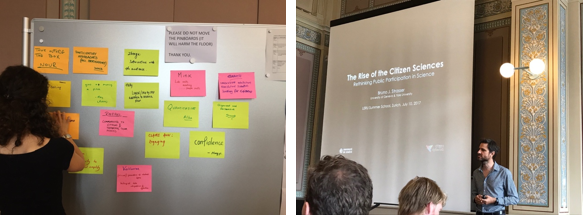
Monday morning kicked off with presenting our PhD projects in the style of the ‘Three Minute Thesis’ competition. In the afternoon, we listened to two keynote speakers. Professor Bruno Strasser’s talk “The Rise of the Citizen Sciences: Rethinking Public Participation in Science” focused on whether citizen science projects will change the way we ‘do’ science (answer = yes!) Professor Effy Vayena’s talk “Citizen Science: Ethical Challenges and Opportunities” then highlighted the issues of quality, accountability, trust and autonomy.
Left: Identifying our unique selling points which ranged from being confident to thinking outside of the box. Right: One of the keynote speakers, Professor Bruno Strasser.
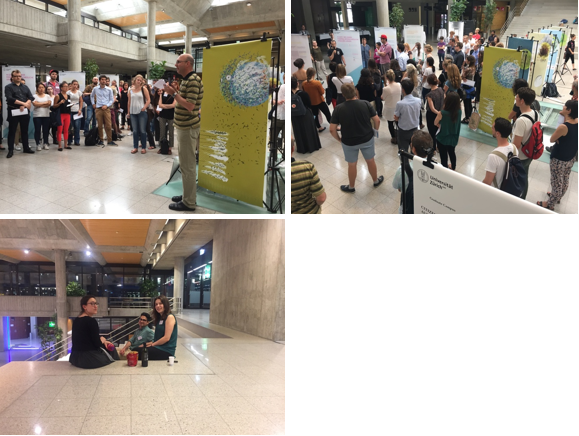
In the evening, we travelled to another campus – Irchel, where a Citizen Science Exhibition was running. A number of university projects were showcased (http://www.grc.uzh.ch/en/focus/exhibition/CitizenScience.html), a personal favourite of mine was a project involving citizens in mapping plant diversity around the city. The aim of this project is to show the public that the city air is filled with plant seeds that repopulate very quickly. Plant trays filled with sterilized soil are distributed to citizens and are placed somewhere in the city – the garden, in a school, on a balcony or on a roof terrace. It is then simply a waiting game! Photos of plants growing spontaneously in their trays can be uploaded to an online platform where it is possible to compare them to their neighbours or other people in the city.
After the Exhibition, we had a BBQ which stayed outside for several hours before a freak thunderstorm caused us to seek refuge inside or brave the weather with broken umbrellas and sodden shoes.
Top: Citizen Science Exhibition at Irchel Campus. Note the commissioned art on the sides of each poster – such a fab idea! Bottom Left: Agnieszka, Judi and Ray taking shelter during the monstrous thunderstorm.
Day 3:
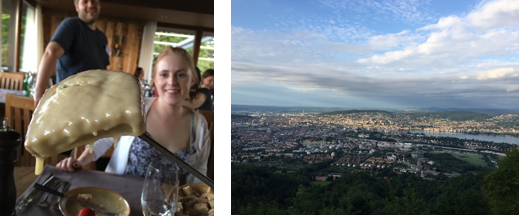
On Tuesday, we attended one of three workshops: Improv, Storytelling or Crowdfunding. I chose Storytelling run by Dr Mirko Bischofberger, a respected filmmaker who works in science communication and science policy. The workshop was designed to improve and apply basic storytelling concepts to our scientific writing. In the evening, we went to the Uetilberg mountain for a traditional fondue dinner. Post cheese and veal, we decided to attempt the 30 min ‘walk’ (if you can call it that) down the mountain…It’s safe to say we all hurt the next day!
Left: The beginning of a very cheesy night. Right: The panoramic view from the top of Uetilberg mountain.
Day 4:
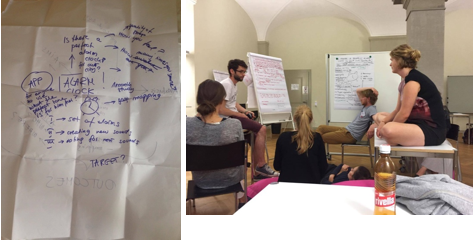
HACK DAY! Today was dedicated to working on our Citizen Science Projects. We laughed when one of the organisers said we could stay at the Graduate Campus until 11.30pm….until it got to 10.30pm and my group was still there suffering with acute cabin fever! Thankfully we managed to turn our alarm clock idea into a demo app (LetsWakeApp) in under 24 hours!
We chose to focus on an alarm app because over the last few years there has been an explosion of sleep related apps. There is however, a lack of research on the types of sounds that wake you up and how they make you feel once you’re awake. The LetsWakeApp project aims to bridge this gap in knowledge by allowing citizens to rate random alarm sounds each morning e.g. did this sound make you happy or sad? Without giving too much away, through citizen participation, machine-based learning, and some snazzy statistical methods, the app will provide the user with a personalised alarm that wakes them up in a positive mood.
The LetsWakeApp team in action.
Day 5:
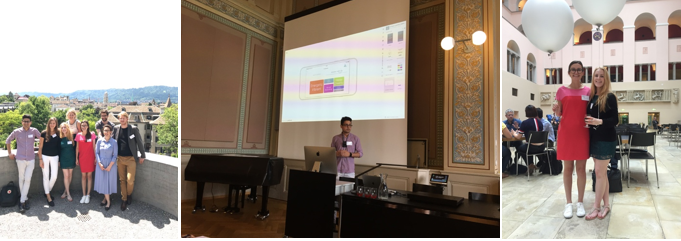
After some last-minute pep talks we presented the LetsWakeApp project to a panel of judges that included the likes of Professor Deketelaere (Secretary General of LERU), Professor Kevin Schawinski (co-founder of Galaxy Zoo) and Professor Daniel Wyler (former Vice President for Medicine and Science) Despite some tough competition, our project was picked by the jury and we won 2500 CHF (£1,900), to develop our project!! In the evening, the winning teams (LetsWakeApp and AstbeSTOP – the student choice) presented at the Graduate School’s Annual Ceremony.
Left: The LetsWakeApp Team. Middle: Ray showcasing a demo of our app. Right: Shauna (L) and I (R) celebrating the LetsWakeApp win.
Day 6:
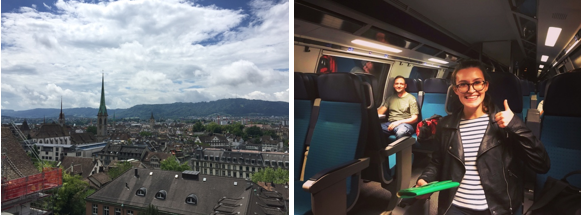
A morning city tour was met with great enthusiasm by the LERU group on our last day. Finally, after an intensive week, we could actually explore the city. Our tour guide Julian, who was as witty as he was knowledgeable, took us on a whirlwind tour. Did you know Lenin lived in Zurich for a few months after he was exiled from Russia? Apparently, he still has a Swiss bank account with 50 CHF in…
Alas like all good things, the LERU Summer School drew to a close. On reflection, I had an incredible time that I know will lead to some very exciting opportunities (keep your eyes peeled for the LetsWakeApp).
Left: The city of Zurich. Right: My first experience of a double decker tram.