Month: May 2019

Imperial/Tokyo Tech-VCC Challenge

Kai and Laura are engineering PhD students at Imperial College. They met last year in Tokyo on the Global Fellows Programme and have since started a social business together.

By Laura Braun

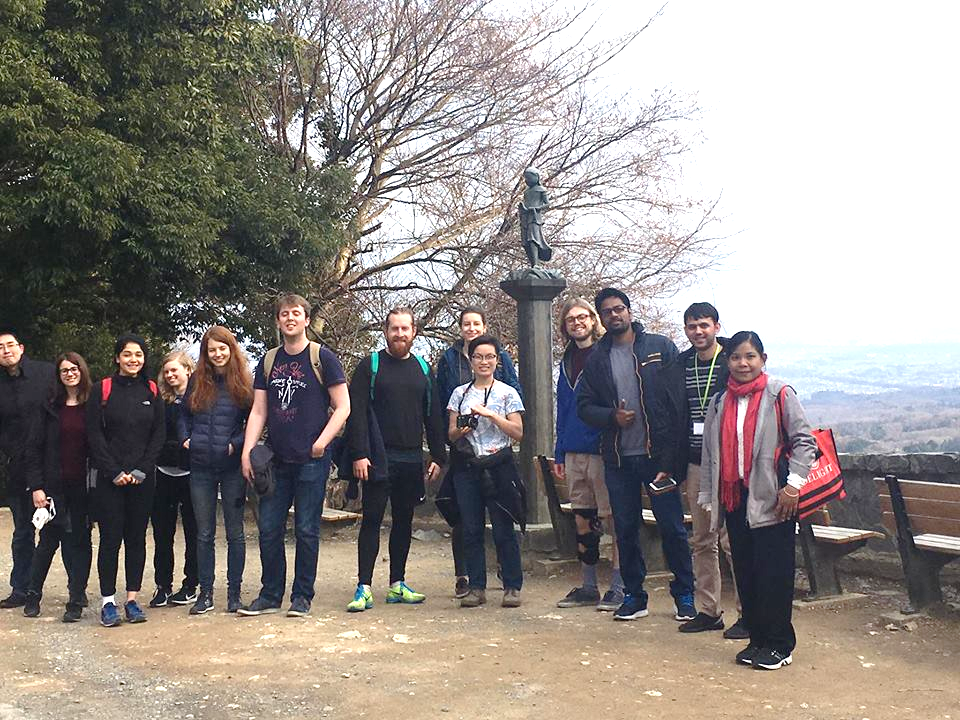
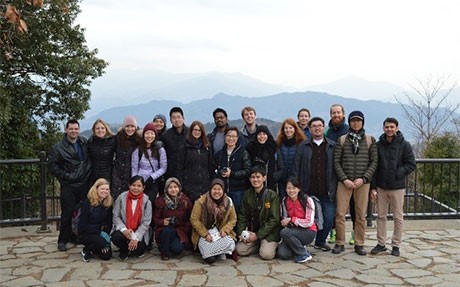
In March 2018, Kai and I attended the Global Fellows Programme run by Tokyo Tech and Imperial College. The theme of the programme was: “Innovation to eradicate poverty” and brought together 40 students who share an interest in humanitarian work. The programme was based in a brutalist student accommodation set in a forest in Hachi-oji, and on arrival we were welcomed with green tea, sake and sushi. Over the course of the week, we heard from guest speakers, participated in team-building activities, and developed solutions to poverty-related challenges.

The cohort was divided up into teams, each of which came up with some incredible solutions, ranging from a fridge-station for reducing fish waste, to an “education bus” that improved literacy rates in Senegal. My team came up with a medical app that allowed health professionals to record disease outbreaks in developing countries, and Kai’s team developed a smartphone microscope for diagnosing diseases. Although Kai and I were on different teams, we saw that our ideas could potentially be merged into one solution; a smartphone microscope that together with an app, would have the ability to diagnose and record diseases. Soon enough, our business idea was born! What we did not know is that exactly one year later we would be pitching this idea and winning £15,000.

Having spent a week with likeminded people, we all left feeling inspired, empowered, and with many new friends. We continued to stay in touch and although the programme was over, the solutions we had developed stayed in our minds. Kai and I often discussed how we could turn our idea to reality, so we started prototyping and after a few slow months, we had a tool that could detect parasites in water.

A few weeks later, we saw a flyer for the Venture Catalyst Challenge (VCC) and decided to apply to the 7-week accelerator programme. We were accepted and thanks to the Enterprise Lab our idea very quickly developed into a focused business: Capta is a handheld microscope that, together with an app, automatically diagnoses parasitic worms in stool samples. Parasitic worms affect 1.7 billion people worldwide, and our vision is to make diagnostics available to everyone in low-resource settings. The VCC allowed us to build momentum for this project, which is exactly what we needed.

After one week of intense pitching, we somehow came out as the winners of the Social Impact track at the VCC, as well as the IGHI Student Challenges Competition! This was a game changer. Winning meant that others believed in our idea, but more importantly gave us confidence to continue our work on Capta. So what’s next? The £15,000, will enable us to further develop our product and test it using real samples in sub-Saharan Africa. The thought that our product could one day be used to diagnose parasitic worms in a health clinic gives is our driving force. Although this achievement is thanks to so many people, our idea was ultimately born in Hachi-oji where the Graduate School provided a space to develop innovative research ideas for poverty alleviation, and for that we are incredibly grateful!

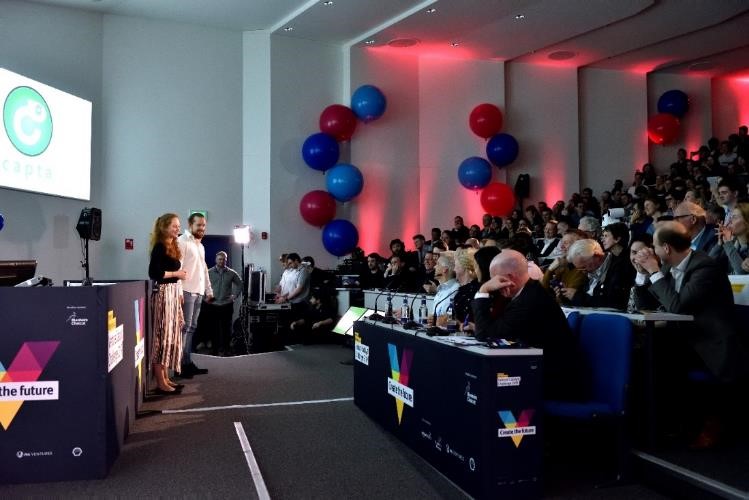
Institute of Global Health Innovation, student challenge winners. Credit: Owen Billcliffe


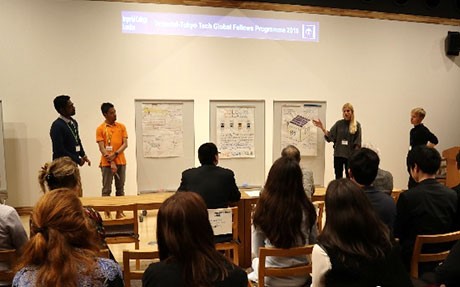
Pitching at the VCC 2019

4Cs Science Communication Writing Competition – People’s Choice Award

by Jemimah-Sandra Samuel, PhD student in the Department of Earth Science and Engineering

My PhD in Under 500 Words

When people think about oil and gas, they think of climate change. But let us imagine for an instant that the exploration of oil and gas has no effect on the earth and its habitats, even more so the use of oil and gas products. Then surely, we will be looking out for better ways to harness its exploration and production. This is the basis for my research which is largely pertinent to developing countries where the means to engage cleaner energy technologies is still emerging, and or in developed nations where there is a current shift from oil towards a cleaner energy source (gas).

People require gas to heat up homes, cook meals, and perhaps fuel vehicles. This gas comes from beneath the earth’s surface, from rock structures underneath the ground; reservoirs beyond human reach or possible survival. Consequently, to produce and utilise gas on earth’s surface, high-quality equipment and machinery costing several million pounds are set-up and sent to underground gas reserves, with the prospect of retrieving this energy resource. Although this exploration is orchestrated by people, petroleum engineers, whom themselves cannot go underground, petroleum engineers ensure that every trip by any equipment to petroleum reservoirs are backed by the supplementary
capacity to collect information about the conditions and behaviours of the reservoirs. Processing this information among other uses includes exploiting them to create possible images and patterns of the petroleum reservoirs’ behaviour. These images and behaviours form models which prove resourceful to petroleum engineers in predicting future behaviours of reservoirs, in addition to helping oil and gas engineers manage oil and gas assets during their production life.

Nevertheless, what can be expected when the underground home of these energy resources is muddled with intricate structures and structural irregularities, heterogeneity? Well, this translates to longer processing time in generating reservoir models; thereby delaying factbased decision-making as well as investment opportunities. And that is

exactly where my research comes in. My PhD focuses on using mathematical methods and coding to improve the speed at which petroleum engineers can develop models that depict petroleum reservoirs. More so, with speed-ups in orders of magnitude above the actual time taken to model petroleum reservoirs by existing techniques. With findings from my research, it is anticipated that oil and gas engineers will not have to wait for ages to build and get results on reservoir models. Needless to say, petroleum companies will not have to delay the advent of taking pertinent decisions that translate to profits in millions of pounds or even taking decisions before having the facts to support them.

We already have some proof of concept model and hopefully, petroleum engineers and explorationists can get results on their oil and gas assets 10, 100, 1000 and maybe 100,000 times quicker than before.

4Cs Science Communication Writing Competition – 3rd Place

by Sarah Hayes, PhD student in the School of Public Health

How can we maintain mans’ best friendship? 

Here in the UK we think of dogs as mans’ best friend. But in some regions of the world they can be our deadliest enemy.

Meet Amos (name changed to protect identity).

He’s a 5-year-old boy living in rural Tanzania.

Ten days ago, he was bitten by a rabid dog.

Anyone exposed to rabies through a bite, scratch or lick from an infected animal must receive treatment immediately. A course of 3 vaccinations (known as post-exposure prophylaxis or ‘PEP’) will effectively protect a person from this deadly virus. But they must be given as soon as possible, ideally within 24 hours of the bite. Once signs of disease develop there is no effective treatment and you’re condemned to a painful, distressing death.

Amos hasn’t had these vaccinations.

Why?

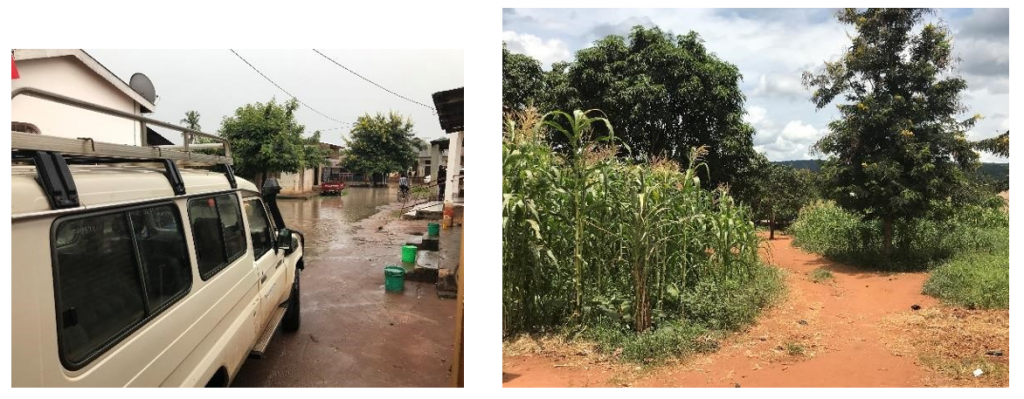
Because in rural Tanzania, access to healthcare can be extremely challenging. Sometimes it’s a lack of awareness of the risks that stops people seeking treatment. At other times it’s a lack of access to healthcare. In Amos’s case the nearest hospital able to provide PEP was over 2 hours away.

Typical Road conditions


Transport costs alone can be prohibitive to some families. Add on the price of treatment and you begin to understand why an estimated 59,000 people a year(1) are still dying of this preventable disease.

So, how can we protect children like Amos?

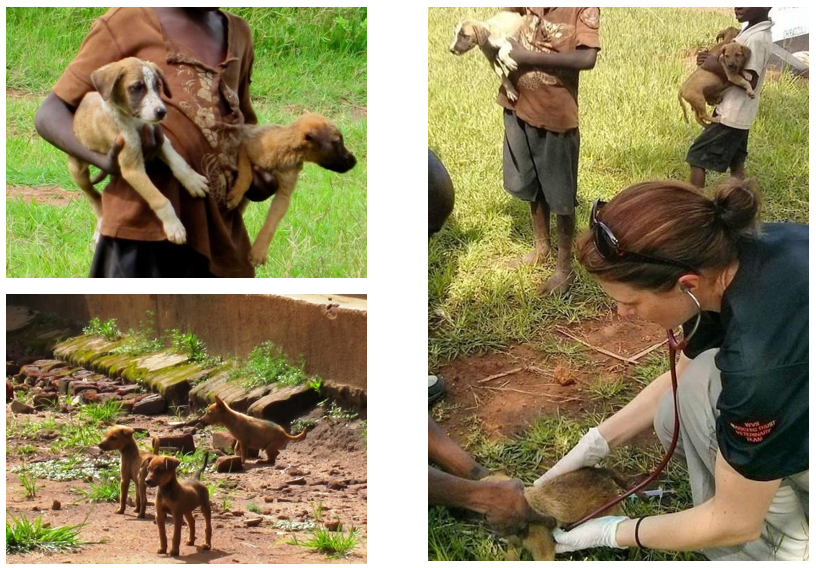
Vaccination of domestic dogs plays a key part. Whilst any mammal can be infected with rabies, domestic dogs are responsible for up to 99% of human rabies cases (2). If we reduce the level of rabies in dogs, we reduce the level in humans.

However, the benefits of dog vaccination campaigns can be compromised if rabies is circulating in other animals. Our research shows that in southern Tanzania where Amos lives, almost 50% of recently reported animal rabies cases have been in jackals. These jackals may have been infected by rabid dogs, but rabies could also be passing from jackal to jackal. Understanding the role that different species play in rabies transmission is vital in implementing effective control strategies. If rabies is being maintained in wildlife, vaccination of domestic dogs alone may not be enough.

Using a combination of ongoing surveillance, statistical analysis and mathematical modelling, my research is investigating the role of different species in rabies transmission in southern Tanzania. These techniques allow us to untangle the part each species is playing in virus transmission and to consider both the short- and long-term effectiveness of different control strategies. This is vital if we are to stamp out rabies from these communities and keep it out.

Thankfully, Amos did ultimately receive his vaccinations. But not everybody will be so lucky. Which is why it’s so important that we tackle rabies at its source and prevent people from being exposed in the first place. And if we can achieve this then who knows, maybe one day people the world over will be able to think of dogs as their best friends.

References

  1. Hampson K, Coudeville L, Lembo T, Sambo M, Kieffer A, Attlan M, et al. Estimating the Global Burden of Endemic Canine Rabies. PLoS Negl Trop Dis. 2015;9(4).
  2. World Health Organization. WHO | Rabies. Who. 2017; Available from: http://www.who.int/mediacentre/factsheets/fs099/en/

4Cs Science Communication Writing Competition – 2nd Place

by Oluwalogbon Akinnola, PhD student in the Department of Bioengineering

The Other Hand Model

If the first thing you think of when you hear the phrase ‘hand model’ is David Duchovny in the 2001 film Zoolander, then congratulations on your excellent taste. Unfortunately, however, no one was willing to fund a PhD researching his performance. No, in the world of Biomechanics hand model means something different yet no less appealing.

Our hands are how we communicate and manipulate the world around us. Feeding ourselves, checking the bathwater, even holding the medium this text is printed on: we use our hands to keep us healthy, happy, and safe. Understandably, this multifunctional system is complex. One quarter of the bones in the body are in the hands. They controlled by an intricate network of muscles and nerves that provide the most tactile feedback in the body and let us do everything from handstands to card tricks.  It is this complexity that makes it difficult to find a solution when things go wrong. Hand injury accounts for almost a fifth of cases at A&Es across the country and the UK spends over £100million a year treating them. Osteoarthritis of the hand affects at least 1.56 million people in the UK and there is no known cure. Understanding exactly how the hand works is vital to finding appropriate solutions to these problems.

My research is concerned with creating an accurate representation of the human hand. Specifically, I’m using mathematical equations and experimental data to create a computer simulation that will replicate the behaviour of the hand in various conditions. This will allow us to investigate nonhealthy hands and gain insight into how to heal them. The model I have been working on is an inverse kinematic model. This means that it works out the forces inside the hand from the movements, or kinematics, of the hand. For example, what is the force on your wrist when you pick up a cup? Motion capture, the same technology Andy Serkis used to give us Gollum, is used to provide the motion input for the model and the results are verified using cadaveric testing and electromyography (EMG).

A hand model ready for motion capture with EMG sensors and reflective markers.

EMG is the detection of the electrical signal produced by your muscles when they move and gives an indication of how much effort the muscle is exerting. In cadaveric testing, we apply forces to the tendons in a hand and measure the kinematics. Imagine Thing from The Addam’s Family but with pulleys. I compare the signal patterns and applied forces to the model results to verify that the model. With all three in agreement, I can conclude that the model is representative of the hand. Thus, it can be used to simulate the effects of surgery and rehabilitation to find the best solutions to hand injuries and diseases. Solutions that could change millions of lives for the better. This hand model may not be wearing diamond ring but I think it pretty exquisite.

4Cs Science Communication Writing Competition – 1st Place

by Stephanie Martin, MRes student in the Department of Life Sciences

Dear Present

Dear Sister,

I recently had an experience which reminded me of the stories Grandma used to tell us. I was hiding in what I thought was an animal’s den after being chased by water-raiders through the desert. The den turned out to be a large chamber, full of nothing except hundreds and hundreds of binders and a sign which said ‘The Daintree Rainforest – Lest We Forget.’

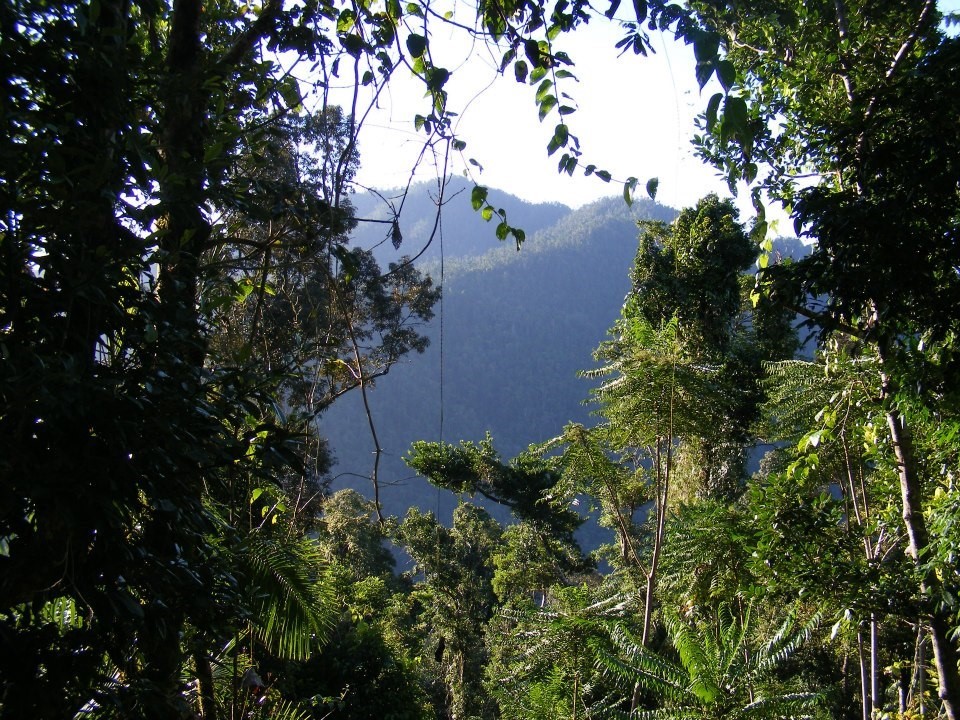
Do you remember what Grandma used to tell us about the Daintree? That luscious mythical jungle that used to inhabit these lands in Australia that we never really believed ever existed. I have included in this letter an old photograph that I found in an album marked ‘2019’, everything she told us about is there; trees too tall to climb, six-foot tall birds of electric blue running through the undergrowth, flowers, butterflies, and frogs… they’re all there.

The binders were full of scientific research from ages past. One paper caught my attention, ‘An Investigation into the Physiology of Trees and Lianas under Experimental Drought Conditions – by Stephanie Martin.’ I read the paper, taking in the (extremely sophisticated) statistical analyses and reading the (detailed and worthy of a distinction) manuscript written by this long since departed Master’s student. ‘Access to the rainforest canopy was gained via a crane’ she writes, ‘measurements were taken from tree species under standard tropical rainforest conditions, as well as those included in the drought experiment.’ I am jealous of this person’s existence in a time when they had to simulate drought conditions when we have lived through it our whole lives!

She goes on to detail her research, which I think you will find interesting. An instrument called a porometer was used to measure stomatal conductance; the rate of carbon dioxide entering and water vapour exiting the leaves via pores called stomata. The drought experiment covered 0.4ha and was evidently constructed using a series of clear-panel plastic roofing structures.

I’ll skip over the Results and Discussion sections, which were written in August 2019, and share with you the passage that has affected me most;

‘The simulated drought conditions reflect a possible future where seasonal rainforests experience hotter and longer dry seasons as a result of climate change. This project is important as global temperatures are set to increase by at least 2 °C degrees by the year 2100 (Raftery et al., 2017). It is essential that we assess the impact this warming effect may have on carbon sinks such as tropical rainforests in order to formulate management plans and influence governments and corporations to take action to prevent dangerous warming scenarios.’

It’s difficult to comprehend the magnitude of failure our ancestors caused when they ignored scientists calling for action to prevent climate change, resulting in a world now where people kill one another for water, and where rainforests are nothing but ancient history.

Maybe one-day things will get better.

All my love,

Your sister.

Making sustainability tangible: experiences from a workshop for postgraduate students

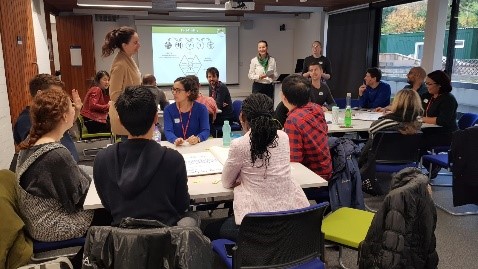
The sustainability workshop was organised by PhD student Vasiliki Kioupi of the Centre for Environmental Policy (CEP) on November 13 2018. It was an opportunity for postgraduate students from different departments of Imperial College London and other Universities to participate in two sessions related to materials and circular economy and assessment of the sustainability of a proposed technology in the context of the problem-solving approach. Moreover, the aim was for the participants to develop skills related to collaboration, systems and strategic thinking.

Twenty PhD students from CEP and Design Engineering Departments as well as a CEP Teaching Fellow and a post-graduate student from Queen Mary University joined the workshop. The event also featured two facilitators for delivering the two sessions; Katherine Whalen from Lund University and Tatiana Vakhitova from Granta Design.

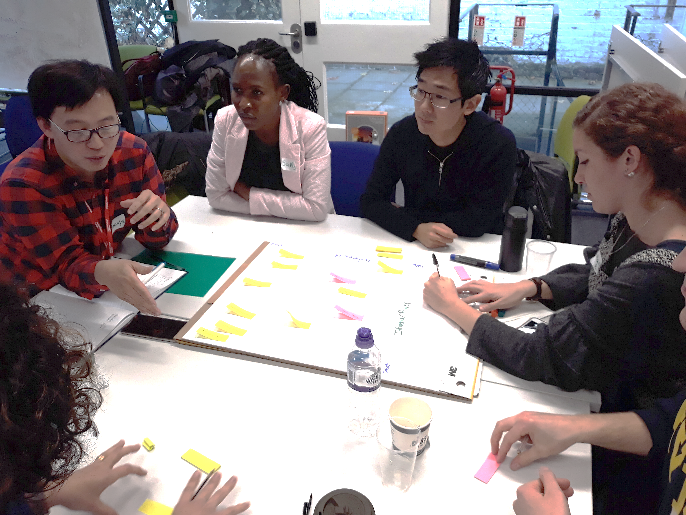
The first session introduced participants to a serious game (In the loop) where they had to work in teams of two and assume the roles of product manufacturing companies making decisions in a changing economic, political and social system. During the reflection session after the game there were lively discussions about elements of competition that surprised the participants, how sustainability is approached, how short and long term strategies affect the course of the game, economic and environmental regulations that should be applied and social issues that emerge from the game. Finally, they came up with suggestions for companies and policy makers in the materials and product manufacturing sector. A very interesting element of the first session was the high degree of participant engagement during the game.

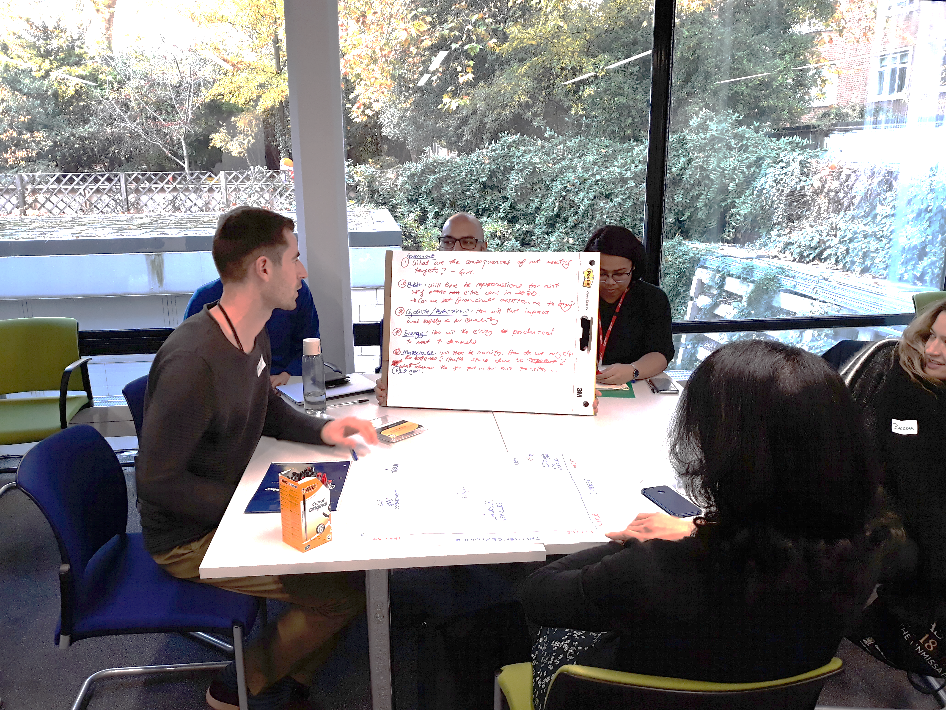
The second session introduced participants to the active learning toolkit “sustainable development”, which is a set of steps that can be used to assess the sustainability of a proposed technology. The case study used was about electric vehicles (EV) and sustainability was assessed on the basis of three capitals: natural, manufactured and social using back-casting, stakeholder analysis, data collection on EV life cycle: CO2 emissions, materials and energy and EU regulations using CES Edupack (software available to ICL students of specific departments via the ICT shop). During the reflection session the participants had the opportunity to discuss not only how this process could be potentially useful for their research or teaching about sustainability, but also the importance of systems thinking in decision-making and interdisciplinary collaboration in addressing sustainability challenges.

Overall, the workshop gave the opportunity to participants to discuss about what sustainability means to them, interact in teams, learn about new concepts, further develop some skills and think about limitations of policy-making as well as suggestions for a more holistic view of sustainability. As for the organiser, it was an important opportunity to develop organisation, collaboration and management skills and use the feedback generated to improve the participant experience and learning outcomes of future workshops.

The workshop was made possible through the generous support of the Graduate School who provided funding and guidance.