Month: October 2018

Strengthening links among Brazilian academics at Imperial

by Lorena Fernanda dos Santos de Souza, PhD student in the Department of Chemical Engineering

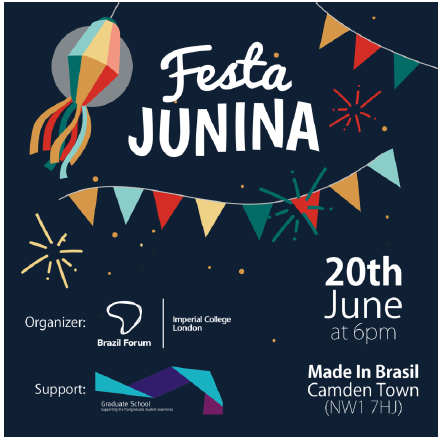
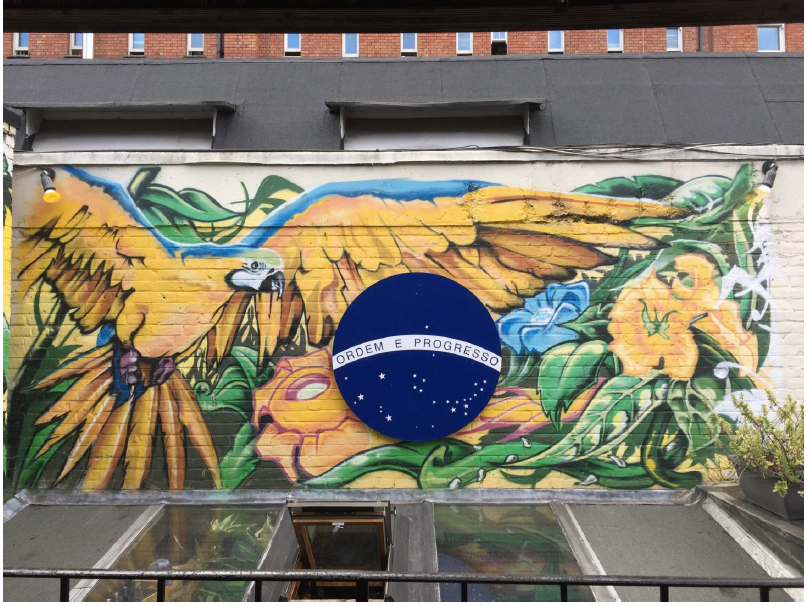
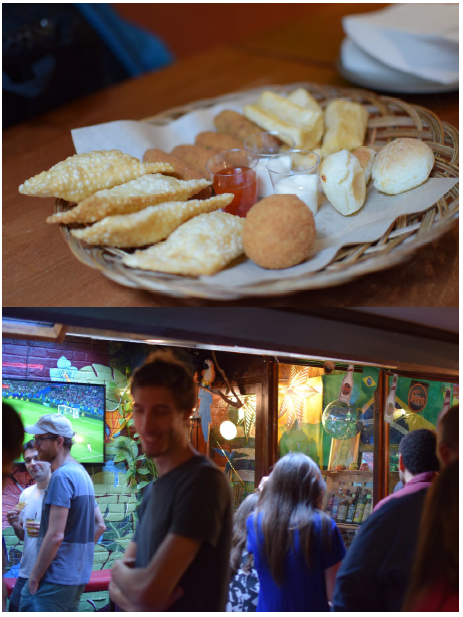
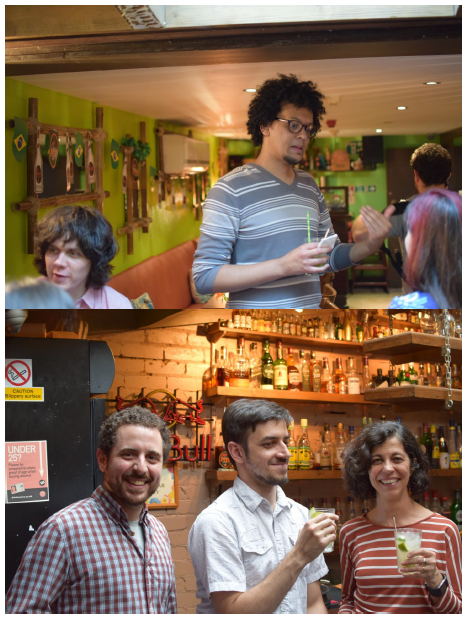
We are the Student Committee of the Imperial College Brazil Forum, and on June 20th (Wednesday) we organized a happy hour to promote the Brazilian culture and foster networking among Brazilian students and international members of the Forum. In a ‘Festa Junina’ themed event, we gathered 26 people in a cross-department get together in the authentic Brazilian restaurant ‘Made in Brasil’, in Camden Town. In Brazil, June is the month to commemorate St John’s day with a “Festa Junina”, the second most important popular celebration in the Brazilian culture.
Apart from celebrating our culture, the main aim of this happy hour was to strengthen the links among Brazilian research students and research students involved or interested in Brazilian issues. Despite being based in the same departments, and sometimes even in the same floor, many Brazilian students/staff do not know each other. New opportunities for collaborations could come, but due to poor networking, it does not happen. This Graduate School-funded event gave new students and postdocs the chance to meet each other and interact with senior members of the Forum. The president of the IC Brazil Forum, Dr Vania Braga, took part in the happy hour, which was particularly important to present initiatives of the Forum to potential new members, and to share our experiences at Imperial.
The feedback we received from those who came along was extremely positive. The participants mainly appreciated the opportunity to meet and network in a friendly environment with Brazilians students/staff and researchers interested in Brazilian issues. They also suggested to have more get-togethers similar to this one, for example every 2/3 months. We believe the event provided the first step to create a more integrated community at Imperial and, hopefully, collaboration among different areas in order to develop interdisciplinary researches. And for that, we are extremely satisfied. We are grateful to the Graduate School for providing funding to the ‘Festa Junina’. If you are interested on any tips on how to organize an event to integrate students/staff, feel free to contact us (l.dos-santos-de-souza14@imperial.ac.uk).
 

Data and Algorithms: Good or bad? Spoiler alert: It’s more complicated than that!

By Victor Pedrosa, PhD student representative

Few things are more effective in motivating PhD students and researchers to take a break from their ‘Nobel Prize-winning’ research than pizza, drinks and the promise of an interesting
talk.

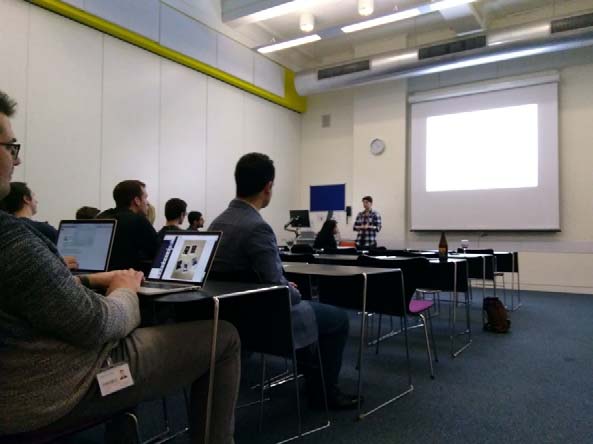
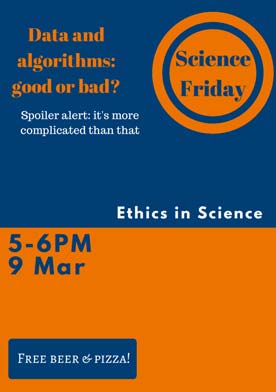
The Bioengineering PhD student representatives organised a talk on data ethics on Friday 9th of March. The topic was widely popular and the event was well-attended. There were some lively discussions over pizza and drinks in room 301.C at the Royal School of Mines Building.

Is data science intrinsically ethically good?

People mingled before the start of the talk, to get the food distraction out of the way, then Dr. Stefania Garasto started her talk titled “Data and algorithms: good or bad? Spoiler
alert: It is more complicated than that.”

She posed the question on whether data science is intrinsically ethically good and her presentation went on to show that algorithms are not ethically neutral because the values
and biases of their designers are reflected in the code. For example, Google shows high-paying job ads preferentially to men and ads with the word “arrest” are more likely to
appear when searching black-sounding names.

There are ethical concerns for current data practices. These practices beg such questions as: Do people have real control over their data? How can bias in the data be corrected? Who is responsible for the ethical failure of an algorithm? And these questions are hard to answer.

Stef presented the controversy over a Facebook case study wherein Facebook manipulated its users’ emotions without their knowledge by influencing their news feeds.
Many in the audience had not heard of this case and no one supported the ethics of this practice.

Stef went on to discuss how ethical data practices might be ensured. One is by law, for example, the GDPR principles. However, people pointed out that this could be restrictive
in data mining and that it might not cover everything, and it would at least be valid for everyone. Another option is to develop a sort of data code of conduct. Yet it was also
argued that this would be hard to enforce and this may vary from one organization to another.

Discussion continued with more pizza and drinks, and people shared with one another whether they were on social media or not and what their privacy settings were.

This event provided a good opportunity for the research students to get to know one another. There was good feedback from both students and other researcher guests about how the talk was a
good reminder to be vigilant about exercising control over our data.

We want to thank the Graduate School for funding this event and helping Bioengineering become a friendly research community.

CSM Summer Social, Research Community Fund

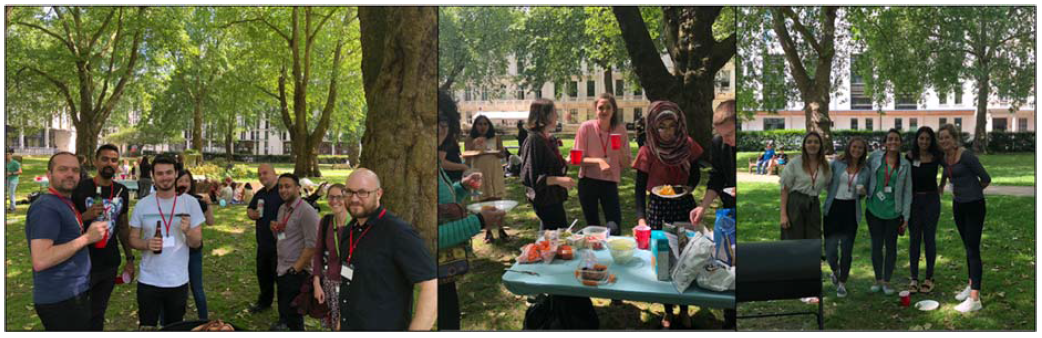
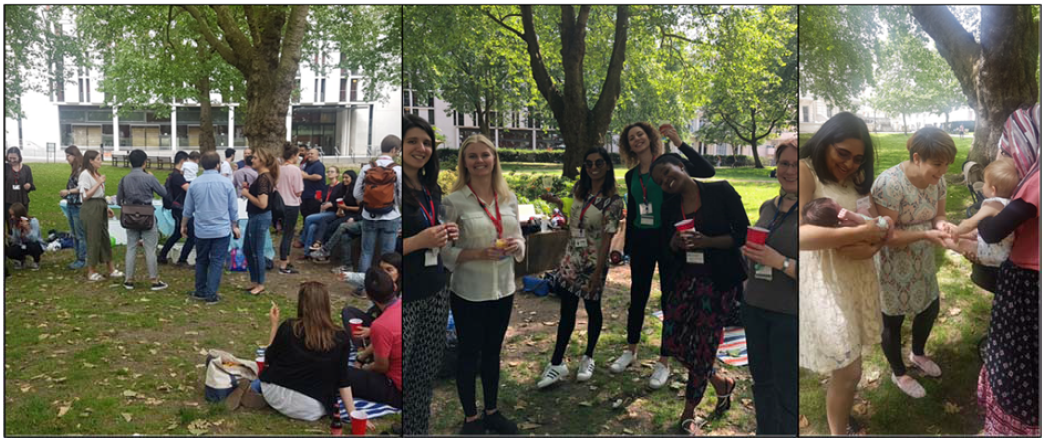
The CSM Summer Social BBQ that took place on the Friday 8th of June in Prince’s Garden was a real success. About 70 persons came along that afternoon, from 12.30 pm to late at night. The aim of this informal lunch was to give a chance for the PhD students to catch up with their peers, discuss some of their research projects with more expert persons, or even to find career advices.

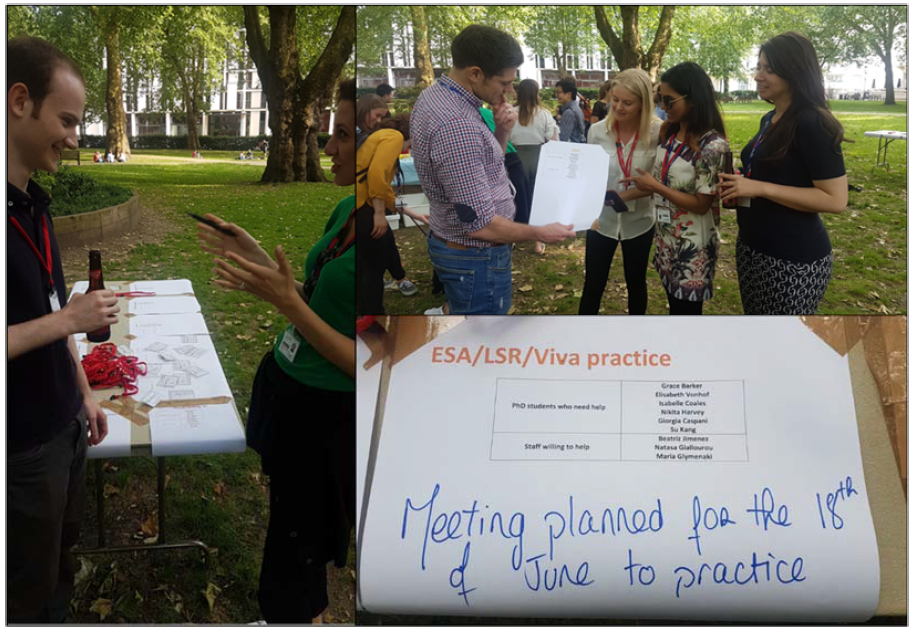
To facilitate the discussion, each PhD students had to chose three subjects that he felt like he needed help with. On the other hand, each staff had chosen three subjects in which they could give advices to PhD students. In the following pictures we can see some examples such as a last‐year PhD student (Peter Bradshaw) receiving advices from a post‐doc (Natasa Giallourou) about how to write efficiently a thesis, or also the Dr Jon Swann, reader in Microbiomics and Human Development, talking about NMR with a part of his team. Some boards were also made available, per subjects, so PhD students could find more easily the staff who could help them for the subjects they chose to talk about (1st year PhD students were happy to find some peers with whom they have been able to practice their Early Stage Review later in the month).

PhD students were particularly lucky to have experts in LCMS and NMR who came that day to share their knowledge. Our division is such a large group, gathering about 160 persons from different
campus. The LCMS MRC‐NIHR Phenome Centre (NPC) team came from Hammersmith Hospital to socialise with the PhD students, which are mostly based on South Kensington campus. Their CCO Matt Lewis was actively engaging himself, by taking care of the BBQ with Dr Antonis Myridakis to fed everyone.

The great weather made the day even more enjoyable, and it pushes more people to join us along the day. It was also a great opportunity for the NMR NPC team to come with their new borns and present to everyone the new generation of scientists!