Blog posts

Early Diagnosis of Lung Cancer: a Pathologist’s Perspective

By guest blogger, Dr Yu Zhi Zhang (Dennis), Clinical Research Fellow and Specialist Registrar in Histopathology at the National Heart and Lung Institute (NHLI), Imperial College London; on behalf of the National Centre for Mesothelioma Research (NCMR), National Heart and Lung Institute (NHLI), Imperial College London
The 9th edition of the renowned Osler’s Textbook on the Principles and Practice of Medicine, published in 1921, dedicated only two (out of 1,139) pages to lung cancer, at which point the condition was described as “New Growths in the Lungs”. Almost a hundred years on, the patterns of epidemiology have shifted drastically, and lung cancer now is recognised as a major health problem globally with more than 1.8 million new cases diagnosed every year. It is the second most common cancer diagnosed in the UK for both men and women, with approximately 46,400 new cases in 2014. Unfortunately more than 60% of cases are diagnosed at Stage III and IV (Figure 1 (see below))[1], meaning the tumour has spread outside the lungs and into lymph nodes or other organs.

The prognosis of patients in these later stages is considerably worse than those diagnosed with Stage I or II disease where the tumour is confined in the lungs and is usually smaller. Stage III and IV disease also tend to develop significant symptoms preventing them from receiving aggressive treatments. It is estimated that more than 80% of patients with Stage I lung cancer will survive beyond 1 year, whilst less than 20% of those with Stage IV disease are expected to do so (Figure 2)[1]. This signifies the importance of early diagnosis, as it necessarily translates into treatment options with a curative intent.

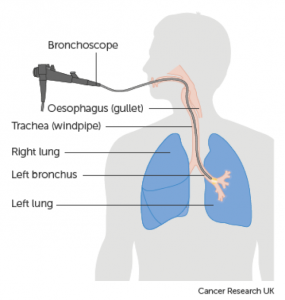
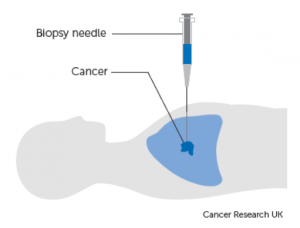
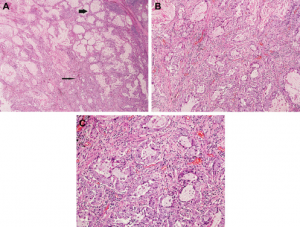
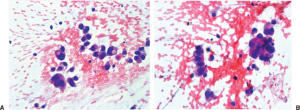
A definitive diagnosis of lung cancer is usually made on tumour biopsies. Biopsies are small but representative portions of tissue from the tumour, obtained mainly via bronchoscopy (Figure 3) [2] and image- guided skin puncture (Figure 4) [3]. The tissue will then be processed and stained in the laboratory, before assessment under the microscope by a histopathologist. The minute features of the individual cells and overall architecture differentiate between cancer and normal tissue (Figure 5)[4]. If patients develop fluid around the lungs (also known as pleural effusion), a drain can be inserted (Figure 6)[5] and we can look for cancer cells floating in the fluid (Figure 7)[6].

Like all cancer types, the test results are discussed regularly at multidisciplinary meetings with doctors, surgeons and nurses where treatment plans are decided. Assessment of biopsies by a pathologist is a core component of the recently commissioned National Optimal Lung Cancer Pathway (NOLCP), which aims at improving early diagnosis of lung cancer in the UK.

Recent advances in lung cancer genetics have transformed our practice. The adoption of standard testing of biopsies with special stains for particular genes allows more refined diagnosis of lung cancer subtypes. Sequencing of relevant genes such as Epidermal Growth Factor Receptor (EGFR) reveal patients whose tumours are sensitive to targeted therapies. By assessing the expression levels of Programmed Death Receptor 1 Ligand (PD-L1), we are able predict a group of patients who will respond better to immunotherapies (Figure 8) [7], some of whom will receive long lasting disease control.

However, with such advances being undertaken at an unprecedented rate, many questions arise in the field of pathology. We are inevitably facing the scenario of “Doing More with Less”, i.e. there is a need to increase information yield with limited amount of clinical materials, which is often the case in initial diagnosis. Essential questions to be answered include: How do we ensure we have got sufficient clinical material for the ever-increasing number of ancillary tests? Can we provide the information in a timely fashion? How are we going to interpret and integrate the test results with clinical information? What is the relationship between genetic test results and what we see under the pathologists’ microscopes?

And perhaps more relevant to the theme: Is there a novel biomarker, test or modality that can lead to even more patients to be diagnosed earlier?

Hopefully these questions will be answered soon by translational research extensively supported by patient- derived tumour tissues. These tissue samples are either left over from biopsies taken for diagnosis, or are donated by the patients. For example, a major component of The 100,000 Genomes Project [8], funded by the Department of Health (DoH), is sequencing various cancer types on a massive scale, including many cases of lung cancer. The TRACERx study [9] looks at the genetic aspect of various parts of the same lung tumour, showing how cancer develops and changes over time.

Gone are the days when advances in the diagnosis and treatment of diseases were made primarily through observations by individuals. The research endeavours of the scientific community show strongly that there is now a greater need for multidisciplinary effort, active patient engagement, and international collaboration.

References

  1. Lung Cancer Statistics. Cancer Research UK. http://www.cancerresearchuk.org/health-professional/cancer-statistics/statistics-by-cancer-type/lung-cancer. Accessed 14/11/2017.
  2. Bronchoscopy under local anaesthetic. Cancer Research UK. http://www.cancerresearchuk.org/about-cancer/lung-cancer/getting-diagnosed/tests-diagnose/bronchoscopy-local-anaesthetic. Accessed 14/11/2017.
  3. Biopsy through the skin. Cancer Research UK. http://www.cancerresearchuk.org/about-cancer/lung-cancer/getting-diagnosed/tests-diagnose/biopsy-through-skin. Accessed 14/11/2017.
  4. Travis WD, Asamura H, Bankier AA, Beasley MB, Detterbeck F, Flieder DB, Goo JM, MacMahon H, Naidich D, Nicholson AG, Powell CA, Prokop M, Rami-Porta R, Rusch V, van Schil P, Yatabe Y; International Association for the Study of Lung Cancer Staging and Prognostic Factors Committee and Advisory Board Members. The IASLC Lung Cancer Staging Project: Proposals for Coding T Categories for Subsolid Nodules and Assessment of Tumor Size in Part-Solid Tumors in the Forthcoming Eighth Edition of the TNM Classification of Lung Cancer. J Thorac Oncol. 2016 Aug;11(8):1204-1223. doi: 10.1016/j.jtho.2016.03.025.
  5. Treatment for fluid on the lung (pleural effusion). Cancer Research UK. http://www.cancerresearchuk.org/about-cancer/coping/physically/breathing-problems/treatment/fluid-on-the-lung-treatment. Accessed 14/11/2017.
  6. Travis WD, Rekhtman N. Pathological diagnosis and classification of lung cancer in small biopsies and cytology: strategic management of tissue for molecular testing. Semin Respir Crit Care Med. 2011 Feb;32(1):22-31. doi: 10.1055/s-0031-1272866.
  7. Kerr KM, Tsao MS, Nicholson AG, Yatabe Y, Wistuba II, Hirsch FR; IASLC Pathology Committee. Programmed Death-Ligand 1 Immunohistochemistry in Lung Cancer: In what state is this art? J Thorac Oncol. 2015 Jul;10(7):985-9. doi: 10.1097/JTO.0000000000000526.
  8. The 100,000 Genomes Project. Genomics England. https://www.genomicsengland.co.uk/the-100000-genomes-project. Accessed 14/11/2017.
  9. Jamal-Hanjani M, Wilson GA, McGranahan N, Birkbak NJ, Watkins TBK, Veeriah S, Shafi S, Johnson DH, Mitter R, Rosenthal R, Salm M, Horswell S, Escudero M, Matthews N, Rowan A, Chambers T, Moore DA, Turajlic S, Xu H, Lee SM, Forster MD, Ahmad T, Hiley CT, Abbosh C, Falzon M, Borg E, Marafioti T, Lawrence D, Hayward M, Kolvekar S, Panagiotopoulos N, Janes SM, Thakrar R, Ahmed A, Blackhall F, Summers Y, Shah R, Joseph L, Quinn AM, Crosbie PA, Naidu B, Middleton G, Langman G, Trotter S, Nicolson M, Remmen H, Kerr K, Chetty M, Gomersall L, Fennell DA, Nakas A, Rathinam S, Anand G, Khan S, Russell P, Ezhil V, Ismail B, Irvin-Sellers M, Prakash V, Lester JF, Kornaszewska M, Attanoos R, Adams H, Davies H, Dentro S, Taniere P, O’Sullivan B, Lowe HL, Hartley JA, Iles N, Bell H, Ngai Y, Shaw JA, Herrero J, Szallasi Z, Schwarz RF, Stewart A, Quezada SA, Le Quesne J, Van Loo P, Dive C, Hackshaw A, Swanton C; TRACERx Consortium. Tracking the Evolution of Non-Small-Cell Lung Cancer. N Engl J Med. 2017 Jun 1;376(22):2109-2121. doi: 10.1056/NEJMoa1616288.
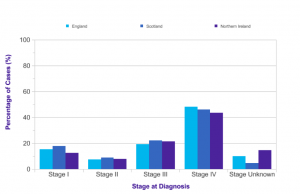
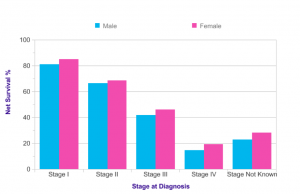
 

Figure 1: Proportion of Cases Diagnosed at Each Stage, All Ages (Source: Cancer Research UK)


Figure 2: One-Year Net Survival (%) by Stage, Adults Aged 15-99, England
(Source: Cancer Research UK)


Figure 3: A schematic representation of bronchoscopy
(Source: Cancer Research UK)


Figure 4: A schematic representation of image- guided skin puncture biopsy
(Source: Cancer Research UK)


Figure 5: Microscopic assessment of a lung adenocarcinoma
A. Low power; B. Medium power; C. High power. Figure adopted from Travis et al. [4].
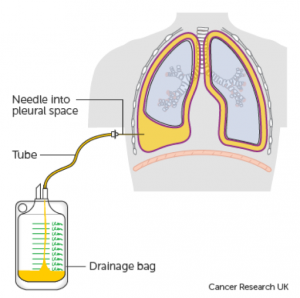


Figure 6: A schematic representation of pleural effusion drainage
(Source: Cancer Research UK)


Figure 7: Individual tumour cells (Adenocarcinoma) from a patient with pleural effusion
A. Singly dispersed tumour cells; B. Tumour cells forming clusters. Figure adopted from Travis and Rekhtman [6].
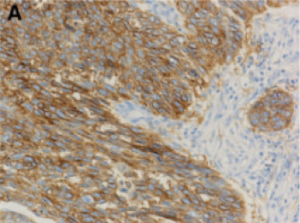


Figure 8: Assessment of PD-L1 in lung adenocarcinoma
Strong staining (Brown) correlates with high level of PD-L1 expression in tumour cells. This predicts sensitivity towards PD-L1 based immunotherapy. Figure adopted from Kerr et al. [7].

Seek advice from a qualified healthcare professional before taking antibiotics

By Dr Timothy Rawson, Clinical Research Fellow, Esmita CharaniSenior Lead Pharmacist and Dr Enrique Castro Sanchez, Academic Research Nurse all from the Faculty of Medicine, Department of Medicine

Antibiotics are a powerful resource that allows us to safely perform surgery, treat cancer with chemotherapy, and recover from infections that over 100 years ago would have killed even the fittest among us.

We are seeing however, a dramatic increase in infections with bacteria resistant to the killing effects of antibiotics (termed drug-resistant infections). These are antibiotics that until recently used to be effective. These resistant bacteria make many infections more and more difficult to treat – in some cases causing patients to die because we no longer have antibiotics that are able to manage the infection.

A major driver of drug-resistant infections is the overuse and misuse of antibiotics. We outline some of the key reasons for this below.

Firstly, some health problems cannot be treated with antibiotics, and it is important to know which ones they are. In some cases, health problems that can be treated with antibiotics need consideration about the right antibiotic for each person. For example, it would be important to consider whether people are taking other medications, whether they have got any other health problems, and even their preferences.

Talking to a health professional helps build relations that are proven to be essential for the experience of people related to antibiotic use. We now know that whilst patients are eager to receive more information about their use of antibiotics, previous experiences about having antibiotics prescribed (or not) gradually imprints expectations about antibiotics. Therefore, having the opportunity to discuss antibiotics with a healthcare professional may also have an impact on future attitudes and expectations when you feel unwell.

As all medications, antibiotics can have negative side effects that may be important to your current and future health. Often without previous discussion with a healthcare professional, it may be difficult to forewarn patients about such side effects and what to do should they appear. The ability to be able to warn someone about certain antibiotics may encourage them to keep taking them if they experience the side effect, or even ensure that they seek help immediately in rarer cases.

The conversation between healthcare professionals and patients about antibiotics are shaped by many factors that are not just related to health. These can reflect cultural beliefs and traditions, expectations, power relations between professionals and patients, the skills that the patient may have to deal with health problems, as well as social circumstances. Patients may feel compelled to access, or request antibiotics as a quick solution to a health problem that may prevent them from going to work. However, antibiotics are not always the solution and in some cases may worsen the problem due to the side effects that patients experience.

Conversations with healthcare professionals allows people to receive useful information about self-care measures that can resolve symptoms and prevent further health problems. For example, painkillers, fluids, and rest may be all that is required to deal with a cold. Being up to date on influenza vaccination, and washing hands thoroughly and correctly could ensure that the risk of catching infections is much reduced.

Studies show that whilst citizens are in agreement with healthcare professionals that the main reason causing drug-resistant infections is antibiotic use, they are not aware of the range of factors driving antibiotic use. Therefore, facilitating opportunities for these conversations to take place would be beneficial to raise awareness and optimise antibiotic use.

Encouraging citizens to engage with professionals in conversations about antibiotics would require that professionals embrace communications approaches and skills that result in meaningful and actionable information for patients and ultimately shared-decision making. Considering that the information related to infections is difficult to understand and process in the time allowed for typical consultations in primary care and due to the limited familiarity of the average citizen with scientific jargon/language, such conversations may be difficult. However, through the use of information aids  and a greater understanding of what information patients desire, we may be able to facilitate meaningful engagement with decision-making even in the most time pressured of situations.

In summary, we all have a role in using antibiotics more responsibly, through better communication approaches that encourage shared-decision making between citizens and healthcare professionals.

Using the evidence-based approach to better antibiotic stewardship

By Chris Bird, MSc Health Policy student at Imperial College and Project Manager in the System Engagement Programme at NICE

This week marks World Antibiotic Awareness Week, the theme of which is to seek advice from a qualified healthcare professional before taking antibiotics.

Antibiotic resistance (AMR) is one of the biggest threats to global health, food security and development in our world today. Antibiotic resistance leads to high medical costs, prolonged hospital stays and increased mortality.

It’s a subject brought home to me as I was lucky enough to study my MSc in the very same historic buildings at St Mary’s Hospital where Alexander Fleming first discovered the miracle of penicillin. This was the first ever antibiotic with capabilities to revolutionise world healthcare by eradicating the scourge of gangrene and tuberculosis. Skip forward to today and the availability of effective antimicrobials are estimated to add approximately 20 years to human life expectancy.

AMR describes the process by which microbes become resistant to the common range of antibiotics used in human and animal health to combat infection. Excessive use and inappropriate prescribing of antibiotics, coupled with a lack of research and development into the identification of new antibiotics have combined to produce a significant threat to world population health.

The UK’s Chief Medical Officer (CMO), Dame Sally Davies has referred to AMR as a ‘ticking timebomb[i] with potential consequences for the nation’s health, so serious that the issue has been logged on the UK’s cross-government national risk register.


Risks and costs 

Where antibiotics can be bought for human or animal use without a prescription, the emergence and spread of resistance is made worse. Similarly, in countries without standard treatment guidelines, antibiotics are often over-prescribed by health workers and veterinarians and over used by the public.

As the late great U.S President John F. Kennedy once said, “There are risks and costs to action. But they are far less than the long term risks of comfortable inaction”.

Kennedy’s words are as relevant and compelling today as they ever were. If we as a society opt for comfortable inaction and if AMR is left unchecked, a time in the not too distant future could come where the risks of infection are too high to perform treatment in common fields of medicine such as cancer, orthopaedics and birth by caesarean section. For urinary tract infections, antibiotic resistance is now already commonplace[ii].  Our health systems and all the progress made in advancing patient outcomes could come to a grinding halt.


Taking steps to address the challenge

In the UK, the National Institute for Health and Care Excellence (NICE) is the independent body responsible for producing the nation’s guidance and advice to improve health and social care. Recent guidance addresses the specific threat of AMR and the changes in practice required to tackle it. Encouraging system-level change at this scale has its challenges. And yet incremental change by the thousands of individual healthcare professionals, taken collectively – with the support of the general public, has the potential to make significant and meaningful progress in this global fight.

One of NICE’s guidelines targeted at the general population, covers awareness-raising on how to correctly use antimicrobial medicines (including antibiotics) and the dangers associated with their overuse and misuse. It aims to change people’s behaviour to reduce antimicrobial resistance and the spread of resistant microbes.

Another NICE guideline is targeted at prescribers. It covers the effective use of antimicrobials (including antibiotics) in children, young people and adults. It aims to change prescribing practice to help slow the emergence of AMR and ensure that antimicrobials remain an effective treatment for infection.

While antimicrobial stewardship work has always been part of medicines optimisation, the NICE guideline is intended as a tool to enable change and focus on these issues. We have positive examples in our Uptake and Impact report of where frontline healthcare professionals have done so with encouraging results.

In Northamptonshire, GPs received a large number of broad-spectrum antibiotic co-amoxiclav prescription requests from podiatrists. This was addressed by training podiatrists on antimicrobial stewardship, and including antibiotics in their toolkit as independent prescribers. This encouraged ownership of the prescribing and resulted in a reduction in the prescribing of co-amoxiclav, cephalosporins and quinolones as a percentage of antibiotics from 11% to 8% (Nene and Corby CCGs, March to October 2016), which the GPs largely ascribed to the medicines optimisation work with podiatrists.

In Southampton, providing one to one support had the biggest impact in changing prescribing behaviour. Specific patient examples were discussed with individual prescribers. Data for 12 months up to July 2016 showed that cephalosporins, quinolones and co-amoxiclav prescribed as a percentage of all antibiotic items reduced from 13% to 11%.


A global call to action

AMR is a worldwide problem and we know that evidence-based NICE guidance has the ability to influence innovation and change in practice, not just at home but by clinicians, prescribers and the general population in countries overseas. Take the opportunity given by World Antibiotic Awareness Week to consider NICE’s guidance. Think how you might use this to change and improve your own practice, and strive to be a better antibiotic steward for this and future generations.

If you are a healthcare professional or prescriber using NICE guidance to deliver good practice in antibiotic stewardship, NICE would like to hear about. Tell us about the work you’re doing by completing the submission form here. 

[i] The Independent. Resistance to antibiotics is ‘ticking time bomb’ – stark warning from Chief Medical Officer Dame Sally Davies. 2013. Available at: http://www.independent.co.uk/news/science/resistance-to-antibiotics-is-ticking-time-bomb-stark-warning-from-chief-medical-officer-dame-sally-8528469.html

[ii] NICE. Antibiotic resistance is now “common” in urinary tract infections. 2017. Available at: https://www.nice.org.uk/news/article/antibiotic-resistance-is-now-common-in-urinary-tract-infections?utm_medium=social&utm_source=twitter&utm_campaign=espaurnews

Antibiotic resistance is a true global health issue

By guest blogger, Paul Kiet Tang, Senior Assistant Editor at The Lancet*

AntibioticsSince its discovery and widespread use, antibiotics have been marvelled as a panacea that has revolutionised modern day medicine. Routine surgical procedures, childbirth, and open wounds are no longer associated with high risks of mortality from infections. However, the overuse and misuse of these drugs have led to increased concerns of antibiotic resistance worldwide, with up to 700,000 people dying globally from antibiotic-resistant infections. In the final 2016 report of The Review on Antimicrobial Resistance from the UK Government and the Wellcome Trust, this incidence was projected to increase to 10 million people per year by 2050, costing the global economy up to 100 trillion US dollars and pushing about 28.3 million people into extreme poverty. These statistics must not be ignored if health-care professionals, stakeholders, and governments worldwide are to avert this catastrophic outcome.
(more…)

Pharmacists – the new guardians of breast cancer care?

By guest blogger Chanice Henry, Editor, Pharma IQ

In the fight against one of the world’s most widespread diseases, new research has found that pharmacists are key in the optimisation of medical treatment for breast cancer patients.

Breast cancer is the most common cancer that occurs in women. In 2012 there were 1.7 million new diagnoses ­– which equated to 12% of all new cancer cases. Less than one per cent of breast cancer develops in males.

Despite its prevalence, death rates from this form of cancer have been consistently declining over the past 25 years due to better awareness and advancing treatment options. Now authors of recent research are advising the involvement of pharmacist as a bridge between physicians and patients to improve therapy outcomes.

A first line of defence

Researchers have suggested that it is productive for pharmacists to address the worries and concerns of the patient.

The study by C. C. Dang et al notes that: “Pharmacist-led pre-chemotherapy counselling improves patient knowledge and understanding of the chemotherapy regimen received.”

In other areas it has been noted that the involvement of the pharmacist in parts of the primary health care system can have positive impacts on drug costs and the length of hospital stays.

Industry understanding of the disease

Like all cancers, breast cancer develops due to a DNA mutation that drives the haphazard reproduction of breast cells into a malignant tumour.

Although there is no definitive cause for the trigger of breast cancer, experts propose that certain life events may increase the risk of its onset.  These include, exposure to radiation from medical treatment, use of hormone therapies and menopause.

North America, Sweden and Japan boast an 80% breast cancer survival rate, however the rate plummets for countries with less financial clout. This is understood to be down to the lower level of early detection programs for breast cancer in these regions.

The World Health Organization (WHO) notes early detection and diagnosis as the “cornerstone of breast cancer control”.  Detection measures include awareness of the signs and symptoms of the condition and screening programs to identify those who may have a susceptibility to the disease. (more…)

The state of mental health in the UK: Where are we going wrong?

By Erin Hallett, Head of Alumni Relations, Imperial College Business School  

Today is World Mental Health Day.

Every year on 10 October healthcare professionals, advocates, patients and other stakeholders come together to raise awareness of global mental health issues and encourage efforts in support of mental health. The World Federation for Mental Health has set this year’s theme as mental health inthe workplace.  

(more…)

Advancing patient outcomes through technological innovation – from science fiction to science fact

By IGHI guest blogger, Chris Bird, PG student from the MSC in Health Policy at the Centre for Health Policy and Project Manager in the System Engagement Programme at the National Institute for Health and Care Excellence (NICE)

At a recent conference I was lucky to listen to a guest lecture by Dr Kevin Fong. Kevin has a long standing interest in human space exploration and space medicine and has worked with NASA’s Human Adaptation and Countermeasures Office at the Johnson Space Centre in Houston. He’s travelled the world to meet medical innovators and has produced interesting documentaries for television showing the extreme scenarios in which healthcare and technology can be applied to further human survival.

Innovating through battlefield medicine

Listening to Kevin inspired me to go away and discover more about how innovations in battlefield medicine have gone on to benefit wider society.

Such are the advances in emergency medicine on the battlefield in recent years that many soldiers who previously would have succumbed to their injuries are now often going on to be so-called ‘unexpected survivors’ as found by the National Audit Office’s assessment into the quality of treatment on military operations. In many cases they survive with complex and highly specialised needs.

One of the most common injuries resulting from recent military engagements in Iraq and Afghanistan has been limb loss. Many soldiers have become multiple amputees as a result of maiming from improvised explosive devices. In the past such survivors would have been constrained by their physical condition and the limits of technology available to give them some form of mobility.

Engineering meets medicine

Today, advances in prosthetic limb replacements mean that science fiction has become science fact. Devices that 20 years ago were only the stuff of science fiction movies are now benefiting veterans in real life today. Specialist providers of prosthetics and orthotics such as the Hanger Clinic in the US are at the forefront of efforts to meld the best practices of engineering, science and healthcare to devise prosthetic solutions that empower their patients.

Recent innovations to prosthetics include gyrostabilisers to provide better balance and support. These devices known as microprocessor-controlled prosthetic knees (MPKs) have an in-built battery powered computer which senses the mode and level of activity the user is undertaking and adjusts swing and stance and the vacuum that grips the user’s residual limb to match this activity. People using an MPK have reported improved individual mobility and independence and greater freedom to undertake activities. Prince Harry’s Invictus Games have served to highlight the incredible achievements that these veterans, supported by advanced prosthetics such as MPKs can realise as a result of these advances in emergency medicine, technology, physical and mental rehabilitation.

So how do we get those innovations out to people in wider society, but living with similar disabilities who might benefit from their application?

Specialised commissioning

In the UK National Health Service (NHS), its specialised commissioning team are now overseeing the provision of MPK devices to restore quality of life to around 500 people per year. Resource stewardship in an era of stretched finances requires policy makers to ensure that money in new innovations is invested wisely. For these new treatments, complex decisions have to be made about which ones represent the best value taxpayers and clinical effectiveness for patients. NHS England has found the MPKs to be a cost-effective innovation for the NHS’s specialised services given the range of improvements that can deliver to a patient’s overall health and wellbeing.

NHS England’s Specialised Commissioning through Evaluation (CtE) Programme (with a budget of £25m) is testing an approach to evaluating further potentially promising specialised treatments, for which there is currently insufficient evidence to supporting routine commissioning (funding) within the NHS.

For each CtE scheme, new data is collected within a formal evaluation programme, undertaken with the National Institute for Health and Care Excellence (NICE), potentially leading to the development of a new or revised national clinical commissioning policy for future access.

Amongst promising new innovations currently at the CtE’s data-gathering stage is the Second Sight Argus II Retinal Prosthesis – ‘bionic eyes’ to tackle inherited blindness where an implant in the patient’s retina is linked to a camera mounted on a pair of glasses. This camera sends wireless signals direct to the nerves which control sight and are then ‘decoded’ by the brain as flashes of light.

Boldly going….

It’s often the case that science fiction forecasts what the next technological innovation will be. Looking at the latest offerings in cinema – from the artificially intelligent synthetic beings of Ridley Scott’s Alien and Blade Runner franchises to the advanced medical diagnostics and regenerative medicine of Star Trek, the future of medicine looks an exciting place to be.

At the recent Expo, NHS Medical Director Sir Bruce Keogh noted exciting new evidence that artificial intelligence will have the capability to read x-rays within four years. It continues to be the role of health service policy makers today to ensure the conditions are in place for these innovations to be tested and if found to meet value and outcomes thresholds, realised for the benefit all those whose lives may be enhanced by them in our healthcare systems.

Follow Chris Bird on Twitter – @TheChrisBirdy

Discovering the medicines of tomorrow: Four lessons from failed Alzheimer’s research

By guest blogger Chanice Henry, Editor, Pharma IQ

Even though drug development for Alzheimer’s Disease has a steep failure rate, the lessons learned from failed trials are of great benefit to future research.

Alzheimer’s is the most common form of dementia – the irreversible loss of memory and other cognitive functions which eventually makes daily tasks unmanageable.

As the life expectancy of the world’s population grows, the Alzheimer’s is becoming more common. Estimates suggest that  the number of affected US patients will climb from 5.3 million to almost 14 million by 2050.

In the fight against this disease many have dedicated their careers to revolutionise how the neurodegenerative disease is diagnosed and handled. Recent studies have created artificial intelligence that can identify the presence of Alzheimer’s two years before a doctor.

Progression has been made in the understanding of this progressive brain cell failure with “..promising targets for next-generation drug therapies under investigation in current research studies” according to the Alzheimer’s association.

However, the failure rates are high when it comes to creating new medical treatments to stop, slow or prevent Alzheimer’s. Between 2002 to 2012 there was a reported 99.6% failure rate within drug discovery for this condition.

Jeffrey Cummings notes that researchers have a duty to make sure that both the physical and financial efforts behind these failed trials are not in vain as they have a lot to contribute in the battle against Alzheimer’s.

Some key lessons from failed trials to incorporate into today’s R&D pipelines:

Animal models aren’t reliable indicators of toxicity of efficacy in humans

Animal testing has long played a key role in the development of drugs and the understanding of how diseases function. However, animal models also have critical translation issues when results are compared to human trials. (more…)

Using the value-based approach to overcome challenges facing healthcare systems in the U.K and Rwanda

By IGHI guest blogger, Chris Bird, PG student in the Centre for Health Policy and Project Manager in the System Engagement Programme at the National Institute for Health and Care Excellence (NICE)

Systems under pressure

Rwanda and the developing world face even more acute pressure on frontline healthcare services.

Health systems around the world face the twin pressures of a rising demand for services, coupled with financial pressure on resources to deliver them. For publicly-funded universal health services in developed countries such as the UK’s National Health Service (NHS), new investment is at an all-time low. Funding for the NHS in England has seen a real-terms rise of 4.4% over 6 years, meaning that the average annual rise was just 0.7% per year. Traditionally NHS funding had averaged at 4% per year.[1]

At the same time in the developing world, pressure on frontline services is even more acute from challenges ranging from natural disaster, population displacement, communicable disease and often scarce availability of healthcare resources and skills to respond. Innovation is the best hope for policymakers and clinical leaders to meet and sustain the WHO’s Millennium Development Goals (MDGs) that aim to address the fundamental inequality in health outcomes between the developed and developing world.

Meeting the challenge with a value-based healthcare approach

In the face of these competing pressures on healthcare systems, Michael Porter of Harvard Business School argues that the time has come for a fundamental new strategy, which represents a shift away from the supply-side model of health care organisation towards a more patient-centred system focussing on achieving best outcomes at the lowest cost. It is termed the ‘value-based healthcare’ (VBH) agenda.

Central to delivering VBH is the Integrated Practice Unit (IPU). An IPU brings all related healthcare professionals together, organised around a given condition, in a multidisciplinary setting, having geographic reach and removing the need for the patient to travel around a variety of different services to access appropriate care interventions. The IPU team takes responsibility for the full cycle of care for the condition including inpatient, outpatient and rehab. It measures outcomes, costs and processes for each patient using a common information platform. (more…)