Blog posts

Malaria research: Scientist industry urged to not underestimate CRISPR’s risks

By IGHI guest blogger Chanice Henry, Editor, Pharma IQ & Pharma Logistics IQ

Similar to new Hollywood feature Rampage, a recent study has urged the life sciences industry not to underestimate the dangers that could hide within CRISPR Cas9.

Although the film has been criticised for wildly exaggerating the capabilities of the gene editing technique, it can be recognised for its effort to draw focus from the excitable buzz around CRISPR Cas9 towards the importance of considering the ethics and dangers associated with the tool.

A recent commentary piece also emphasised the importance of methodically debating the potential outcomes of CRISPR within the task of tackling Malaria.

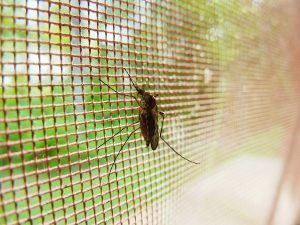
Malaria is spread by the bite of female mosquitos holding the Plasmodium parasite. Plasmodium falciparum causes life threatening malaria.

Advances made so far
In the five years to 2015, 17 countries managed to eradicate malaria –including the likes of Senegal and Bolivia. In this period, mortality fell by 50% and incidences fell by 15% – preventing over 6 million deaths.

The World Health Organisation (WHO) recently launched “the world’s first malaria vaccine that has been shown to provide partial protection against malaria in young children.”  After establishing efficacy in Phase 3 clinical trials a vaccine implementation programme is due to commence within this year’s immunization projects in Ghana, Kenya and Malawi.

A long way to go

Government spend on malaria prevention has seen a dramatic increase over the past decade. Although, experts note that around $6.5 billion of funding by 2020 will be key to hitting the WHO’s 2030 goal to wipe out malaria in 35 countries and shrink incidents and deaths by 90%.

Statistics claim that malaria still kills one child every two minutes.

Sub-Saharan Africa, as noted by Tanvi Nagpal, housed around 80% of the world’s malaria cases in 2016. “Their high infection rates are compounded by insufficient domestic budgets and struggling health systems.”Reports recently emerged stating of one in four blood banks in certain areas of Sub-Saharan Africa host supplies infected with malaria causing parasites.

CRISPR Cas9  

Researchers are now turning to CRISPR Cas9 to stop the disease at the source of transmission – the mosquito.

What is CRISPR?

The genome-editing system based on CRISPR-Cas9 is becoming a valuable tool for different applications in biomedical research, drug discovery and human gene therapy by gene repair and gene disruption, gene disruption of viral sequences and programmable RNA targeting.  The tool permanently manipulates gene expression by using programmable DNA nuclease and can remove faulty genes from a DNA sequence. (more…)
Mosquitoes, human health and environmental change

By Paul Huxley, Research Postgraduate, Faculty of Medicine, School of Public Health

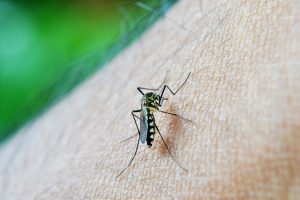
MosquitoRonald Ross, a British medical doctor of the late-19th and early 20th centuries, was first to identify the mosquito as the winged-insect carrier of malaria-causing parasites. Prior to this breakthrough, bad air (mal aria in Italian) was thought to have been the culprit. Together, Ross and Giovanni Grassi (who’s work, unlike Ross’, was controversially ignored by the Nobel Committee in 1902) uncovered a truth of huge ecological and epidemiological significance and sparked an ongoing international research effort aimed at answering fundamental questions about the processes that drive patterns of human morbidity and mortality caused by diseases carried by mosquitoes.

(more…)

The power of our microbiota

by Lily Roberts, Centre for Health Policy, Institute of Global Health Innovation

Did you know that not only does your gut do an incredible job of nourishing you by digesting your food, but that the composition of your resident gut bacteria also has a profound impact on your quality of life? While some of the specific mechanisms are still to this day unclear, a plethora of significant research is out there, with answers to our burning questions on how our gut bacteria can affect us.

On day one, the human body is exposed to a multitude of bacteria via the birthing canal. These bacterial cells colonise our body at a ratio of 10:1 with our own cells, most of which taking residence in the gut. Those that make themselves at home in our gut are referred to as our ‘microbiota’ (roughly translating to tiny living things). The relationship between the human body and these cells which make up our microbiota is referred to as ‘symbiotic’, which simply means both parties benefit from co-existing. It turns out our microbiota responds directly to the food supply by encouraging growth of either beneficial bacteria or harmful bacteria. This means that if we choose to eat nourishing whole, natural, unprocessed foods, our beneficial gut bacteria will thrive. If we constantly feed ourselves processed foods like hamburgers and chips, harmful bacteria that thrive on these foods will take over the gut and wreak havoc, impeding growth of beneficial bacteria. Ever heard of the phrase ‘you are what you eat’? (more…)

Taking part in the UHC conversation

By Dr Ryan Li, Adviser, Imperial College London, Global Health and Development Group

Universal health coverage is about ensuring all people can get quality health services, where and when they need them, without suffering financial hardship. No one should have to choose between good health and other life necessities.

As part of World Health Day, Dr Ryan Li from the Global Health & Development Group who is an advisor for the International Decision Support Initiative (iDSI), which supports countries to get the best value for money from health spending, reflects on a visit to Vietnam and the principles for developing clinical quality standards in Low and Middle Income Countries (LMICs):

I remember very vividly two of the hospitals I visited in Vietnam, during my first field trip as a global health advisor for iDSI. In a central hospital in Hanoi, I saw an acute stroke centre that was spotlessly clean and gleaming with the latest equipment, with specialised stroke clinicians offering a range evidence-based treatments matching Western standards. In contrast, in a district hospital a mere two hours away from the capital city, I saw an elderly woman with suspected stroke who had been hospitalised for two weeks, seemingly not getting any better and not receiving any meaningful treatment (and there was no way to confirm the diagnosis as no brain imaging could be done). There was no question as to which hospital I would choose, if I could, if a relative or I were unfortunate to have a stroke.

The reality is that for most people, there is no choice – those who have the means to access the better hospitals, perhaps simply because they live closer to the city, likely get better treatment. This is unfair. Universal health coverage (UHC) is only truly universal if everyone has fair access to good quality health services, irrespective of where they live, what facilities they have access to, their education, income, religion or ethnic background.

Variation in quality is not a phenomenon unique to Vietnam, but is a reality in health systems across the world – even in relatively well-resourced and well-performing UHC systems such as the UK National Health Service. Some variation in quality may be acceptable, but one reason why unacceptable variation occurs is that there is a lack of clarity across the system about what is best practice.

Quality standards

In a bid to address this variation, the National Institute for Health and Care Excellence (NICE) in the UK introduced Quality Standards (QS): concise sets of statements that describe what is best practice in a given disease area (drawn from existing evidence based guidelines). For instance, what kinds of and how many antenatal checks a pregnant woman should ideally receive; sets out the practical steps required to achieve improvement; and most importantly quantifies the improvement. In essence, QS brings everyone together to identify the top five or 10 things that need improving nationally; and focus efforts towards raising standards in those areas.

Since 2012, iDSI has been working with India, China, Vietnam and Thailand to develop and implement QS as ways of tackling inequalities in healthcare quality; and to raise overall standards in key areas such as antenatal and maternal health, non-communicable diseases (stroke, hypertension, and diabetes) and antimicrobial resistance. We have drawn on our UK and international experience to create a guide to QS, which is now available in the resources section of the iDSI website and on our iDSI Knowledge Gateway.

Thailand, long seen as a success story of UHC, also recognises unacceptable variation in quality among public healthcare providers. In particular, there is now a push to raise and standardise quality in health promotion and disease prevention, beginning with QS in antenatal care. I was privileged to be invited as an international expert to observe and advise on this process. The discussions I heard among policymakers, clinicians and grassroots health volunteers were so rich that I can already anticipate insights and lessons that will go into the next version of the QS guide.

The enthusiasm and expertise of the stroke clinicians I met in the central hospital in Vietnam was unquestionable; the challenge is to sustain those excellent standards of practice and to ensure that all healthcare services across a country can reach those standards. iDSI’s vision is that everyone has fair access to quality healthcare, and we hope that our efforts in introducing and localising the QS model is a small step in the right direction.

A young person’s perspective on being involved in a mental health research project

By Katy Pickles

My name is Katy Pickles and I’m currently part of the Young Persons Advisory Group (YPAG) for Imperial College London’s social media, other technologies and mental health research, which is focused on how young people might use social media whilst suffering with a mental health issue. Having used social media whilst in treatment for mental illness, I have found myself curious about the results of research such as this. I have been receiving information and helping shape the project for just over a month now and look forward to the next few months whilst I follow the progress that is made. (more…)
Cholangiocarcinoma – the rare disease that’s on the increase

By Professor Simon Taylor-Robinson, Consultant Hepatologist and Professor of Translational Medicine at Imperial College London

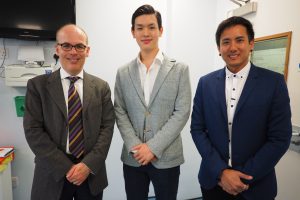
Professor Simon Taylor-Robinson with colleagues

Cholangiocarcinoma is a rare primary malignancy arising from cholangiocytes, the endothelial lining of the biliary ducts, with an incidence 2500 cases of per annum in the UK. The only option for cure is surgical resection, but cholangiocarcinoma usually presents late when it grows sufficiently to block the drainage of bile from the liver, presenting with jaundice. By this point it is often irresectable, and palliative management includes holding open the ducts with stents to prevent blockage, and chemotherapy. One-year survival is only 5%.

The incidence of this insidious disease is increasing, and earlier diagnosis and better treatment are urgently required. Aetiological factors are thought to include exposure of the endothelium to carcinogenic compounds, and increased mutation induced by chronic inflammation, which may explain the association of chronic infection/gallstones, anatomical abnormalities, intrabiliary parasites, chronic biliary inflammatory disease. However, many patients do not have any identifiable risk factors.

The Lead Investigators in our research, as well myself, include Dr Shahid Khan, Honorary Clinical Senior Lecturer, Adjunct Reader from the Faculty of MedicineFaculty of Medicine Centre and Professor Richard Syms from the Faculty of EngineeringDepartment of Electrical and Electronic Engineering. Our work aims to tackle cholangiocarcinoma in five main areas:
                       
1) Novel biomarkers for cholangiocarcinoma. This takes advantage of the large numbers of patients with hepatobiliary malignancies including cholangiocarcinoma who are managed through the tertiary referral HPB services provided at Hammersmith Hospital, and utilises scientific expertise and infrastructure on both the Hammersmith and South Kensington sites. As part of a UKCRN-adopted programme we are establishing a biobank of body fluids from patients with various hepatobiliary malignancies in collaboration with other groups. We are applying metabonomic and proteomic analysis to blood, bile and urine samples to identify novel biomarkers for cholangiocarcinoma diagnosis and prognostication.

2) Genetic risk factors for cholangiocarcinoma. We have established a bank of DNA samples from patients with cholangiocarcinoma and with related diseases. DNA SNP analysis has demonstrated association of mutations in bilary transporters with development of cancer. Further analysis continues.

3) Epidemiology of Cholangiocarcinoma. It is known that the diagnosed incidence of cholangiocarcinoma is increasing. Work in our group in collaboration with Mireille Toledano (School of Public Health) has demonstrated the need for careful re-evaluation of these data as the real trend is obscured by changes in disease coding practice. Epidemiological work is continuing to identify associated factors which may give insight into cause, and assist in service planning.

4) Improving imaging in Cholangiocarcinoma. Current imaging techniques include ultrasound, MRI and CT scanning. However, optimising patient staging to accurately identify those who may benefit from resection or other therapies demands greater imaging resolution than these techniques can provide. In a collaborative project with the Richard Syms in the Engineering Faculty, we are
developing an MRI probe which could be placed inside the bile ducts to give fine detail on tumour anatomy and its breach of the ductal layers as it progresses. This has led to the development of novel coil technologies by our collaborating partners and offers exciting prospects for the future in this and other applications.

5) International and Domestic  Collaborations. In other countries infestation with biliary parasites is associated with a higher incidence of cholangiocarcinoma. We have previous, ongoing and evolving collaborations with Thailand, Egypt, and Bangladesh with the aim of comparing samples from fluke-related disease with our own cohort to identify differentiating factors. We also have collaboration with the Mayo Clinic and leading Norwegian researchers. Within the UK we have existing collaborations with Oxford and UCL, and are developing new relationships as part of the UKCRN scheme, with 6 new centres currently agreed

We can, I can, this World Cancer Day

By Caitriona Tyndall, MSc. BSc, Cancer Research UK Imperial Centre, Department of Surgery and Cancer, Imperial College London.

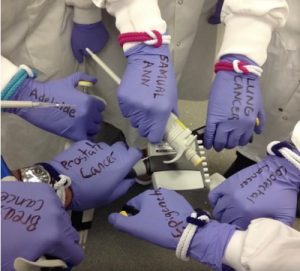
Cancer Research UK (CRUK) introduced the unity bands as a symbol of our united front against cancer and a pledge to help beat cancer sooner.

The 4th of February is World Cancer Day. This is a day to remember and celebrate. Sadly cancer affects us all whether it’s personally or through our friends and family or work colleagues. In fact it’s estimated that 1 in 2 of us will be affected by cancer at some point in our lifetime. But in the face of this depressing statistic there is cause to celebrate. We can celebrate the people we know who have beaten cancer, celebrate the lives of those we have lost and celebrate the ground-breaking research being done by thousands of people across the UK and the world to help beat cancer sooner. I started my career in cancer research in the final year of my undergraduate. As I was starting my final year project in breast cancer research, someone very close to me was diagnosed with breast cancer. Thankfully she fought tooth and nail and came out a survivor but this moment really drove home the importance of the work that cancer researchers, clinicians and volunteers do to find new ways to prevent, diagnose and treat cancer.

The theme of World Cancer Day 2016-2018 is “We can. I can.” It may not seem likely but everyone as an individual can have an impact on cancer as a disease. This is why it’s a great opportunity on World Cancer Day to raise awareness of the different types of cancers and how we as a collective can beat each and every one. Prevention is one of the key ways we can reduce cancer incidence. There are many preventative steps we can all take. Health and lifestyle factors (also known as risk factors) influence the chances of developing cancer. We can reduce this influence by changing small habits, for example reducing our alcohol intake, stopping smoking and adopting more balanced, healthier and active lifestyles. We also want to keep an eye on our bodies, get to know what’s normal for us so we can spot when something isn’t normal. These simple individual changes can add up to a global shift in cancer incidence and mortality. (more…)

The IGHI Big Data Analytical Unit 2017 – year in review

By Joshua Symons, BDAU, Centre for Health Policy, Institute of Global Health Innovation 

2017 has been a very busy year for the Big Data and Analytical Unit (BDAU). High level accomplishments in data security and researcher outreach have led the BDAU to become one of the most secure and recognised analytic platforms for healthcare data at Imperial.

In May of 2017, the BDAU Secure Environment (SE) became the first ISO 27001:2013 (figure 1) and NHS IG Toolkit 100% Level 3 (figure 2) certified research environment in Imperial College. Over the course of 2017, the BDAU SE was successful in completing a further 11 internal and external audits. The 6-month surveillance audit required for retaining ISO 27001 certification was completed with 0 non-conformances. The BDAU now provides advisory to the Imperial College Information Governance Operational Group and the Information Governance Steering Committee for the Department of Surgery and Cancer.

Usage (more…)

Ideabatic – where we are now…

By Kitty Liao and Abellona U of IdeabaticIGHI’s 2017 Student Challenges Competition winners

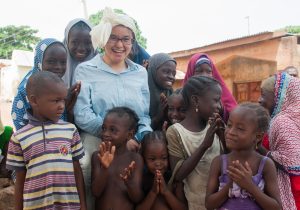
Kitty in the community where a vaccine campaign was being carried out

So much has happened since we won the Student Challenges Competition last year. The prize from the competition has been very helpful for us to secure our UK patent. Following that, we have recently submitted our global patent.

(more…)

Ending stigma and HIV transmission

By Dr Julia Makinde is a Research Associate with the International AIDS Vaccine Initiative at Imperial College London

It is estimated that there are 36.7 million people living with HIV globally with 1.8 million new infections in 2016 alone (1). This number represents an 11% drop in the number of new infections from 2010 . Some might consider this an achievement or a testament to the impact of strategic national and global policies aimed at tackling the epidemic. But in reality, these numbers mask the discrepant pace in the effort to tackle transmission and AIDS-related deaths in countries across the globe. UNAIDS recently reported a steep decline in new infections in sub-Saharan Africa against an alarming increase in the number of new infections in eastern Europe and central Asia in the same period (2). In the UK where the HIV burden is considerably lower, the number of new infections has been steadily falling (3). The reasons for these differences are complex and certain socio-economic factors have the potential to undermine the global effort to tackle transmission.

(more…)