Author: Anna Lawrence-Jones

A young person’s experience of being involved in the Networked Data Lab

The Institute of Global Health Innovation partners with Imperial College Health Partners (ICHP) and Imperial College London to lead the North West London Networked Data Lab (NDL).

The Networked Data Lab (NDL), funded by The Health Foundation, is a community of data professionals looking to solve the UK’s most pressing health care challenges since COVID-19. The North West London NDL is one of five NDLs around the UK that carries out data analysis on various topics based on local priorities, which were determined through community engagement and by the Health Foundation. Health care data is often fragmented, making reliable analysis difficult, but in North West London we have access to a depersonalised linked data set, via Discover-NOW, covering a diverse population of over 2.5 million. The NDL analysed how young people’s mental health and access to care was impacted by the COVID-19 pandemic.

Arif, one of the 20 young people who attended the first public involvement workshop in May 2021, tells us about his experience of being involved and why he then ended up joining the project’s Young Person’s Advisory Group. 

This blog was originally posted online by Imperial College Health Partners.

Person writes with pen on a yellow post-it note

I saw an advert for the workshop in communications from a youth charity I’m part of. I thought it sounded like an interesting workshop because it was about coming up with priorities for research around young people’s mental health, which could then improve care. I wanted to represent my views as a young person with experience of mental health difficulties and to try to make a difference for other young people going through something similar.

“I think it’s so important to involve young people in projects like this – we should have a say in how services, which support us, run.” – Arif

More young people need mental health support than ever before, and services are struggling with increased demand – something needs to change. Who better to suggest changes than the people who have experienced the services and have ideas about what could make them better. We bring our own experiences and skills that are different to researchers and healthcare professionals. We can help unlock answers to issues that professionals might not have thought about.

After the workshop, we were asked if we wanted to apply to be part of the Young Person’s Advisory Group, to oversee the project from a young person perspective, which I was pleased to join. My role was to advocate the views of young people in the work and outputs and to make sense of the data. For example, we were presented the initial findings from the analysis of the data and then suggested areas that we thought would be interesting to explore further. The data analysts presented the different findings in a number of graphs and talked us through the significance of each. One of the findings was around how young women in North West London have been accessing more mental health services since COVID-19 and receiving more diagnosis and treatment than young men. However, when we discussed this in the group, we thought that it didn’t necessarily mean young men were not experiencing as many mental health difficulties as young women, but maybe young men were less likely to seek help. Having us look at the results, helped the analysts see that the results might not be showing the whole picture.

I also reviewed The Health Foundation’s national policy paper to make sure that the results were clear. The paper recommends that three key areas need urgent investigation, to help ensure children and young people universally get the care they need.

Image of report, with title "Briefing: "Improving children and young people’s mental health services". Below the text is the logo of The Health Foundation. These are, understanding:

  • The rapid increases in mental health prescribing and support provided by GPs
  • The prevalence of mental health problems among adolescent girls and young women
  • The stark socioeconomic inequalities across the UK

One key thing that stood out to me was the increase in prescribing medication to treat young people, that didn’t match an increase in other kinds of treatment. I think we need to understand why this is happening. To me, this suggests there are limited options for GPs to progress mental health support in other ways.

“Being part of this project, I’ve learned that implementing effective improvements is a long process and it cannot happen instantly.” – Arif

It takes time and resource. But I can’t wait to see the impact the results of the NDL will have on services and young people. I think the YPAG could help with ensuring the results are implemented, by meeting with some of the leaders, to help ensure they act on change. Having a young person at the table helps to add a face to the people who have been experiencing worsened mental health since COVID-19 and difficulty accessing services. We could share the results with our networks and empower young people to advocate to decision-makers about what needs to change, to urgently tackle this mental health crisis.

I would definitely recommend that young people get involved in projects like this. Not only can you gain valuable professional experience, but you can get involved in improving problems that might otherwise be overlooked. The amount of time we had to dedicate was manageable around my work commitments. And, I liked that there were Mental Health First Aiders as part of the team, in case any of us wanted to have a debrief after a meeting.

In terms of what could have been done differently around our involvement; I think it would have been useful to have more consistent communication and a stable point of contact. There were a lot of changes in staff, so we had three different Public Involvement Leads as our main point of contact, which got a bit confusing. Now that I am involved in a few projects, I think it would be really useful to be sent a brief summary of what has happened so far, to keep me up to speed and to keep the project front of mind.

If other researchers are looking to involve young people in their work, I would suggest to:

  • Have a clear idea of the time commitment that the young people would need to dedicate to the project and how often they would meet
  • Send clear and concise information with enough notice before a meeting
  • Involve people in the late afternoons or evening after work e.g. 4.30-7pm or in lunch breaks
  • Potentially, set up a WhatsApp group that could be useful to send reminders and get the group to work well as a team


If you are aged 16-25 and are looking to get involved in a project like Arif, sign up to Imperial College London’s Young Person’s Advisory Network.

How seldom heard groups are helping us shape our research priorities – learnings so far

Person rubbing alcohol gel onto hands

Last summer, the Institute of Global Health Innovation, Imperial College Health Partners and Imperial College London were successful in being named as one of the five Network Data Labs (NDL) across the UK, funded by the Health Foundation.

This is an extremely exciting opportunity for our partnership. We have the opportunity to work with our local community in North West London to identify research priorities for health and care since COVID-19, and translate those findings into practice – helping to reduce inequalities.

In North West London we are also very fortunate to have access to a linked data set, known as Discover. This provides information from primary care, acute, mental health, community and social care. It gives us the unique opportunity to delve deeper into health inequalities, and use data to try and discover how communities have been affected by the pandemic.

Our first research project has been an analysis of people recommended to shield by the government, and how COVID-19 has affected them. North West London has a very diverse population in terms of income and ethnicity. We therefore wanted to be sure we were working with a range of patients and the public to help inform our research priorities. Two groups we worked closely with are the Imperial Research Partners group, a diverse group of 11 patients and carers, and also Community Voices, a group of community leaders linked to groups representing people from socially disadvantaged backgrounds, those who don’t have English as a first language and a range of other seldom heard communities.

Identifying priorities and concerns

Back in November around 50 people from Community Voices, 40% of whom were from a minority ethnic background and 40% who identified as having a disability, attended a design workshop to help consider two questions. 1) What changes have you noticed in the way that health and care are supported and delivered in North West London since COVID-19? And 2) In terms of the impact COVID-19 has on health and care in the UK, what are our local North West London community priorities for health and care? What are people most worried about and why?

There were two key elements that helped to ensure the workshop could be as productive as possible:

  • Ensuring we had plenty of time to explain the Discover data in plain English, and to allow questions around data security.
  • Having an analyst involved with each breakout session to help ensure emerging themes were issues we could analyse within our data.

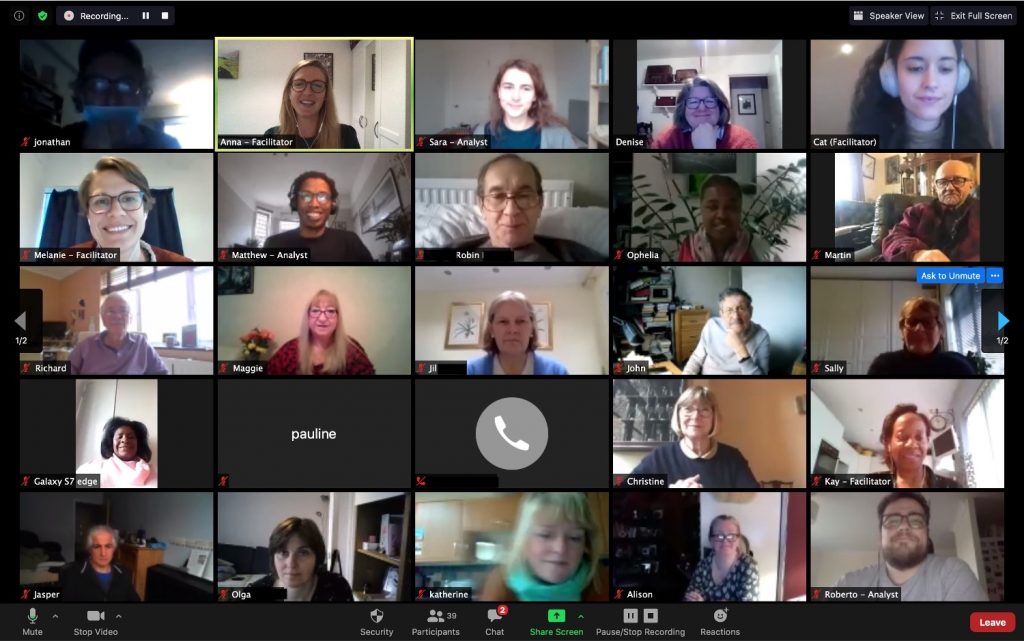
A screenshot from the virtual workshop involving seldom heard groups

The impact of COVID-19 on mental health

After the workshop, we collated all of the themes that were raised and the analysts checked whether these themes could be answered using the Discover data set. Seven themes were put into a prioritisation survey. To reach as many North West Londoners as possible, we sent the survey to all the Community Voices network, the workshop attendees and other local community groups, via Twitter, Instagram, the Nextdoor App and Facebook groups for local COVID-19 Mutual Aid Groups. 112 community members completed the survey and the seven themes ranked in this order of importance:

  1. Diagnosis of other conditions
  2. Underserved communities (e.g. people on low incomes)
  3. Mental health
  4. Local availability of services
  5. Access to video consultations
  6. Social and community care
  7. Worse COVID-19 outcomes for minority ethnic groups.

We submitted these findings to the Health Foundation, along with the other NDL members. The next overarching topic we will be working on is the impact of COVID-19 on mental health – one of the top three priorities selected locally. Working with local clinicians and drawing on evidence from recent research and engagement with people with lived experience of mental health, including those from under-represented groups, the Health Foundation have decided our next focus will be on inequalities in children and young people’s access to mental healthcare.

Using data to drive real change

We know the pandemic has particularly impacted children and young people from socially disadvantaged backgrounds, particularly in terms of mental health service provision. So we will use Discover and other data sets to delve deeper into why access to services is so fragmented at the moment. We will also work with young people from North West London with lived experience of mental health conditions. We will discuss what is important to them in health and social care since COVID-19, as well as carers, families and teachers.

Building on learnings from IGHI’s co-produced CCopeY study, which has looked at the impact of lockdown on young people’s mental health, we’ll be making these sessions as interactive and as accessible as possible. Our intention is to use our findings – from both our engagement and our data analysis – to help effect real change locally in North West London. We’re so excited to start this work. And we’re looking forward to sharing our learnings as we progress through the journey.

For more information, or to get involved, please do contact me at a.lawrence-jones@imperial.ac.uk

By Anna Lawrence-Jones, PPIE lead for the Network Data Lab and IGHI

Our Co-production Journey: From Sandpits to Bird Boxes

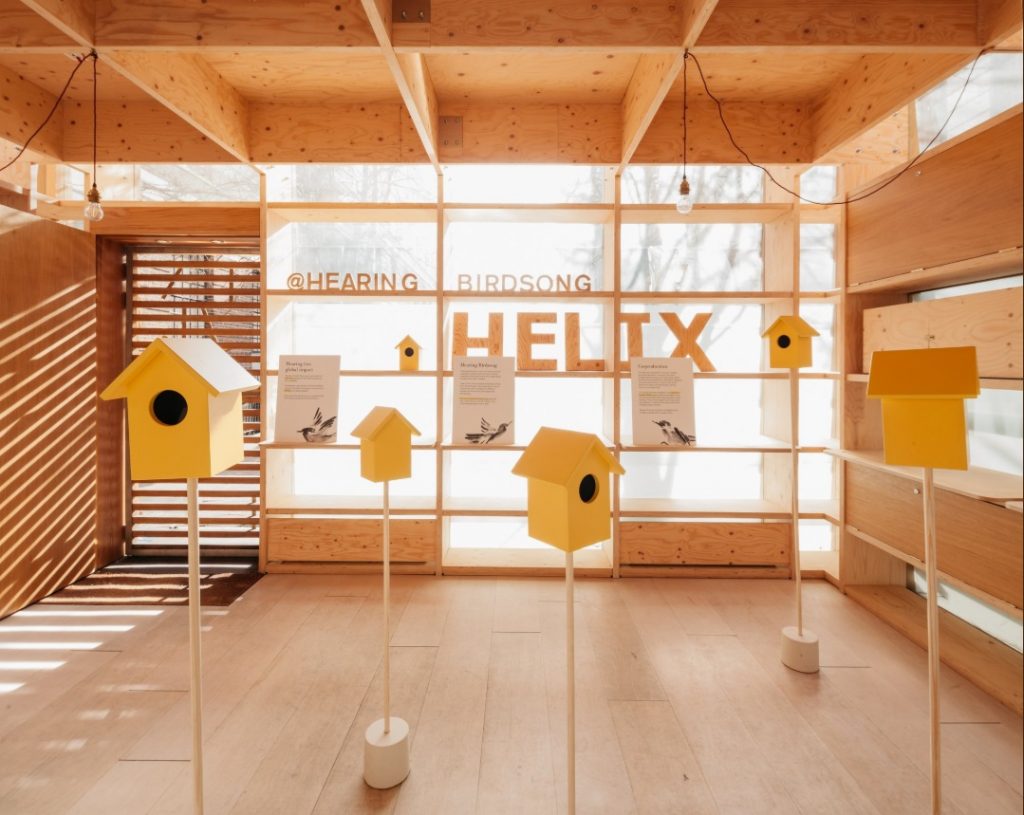
A picture of yelllow bird boxes at a pop-up event.
Image credit: James Retief @jretief11

By Anna Lawrence-Jones (co-written with Jean Straus).

This article originally appeared on the UCL Public Engagement blog and has been reposted with permission. Visit the blog to read more about the UCL Centre for Co-Production in Health Research. 

In my former job at Cancer Research UK, I organised Sandpit Innovation Workshops that brought together researchers, healthcare professionals and innovative thinkers to come up with novel research ideas to help solve a health challenge. Normally a three-day event, sandpits are a way to generate research ideas – which are inevitably more innovative and daring in this spontaneous environment – and get them funded quickly. But often, patient attendees were part of a panel which selected projects to fund, and were not part of the teams producing the ideas themselves. I often felt these were a lost opportunity for patients to have a greater role. (more…)