Category: Infection

Topical issues in STIs: going beyond testing at the Jefferiss Wing centre for Sexual Health

By Dr Angela Bailey, Consultant HIV/GU medicine, Imperial College Healthcare NHS Trust

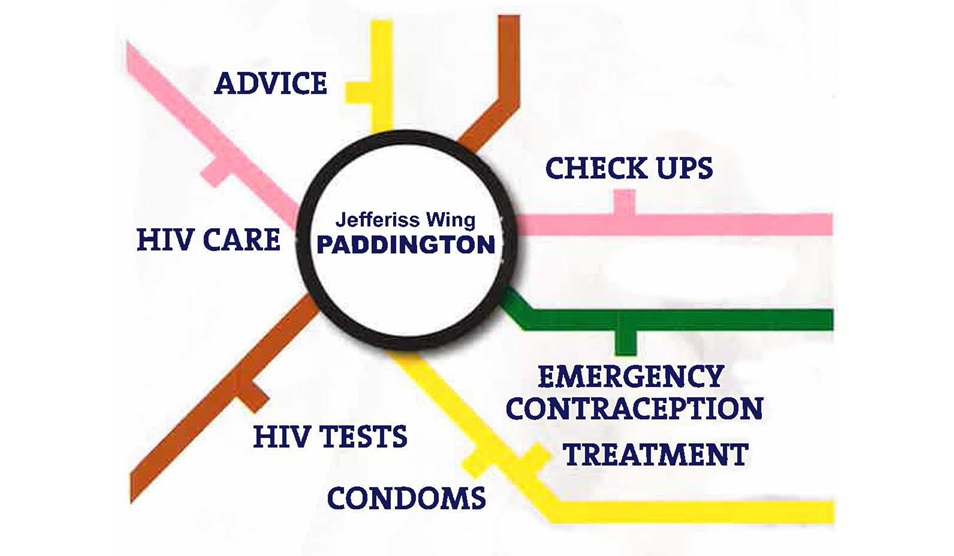
Jefferiss Wing centreThe Jefferiss Wing at St Mary’s hospital is one of the biggest sexual health clinics in the UK. As well as providing services for testing (walk in and bookable online), we have an active Clinical Trials Centre and many of our clinicians are involved in sexual health research which gives our patients a chance to participate in studies and access to the latest developments in STI care. Some key areas, which have been in the news over the last year, are discussed here.

(more…)

Putting TB to the test: My journey so far

By Harriet Gliddon, winner of the IGHI Student Challenges Competition 2015-16

ANT_4401During March 2016, I blogged for IGHI on World TB Day about my experiences of entering the Student Challenges Competition.

The intervening six months have been busier than I could have imagined, and filled with things like delivering an invited talk at the Biosensors Summit in Sweden, submitting my PhD thesis and completing an internship at the World Health Organization.

Despite the chaos, I’ve managed to make some exciting advances with the nanomaterial-based diagnostic test for TB that I presented at the Student Challenges Competition. One component of this work has focused on validating the genetic markers that are the biological targets, or biomarkers, of the test. I have used various methods, some well established and others more experimental, to assess the reliability of the biomarkers in discriminating between patients with and without TB. As I said in March, this work is a real team effort and a large proportion of the analysis was conducted by Dr Myrsini Kaforou, who I’m very grateful to. The biomarkers validated extremely well across multiple platforms, which proves their robustness regardless of the HIV infection status of patients, and across geographical locations (Malawi and South Africa), showing that they’re robust and reproducible for use as diagnostic markers of TB. This work is currently being prepared for publication, so keep an eye out for it in the next few months!

I have been keen to use mobile phone technology to translate the current assay, which currently requires a relatively sophisticated plate reader to record the results, into something more appropriate for use in field settings. Through the i-sense EPSRC Interdisciplinary Research Centre (IRC), my colleagues and I have been lucky enough to work with Dr Matthew Penny and Dr Steve Hilton from UCL, who have developed a working prototype of a mobile phone spectrometer that can sensitively detect the fluorescence of quantum dots (the nanoparticles I have been working with). (more…)

The global burden of viral hepatitis

By Dr Graham Cooke, Clinical Senior Lecturer in Infectious Diseases, Imperial College London

A couple of weeks ago we published our paper on the burden of viral hepatitis. We’d hoped that the Lancet would publish it in time for World Health Assembly in May and it might get a bit of attention. That couldn’t be done, so it came out on the 6th July. The same day as Chilcot. Not a brilliant piece of planning, it has to be said, and a reminder of how much I have to learn about PR.

With colleagues at Imperial, we have been studying and writing about hepatitis for some years. But there’s always been a feeling that hepatitis has been relatively low profile in the global health community, and not just because of major enquiries into wars. So how did we end up writing a paper on the burden of hepatitis?

Most of the health impact of viral hepatitis is from two viruses, hepatitis B (HBV) and hepatitis C (HCV) – both cause liver scarring (cirrhosis) and liver cancer (hepatocellular carcinoma). The world has had a good HBV vaccine for a long time, and in the last few years we have seen great progress in new treatments for both viruses. Hepatitis B can be controlled, like HIV, with daily medication. But a revolution in treatment really kicked off in late 2011 when data was presented on the first a new class of curative treatments for hepatitis C, sofosbuvir (then known catchily as PSI-7977).  As soon as we saw that data it was clear that the step forward in treatment could transform treatment, not just in developed health systems, but potentially in all health systems. (more…)

TB or not TB?

By final year Imperial Medical PhD student Harriet Gliddon – winner of our Student Challenges Competition 2015/16 

TB is a major public health challenge in developing countries

World TB Day (24th March) commemorates the anniversary of Robert Koch’s 1882 discovery of the causative agent of tuberculosis (TB). Since then, it has been the subject of intense research, with hundreds of millions of dollars spent on TB research and development every year. Despite this, we still lack the antibiotics, vaccines and diagnostic tests needed to control the disease properly, and TB therefore remains a major public health challenge, particularly in developing settings like much of sub-Saharan Africa. As of last year, TB is the leading cause of death worldwide due to an infection. Added to that, the WHO estimates that 37% of cases go undiagnosed or unreported, largely because of our ineffective, costly and time-consuming tools for diagnosing the disease.

My work aims to address this by developing a test for TB that works in a completely different way to TB diagnostics currently in use. Instead of trying to detect the TB bacteria, I want to detect an individual’s response to TB infection. But just diagnosing TB isn’t enough – the test has to be fast, affordable and easy to use.

When someone is infected with TB, certain genes are switched on to fight the infection, and other genes are switched off. The combination of ‘on’ and ‘off’ genes makes up a unique gene signature for TB, which can be used to diagnose the disease. Our current tools to measure the levels of these genes currently require highly trained personnel, bulky and costly equipment, and stable power supplies; not techniques you could imagine using in resource-limited settings. (more…)

Controlling schistosomiasis: another reason why clean water is so important

By Dr Michael Templeton, Faculty of Engineering, Department of Civil and Environmental Engineering, Imperial College London

With World Water Day approaching on 22 March, research at Imperial College London is highlighting yet another example of why access to clean water is so vitally important to human health.

The research is seeking to quantify the role of access to clean water in reducing the odds of becoming infected with the neglected tropical disease schistosomiasis.

A schistosomiasis worm

It has been estimated that 200 million people in developing countries are infected with the parasite causing this disease, which manifests itself in a range of symptoms, including enlargement of the liver and spleen, anaemia, increased risk of bladder cancer, exacerbation of the transmission of HIV and its progression to AIDS, and in extreme cases seizures. The parasite lives within infected people, with aquatic snails acting as intermediate hosts and releasing cercariae (the larval form of the parasite) into water bodies, which then penetrate the skin of other people who come in contact with the contaminated water. Preventing people from coming into contact with contaminated water and preventing urine and faeces from passing into water bodies should stop this cycle, however most endemic countries lack adequate water and sanitation provision. (more…)

SCI needs to expand coverage to help treat 100 million children a year against bilharzia (schistosomiasis) and worms.

By Professor Alan Fenwick OBE, Director of SCI (Schistosomiasis Control Initiative), Imperial College, London)

A schistosomiasis worm

Schistosomiasis is a type of infection caused by parasites that live in fresh water, such as rivers or lakes, in subtropical and tropical regions worldwide.  It is also known as bilharzia.

The Schistosomiasis Control Initiative (SCI) at Imperial College London supports Ministries of Health and Education in 16 countries to deliver medicines to treat people infected with schistosomiasis and three intestinal worms. The medicines are donated by various pharmaceutical companies, Merck KgGA (praziquantel), GSK (albendazle) and Johnson and Johnson (mebendazole), and for the most part, the targets are school aged children.

Treating children for schistosomiasis

The SCI’s role includes advocacy at all levels in the countries from Ministers down through regional officials to teachers and health staff who deliver the medicines. These medicines are safe to swallow and effective. For the most part they are delivered annually through schools or through communities. We assist the countries with mapping so that the geographical distribution of the diseases is known, and then with preparing medicine donation requests. (more…)

IGHI Student Challenges Competition: Diagnosing Schistosomiasis: My Journey so Far…

Gabrielle for articleGabrielle Prager, Winner of IGHI’s 2013 Student Challenges Competition guides us through her journey throughout the contest and the next steps for her research project.

This is the problem:  In 2011, 243 million people required treatment for schistosomiasis. 28.1 million were reported to have received that treatment. Schistosomiasis is a neglected tropical disease.  What is it? It is a blood dwelling fluke. How is it treated? Mass Drug Administration with Praziquantel has been the mainstay of most treatment programmes. Uganda was the first country in Africa to initiate a national control programme coordinated by the Ministry of Health with technical and financial support from the Schistosomiasis Control Initiative (SCI). The SCI have been involved in the mapping, monitoring and evaluation of schistosomiasis.  Within two years Uganda saw a decrease in prevalence and infection intensity. As Mass Drug Administration continues, infection intensities and prevalence decreases and areas of lower infection intensities and prevalence begin to be targeted. In lower intensity areas, better diagnostic tools are required. Finding a better diagnostic tool is the beginning of my story.

Gabrielle with childDr. Charlotte Gower works closely with Dr. Poppy Lamberton in the Department of Infectious Disease Epidemiology and they have been involved in tackling this neglected tropical disease for a number of years. Dr. Gower has been investigating the identification and development of new diagnostic tools, in particular loop-mediated isothermal amplification or LAMP. LAMP is an isothermal DNA amplification technique, which allows amplification in less than an hour at a single temperature, which decreases the need for complex and expensive lab equipment. Dr. Lamberton’s fieldwork took her to Uganda to monitor infection and examine drug resistance. I had the good fortune of working with both these extraordinary women. (more…)