Blog posts

Presenting my research at the Rising Scientist Day

By Jonathan Li, PhD Student, Department of Metabolism, Digestion and Reproduction

Hi, I’m Jonathan.  I’m a 3rd year PhD student studying signalling pathways in the myometrium. I presented my research at the Rising Scientist Day hosted by Faculty of Medicine. It is a one day conference that allows PhD students from multiple backgrounds to present their work. Usually, the symposium offers a great chance to network with other PhD students and to find out what their research is all about. This year, due to COVID-19, the format was slightly different than previous years, where everything was done remotely.  Nonetheless, the event was still a great success. 

The day started off with a number of 3 minute thesis talks, then this was followed by intermissions and lunch breaks where we could view the posters. Given the challenges of hosting a symposium remotely, the day went very smoothly with only a few technical hitches due to the overwhelming number of people wanting to listen in on the talks. One of the advantages of having a remote symposium is that students who are not based in London can attend these events, where we had one speaker dial in from South East Asia! 

The remote nature of the symposium meant that a poster session was not possible. However, the posters were consolidated into one website that was very accessible. Whilst lacking the benefits of having a scientist explaining their work in person. The posters were submitted along with a 1 minute recording. One of the challenges is how do you explain your research in such a short amount of time without being there in person.  Suffice to say the approaches of how to tackle this problem were varied, where some chose to adopt QR codes, some used hyper-links.  The sheer amount of thought and consideration to these limitations, coupled with the high quality of research in these posters made it feel like I was attending an international conference.  

The sheer variety of fields was also very eye opening, ranging from preterm labour (my research focus) to things like embryonic stem cells or avian influenza viral research.  As a final year PhD student, I can say from personal experience it is very easy to focus on your own project, as the deadlines mount and you try to complete experiments or gather more data. The symposium provides an excellent chance to find out about other projects ongoing at Imperial. 

Overall, the day was a wonderful experience and having the chance to see the excellent research that is being carried out by my peers makes for a nice break from the routine of lab work. Whilst the symposium lacks the in-person touch this year, I’m looking forward to similar future events when COVID-19 restrictions are relaxed. I would highly recommend PhD students to submit their work if they have the chance next year.  

Many thanks to the staff members who helped organise the event. 

A Unique Rising Scientist Day

By Alexander Carver, PhD student, Department of Infectious Disease

Hi, I’m Alex, a second year PhD student studying in Professor Xiaodong Zhang’s group. On 20th April, I was lucky enough to take part in Rising Scientist Day 2021 and win the 3-minute thesis competition. It has been a tough year for PhD students across Imperial College with the coronavirus pandemic taking a toll on what has been possible to achieve in the lab; however, it was very impressive to see what people have been working on for the last 1-2 years. The day consisted of poster viewing sessions in which all 2nd and 3rd year PhD students in the Faculty of Medicine were expected to compete. The posters were of exceptional quality, and the winners did a great job in producing posters worthy of any conference. 

In addition to poster viewing sessions, 25 PhD students were also nominated to produce a single slide summarising their research which they would present to the audience (over Zoom) in a maximum of three-minutes. Undoubtedly a big challenge, the field was full of great talks, ranging from discussion of new Hepatitis treatments in Eastern Asia to understanding the role of microbiota in immunity. My talk examined the regulation of the DNA damage response, particularly the proteins involved in Homologous Recombination, a pathway of repair essential for the maintenance of genome integrity. 

We were also treated to two talks by two recent Imperial College alumni who gave us an insight into what they achieved with their PhDs. Despite both alumni completing a PhD in the Faculty of Medicine, they both had gone into different careers that have used the skills gained during their doctoral research. The first, Zoe Seager, told us much about what it is like to be a post-doctoral researcher in academia. It was a very interesting listen, and many questions were asked about how to go about writing an excellent thesis and articles for publication, as well as how to apply for jobs in academia. The second alumnus, Sophie Ward, did not do a post-doctoral research role in academia but had instead gone into strategy at the Wellcome Trust. In particular, she played a key role in the Covid-response by the Trust. Despite the exit from academic, *name* talk demonstrated that having a PhD gives you the skills necessary to turn your hand to any job, within or without academia. 

Overall, despite the obvious effect of Covid making the Rising Scientist Day not what it could have been, it was heartening to see the quality and diverse range of research that has continued to speed ahead. I would like to thank all the other competitors in both the Poster and 3-Minute Thesis competitions, especially the winners (as listed below). 

Three-Minute Thesis: 

  1. Alex Carver 
  2. Max Larkinson
  3. Catherine Cherry 

Poster: 

  1. Maddalena Cerrone 
  2. Jonathan Li 
  3. Golly Mobayen 

Most fun poster: Ioanna Panagi 

I would also like to thank the organisers of the day, including Hayley Kendall-Berry and Kevin Murphy, who expertly hosted the event despite the early Zoom-related technical issues. Hopefully we’ll be back to presenting in person next year and will be able to enjoy some well-deserved nibbles and vino afterwards!

The Crick-Imperial Symposium 2021

Every three years, PhD students from The Francis Crick Institute and Imperial College hold a symposium dedicated to enabling students from both institutions to share their research through posters and talks in a supportive environment. Obviously, this year had to be a little different. The event had to held virtually as a result of the COVID-19 pandemic which posed new challenges. A key objective of this event is the provide a platform for graduate students from a range of scientific backgrounds to network and work together, something we can all agree is much more challenging behind a computer screen!

We decided that alongside using Zoom for the talks we would use Gather.Town for the posters and networking. We felt this best replicated the networking opportunities normally facilitated at these events as Gather.Town lets you speak with people 1-1 and in small groups. You can design different rooms for people to browse (see pictures for the main foyer and Perkin Elmer’s room).

Alongside the PhD speakers we had Professor Aldo Faisal and Geraldine Cox as plenary speakers. Apart from being inspiring and captivating speakers, their talks also complimented the interdisciplinary nature of the symposium.

Professor Faisal is a Professor of AI & Neuroscience jointly at the Dept. of Bioengineering and the Dept. of Computing at Imperial College London, where he leads the Brain & Behaviour Lab. He talked about his work on using wearables to record natural human behaviour and training AI with this data to improve performance of machine vision for self-driving cars or help mobility of wheelchairs of paralysed patients. (find more about his work https://www.imperial.ac.uk/people/a.faisal).

Geraldine Cox has degrees in physics and fine art and began her project called ‘Finding Patterns’ in 2011 at Imperial College London with an ‘Artist in Residence Award’ from the Leverhulme Trust. Since then, her work has grown to involve scientists from other universities including Oxford, Cambridge, Durham and MIT. See her talk here. Both talks were really engaging and offered interesting new perspectives. As Geraldine’s talk rounded off the day, she joined us in Gather.Town for the final networking session and facilitated some excellent discussions!

Examples of Geraldine’s work: Harmony and Universe

Prizes were awarded for the top 3 talks and posters, voted for by the other attendees. This gave us an opportunity to recognise the excellent work being done by PhD students from both institutions and helped to engage the audience. We also held a raffle based on who attended the Perkin Elmer booth, for which they kindly donated 10 £25 vouchers as prizes. This added an incentive for participation as we know this can sometimes be difficult at virtual events!

We know that virtual events can be a challenge and we just want to say a massive thank you to everyone who participated so enthusiastically in the symposium! We hope it was a good opportunity to present your work to an audience of more diverse backgrounds and that you got the chance to engage with each other as much as possible. We look forward to seeing you all in person sometime soon!

From the lab to the ward, and back again

by Dr Sonia Wolf, Department of Infectious Disease

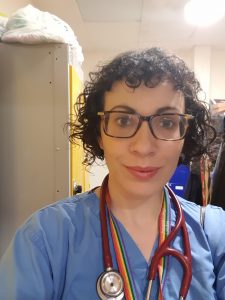
In January 2020, talk of a new virus in Wuhan emerged. As whispers spread about what it was and where it had come from, my curiosity was only that of an interested PhD student in the Department of Infectious Disease. As the epidemic grew and spread, however, I became increasingly aware that, as a medical doctor, my skills on the frontline were going to be needed. As college shut down, my research samples sat sadly in the freezer, while I tried (and failed) to write from home. The email came at the end of March; I was going to Newham Hospital, as an Acute Medical Registrar.

It was a daunting redeployment for me. I had been out of clinical work for over 2 years; I had never worked at Newham, and this was not my usual specialty, Haematology. I went for training on how to use a ventilator. The hospital was eerily quiet; busy but calm, everyone transporting patients briskly from A&E to the wards, behind expressionless masked faces. I started on night shifts, covering the Care of the Elderly wards. I had never in my career seen anything like this. There were 9 wards, excluding Intensive Care, at Newham, and 8 and a half were filled with Covid patients. For most of the elderly, deemed too frail for Intensive Care, this was their only option. For many of them at that time, the only thing we could do was increase the oxygen to the maximum level, then watch to see if they made it through. Many did not.

Dr Sonia Wolf
Dr Sonia Wolf

In the doctors’ mess, doctors of all backgrounds and ages rested, chatted or ate midnight noodles, supplied by the canteen. Many of us had come from research, or non-acute specialties like HIV Medicine and Dermatology, and those who traditionally filled Acute Medicine roles helped support us as we adjusted to the circumstances.

After about two weeks I fell ill with Covid myself and spent two weeks recovering. When I returned, the usual diversity of hospital life was returning. Covid was still there; plenty of it, but now we had suicide attempts, alcohol withdrawal and late-presenting cancers. These were the unseen casualties of the pandemic. We also had to talk to each relative by phone every day, trying to pass news one way, and love, without sight or touch, the other.

I returned to my lab work in June. It was a relief but also sad to say goodbye to so many incredible colleagues, both old and new. I learned that I love clinical work, but the toll it took on us was huge.  I hope what I did was able, in a small part, to buy some time, in order to allow the scientific community to continue their incredible efforts.

1st MRC Centre for Environment and Health’s Sustainability Workshop

by Aina Roca Barceló

On the 29th of January 2020, a group of students and staff members from Imperial College London gathered with one objective: to identify the barriers to a more sustainable workspace. This was part of the 1st MRC Centre for Environment and Health’s Sustainability Workshop, organised by the MRC Researchers Society’s co-chair Aina Roca Barceló (1st year President PhD Scholar), supported by the MRC Centre for Environment and Health, within the Epidemiology and Biostatistics Department (EBS), represented by Drs Fred Piel and Eduardo Seleiro. This was kindly funded by the Graduate School’s Research Community Fund.

For a long time, I (and a lot of people out there) believed that information would lead to change. We now know this is not necessarily correct for climate action. The planet is warming – we know it. Long-term changes in climate, biodiversity, air, water and soil quality are caused by human actions – we know it. We are running out of time to minimise the damage to Earth – we know it. We need to change our behaviours if we want to save humanity and the planet – again, we know it. We are probably the most well informed generation that the Earth has seen [1] and yet, we can’t seem to change fast enough, and not at all in some fronts. Even more alarming is the fact that those advocating for this change often fail to make the necessary changes themselves. Ironic, isn’t it? Yet, this is the reality for many Academic environments. The 1st MRC Centre for Environment and Health’s Sustainability Workshop was designed to change this drift and create the momentum to initiate a sustainability journey in the department. This involved creating an engaging space for students at the School of Public Health (staff members were also welcomed) to identify barriers to sustainable behaviours and generate ideas for action.

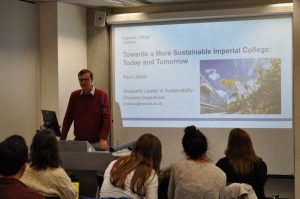
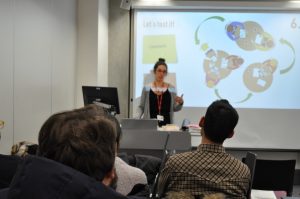
Prof. Paul Lickiss, Academic Sustainability Leader at Imperial College London, presenting the current reality of the university and its future plans in relation to its sustainable practises.

The first stop of our journey; where are we starting from? To do so, we invited Prof. Paul Lickiss, the new Academic Leader in Sustainability for Imperial College London. He guided us through all the past, present and future initiatives happening at Imperial. Several of the initiatives described and available resources were unknown by most of the audience, which highlighted the need for better communication.


Dr. Nicola Hogan, Sustainability Manager for the Sustainability Team at King’s College London, giving some useful tips on how to make institutions greener, building on her previous experience.

Second stop; how are others moving? Dr Nicola Hogan from the Sustainability Team at King’s College London shared with us a collection of “lessons learned” from their long-running and highly-successful sustainability programme, giving us useful practical tips for achieving rapid changes.

Third stop; why are we not moving? We were determined to identify concrete problems and the barriers to more sustainable behaviours. To do this, we ran a behavioural change co-creation workshop with a user-centred approach. The idea was to promote an environment and state of mind that puts aside prejudice and preconceived ideas and fosters empathy, introspection and creative thinking. One of the activities we used to endorse empathy and explore barriers was role playing. In small groups, participants mapped potential unsustainable actions in a normal day of a fictional character and discussed reasons for such actions, based on that character’s story. To the surprise of most participants, barriers were often neither financial nor relating to knowledge (despite these being the focus of most campaigns and initiatives) but emotional, cultural or social instead. This, and the rest of activities highlighted the complex mixture of barriers that conditions behavioural changes, while also creating a nice engaging drive to push for change.

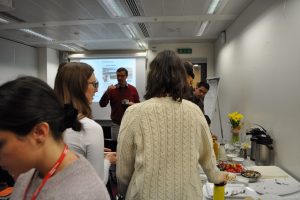
Participants and keynote speakers networking during our sustainable and eco-friendly lunch.

Final stop; let’s move! Of the barriers and unsustainable practises identified in the activities, each group picked a few and brainstormed ideas on how to break those walls that inhibit people to change. Groups were encouraged to think big, to think outside the box, we wanted to drift away from the standard initiatives and create something unique and suitable for our audience.

What is next, you may be wondering? Well, the workshop helped to create a nice momentum that we aim to keep exploring in the coming months. So far, the lines of work that have arose from the workshop include: the creation of a working group focusing on looking in more detail into the ideas generated in the workshop and suggesting potential changes to make the university more sustainable; organizing awareness campaigns; continue to grow our relationship with the Academic Sustainability Leader Prof. Paul Lickiss, and starting some conversations with other groups across the college with similar interests to join up and bring forces together. So, stay tuned to know more about what we found out. Soon on our website!

Overall, the workshop was well received by both the participants and the keynote speakers, who engaged in part of the co-creation workshop. Based on the feedback, the workshop helped to create a great space to discuss with peers’ and institutional representatives’ views, concerns and ideas to keep pushing our university forward and set the seed for a sustainability network.

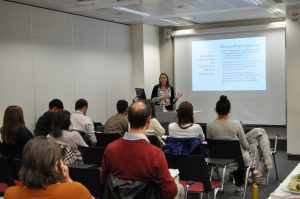
Co-organizer Aina Roca Barcelo (1st year President Scholar PhD student) introducing the first activity of the co-creation workshop.
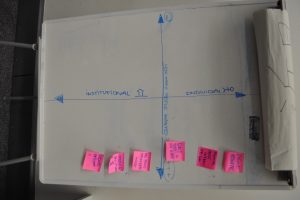
Picture of the “Know your problem” activity, where the different issues raised where classified based on “how many people is affected” and whether the problem is “institutional or individual”.


Funding disclaimer: This initiative has been possible thanks to the generous support from the Community Research Seed Fund, Imperial College London.

[1] Obviously, with some communities remaining in the shadow of this information pandemic due to social, economic and technical limitations

My experience at the ‘Careers Talk with a Difference’

My name is Niamh Sayers and I’m a third year PhD student based at Hammersmith Hospital in the Department of Metabolism, Digestion and Reproduction, and also a Student Rep for this cohort. As I am nearing the end of my PhD (as are many of the friends I started with) I realised we may all be looking for things we want to do after our PhD, therefore I decided to organise this ‘Careers Talk with a Difference…’. We attend many scientific talks during our PhDs, from Work in Progress’ to conference seminars, but I realised we do not have access to many talks outside of the realms of science. So, I decided to organise a careers talk with a renowned public speaker to give some insight into other forms of communication besides scientific.

All postgraduate students were invited, across both the Hammersmith and White City campuses. The event was held in the IRDB seminar room. Drinks were provided upon arrival and pizza was ordered for the networking session after the talk had been given. The talk was held on Wednesday 4th March 2020.

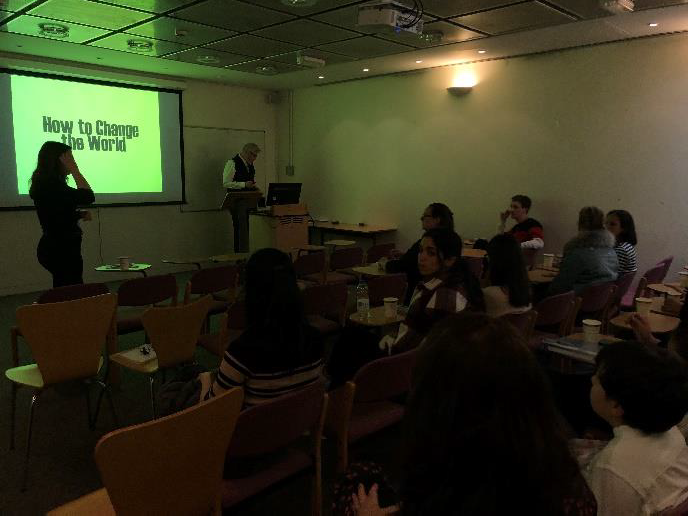
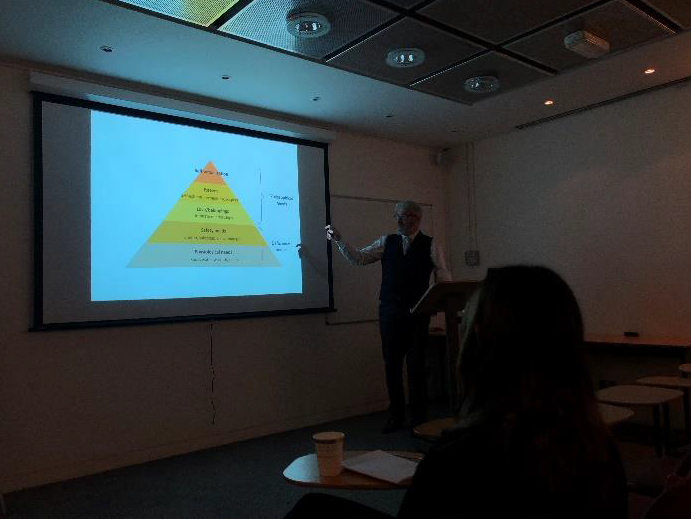
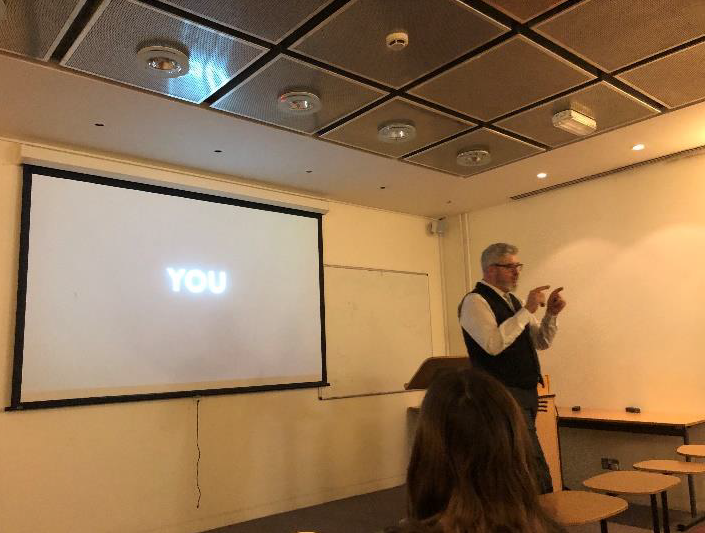
I invited renowned public speaker Matt Black to talk at our University to the postgraduate students to give us an introduction into another way of thinking about the world and potentially help us in the next big steps of our career paths. Matt Black spoke about finding a path that is right for you and your motivations, and finding something that suits you, emphasising most importantly doing something that YOU choose you want to do. He used examples from his own personal career journey and spoke about Greta Thunberg as an inspiration for taking on big challenges.

There were many positive outcomes from the talk, one student even commented they were influenced to apply for a PhD position after Matt Black spoke about the idea that we choose the life we build and the direction we go in. I agree, in that he reminded me of the importance of choosing to do something I am passionate about, rather than following on down a path already trodden/laid out for me, based on what I “think” I should be doing. He also convinced me that anything is possible, if you choose the right mindset.

For me personally, I found Matt Black very engaging and enthusiastic, and I can see with his energy how he has gotten so far in the public speaking domain, which was excellent to witness, as well as learn from some the techniques he used to engage the audience. In addition to seeing his encapsulation of the audience, Matt gave me plenty to ponder over; my goals in life; what makes me happy and what incentivises me, so I left feeling thoughtful about my next steps after completing my PhD.

The aim of this event was to bring in a thought-provoking speaker with experience outside of science and to get students thinking about potential career moves after their postgraduate degree. Matt Black engaged with the audience and asked questions throughout, he also stayed behind and was approached to talk to by many groups of students in the networking event after. The feedback from the event was that many students left feeling thoughtful and encouraged, and there were many positive comments about the speaker and the event at large, with a highlight being one student even referencing this talk affirming her idea of wanting to apply for a PhD position next year.

All-in-all I am very happy with how the event turned out. Many postgraduate students attended, from a range of departments across the Hammersmith and White City campuses, and I will be looking for more speakers of a similar nature to invite to Imperial to aid tough decision-making by students about themselves and their future careers with another careers talk with a difference.

Many thanks to the Graduate School for funding this event and making it possible.