Blog posts

Institute of Clinical Sciences – Greening LMS Launch Event

On a brisk Wednesday at the end of September we launched our programme to encourage sustainable practices within the MRC LMS at the “GreeningLMS launch event”. The main aims of our event were to give LMS members the opportunity to get to know the team and find out about its initiatives. This event also allowed important informal chats inspiring new ideas and collaborations! The suggestion box was full of lots of exciting thoughts of how the GreeningLMS and LMS staff members can come together to create the most impact.  It was a fantastic event with a great turnout including all LMS Imperial students on the 6th floor of the CRB building, Hammersmith Campus.

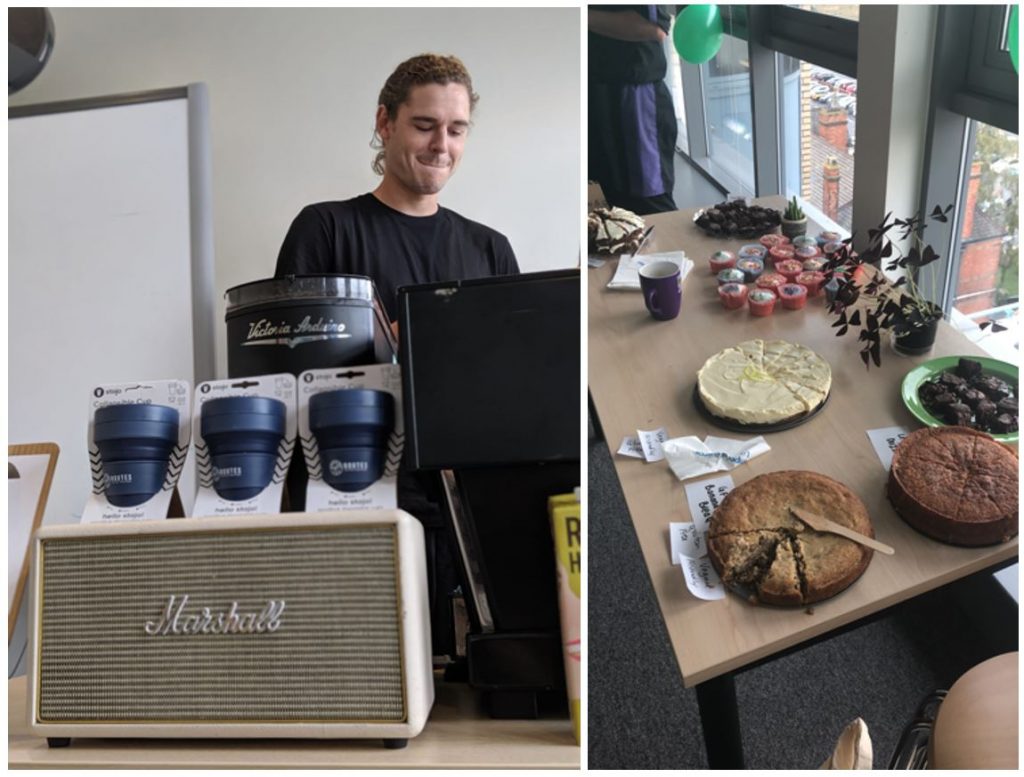
Routes coffee, an independent barista with an environmental conscience, generously donated their time. Needless to say delicious coffee was enjoyed by all! Members of the team made homemade cakes, catering for gluten intolerant and vegans alike.
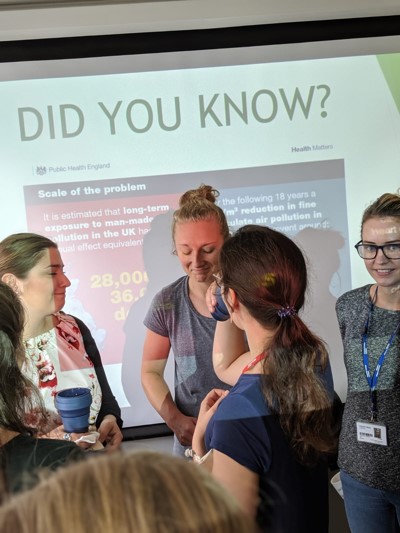
An informative presentation was projected and ran on loop in the event room, advertising the main aims and goals of the team, some practical tips for sustainable practices in and outside the lab. In addition, a plethora of frightening facts about the effects of the current environmental situation on health and the world’s ecosystems and how we contribute to it where shown. Feedback highlighted how many of the attendees were unaware of the current state of play.
Finally, the event saw the signing up of Greening representatives for each lab – a point of contact between the lab and GreeningLMS – ensuring that best sustainability practices are maintained by all. These representatives will also be key in the ongoing evolution of sustainable practice implementation and will provide constant feedback about the success of the different GreeningLMS initiatives.

This event engaged the whole institute, raising awareness of sustainable issues and it was wonderful to see the general enthusiasm and support from all. In particular, it was great to see so many students attending, especially the newbies, as you will be pioneers – doing lab work as sustainably as possible from the beginning with no bad habits ;).
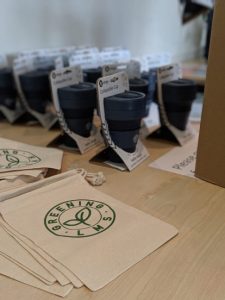
Due to the generous funding by the Research Community Fund, we were able to fund this event and buy sustainable freebies to pass out to attendees and bites to eat. Attendees were able to take a collapsible cup for their morning coffee on the go and a 100% cotton bag for their fruit and packed lunch. Without this funding the event would not have had record attendance or such widespread impact. So, a massive thank you to the Research Community Fund for helping to make our event possible and the success it was!
CDT Networking Events – Round One

What a better way to kickstart the beginning of the new term if not with a new series of social events?

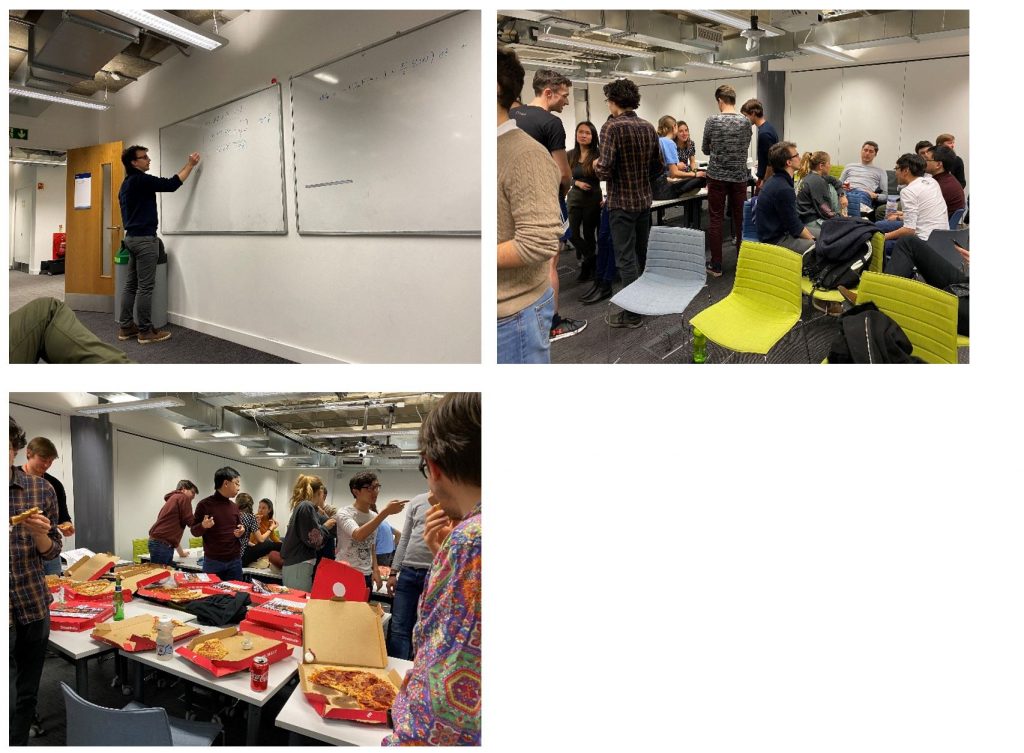
A CDT student-led committee has organised a schedule of “CDT Networking Events”, where students belonging to different CDT cohorts get to know each other in an informal setting. The first iteration of our CDT Networking events was held on Friday 17th of January in the EPSRC CDT Space. The events entail, in the first 30 minutes, an educational talk given by one of the EPSRC CDT students on a topic belonging to his\her research area. On the very first round, Alain Rossier (CDT Mathematics of Random Systems- Oxford Cohort) discussed about Maths and the game of Poker. Alain covered important notions of game theory, including Nash equilibrium and the optimality of strategies, which closely relate to his research topic.

The content and the quality of the talk given by Alain was widely appreciated by the audience and it led to further informal discussion during the second part of the event, where student had the chance to extend their professional networks and socialise with their peers. The event was accompanied by free pizzas, drinks and snacks for all the students. The event also had a large number of presences, counting at peak time more than 40 students. This really encouraged the event committee to organise the next series of event in a similar fashion and which are planned to take place in the months to come in the Spring and Summer terms.

The committee would like to the Graduate School as well as the participating CDTs who acted as financial sponsors for the events.

Two minutes with… Humera Ansari (Student Programme Leader – Research Communication Programme)

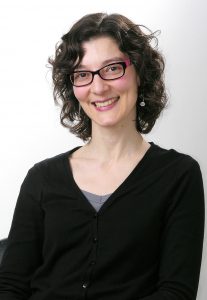
Two minutes with… Ester Anaya-Boig (Student Programme Leader – Professional Effectiveness Programme)

The Graduate School has appointed Student Programme Leaders in order to give doctoral students the opportunity to engage with our Professional Development Programme and shape its design and delivery.

In our new ‘Two Minutes with….’ series we will be introducing you to our current SPLs and finding out their thoughts so far on the role!

Name: Ester Anaya-Boig

Department: Centre for Environmental Policy

Introduce your research: I am studying what aspects of the built and the social environment influence in people’s cycling behaviour

Student Programme Leader: Professional Effectiveness Programme

Why did you choose to apply for this particular SPL role?

I had attended quite a few courses and a couple of retreats from the Graduate School and I had found them really useful. I found that the courses within the professional effectiveness programme were the ones that had made the bigger positive impact in my PhD life.

I thought I was motivated to review the programme in-depth, working with the team that created the courses and representing the views of my fellow students in order to contribute to how this programme is delivered.

Three things you’ve found interesting:

  • Knowing the contents of the courses in-depth and sometimes even do a bit of research about some specific aspect
  • Getting to know how the courses are created
  • Thinking about how to take into account the diversity of Imperial students that attend the courses.

Three things you’ve enjoyed most:

  • Providing feedback that is appreciated and recognised by the Grad School team
  • Working with a highly professional and knowledgeable team, that knows very well what they are doing!
  • Reading the feedback about the courses and extracting the highlights that I think can help make them better

What impact have you had on the programme?

Apart from the feedback evaluation, I have provided suggestions on the contents and on the structure of the course. Also I have provided notes on how it is delivered. Observing in one of the courses was really helpful and helped me provide feedback in detail.

What advice would you give to other students thinking of applying for the SPL role in future?

It’s a great opportunity to learn how the Graduate School creates their programmes, how they are delivered and also to train you in how to reach the diversity of the student population. You realise you can contribute with more than you thought and that your contributions are valued by the team.

Why do you think professional development training is important?

I have experienced how it has helped me and kept me grounded. It also provides you with resources available for whenever you need them, it’s like a safety net that you create by attending these courses. The professional development courses provide you the space and the tools to make you aware and reflect on how you do things and then be able to create change. Sometimes the courses can help you change your habits or introduce a new habit in your life.

Two minutes with… Katia Hougaard (Student Programme Leader – Master’s Programme)

The Graduate School has appointed Student Programme Leaders in order to give doctoral students the opportunity to engage with our Professional Development Programme and shape its design and delivery.

In our new ‘Two Minutes with….’ series we will be introducing you to our current SPLs and finding out their thoughts so far on the role!

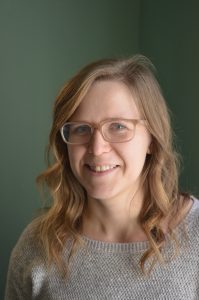
Name: Katia Hougaard

Department: Life Sciences

Introduce your research: My PhD project focuses on the innate defence responses of plants against aphids, an economically important insect pest.

Student Programme Leader: The MasterClass workshop series with Dr Helal Ahmed

Why did you choose to apply for this particular SPL role?

While a MRes student at Imperial, I benefited greatly from the free Master Class programme offered to all Masters students. Based on my very positive experience as a student in the classes, I wanted to give back to the programme that helped me learn a variety of transferable skills. In addition, I am interested in gaining experience of being in an educator role for postgraduate students since one of my career interests is higher education.

Three things you’ve found interesting: 

Analysing and implementing student feedback, discussing wording and visual appeal of slides with Dr. Ahmed, and designing my own slides are 3 interesting aspects of this role.

Overall, being in the teaching role has been a new perspective on the learning experience.

Three things you’ve enjoyed most:

I enjoy co-delivering workshops on public speaking and presentation skills with Dr. Ahmed. Through this activity, I’ve gained experience in managing and leading a large group of students.

I also enjoy the planning discussions with Dr. Ahmed and other members of the graduate school.

I’ve additionally enjoyed reaching out to fellow students to learn their opinions on past and current Graduate School courses.

What impact have you had on the programme?

My contributions have made the public speaking / presentation skills workshop more interactive and hopefully more entertaining. I am also working on arranging a focus group to learn what students wish to see from the programme in the future.

What advice would you give to other students thinking of applying for the SPL role in future?

I would highly encourage any postgraduate student who is interested in being an educator to apply for this role. I would advise to approach the role with an enthusiastic and cooperative attitude to get the most out of working with your supervisor.

Why do you think professional development training is important?

I feel it is extremely important for postgraduate students to develop their transferable professional skills for any career they choose after their education at Imperial. The free courses are a valuable addition to any postgraduate studies, and an opportunity to meet students from across disciplines at Imperial.

Two minutes with… Marie Rider (Student Programme Leader – GTA Programme)

The Graduate School has appointed Student Programme Leaders in order to give doctoral students the opportunity to engage with our Professional Development Programme and shape its design and delivery.

In our new ‘Two Minutes with….’ series we will be introducing you to our current SPLs and finding out their thoughts so far on the role!

Name: Marie Rider

Department: Physics

Introduce your research:  I work in the condensed matter theory group, and I study topological nanophotonics, where we’re working to understand how light interacts with topological materials at the nanoscale.

Student Programme Leader: Graduate Teaching Assistant Programme

Why did you choose to apply for this particular SPL role?

GTAs are a crucial bridge between students and academics. We can have a massive impact on the student experience and the GTA programme provides vital training on how to approach the role. We’re the next generation of academics, and the approach to teaching and learning we develop now will stay with us throughout our careers so I really wanted to be part of the professional skills programme teaching those skills.

Three things you’ve found interesting: 

  1. The way the GTA role is defined varies massively between faculties and departments, so it’s an interesting challenge to make the programme relevant and useful for GTAs across college.
  2. GTAs have really different experiences of teaching and there’s as much to learn from each other as from the programme leads.
  3. Co-leading sessions for the GTA programme is a lot different from teaching a STEM subject!

Three things you’ve enjoyed most:

  1. Working with SPLs from other faculties.  Under ordinary circumstances we might never had met!
  2. Getting the opportunity to co-lead some of the programme sessions. Peer-run sessions are really fun and very different to the usual teaching I get to do
  3. Working with the programme leader, Richard. He’s so passionate and informed about what he does, so it’s been great to learn from him

What impact have you had on the programme?

We’ve been collating information from all departments across college on how they define their GTA roles and what skills they want their GTAs to have, so that we can tailor the content of the programme courses better

What advice would you give to other students thinking of applying for the SPL role in future?

Do it! Find a programme you’re passionate about and jump in.

Why do you think professional development training is important?

Being a scientist or engineer is about much more than our technical skills. The things you learn in professional development training help you grow as an academic and as a person.

Two minutes with… Daryl Ma (Student Programme Leader – GTA Programme)

The Graduate School has appointed Student Programme Leaders in order to give doctoral students the opportunity to engage with our Professional Development Programme and shape its design and delivery.

In our new ‘Two Minutes with….’ series we will be introducing you to our current SPLs and finding out their thoughts so far on the role!

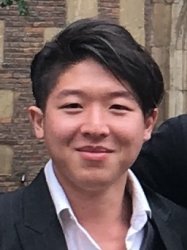
Name: Daryl Ma

Department: Electrical Engineering

Introduce your research: Designing monolithic wireless electrochemical sensors for biomedical applications for blood or sweat monitoring.

Student Programme Leader: Graduate Teaching Assistant Programme

Why did you choose to apply for this particular SPL role?

I enjoy GTA work as I find teaching quite fun. I felt that applying for this role allowed me to learn more about other aspects of teaching.

Three things you’ve found interesting: 

  1. Speaking to other departments in the engineering faculty on how they run their GTA programmes.
  2. Understanding the different roles played by various GTAs in different departments.
  3. Conducting lectures for the GTA program.

Three things you’ve enjoyed most:

  1. I liked how different departments had their various viewpoints on how GTA work should be like.
  2. Talking about more in-depth teaching techniques applied, which probably bordered the field of psychology.
  3. Speaking to fellow GTAs and learning from their experiences.

What impact have you had on the programme?

We’ve managed to make some changes to the GTA program across departments by simply comparing them and explaining to these departments what the college standards are.

What advice would you give to other students thinking of applying for the SPL role in future?

Do it, it’s fun!

Why do you think professional development training is important?

It provides you with the soft skills required to perform your required administrative roles in whichever field your career path takes you.

CMBI Christmas-Themed Games Night

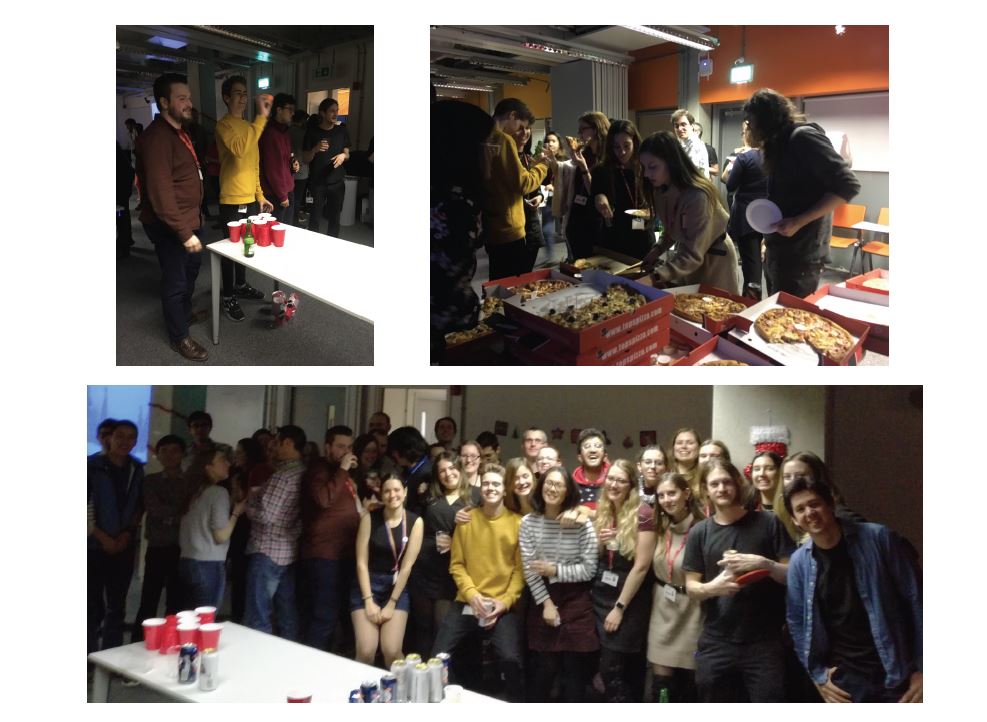
To celebrate the end of 2019, over 60 students, post-docs and PIs from the CMBI got together for a Christmas-themed games night organised by first year PhD students. This event was an opportunity for people from different departments and spread out throughout the Flowers building to socialise, as well as to allow the first year PhD students to get to know each other and the building.

Despite the students being thrown in the deep end, the event ran smoothly (mostly due to the invaluable help from the Flowers admin team and a last-minute dash to Waitrose).
Attendees played party games such as twister, beer pong and table tennis, as well as dancing to a music playlist best described as a Year 6 disco. There were also drinks, snacks and mince pies available, as well as several types of pizza and vegan pizza, which was kindly sponsored by the Graduate School.

The event was a success, with positive feedback from those who attended. It was also a great success for the first year PhD students, even if not all made it to the end of the night, as cleaning up the next day solidified new friendships!

We would like to acknowledge the Graduate school for kindly providing funds which made this event possible.

Our very merry meeting across the new-found divisions at South Kensington

Following the considerable restructure within the Department of Surgery and Cancer and new-found Department of Metabolism, Digestion and Reproduction, in a time where many aspects of PGR life have seemed up in the air, Simone and I (Kate) decided to unite everyone for a single evening.  The aim was to encourage new friendships, to promote collaborative opportunities and reinforce the sense of community across PGR students at South Kensington. For the first time, students, post-docs and supportive PI’s took to a cosy boutique hotel in Hammersmith to meet, eat and be merry!

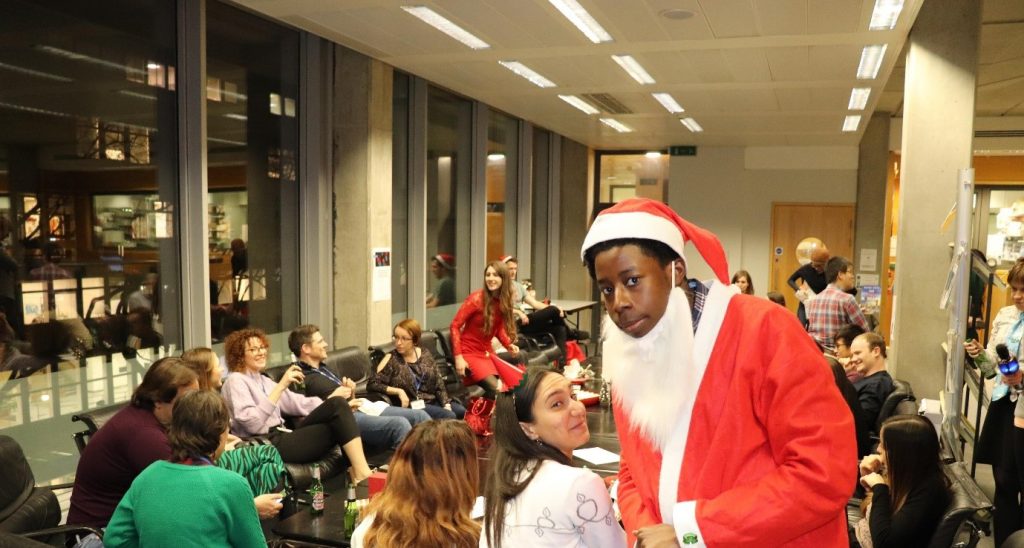
The evening started with the classic Secret Santa, where our personal Santa Claus facilitated the exchange of gifts. This gave people the chance to find out more about colleagues they hadn’t potentially met before and represented the perfect opportunity to introduce the new PhD students to the Departments.

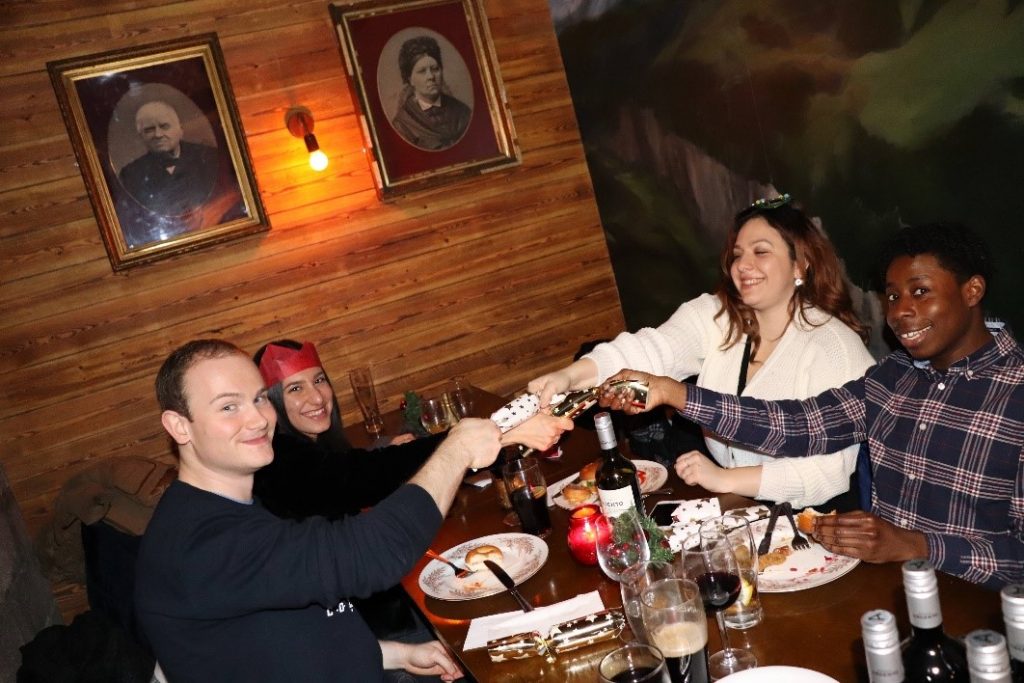
Following the many laughs at unconventional gifts, we moved to a close-by venue to begin our evening. The turnout was fantastic! A large number of students joined the event, not only new PhD students of the Divisions but also students based on other campuses who hadn’t yet felt integrated with the rest of the PGR community. One of the main aims for the event was to get students to meet each other. To overcome any nerves, we provided Christmas crackers along with food and encouraged students to pull them with people they hadn’t met before and break the ice using the jokes inside. 

Another aim of the event was to make sure students knew who they could go to with technical issues, as often people down the hall or across your desk may have solutions to your problems or have faced the same struggles. This large-scale event allowed students to get together and have these conversations. Additionally, colleagues from the National Phenome Centre, who are integrated with many students’ projects,  were invited to inform students of their capacity to support their work. I also finally got the opportunity to introduce myself to colleagues I have seen several times around the lab but felt it wasn’t the right time to spark up conversation, some of these colleagues working on similar instrumentation as myself, highlighting the importance of community building events such as this. With this in mind, we are incredibly grateful to the Imperial Graduate School and the Research community fund made available to us, without which this event would not have been possible.

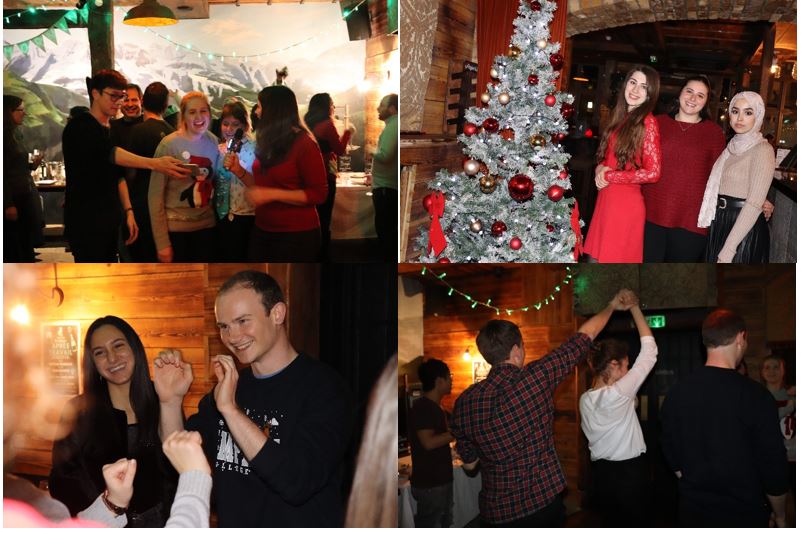
The final stage of the night was to cut loose and really enjoy each other’s company. Dancing was heavily encouraged, with the manager of the venue giving us full reign of music control – balancing the evening between friendship, food and fun!

Feedback from attendees was overwhelmingly positive! New students have now formed relationships with many of the existing PGR students and they will develop these connections over the coming months to years of their PhD. The next step for all of us will be to support each other during these sometimes stressful and demanding years of our PhD. We are now surer than ever that despite working independently and across different campuses, we are a single community ready to support each other. 

PhD Business School Research Dinner

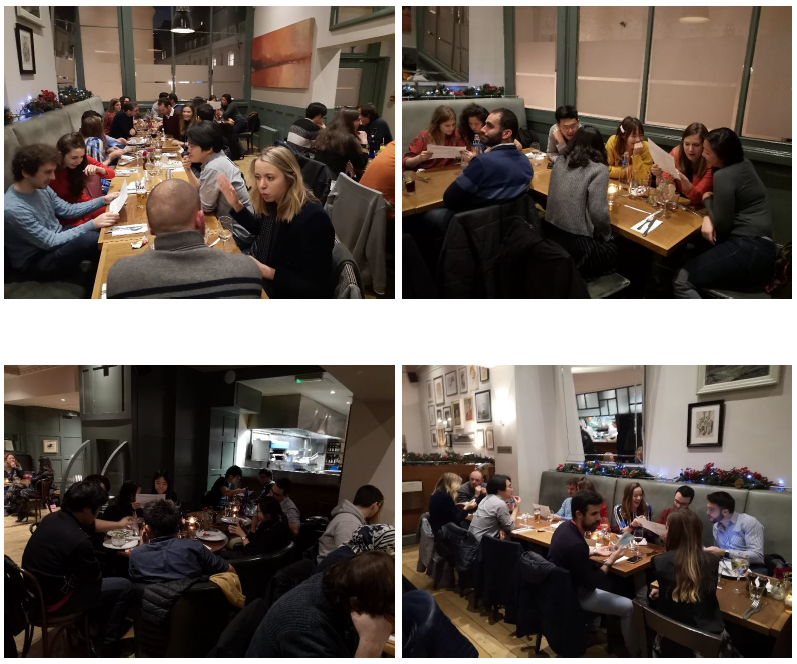
On the 4th of December, we, the Business School Research Graduates, shared research interests and a fun time with a Christmas dinner at Coco Momo. We are thankful to the Graduate School’s Research Community Fund to co-sponsor the event together with the Business School’s Student Staff Committee. It was a fantastic event with a large turnout across all departments and year groups.

The Imperial College Business School has a variety of PhD tracks including, amongst others, Management, Finance, Innovation and Entrepreneurship, Economics, Marketing, and Operations. Consequently, although we pursue a large array of research topics as a PhD cohort, we often are focused on research within our respective departments. The Christmas dinner offered a great opportunity for us to socialise across departments and year groups. In preparation of the dinner, we asked all attending students to submit their research interests/topics/titles. We created a table, outlining everybody’s research topic and shared this table with everybody on the evening.

Across a 3-course menu and a glass of wine or soft-drink, we had ample opportunity to get to learn each other’s interests. Operations students for instance learnt about the importance of herd immunity and the impact of social primers on vaccination decisions from health economists students, while finance students explained to marketing students about new research directions in Asset Pricing focusing on exploiting information in the cross section rather than in the time series dimension. At the same time, older PhD students gave helpful tips and tricks to younger students.

The Christmas dinner was a great success across all dimensions – food, drinks, research and banters. We got to know not only our colleagues and their research interests, but also picked up new dimensions to our own research as well as new research ideas.

Thank you, Graduate School, for supporting this event!