Blog by Kaoutar Abaakil, Research Postgraduate, Department of Metabolism, Digestion and Reproduction
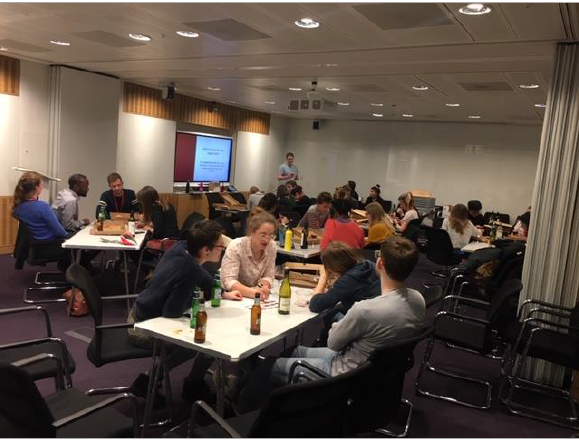
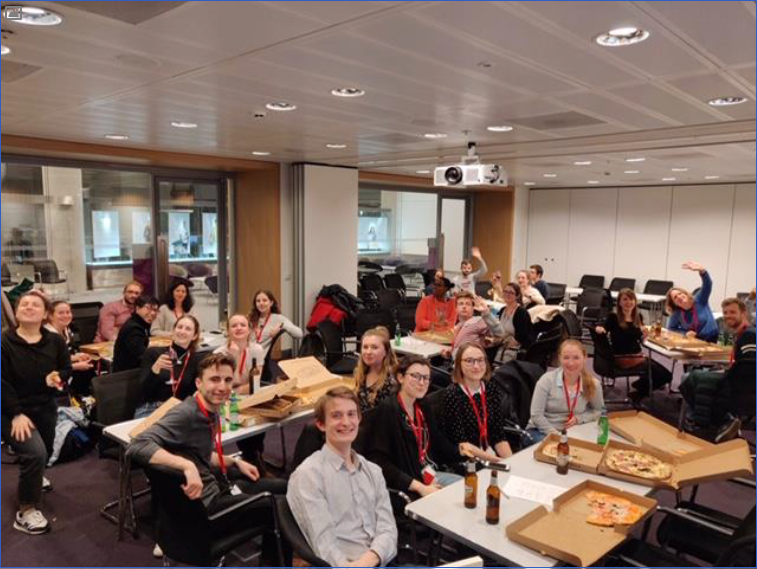
The Nutrition Section Away day took place on December 2nd, 2024, bringing together members from various research groups across the Nutrition section with the generous sponsorship of the Early Career Researcher Institute (ECRI). The event aimed to foster networking, knowledge exchange, and collaboration. It was a fantastic event, with a strong turnout of students and researchers eager to connect and share ideas.
The day began with an informal networking lunch, providing a relaxed environment for students, post-doc researchers and principal investigators to engage with one another. This casual setting set the tone for the day, allowing participants to build connections before the formal program began.
The event officially opened with insightful talks from ECRI speakers Dr. Caroline Hargreaves and Dr. Anna Seabourne, offering valuable perspectives on learning about different stages in one’s research journey and strategies for professional development. The speakers also emphasised the importance of networking events like the one we were holding and provided guidance to identify the right contacts for addressing issues we might come across during our time at Imperial. A key focus of the discussions was the role of collaboration, networking, and the support available through ECRI for Master’s, PhD, and Early Career Researchers (ECRs). Through interactive activities, we also had a chance to discuss common challenges and concerns shared between us, reinforcing the sense of community and mutual support within the section. These activities also encouraged open dialogue and highlighted the collaborative spirit among the section.
Next, the event was followed by contributions from Dr. Racheal Barry and Dr. Aygul Dagbasi. Dr. Barry shared insights on her recent successful fellowship application and strategies for career development, while Dr. Dagbasi discussed lessons learned from her work leading the Ageing and Nutrient Sensing (AGENTs) initiative and how it benefited her career.
The day concluded with a talk by Professor Gary Frost, Head of theSection, who highlighted the importance of data integrity. His discussion emphasised the importance of setting best practices in data sharing and management, particularly in fostering transparency and collaboration across research groups. The discussion was also opened to all attendees to brainstorm ideas and share their insights in a cooperative manner.
The Nutrition Section Away Day was not only an opportunity to gain useful tools and knowledge for academic progression but also served as day for us to connect with peers, share ideas and address common challenges. Overall, it was a valuable experience that left participants feeling connected, informed and motivated.
We acknowledge the generous support of the Early Career Researcher Institute (ECRI) through the Postgraduate Community Fund, which made this event possible.
Written by Peter Bryan and Naima Adan, PhD Students from the Department of Bioengineering
Last month, Imperial College London’s Black Doctoral Network (BDN) held its inaugural inter-university event bringing together attendees from Imperial, London School of Economic (LSE), King’s College London (KCL), University College London (UCL), Cambridge, Bath, Swansea and more to share experiences, insights and anecdotes of postgraduate studies and careers. With over 40 attendees, the event was a resounding success.
Panel discussion
The event kicked off with a panel discussion hosted by Dr Wayne Mitchell, Associate Provost (Equality, Diversity and Inclusions). Joining Wayne was Kathryn Plummer, Patent Attorney at Carpmaels and Ransford, Dr Andrea Attipoe, co-founder of BDN and Microsystems Engineer at Beyond Blood Diagnostics, and Dr Emily Muller, Machine Learning Engineer at the Wellcome Trust and co-chair of Indaba.
The panel delved into their experiences as they transitioned from PhD researchers to their current careers. Andrea also discussed why he and Du-Shaine Murray started the network 4 years ago, and shared his vision for the BDN.
“We wanted this network to become a community to share joys and struggles, and to provide strong roots to navigate an environment that is often hostile to ethnic minorities.”
After the event we talked to Andrea and asked his thoughts on Empower and how he found coming back to the network..
“I thought the event was thoroughly enjoyed both by the audience and the panel. It’s always great to share your experience, hoping it can help someone who’s on a journey similar to yours. From the questions the audience asked, it was apparent that events like these are very much needed and appreciated by a Black community at Imperial that can often feel isolated and forgotten about. I’m very happy and proud that the network manages to provide the level of support and advice its members need to keep going with their head up proud!”
Wellbeing session
The second session focused on wellbeing, delving into the expectations and realities of the PhD process. Speakers shared methods and techniques for managing and protecting ourselves, and we learnt techniques to stabilise the journey.
“The comfort and familiarity of walking into a room with people who look like you and have an understanding or similar experience cannot be overstated” PhD student and BDN member
UK Black Research Network
The event sparked the creation of the UK Black Research Network (UK BRN). The purpose of the network is to support Black researchers during and after their PhDs and facilitate connections within and across universities. The network is based in a WhatsApp group chat where opportunities, events, resources, and socials are shared. The network’s first games night is already in the calendar!
Closing the event with Afro-Caribbean food and the obligatory selfie with Dr Sunday Popo-Ola, there was a powerful feeling of community as attendees reflected on the future of the BDN and new UK BRN.
On January 15th, we had the pleasure of hosting the Vaccine Bioscience Seminar, part of the Winter Seminar Series. This was the first event we organised—a kick-off for the Vaccine Student Research Network. Our aim was to provide an interdisciplinary perspective on vaccine research for postgraduate students and offer a first glimpse into the breadth of science taking place at Imperial.
While the COVID-19 pandemic now seems to be behind us, this seminar helped us to reflect on these years and the crucial role of vaccine technology. Throughout the afternoon, we discussed public health and pandemic management through various lenses.
The event drew big name speakers, each of whom contributed a significant piece of a big-picture discussion. To start, Dr. Ferdinando Insalata presented the mathematical foundations of the SIREN study, a unique and powerful UK-led clinical study that helped inform policymakers about COVID-19 vaccine effectiveness. Then, Dr. Zoltán Kis shared insights into building sufficient production capacity for the next pandemics. Zoltán introduced digital tools to facilitate knowledge sharing among vaccine developers and manufacturers. His vision of distributed manufacturing to enhance vaccine supply in low- and middle-income countries was undoubtedly inspirational for many of us. Following this, we had the chance to listen to Dr. Simon Barton from the NHS, who delivered a thought-provoking talk on how we can learn from the HIV experience for future vaccine development. He emphasised the essential role of public health behaviours in limiting transmissions. In a hopeful concluding note, Prof. Robin Shattock showcased in his keynote presentation the potential of self-amplifying RNA technology to address many unmet medical needs. At the end of the sessions, Imperial students seized the opportunity to discuss the future of vaccine research with our panel of experts: upcoming vaccines in clinical pipelines, future regulatory challenges, and improved vaccine accessibility.
Overall, we are proud to have organised such an event, attracting over 100 attendees from various departments. We all felt that we learned something valuable about vaccine technologies and vaccine innovations. It was wonderful to see how the UK ecosystem, especially the diverse Imperial community, is a vibrant place for concrete and impactful vaccine research. We are now even more excited about our upcoming seminars organised for the large postgraduate student’s community from across four faculties at Imperial. We are also looking forward to inviting you to our annual conference in September. Stay tuned and check out our network’s website!
I’m on the MRes in Biomedical research course and many, if not all, of the career talks, resources and email adverts are all veering towards academia. Not to say this isn’t a good thing, many of us want to go down the academic route. However, my fellow reps and I have identified that there is a sizeable proportion of our course who do not want an academic career or are yet to be successful in securing one.
With that in mind, we planned a careers event and an informal reception not catered to academia. We scouted and contacted people from our course and allied courses who are in industry, public health, or alternate careers such as consulting. This led us to our 6 brilliant panellists who happily came to our event to share their wisdom and inspire us.
Post-panel we had a reception where we all drank, ate, and mingled with our panellists as well as each other.
Thirty-one students attended the event and kindly provided us with feedback post-reception. All students were grateful to find out more about other career pathways and are now feeling more hopeful about their futures.
Quotes from our peers included: “It was really interesting to know the various sectors you could go into after graduating from the course” “I loved how honest the speakers were about struggles in their career journey and it gave me a lot of confidence going forward in my career”
Our degree provides us with many transferable skills which can allow us to break into many other sectors outside academia; however, this can be challenging if this field is unknown! My fellow reps and I, with the support of our course management team, were honoured to be able to give our peers a space to open the discourse whilst having fun.
Every three years, PhD students from The Francis Crick Institute and Imperial College hold a symposium dedicated to enabling students from both institutions to share their research through posters and talks in a supportive environment. Obviously, this year had to be a little different. The event had to held virtually as a result of the COVID-19 pandemic which posed new challenges. A key objective of this event is the provide a platform for graduate students from a range of scientific backgrounds to network and work together, something we can all agree is much more challenging behind a computer screen!
We decided that alongside using Zoom for the talks we would use Gather.Town for the posters and networking. We felt this best replicated the networking opportunities normally facilitated at these events as Gather.Town lets you speak with people 1-1 and in small groups. You can design different rooms for people to browse (see pictures for the main foyer and Perkin Elmer’s room).
Alongside the PhD speakers we had Professor Aldo Faisal and Geraldine Cox as plenary speakers. Apart from being inspiring and captivating speakers, their talks also complimented the interdisciplinary nature of the symposium.
Professor Faisal is a Professor of AI & Neuroscience jointly at the Dept. of Bioengineering and the Dept. of Computing at Imperial College London, where he leads the Brain & Behaviour Lab. He talked about his work on using wearables to record natural human behaviour and training AI with this data to improve performance of machine vision for self-driving cars or help mobility of wheelchairs of paralysed patients. (find more about his work https://www.imperial.ac.uk/people/a.faisal).
Geraldine Cox has degrees in physics and fine art and began her project called ‘Finding Patterns’ in 2011 at Imperial College London with an ‘Artist in Residence Award’ from the Leverhulme Trust. Since then, her work has grown to involve scientists from other universities including Oxford, Cambridge, Durham and MIT. See her talk here. Both talks were really engaging and offered interesting new perspectives. As Geraldine’s talk rounded off the day, she joined us in Gather.Town for the final networking session and facilitated some excellent discussions!
Examples of Geraldine’s work: Harmony and Universe
Prizes were awarded for the top 3 talks and posters, voted for by the other attendees. This gave us an opportunity to recognise the excellent work being done by PhD students from both institutions and helped to engage the audience. We also held a raffle based on who attended the Perkin Elmer booth, for which they kindly donated 10 £25 vouchers as prizes. This added an incentive for participation as we know this can sometimes be difficult at virtual events!
We know that virtual events can be a challenge and we just want to say a massive thank you to everyone who participated so enthusiastically in the symposium! We hope it was a good opportunity to present your work to an audience of more diverse backgrounds and that you got the chance to engage with each other as much as possible. We look forward to seeing you all in person sometime soon!
On the 29th of January 2020, a group of students and staff members from Imperial College London gathered with one objective: to identify the barriers to a more sustainable workspace. This was part of the 1st MRC Centre for Environment and Health’sSustainability Workshop, organised by the MRC Researchers Society’s co-chair Aina Roca Barceló (1st year President PhD Scholar), supported by the MRC Centre for Environment and Health, within the Epidemiology and Biostatistics Department (EBS), represented by Drs Fred Piel and Eduardo Seleiro. This was kindly funded by the Graduate School’s Research Community Fund.
For a long time, I (and a lot of people out there) believed that information would lead to change. We now know this is not necessarily correct for climate action. The planet is warming – we know it. Long-term changes in climate, biodiversity, air, water and soil quality are caused by human actions – we know it. We are running out of time to minimise the damage to Earth – we know it. We need to change our behaviours if we want to save humanity and the planet – again, we know it. We are probably the most well informed generation that the Earth has seen [1] and yet, we can’t seem to change fast enough, and not at all in some fronts. Even more alarming is the fact that those advocating for this change often fail to make the necessary changes themselves. Ironic, isn’t it? Yet, this is the reality for many Academic environments. The 1st MRC Centre for Environment and Health’s Sustainability Workshop was designed to change this drift and create the momentum to initiate a sustainability journey in the department. This involved creating an engaging space for students at the School of Public Health (staff members were also welcomed) to identify barriers to sustainable behaviours and generate ideas for action.
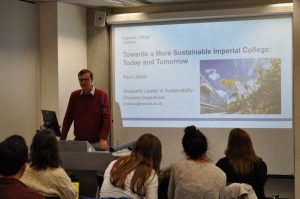
Prof. Paul Lickiss, Academic Sustainability Leader at Imperial College London, presenting the current reality of the university and its future plans in relation to its sustainable practises.
The first stop of our journey; where are we starting from?To do so, we invited Prof. Paul Lickiss, the new Academic Leader in Sustainability for Imperial College London. He guided us through all the past, present and future initiatives happening at Imperial. Several of the initiatives described and available resources were unknown by most of the audience, which highlighted the need for better communication.
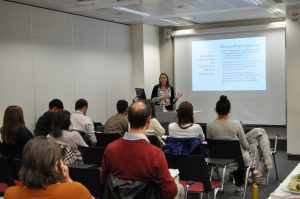
Dr. Nicola Hogan, Sustainability Manager for the Sustainability Team at King’s College London, giving some useful tips on how to make institutions greener, building on her previous experience.
Second stop; how are others moving?Dr Nicola Hogan from the Sustainability Team at King’s College London shared with us a collection of “lessons learned” from their long-running and highly-successful sustainability programme, giving us useful practical tips for achieving rapid changes.
Third stop; why are we not moving? We were determined to identify concrete problems and the barriers to more sustainable behaviours. To do this, we ran a behavioural change co-creation workshop with a user-centred approach. The idea was to promote an environment and state of mind that puts aside prejudice and preconceived ideas and fosters empathy, introspection and creative thinking. One of the activities we used to endorse empathy and explore barriers was role playing. In small groups, participants mapped potential unsustainable actions in a normal day of a fictional character and discussed reasons for such actions, based on that character’s story. To the surprise of most participants, barriers were often neither financial nor relating to knowledge (despite these being the focus of most campaigns and initiatives) but emotional, cultural or social instead. This, and the rest of activities highlighted the complex mixture of barriers that conditions behavioural changes, while also creating a nice engaging drive to push for change.
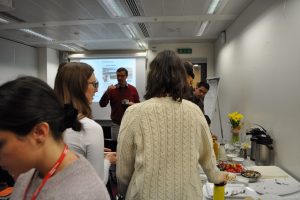
Participants and keynote speakers networking during our sustainable and eco-friendly lunch.
Final stop; let’s move! Of the barriers and unsustainable practises identified in the activities, each group picked a few and brainstormed ideas on how to break those walls that inhibit people to change. Groups were encouraged to think big, to think outside the box, we wanted to drift away from the standard initiatives and create something unique and suitable for our audience.
What is next, you may be wondering? Well, the workshop helped to create a nice momentum that we aim to keep exploring in the coming months. So far, the lines of work that have arose from the workshop include: the creation of a working group focusing on looking in more detail into the ideas generated in the workshop and suggesting potential changes to make the university more sustainable; organizing awareness campaigns; continue to grow our relationship with the Academic Sustainability Leader Prof. Paul Lickiss, and starting some conversations with other groups across the college with similar interests to join up and bring forces together. So, stay tuned to know more about what we found out. Soon on our website!
Overall, the workshop was well received by both the participants and the keynote speakers, who engaged in part of the co-creation workshop. Based on the feedback, the workshop helped to create a great space to discuss with peers’ and institutional representatives’ views, concerns and ideas to keep pushing our university forward and set the seed for a sustainability network.
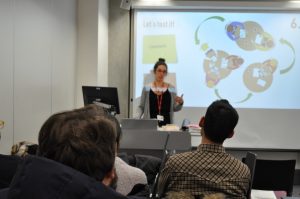
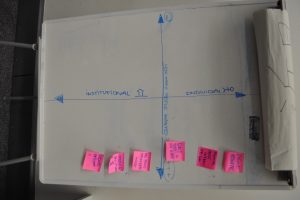
Co-organizer Aina Roca Barcelo (1st year President Scholar PhD student) introducing the first activity of the co-creation workshop.Picture of the “Know your problem” activity, where the different issues raised where classified based on “how many people is affected” and whether the problem is “institutional or individual”.
Funding disclaimer: This initiative has been possible thanks to the generous support from the Community Research Seed Fund, Imperial College London.
[1] Obviously, with some communities remaining in the shadow of this information pandemic due to social, economic and technical limitations
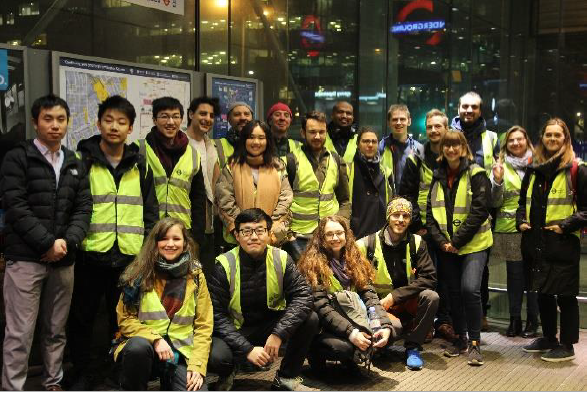
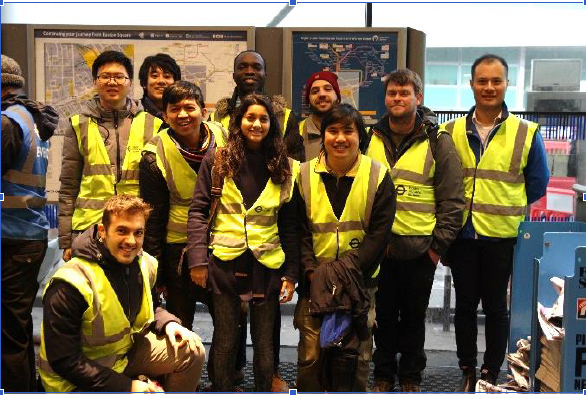
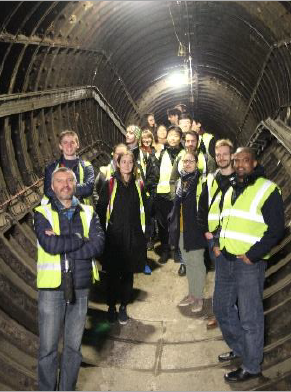
On 28th February, the researchers from the Geotechnics Section explored some of London’s hidden tunnels in a fascinating tour run by the London Transport Museum. With the financial support from the Graduate School cohort building fund, we were able to enjoy this social event and get closer as a group while also learning more about the tunnels that many of us study as part of our research projects.
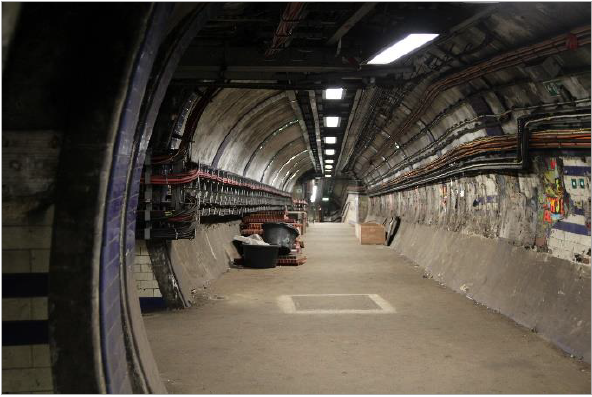
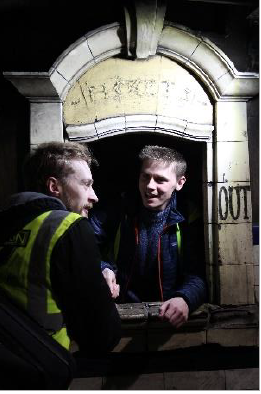
On Friday afternoon, we all made our way to Euston station and joined the brilliant team from ‘Hidden London’ who first gave us a presentation on the history of the London Underground. Once we all had our high-vis jackets on, we were led down into the tunnels, past the busy crowds of commuters into the parts of the station that are normally hidden from the public. We were able to see one of the original ticket offices, beautiful old posters and many disused station-, construction-, and ventilation-tunnels. Since we are a group of geologists and geotechnical engineers it was an amazing experience for us to learn so much about the tunnels and the construction processes behind them. It was also a great opportunity for everyone to start conversation and get to know the new students that had recently started their PhD in the Section. Thanks to the support from the Graduate School we were able to bond as a group and gained a boost of motivation for our research by exploring the tunnels that engineers built in the last hundred years. After the tour, we gathered in a nearby pub, talked about the experience, each other’s research work and life and enjoyed each other’s company until the day came to an end.
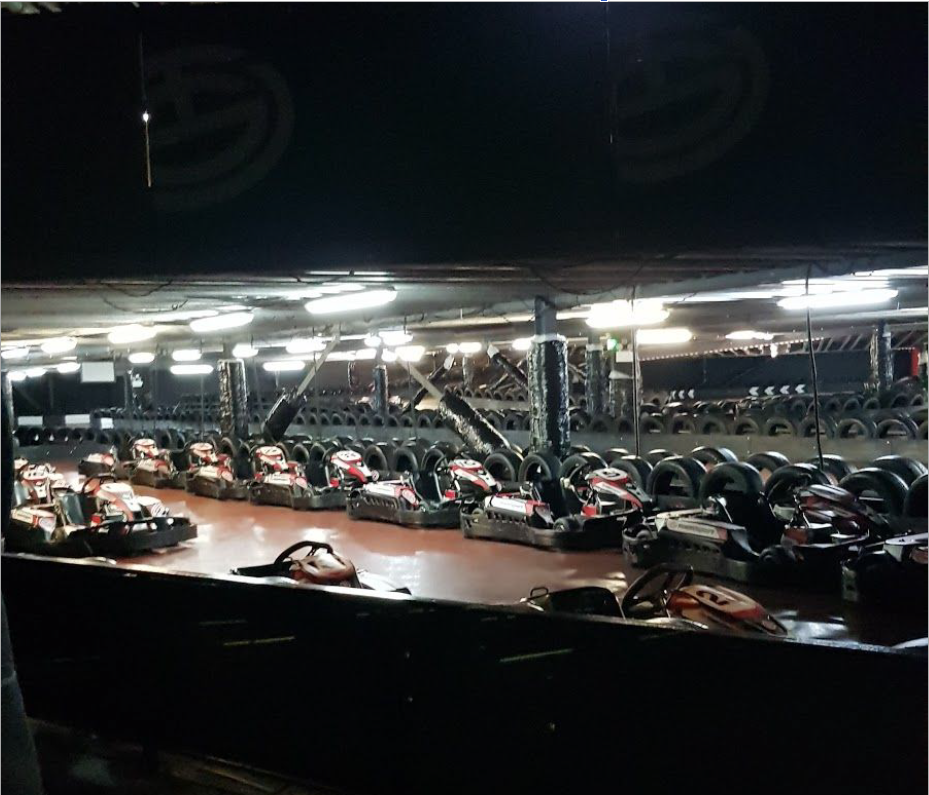
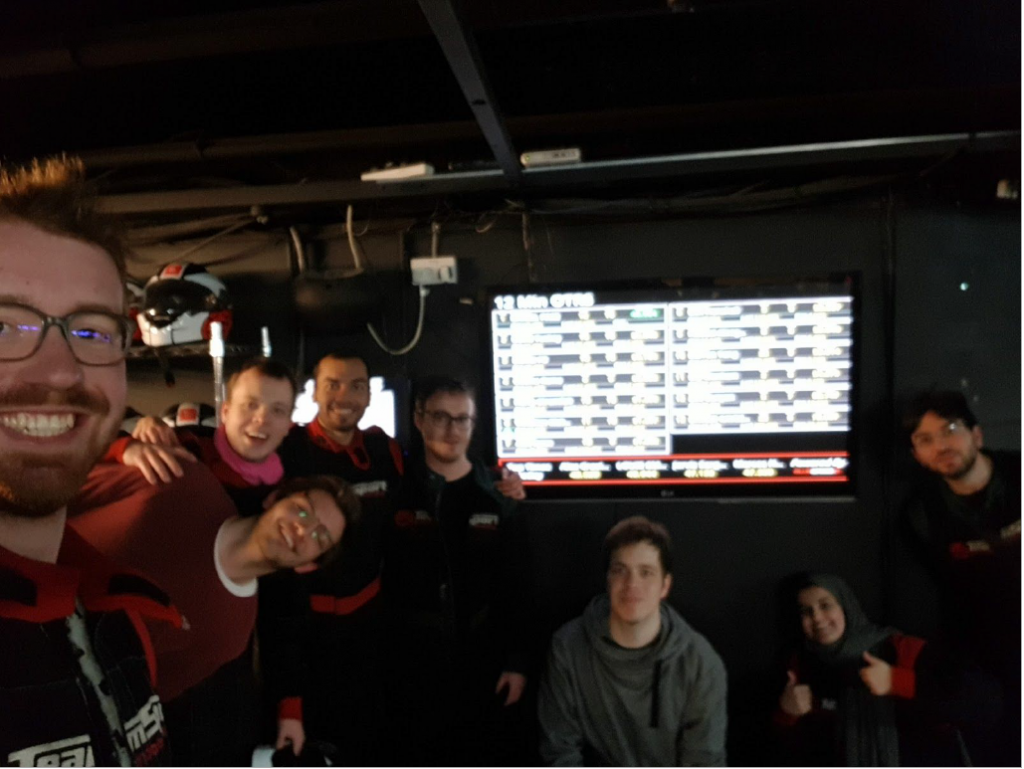
After weeks of online SuperTuxKart championships, it was time for the PhD members of the SPIKE research group to race in real life. On Sunday, 8 March, 2020 (just before a pandemic took over the world), SPIKE members enjoyed an eventful evening of go karting followed by a group dinner.
The evening was a chance to help foster the team spirit of the research group, and enable collaboration that goes beyond the day to day activities of each member’s individual research journey. As one PhD student put it:
“Karting was an unequalled experience: the wind on my face, the speed making the kart almost fly… It would have been that, if I had not worn a helmet, and I had not driven as slow as a stroll in the park (cit.).
But it was my first time karting at all, and as they say, better safe than sorry, right?
Anyway, it was a fun experience. It was cool to see people you normally see at work in a more relaxed atmosphere, where you don’t feel guilty if you’re not discussing work.”
All in all, it was an evening to remember. Thanks to the Graduate School for sponsoring it.
In their effort to establish an Early Career Research (ECR) community for all malaria researchers based at London research institutes, PhD students organized a launch event at the Crick Institute to bring everyone together. Research assistants, research technicians, PhD students and junior postdocs who work under either computational or laboratory settings were encouraged to interact with researchers outside their own social/departmental circles and suggest their ideas about the future of this network. None missed the chance to also show-off their ‘Knowles-it-all’ expertise on a malaria-based pub quiz, while enjoying nibbles and drinks.
Over 50 people from four different London-based institutes registered for the event, with a turnout of 30. It was a fantastic success and the outputs of the evening have included launch of a Slack and Twitter account which will facilitate the direct communication between researchers, a speed-networking event where researchers will have a few minutes to talk about their work with each other and more future social events where researchers will have the opportunity to mainly have fun and build new friendships and collaborations. Everyone in the end left with an ‘Ano-pheeling good’ attitude!
The workshop was made possible through the generous financial support of the Graduate School.
With the Christmas break a distant memory and work-weary lab members itching for a break, re-energisation of the work place was desperately in order. And how better to achieve this than with ping pong, pizza and (substantial quantities of) alcohol? Generous funding was granted from the Research Community Fund, allowing PhD students and early career post-docs from the Section of Investigative Medicine and Section of Cell Biology and Functional Genomics to attend an inter-lab social at Bounce Ping Pong on 12th April 2019. Due to popular demand, a round robin competition was held across the two hired tables, with members from different sections paired into doubles teams. Play ensued with fierce competition, and winners emerged from both sections!
Jamie Frampton, a first year PhD student and a winner of the competition emphasised how much he enjoyed the event. He referred to his team’s win as “legendary” and said that “it was great meeting new people with similar scientific interests over a drink while smashing a few ping pong balls. Who’d have thought that ping pong and scientific networking were such compatible activities?”
Rebecca Cheung, a second year PhD student, expressed her gratitude to the Graduate School for facilitating the event. She enquired as to how to apply for funding, stating that “events such as these are so important in raising morale and strengthening lab friendships. And thinking about it, this was probably the most fun I’ve had whilst still being able to talk about my research!”
Completing a PhD is testing even at the best of times. Events such as these are therefore crucial in fostering a supportive and friendly lab environment, and so we would sincerely like to thank the Graduate School for making it possible. As people came together over food and drink, with laughs and time to reflect on current work, we headed into the Easter break with continued dreams of research success.
Yateen Patel and Maria Lucey, Section of Investigative Medicine
 The day concluded with a talk by Professor Gary Frost, Head of theSection, who highlighted the importance of data integrity. His discussion emphasised the importance of setting best practices in data sharing and management, particularly in fostering transparency and collaboration across research groups. The discussion was also opened to all attendees to brainstorm ideas and share their insights in a cooperative manner.