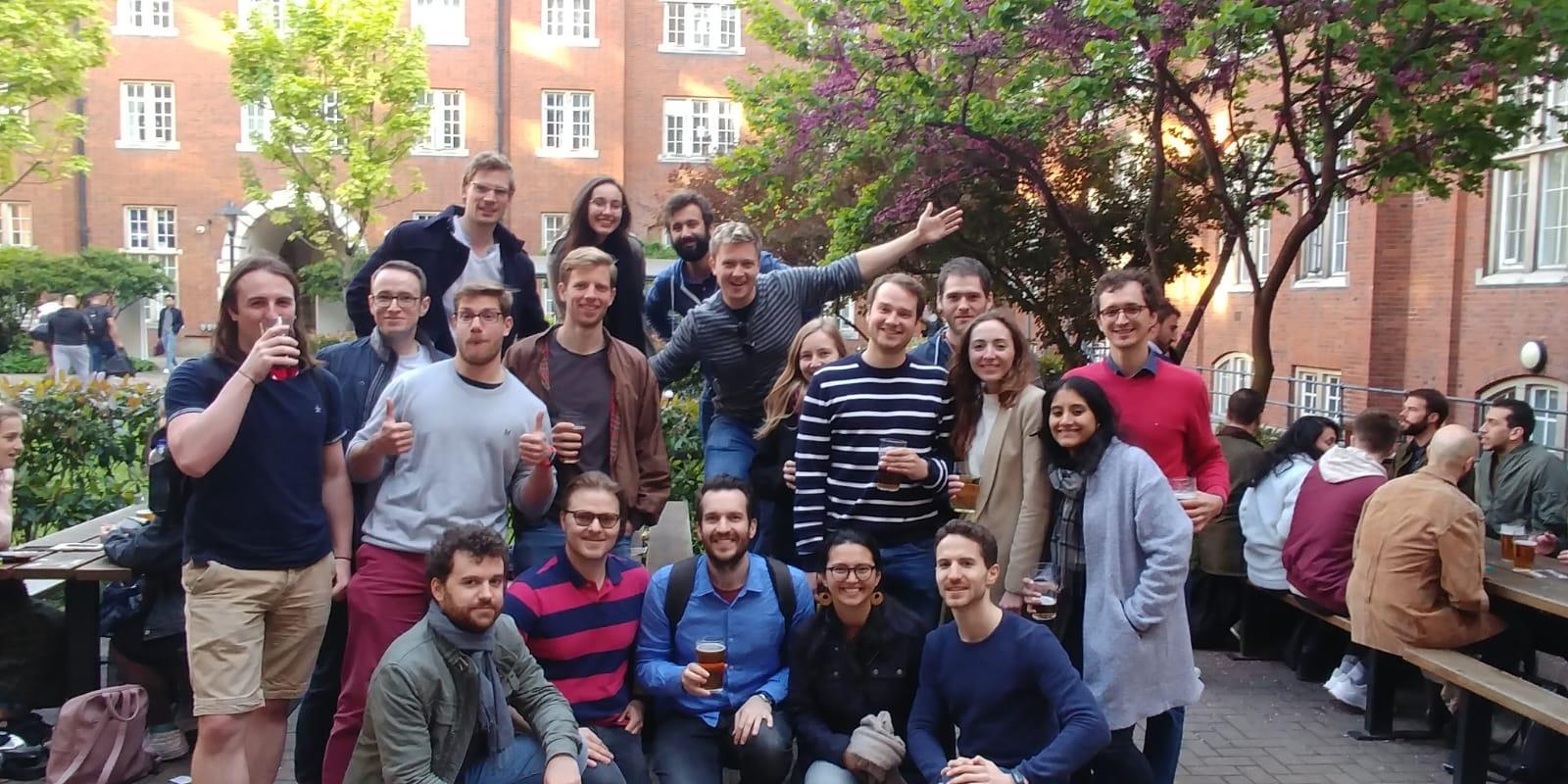
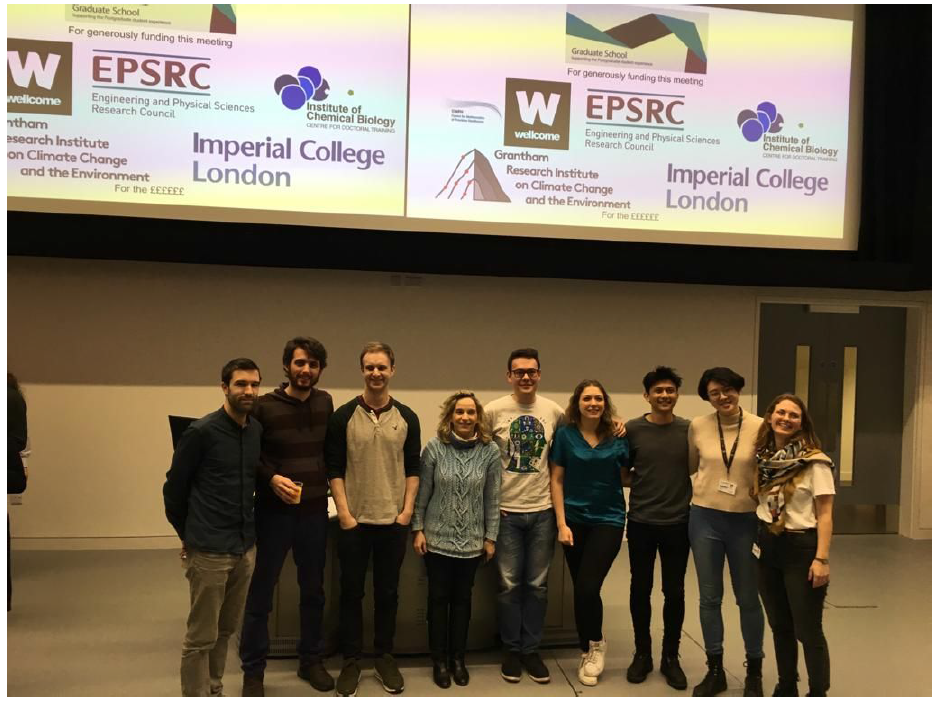
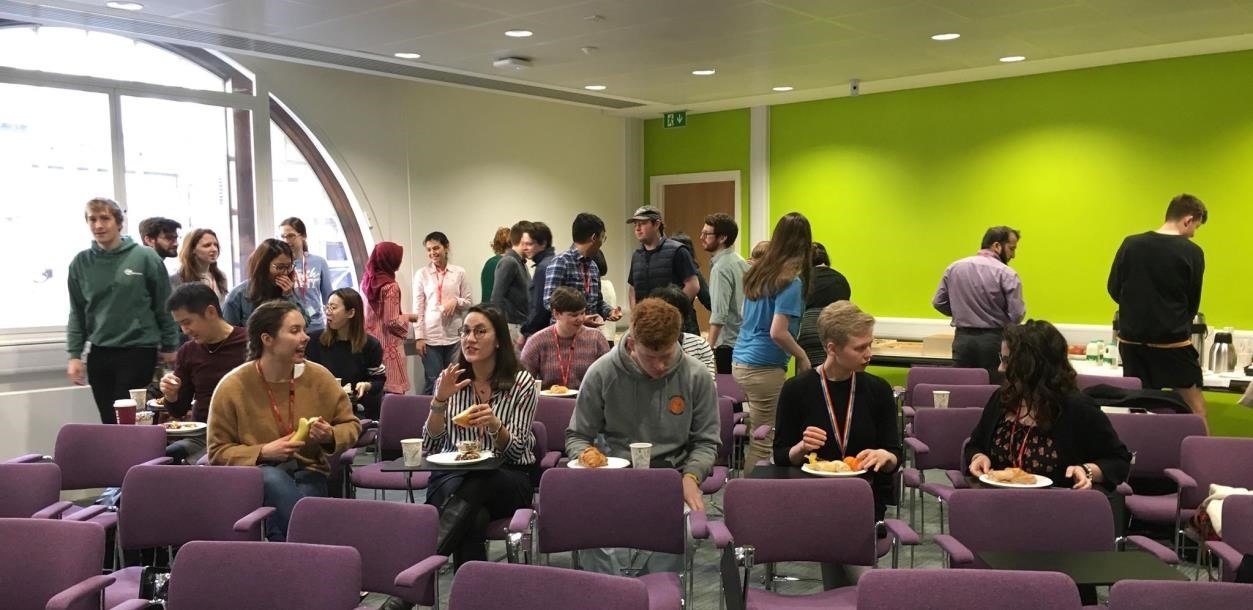
On Friday, 10th of May the third event of the Cross-CDT series took place. The students from five different CDTs gathered at the Union bar to catch up with people from their own cohort as well as with people from other CDTs and cohort years that they got to know at the other events. In total more than 20 students from different CDTs joined for this event in the course of the evening and had a great time together.
It was a great opportunity for friends who have not seen eachother in a long time to socialise and grab a drink together. At the beginning of our PhD program, all of PhD students were working together in an open office area. However, since now everybody is spread out in a different building and even different campuses (White City and South Kensington), it is very rewarding to meet up from time to time and to have a chat about how the PhD projects are going, to what cool conference some people already went or which internships they have done and to exchange also thoughts and advice that we have accumulated over the time. The Union bar was the perfect choice for such and event, since it is close to all of our offices and easy to convince people to join for a after work drink on a Friday.
Overall it was a great event that was appreciated by all the people involved. Everybody is looking forward to the next event. A thanks goes to the Graduate School of Imperial College London which financially supported this cohort building activity.
Athanasios E. Giannenas, Alexander Schwertheim & Omar Mahfoze
Postgraduate Students & Departmental representatives, Department of Aeronautics
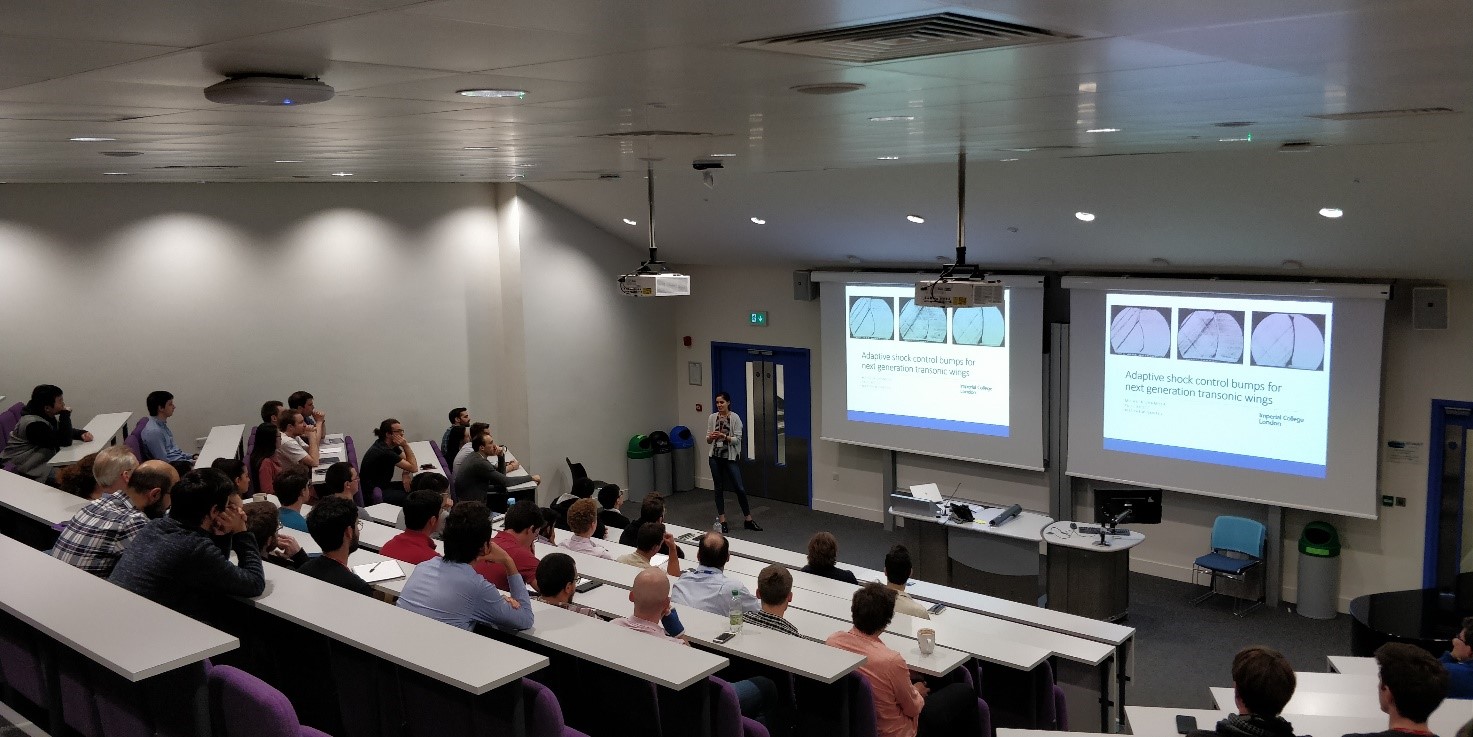
The Inaugural Aeronautical and Mechanical Engineering Seminar took place on 29th of March 2019 comprising a joint academic seminar between the Aeronautics and Mechanical Engineering departments, followed by a networking opportunity over food/snacks. Three presenters (PhD students and Postdocs of both departments) introduced their latest research to their fellow colleagues. The seminar offered a unique opportunity for the presenters to share their work in a somewhat informal setting. This allowed them to discuss not only their achievements, but also their failures and struggles—something generally not shared at formal conferences.
The rationale behind this event was to create a bridge between the two departments. While these two departments overlap in several research areas, they seldom interact both academically and socially. We wanted to change this, and in turn create a broader, more active community of young researchers, by improving relations, and inspiring both presenters and audience.
A wide variety of research areas were covered by the three speakers who provided the following titles for their talks:
Michela Gramola (PhD Student, Department of Aeronautics): ‘Adaptive shock control bumps for next generation transonic wings’
Giovanni Giustini (Postdoc, Department of Mechanical Engineering): ‘Computational Fluid Dynamics for nuclear thermal hydraulics: application to microscopic modelling of boiling’
Dimitrios Bekas (Postdoc, Department of Aeronautics): ‘Structural Health Monitoring of composite structures using additively manufactured sensors’
The event drew fantastic attention and attendance with approximately 65 attendees from both departments. The seminar was an outstanding opportunity for the active PhD and Postdoc students of both departments to gain an insight into the world-leading research that is currently conducted in our departments. Despite the rather short duration of the presentations (15 minutes), they provided a high-level introduction on the presenters’ field of research. The networking session over food and drinks proved to be a success which brought together students from both departments not only to discuss their research but also network and socialize.
Overall, the seminar proved to be a tremendous success as we received very positive feedback and many requests to repeat the event in the future. Furthermore, we received many requests from students who are eager to present their research in future events. Both departments recognised the benefits and popularity of the event and we are currently trying to establish funding to repeat the seminars every month where members of academic staff will also be invited. We also learned a lot from organising and hosting this event and we very much look forward to arranging more (and hopefully equally successful) events.
We would like to very warmly thank Dr Paul Bruce (Senior Tutor for PGR in the department of Aeronautics) for his help and support. We thank the PhD reps from the Mechanical Engineering Department for their help and cooperation. We would also like to thank the Graduate School for kindly awarding us the Research Community Fund and making this event possible.
by Diego Mesa, PhD student in the Department of Earth Science and Engineering
This year the University of Edinburgh, a member of the League of European Research Universities (LERU), hosted in July the 9th LERU Doctoral Summer School. The main focus of the Summer School was on Collaboration in Research, aiming to develop a guidebook for early career researchers on effective collaboration.
My name is Diego Mesa and I’m a 3rd year PhD student in the Advanced Mineral Processing Research Group of Imperial College London. When I saw the Graduate School’s invitation to be part of this activity, I knew I had to apply. Not only is my area of research fundamentally based on the inter-sectorial collaboration among universities, companies and other stakeholders, but also my personal interests lie in international collaboration. Being of Chilean origin, I had the honour of representing the Latin American community of Imperial College as President of the Society for the 2017-2018 academic year. Hence, I have seen first-hand the impact that international research projects can have on our countries and communities. I was indeed thrilled and honoured to be selected to represent Imperial College at this Summer School.
As a pre-course activity, we were asked to interview an established and successful researcher about their views and experiences in collaboration projects. I decided to interview Prof. Mark Rehkämper, a specialist in Mass Spectrometry and Isotope Geochemistry of the Earth Science and Engineering Department. His insights were key and influential in informing my understanding of collaborative projects. This enabled me to participate effectively in the debates that we eventually had during the Summer School activities. It was amazing to see that so many professors were absolutely open and willing to share their research experiences. I would firmly encourage other students to get in touch with other professors and perform such interviews.
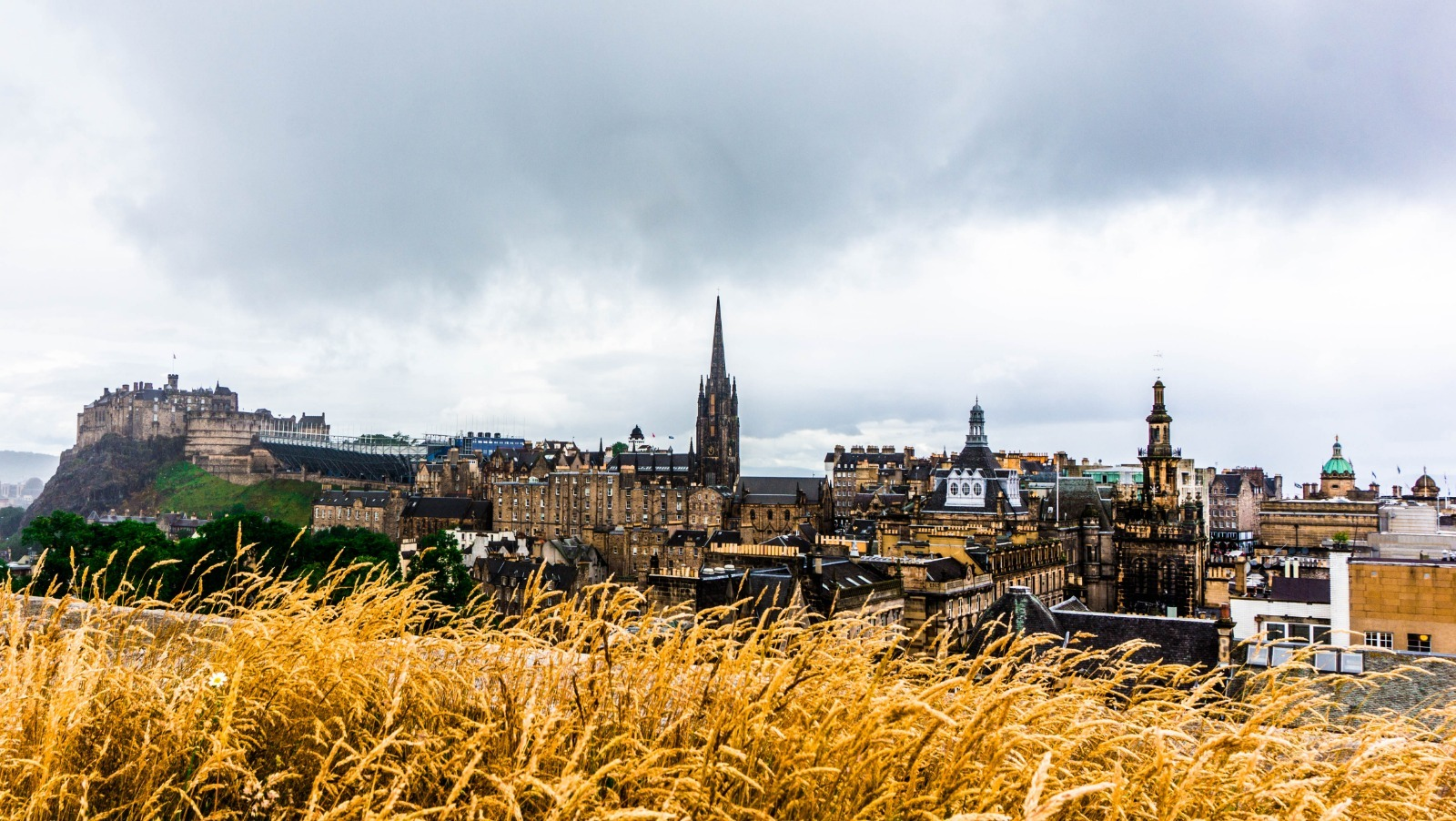
Months passed quickly, as they do during your Ph.D., and the date for my trip to Edinburgh arrived. It was my first time in Scotland, so I was blown away by the architecture, the landscapes and how friendly the people were (under that thick accent).
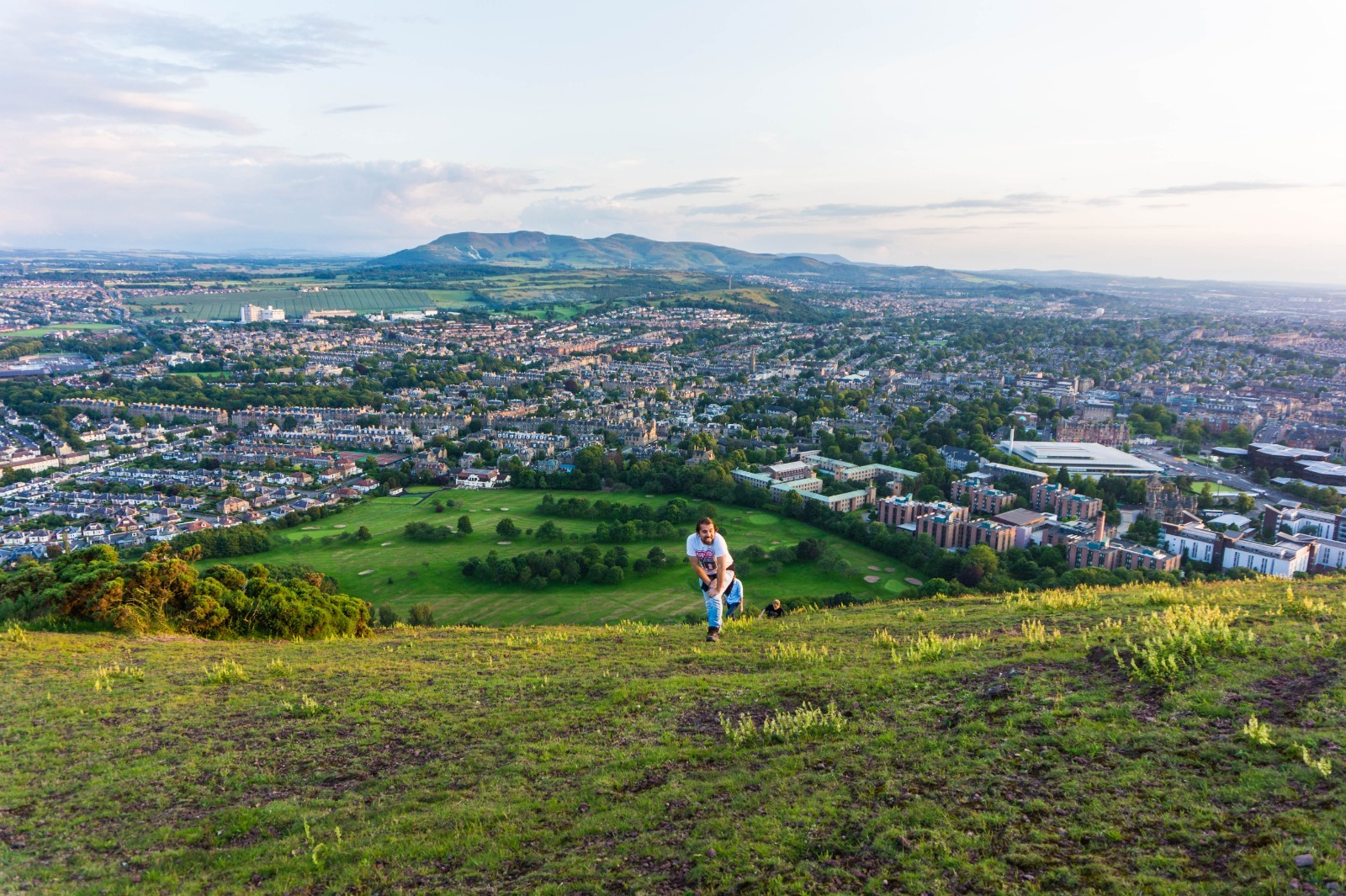
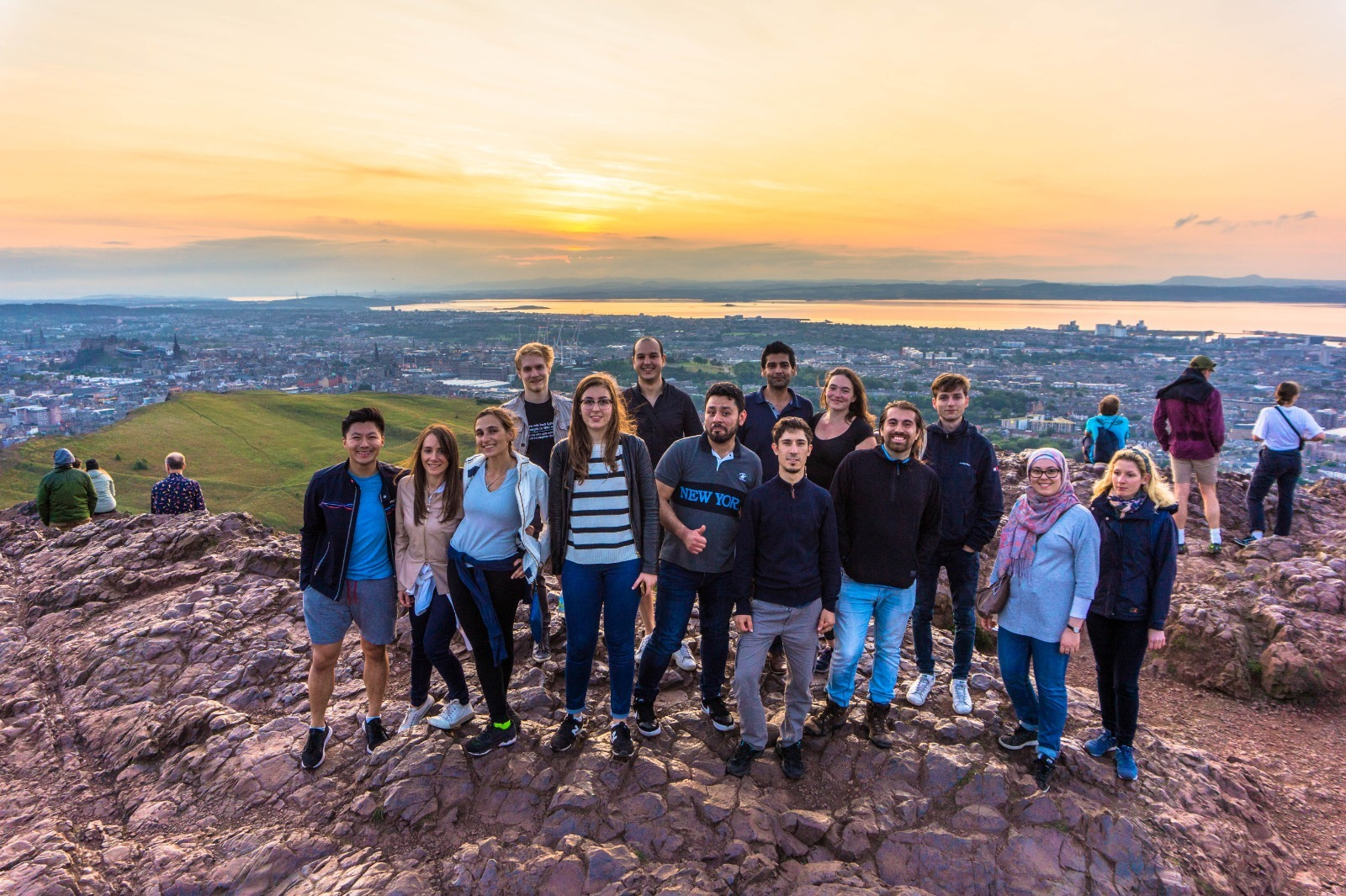
Me, struggling to climb the Arthur’s Seat. Photo Credit: Shishir Pant, Helsinki University
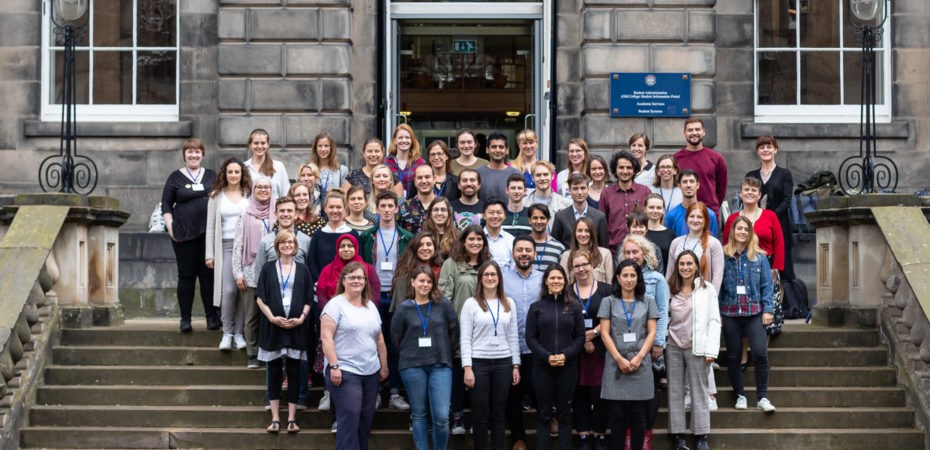
On the first day, I got to meet the rest of the participants. We were 52 Ph.D. researchers from 23 different universities, different countries, and cultures. However, what surprised me the most was the diversity of research topics represented amongst us. My scientifically oriented mind tricked me when I read the title of the Summer School, thinking that I’d be surrounded by STEM-researchers. There were: lawyers, philosophers, historians, artists, scientists, engineers amongst many others.
The Summer School was much tougher than I had anticipated. Each day involved an action-packed agenda. Usually we would start the day with some keynote talks by researchers and members of staff of the University of Edinburgh, which allowed us to gain novel insights about different aspects of collaboration. We would then divide into small groups to analyse and write different sections of the guidebook. I would have never though it possible that one could write a quality piece of work in one week involving more than 50 authors. Fortunately, this was all brought together by the masterful guidance of the organisers and we were able to create an amazing guidebook.
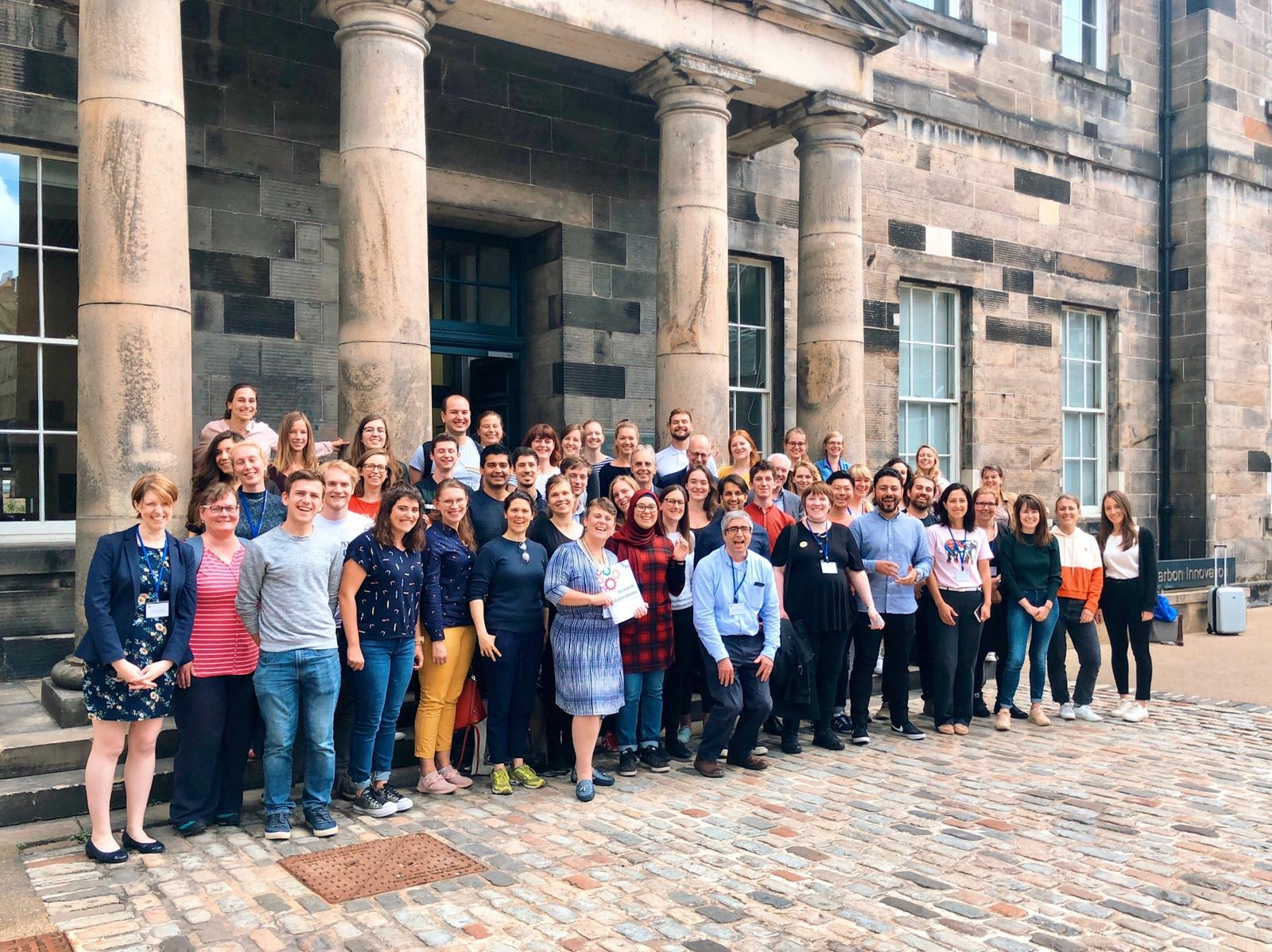
LERU Summer School Participants at University of Edinburgh. Photo Credit: University of Edinburgh
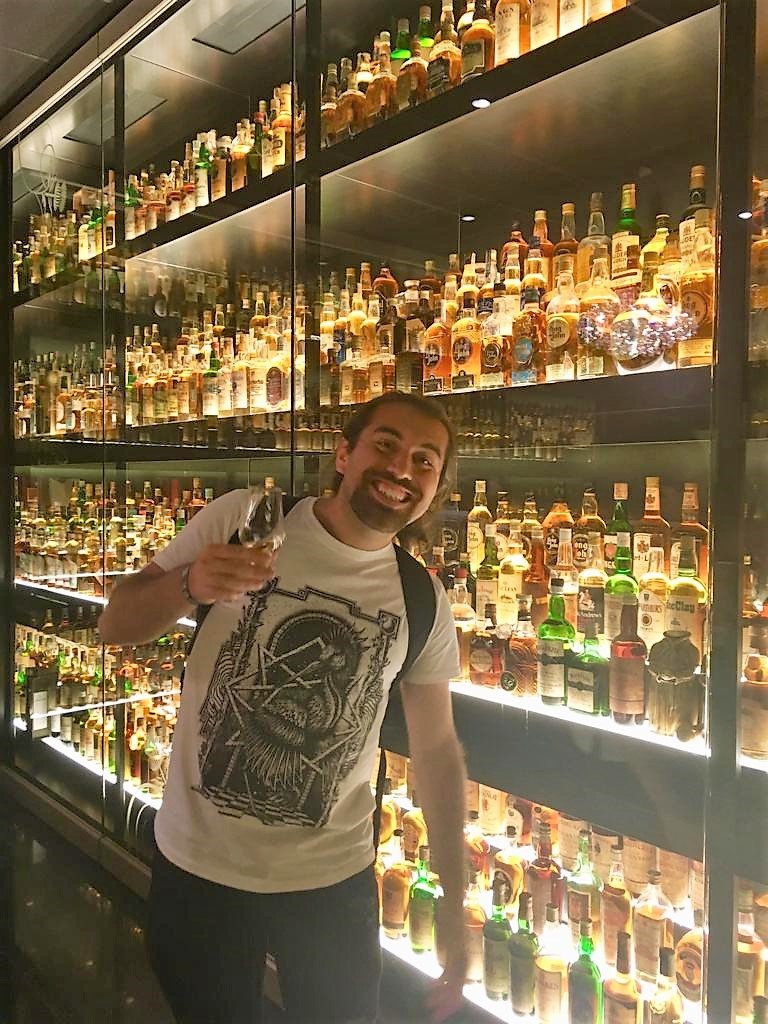
However, not everything was hard work. We learnt that many collaborations start in the pub and that the strength of the social relationship between partner is key to a successful collaboration… so, we decided to put that piece of advice to practice quickly! On the first day, we went on the Scotch Whisky Experience and then for a lovely dinner altogether. For the rest of the week, we would spontaneously meet in the pub after classes or for outdoor activities. We climbed the Arthur’s Seat, went on a walking tour around Edinburgh and even danced the traditional Ceilidh with bagpipes!
Views of Edinburgh. Photo Credit: Shishir Pant, Helsinki University
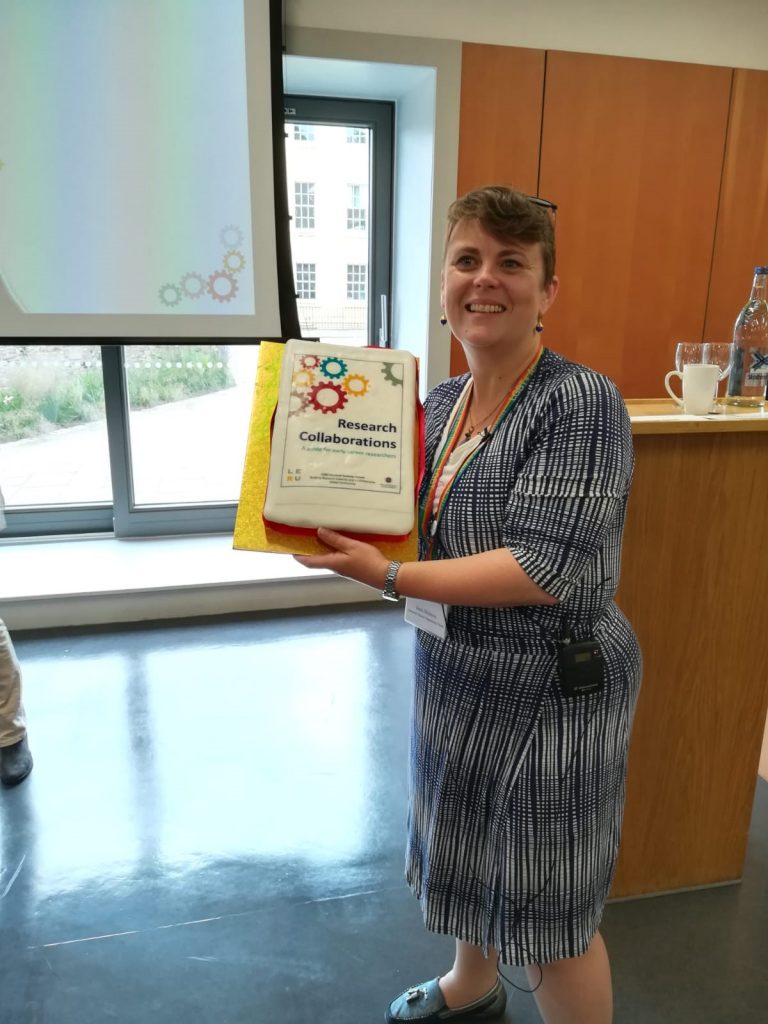
Our last day was very moving as we got to see the last draft of our guidebook. We were honoured by the presence of Professor Kurt Deketelaere, Secretary-General of LERU at the closing ceremony, where he remarked on the importance of collaboration among our elite universities. This is important not only for the advancement of science and knowledge, but also for the further development of global communities able to work and live in harmony, respecting and embracing our diversity. Five participants (including me!) volunteered to introduce the guidebook to him. We explained the contents, the process of development and the impact of the work we all had just performed that week. Finally, Dr Sara Shinton, organiser and moderator of the whole process, revealed a cake featuring the design of our collaboration guide!
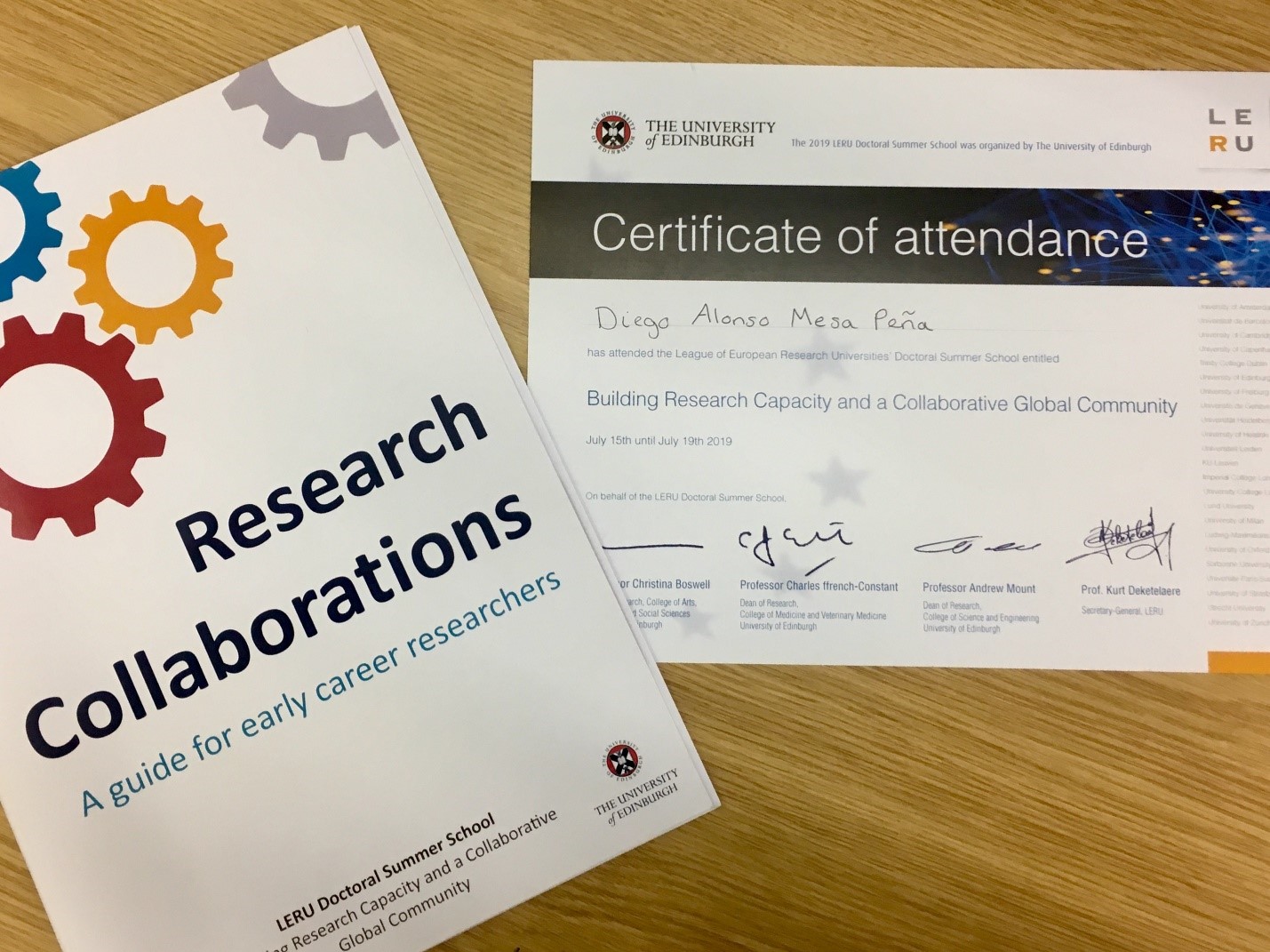
Research Collaboration Guidebook and Certificate of AttendanceDr Sara Shinton with the cake. Photo Credit: Nathalie Dupin
In conclusion, the LERU Summer School was an amazing and engaging experience, where we were able to collaborate and develop our guidebook! We anticipate that this guide will help many researchers globally to engage effectively in more collaborative projects in the future. Finally, I also met amazing people along the way, who came from all over Europe. This both expanded my professional networks and allowed me to develop some great friendships. I look forwards to meeting everyone again soon!
A group of participants at the top Arthur’s Seat. Photo Credit: Shishir Pant, Helsinki UniversityLast day of LERU Summer School. Photo Credit: Brian Wong, University College LondonMe in the Scotch Whisky Experience
On the evening of Thursday the 7th of February, the Computational Chemistry division of the Chemistry Department held its third monthly research and social event. These meetings started running in September to strengthen the professional and personal relationships between computational research groups, which have found themselves sharing a large open-plan office after the departmental move to the White City campus in Summer 2018. The meetings are mainly organised by the postgraduate students of each group and promote the integration of students of all levels into the wider departmental community.
This month, we put up the event with the generous help of the Graduate School cohort building fund. The meeting was attended by about 50 people, split evenly between undergraduates, graduate students, postdocs and PIs of the computational groups within the Chemistry department. As in the previous months, we started the evening with a brief presentation of our group’s work. All current students of the group, joined by collaborating students from the maths department, presented a few applications of graph-theoretical methods, including the study of protein dynamics. After the presentation everyone in the audience participated in a quiz-style activity (which involved buzzers!) based on the same mathematical methods we use in our work. Afterwards we all moved on to socialising over drinks, snacks and Homeslice pizza.
It was a great opportunity for new students to introduce themselves to the rest of the cohort, for some stimulating academic conversations and for everyone to have some fun, too! We are extremely grateful for the Graduate School’s funding, and we will be recommending it to anyone else organizing similar events.
With love,
The Yaliraki Group
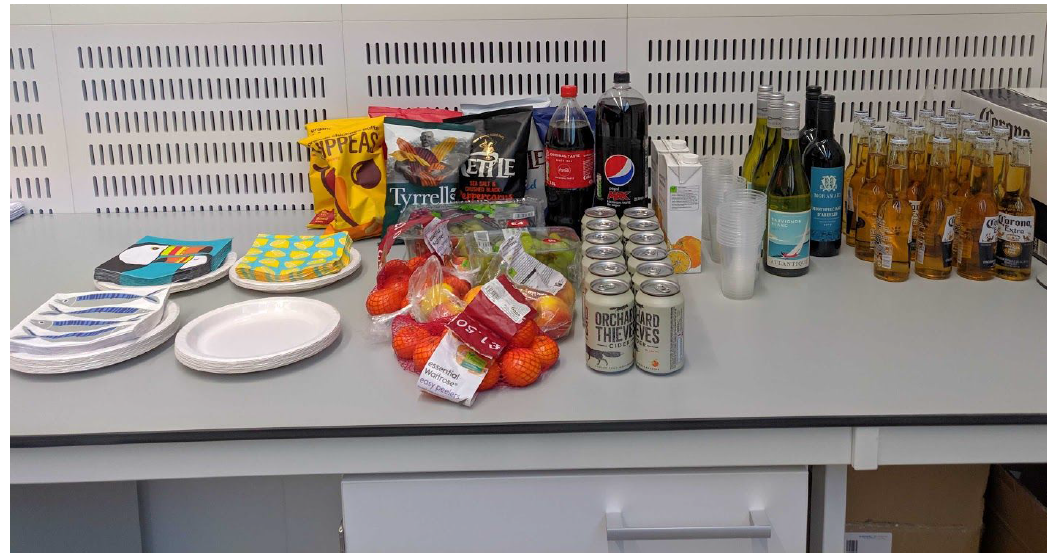
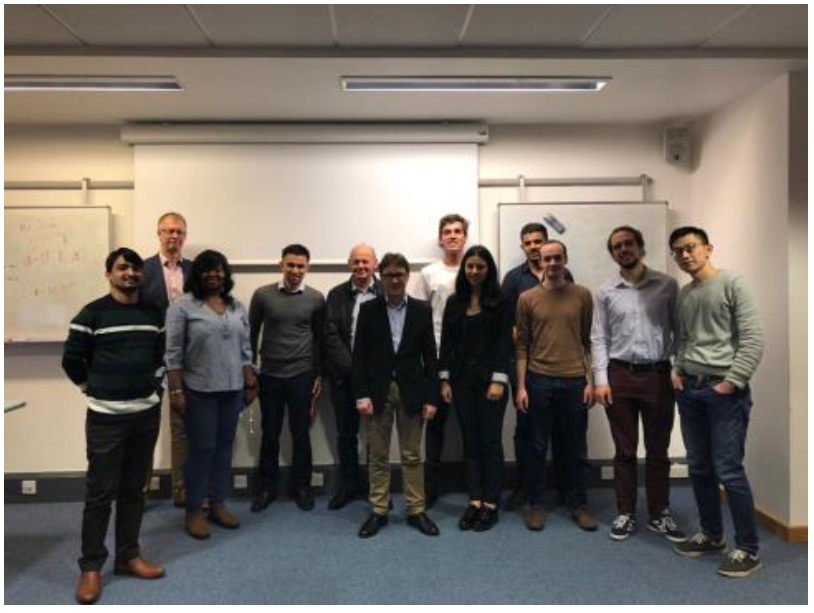
Fig. 1 Snacks and refreshments set up….courtesy of the Graduate School!Fig. 2 The Yaliraki group after a successful presentation
Founded in October 2018, the IEEE Student Branch at the Department of Electrical and Electronic Engineering, Imperial College London, was created with the motivation of “Developing collaboration between engineering students, researchers, academics, and industry by actively organising and promoting IEEE events”. The student branch strives to act as a common channel that various researchers, students and academics can use to share their research work, create new collaborations and discuss future directions. In doing so, we also hope to engender a more social atmosphere to the research scene in the college. This document will showcase the event that we have organised with your much appreciated support and will also detail intended future events with the hope that we will have your continued support moving on.
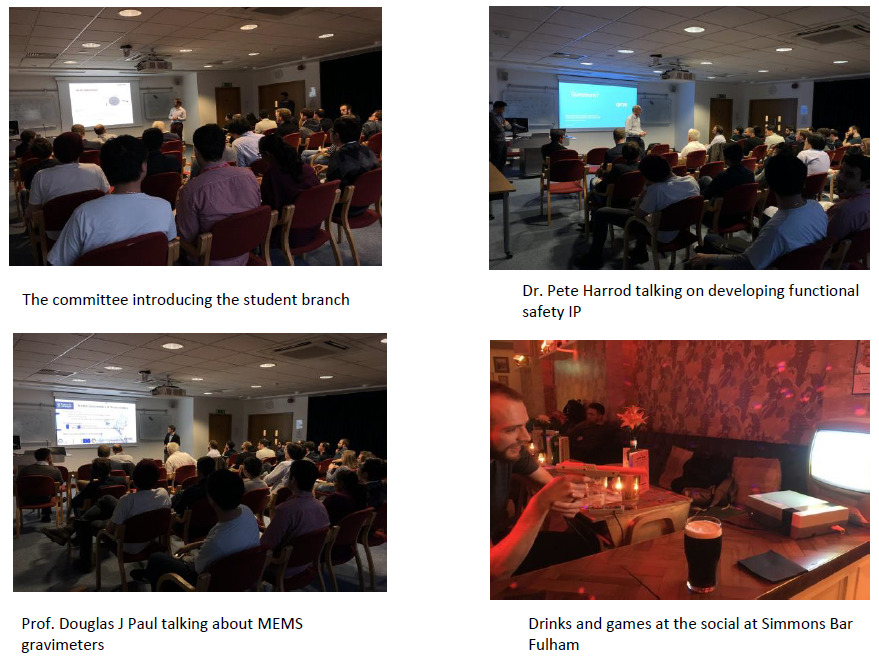
Our inaugral event, The IEEE Symposium, was organized at the EEE department on the evening of Wednesday 20th March 2019, and was a great success. The event introduced the student branch to the postgraduate community within the Electrical and Electronic Engineering Department, as well as worked as a launch pad to introduce our planned flagship event, the IEEE Conference on Advances in Communications, Devices, and Systems – IEEE ACDS, which the student branch plan to organize later this year. The symposium featured talks from two highly distinguished senior IEEE members, Dr. Pete Harrod and Prof. Douglas J Paul. Dr. Harrod is currently the Director of Functional Safety at the CPU group at ARM and spoke on the challenges of developing IP for functional safety applications such as automated driving. Prof. Paul is an EPSRC Established Quantum Technology research Fellow at the University of Glasgow and spoke on the use of MEMS devices to detect gravity with high sensitivity and resolution. The talks were very engaging and we had a large turnout of over 30 people. Apart from aptly managing the logistics behind contacting the speakers and advertising the event, the student branch provided pizzas for all attendees to enjoy while listening to the talks.
Following the talks, we proceeded to a social at the Simmons Bar in Fulham (SW6 1LY). The student branch had organised a tab for everyone attending. The social had a turnout of about 20 people and was a fun night of some drinks, pool and retro video games. The social provided an opportunity for the researchers to socialise as well as discuss their research with their peers. The event ended successfully by 21:30, and feedback from participants was overwhelmingly positive, with many of them thanking the organising committee for making the effort to organise this event. Below are some pictures from the event. We feel such opportunities are a valuable part of postgraduate education and work towards our goal as a student branch. The organising committee is immensely grateful to the Graduate School’s Course Quality and Strategic Development Committee (CQSD) for providing generous financial support for this event.
In terms of future events, we aim to host more such symposiums with speakers from other fields of research along with different socials to accompany these events. We believe that having insights from speakers not only from other universities but also from industry is hugely beneficial to postgraduates at Imperial. Apart from these symposiums, our main goal for this year is the IEEE Conference on Communication, Devices and Systems (IEEE ACDS) conference, which we are currently planning and the details will be provided soon. For more information on any of these events, feel free to contact any of the committee members via email. The contact details can be found on our website https://edu.ieee.org/uk-imperial/.
Yours sincerely,
The IEEE Student Branch Committee at the Department of EEE, Imperial College London
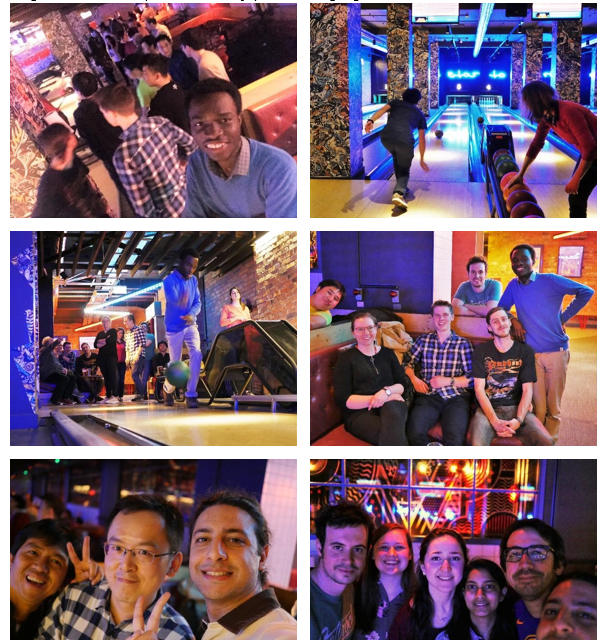
On the 29th of March 2019 we made our way to the nearby bowling place in Bayswater for a Geotechnics Section-bowling night. After a nice group walk through Hyde Park we all gathered at the bowling alley at 18:00. Thanks to the great turnout of 26 people, we took over five of the lanes and played two hours of bowling – some more competitively than others. A few people tried bowling for the first time in their life and ended up getting one strike after the other, so there were many great celebration dances to be seen. While waiting for our next turn and cheering our teammates on, there was a large selection of burgers and other finger foods for everyone to enjoy.
Since bowling in London is quite expensive, this event would not have taken place at all without the support from the Graduate School’s Research Community Fund. We are therefore very grateful that we got the chance to spend such an enjoyable evening together as a Section.
by Nora Schmit & Constanze Ciavarella, PhD students in the School of Public Health
The first School of Public Health breakfast club took place in the morning of Tuesday 26th March 2019 at St Mary’s campus. The student reps organised this initiative to bring together PhD students from 5 departments spread across St Mary’s, Charing Cross and White City campuses, to share their experiences around the theme “Making the most of your PhD” while enjoying a delicious breakfast buffet.
The event had a high turnout, with over 50 students from all stages of the PhD gathering in room G64. It started at 10am with tea, coffee and various breakfast options from Le Pain Quotidien, including waffles, pastries, baguettes and fruit. After everyone had taken a seat, 3 students from the Department of Infectious Disease Epidemiology gave short talks on extracurricular activities they had pursued during their PhD.
First, final-year PhD student Tom talked about the insights he gained during an internship at the Parliamentary Office of Science and Technology. He also gave practical tips for students wanting to apply to the internship scheme and on managing the practical aspect of taking time out of the PhD. Andria, a second-year student, then presented an overview of her short-term work assisting the Ebola outbreak response team at the World Health Organization. She gave some details on the current Ebola epidemic and the tasks she had to complete during this position interspersed with beautiful pictures of Geneva. Finally, Nora shared her experience of the Global Fellows Programme at Tokyo Tech University organised by the Graduate School, which she had attended during the first year of her PhD. She highlighted her happy memories of the trip and encouraged participants interested in developing teamwork and communication skills to apply. All speakers agreed on the benefits of taking up these varied opportunities and expanding their experience beyond their research project, particularly with regards to skills and careers development, but also highlighted the difficulties they encountered in reconciling the activity with their PhD.
After the talks, everyone had the chance to ask questions or talk to the speakers in person. People helped themselves to more food and some stayed to mingle with the other students until 11.30am. Participants additionally had the opportunity to vote on future social activities to be organised by the PhD reps, with paintball, karaoke and a museum late visit coming out as favourites.
The first breakfast club was a great success and received positive feedback throughout; everyone was impressed by the food and participants said they appreciated the opportunity to get to know other students and getting inspiration and practical information to make the most of their PhD.
We would like to thank the Graduate School for funding this event and hope to organise more activities in the future to improve the postgraduate research community in the School of Public Health.
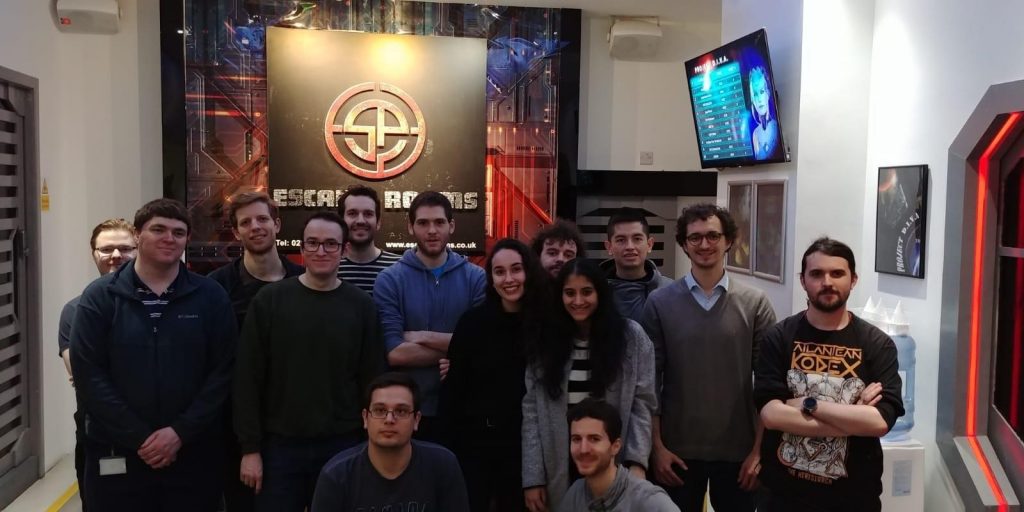
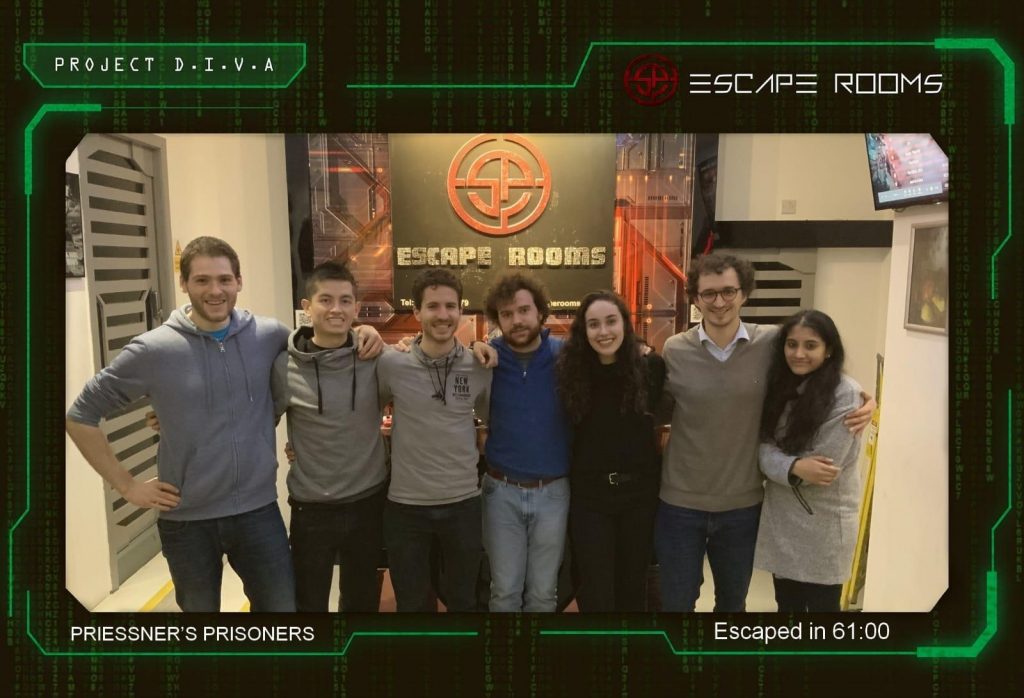
On Wednesday 13th of February 2019, the second event in the Cross-CDT series took place – a total of 14 PhD students from different 3 different CDTs gathered to face the tasks that needed to be solved. The students divided in to two teams and were required to work together to solve different puzzles in order to beat the clock (and each other), to escape and unlock their respective ‘rooms’. As this was the second of the scheduled activities, many of the students were already acquainted and were able to jump to the tasks at hand instantly.
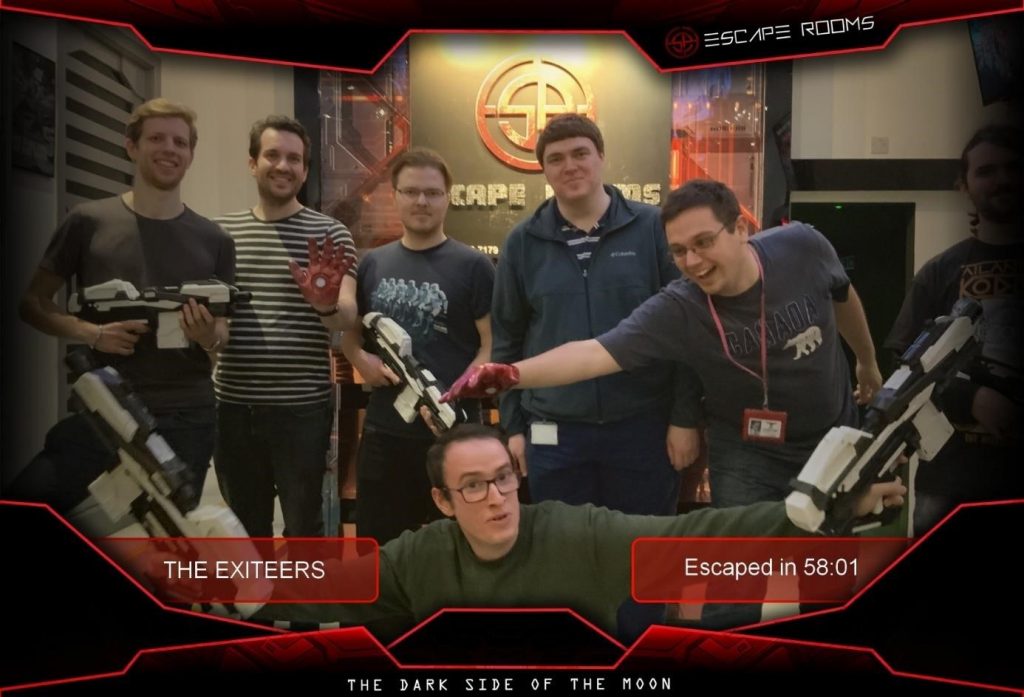
The theme of the first room was “Project D.I.V.A” and the second, “Dark side of the moon”. Both adventures had their own unique set of fun challenges, questions and tasks which needed to be solved and which put our team work and skills of inquiry to the test. It was a welcome distraction from our PhD work and a reminder that from time to time, we also need to enjoy ourselves.
After an initial struggle both teams managed to escape their respective rooms – rooms. It was great to receive the “Mission accomplished” announcement!
Following the escape room activity, the students who still had some energy left, decided to go to the pub to reward their hard work. This gave the group the opportunity to chat and share experiences.
Overall it was a great event and we are all looking forward to the next!
We would like to extend our thanks to the Graduate School for financially supporting this cohort building activity.
Britain is at the forefront of energy system transformation. In 2018, 53% of electricity consumed came from low-carbon generators, up from 25% in 2009. As a result, carbon intensity halved from nearly 500 to 217 gCO2/MWh (Electric Insights). However, as an island with limited interconnection to its neighbours, the stakes are particularly high to achieve further reductions down to 100 gco2/MWh by 2030 (Fifth Carbon Budget).
At the same time, me and fellow PhD students miss the exchange amongst us as well as with other academic, industry and policy experts on energy system transformation. What is missing is a closeknit energy system community that can easily discuss transformation pathways. Although individually, research, business and policy-making in energy, is world-leading, the community is siloed. In addition, there is no forum within Imperial where students working in this field can easily exchange information and discuss.
The missing link is a platform that offers a direct (!) communication channel between students and experts of all sectors and brings them together to openly discuss ongoing work. That’s why I set up PowerSwarm.
Power Swarm is an open, free network of energy system transformation experts across academia, industry and policy. It is not a single event, but rather has two key components:
E-mail list: Every Power Swarmer can write to this list to advertise jobs, papers, conferences, etc., and ask questions related to energy system transformation. The purpose is to leverage swarm intelligence for better information exchange and more efficient problem-solving. When I e-mailed the group about recent reports on the amount of storage required in future energy system scenarios, I received more than 15 reports I hadn’t been aware of. That’s my PhD literature review sorted!
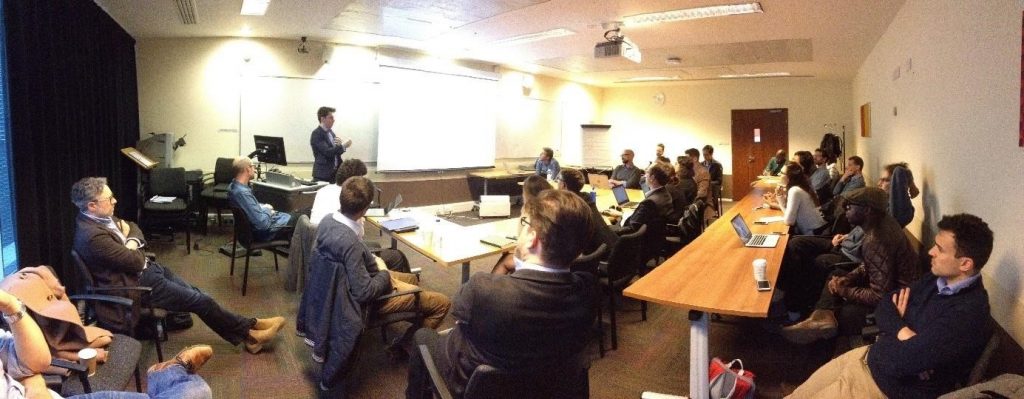
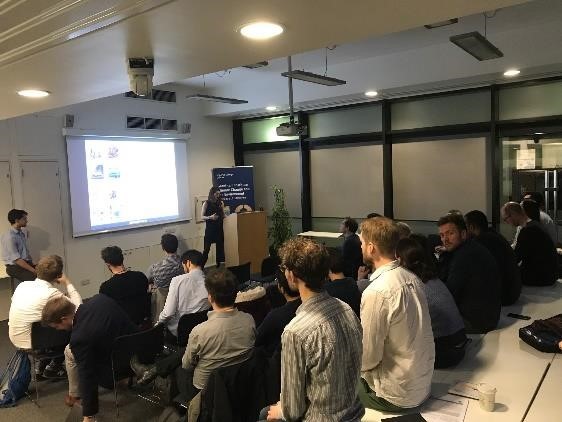
Workshops: For a different topic each month, academic, industry and policy experts speak about their ongoing work in this area. Two hours with five presentations of ten minutes ensure a concise format that allows for real, content-based, cross-sectoral discussions. No need for shiny result slides, rather a discussion of current roadblocks. The workshops take place from 5-7pm and are usually attended by 20-30 people working in the particular field. Past meetings were on ‘Modelling Renewables’, ‘Value of Storage’, ‘Energy Trading’ and ‘Hydrogen’. My roadblock was how to quantify the value of energy storage and the advice from experts of Pivot Power, Aurora, RenewablesUK, and others came in very handy.
Last week’s workshop (21st February) was already our fourth one and focussed on the future role of ‘Hydrogen’ in the UK. 20 to 30 attendees (MScs, PhDs, researchers, NGOs, industry), discussed with speakers from academia (Imperial, UCL), consulting (Element Energy, E4Tech), industry (ITM Power) and policy (BEIS) about the current roadblocks to decarbonising energy, transport, heat and industry with hydrogen. The event was followed by drinks at Eastside where students could network with professionals and continue the discussion.
Power Swarm thereby supports Imperial’s research network and fosters exchange of research insights on energy across departments, connects Imperial’s research community to the wider academic and (most importantly) industry and policy community working on energy, and establishes a forum for students to network among each other, with the Imperial community, and with industry and policy experts.
Power Swarm has already more than 200 members in the energy sector. If you think you could benefit from the network, join!
We would like to extend our thanks to the Graduate School for supporting this Research Community Fund activity.
The first Power Swarm workshop on Modelling Renewables on 18th October 2018.The fourth Power Swarm workshop on Hydrogen on 21st February 2019.
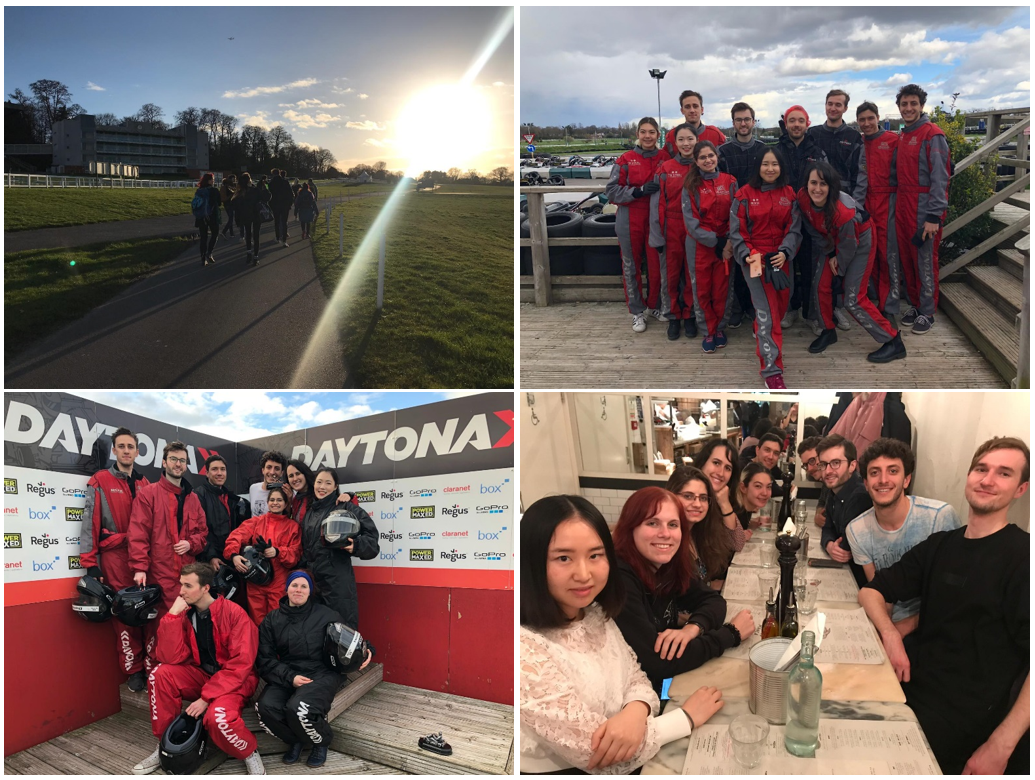
On Sunday the 17th of March 2019, the first-year PhD students from the Bioengineering Department enjoyed an active day out which started with a go-karting race in Sandown Park and culminated in a joyful social over dinner at Franco Manca in Earl’s Court. The students, who organised the outing on the WhatsApp group they created at the beginning of the year, sought to reinforce the professional ties and personal bonds they developed since the first social at the beginning of February. The event was made possible thanks to funding obtained through the Imperial College London Graduate School from the Research Community Fund, for which the students are very grateful.
The day out started at 1 P.M. when the students met at the South Kensington Campus to catch a minibus ride they’d booked, and headed out for Sandown Park. The bus quickly filled with a variety of overlapping conversations with topics ranging from technical comparisons of experimental methodologies to the importance of engaging as Teaching Assistants for one’s own self-development. Such conversations promote collaboration: as an example, a professional connection between two students which emerged in the previous social event resulted in one’s participation in the other’s lab work as a pilot subject – allowing them to further tune their experimental design through discussion other peers. As one student put it: “It’s also nice to connect with people who I might be able to collaborate with – providing opportunities for similar connections to occur is essential and may result in fruitful collaborations and exchanges of perspectives of the challenges PhD students face daily”.
As the minibus approached the venue, those that had been go-karting before shared their accounts of previous experiences. The weather gave some signs of worsening before clearing up, fortunately – the track was just made humid enough to make the spin-outs funnier to recount on the minibus on the way back. The student engaged in the race showing their competitive spirits and very much enjoyed the challenge of handling the karts in damp conditions. The event ended with pizzata – Italian for a pizza get together – in Franco Manca at Earl’s Court, where the room filled with friendly conversation.
Indeed, aside from the aspect of providing an opportunity to develop professional relationships for direct scientific collaboration, a very important aspect of social interaction is to web a support network made of personal relationships between the students. This network enables students to manage any work-related anxiety, stress or loneliness by having a go-to person in a similar professional situation to them. The event was designed to facilitate a combination of the tension-releasing adrenaline-inducing sporting activity and the relaxed and informal follow-on dinner and was a great success! Everyone thoroughly enjoyed the day out, as one student’s reaction reveals: “We all had a fantastic time, relaxing, having fun and forgetting about work for a few hours! Very much looking forward to seeing my colleagues again for another event in a few weeks’ time!”