Tag: sciencecommunication

Presenting my research at the Rising Scientist Day

By Jonathan Li, PhD Student, Department of Metabolism, Digestion and Reproduction

Hi, I’m Jonathan.  I’m a 3rd year PhD student studying signalling pathways in the myometrium. I presented my research at the Rising Scientist Day hosted by Faculty of Medicine. It is a one day conference that allows PhD students from multiple backgrounds to present their work. Usually, the symposium offers a great chance to network with other PhD students and to find out what their research is all about. This year, due to COVID-19, the format was slightly different than previous years, where everything was done remotely.  Nonetheless, the event was still a great success. 

The day started off with a number of 3 minute thesis talks, then this was followed by intermissions and lunch breaks where we could view the posters. Given the challenges of hosting a symposium remotely, the day went very smoothly with only a few technical hitches due to the overwhelming number of people wanting to listen in on the talks. One of the advantages of having a remote symposium is that students who are not based in London can attend these events, where we had one speaker dial in from South East Asia! 

The remote nature of the symposium meant that a poster session was not possible. However, the posters were consolidated into one website that was very accessible. Whilst lacking the benefits of having a scientist explaining their work in person. The posters were submitted along with a 1 minute recording. One of the challenges is how do you explain your research in such a short amount of time without being there in person.  Suffice to say the approaches of how to tackle this problem were varied, where some chose to adopt QR codes, some used hyper-links.  The sheer amount of thought and consideration to these limitations, coupled with the high quality of research in these posters made it feel like I was attending an international conference.  

The sheer variety of fields was also very eye opening, ranging from preterm labour (my research focus) to things like embryonic stem cells or avian influenza viral research.  As a final year PhD student, I can say from personal experience it is very easy to focus on your own project, as the deadlines mount and you try to complete experiments or gather more data. The symposium provides an excellent chance to find out about other projects ongoing at Imperial. 

Overall, the day was a wonderful experience and having the chance to see the excellent research that is being carried out by my peers makes for a nice break from the routine of lab work. Whilst the symposium lacks the in-person touch this year, I’m looking forward to similar future events when COVID-19 restrictions are relaxed. I would highly recommend PhD students to submit their work if they have the chance next year.  

Many thanks to the staff members who helped organise the event. 
A Unique Rising Scientist Day

By Alexander Carver, PhD student, Department of Infectious Disease

Hi, I’m Alex, a second year PhD student studying in Professor Xiaodong Zhang’s group. On 20th April, I was lucky enough to take part in Rising Scientist Day 2021 and win the 3-minute thesis competition. It has been a tough year for PhD students across Imperial College with the coronavirus pandemic taking a toll on what has been possible to achieve in the lab; however, it was very impressive to see what people have been working on for the last 1-2 years. The day consisted of poster viewing sessions in which all 2nd and 3rd year PhD students in the Faculty of Medicine were expected to compete. The posters were of exceptional quality, and the winners did a great job in producing posters worthy of any conference. 

In addition to poster viewing sessions, 25 PhD students were also nominated to produce a single slide summarising their research which they would present to the audience (over Zoom) in a maximum of three-minutes. Undoubtedly a big challenge, the field was full of great talks, ranging from discussion of new Hepatitis treatments in Eastern Asia to understanding the role of microbiota in immunity. My talk examined the regulation of the DNA damage response, particularly the proteins involved in Homologous Recombination, a pathway of repair essential for the maintenance of genome integrity. 

We were also treated to two talks by two recent Imperial College alumni who gave us an insight into what they achieved with their PhDs. Despite both alumni completing a PhD in the Faculty of Medicine, they both had gone into different careers that have used the skills gained during their doctoral research. The first, Zoe Seager, told us much about what it is like to be a post-doctoral researcher in academia. It was a very interesting listen, and many questions were asked about how to go about writing an excellent thesis and articles for publication, as well as how to apply for jobs in academia. The second alumnus, Sophie Ward, did not do a post-doctoral research role in academia but had instead gone into strategy at the Wellcome Trust. In particular, she played a key role in the Covid-response by the Trust. Despite the exit from academic, *name* talk demonstrated that having a PhD gives you the skills necessary to turn your hand to any job, within or without academia. 

Overall, despite the obvious effect of Covid making the Rising Scientist Day not what it could have been, it was heartening to see the quality and diverse range of research that has continued to speed ahead. I would like to thank all the other competitors in both the Poster and 3-Minute Thesis competitions, especially the winners (as listed below). 

Three-Minute Thesis: 

  1. Alex Carver 
  2. Max Larkinson
  3. Catherine Cherry 

Poster: 

  1. Maddalena Cerrone 
  2. Jonathan Li 
  3. Golly Mobayen 

Most fun poster: Ioanna Panagi 

I would also like to thank the organisers of the day, including Hayley Kendall-Berry and Kevin Murphy, who expertly hosted the event despite the early Zoom-related technical issues. Hopefully we’ll be back to presenting in person next year and will be able to enjoy some well-deserved nibbles and vino afterwards!

4Cs Science Communication Writing Competition – People’s Choice Award

by Clavance Lim, MSc Student in the Department of Computing

Translating words to numbers

As humans, one way in which we are unique is our ability to communicate with complex language (arguably, science students possess this skill too). In contrast, computers ‘think’ not in language, but in binary numbers. Instead of the decimal system we count with, which uses the ten unique digits ‘0’ to ‘9’, computers ‘think’ only in ‘0’s and ‘1’s. This is because their hardware is controlled by tiny switches, which turn electrical current on or off. As it is difficult to control electrical current at such a microscopic level (switches can be as small as only 10x the size of an atom!), the hardware only works with two states, ‘on’ and ‘off’, which correspond to ‘0’ and ‘1’. So everything we do on a computer – from pressing a single key on the keyboard, to watching a movie – has to be converted to a series of instructions in the form of ‘0’s and ‘1’s.

In recent years, there has been some hype surrounding the pursuit of ‘artificial intelligence’, or the creation of computers or machines to perform tasks requiring human intelligence. To achieve this, any task must be represented in the form of numbers, for the computer to process it. Thus, one question the field of natural language processing faces is: how do we translate words to numbers, while allowing words to retain their linguistic meaning?

A key breakthrough has been to design algorithms which convert each word to a vector (which is simply a row of many numbers). A famous example of the success of this approach is when researchers managed to show that the vectors for ‘Man’ deducted from ‘King’ plus ‘Woman’ resulted in the vector for ‘Queen’.1


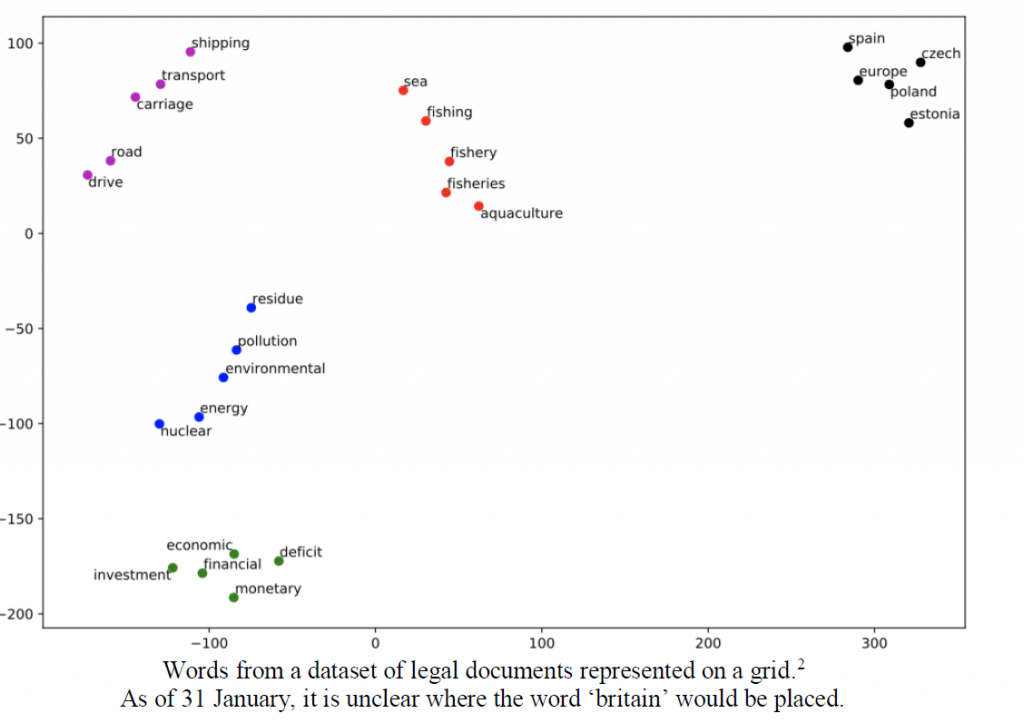
Part of my education at Imperial has been to examine the application of this to legal documents, a field in which language is particularly important. For example, we can see that even when mapped to a small grid, words which have similar meanings are placed closer to each other.

Meaningfully representing words as numbers unlocks the potential for computers to do much more. For example, using a much older method,3 the first paragraph of this essay was summarised as:

“Instead of the decimal system we count with, which uses the ten unique digits ‘0’ to ‘9’, computers ‘think’ only in ‘0’s and ‘1’s. So everything we do on a computer – from pressing a single key on the keyboard, to watching a movie – has to be converted to a series of instructions in the form of ‘0’s and ‘1’s.”

This already seems to capture the gist of the paragraph. With current research, the aim is to accurately summarise documents not only by picking out the most important sentences, but by rewriting the entire passage using words unseen in the text itself. From distilling complex articles to designing intelligent chatbots, the potential of this research is tremendously exciting.

References:

  1. Mikolov et al. (2013), Efficient Estimation of Word Representations in Vector Space, available at: https://arxiv.org/abs/1301.3781
  2. This diagram is from my dissertation, available at:
    https://www.imperial.ac.uk/media/imperial-college/faculty-of-engineering/computing/public/1819-pg-projects/An-Evaluation-of-Machine-Learning-Approaches-to-Natural-Language-Processing-for-Legal-Text-Classi%EF%AC%81cation.pdf
  3. Mihalcea and Tarau (2004), Bringing Order into Texts, available at: https://web.eecs.umich.edu/~mihalcea/papers/mihalcea.emnlp04.pdf

4Cs Science Communication Writing Competition – 1st Place

by Michelle Lin, MRes Student in the Department of Life Sciences

Cryptococcosis: The Silent Killer

The young patient presented to the hospital with a fever, headache, seizures, and both eyes bulging out of their sockets. Suspecting an infection, doctors first treated the boy with a common antibiotic, Penicillin, presumably to knock out whatever bacterial agent they believed was causing his symptoms.¹

With the boy’s condition failing to improve, doctors kept the boy hospitalized as they searched for a diagnosis and administered various antibiotic and antiviral medications.

As his hospital stay dragged on, the boys condition continued to deteriorate until, after 52 days of ineffective treatments in the hospital, the boy succumbed to his illness. Post-mortem, doctors were able to confirm the boy had been suffering from cryptococcosis, an invasive fungal infection that, without proper anti-fungal treatment, is almost uniformly fatal.

He was six years old.

——————————————————————————–

A fungal infection?

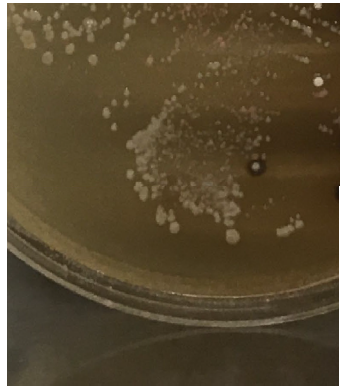
Pathogenic fungi (meaning they are disease causing) are the silent killers of the emerging infectious diseases. Rarer than bacterial and viral infections, invasive fungal infections are often overlooked as a major cause of mortality, while still accounting for approximately 1 million deaths a year.²³ The fungal infection that killed the young boy described above, cryptococcosis, is one of these “silent killers.” Caused by two species of fungi commonly found in the environment, Cryptococcus neoformans and Cryptococcus gattii, cryptococcosis is responsible for upwards of 181,000 deaths per year.⁴

How does infection occur?

Acquired through exposure in the environment, infection can occur years after the initial inhalation of airborne Cryptococcus particles. After traveling through the respiratory tract, these spores settle in the lungs and from there can infect virtually any organ in the body, with the most common targets being the brain, heart, eyes, and lungs. While cryptococcosis infections can be seen in patients with healthy immune systems, the majority of cryptococcosis cases occur in “immunocompromised” populations. ⁵

Yikes- so what is there to do?

With low- and middle-income countries disproportionately affected by cryptococcosis, disease prevention is often the most sensible public health strategy available.⁶ Knowing where Cryptococcus is in the environment gives public health officials the ability to set guidelines for where vulnerable individuals should avoid going and could even prove beneficial for patients by factoring high-risk locations into the differential diagnosis pipeline. The faster a diagnosis is reached with cryptococcosis the better, as timely delivery of anti-fungal medications can be the difference between life and death.


However, all of this requires knowing where C. gattii and C. neoformans are in the environment. That’s where my research comes in. Using field work, statistical modelling, and GIS, I map where in the environment Cryptococcus could be found.

By modelling known presence locations and environmental variables, we are able to uncover the environmental factors most important to each species’ geographic spread and can even create predictive maps depicting where Cryptococcus might be lurking.

By highlighting environmental reservoirs of infection, we are able to determine areas that pose a higher risk of disease transmission in the hopes of one day reducing infections and preventing premature deaths from this environmental scourge.

4Cs Science Communication Writing Competition – 2nd Place

by David Ho, PhD Student in the Department of Physics

A really strong magnet can dissolve Everything

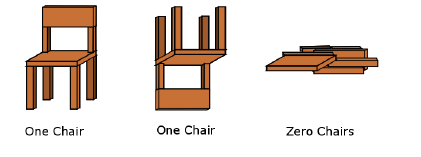
One wrong thing everyone knows about the universe is “conservation of matter”. It seems obvious: if you have a chair, you can move it, or turn it around, and you still have one chair. If these were the only experiments you did, you might proclaim that the number of chairs in the universe always stays the same.

Of course, it doesn’t take much thought to counter this: with a hammer you can easily change the number of chairs in the universe. But if you collect every splinter of leftover wood, you’ll find the same amount before and after the destruction. Is wood conserved? Of course not; just light a match. But if you count all the atoms…


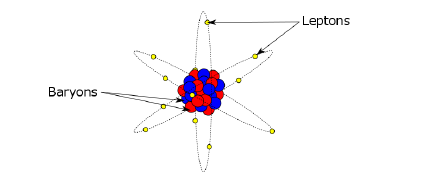
This example could continue for a while. The main theme is that certain things appear to be conserved, but if you put in enough energy you can break apart the original unit and find a smaller one. The natural question, then, is where does this end? To current physicists’ best knowledge, there are two endpoints to the chain of reduction: all matter is made up of baryons and/or leptons.

The baryons that most people are familiar with are protons and neutrons(1). The most familiar leptons are electrons (less familiar are neutrinos, muons and tauons). Every interaction ever observed conserves baryon and lepton number(2): you can change neutrons into protons, or neutrinos into electrons, but we have never seen a proton become an electron.

(1) Many readers will be aware that baryons contain quarks, though quarks are never found alone. This makes little difference here, but it may be reassuring to know quarks have baryon number 1/3. (2) More physics-inclined readers (or fans of Dan Brown) might protest that I haven’t mentioned antimatter. This keeps things clearer and briefer, but I’ll note that giving antiparticles negative baryon or lepton number keeps the conservation law working.


Baryon and lepton conservation seems, experimentally, to be unavoidable. But theoretical physicists have found a loophole: a process known as the sphaleron can transform baryons into leptons and vice versa. This is a type of quantum tunnelling: the strange rules of quantum mechanics allow a baryon to pop out of existence and a lepton to take its place. Like nuclear fusion in the lab, sphaleron processes are possible but haven’t been achieved yet. This is because they are phenomenally unlikely: the chance of seeing one is about one in 10160, so small lightning-striking-lottery-ticket analogies aren’t worth the effort.

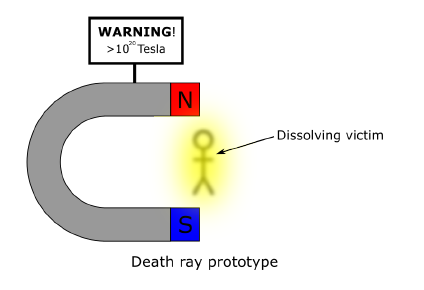
It turns out, however, that a magnetic field can help this process. In fact, a strong enough magnet would make sphalerons so likely that anything in the magnet’s field would have its baryons converted to leptons, and the object would dissolve. My recent research has been to calculate exactly how strong this is, and we’ve confirmed a long-held suspicion that it’s around 1020 Tesla. Unfortunately (or perhaps thankfully), our strongest permanent magnets are only about 10 T. My funding doesn’t extend to death-ray development, but perhaps one day supervillains will thank 21st Century theorists.


4Cs Science Communication Writing Competition – Joint 3rd Place

by Eva Kane, PhD Student in the Institute of Clinical Sciences

It is 23rd January 1922. Toronto is cold, and so are you. You stop at a tavern, hoping to warm your numbed hands. You take a seat next to two men, introduce yourself and settle down to thaw.

One identifies himself as Dr Charles Best. “And my mentor, Dr Frederick Banting”.

“You catch us on quite an evening. We’ve just changed the course of history! Have you heard of the fatal disease, diabetes?”

You have but are not well-versed.

“Within the pancreas are clumps of cells that, under a microscope, look different. These are the islets of Langerhans,” says Dr Banting. “These islets secrete something important. Our diabetic patients have no islets, and therefore no such secretion. Consequently, they are unable to use the sugar from their diet. Their blood and urine are full of sugar that cannot be taken up by their organs for energy.”

“What is this secretion?” you ask.

“Well,” he grins. “We thought we would call it insulin.”

It transpires that earlier that day, Banting and Best had finally isolated and purified this secretion, insulin. They injected it into a 14-year-old boy at the behest of his father, as he was in a diabetic coma and seemed not long for this world.

“He woke up!” cries Best, “He’s cured!”

“Well”, says Banting, looking into his glass. “This is not quite curative. I anticipate he will require injections, every day, for the remainder of his life – no small undertaking.”

“Preferable to a death sentence, but a life sentence” you comment, as Best lifts from his seat in indignation.

“A daily injection versus a slow and certain death is surely a fair price to pay!”

Banting waves him away. “Let us cast our minds forward! Given the destruction of islets in these patients, I wonder whether replacement of the tissue may be the best avenue. Skin grafts have been reported successful. Perhaps one day we will be able to transplant the islets of Langerhans from one patient to the other.”

Best is subdued.

“Have you read Wilson’s thoughts on the stem cell?1”, Banting asks you.
You have not.

“See, each cell has a speciality…an identity, I suppose. A muscle cell does not look or behave the same as the cells of the blood or brain. However, when you are conceived, and are merely a few cells in your mother’s womb, there is no such specialisation. Those few cells become every cell in the body. That, the cell with the capacity to beget all others, is a stem cell. Had we the technology to harness it, I wonder whether we couldn’t make new islets for our patients!”

“Now,” exclaims Best. “That would be the ticket!”

***

It is 2006, and you are very old. Long retired from an illustrious career in science inspired by a conversation on a cold night in a warm tavern, you still peruse the scientific literature. A title catches your eye: “Production of pancreatic hormone-expressing endocrine cells from human embryonic stem cells”2.

You smile.

References

1. Wilson, E.B. (1896) The Cell in Development and Inheritance. Macmillan: New York
2. D’Amour et al. (2006) Production of pancreatic hormone-expressing endocrine cells from human embryonic stem cells. Nature Biotechnology 24:11(1392-1401)

4Cs Science Communication Writing Competition – Joint 3rd Place

by Imanol Duran, MSc Student, Department of Life Sciences

Quarantine Connection – Grandma Calling

DRAMATIS PERSONAE

GRANDMA (with internet connection)
GRANDSON (with a STEM degree)

ACT I. SCENE I.
Spain. Each in their quarantine homes, awaiting the bending of the COVID-19 curve.

Grandma: Wait… I can’t see you, son.
Grandson: Grandma, take the thumb off the screen (laughs). Yes, that’s it.
Grandma: So what are those interesting things your mom told me about, you know, the ones to help uncle John’s lung cancer? (Accommodates in grandpa’s armchair, looking at the screen with the chin a bit too high).
Grandson: They’re called senolytics, and are tiny molecules that target some specific cells in cancer.
Grandma: Smaller than the new virus?
Grandson: Yes, smaller, they’re proteins. Anyway, when cells get old (they become senescent) and cannot do their function correctly, they stop dividing and take a resting attitude.
Grandma: So… they’re in retirement.
Grandson: Yes, basically! But sometimes they go rogue and they start to multiply and contribute to tumour growth, acting in exactly the opposite way to the wellbeing of the tissue!
Grandma: They are like the other cancer cells then…
Grandson: Not necessarily, but they can contribute to the aggressiveness of the disease, and worsen the relapse if it happens.
Grandma: And what do senolytic ‘things’ have to do with this?
Grandson: (leans towards the computer in his bedroom, with excitement). Doing big screening with a lot of drugs, molecules that specifically target and destroy these rogue senescent cells, which can be coupled with mainstream therapies of chemotherapy, radiotherapy and immunotherapy, and treat cancers from lung to liver. However, the development of these drugs and the process of their validation is quite complicated.
Grandma: You can’t have a rainbow, without a little rain.
Grandson: What?
Grandma: (laughs) You’re too young to know who Dolly Parton is. What I mean is that science, as all things in life take time. Back in the day we didn’t have apricots all year around you know? We had to wait, and work hard.
Grandson: You’re probably right.
Grandma: Of course I am! The presenter on the TV said that the virus trial would take more than a year even if they rush it, so I guess this will take even longer.
Grandson: The development of senolytics is quite recent, as well as the identification of cell targets that we can use to fight against them. Interestingly, some of these molecules have been used for years now, like some cardiac glycosides, used to treat other heart problems.
Besides, these drugs have shown, at least in mice, that they can rejuvenate tissues by killing senescent cells and even help you with your arthritis.
Grandma: Being old has its perk too.
Grandson: Unfortunately, coming up with functional and secure drugs to help with cancer treatments is still quite far; too far for many who need it now.
Grandma: Things take time son, you have plenty of it (stares with that gaze only age can provide) .

[Exeunt]

The End

4Cs Science Communication Writing Competition – People’s Choice Award

by Jemimah-Sandra Samuel, PhD student in the Department of Earth Science and Engineering

My PhD in Under 500 Words

When people think about oil and gas, they think of climate change. But let us imagine for an instant that the exploration of oil and gas has no effect on the earth and its habitats, even more so the use of oil and gas products. Then surely, we will be looking out for better ways to harness its exploration and production. This is the basis for my research which is largely pertinent to developing countries where the means to engage cleaner energy technologies is still emerging, and or in developed nations where there is a current shift from oil towards a cleaner energy source (gas).

People require gas to heat up homes, cook meals, and perhaps fuel vehicles. This gas comes from beneath the earth’s surface, from rock structures underneath the ground; reservoirs beyond human reach or possible survival. Consequently, to produce and utilise gas on earth’s surface, high-quality equipment and machinery costing several million pounds are set-up and sent to underground gas reserves, with the prospect of retrieving this energy resource. Although this exploration is orchestrated by people, petroleum engineers, whom themselves cannot go underground, petroleum engineers ensure that every trip by any equipment to petroleum reservoirs are backed by the supplementary
capacity to collect information about the conditions and behaviours of the reservoirs. Processing this information among other uses includes exploiting them to create possible images and patterns of the petroleum reservoirs’ behaviour. These images and behaviours form models which prove resourceful to petroleum engineers in predicting future behaviours of reservoirs, in addition to helping oil and gas engineers manage oil and gas assets during their production life.

Nevertheless, what can be expected when the underground home of these energy resources is muddled with intricate structures and structural irregularities, heterogeneity? Well, this translates to longer processing time in generating reservoir models; thereby delaying factbased decision-making as well as investment opportunities. And that is

exactly where my research comes in. My PhD focuses on using mathematical methods and coding to improve the speed at which petroleum engineers can develop models that depict petroleum reservoirs. More so, with speed-ups in orders of magnitude above the actual time taken to model petroleum reservoirs by existing techniques. With findings from my research, it is anticipated that oil and gas engineers will not have to wait for ages to build and get results on reservoir models. Needless to say, petroleum companies will not have to delay the advent of taking pertinent decisions that translate to profits in millions of pounds or even taking decisions before having the facts to support them.

We already have some proof of concept model and hopefully, petroleum engineers and explorationists can get results on their oil and gas assets 10, 100, 1000 and maybe 100,000 times quicker than before.

4Cs Science Communication Writing Competition – 3rd Place

by Sarah Hayes, PhD student in the School of Public Health

How can we maintain mans’ best friendship? 

Here in the UK we think of dogs as mans’ best friend. But in some regions of the world they can be our deadliest enemy.

Meet Amos (name changed to protect identity).

He’s a 5-year-old boy living in rural Tanzania.

Ten days ago, he was bitten by a rabid dog.

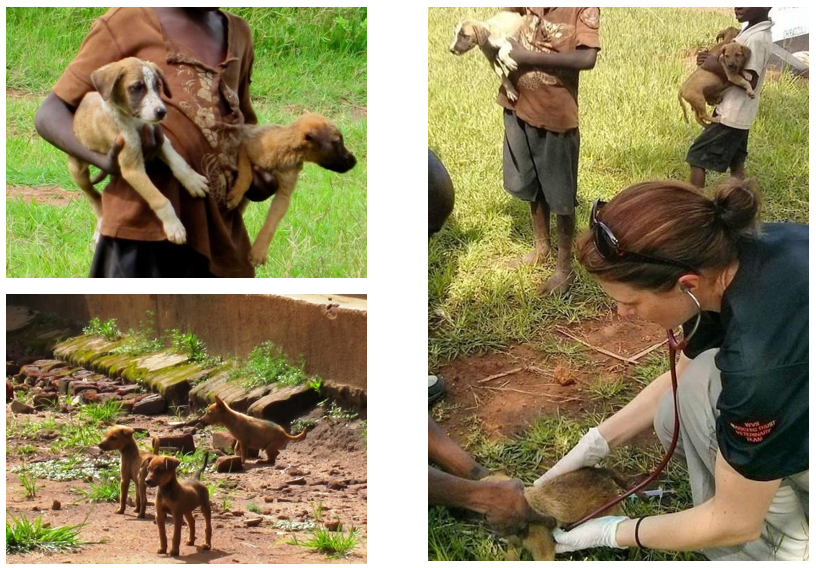
Anyone exposed to rabies through a bite, scratch or lick from an infected animal must receive treatment immediately. A course of 3 vaccinations (known as post-exposure prophylaxis or ‘PEP’) will effectively protect a person from this deadly virus. But they must be given as soon as possible, ideally within 24 hours of the bite. Once signs of disease develop there is no effective treatment and you’re condemned to a painful, distressing death.

Amos hasn’t had these vaccinations.

Why?

Because in rural Tanzania, access to healthcare can be extremely challenging. Sometimes it’s a lack of awareness of the risks that stops people seeking treatment. At other times it’s a lack of access to healthcare. In Amos’s case the nearest hospital able to provide PEP was over 2 hours away.

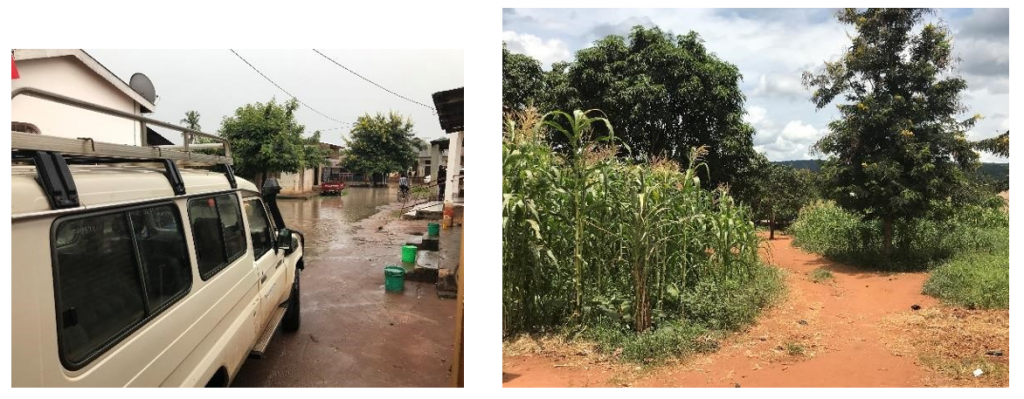
Typical Road conditions


Transport costs alone can be prohibitive to some families. Add on the price of treatment and you begin to understand why an estimated 59,000 people a year(1) are still dying of this preventable disease.

So, how can we protect children like Amos?

Vaccination of domestic dogs plays a key part. Whilst any mammal can be infected with rabies, domestic dogs are responsible for up to 99% of human rabies cases (2). If we reduce the level of rabies in dogs, we reduce the level in humans.

However, the benefits of dog vaccination campaigns can be compromised if rabies is circulating in other animals. Our research shows that in southern Tanzania where Amos lives, almost 50% of recently reported animal rabies cases have been in jackals. These jackals may have been infected by rabid dogs, but rabies could also be passing from jackal to jackal. Understanding the role that different species play in rabies transmission is vital in implementing effective control strategies. If rabies is being maintained in wildlife, vaccination of domestic dogs alone may not be enough.

Using a combination of ongoing surveillance, statistical analysis and mathematical modelling, my research is investigating the role of different species in rabies transmission in southern Tanzania. These techniques allow us to untangle the part each species is playing in virus transmission and to consider both the short- and long-term effectiveness of different control strategies. This is vital if we are to stamp out rabies from these communities and keep it out.

Thankfully, Amos did ultimately receive his vaccinations. But not everybody will be so lucky. Which is why it’s so important that we tackle rabies at its source and prevent people from being exposed in the first place. And if we can achieve this then who knows, maybe one day people the world over will be able to think of dogs as their best friends.

References

  1. Hampson K, Coudeville L, Lembo T, Sambo M, Kieffer A, Attlan M, et al. Estimating the Global Burden of Endemic Canine Rabies. PLoS Negl Trop Dis. 2015;9(4).
  2. World Health Organization. WHO | Rabies. Who. 2017; Available from: http://www.who.int/mediacentre/factsheets/fs099/en/

4Cs Science Communication Writing Competition – 2nd Place

by Oluwalogbon Akinnola, PhD student in the Department of Bioengineering

The Other Hand Model

If the first thing you think of when you hear the phrase ‘hand model’ is David Duchovny in the 2001 film Zoolander, then congratulations on your excellent taste. Unfortunately, however, no one was willing to fund a PhD researching his performance. No, in the world of Biomechanics hand model means something different yet no less appealing.

Our hands are how we communicate and manipulate the world around us. Feeding ourselves, checking the bathwater, even holding the medium this text is printed on: we use our hands to keep us healthy, happy, and safe. Understandably, this multifunctional system is complex. One quarter of the bones in the body are in the hands. They controlled by an intricate network of muscles and nerves that provide the most tactile feedback in the body and let us do everything from handstands to card tricks.  It is this complexity that makes it difficult to find a solution when things go wrong. Hand injury accounts for almost a fifth of cases at A&Es across the country and the UK spends over £100million a year treating them. Osteoarthritis of the hand affects at least 1.56 million people in the UK and there is no known cure. Understanding exactly how the hand works is vital to finding appropriate solutions to these problems.

My research is concerned with creating an accurate representation of the human hand. Specifically, I’m using mathematical equations and experimental data to create a computer simulation that will replicate the behaviour of the hand in various conditions. This will allow us to investigate nonhealthy hands and gain insight into how to heal them. The model I have been working on is an inverse kinematic model. This means that it works out the forces inside the hand from the movements, or kinematics, of the hand. For example, what is the force on your wrist when you pick up a cup? Motion capture, the same technology Andy Serkis used to give us Gollum, is used to provide the motion input for the model and the results are verified using cadaveric testing and electromyography (EMG).

A hand model ready for motion capture with EMG sensors and reflective markers.

EMG is the detection of the electrical signal produced by your muscles when they move and gives an indication of how much effort the muscle is exerting. In cadaveric testing, we apply forces to the tendons in a hand and measure the kinematics. Imagine Thing from The Addam’s Family but with pulleys. I compare the signal patterns and applied forces to the model results to verify that the model. With all three in agreement, I can conclude that the model is representative of the hand. Thus, it can be used to simulate the effects of surgery and rehabilitation to find the best solutions to hand injuries and diseases. Solutions that could change millions of lives for the better. This hand model may not be wearing diamond ring but I think it pretty exquisite.