Tag: metabolismdigestionandreproduction

Our experience of the Early Academic Talks (EAT)

By Clara Finnigan, Postgraduate Student, Department of Metabolism, Digestion and Reproduction

Research is all about collaboration and communication. However, it can be daunting to meet new researchers, especially those outside of your immediate environment. We set up Early Academic Talks (EAT) to provide a space for Imperial Early Career Researchers (ECRs) to connect and present their research, helping break down barriers for collaboration and communication. Our fourth EAT session took place on Thursday, 24th of April.

This talk series is a cross-sectional initiative, aiming to oGer the opportunity for ECRs to meet and learn about the research at Imperial in a friendly and informal environment. These events take place every month and have 2-3 ECRs presenting the research they carry out at Imperial. It was a great event in which we saw a high turnout, with the talks stimulating excellent discussions between researchers. The students and postgraduates also enjoyed the post talk social with food and drinks in the Wolfson Canteen in the Commonwealth Building.

“I found this was an amazing opportunity to practice my presenting skills and to share my next career steps as a post-doc” – Iona Davies

The importance of communication between researchers cannot be emphasised enough. Here at Imperial, essential research is happening every day but not everyone always knows about it. EAT provides the space to disseminate knowledge and build networks with other Imperial ECRs. The series helps with presentation practice, as feedback is provided in a friendly and supportive environment. The series also supports researchers to communicate their work in an accessible way to allow it to be understood across the different disciplines here at Imperial.

Here are examples of some talks we have had in the past:

  • Rutian Ding, MRes Clinical Research – “Applying metabolomics strategies to assess postprandial variability in response to two extreme diets in people at risk of cardiovascular diseases.”
  • Jia Jun Lee, PhD – “Skin wound healing models – potential targets for diabetic wound healing.”
  • Iona Davis, Post-doc – “Investigating pancreatic and CNS GIPR signalling; Implications for the treatment of metabolic disease.”
“I learnt new tools and techniques for illustration for presenting academic research such as BioRender. Moreover, meeting new connections is one of the highlights from EAT!” – Onyinye Eze

The event series so far has provided a platform to practice presenting academic work and critically analyse research in a friendly space, fostering an interdisciplinary and collaborative environment. Personally, through the series I have further developed my presenting skills and ability to discuss my PhD project in more depth and answer more challenging questions from my peers. This has simultaneously facilitated broadening my Early Career Researcher network. We hope to see more of you ECRs at our next event!

Next Event: 29 May 2025, 16:10 – 17:00 – SB Seminar Room 10A, Conference Room, Hammersmith Campus.
Event Details https://linktr.ee/earlyacademictalks

A huge thank you to the Early Career Researcher Institute as our sponsors for this talk series!

! Look out for our fliers around the Hammersmith Campus !


Strengthening Our Research Community: Insights from the Nutrition Section Networking & Development Day

Blog by Kaoutar Abaakil, Research Postgraduate, Department of Metabolism, Digestion and Reproduction

The Nutrition Section Away day took place on December 2nd, 2024, bringing together members from various research groups across the Nutrition section with the generous sponsorship of the Early Career Researcher Institute (ECRI). The event aimed to foster networking, knowledge exchange, and collaboration. It was a fantastic event, with a strong turnout of students and researchers eager to connect and share ideas.

The day began with an informal networking lunch, providing a relaxed environment for students, post-doc researchers and principal investigators to engage with one another. This casual setting set the tone for the day, allowing participants to build connections before the formal program began.

The event officially opened with insightful talks from ECRI speakers Dr. Caroline Hargreaves and Dr. Anna Seabourne, offering valuable perspectives on learning about different stages in one’s research journey and strategies for professional development. The speakers also emphasised the importance of networking events like the one we were holding and provided guidance to identify the right contacts for addressing issues we might come across during our time at Imperial. A key focus of the discussions was the role of collaboration, networking, and the support available through ECRI for Master’s, PhD, and Early Career Researchers (ECRs). Through interactive activities, we also had a chance to discuss common challenges and concerns shared between us, reinforcing the sense of community and mutual support within the section. These activities also encouraged open dialogue and highlighted the collaborative spirit among the section.

Next, the event was followed by contributions from Dr. Racheal Barry and Dr. Aygul Dagbasi. Dr. Barry shared insights on her recent successful fellowship application and strategies for career development, while Dr. Dagbasi discussed lessons learned from her work leading the Ageing and Nutrient Sensing (AGENTs) initiative and how it benefited her career.

The day concluded with a talk by Professor Gary Frost, Head of theSection, who highlighted the importance of data integrity. His discussion emphasised the importance of setting best practices in data sharing and management, particularly in fostering transparency and collaboration across research groups. The discussion was also opened to all attendees to brainstorm ideas and share their insights in a cooperative manner.
The Nutrition Section Away Day was not only an opportunity to gain useful tools and knowledge for academic progression but also served as day for us to connect with peers, share ideas and address common challenges. Overall, it was a valuable experience that left participants feeling connected, informed and motivated.

We acknowledge the generous support of the Early Career Researcher Institute (ECRI) through the Postgraduate Community Fund, which made this event possible.

My experience at the ‘Careers Talk with a Difference’

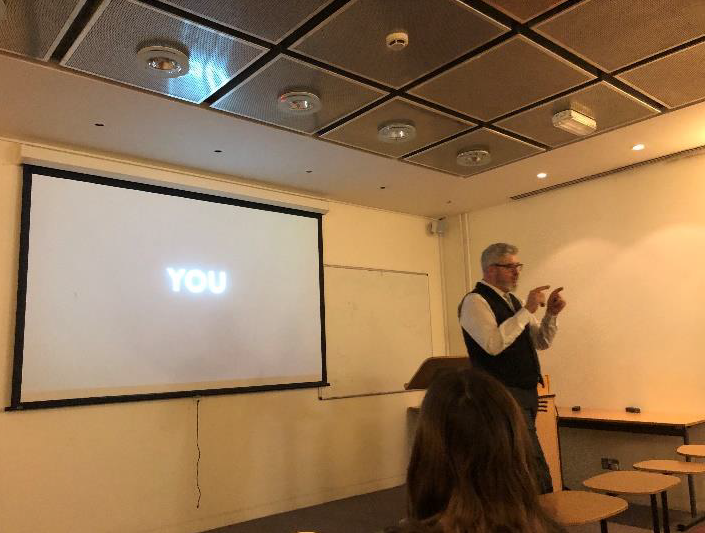
My name is Niamh Sayers and I’m a third year PhD student based at Hammersmith Hospital in the Department of Metabolism, Digestion and Reproduction, and also a Student Rep for this cohort. As I am nearing the end of my PhD (as are many of the friends I started with) I realised we may all be looking for things we want to do after our PhD, therefore I decided to organise this ‘Careers Talk with a Difference…’. We attend many scientific talks during our PhDs, from Work in Progress’ to conference seminars, but I realised we do not have access to many talks outside of the realms of science. So, I decided to organise a careers talk with a renowned public speaker to give some insight into other forms of communication besides scientific.

All postgraduate students were invited, across both the Hammersmith and White City campuses. The event was held in the IRDB seminar room. Drinks were provided upon arrival and pizza was ordered for the networking session after the talk had been given. The talk was held on Wednesday 4th March 2020.

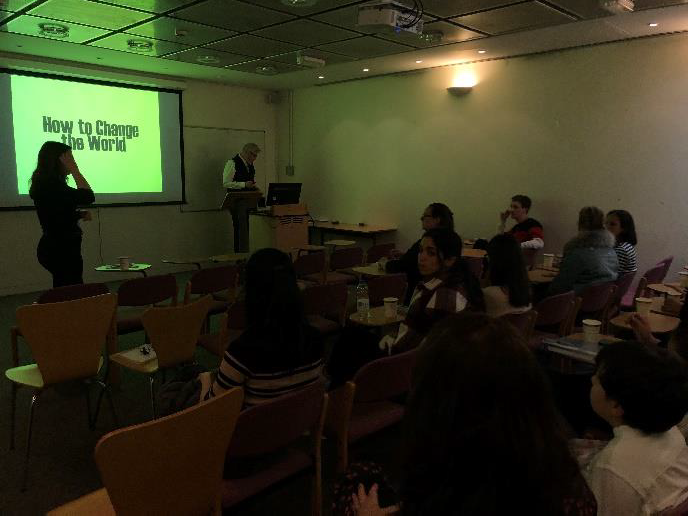
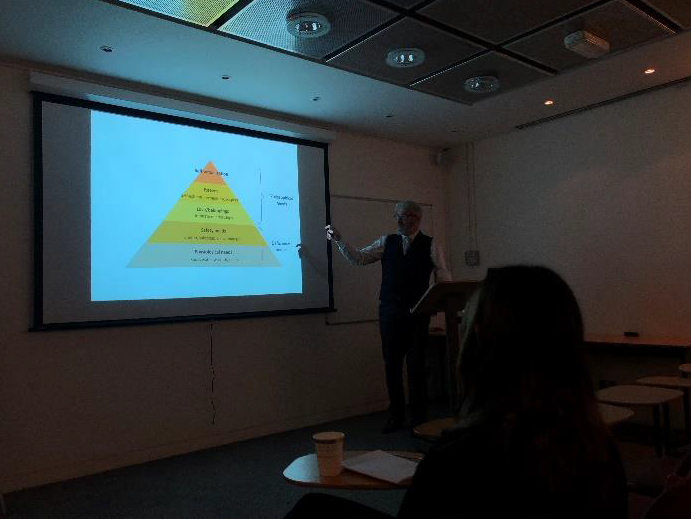
I invited renowned public speaker Matt Black to talk at our University to the postgraduate students to give us an introduction into another way of thinking about the world and potentially help us in the next big steps of our career paths. Matt Black spoke about finding a path that is right for you and your motivations, and finding something that suits you, emphasising most importantly doing something that YOU choose you want to do. He used examples from his own personal career journey and spoke about Greta Thunberg as an inspiration for taking on big challenges.

There were many positive outcomes from the talk, one student even commented they were influenced to apply for a PhD position after Matt Black spoke about the idea that we choose the life we build and the direction we go in. I agree, in that he reminded me of the importance of choosing to do something I am passionate about, rather than following on down a path already trodden/laid out for me, based on what I “think” I should be doing. He also convinced me that anything is possible, if you choose the right mindset.

For me personally, I found Matt Black very engaging and enthusiastic, and I can see with his energy how he has gotten so far in the public speaking domain, which was excellent to witness, as well as learn from some the techniques he used to engage the audience. In addition to seeing his encapsulation of the audience, Matt gave me plenty to ponder over; my goals in life; what makes me happy and what incentivises me, so I left feeling thoughtful about my next steps after completing my PhD.

The aim of this event was to bring in a thought-provoking speaker with experience outside of science and to get students thinking about potential career moves after their postgraduate degree. Matt Black engaged with the audience and asked questions throughout, he also stayed behind and was approached to talk to by many groups of students in the networking event after. The feedback from the event was that many students left feeling thoughtful and encouraged, and there were many positive comments about the speaker and the event at large, with a highlight being one student even referencing this talk affirming her idea of wanting to apply for a PhD position next year.

All-in-all I am very happy with how the event turned out. Many postgraduate students attended, from a range of departments across the Hammersmith and White City campuses, and I will be looking for more speakers of a similar nature to invite to Imperial to aid tough decision-making by students about themselves and their future careers with another careers talk with a difference.

Many thanks to the Graduate School for funding this event and making it possible.


Our very merry meeting across the new-found divisions at South Kensington

Following the considerable restructure within the Department of Surgery and Cancer and new-found Department of Metabolism, Digestion and Reproduction, in a time where many aspects of PGR life have seemed up in the air, Simone and I (Kate) decided to unite everyone for a single evening.  The aim was to encourage new friendships, to promote collaborative opportunities and reinforce the sense of community across PGR students at South Kensington. For the first time, students, post-docs and supportive PI’s took to a cosy boutique hotel in Hammersmith to meet, eat and be merry!

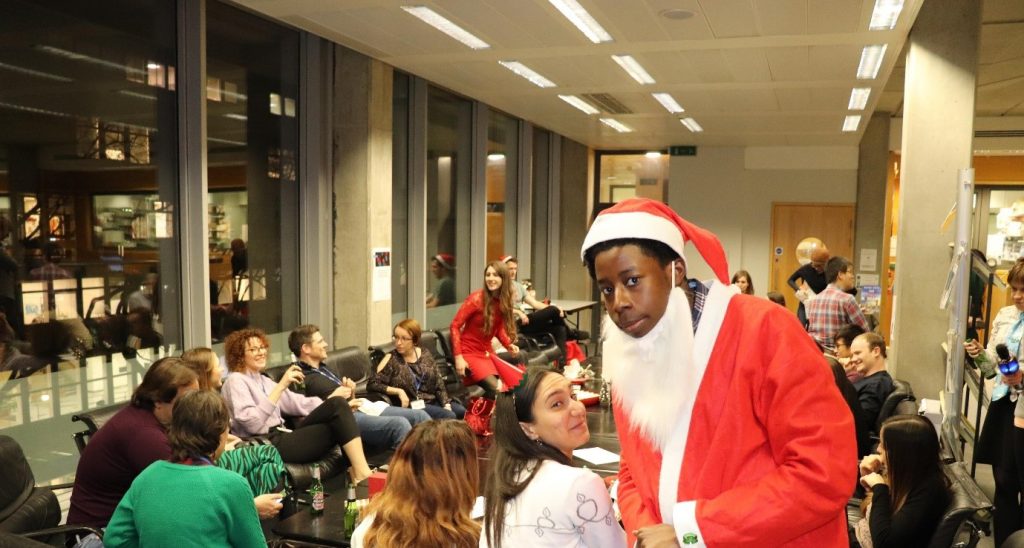
The evening started with the classic Secret Santa, where our personal Santa Claus facilitated the exchange of gifts. This gave people the chance to find out more about colleagues they hadn’t potentially met before and represented the perfect opportunity to introduce the new PhD students to the Departments.

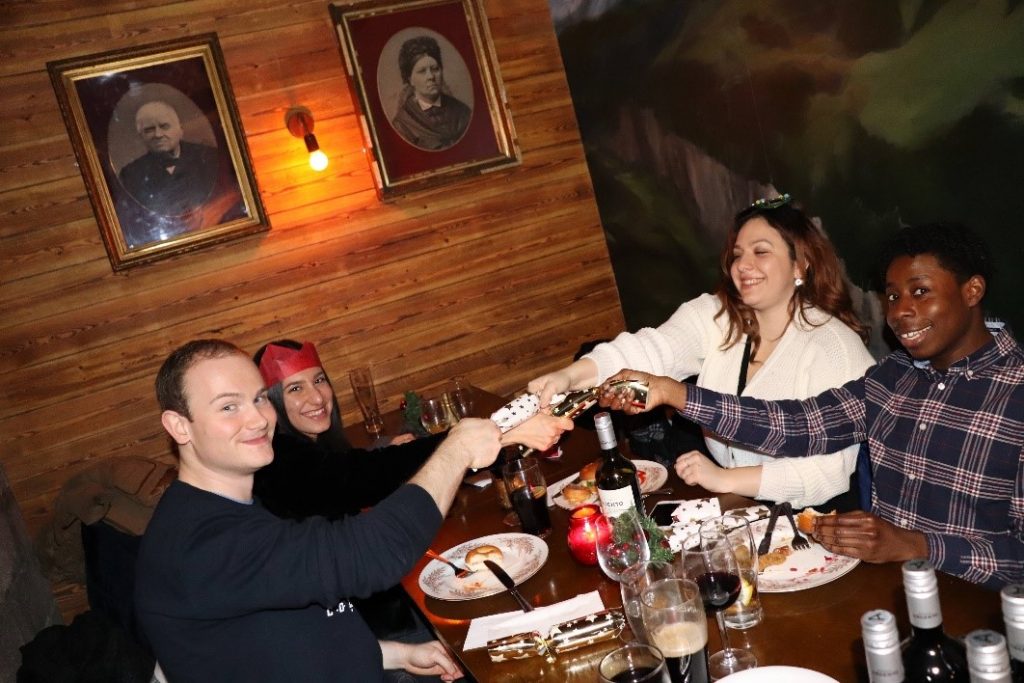
Following the many laughs at unconventional gifts, we moved to a close-by venue to begin our evening. The turnout was fantastic! A large number of students joined the event, not only new PhD students of the Divisions but also students based on other campuses who hadn’t yet felt integrated with the rest of the PGR community. One of the main aims for the event was to get students to meet each other. To overcome any nerves, we provided Christmas crackers along with food and encouraged students to pull them with people they hadn’t met before and break the ice using the jokes inside. 

Another aim of the event was to make sure students knew who they could go to with technical issues, as often people down the hall or across your desk may have solutions to your problems or have faced the same struggles. This large-scale event allowed students to get together and have these conversations. Additionally, colleagues from the National Phenome Centre, who are integrated with many students’ projects,  were invited to inform students of their capacity to support their work. I also finally got the opportunity to introduce myself to colleagues I have seen several times around the lab but felt it wasn’t the right time to spark up conversation, some of these colleagues working on similar instrumentation as myself, highlighting the importance of community building events such as this. With this in mind, we are incredibly grateful to the Imperial Graduate School and the Research community fund made available to us, without which this event would not have been possible.

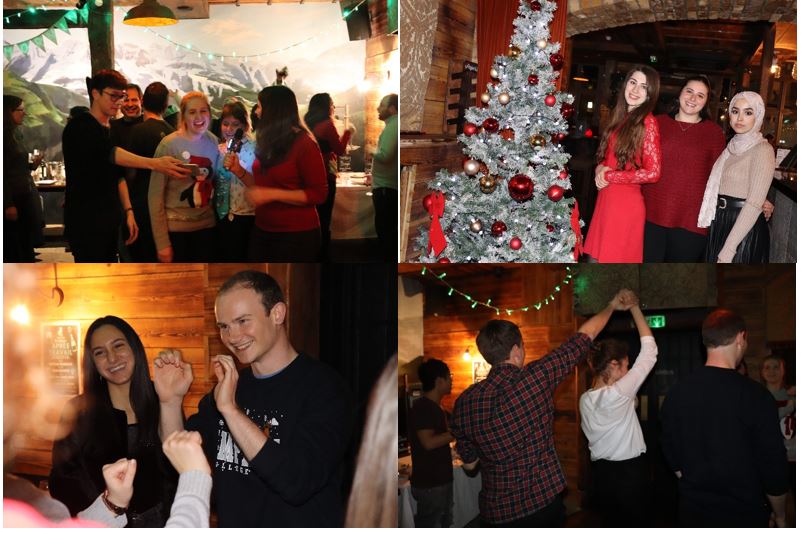
The final stage of the night was to cut loose and really enjoy each other’s company. Dancing was heavily encouraged, with the manager of the venue giving us full reign of music control – balancing the evening between friendship, food and fun!

Feedback from attendees was overwhelmingly positive! New students have now formed relationships with many of the existing PGR students and they will develop these connections over the coming months to years of their PhD. The next step for all of us will be to support each other during these sometimes stressful and demanding years of our PhD. We are now surer than ever that despite working independently and across different campuses, we are a single community ready to support each other.