Tag: Events

Lunchtime Yoga @ White City Campus

On the 22nd of May the first power yoga class for PG students took place at the Molecular Science Research Hub on the newly built White City Campus.

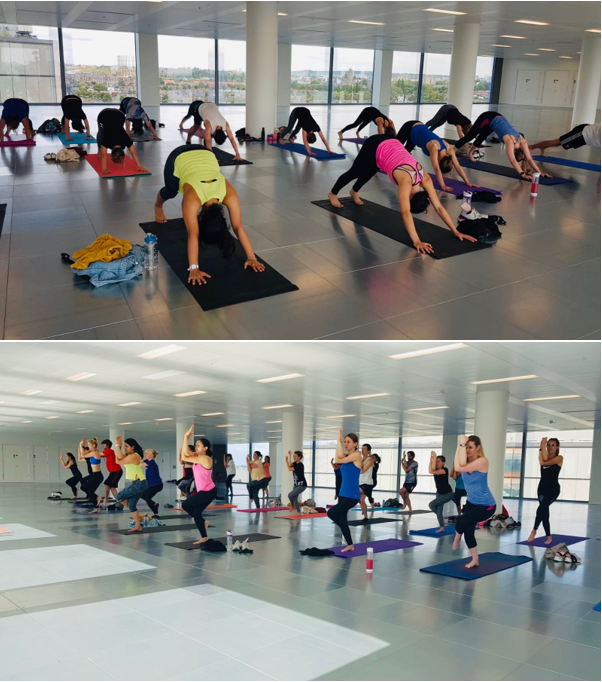
For the first Taster Session a small room was booked, because no one expected a huge demand. Instead nineteen people showed up to the first free yoga class of which quite a few did yoga for the first time!
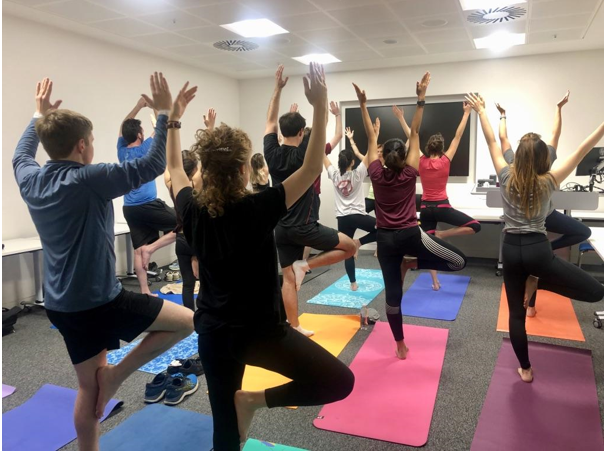
Figure 1: Our first ever lesson had a great turnout for a tiny room.

At the beginning of the first yoga class the teacher asked everyone to introduce themselves and tell everyone what they are trying to get out of this class. Almost everyone was craving for 60 minutes a day during which they can forget about their stressful PhDs and relax their backs from sitting in front of a computer or standing at a lab bench all day. Our personal favorite answer was from a complete Newbie to yoga who said  “I want to like it, so that I want to come back next week!”

Our teacher, Barbara Durand, is a professional yoga teacher, usually teaching at the Lumi Power Yoga studio in Hammersmith. The Vinyasa flow type of yoga they teach @LumiPowerYoga is perfect for young adults. Most attendees were surprised of how dynamic this type of yoga is. A lot of people which hesitated joining at first saying ‘I’m not flexible enough for yoga’ overcame their fear and realised that it’s not about the others or being average, it’s about your own personal body and battle. Every posture in yoga has multiple options, so anyone can improve at whatever level they’re at. The teacher does a great job in incorporating this into the weekly practise, making it highly inclusive.
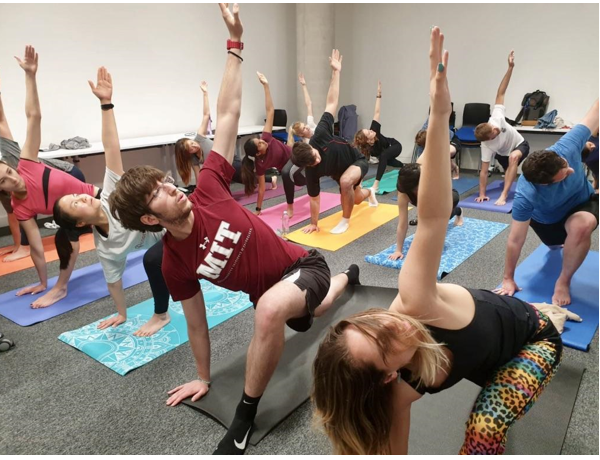
Figure 2: We enjoy sweating and stretching every Tuesday in the yoga side angle pose.

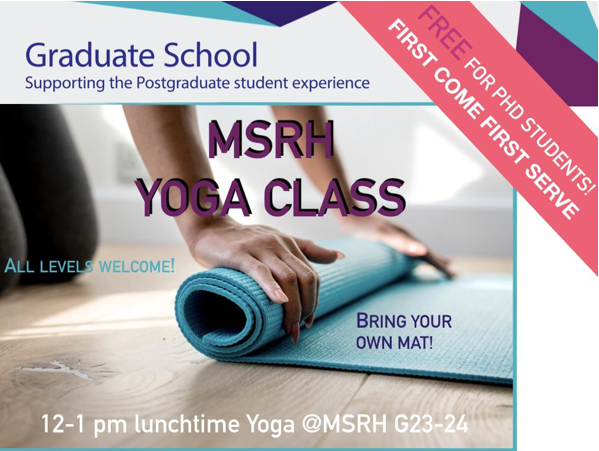
The number of participants has been continuously rising and we register around 25 sign-ups every week. This is also mirrored in the steadily growing number of members of our mailing list which is currently at 54. We even had to move to a new room for more space at Brickfields Hall around the corner. All postgraduate students based at White City Campus are welcome to join the free Yoga lessons and we even have a couple of staff members being regulars.
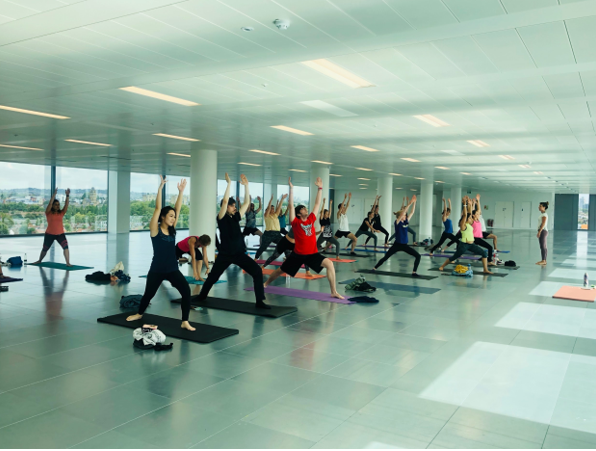
Figure 3: The IHUB on the new White City campus is the ideal location for a lunchtime Yoga session – with unlimited capacity!

Yoga has become an integral part of our weekly work routine. This one hour of lunchtime break a week has positively impacted our productivity and social coherence across hierarchies, different laboratories and research branches. We look forward to anyone joining us at any time. EVERY level is welcome.

Happy Yoga,

Julia & Léonie


Testimonials:

‘I’ve been to so many yoga classes before. They never actually explained how to transition from an upwards dog into a downward dog. It was so good.’

 “I was worried I wasn’t gonna get a sweat because everyone replied saying they wanted relaxation out of this class, but I’m so glad I did sweat. I was scared they would just make us lay down in Savasana for ages playing some old-fashioned Indian music, which doesn’t relax me at all. I enjoyed the relaxation today, it was the perfect length. Normally all I want to do is walk off, because it doesn’t work for me, but here it worked. I’m definitely going again next week.”

 “Highlight of my week.”

 “I know why I didn’t go to the gym this morning.” “Me too!”

 “It was quite fast paced compared to other yoga classes I had been to before. I really liked it. I got a sweat out of it. A little sweat, which I wanted, so it feels like exercise. The class went by really fast.”


For more information drop us a message: yogawhitecity@gmail.com

Or follow us on Instagram: @msrhyoga
Summer Derby Day Party

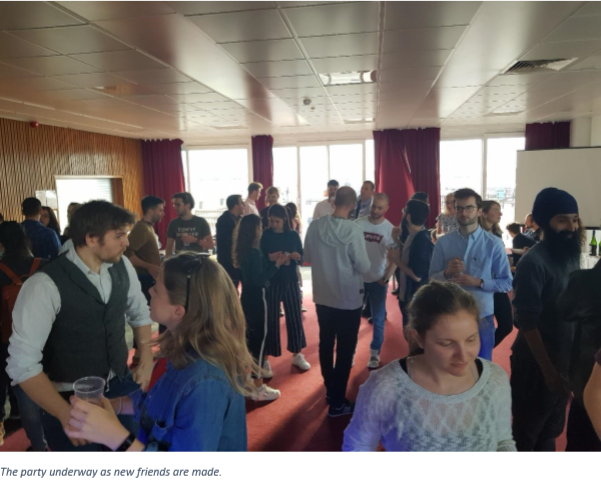
There are many pitfalls that must be navigated as you work towards earning a PhD: one of the biggest is isolation. By its very nature, a PhD requires you to be researching something new and unique and when you’re at your desk trying to work out why the data looks weird, because it always looks weird, it can be easy to forget you’re not alone. That’s why events like the PhD Summer Party are so important. Thanks to the generosity of the Graduate School and the Bioengineering Department, every year, we’re afforded the opportunity to relax, make new friends outside of the lab, and live the student dream of free food and drink. This year was no different.

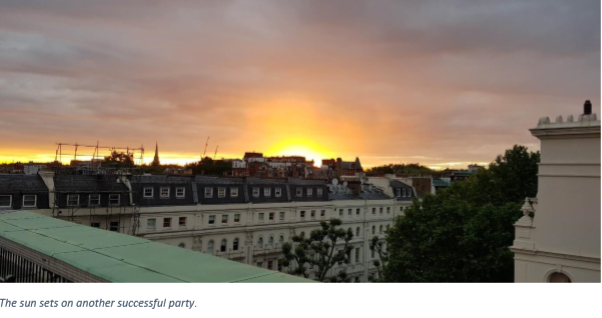
After a solid week of rain, the heavens cleared on the last Thursday as if to bless the oncoming merriment of the evening. We’re fortunate in Bioengineering to have very talented staff who have joined together to form the Gastric Band and, with the help of some volunteers, they relocated and set up in on the 8th floor of the Blackett Building complete with terrace. After some, shall we say, efficient preparations, the room was ready for the party to begin promptly at 5:30pm. By 5:45, the food was gone; at least that’s how I remember it. It wasn’t long before the room was full of clusters of people chatting, their plates laden with delicious BBQ all being washed down with a selection of delicious drinks. The warm weather meant we could venture out on to the terrace and look over the city as the sun slowly set over the capital. With everyone fed and watered, the band took centre stage and the party began in earnest.

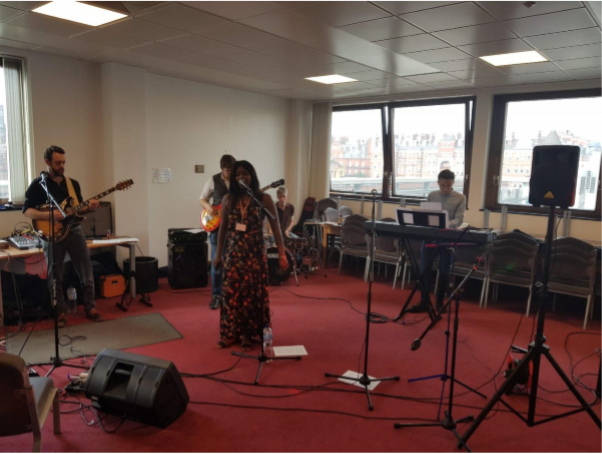
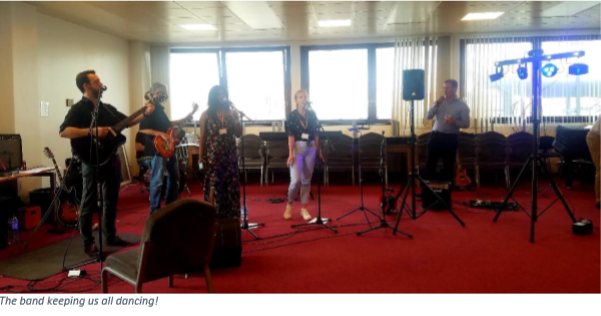
The band astounded with renditions with their covers of rock classics, like “Johnny Be Good”, to pop hits, like Cee-lo Green’s “Forget You”, and everything in between. Though reluctant at first, 6:30pm is a bit early to boogie, it wasn’t long before the dancefloor was established and all manner of shapes were being thrown. Each member of the band shone with spectacular solos but the mellifluous voices of Kemi Aofolaju and Melanie Albright really got people cheering. Even Professor Bull got on the stage and had us bopping along to “Hit the Road Jack”. If you ever get a chance, see the Gastric Band: I guarantee you will not regret it.

9pm came, and with it the end of our booking. The band packed up, the reps and volunteers cleaned up, and my colleagues grabbed their “one for the road” and made their way to the Union Bar to continue the festivities. It would be easy to see the Summer party as just a time to blow off some steam and a waste of money for various departments but I believe it plays a vital role in making the PhD experience just that bit easier and more enjoyable. Whether it’s new friendships that you help you expand your research and build your career or just a friendly face to say hi to by the coffee machine. Every year the party gives us the opportunity to hop over the pitfall of isolation all to the tune of Toto’s “Hold the Line”. If you ask me, that’s worth every penny.

MRC LMS PhD Student Retreat 2019

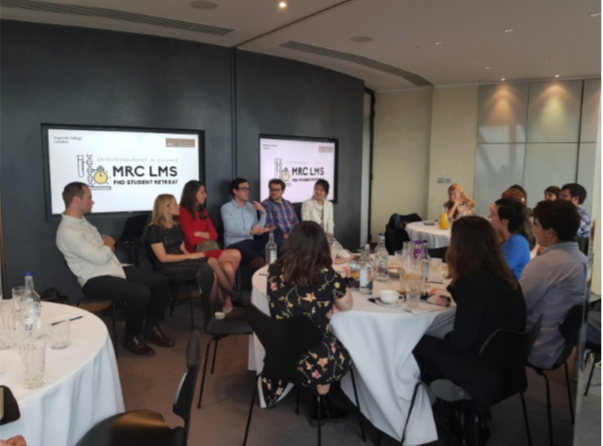
On the morning of Friday June 14, unusually, we found ourselves amidst the Liverpool Street commuters’ rush as we headed into the heart of the financial district for the 2019 LMS PhD Student Retreat. Our destination was the imposing figure of the Gherkin. Going up to just beneath the top of the building, we took a few minutes to marvel at the panoramic views before the retreat’s ‘entrepreneurship’ theme was brought sharply into focus.

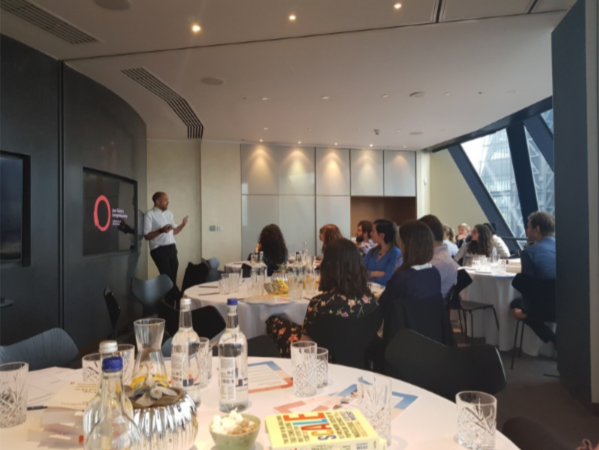
“What does it mean to be an entrepreneur?” Ben Mumby-Croft asked, as we began the morning workshop. Ben is director of the Imperial Enterprise Lab, which works to help students at Imperial College London innovate and launch new ideas for the market. Is having ideas enough? Ben explained through the ‘Lean Startup’ approach, that what separates a successful entrepreneur from your ordinary “ideas man” is the need to take initiative with the groundwork and minimising assumptions about your potential customers. Although at the start only a handful of students announced themselves as entrepreneurs, by the end of the pitch training session each table developed a rough business model for an intriguing idea with potential for the market. One of our PhD students, Vas, said about the workshop “Hearing the Lean Startup idea explained by Ben was a great way to formalise and make us aware of the common pitfalls of being a new entrepreneur.”


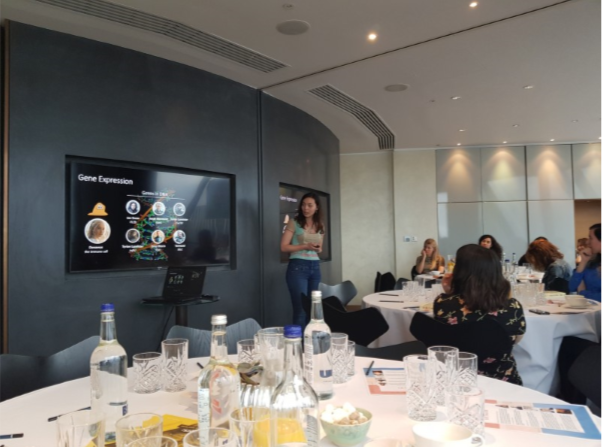
Next was the short talk session, aimed at increasing student collaboration and conversation. Sophie Arthur from the Grants Engagement and Communications (GECo) team discussed the importance of communication and engagement, highlighting the wide-ranging opportunities at the LMS. We also heard from Greening LMS founder Rebeca Fiadeiro (2nd year PhD student), who presented her valuable work increasing sustainability at the LMS. 3rd year PhD students Chiara Prodani and Irene Robles Rebollo ended the session with engaging presentations, deconstructing their research on epigenetic imprinting and genome organisation respectively.


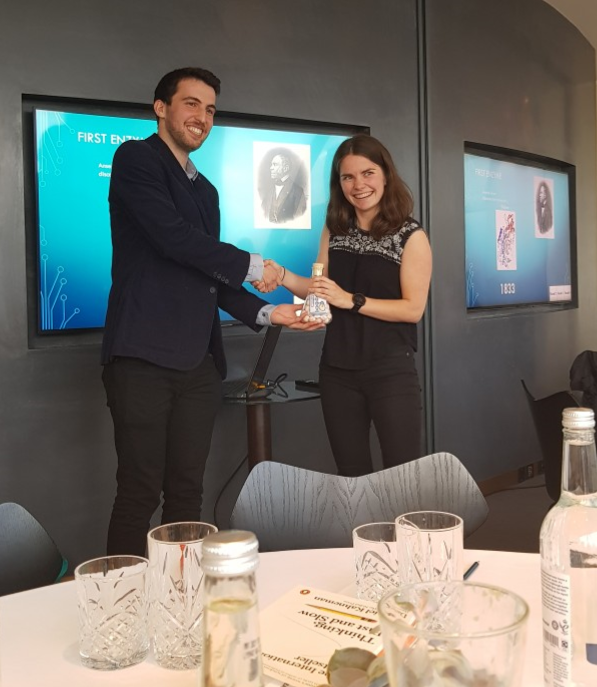
To round out the first half of the day, 2nd year PhD student Eren Akademir hosted the inaugural ‘Whose Year Is It Anyway?’ quiz. Members from each team were asked to give the year of landmark discoveries, distinguishing themselves as scholars of scientific history. It went down to the wire, with a tiebreaker required after five rounds. In the end, team CMoC captained by Helen Paterson emerged victorious.

After lunch, we returned to our theme with a Q&A panel of young science entrepreneurs panel chaired by 1st year PhD student Sijia Yu. John Simpson and Alexander Bond shared their experience going from co-workers at Imperial College London to co-founders of their start-up company Fresh Check. John and Alex were quick to highlight the support that Imperial College provides for prospective entrepreneurs. We also heard from Momoby co founder Andrea Rodriguez-Martinez, and Laura Towart, founder and CEO of My Personal Therapeutics who gave their insight into opportunities for women in the business world. Also present, Co-founder of techspert.io Graham Mills, who led us through his entrepreneurship journey starting at Cambridge and what he does to instill an effective business culture in a large company. A number of other informative answers were given to audience questions relating to funding, time-management and productivity.

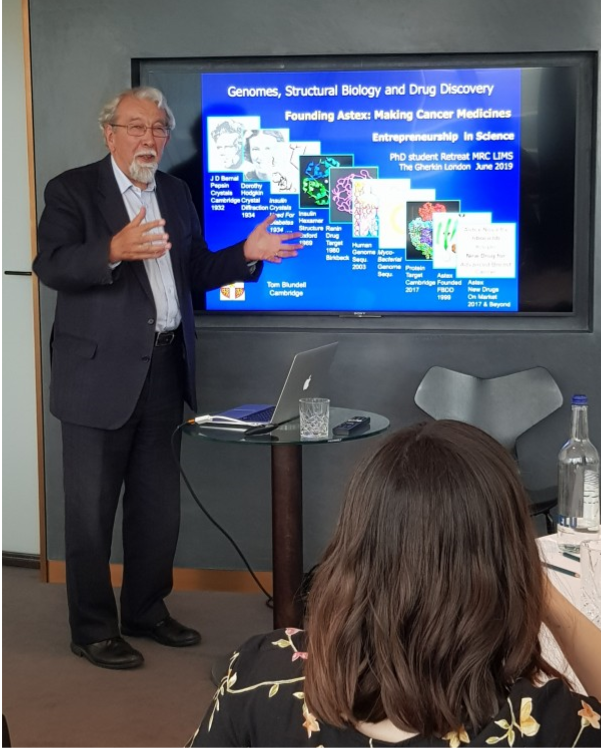
We drew to a close with an enthralling keynote speech delivered by Sir Tom Blundell, Emeritus Professor of Biochemistry at the University of Cambridge. Sir Tom took us steadily through his rollercoaster life in science, politics, business and even music – from discovering the structure of insulin with Dorothy Hodgkin in 1969, to co-founding multi-million pound oncology pharmaceuticals company Astex in 1999 – extracting the important lessons for success along the way.

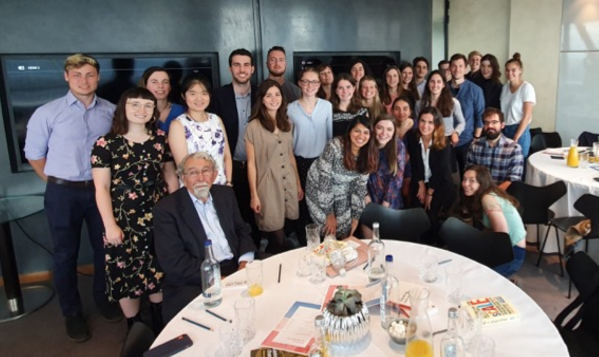
Thus concluded a triumphant student retreat organised by the tireless LMS PhD Student Committee. We would like to express our sincere gratitude to the Imperial Graduate School and Medical Research Council for the generous funding, without which these events would not be possible.

Life Beyond the PhD

I’m very grateful to Imperial College Graduate School for offering me a scholarship to attend the “Life Beyond the PhD” conference at Cumberland Lodge in Windsor. About 60 PhD students and early career researchers from 35 universities across the UK attended. I was honoured that I was representing Imperial College. Their research was not only in science but also in other fields such as history, art, sociology etc. It was great to meet people from so many different disciplines in such a relaxing and glamorous place situated in the heart of Windsor Great Park.

  • On the first day, we were given an extensive tour of the lodge. Many royals used to live there and even nowadays the Queen sometimes visits the lodge. In the first workshop we learnt about the research culture in the UK, equality and how the role of an academic is changing towards being more entrepreneurial. A point which I thought was very interesting is that the more educated one is, the more difficult is to change mind or direction.
  • On the second day, we discussed about mental health issues among researchers. We also had workshops on how to be an engaging and impactful speaker and writer. The key message was that our writing needs to be relevant, clear and vivid. These very useful tips will certainly help me in writing my PhD but also for any writing or public speaking I do in the future. I also had a personal CV consultation with the Head of Research Development of Cambridge University who gave me some excellent advice.
  • On the third day, everyone presented their research within small groups. We needed to pitch it to a lay audience because we were all from different disciplines. I listened to many interesting talks from my colleagues and gave feedback. I also received valuable feedback for my presentation.
  • On the last two days, we talked about multidisciplinary research. The organizers set up a competition for us: we were split into small groups and the competition was to build a utopian town. Within my group we had fascinating discussions on how we would build this town. Surprisingly we won!

Between all these activities we were provided with plenty of excellent food (eating in the garden in the sunshine) and had very interesting conversations about each other’s research area, behind the scenes issues of each one’s PhD experience, but also about the research culture in general. I think Cumberland Lodge is great because its main aim is to foster collaborations across many different disciplines in a relaxed environment. It’s such an inspirational place too, surrounded by wonderful natural beauty.

The annual Life Beyond the PhD conference held at Cumberland Lodge, is a unique, interdisciplinary celebration of research culture in the UK. Now in its twelfth year, it gives PhD students and early-career researchers the opportunity to share their experiences, develop their transferable skills, and explore the value of doctoral research in an inclusive and supportive environment.


Written by Marianna Kapsetaki

Bounce Ping Pong Intersectional Social 2019

With the Christmas break a distant memory and work-weary lab members itching for a break, re-energisation of the work place was desperately in order. And how better to achieve this than with ping pong, pizza and (substantial quantities of) alcohol? Generous funding was granted from the Research Community Fund, allowing PhD students and early career post-docs from the Section of Investigative Medicine and Section of Cell Biology and Functional Genomics to attend an inter-lab social at Bounce Ping Pong on 12th April 2019. Due to popular demand, a round robin competition was held across the two hired tables, with members from different sections paired into doubles teams. Play ensued with fierce competition, and winners emerged from both sections!

Jamie Frampton, a first year PhD student and a winner of the competition emphasised how much he enjoyed the event. He referred to his team’s win as “legendary” and said that “it was great meeting new people with similar scientific interests over a drink while smashing a few ping pong balls. Who’d have thought that ping pong and scientific networking were such compatible activities?”

Rebecca Cheung, a second year PhD student, expressed her gratitude to the Graduate School for facilitating the event. She enquired as to how to apply for funding, stating that “events such as these are so important in raising morale and strengthening lab friendships. And thinking about it, this was probably the most fun I’ve had whilst still being able to talk about my research!”

Completing a PhD is testing even at the best of times. Events such as these are therefore crucial in fostering a supportive and friendly lab environment, and so we would sincerely like to thank the Graduate School for making it possible. As people came together over food and drink, with laughs and time to reflect on current work, we headed into the Easter break with continued dreams of research success.

Yateen Patel and Maria Lucey, Section of Investigative Medicine

Crystal Maze Experience- EEE PhDs

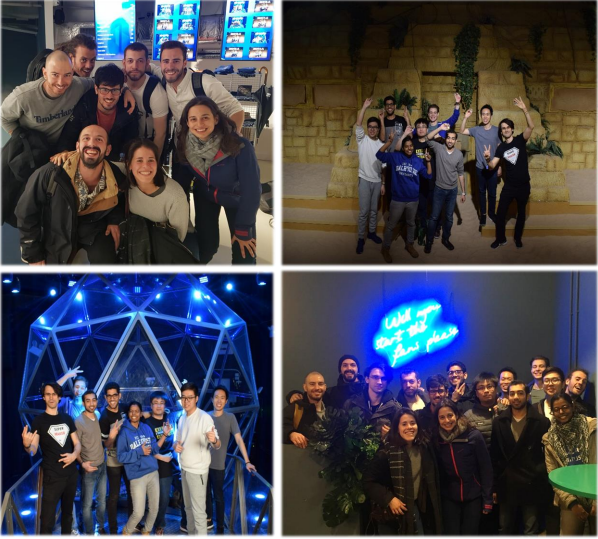
The first Crystal Maze event connecting PhD students from the department of Electrical and Electronic Engineering, took place on Friday 5th of April. The goal of this unforgettable experience was to mix students from different groups and foster new collaborations within the EEE department.

The evening started with a drinks hangout at union bar where the attendants got to know about each other before the team building event. The Crystal Maze Experience was a truly interactive, frenetic and funny team challenge. Expertly guided by the Maze Master, the two teams of students journeyed through four different adventure zones: Aztec, Industrial, Futuristic and Medieval. Along the way, the teams faced lots of challenging tasks and games. Every challenge successfully completed won each team a crystal. Every Crystal earned, gave more time in the very final challenge: The Crystal Dome. Here, the teams had to work together to catch as many tokens as possible.

The event was a great success, with a big turnout of 16 students. Everyone had a great time and enjoyed building teamwork and social skills. EEE PhDs were very happy to meet new people from the department in such a fun way.

Connect to Succeed

As we get closer and closer to graduation, we look forward to taking a step into the real world and work either for corporations or starting our own venture in order to reach our potential. Judging by the society we live in, connections have a great impact on our future. Events managed and produced by the GSU give such opportunities to students, allowing them to expand their horizons. One such event was the GSU connect 2019 initiative.

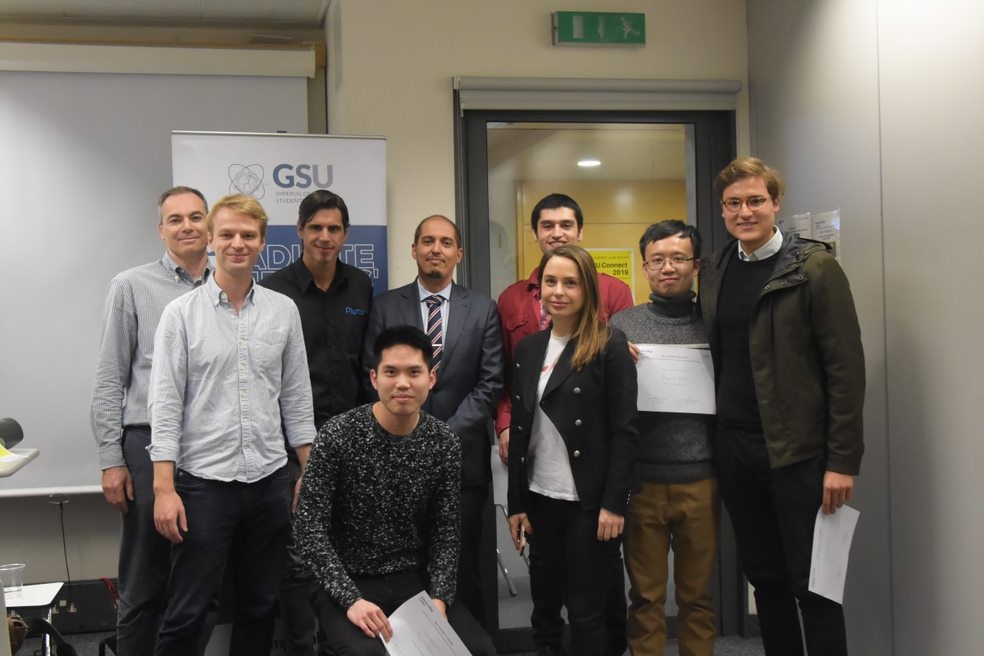
The event offered students the opportunity to enjoy the cross disciplinary collaboration with other students, allowing for students to benefit from different skills and expertise. The event saw 60 students from diverse backgrounds, participating in the competition. Though GSU Connect has traditionally been a networking event, this year the committee had added a twist. Students had the opportunity to present a pitch to a panel of judges as well as the audience and the winning team to win £1,000 pounds in cash. The event ran for 2 days, one exclusively to allow students to connect with peers in a professional environment and the second to allow the teams to pitch their ideas to their selective audience and judges. The panel of judges included Mr. Anouar Adham Founder of Elite Crowdfunding Ltd., Elite Assets International and Elite IRP/ Assets and Wealth Management Expert, Ms. Anca Enica Co-founder of Legacy Venture, Mr. Matthieu Burnand Manager of Solar Energy startup, MBA at INSEAD, Mr. Robert Benson an Active investor in startup businesses, Founder of Arete Consulting and Mr. William Makant. In this year’s competition, two teams had the opportunity to take home £500 each by presenting an idea that could wow the panel and the audience. This year, the winning team had a unique idea, to develop a sustainable autonomous vertical farming system based on the aeroponics technology by using a technique in AI called Reinforcement Learning. This would allow scalability for vertical farming system, as the AI can learn and adapt in any given environment given enough training. The idea won both the award from the esteemed judges as well as the audience, proving to the world just how bright the minds of the future are.

Though next year’s event will focus solely on building connections and networking, we look forward to receiving both your feedback and any suggestions on improvement. The GSU thanks it’s participants for making this event as successful as it could have been and we look forward to seeing you all again at our future events. Keep an eye out on our social media channels to get updates and information on our exciting upcoming events.

We would like to thanks the Graduate School and the Research Community Fund for their financial support and for enabling this event to take place.

4Cs Science Communication Writing Competition – People’s Choice Award

by Jemimah-Sandra Samuel, PhD student in the Department of Earth Science and Engineering

My PhD in Under 500 Words

When people think about oil and gas, they think of climate change. But let us imagine for an instant that the exploration of oil and gas has no effect on the earth and its habitats, even more so the use of oil and gas products. Then surely, we will be looking out for better ways to harness its exploration and production. This is the basis for my research which is largely pertinent to developing countries where the means to engage cleaner energy technologies is still emerging, and or in developed nations where there is a current shift from oil towards a cleaner energy source (gas).

People require gas to heat up homes, cook meals, and perhaps fuel vehicles. This gas comes from beneath the earth’s surface, from rock structures underneath the ground; reservoirs beyond human reach or possible survival. Consequently, to produce and utilise gas on earth’s surface, high-quality equipment and machinery costing several million pounds are set-up and sent to underground gas reserves, with the prospect of retrieving this energy resource. Although this exploration is orchestrated by people, petroleum engineers, whom themselves cannot go underground, petroleum engineers ensure that every trip by any equipment to petroleum reservoirs are backed by the supplementary
capacity to collect information about the conditions and behaviours of the reservoirs. Processing this information among other uses includes exploiting them to create possible images and patterns of the petroleum reservoirs’ behaviour. These images and behaviours form models which prove resourceful to petroleum engineers in predicting future behaviours of reservoirs, in addition to helping oil and gas engineers manage oil and gas assets during their production life.

Nevertheless, what can be expected when the underground home of these energy resources is muddled with intricate structures and structural irregularities, heterogeneity? Well, this translates to longer processing time in generating reservoir models; thereby delaying factbased decision-making as well as investment opportunities. And that is

exactly where my research comes in. My PhD focuses on using mathematical methods and coding to improve the speed at which petroleum engineers can develop models that depict petroleum reservoirs. More so, with speed-ups in orders of magnitude above the actual time taken to model petroleum reservoirs by existing techniques. With findings from my research, it is anticipated that oil and gas engineers will not have to wait for ages to build and get results on reservoir models. Needless to say, petroleum companies will not have to delay the advent of taking pertinent decisions that translate to profits in millions of pounds or even taking decisions before having the facts to support them.

We already have some proof of concept model and hopefully, petroleum engineers and explorationists can get results on their oil and gas assets 10, 100, 1000 and maybe 100,000 times quicker than before.

4Cs Science Communication Writing Competition – 3rd Place

by Sarah Hayes, PhD student in the School of Public Health

How can we maintain mans’ best friendship? 

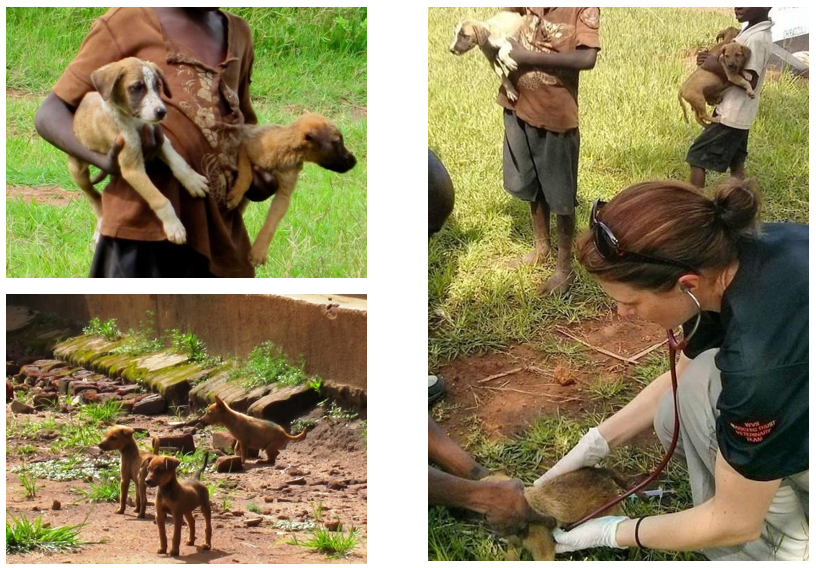
Here in the UK we think of dogs as mans’ best friend. But in some regions of the world they can be our deadliest enemy.

Meet Amos (name changed to protect identity).

He’s a 5-year-old boy living in rural Tanzania.

Ten days ago, he was bitten by a rabid dog.

Anyone exposed to rabies through a bite, scratch or lick from an infected animal must receive treatment immediately. A course of 3 vaccinations (known as post-exposure prophylaxis or ‘PEP’) will effectively protect a person from this deadly virus. But they must be given as soon as possible, ideally within 24 hours of the bite. Once signs of disease develop there is no effective treatment and you’re condemned to a painful, distressing death.

Amos hasn’t had these vaccinations.

Why?

Because in rural Tanzania, access to healthcare can be extremely challenging. Sometimes it’s a lack of awareness of the risks that stops people seeking treatment. At other times it’s a lack of access to healthcare. In Amos’s case the nearest hospital able to provide PEP was over 2 hours away.

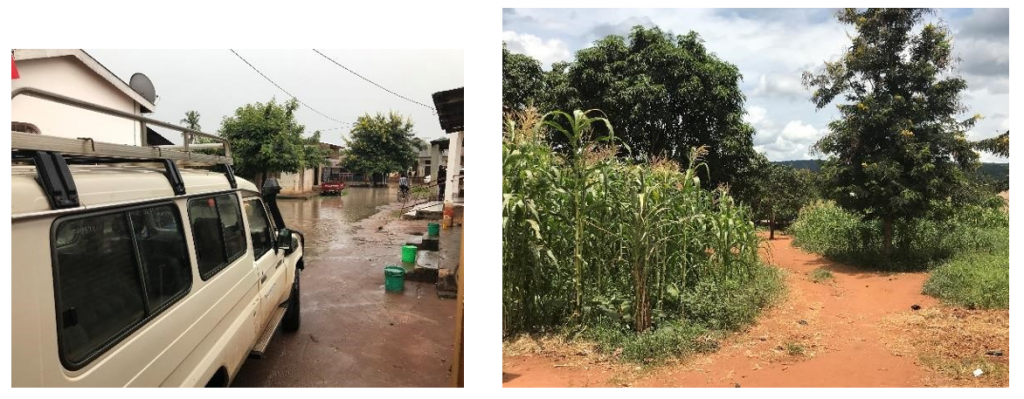
Typical Road conditions


Transport costs alone can be prohibitive to some families. Add on the price of treatment and you begin to understand why an estimated 59,000 people a year(1) are still dying of this preventable disease.

So, how can we protect children like Amos?

Vaccination of domestic dogs plays a key part. Whilst any mammal can be infected with rabies, domestic dogs are responsible for up to 99% of human rabies cases (2). If we reduce the level of rabies in dogs, we reduce the level in humans.

However, the benefits of dog vaccination campaigns can be compromised if rabies is circulating in other animals. Our research shows that in southern Tanzania where Amos lives, almost 50% of recently reported animal rabies cases have been in jackals. These jackals may have been infected by rabid dogs, but rabies could also be passing from jackal to jackal. Understanding the role that different species play in rabies transmission is vital in implementing effective control strategies. If rabies is being maintained in wildlife, vaccination of domestic dogs alone may not be enough.

Using a combination of ongoing surveillance, statistical analysis and mathematical modelling, my research is investigating the role of different species in rabies transmission in southern Tanzania. These techniques allow us to untangle the part each species is playing in virus transmission and to consider both the short- and long-term effectiveness of different control strategies. This is vital if we are to stamp out rabies from these communities and keep it out.

Thankfully, Amos did ultimately receive his vaccinations. But not everybody will be so lucky. Which is why it’s so important that we tackle rabies at its source and prevent people from being exposed in the first place. And if we can achieve this then who knows, maybe one day people the world over will be able to think of dogs as their best friends.

References

  1. Hampson K, Coudeville L, Lembo T, Sambo M, Kieffer A, Attlan M, et al. Estimating the Global Burden of Endemic Canine Rabies. PLoS Negl Trop Dis. 2015;9(4).
  2. World Health Organization. WHO | Rabies. Who. 2017; Available from: http://www.who.int/mediacentre/factsheets/fs099/en/

4Cs Science Communication Writing Competition – 2nd Place

by Oluwalogbon Akinnola, PhD student in the Department of Bioengineering

The Other Hand Model

If the first thing you think of when you hear the phrase ‘hand model’ is David Duchovny in the 2001 film Zoolander, then congratulations on your excellent taste. Unfortunately, however, no one was willing to fund a PhD researching his performance. No, in the world of Biomechanics hand model means something different yet no less appealing.

Our hands are how we communicate and manipulate the world around us. Feeding ourselves, checking the bathwater, even holding the medium this text is printed on: we use our hands to keep us healthy, happy, and safe. Understandably, this multifunctional system is complex. One quarter of the bones in the body are in the hands. They controlled by an intricate network of muscles and nerves that provide the most tactile feedback in the body and let us do everything from handstands to card tricks.  It is this complexity that makes it difficult to find a solution when things go wrong. Hand injury accounts for almost a fifth of cases at A&Es across the country and the UK spends over £100million a year treating them. Osteoarthritis of the hand affects at least 1.56 million people in the UK and there is no known cure. Understanding exactly how the hand works is vital to finding appropriate solutions to these problems.

My research is concerned with creating an accurate representation of the human hand. Specifically, I’m using mathematical equations and experimental data to create a computer simulation that will replicate the behaviour of the hand in various conditions. This will allow us to investigate nonhealthy hands and gain insight into how to heal them. The model I have been working on is an inverse kinematic model. This means that it works out the forces inside the hand from the movements, or kinematics, of the hand. For example, what is the force on your wrist when you pick up a cup? Motion capture, the same technology Andy Serkis used to give us Gollum, is used to provide the motion input for the model and the results are verified using cadaveric testing and electromyography (EMG).

A hand model ready for motion capture with EMG sensors and reflective markers.

EMG is the detection of the electrical signal produced by your muscles when they move and gives an indication of how much effort the muscle is exerting. In cadaveric testing, we apply forces to the tendons in a hand and measure the kinematics. Imagine Thing from The Addam’s Family but with pulleys. I compare the signal patterns and applied forces to the model results to verify that the model. With all three in agreement, I can conclude that the model is representative of the hand. Thus, it can be used to simulate the effects of surgery and rehabilitation to find the best solutions to hand injuries and diseases. Solutions that could change millions of lives for the better. This hand model may not be wearing diamond ring but I think it pretty exquisite.