Tag: Cohort Building Fund

Bringing Together Imperial’s and Britain’s Energy System Community

Britain is at the forefront of energy system transformation. In 2018, 53% of electricity consumed came from low-carbon generators, up from 25% in 2009. As a result, carbon intensity halved from nearly 500 to 217 gCO2/MWh (Electric Insights). However, as an island with limited interconnection to its neighbours, the stakes are particularly high to achieve further reductions down to 100 gco2/MWh by 2030 (Fifth Carbon Budget).

At the same time, me and fellow PhD students miss the exchange amongst us as well as with other academic, industry and policy experts on energy system transformation. What is missing is a closeknit energy system community that can easily discuss transformation pathways. Although individually, research, business and policy-making in energy, is world-leading, the community is siloed. In addition, there is no forum within Imperial where students working in this field can easily exchange information and discuss.

The missing link is a platform that offers a direct (!) communication channel between students and experts of all sectors and brings them together to openly discuss ongoing work. That’s why I set up Power Swarm.

Power Swarm is an open, free network of energy system transformation experts across academia, industry and policy. It is not a single event, but rather has two key components:

  1. E-mail list: Every Power Swarmer can write to this list to advertise jobs, papers, conferences, etc., and ask questions related to energy system transformation. The purpose is to leverage swarm intelligence for better information exchange and more efficient problem-solving. When I e-mailed the group about recent reports on the amount of storage required in future energy system scenarios, I received more than 15 reports I hadn’t been aware of. That’s my PhD literature review sorted!
  1. Workshops: For a different topic each month, academic, industry and policy experts speak about their ongoing work in this area. Two hours with five presentations of ten minutes ensure a concise format that allows for real, content-based, cross-sectoral discussions. No need for shiny result slides, rather a discussion of current roadblocks. The workshops take place from 5-7pm and are usually attended by 20-30 people working in the particular field. Past meetings were on ‘Modelling Renewables’, ‘Value of Storage’, ‘Energy Trading’ and ‘Hydrogen’. My roadblock was how to quantify the value of energy storage and the advice from experts of Pivot Power, Aurora, RenewablesUK, and others came in very handy.

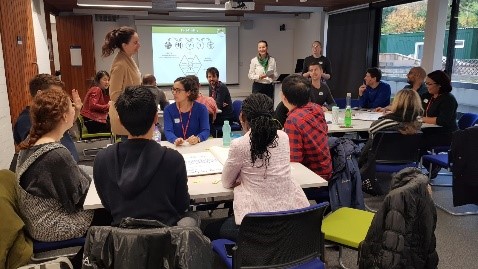
Last week’s workshop (21st February) was already our fourth one and focussed on the future role of ‘Hydrogen’ in the UK. 20 to 30 attendees (MScs, PhDs, researchers, NGOs, industry), discussed with speakers from academia (Imperial, UCL), consulting (Element Energy, E4Tech), industry (ITM Power) and policy (BEIS) about the current roadblocks to decarbonising energy, transport, heat and industry with hydrogen. The event was followed by drinks at Eastside where students could network with professionals and continue the discussion.

Power Swarm thereby supports Imperial’s research network and fosters exchange of research insights on energy across departments, connects Imperial’s research community to the wider academic and (most importantly) industry and policy community working on energy, and establishes a forum for students to network among each other, with the Imperial community, and with industry and policy experts.

Power Swarm has already more than 200 members in the energy sector. If you think you could benefit from the network, join!

We would like to extend our thanks to the Graduate School for supporting this Research Community Fund activity.
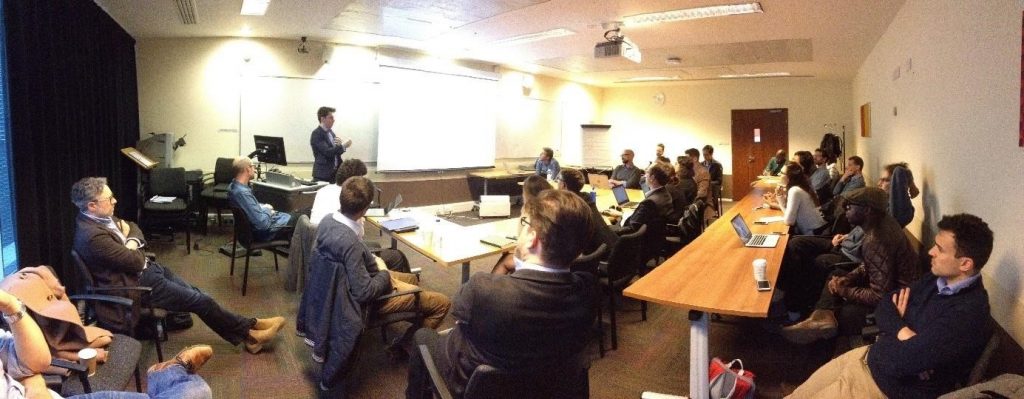
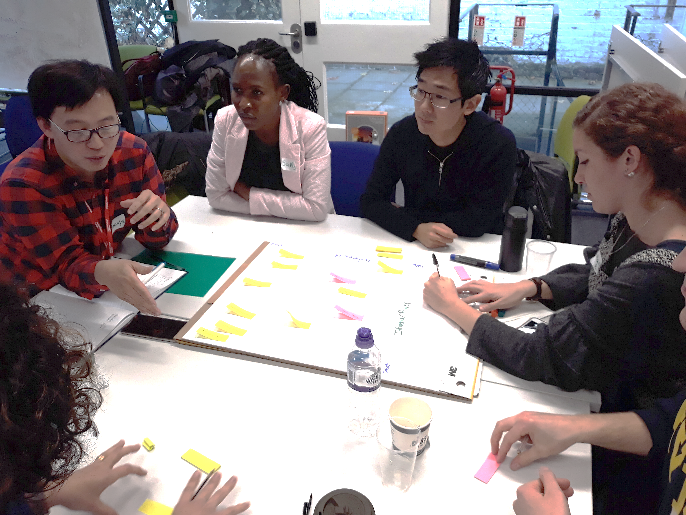
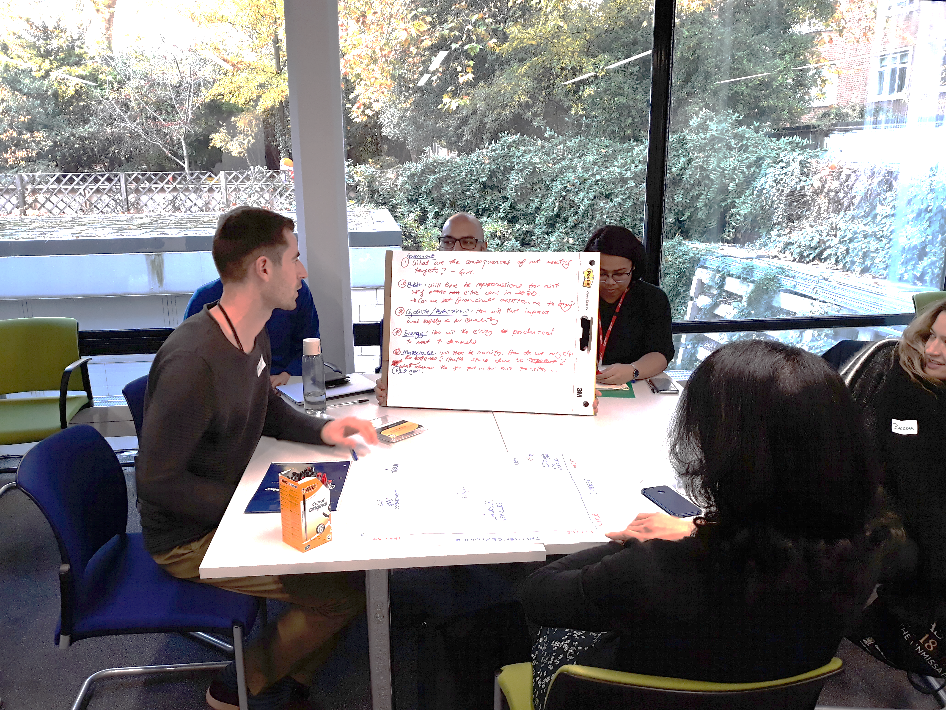
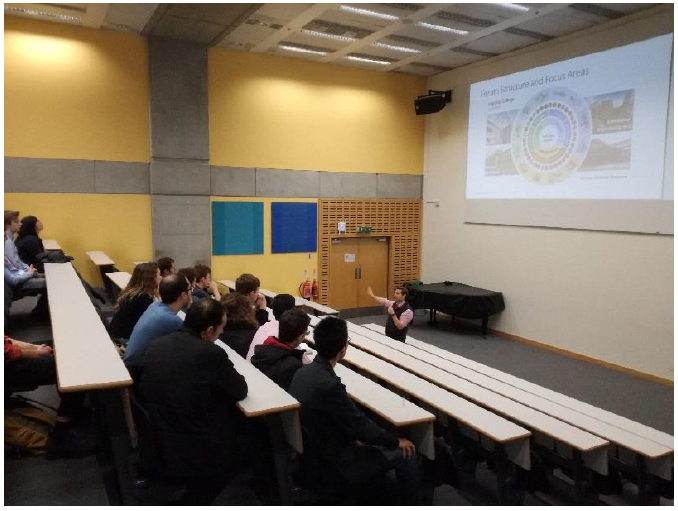
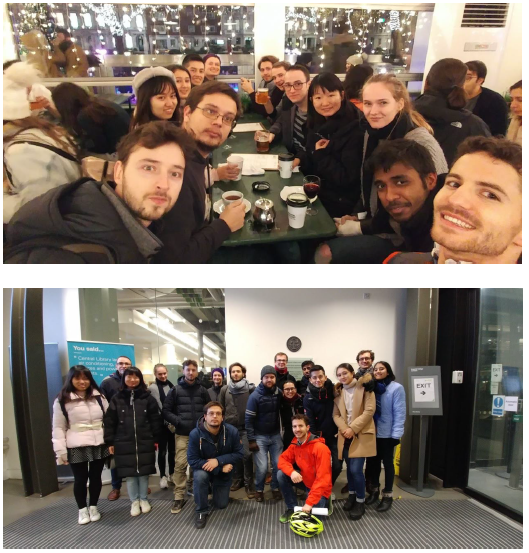
The first Power Swarm workshop on Modelling Renewables on 18th October 2018.
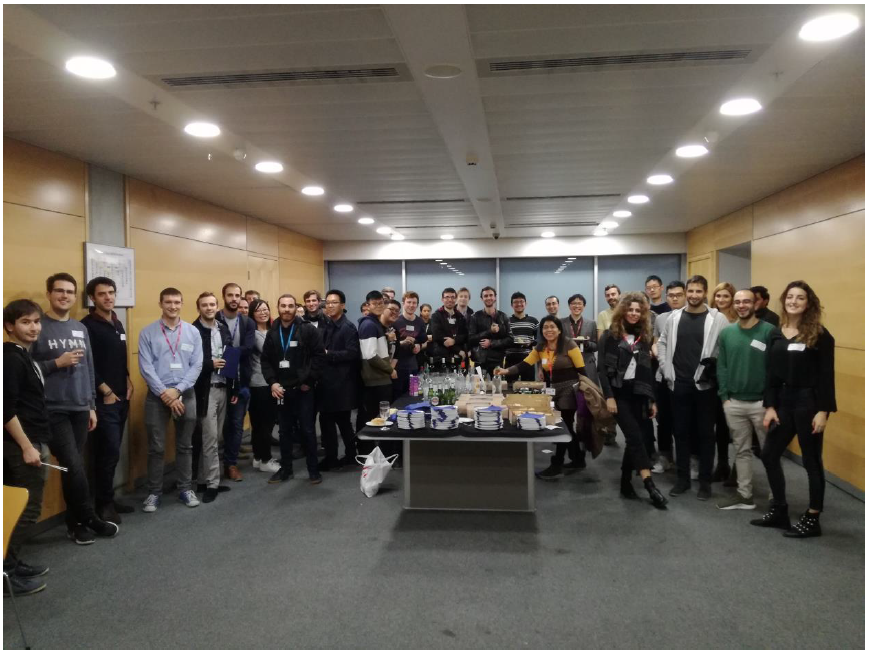
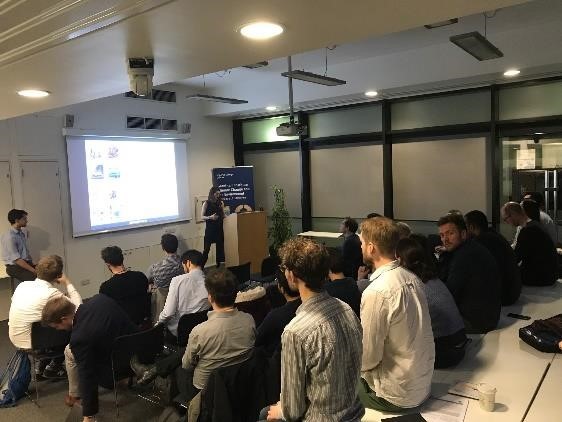
The fourth Power Swarm workshop on Hydrogen on 21st February 2019.

Go-Karting Event – 1st Year Bioeng PhD students

by Enrico Varano

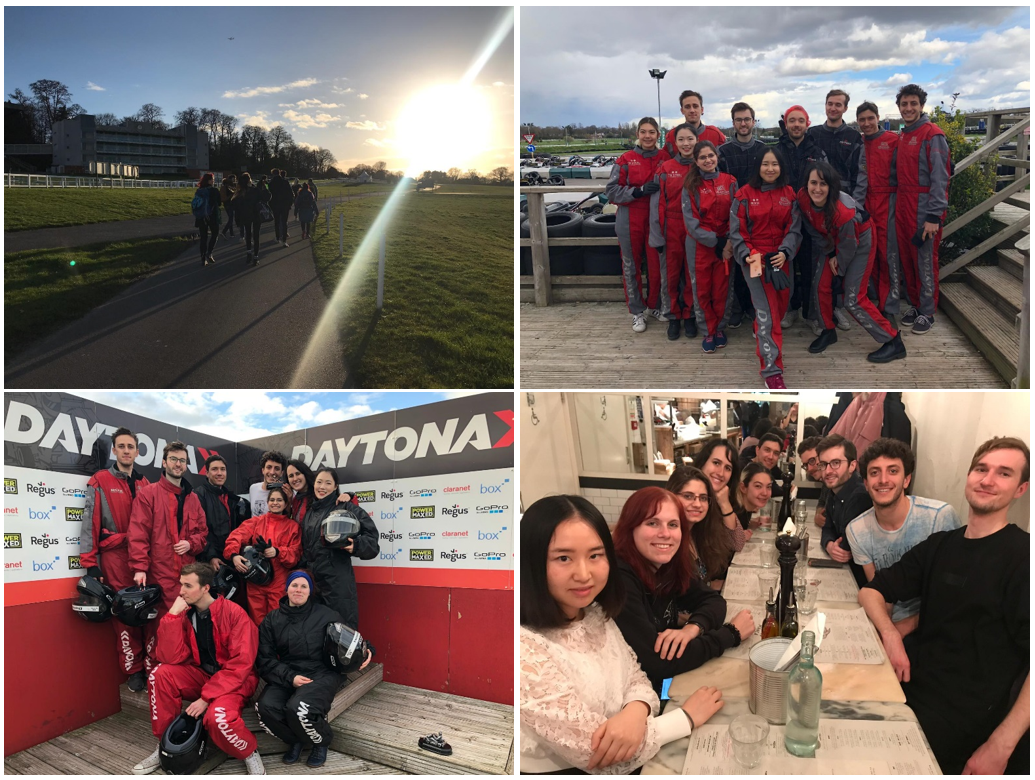
On Sunday the 17th of March 2019, the first-year PhD students from the Bioengineering Department enjoyed an active day out which started with a go-karting race in Sandown Park and culminated in a joyful social over dinner at Franco Manca in Earl’s Court. The students, who organised the outing on the WhatsApp group they created at the beginning of the year, sought to reinforce the professional ties and personal bonds they developed since the first social at the beginning of February. The event was made possible thanks to funding obtained through the Imperial College London Graduate School from the Research Community Fund, for which the students are very grateful.

The day out started at 1 P.M. when the students met at the South Kensington Campus to catch a minibus ride they’d booked, and headed out for Sandown Park. The bus quickly filled with a variety of overlapping conversations with topics ranging from technical comparisons of experimental methodologies to the importance of engaging as Teaching Assistants for one’s own self-development. Such conversations promote collaboration: as an example, a professional connection between two students which emerged in the previous social event resulted in one’s participation in the other’s lab work as a pilot subject – allowing them to further tune their experimental design through discussion other peers. As one student put it: “It’s also nice to connect with people who I might be able to collaborate with – providing opportunities for similar connections to occur is essential and may result in fruitful collaborations and exchanges of perspectives of the challenges PhD students face daily”.

As the minibus approached the venue, those that had been go-karting before shared their accounts of previous experiences. The weather gave some signs of worsening before clearing up, fortunately – the track was just made humid enough to make the spin-outs funnier to recount on the minibus on the way back. The student engaged in the race showing their competitive spirits and very much enjoyed the challenge of handling the karts in damp conditions. The event ended with pizzata – Italian for a pizza get together – in Franco Manca at Earl’s Court, where the room filled with friendly conversation.

Indeed, aside from the aspect of providing an opportunity to develop professional relationships for direct scientific collaboration, a very important aspect of social interaction is to web a support network made of personal relationships between the students. This network enables students to manage any work-related anxiety, stress or loneliness by having a go-to person in a similar professional situation to them. The event was designed to facilitate a combination of the tension-releasing adrenaline-inducing sporting activity and the relaxed and informal follow-on dinner and was a great success! Everyone thoroughly enjoyed the day out, as one student’s reaction reveals: “We all had a fantastic time, relaxing, having fun and forgetting about work for a few hours! Very much looking forward to seeing my colleagues again for another event in a few weeks’ time!”

Making sustainability tangible: experiences from a workshop for postgraduate students

The sustainability workshop was organised by PhD student Vasiliki Kioupi of the Centre for Environmental Policy (CEP) on November 13 2018. It was an opportunity for postgraduate students from different departments of Imperial College London and other Universities to participate in two sessions related to materials and circular economy and assessment of the sustainability of a proposed technology in the context of the problem-solving approach. Moreover, the aim was for the participants to develop skills related to collaboration, systems and strategic thinking.

Twenty PhD students from CEP and Design Engineering Departments as well as a CEP Teaching Fellow and a post-graduate student from Queen Mary University joined the workshop. The event also featured two facilitators for delivering the two sessions; Katherine Whalen from Lund University and Tatiana Vakhitova from Granta Design.

The first session introduced participants to a serious game (In the loop) where they had to work in teams of two and assume the roles of product manufacturing companies making decisions in a changing economic, political and social system. During the reflection session after the game there were lively discussions about elements of competition that surprised the participants, how sustainability is approached, how short and long term strategies affect the course of the game, economic and environmental regulations that should be applied and social issues that emerge from the game. Finally, they came up with suggestions for companies and policy makers in the materials and product manufacturing sector. A very interesting element of the first session was the high degree of participant engagement during the game.

The second session introduced participants to the active learning toolkit “sustainable development”, which is a set of steps that can be used to assess the sustainability of a proposed technology. The case study used was about electric vehicles (EV) and sustainability was assessed on the basis of three capitals: natural, manufactured and social using back-casting, stakeholder analysis, data collection on EV life cycle: CO2 emissions, materials and energy and EU regulations using CES Edupack (software available to ICL students of specific departments via the ICT shop). During the reflection session the participants had the opportunity to discuss not only how this process could be potentially useful for their research or teaching about sustainability, but also the importance of systems thinking in decision-making and interdisciplinary collaboration in addressing sustainability challenges.

Overall, the workshop gave the opportunity to participants to discuss about what sustainability means to them, interact in teams, learn about new concepts, further develop some skills and think about limitations of policy-making as well as suggestions for a more holistic view of sustainability. As for the organiser, it was an important opportunity to develop organisation, collaboration and management skills and use the feedback generated to improve the participant experience and learning outcomes of future workshops.

The workshop was made possible through the generous support of the Graduate School who provided funding and guidance.

Bioengineering PhDs go for an escape room and dinner!

On Saturday the 2nd of February 2019, the first-year PhDs from the Bioengineering Department went for a nice evening out, that started with an escape room followed by a nice Italian dinner.

The objective of this activity was fomenting a good relationship and friendship between the first-year PhD students from the Bioengineering Department, as we don’t all know each other despite constantly crossing each other in the hallways. We are all now starting a 3-4 year journey where these relationships are going to be invaluable, not only on a personal level but also on the professional one, as thriving engineering usually requires (besides obvious personal effort) help/knowledge from others and team effort. Now we’ll know who to ask for help if we run into a problem that it is not in our main domain or field!

The evening started at 6:25pm as we gathered in the entrance of the escape room. For some it was their first time on an escape room, while for others it was another opportunity more to prove our intellects. We randomly divided into four teams and the game masters of HintHunt London led us to the entrance of our respective rooms and introduced us into the story we were going to play: for some of us it was about stopping an embezzler from doing a transaction while for others it was about getting out of a Japanese-themed room in less than an hour. After some stress because the time was running out, through teamwork and deduction skills, all the teams managed to get out of their rooms!

After this, we walked to Franco Manca, our destination for dinner, while getting to know each other. Once there, our lovely waiters led us to two adjacent tables where we had some great burrata as a starter, delicious pizza for main, and tiramisu for dessert, all accompanied by some wine. Even our Italian peers were satisfied with the feast!

After the dinner, some decided to retreat home, tired from the evening out, while some of us decided to move the evening to a pub, where we continued to get to know each other and had a few more drinks.

The event was a total success! We had lots of fun, used our heads, filled out tummies and had an overall great night! A big thank you to the Graduate School for funding this event, we’ll be making it an annual or even semesterly event!

Theory Group Student Seminars: Sharing Our PhD ‘Wisdom’

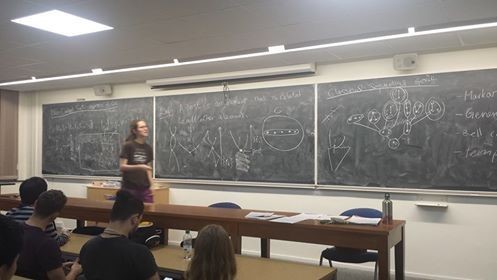
One of the most important skills of any physicist, second only to the ability to do research itself, is to communicate both the results and the methods of that research to a variety of audiences: students, peers, senior researchers, and to a lesser extent, the general public. All of these groups require their own unique approach, and it is to the first two that the student seminars in the theoretical physics department at Imperial are aimed. The speakers are PhD students, the audience consists of PhD and MSc students in comparable proportions. This is a pedagogical experience for all involved, albeit in different ways.

Firstly, the speaker. Choosing a subject for a talk is a nontrivial task in itself. The choice might be, roughly, between the day to day research of the speaker, maybe an upcoming paper, and a broader, less directly related topic, with which the speaker had to familiarise themselves in order to perform their research, not having learnt about it in class. Sometimes, these are useful tools; sometimes, these are topics which are interesting in and of themselves. Whichever subject is chosen, having to talk about this to an audience is an excellent self check – have I truly understood what I am talking about? What is the broader picture here, what is the forest behind the trees and leaves of equations? A variety of wise human have said, in more or less these words, that one has not truly understood that which one cannot explain to a computer, or an undergraduate. Since both of these would take considerable amounts of time, postgraduate students will have to suffice.

Giving a talk is a skill which is valuable both to future academics as well as those who go on to work in what is known with varying degrees of derision as “real life”. How to be engaging, how to be clear, how to estimate the level of knowledge of the audience, adapt the talk if that estimate proves to be inadequate. Choosing suitable visualization tools: the chalk vs. the powerpoint!

Secondly, the audience. It is a rough awakening to go to a talk for the first time. However complicated a lecture seemed to be, the knowledge the professor assumed you to have was always knowledge that you knew you should hypothetically have. It is an art in itself to not be discouraged and stop listening the second one does not understand something. A good speaker will usually try to give you “the gist of it”, and it is possible to understand a number of things without understanding anywhere near all the detail. It is an excellent opportunity for MSc students to be given the chance to listen to a talk that is less complicated than a full fledged conference talk, but still more complicated than any seminar talk they would have previously come across.

The other PhD students might learn some of the actual material which is being presented, as well as give some valuable feedback (“no, you may not assume everybody knows what diffeomorphism invariance is”, “no, don’t print black on a red background on your slides”) .

Finally, it is a well known fact that students are being underpaid and hence underfed, and therefore free pizza provides a most useful tool to lure the starving students in, as well as feed them. Bon appetit!

We would like to extend our thanks to the Graduate School’s Research Community Fund for sponsoring this event.

‘Breaking the Ice’ – Hammersmith Campus Postgraduate Social!

Postgraduate students based at the Imperial Hammersmith Hospital campus took to the ice for a PG student social at the Natural History Museum on Wednesday the 19th of December. This social brought together research students from the departments of Medicine, Surgery & Cancer and the NHLI in a festive skating session followed by drinks at ħ bar, allowing PG students on the campus to mingle across different departments and disciplines.

The event was a great success, bringing together research students from across departments and institutes based at the Hammersmith hospital campus, as well as other research staff that were interested in getting involved with the event (including clinical and postdoctoral fellows). The Graduate School’s Research Community Fund, paid for twenty tickets for PGR students to go ice skating at the NHM (which sold out within 12 hours of the email being sent out) and a free drink at ħ bar, where PG students shared a festive drink as a way to send off the end of term before college closes.

This event was organised by campus-based PhD student representatives (Emily Heathward, with assistance from Hannah Maude and Berta Font Cunill), who’d like to improve the postgraduate research community in the Faculty of Medicine at the Hammersmith Campus, and serves as an introductory event, with high hopes for more to follow.

Thank you to the Graduate School for enabling this event to take place!

Mech Eng – Robotics Forum PhD Connect

by Eloise Matheson, PhD student in the Department of Mechanical Engineering

The first PhD networking event for robotics related researchers was held on Thursday 15th November 2018. Sponsored by the Imperial College Graduate School Research Community Fund and the supported by the Imperial College Robotics Forum (Network of Robotics), this event was aimed to connect PhD researchers across the college that face similar technical and research challenges! Robotics in general is a very multi-disciplinary topic, and with over 28 robotics labs spread across departments and faculties, this event was a great chance to bring people together. Over 50 people from 15 different labs registered for the event, with a turnout of around 40. It was a fantastic success, and the outputs of the afternoon have included ad hoc visits to other’s labs, the plan to form a mailing list between PhD/EngD researchers, future smaller social meetings and the hope to run the event annually.

The afternoon started with a short presentation by Prof. Ferdinando Rodriguez y Baena, the Speaker for the Robotics Forum, who highlighted the importance of creating links between our labs at all levels – including between PhDs and other researchers.

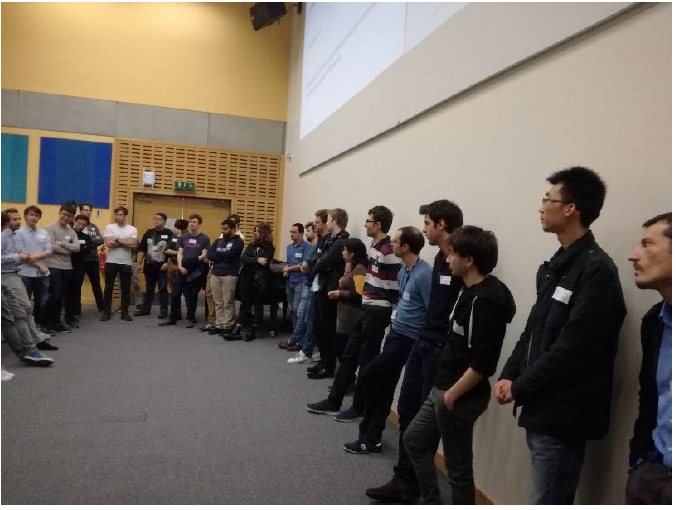
Keen to meet the other researchers in the audience, we then had a few minutes to introduce ourselves to someone we didn’t know – and following that, to introduce our new partner in a round circle to the rest of the group.

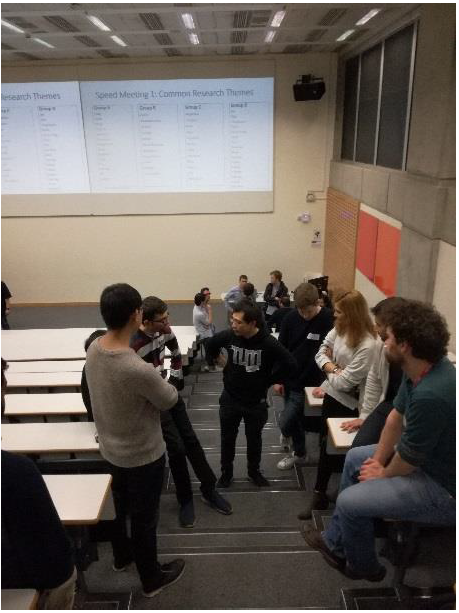
The group introduction helped break the ice, so that we could begin the main activity of the afternoon – intense speed meeting! We broke into pre-allocated smaller groups over three sessions each of 20 minutes, meaning that targeted discussions could take place. The first session grouped people from different labs together, and the topic encouraged them to talk about best practises from their labs. The second grouped people of similar research topics together – specifically covering Modelling and Simulation, Control, Mechanical Design, and Sensing and Electronics. The third and final group split us according to a more social demographic – with Post-Docs and later stage PhDs in one group, early PhDs in another, middle PhDs in the third and finally all the robotics female researchers together, so that they could discuss issues and exchange ideas pertinent to their experience.

To conclude a fantastic afternoon, we finished the event with food and drinks and a social networking opportunity. Thanks again to the Graduate School for enabling this event!

Football at the Molecular Science Research Hub

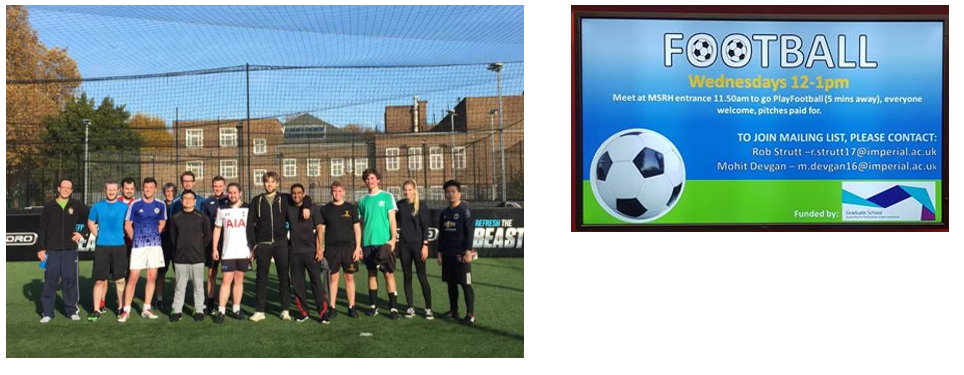
5-aside football at Imperial’s new White City Campus takes place very Wednesday lunch time between 12 and 1pm at PlayFootball Shepherds Bush, just A 5-minute walk away. The first event took place on the 7th November and will continue for 10 weeks. The aim of this event was to facilitate activity and departmental communication between staff, PhD students and masters students across all floors of the new Molecular Sciences Research Hub.

This summer, the Chemistry department was the first to move to the new White City Campus. The new building was designed to foster a sense of communication within the department and as the campus is still in development, there are currently little or no social areas, activity / sports spaces. With help from the graduate school and a local company, PlayFootball Shepherds Bush, we were able to negotiate 2 discounted 5-aside football pitches to provide fun, competitive and free exercise.

The turnout has been fantastic with over 70 people on the mailing list, all wanting to play. Players have come from a range of research groups from various sizes and a strong sense of community and appreciation for the project has been felt. As of this blog, 2 weeks of football have been played and we have been lucky enough to have had some great weather. Each session we have had 4 randomly picked teams with 2 games on each pitch lasting 30 minutes, winners playing winners and losers playing losers. The randomly picked teams have bonded a range of department members together from young MSci students to academic members of staff, both male and female. After the games, MSRHs new showers have also truly been put to the test…

At the end of the 10 weeks, we will have an awards ceremony congratulating all players for their effort, networking, and improved fitness and football skills. Due to the project’s initial success, we are considering alternative funding options for the future and would not have been able to start this project without the help of the Graduate School.

5 aside football at MSRH is open to all members of Imperial College London and welcomes all skill levels. Please email r.strutt17@ic.ac.uk to be added to the mailing list. 

Members of MSRH football, Rob Strutt and Mohit Devgan, organisers, in the centre (wearing trousers!). Advert distributed on screens around department.

Cross-CDT Ice Skating Event

by Martin Prießner, PhD student in the Department of Chemistry

On Tuesday the 11th of December the first event of this year’s Cross-CDT event series took place. The Cross-CDT event series aims to strengthen the already established friendships and form new ones between CDT students of different disciplines across the different cohort years. By organising meetings and fun activities with an informal character, the participating students get the opportunity to exchange their PhD experiences and professional and private matters. This enables them to form long-lasting friendships which will hopefully surpass their PhD studies.

On this winter-like evening on the 11th of December a total of 18 CDT students from 4 different CDT programs across two cohort years gathered together in front of the library at Imperial College London. Since not everyone knew everyone from the group, we briefly introduced each other and spoke a bit about how we found out about this event. In these conversations some of us found out that through the well-connected network within the CDT programs, we had already quite a few friends in common. After everyone arrived, we started walking to the ice rink at the Natural History Museum and got ready to demonstrate our skills on the ice!

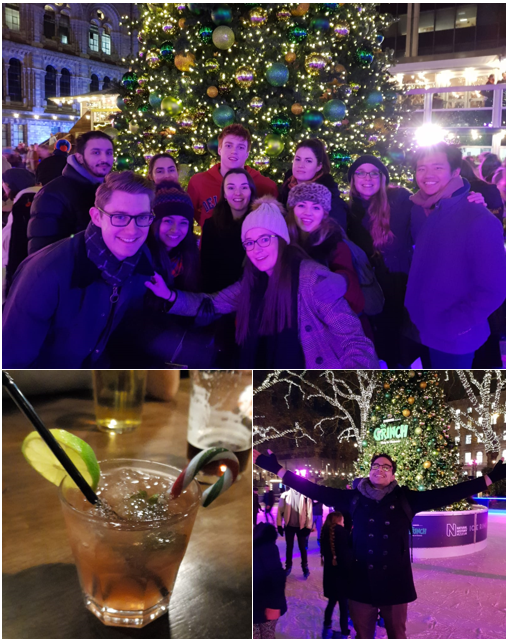
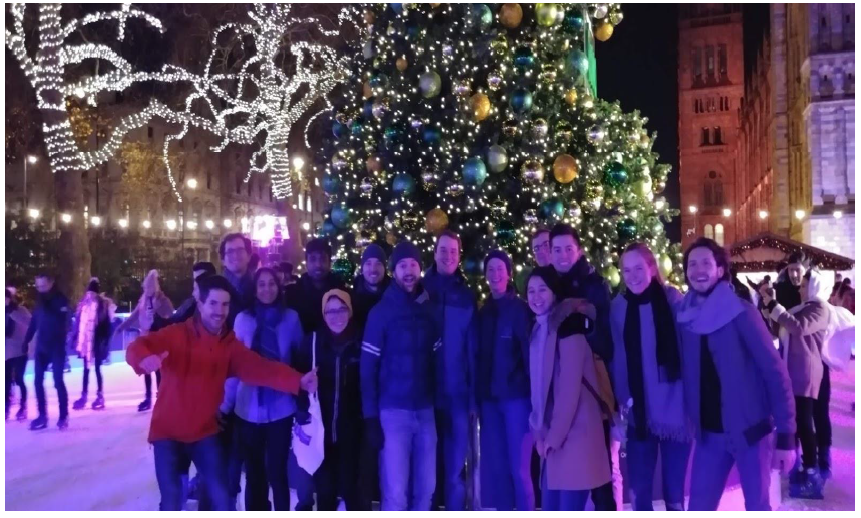
Since there were some participants from countries in which the climate is naturally too warm to form ice, it was a first-time experience for them. With some of the more ‘advanced’ skaters helping those less able, everyone finally managed to get comfortable on the ice and most of us gathered at the Christmas tree in the centre of the ice rink for a nice group picture.

After roughly one hour we finished ice skating and rewarded ourselves with a drink at the bar, where we continued to exchange our experiences of the CDT program and the opportunities afforded to us as part of this cohort, e.g. helping organise the festival of science, which some members of the group had done the year before.

Following the skating, some of the group decided to go to the Bio-Eng-Christmas party in the Royal School of Mines to continue the evening!

To summarise this first Cross-CDT event was a very successful gathering of CDT-PhD students across different CDT years. We had a great time ice skating, celebrating and exchanging our experience of the PhD so far.

Thank you to the Graduate School of Imperial College London, for the financial support to ensure this cohort building activity could take place.

St. Mary’s Christmas Party 2018

by Inne Nauwelaers, PhD student at the National Heart and Lung Institute

On Wednesday, 12th of December 2018, students at St. Mary’s School of Medicine building got together for the second building-wide party. Thanks to the financial aid of the Graduate School, we were able to organise a Christmas party, bringing people together from every department at this campus: the School of Public Health, Virology, Respiratory medicine, Infectious Diseases and Paediatrics.

The reason we took the initiative and wanted to bring everyone together, is due to the fact that there is no communal space for people to gather and therefore interaction between departments is often limited.

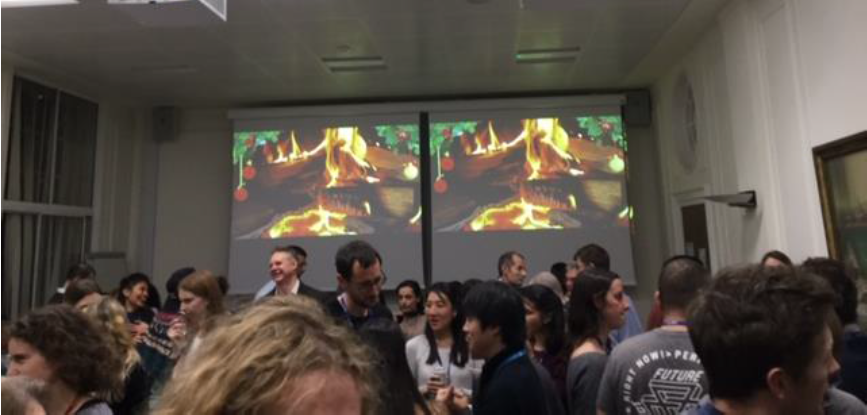
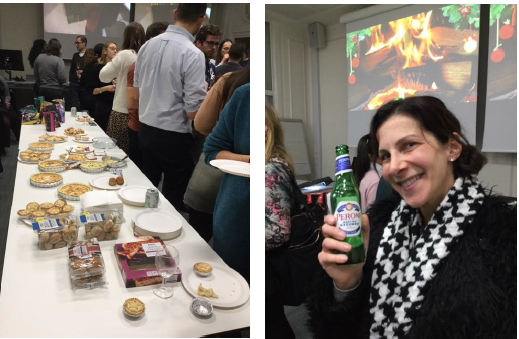
This Christmas party brought students from different departments together and made it so much easier to start talking to each other. We decorated the room, putting up a ‘fire place’ and turned on some Christmas music. The relaxed atmosphere, along with the wine, beer, mince pies and snacks helped everyone to have fun and made interacting and talking to new people so much easier. New friendships and connections were formed as a result.

From 4pm onwards people showed up and had their first drink. Within half an hour, the entire room was full and people were eating and drinking, chatting to colleagues and talking to strangers. They enjoyed quiches, mini pork pies, sausages rolls, crisps and of course mince pies with a sip of bubbly, wine, beer or soft drinks. By 7pm, people were still chatting, but we had to start cleaning up. Rubbish was binned, glasses collected and washed, and the room was cleared of left overs. Several people were happy to help and spoke highly of this successful second Christmas party at St. Mary’s. Afterwards, several people moved to the pubs around to keep the evening going with their new friends. Merry Christmas!