Tag: centreforenvironmentalpolicy

Navigating PhD life as a Parent: Recommendations and resources at Imperial College

Blog by Laila Kasuri, PhD Student, Centre for Environmental Policy

As a mum doing a PhD, I get my fair share of sympathetic yet awkward remarks. After all, very few of my colleagues inhabit the world that I am in. Instead of telling them unrelatable stories of how my kid who is teething kept me up all night,  I tell them about Michelle Yeow’s character, Evelyn, in Everything, Everywhere all at once. Like Evelyn, I often find myself in two different universes, each encapsulating two different identities of myself. In one, I could be learning new approaches and methods, producing posters and learning to present my research in an ‘engaging’ way, while in another universe, I am sleep-training my 1-year-old, attending reading mornings at my 4 year-old’s school and visiting the GP once a week for vaccinations, postpartum visits, measles, colds, vaccinations, and a never-ending slew of other sicknesses. Then, there are the logistical challenges of managing a house, figuring out childcare, coordinating school pick-ups and drop-offs, meal prepping and laundry for a family of four and then trying to find yourself amidst the endless slew of chores. Sometimes, these universes overlap in undesirable ways, for example when I was forced to take a 30-minute nap in an office full of PhD students because of sleep deprivation, only reminding me that I am a mom, a house manager and a PhD student everywhere, all at once.

But I list these challenges not to scare anyone – instead, I want to point out that in spite of these challenges that seem unsurmountable, pursuing a PhD as a mum is very doable, if not conducive to raising kids, because of the flexibility it affords in comparison to full-time work, not to mention rewarding. The goal of this post is to offer insights from my personal journey and to provide information on the resources available at Imperial that one can draw upon for support along the way.

If you are a parent, the first thing to know is that there is no universe, not mine nor Evelyn’s where you can manage a PhD without a good advisor. That is not an easy task, so make sure you choose the best advisor, who will support you as a parent as well. Then, it is imperative to have some degree of financial security. This could be in the form of a scholarship, a studentship, or part-time work. At Imperial, there are many such options available, and many of these are not listed on the website so the best thing to do is to email professors who interest you and ask around. Once you find an advisor who you click with, the funding will follow.

Next up, you will need a plan for childcare, whether it is in the form of a spouse, nanny, au pair, or the lucky few who have the ‘grandma’ close by. Luckily, Imperial has its own on-site nursery which has excellent trained staff, healthy meals and the fee is heavily subsidized. There is a wait-list like most good things, but it isn’t terribly long, so if you apply early enough, you will only need to wait a few months.

For housing, here you will need to seek support outside of Imperial. Through Google and word of mouth, we discovered that there are a handful of non-profit housing associations in London that specifically cater to international student families. They provide affordable yet very desirable housing to students across the various universities of London and while the demand for this housing is high and supply is low, if you search and apply early enough, you have a higher chance of getting a housing spot. We went this route and did luck out and were allocated a spot as soon as we arrived in London.

Even though your journey as a PhD parent will be unique and set you apart from your peers, it need not be socially isolating. Imperial offers a range of activities, events and clubs that you can join. In my case, I often participate at the many events that Imperial specifically organizes for its PhD student families through the Imperial International Family Network. This is a great initiative because I have not heard of other universities within the UK that do this. Through this, I have attended some wonderful plays, shows and events, from Cirque du Soleil to Kew Gardens, all with my family and also met other PhD students across the departments. Through these events, I don’t feel like I am missing out socially, not to mention I spend time with my kids AND my parent colleagues.

On the Tube heading to South Kensington

The last advice I have is on time management and organization. There will be never enough hours in the day to do everything. You will have to build a schedule around your family, because you are a mom doing a PhD, not a PhD student who is parenting. The difference between the two is that your primary responsibility will be taking care and safeguarding your children so your PhD work will be woven into your everyday life, not the other way around. This will usually mean working more from home, spending shorter office hours, saying no to many of the conferences your colleagues are going to and prioritizing the things that need getting done. As much as we would like to have it all, we cannot have it all at the same time.

This last advice is easier said than done, and I imagine it will remain a struggle for parents throughout their lives, outside of a PhD even. But for now, what has helped me the most, and this might resonate with other PhD students who don’t fit the mould – whether they are older, have caring responsibilities or any other attribute that sets them apart – is to surround yourself with peoples, supervisors, staff and colleagues, who will protect and respect your individual journey.

Enjoying an ice-cream outside Sherfield Building

I am not the first mum doing a PhD at Imperial and I won’t be the last. However, I know that our stories are not the norm – indeed we are going against the grain. But there is nothing wrong with forging that path. And for the parents who want to be prospective PhD students here at Imperial, if you want to pursue a doctoral degree, whether it is for a career transition, career progression, personal growth, or simply a passion project, find a good advisor and then take that leap! I say this because not too long ago, I was in your shoes, but I can tell you now that there isn’t anything you can’t do because you’re already doing the hardest (and unpaid) job ever.

“Beauty of a more colourful world” – CEP X Dyson X ICBS PhD Flash Mob #1

Blog by Yurong Yu, PhD student from the Centre for Environmental Policy

In response to the 2021 United Nations Climate Change Conference (COP26) and the environmental crisis, we, a few of PhD students from Centre for Environmental Policy (CEP), Dyson School of Design Engineering (Dyson) and Imperial Business School (ICBS), initiated the event, “Beauty of a More Colourful World”. The event brought together 12 PhD students from 6 departments to showcase how their research ties into addressing environmental problems. 

Students are waiting to sign in (photo credit to Yunwan Tao)

The event took place on Wednesday 1st of December 2021 and was a cross-departmental initiative, aiming to create a unique opportunity to gather researchers and wider college community with shared interests in conservation, biodiversity, sustainability, and climate change & the environment more broadly. The 12 PhD student presenters ran 9 stalls with different topics in the Queen’s Tower Rooms. The detailed topics can be found in the map below.

Event map (created by Judy Xie)

A general public audience from across Imperial were invited to this event. They were encouraged to learn about all 9 different projects and could take part in quizzes with questions spanning each stall to demonstrate their newfound knowledge and win prizes. It was a fun and immersive event which saw high turnout, with attendees enjoying the stalls, snacks, drinks and, of course, prizes!

The prize for quiz winners (photo credit to Yunwan Tao)

As the organizers initiating this event, we (Yurong Yu and Neel Le Penru), realized the complexity of environmental problems requires interdisciplinary collaboration, so interdepartmental communication among researchers is critical. More importantly, it is crucial for junior researchers to learn how to communicate their research to a lay audience, to achieve a great impact. After some discussion, we came up with the idea of inviting interactive and entertaining presentations from multiple departments, using the formats of demos, prototypes, installations, games,  and so on, to inspire members of our Imperial community.  

Yurong and Yuruo played a video of training students to plant coral reef in Hainan, China, as well as a PowerPoint presentation to explain the whole project, receiving great feedback from the audience. This project is part of Yurong’s PhD research of how to increase public awareness of conservation, which can further lead to a fundamental behaviour change.

One group of the presenters, Yurong Yu (CEP) and Yuruo Lin (Department of Life Sciences) are explaining their research on coral reef conservation to the audience (photo credit to Yunwan Tao)

Neel’s presentation featured  a ‘listening station’ with sounds and images from the Bornean rainforest.  His research group  explore EcoAcoustic Monitoring, which involves listening to the natural environment’s soundscape to infer metrics of ecosystem health. They designed and deployed a network of low-cost, open-source field recorders to passively and continuously monitor various environments. They then analysed this data with techniques including machine learning (for predicting aspects of ecosystem health) and, more recently, spatial audio analysis (for locating sounds). As part of the Stability of Altered Forest Ecosystems (SAFE) project, they are specifically using EcoAcoustic Monitoring to explore how human pressures are impacting globally vital rainforest ecosystems by analysing soundscapes across a habitat degredation gradient from primary rainforest to oil palm plantations in Malaysian Borneo.

Neel Le Penru (Dyson & Department of Life Sciences) is playing sounds from the tropical rainforest for an attendee (photo credit to Yunwan Tao)

Francesca Lugaresi and her colleagues from Department of Mechanical Engineering are part of Imperial Hazelab, the research group studying heat transfer, combustion and fire science. Francesca’s research is on improving the façade of a building, to increase its sustainability performance and reduce energy use.  

Francesca Lugaresi (Department of Mechanical Engineering) is explaining the lab work of her research group

Matilde Faralli is a second-year PhD student from Department of Finance, ICBS. Her research is about preserving financial stability. To achieve this, a key part is to understand how to correctly assess and price climate-related risks.  Her work studies: how to incorporate natural hazards such as wildfires, flooding, etc. into expectations and forecasts; how climate risks shape public perception of future natural disasters and the associated economic damages; and, how to forecast adjustments following climate events. 

Matilde Faralli (Business School) is presenting her research about climate risks in daily financial decisions

The event received great feedback from our audience. Professor Mark Burgman, the Director of CEP commented, “It is a very well-organized event, with impressive attendance across Imperial. I enjoyed these presentations very much.” Kevin Sum, our volunteer journalist, interviewed a few attendees on the day, and heard from  Xilan, an MSc student from the Department of Civil and Environmental Engineering,  that the event made her realize there are so many disciplines at Imperial that are environmentrelated, and that they are all so fun!

Some prize winners at the end of the event (photo credit to Yunwan Tao)

Many presenters found the interaction with the audience was beyond their expectations too. Sander Valk (Dyson) found it pleasant that so many students and faculty members are interested in learning his climate change related card game. Victoria Hoare (CEP), Riqi Zhang (CEP), Karina Corada Perez (CEP), Erika Piroli (CEP) and Ric Zhang (Dyson) all found the format of this event very engaging. The quiz competition “nudged” the audience to approach presenters and ask more questions about their research. Sander said, “I loved the format of the event!” 

Please read more about all presentations here: tinyurl.com/cepflashmob1  

Last but not least, we are grateful for the generous financial support from the Graduate School and Centre for Environmental Policy for this event.  

Urban Resilience Dialogues: Growing an online community through a research podcast

By Corina Angheloiu, PhD Student, Centre for Environmental Policy

As the pandemic has unfolded, as PhD students we’ve had to rethink the ways in which we conduct our research, share and discuss findings, as well as build networks and seed collaborations. In this blog post, I’ll share my experience of co-developing a podcast in this attempt to adapt.

Why a podcast?

I’m a third year PhD student in the Centre for Environmental Policy and my research focuses on the ways we can tackle increasing gaps between the knowledge and the implementation of urban resilience. As a field, urban resilience has never seemed more vital over the past year – we’ve seen the ways in which different cities have dealt with challenges posed by a shock such as the pandemic, as well as challenges arising from the overlap of shocks (such as hurricanes or wildfires) or the overlap between the impact of the pandemic and existing underlying stressors such as air pollution, demographics, or inequality.

However, as researchers, practitioners, and policy makers we’ve been lacking spaces to pause and reflect and to dig deeper into the tricky topics that we usually discuss on the sideline of conferences, official events, trainings or social gatherings. With most events being moved online, we’ve been overwhelmed by the volume of urban resilience webinars and conferences. Although these are valuable contributions, I sensed a gap in facilitated dialogues and smaller scale spaces for discussion and connection.

How did we do it?

With this in mind, myself and urban resilience practitioner Chiara Tomaselli decided to start a podcast where we can explore key urban resilience issues with different guests, as well as facilitate discussions among the wider community of resilience professionals. To do so, we decided to record our podcasts using Zoom, and invite members of our wider urban resilience community of practice to join us live for the recording sessions and stay for a conversation and reflections afterward.

So far we’ve produced four episodes and have plans for two more and one recap as part of this first season. In episode 1, we travelled to Santiago de Chile to explore the role of memory in urban resilience with Cristobal Reveco, episode 2 took us to Calgary where we talked about all things feminism with Jenna Dutton, while in episode 3 we discussed the topic of vulnerability in the context of Wayanad with Mrudhula Koshy. Our fourth episode is just out – and this time we interrogate the meaning, application, scaling (and failure) of urban experiments with Federico Savini.

What we’ve learnt

We started thinking about this idea of a podcast with no knowledge of the production skills required so it has felt like a steep learning curve! We’ve found that producing one episode a month is a manageable rhythm with our other commitments, and we usually plan one episode ahead. We’ve also found it really valuable to have a warm up chat with our guest of the month, to bounce ideas about the topic we want to explore and get to know each other.

When we started we thought our topics were relatively niche compared to many other podcasts, especially ones that explore wider urban issues. However, we were blown away by the success so far – we’ve had more than 400 listeners, while the live recording sessions have built a regular attendance of about 10-15 urban resilience professionals with whom we’ve had great conversations at the end of the live recording. This has been a great encouragement and we’re now already thinking of the structure for our next season.

In conclusion, I’d really recommend podcasting as a format for dissemination and engagement – and why not, as a research method in its own right!

You can listen to all the podcast episodes on your app of choice by following this link.

This research podcast has been made possible with financial support from the Graduate School Research Community Fund.

Making sustainability tangible: experiences from a workshop for postgraduate students

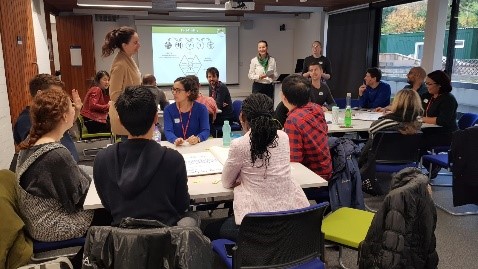
The sustainability workshop was organised by PhD student Vasiliki Kioupi of the Centre for Environmental Policy (CEP) on November 13 2018. It was an opportunity for postgraduate students from different departments of Imperial College London and other Universities to participate in two sessions related to materials and circular economy and assessment of the sustainability of a proposed technology in the context of the problem-solving approach. Moreover, the aim was for the participants to develop skills related to collaboration, systems and strategic thinking.

Twenty PhD students from CEP and Design Engineering Departments as well as a CEP Teaching Fellow and a post-graduate student from Queen Mary University joined the workshop. The event also featured two facilitators for delivering the two sessions; Katherine Whalen from Lund University and Tatiana Vakhitova from Granta Design.

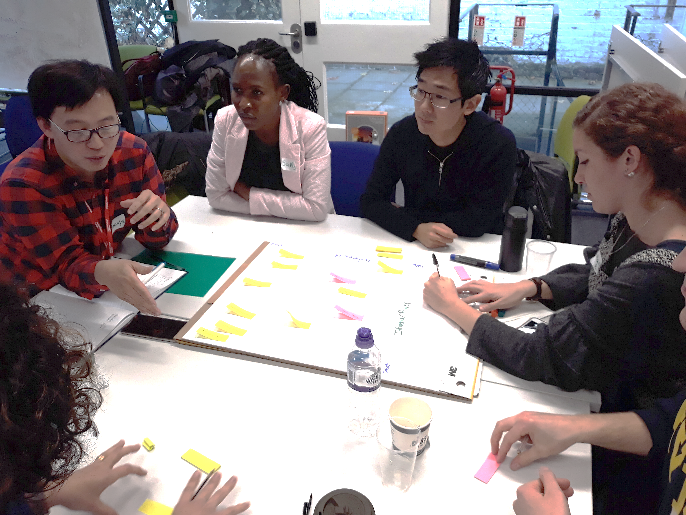
The first session introduced participants to a serious game (In the loop) where they had to work in teams of two and assume the roles of product manufacturing companies making decisions in a changing economic, political and social system. During the reflection session after the game there were lively discussions about elements of competition that surprised the participants, how sustainability is approached, how short and long term strategies affect the course of the game, economic and environmental regulations that should be applied and social issues that emerge from the game. Finally, they came up with suggestions for companies and policy makers in the materials and product manufacturing sector. A very interesting element of the first session was the high degree of participant engagement during the game.

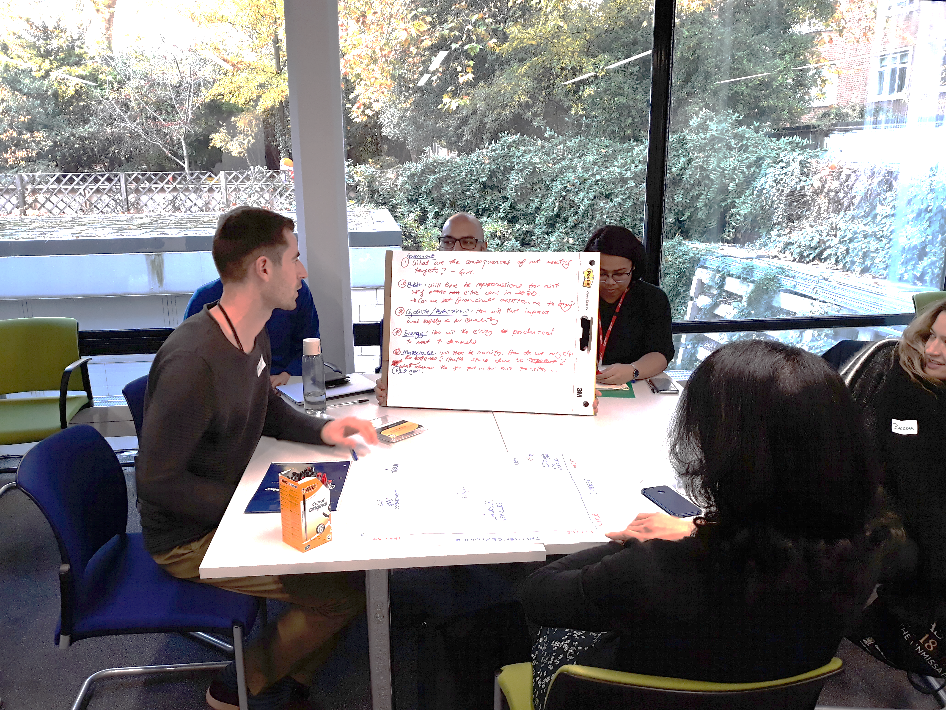
The second session introduced participants to the active learning toolkit “sustainable development”, which is a set of steps that can be used to assess the sustainability of a proposed technology. The case study used was about electric vehicles (EV) and sustainability was assessed on the basis of three capitals: natural, manufactured and social using back-casting, stakeholder analysis, data collection on EV life cycle: CO2 emissions, materials and energy and EU regulations using CES Edupack (software available to ICL students of specific departments via the ICT shop). During the reflection session the participants had the opportunity to discuss not only how this process could be potentially useful for their research or teaching about sustainability, but also the importance of systems thinking in decision-making and interdisciplinary collaboration in addressing sustainability challenges.

Overall, the workshop gave the opportunity to participants to discuss about what sustainability means to them, interact in teams, learn about new concepts, further develop some skills and think about limitations of policy-making as well as suggestions for a more holistic view of sustainability. As for the organiser, it was an important opportunity to develop organisation, collaboration and management skills and use the feedback generated to improve the participant experience and learning outcomes of future workshops.

The workshop was made possible through the generous support of the Graduate School who provided funding and guidance.

CEP Ultimate Team Building Experience

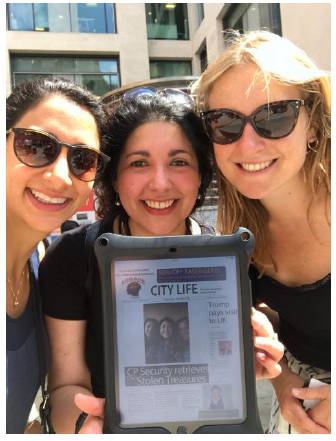
In search of an activity to build bonds and healthy competition between the PhD cohort at the CEP, we found the Ultimate Team Building Experience as the best option. It offered a novel way to explore the City of London helping our first year students to get a taste of what this city has to offer whilst getting to know their peers in an unconventional way. Following up the activity with a lunch discussion helped the students to get familiarized with other research topics and get a sense of the wide variety of topics our department holds. We would definitely recommend this activity to other departments and would love to turn this into an every-year activity.

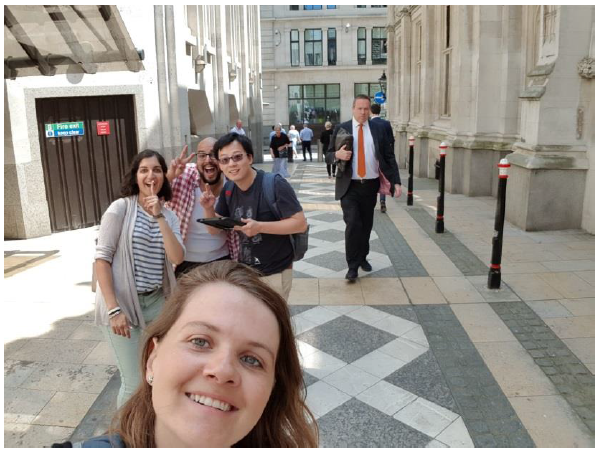
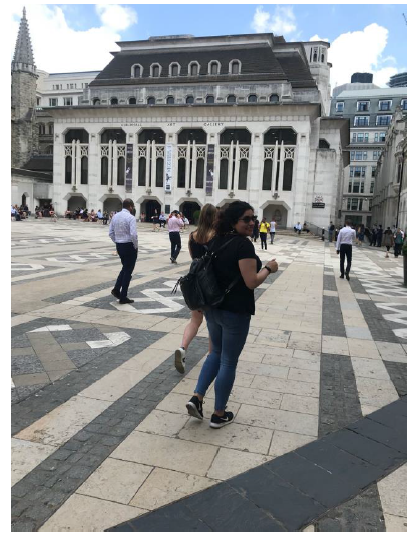
Our day started at 9:00am at the Escape Entertainment offices (ldn.escape-entertainment.com) where we were split into four teams of four people. This were chosen in a way that would promote teams with members of different research areas. We were given instructions on the outdoor game and a tablet with GPS and the riddles to solve, in increasing difficulty levels. We had the good fortune of having the perfect weather for the activity, and we managed to visit iconic places such as Saint Paul’s Cathedral, The Royal Exchange, and the Guildhall art gallery. Even, one of our groups got a taste of the international jet-set scene and spotted Angelina Jolie!… he couldn’t help himself and bragged about it for a week! The entire activity culminated with a lunch the day after where we had time to talk about how this activity had helped bringing a sense of community and to share the different research topics everyone is involved in.

Overall the activity was a big success. Everyone enjoyed it and said that got more out of it than they expected. As part of the discussion during lunch, some ideas on how to improve came up, such as:

  • Attendance rates could improve. Although at the end we had close to 20 participants,these were the ones that are normally very much involved in departmental activities. In future editions, a bigger effort could be done to promote the event in a way that appeals to those less interested.
  • The activity had to be split in two days mainly because of other research commitments. In the future, supervisors could be more flexible and even encourage their entire teams to take part.

Finally, we would like to thank the Graduate School for providing sponsorship for this event via the Research Community Fund.