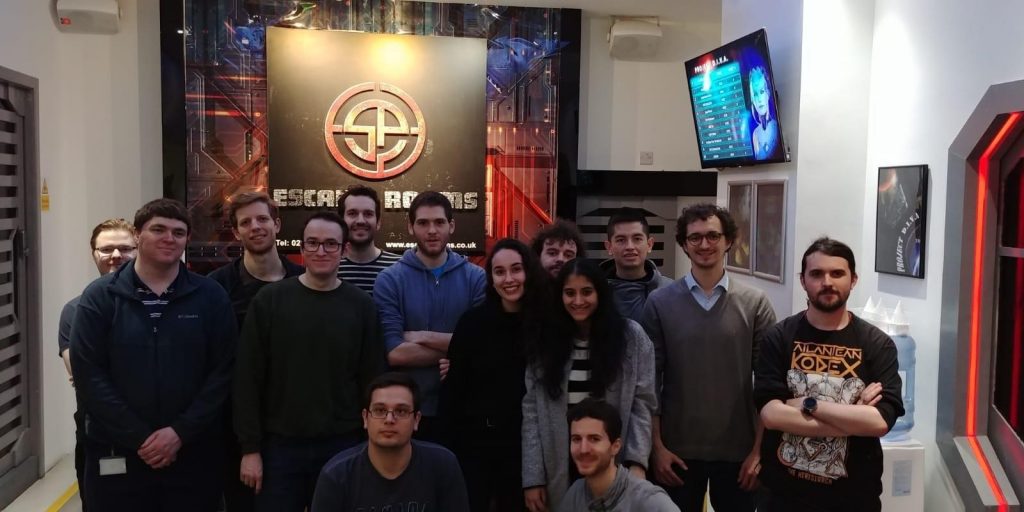
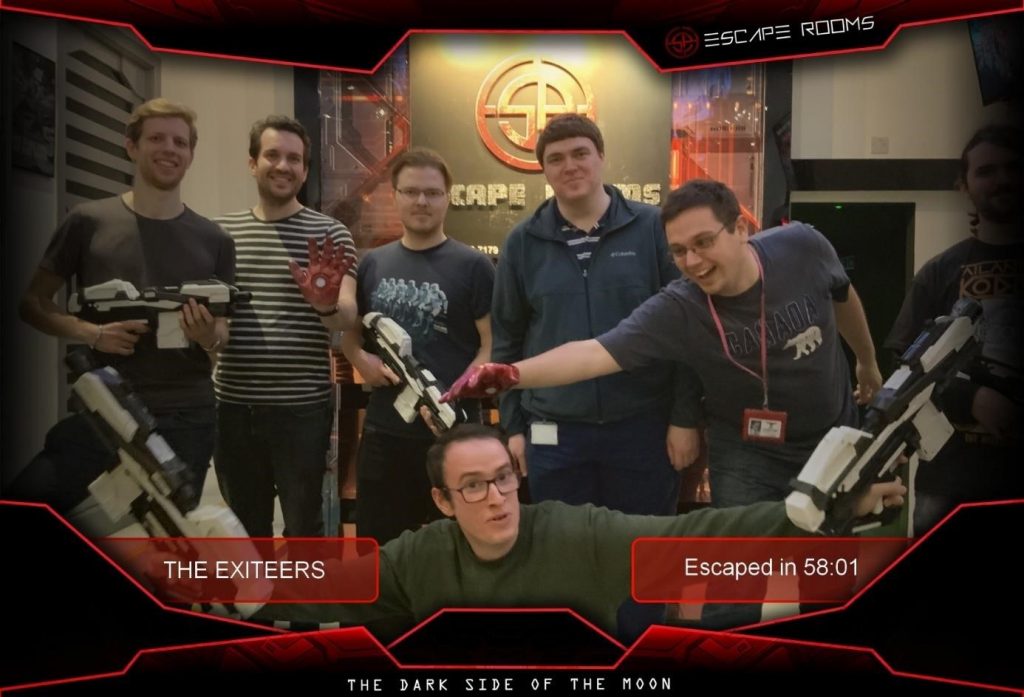
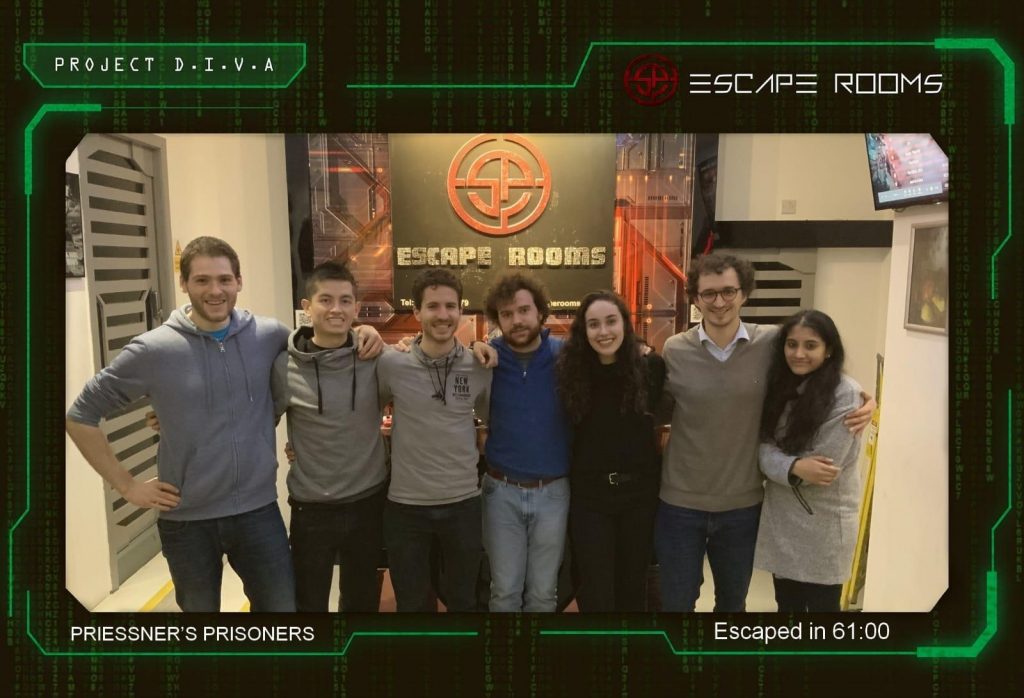
On Wednesday 13th of February 2019, the second event in the Cross-CDT series took place – a total of 14 PhD students from different 3 different CDTs gathered to face the tasks that needed to be solved. The students divided in to two teams and were required to work together to solve different puzzles in order to beat the clock (and each other), to escape and unlock their respective ‘rooms’. As this was the second of the scheduled activities, many of the students were already acquainted and were able to jump to the tasks at hand instantly.
The theme of the first room was “Project D.I.V.A” and the second, “Dark side of the moon”. Both adventures had their own unique set of fun challenges, questions and tasks which needed to be solved and which put our team work and skills of inquiry to the test. It was a welcome distraction from our PhD work and a reminder that from time to time, we also need to enjoy ourselves.
After an initial struggle both teams managed to escape their respective rooms – rooms. It was great to receive the “Mission accomplished” announcement!
Following the escape room activity, the students who still had some energy left, decided to go to the pub to reward their hard work. This gave the group the opportunity to chat and share experiences.
Overall it was a great event and we are all looking forward to the next!
We would like to extend our thanks to the Graduate School for financially supporting this cohort building activity.
Britain is at the forefront of energy system transformation. In 2018, 53% of electricity consumed came from low-carbon generators, up from 25% in 2009. As a result, carbon intensity halved from nearly 500 to 217 gCO2/MWh (Electric Insights). However, as an island with limited interconnection to its neighbours, the stakes are particularly high to achieve further reductions down to 100 gco2/MWh by 2030 (Fifth Carbon Budget).
At the same time, me and fellow PhD students miss the exchange amongst us as well as with other academic, industry and policy experts on energy system transformation. What is missing is a closeknit energy system community that can easily discuss transformation pathways. Although individually, research, business and policy-making in energy, is world-leading, the community is siloed. In addition, there is no forum within Imperial where students working in this field can easily exchange information and discuss.
The missing link is a platform that offers a direct (!) communication channel between students and experts of all sectors and brings them together to openly discuss ongoing work. That’s why I set up PowerSwarm.
Power Swarm is an open, free network of energy system transformation experts across academia, industry and policy. It is not a single event, but rather has two key components:
E-mail list: Every Power Swarmer can write to this list to advertise jobs, papers, conferences, etc., and ask questions related to energy system transformation. The purpose is to leverage swarm intelligence for better information exchange and more efficient problem-solving. When I e-mailed the group about recent reports on the amount of storage required in future energy system scenarios, I received more than 15 reports I hadn’t been aware of. That’s my PhD literature review sorted!
Workshops: For a different topic each month, academic, industry and policy experts speak about their ongoing work in this area. Two hours with five presentations of ten minutes ensure a concise format that allows for real, content-based, cross-sectoral discussions. No need for shiny result slides, rather a discussion of current roadblocks. The workshops take place from 5-7pm and are usually attended by 20-30 people working in the particular field. Past meetings were on ‘Modelling Renewables’, ‘Value of Storage’, ‘Energy Trading’ and ‘Hydrogen’. My roadblock was how to quantify the value of energy storage and the advice from experts of Pivot Power, Aurora, RenewablesUK, and others came in very handy.
Last week’s workshop (21st February) was already our fourth one and focussed on the future role of ‘Hydrogen’ in the UK. 20 to 30 attendees (MScs, PhDs, researchers, NGOs, industry), discussed with speakers from academia (Imperial, UCL), consulting (Element Energy, E4Tech), industry (ITM Power) and policy (BEIS) about the current roadblocks to decarbonising energy, transport, heat and industry with hydrogen. The event was followed by drinks at Eastside where students could network with professionals and continue the discussion.
Power Swarm thereby supports Imperial’s research network and fosters exchange of research insights on energy across departments, connects Imperial’s research community to the wider academic and (most importantly) industry and policy community working on energy, and establishes a forum for students to network among each other, with the Imperial community, and with industry and policy experts.
Power Swarm has already more than 200 members in the energy sector. If you think you could benefit from the network, join!
We would like to extend our thanks to the Graduate School for supporting this Research Community Fund activity.
The first Power Swarm workshop on Modelling Renewables on 18th October 2018.The fourth Power Swarm workshop on Hydrogen on 21st February 2019.
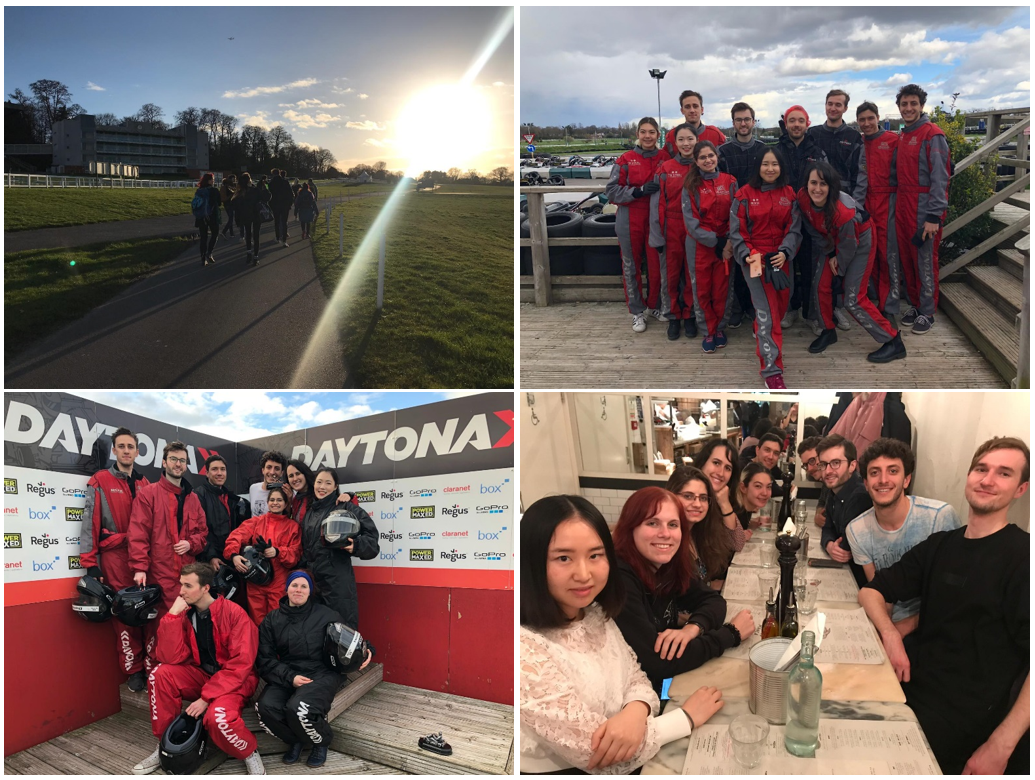
On Sunday the 17th of March 2019, the first-year PhD students from the Bioengineering Department enjoyed an active day out which started with a go-karting race in Sandown Park and culminated in a joyful social over dinner at Franco Manca in Earl’s Court. The students, who organised the outing on the WhatsApp group they created at the beginning of the year, sought to reinforce the professional ties and personal bonds they developed since the first social at the beginning of February. The event was made possible thanks to funding obtained through the Imperial College London Graduate School from the Research Community Fund, for which the students are very grateful.
The day out started at 1 P.M. when the students met at the South Kensington Campus to catch a minibus ride they’d booked, and headed out for Sandown Park. The bus quickly filled with a variety of overlapping conversations with topics ranging from technical comparisons of experimental methodologies to the importance of engaging as Teaching Assistants for one’s own self-development. Such conversations promote collaboration: as an example, a professional connection between two students which emerged in the previous social event resulted in one’s participation in the other’s lab work as a pilot subject – allowing them to further tune their experimental design through discussion other peers. As one student put it: “It’s also nice to connect with people who I might be able to collaborate with – providing opportunities for similar connections to occur is essential and may result in fruitful collaborations and exchanges of perspectives of the challenges PhD students face daily”.
As the minibus approached the venue, those that had been go-karting before shared their accounts of previous experiences. The weather gave some signs of worsening before clearing up, fortunately – the track was just made humid enough to make the spin-outs funnier to recount on the minibus on the way back. The student engaged in the race showing their competitive spirits and very much enjoyed the challenge of handling the karts in damp conditions. The event ended with pizzata – Italian for a pizza get together – in Franco Manca at Earl’s Court, where the room filled with friendly conversation.
Indeed, aside from the aspect of providing an opportunity to develop professional relationships for direct scientific collaboration, a very important aspect of social interaction is to web a support network made of personal relationships between the students. This network enables students to manage any work-related anxiety, stress or loneliness by having a go-to person in a similar professional situation to them. The event was designed to facilitate a combination of the tension-releasing adrenaline-inducing sporting activity and the relaxed and informal follow-on dinner and was a great success! Everyone thoroughly enjoyed the day out, as one student’s reaction reveals: “We all had a fantastic time, relaxing, having fun and forgetting about work for a few hours! Very much looking forward to seeing my colleagues again for another event in a few weeks’ time!”
On Saturday the 2nd of February 2019, the first-year PhDs from the Bioengineering Department went for a nice evening out, that started with an escape room followed by a nice Italian dinner.
The objective of this activity was fomenting a good relationship and friendship between the first-year PhD students from the Bioengineering Department, as we don’t all know each other despite constantly crossing each other in the hallways. We are all now starting a 3-4 year journey where these relationships are going to be invaluable, not only on a personal level but also on the professional one, as thriving engineering usually requires (besides obvious personal effort) help/knowledge from others and team effort. Now we’ll know who to ask for help if we run into a problem that it is not in our main domain or field!
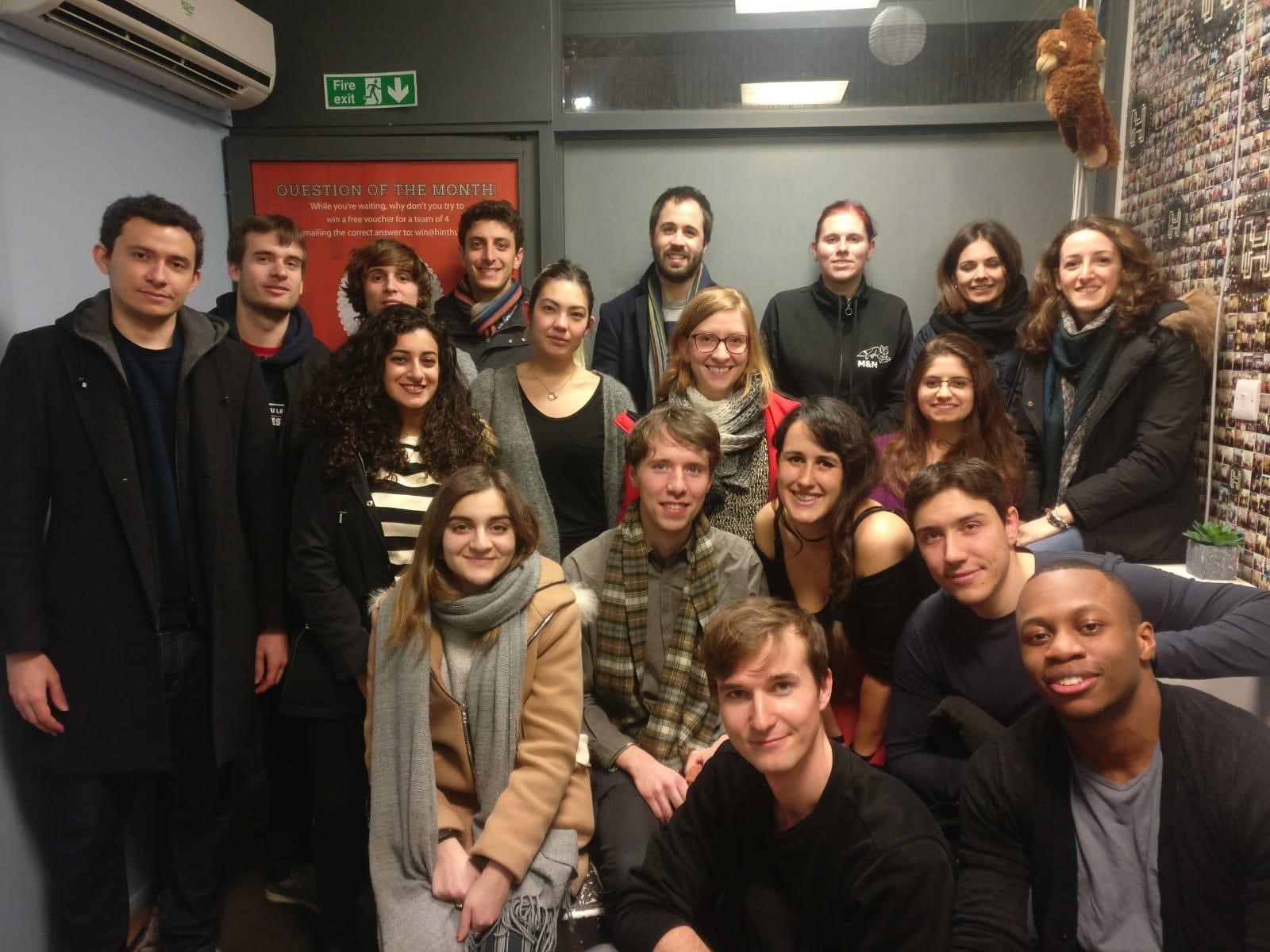
The evening started at 6:25pm as we gathered in the entrance of the escape room. For some it was their first time on an escape room, while for others it was another opportunity more to prove our intellects. We randomly divided into four teams and the game masters of HintHunt London led us to the entrance of our respective rooms and introduced us into the story we were going to play: for some of us it was about stopping an embezzler from doing a transaction while for others it was about getting out of a Japanese-themed room in less than an hour. After some stress because the time was running out, through teamwork and deduction skills, all the teams managed to get out of their rooms!
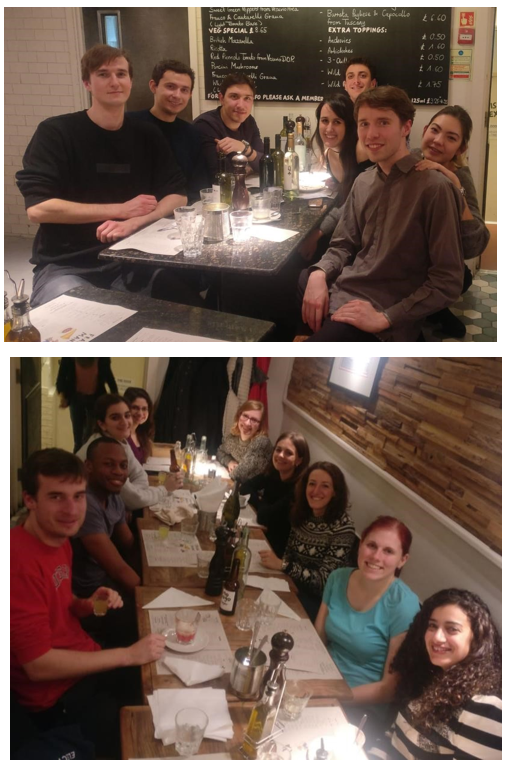
After this, we walked to Franco Manca, our destination for dinner, while getting to know each other. Once there, our lovely waiters led us to two adjacent tables where we had some great burrata as a starter, delicious pizza for main, and tiramisu for dessert, all accompanied by some wine. Even our Italian peers were satisfied with the feast!
After the dinner, some decided to retreat home, tired from the evening out, while some of us decided to move the evening to a pub, where we continued to get to know each other and had a few more drinks.
The event was a total success! We had lots of fun, used our heads, filled out tummies and had an overall great night! A big thank you to the Graduate School for funding this event, we’ll be making it an annual or even semesterly event!
Workshop On Numerical methods in KomplexitY (WONKY)
08.10.18 to 10.10.18
Amberley, South Downs Way
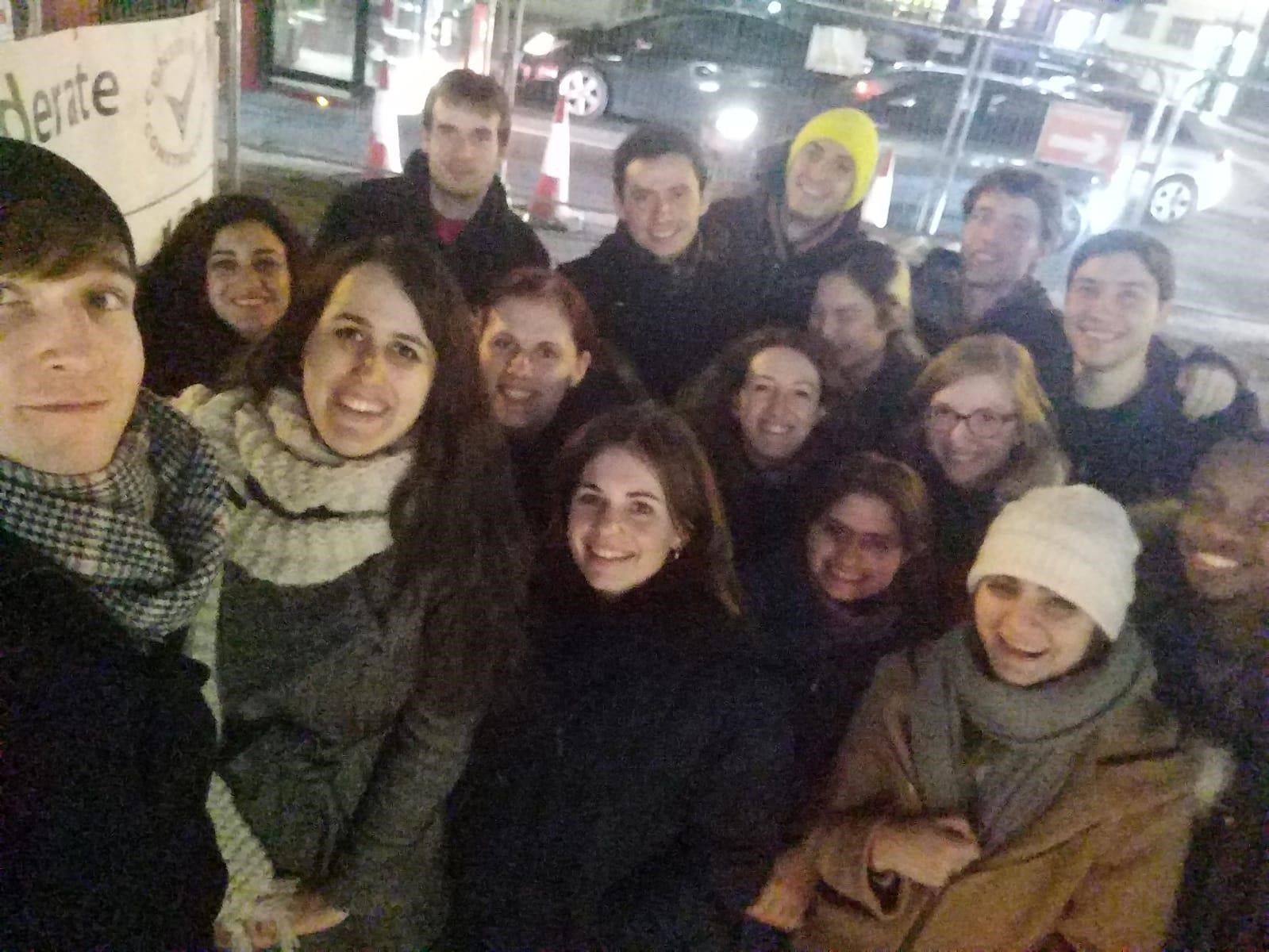
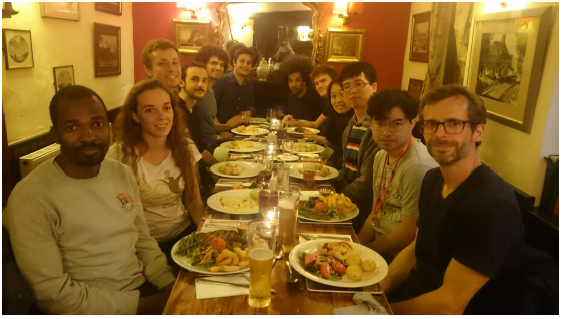
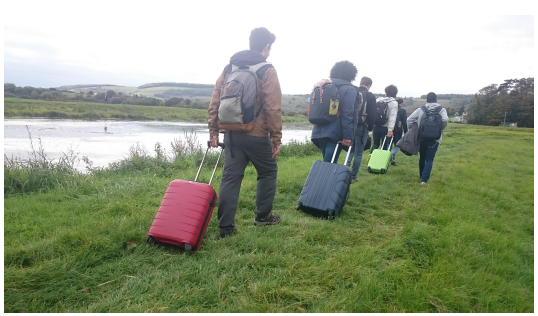
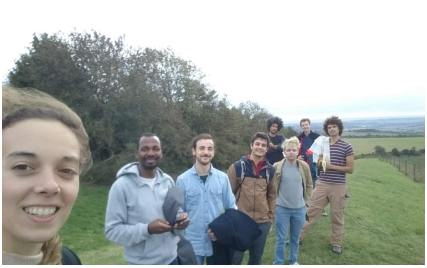
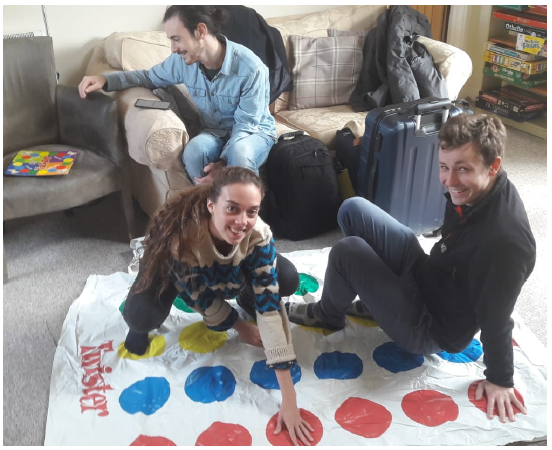
Our group of 13 doctoral students at the Centre for Complexity Science at Imperial College held a trip of three days in the National Park of the South Downs Way. We stayed in a bunkhouse in Amberley, where we carried out a little workshop on numerical methods and combined it with long strolls in the green countryside. We had a good time and plenty of discussions.
Some years ago, a few of us had the idea of organising a small workshop to share tips and tricks for numerical methods in our research. Specifically it was an opportunity to discuss methods with some practical value seldom discussed in seminars. The workshop idea lay simmering for some time until we got the funding from the Research Community Fund, we then decided to combine the workshop with a jaunt in the countryside where spent a good time together and welcomed new students to the group. We would like to thank the Graduate School for sponsoring the event and for enabling our group to complete this activity.
We discussed the following topics (see our brochure): • Project scaffolding • Managing code • Managing data • Statistical inferences • Machine learning methods • Does and don’ts of programming • Plotting • Using the Imperial Cluster • First approach to data analysis • Blockchain • Use of Profilers • Julia
And did the following excursions:
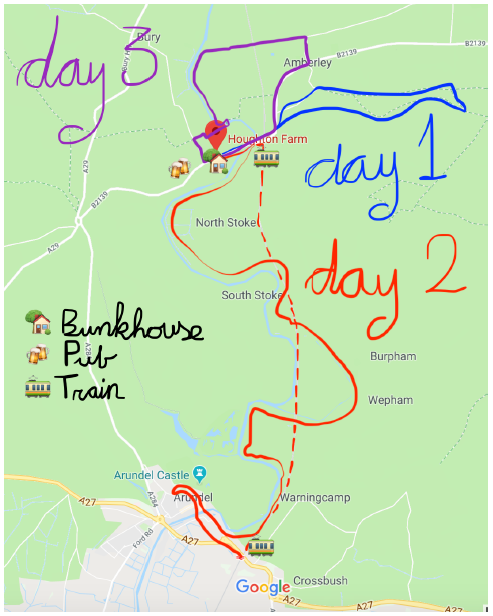
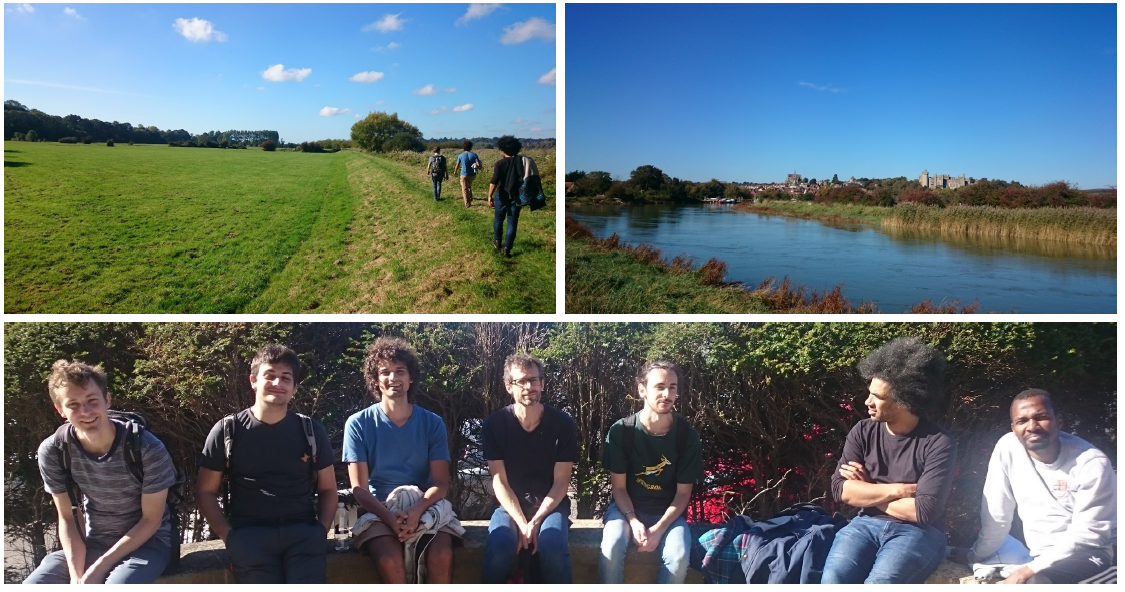
Day 1: We went on a loop starting at the bunkhouse, following the South Downs Way until the Rackham Banks and back.
Day 2: We walked by the side of the river Arun until we arrived to Arundel, where we walked around the centre, visited historical buildings and took the train back. It took 4 minutes by train what had taken us 3 hours to do on foot!
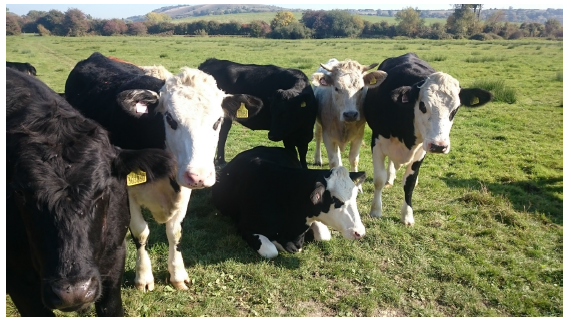
Day 3: We went to Amberley and then walked towards Bury until we reached the river, walked by the riverside until we found a bridge, walked a bit more between farms and closed the loop at the bunkhouse. On the way, we met a friendly group of cows, who were very eager to join us.
by Janet Deane, Research Assistant in the Department of Surgery and Cancer
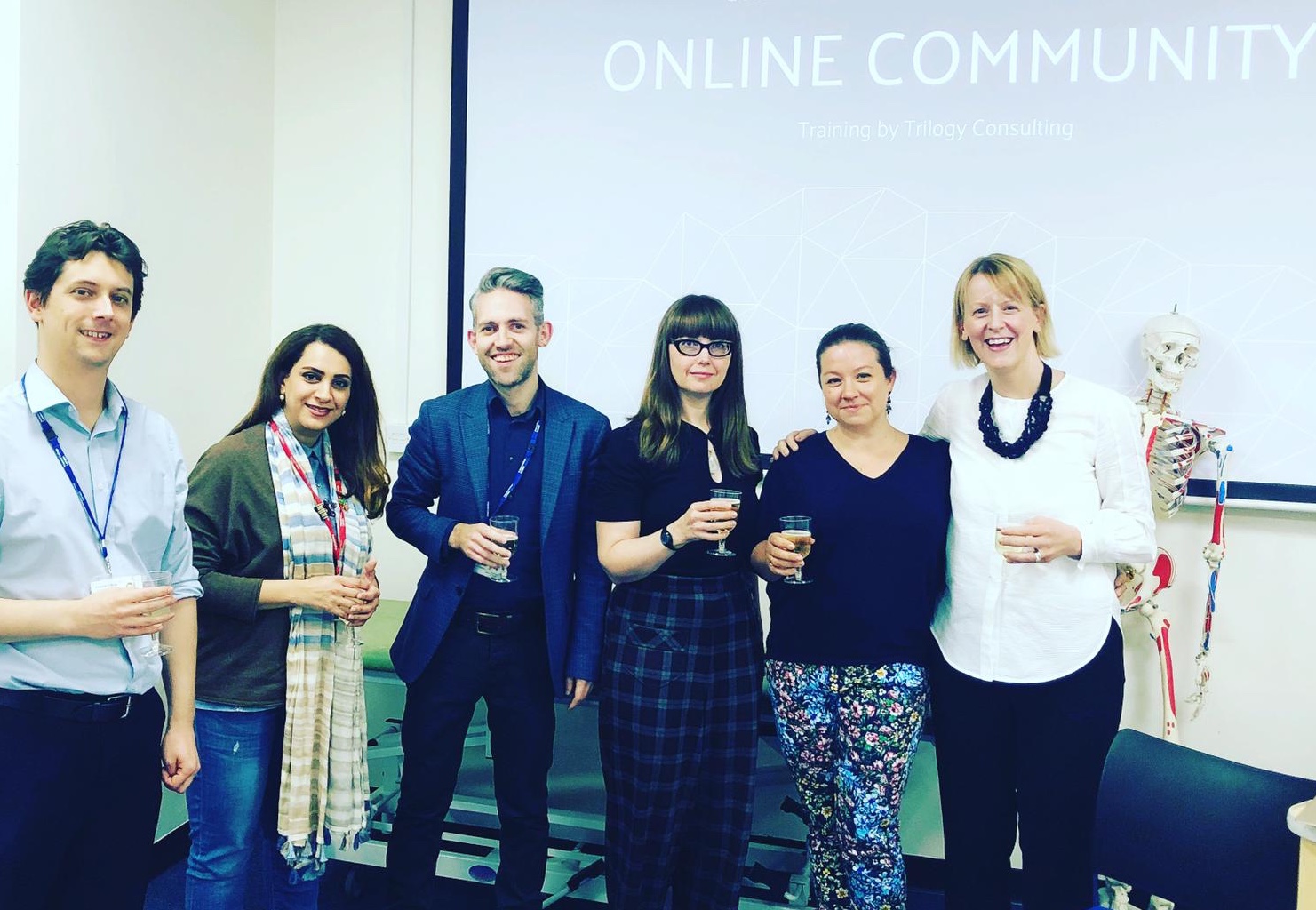
On Thursday 18th October at the MSK LAB at Imperial College London, we started the development of a secure and moderated peer support Facebook Group for AHPs in academic research.
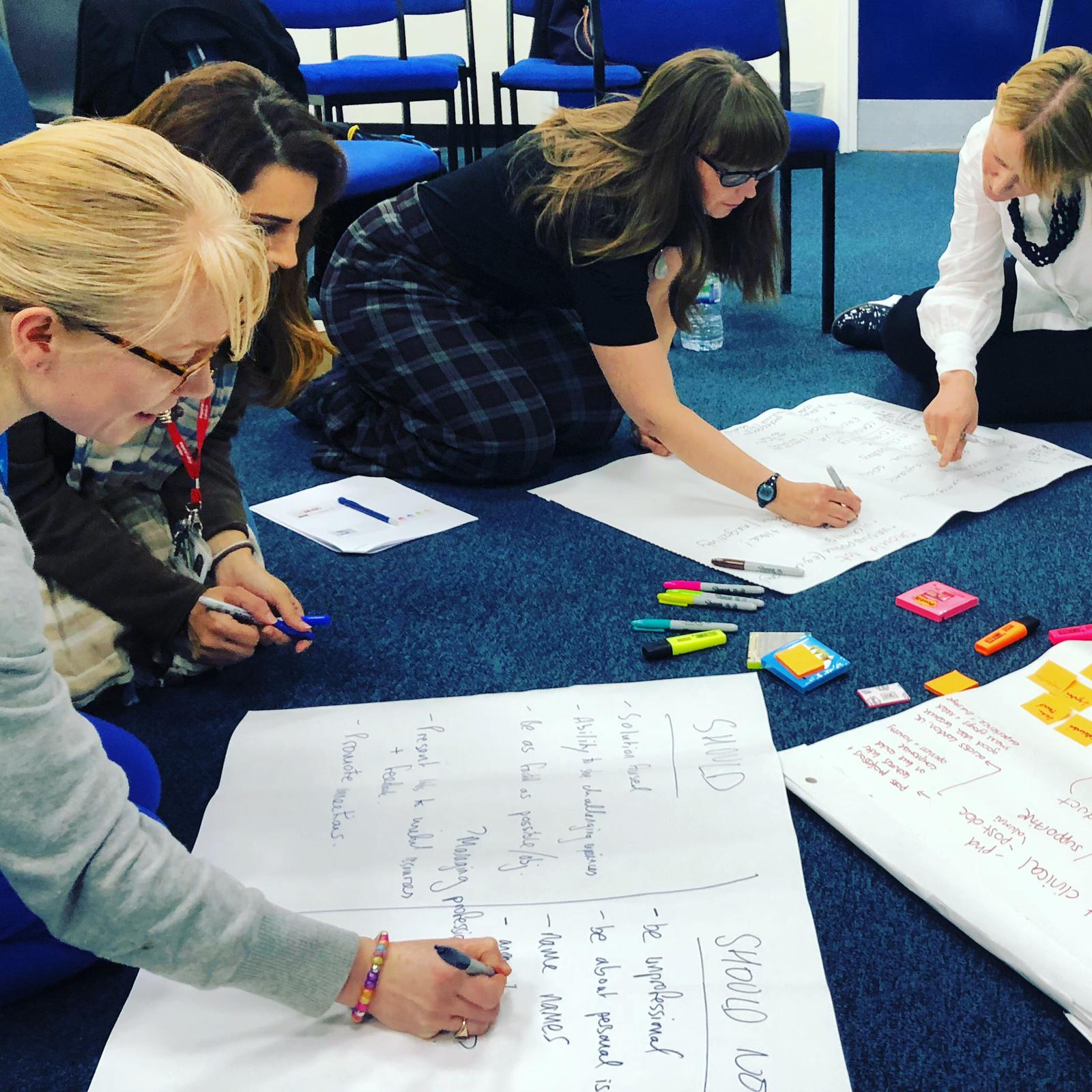
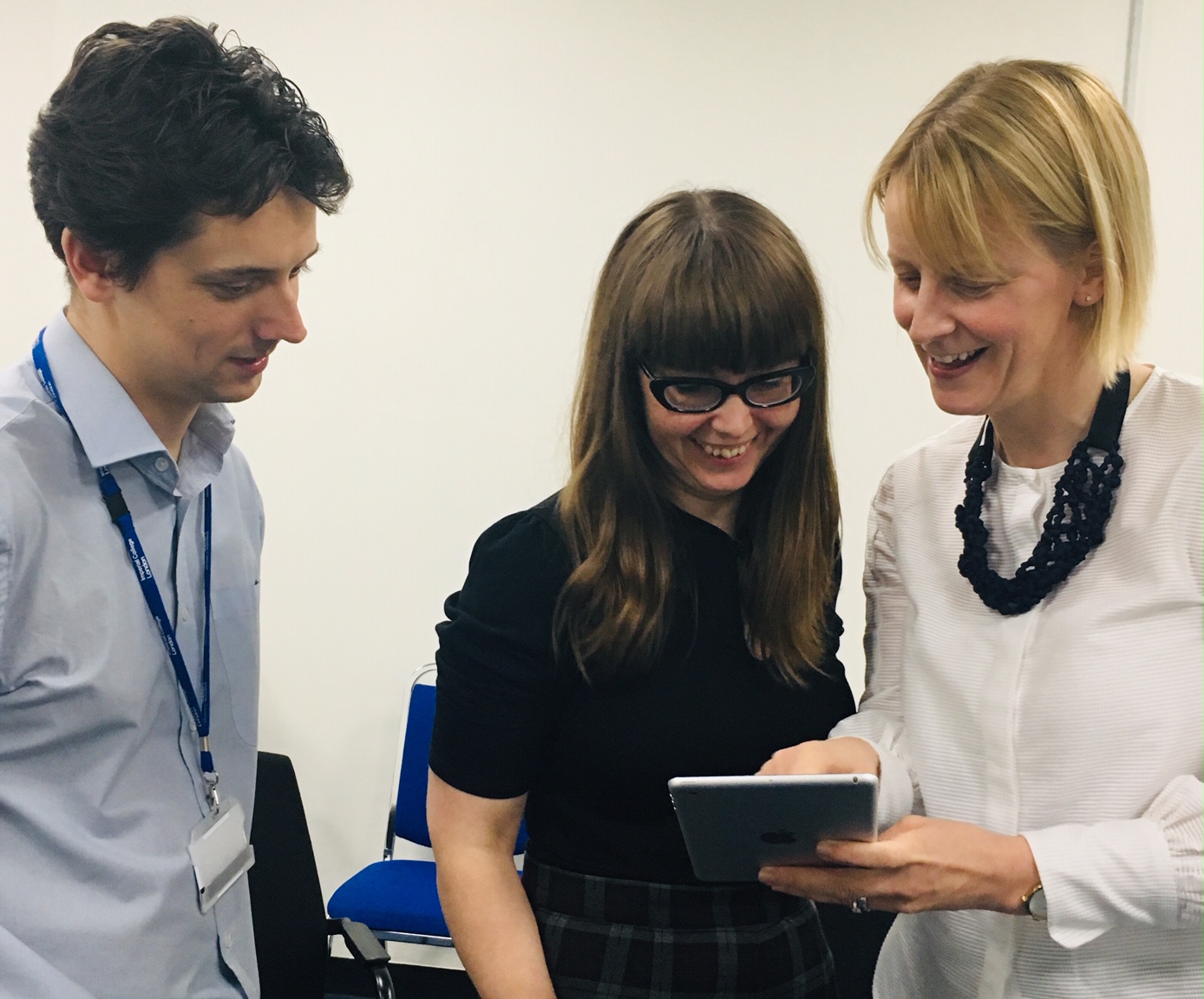
Natasha Wallace from Trilogy Consulting, an external expert in the creation of online professional platforms was invited to provide training. At the training session, AHPs could discuss their needs, learn how to share knowledge using innovative technologies, and collectively help to determine the vision of the group.
AHPs (Physiotherapists, Radiographers, Occupational therapists and Speech therapists) are becoming increasingly involved in research that has the potential to change the quality of lives of patients with various health conditions.
As a result, more peer support is required by AHP students to support their transition from the clinical to an inter-professional, laboratory-based context at Imperial College. AHP doctoral and research students work in a wide variety of roles, departments and locations so it is important we have a central online resource to build a support network and research community.
The Graduate School’s research community fund enabled us to begin the development of an online resource, to learn about how to brand and market a professional community, determining membership admission, curation and creation of content, online engagement and to learn about monitoring performance and growth.
This venture has been since supported by the Healthcare Professional Academic Group (HPAG) at Imperial College and the Council for Allied Health Professions Research (CAHPR), and this training marked the humble beginnings of a new type of digital resource.
With no previous experience in developing an online professional platform, I was unaware of the time this would take and the amount of honing that this would require. The support of fellow AHPs has been vital and valuable in this process. The ongoing success of this resource cannot be achieved by individuals working in isolation, and requires commitment and collaboration from AHP members as we learn how to support our community together.
I am extremely proud of what we have achieved so far and look forward to many students benefiting from this resource in the future.
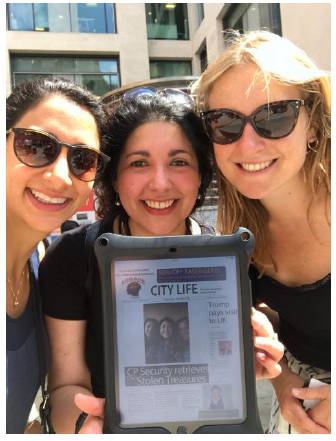
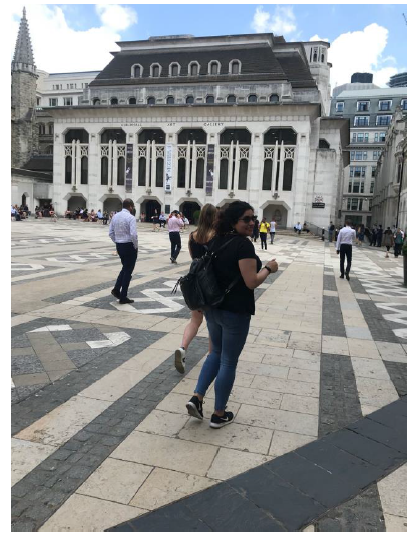
In search of an activity to build bonds and healthy competition between the PhD cohort at the CEP, we found the Ultimate Team Building Experience as the best option. It offered a novel way to explore the City of London helping our first year students to get a taste of what this city has to offer whilst getting to know their peers in an unconventional way. Following up the activity with a lunch discussion helped the students to get familiarized with other research topics and get a sense of the wide variety of topics our department holds. We would definitely recommend this activity to other departments and would love to turn this into an every-year activity.
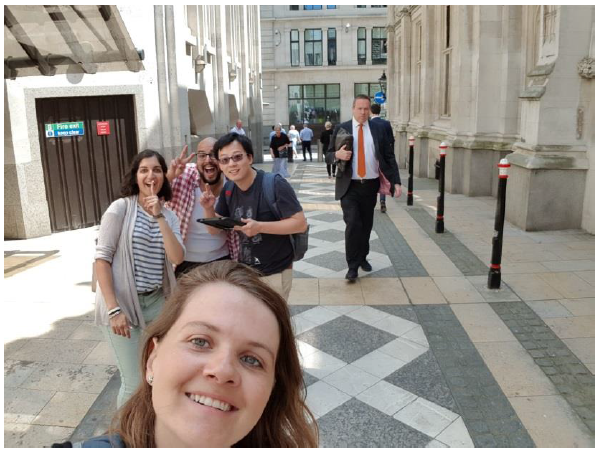
Our day started at 9:00am at the Escape Entertainment offices (ldn.escape-entertainment.com) where we were split into four teams of four people. This were chosen in a way that would promote teams with members of different research areas. We were given instructions on the outdoor game and a tablet with GPS and the riddles to solve, in increasing difficulty levels. We had the good fortune of having the perfect weather for the activity, and we managed to visit iconic places such as Saint Paul’s Cathedral, The Royal Exchange, and the Guildhall art gallery. Even, one of our groups got a taste of the international jet-set scene and spotted Angelina Jolie!… he couldn’t help himself and bragged about it for a week! The entire activity culminated with a lunch the day after where we had time to talk about how this activity had helped bringing a sense of community and to share the different research topics everyone is involved in.
Overall the activity was a big success. Everyone enjoyed it and said that got more out of it than they expected. As part of the discussion during lunch, some ideas on how to improve came up, such as:
Attendance rates could improve. Although at the end we had close to 20 participants,these were the ones that are normally very much involved in departmental activities. In future editions, a bigger effort could be done to promote the event in a way that appeals to those less interested.
The activity had to be split in two days mainly because of other research commitments. In the future, supervisors could be more flexible and even encourage their entire teams to take part.
Finally, we would like to thank the Graduate School for providing sponsorship for this event via the Research Community Fund.
by Lorena Fernanda dos Santos de Souza, PhD student in the Department of Chemical Engineering
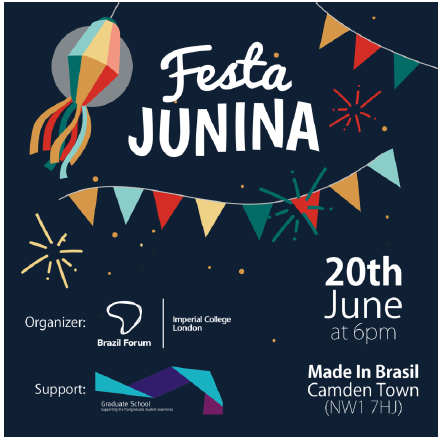
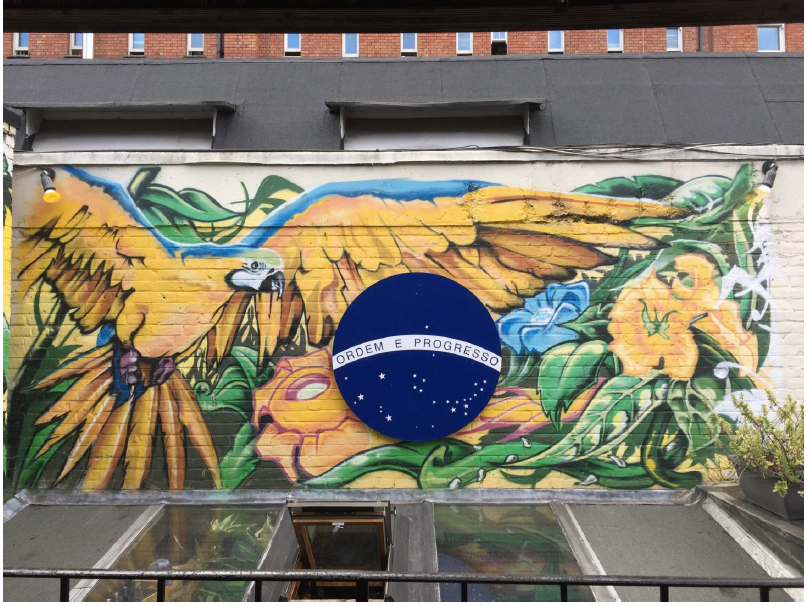
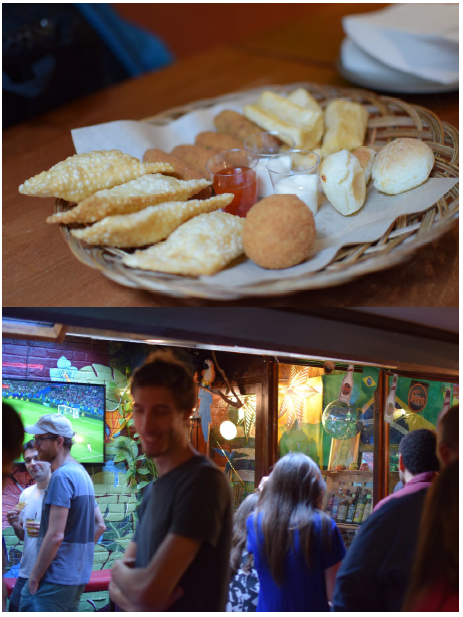
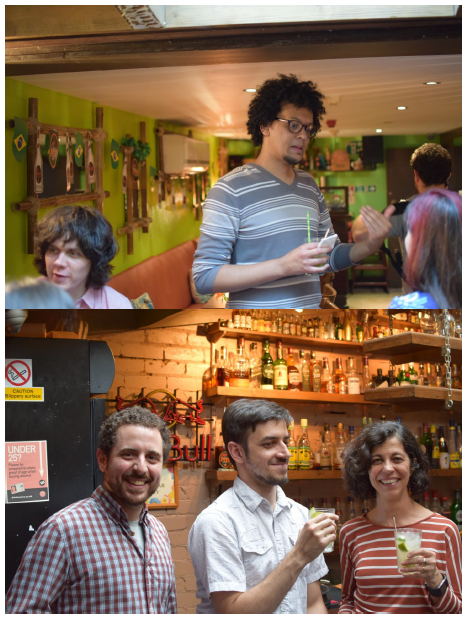
We are the Student Committee of the Imperial College Brazil Forum, and on June 20th (Wednesday) we organized a happy hour to promote the Brazilian culture and foster networking among Brazilian students and international members of the Forum. In a ‘Festa Junina’ themed event, we gathered 26 people in a cross-department get together in the authentic Brazilian restaurant ‘Made in Brasil’, in Camden Town. In Brazil, June is the month to commemorate St John’s day with a “Festa Junina”, the second most important popular celebration in the Brazilian culture.
Apart from celebrating our culture, the main aim of this happy hour was to strengthen the links among Brazilian research students and research students involved or interested in Brazilian issues. Despite being based in the same departments, and sometimes even in the same floor, many Brazilian students/staff do not know each other. New opportunities for collaborations could come, but due to poor networking, it does not happen. This Graduate School-funded event gave new students and postdocs the chance to meet each other and interact with senior members of the Forum. The president of the IC Brazil Forum, Dr Vania Braga, took part in the happy hour, which was particularly important to present initiatives of the Forum to potential new members, and to share our experiences at Imperial.
The feedback we received from those who came along was extremely positive. The participants mainly appreciated the opportunity to meet and network in a friendly environment with Brazilians students/staff and researchers interested in Brazilian issues. They also suggested to have more get-togethers similar to this one, for example every 2/3 months. We believe the event provided the first step to create a more integrated community at Imperial and, hopefully, collaboration among different areas in order to develop interdisciplinary researches. And for that, we are extremely satisfied. We are grateful to the Graduate School for providing funding to the ‘Festa Junina’. If you are interested on any tips on how to organize an event to integrate students/staff, feel free to contact us (l.dos-santos-de-souza14@imperial.ac.uk).
Few things are more effective in motivating PhD students and researchers to take a break from their ‘Nobel Prize-winning’ research than pizza, drinks and the promise of an interesting
talk.
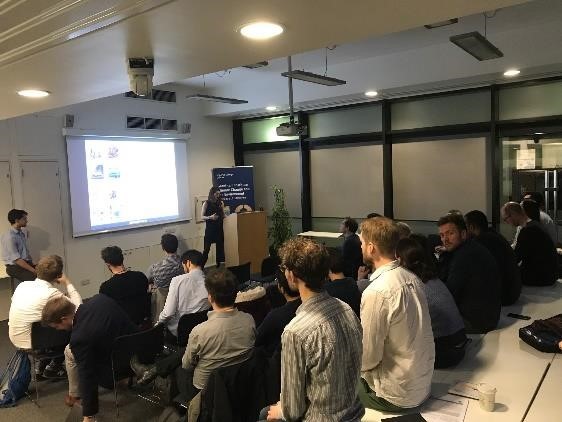
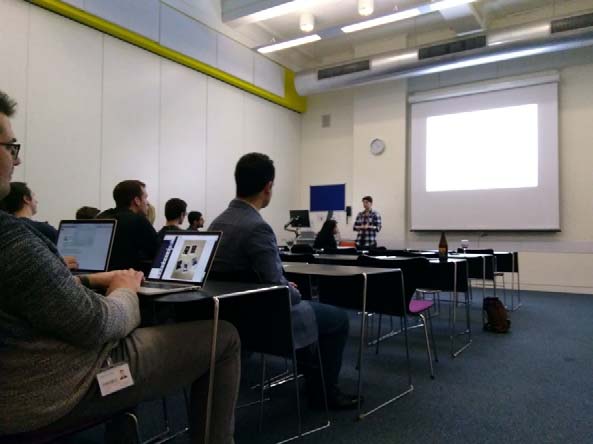
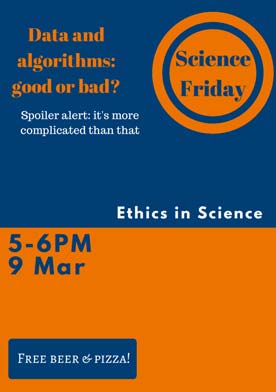
The Bioengineering PhD student representatives organised a talk on data ethics on Friday 9th of March. The topic was widely popular and the event was well-attended. There were some lively discussions over pizza and drinks in room 301.C at the Royal School of Mines Building.
Is data science intrinsically ethically good?
People mingled before the start of the talk, to get the food distraction out of the way, then Dr. Stefania Garasto started her talk titled “Data and algorithms: good or bad? Spoiler
alert: It is more complicated than that.”
She posed the question on whether data science is intrinsically ethically good and her presentation went on to show that algorithms are not ethically neutral because the values
and biases of their designers are reflected in the code. For example, Google shows high-paying job ads preferentially to men and ads with the word “arrest” are more likely to
appear when searching black-sounding names.
There are ethical concerns for current data practices. These practices beg such questions as: Do people have real control over their data? How can bias in the data be corrected? Who is responsible for the ethical failure of an algorithm? And these questions are hard to answer.
Stef presented the controversy over a Facebook case study wherein Facebook manipulated its users’ emotions without their knowledge by influencing their news feeds.
Many in the audience had not heard of this case and no one supported the ethics of this practice.
Stef went on to discuss how ethical data practices might be ensured. One is by law, for example, the GDPR principles. However, people pointed out that this could be restrictive
in data mining and that it might not cover everything, and it would at least be valid for everyone. Another option is to develop a sort of data code of conduct. Yet it was also
argued that this would be hard to enforce and this may vary from one organization to another.
Discussion continued with more pizza and drinks, and people shared with one another whether they were on social media or not and what their privacy settings were.
This event provided a good opportunity for the research students to get to know one another. There was good feedback from both students and other researcher guests about how the talk was a
good reminder to be vigilant about exercising control over our data.
We want to thank the Graduate School for funding this event and helping Bioengineering become a friendly research community.
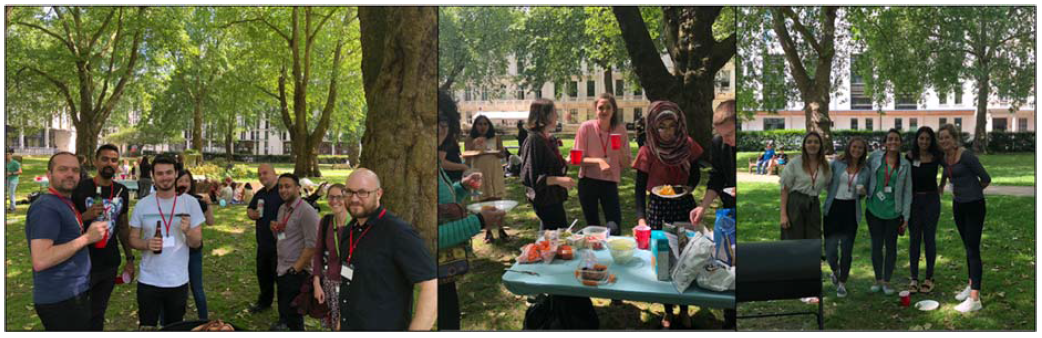
The CSM Summer Social BBQ that took place on the Friday 8th of June in Prince’s Garden was a real success. About 70 persons came along that afternoon, from 12.30 pm to late at night. The aim of this informal lunch was to give a chance for the PhD students to catch up with their peers, discuss some of their research projects with more expert persons, or even to find career advices.
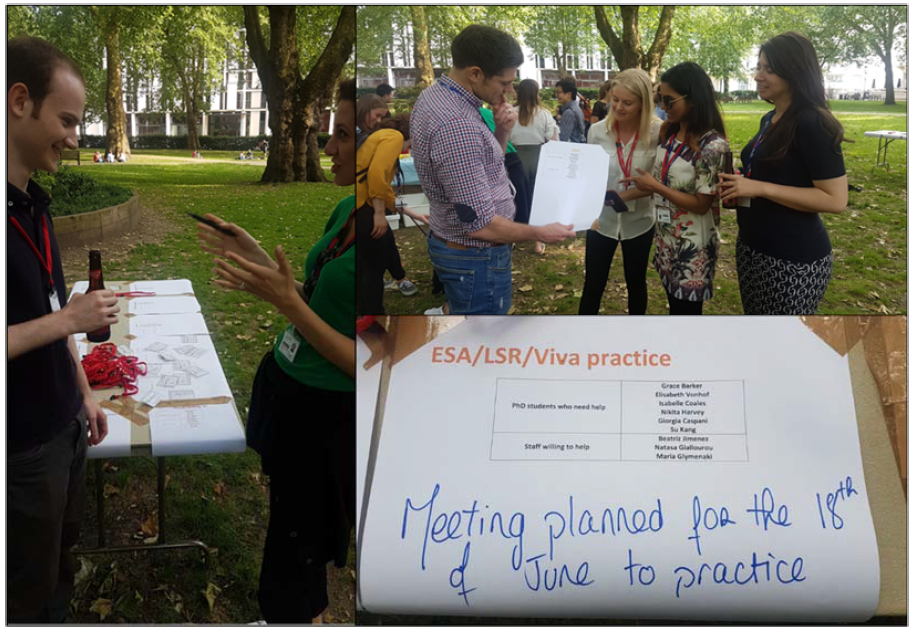
To facilitate the discussion, each PhD students had to chose three subjects that he felt like he needed help with. On the other hand, each staff had chosen three subjects in which they could give advices to PhD students. In the following pictures we can see some examples such as a last‐year PhD student (Peter Bradshaw) receiving advices from a post‐doc (Natasa Giallourou) about how to write efficiently a thesis, or also the Dr Jon Swann, reader in Microbiomics and Human Development, talking about NMR with a part of his team. Some boards were also made available, per subjects, so PhD students could find more easily the staff who could help them for the subjects they chose to talk about (1st year PhD students were happy to find some peers with whom they have been able to practice their Early Stage Review later in the month).
PhD students were particularly lucky to have experts in LCMS and NMR who came that day to share their knowledge. Our division is such a large group, gathering about 160 persons from different
campus. The LCMS MRC‐NIHR Phenome Centre (NPC) team came from Hammersmith Hospital to socialise with the PhD students, which are mostly based on South Kensington campus. Their CCO Matt Lewis was actively engaging himself, by taking care of the BBQ with Dr Antonis Myridakis to fed everyone.
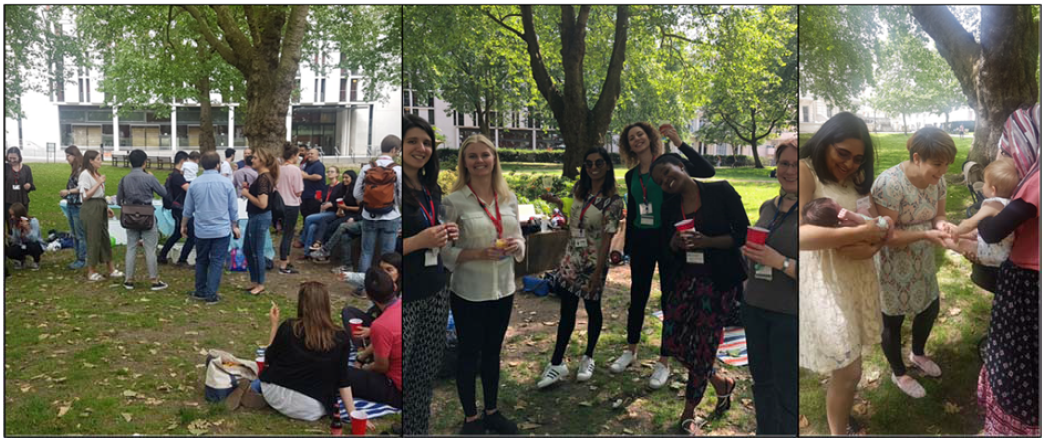
The great weather made the day even more enjoyable, and it pushes more people to join us along the day. It was also a great opportunity for the NMR NPC team to come with their new borns and present to everyone the new generation of scientists!