Tag: sciencecommunication

4Cs Science Communication Writing Competition – 1st Place

by Stephanie Martin, MRes student in the Department of Life Sciences

Dear Present

Dear Sister,

I recently had an experience which reminded me of the stories Grandma used to tell us. I was hiding in what I thought was an animal’s den after being chased by water-raiders through the desert. The den turned out to be a large chamber, full of nothing except hundreds and hundreds of binders and a sign which said ‘The Daintree Rainforest – Lest We Forget.’

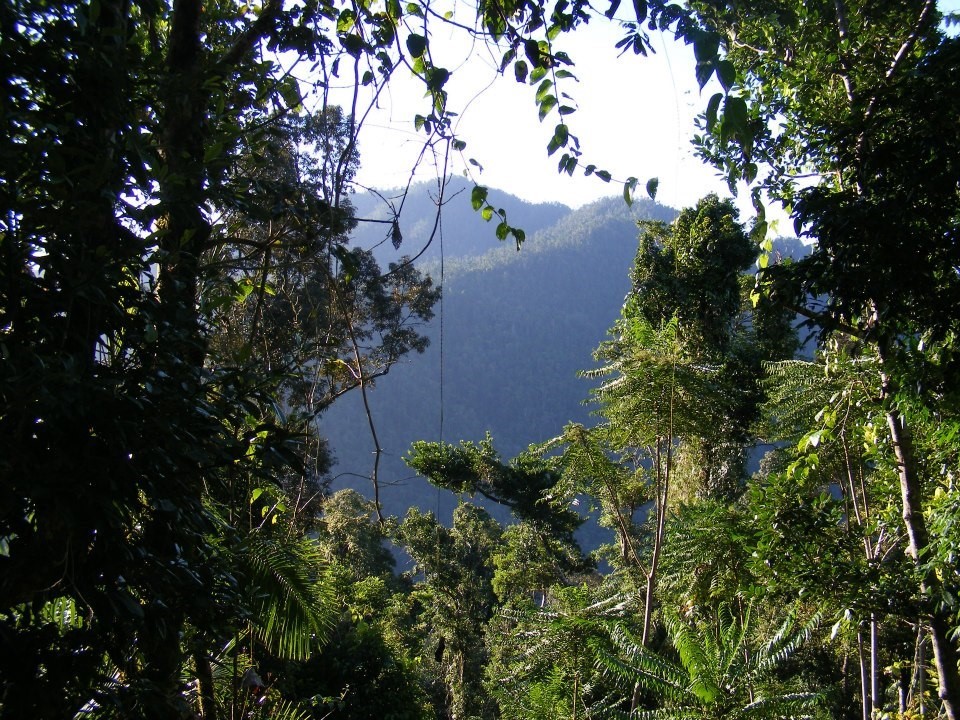
Do you remember what Grandma used to tell us about the Daintree? That luscious mythical jungle that used to inhabit these lands in Australia that we never really believed ever existed. I have included in this letter an old photograph that I found in an album marked ‘2019’, everything she told us about is there; trees too tall to climb, six-foot tall birds of electric blue running through the undergrowth, flowers, butterflies, and frogs… they’re all there.

The binders were full of scientific research from ages past. One paper caught my attention, ‘An Investigation into the Physiology of Trees and Lianas under Experimental Drought Conditions – by Stephanie Martin.’ I read the paper, taking in the (extremely sophisticated) statistical analyses and reading the (detailed and worthy of a distinction) manuscript written by this long since departed Master’s student. ‘Access to the rainforest canopy was gained via a crane’ she writes, ‘measurements were taken from tree species under standard tropical rainforest conditions, as well as those included in the drought experiment.’ I am jealous of this person’s existence in a time when they had to simulate drought conditions when we have lived through it our whole lives!

She goes on to detail her research, which I think you will find interesting. An instrument called a porometer was used to measure stomatal conductance; the rate of carbon dioxide entering and water vapour exiting the leaves via pores called stomata. The drought experiment covered 0.4ha and was evidently constructed using a series of clear-panel plastic roofing structures.

I’ll skip over the Results and Discussion sections, which were written in August 2019, and share with you the passage that has affected me most;

‘The simulated drought conditions reflect a possible future where seasonal rainforests experience hotter and longer dry seasons as a result of climate change. This project is important as global temperatures are set to increase by at least 2 °C degrees by the year 2100 (Raftery et al., 2017). It is essential that we assess the impact this warming effect may have on carbon sinks such as tropical rainforests in order to formulate management plans and influence governments and corporations to take action to prevent dangerous warming scenarios.’

It’s difficult to comprehend the magnitude of failure our ancestors caused when they ignored scientists calling for action to prevent climate change, resulting in a world now where people kill one another for water, and where rainforests are nothing but ancient history.

Maybe one-day things will get better.

All my love,

Your sister.
How interventions are spread: Winning second prize at the Research as Art Summer Showcase

By Sophie Spitters, PhD Student, Department of Medicine

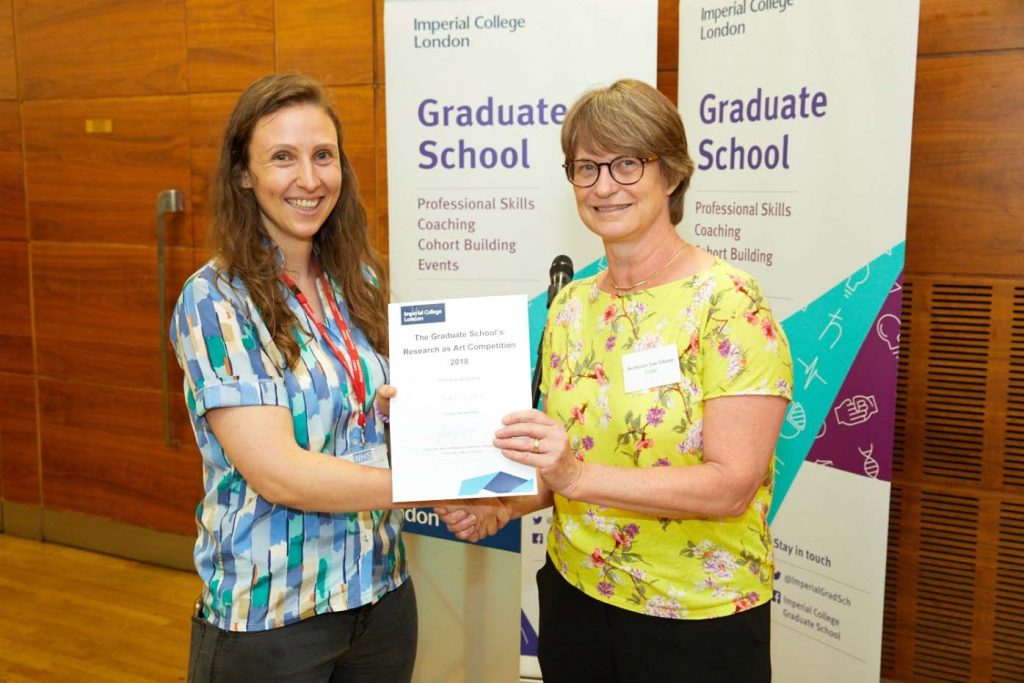
The Imperial College London Graduate School organised their annual Summer Showcase on Friday July 13th. The showcase aims to celebrate research undertaken by PhD students at Imperial and invites staff, students and visitors to find out more about their work via a poster and a research as art exhibition. I joined the research as art exhibition, showcasing my NIHR CLAHRC NWL research, and won second prize! First prize was won by Iman Ibrahim, who demonstrated what it takes to get clean drinking water to our taps in her mandala called ‘the ripple effect’. And third prize was won by Laura Braun for her ‘sludge cake’ made from sewage, demonstrating the value of faecal waste treatment in order to return it safely to the environment as a natural fertiliser.


How interventions are spread

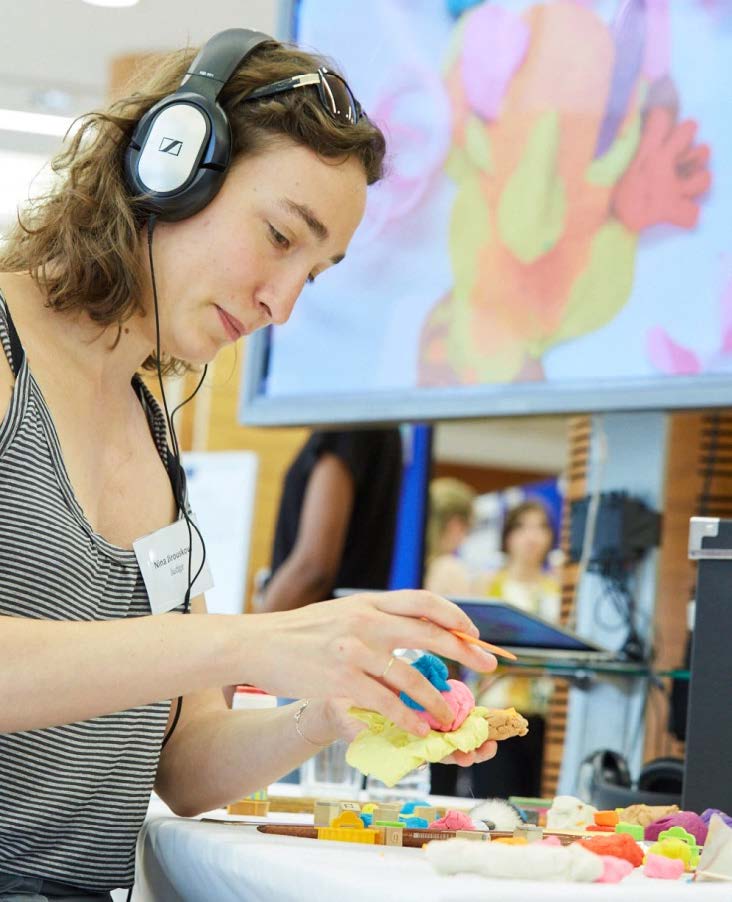
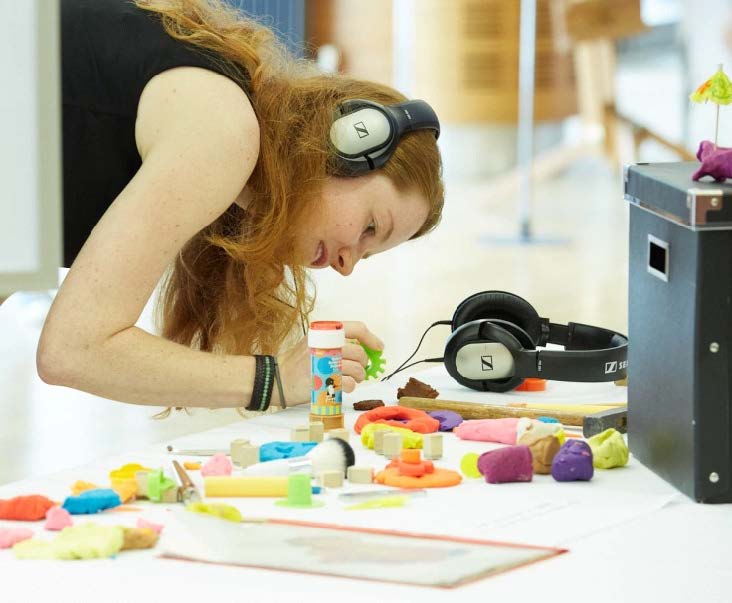
My art installation, titled ‘How interventions are spread’, aimed to communicate the reality of spreading healthcare improvement interventions, which often does not follow the expected trajectory. Healthcare improvement is often depicted as a linear straightforward process. First, a problem is identified. Then, a potential solution or intervention gets implemented in one area. Finally, if that intervention has shown to be successful, it is spread to other areas. The aim of spread in this context is to replicate the successful intervention exactly as is. Big investments are made to demonstrate that positive outcomes are linked to a particular intervention. So why change a winning formula? Why change an evidence-based intervention?

My research shows how in reality, the process of spread is a lot more complex. Evidence-based interventions often get presented as nicely packaged products with a clear step-by-step manual, not reflecting the messiness of interpersonal relationships, hard work and contextual dependencies underpinning its development. Hence, interventions do not just get picked up in one place and dropped off in another. When spreading to other areas, interventions change and develop depending on local priorities, capabilities and resources. This work is based on the spread of an allergy service improvement initiative.

I tried to communicate these issues through my art installation via two components: the video below and an interactive element encouraging people to build their own intervention with the (flawed) information and materials provided in the black box.


Exhibiting at the Summer Showcase

Joining the research as art competition was a great opportunity for me to communicate one of my research findings in a creative way. During the creation of the project, I realised that replicating a simple playdoh sculpture (which I used as a visual analogy) had many subtleties in common with replicating interventions in real-life quality improvement efforts. I never actually expected to see that. The Summer Showcase gave me the chance to explore these similarities and differences further with the visitors. It was great talking to people from different disciplines and different backgrounds about my research and to hear about their thoughts and insights. The art installation proved to be a great vehicle to start discussion, explore connections with people’s own experiences, and to visually demonstrate a key take home message from my research.

My Three Minute Thesis

By Hannah Maude, 2nd Year PhD Student, Department of Medicine.
hannah.maude12@imperial.ac.uk

I was absolutely thrilled to recently be awarded third place in the Graduate School Three Minute Thesis (3MT) Competition. Not only because it was completely unexpected, but because the standard of the competition was insanely high (classic Imperial?!). Every single contestant gave an excellent talk.

If you aren’t familiar with the concept of a three-minute thesis, I can tell you it means exactly that: describe your three-year PhD in three minutes. Sounds a challenge, right? I confess that my favourite bad habit is signing up to anything outside my comfort zone; bad because it means experiencing all the nerves and potential failure, but good because overcoming the challenge means learning new skills, feeling proud of my achievements, and ultimately having a great time.

What’s involved?

The first brief was quite general, “nominees will present their current research in one slide and three minutes”, so I did what I do best and carried out some research. YouTube revealed that 3MT equals general overview of your research topic: background, clarity, content, confidence, enthusiasm and simplicity were just a few of the recommended qualities. People approach this in different ways, some choose to speak ad-lib, while others—including myself—write a speech and learn it word for word.

What did your speech cover?

My speech covered the background and concepts behind my research, in a nutshell that risk of Type 2 Diabetes can be inherited, and that I spend my days researching exactly how DNA mutations increase your risk of disease. See the published speech: https://hanmaude.wixsite.com/keepcalmreadscience/my-3-minute-thesis


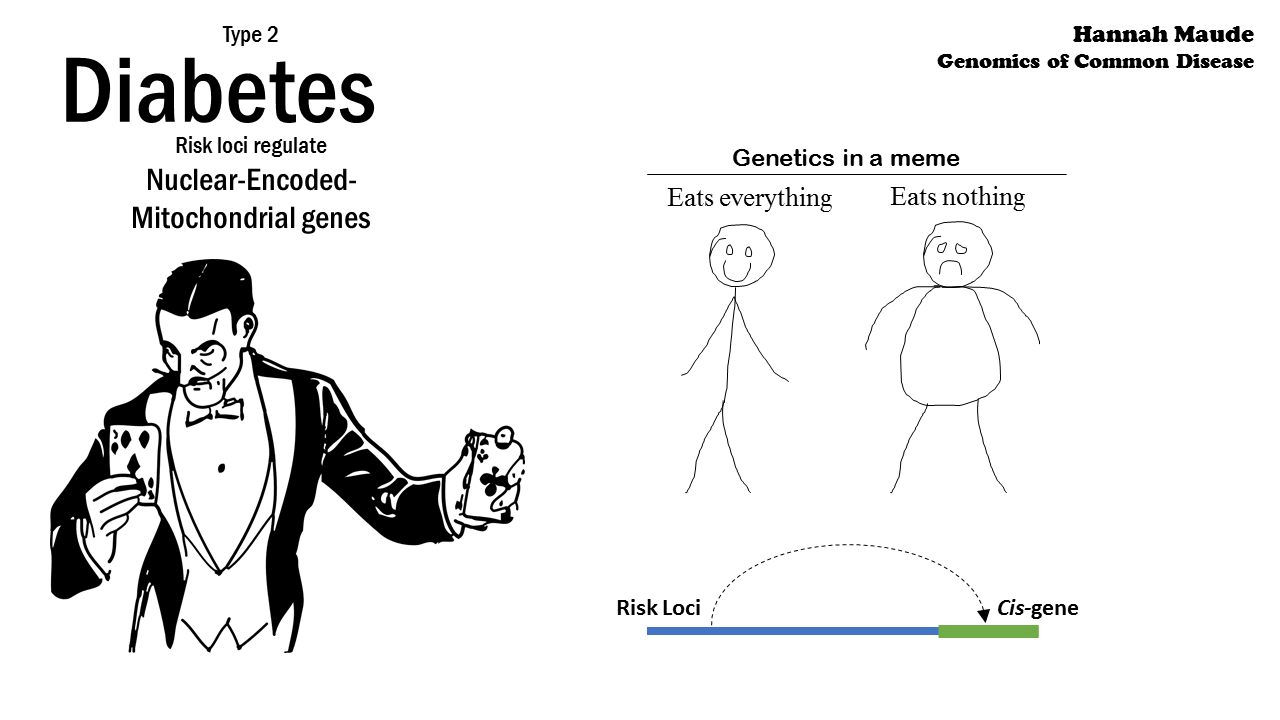
The 3MT slide, with quotes below. “This meme, which recently appeared on my Facebook, represents how some people can live healthily, yet still develop obesity and Diabetes. This bad luck has an explanation: it’s in your DNA”. “The DNA you inherit is like a game of cards; we have no control over whether we are dealt a ‘healthy’ or an ‘unhealthy’ genetic hand.” “Mutations at ‘risk loci’ disrupt ‘instructions’ and change the activity of nearby genes.”

How was the experience?

Honestly, the idea of standing up at the front of a lecture theatre and reciting a speech word for word within a strict time limit is pretty daunting. Once on stage however, I really enjoyed myself. I was able to be fully enthusiastic about my work and explain it to an audience who were genuinely curious. I also loved listening to all the other fascinating 3MT’s – who knew the concept of mixing two liquids could be so interesting?!

What did you learn?

The aim of a 3MT is to help a lay audience understand what you are researching. Not only is this super fun (and my Mum finally understands what I do) but taking a step back to think about your research in very basic terms, is totally underrated. I learnt to overcome my nerves, to be disciplined within a time limit, and how to communicate my research.

Take home message?

I would recommend the 3MT competition to all graduate students. It’s one of my biggest achievements this year and was so much fun. If you’re not one for presenting, I would absolutely recommend watching. It’s an inspiring event with engaging talks and you get a real feel for the huge variety of PhD projects going on at Imperial.

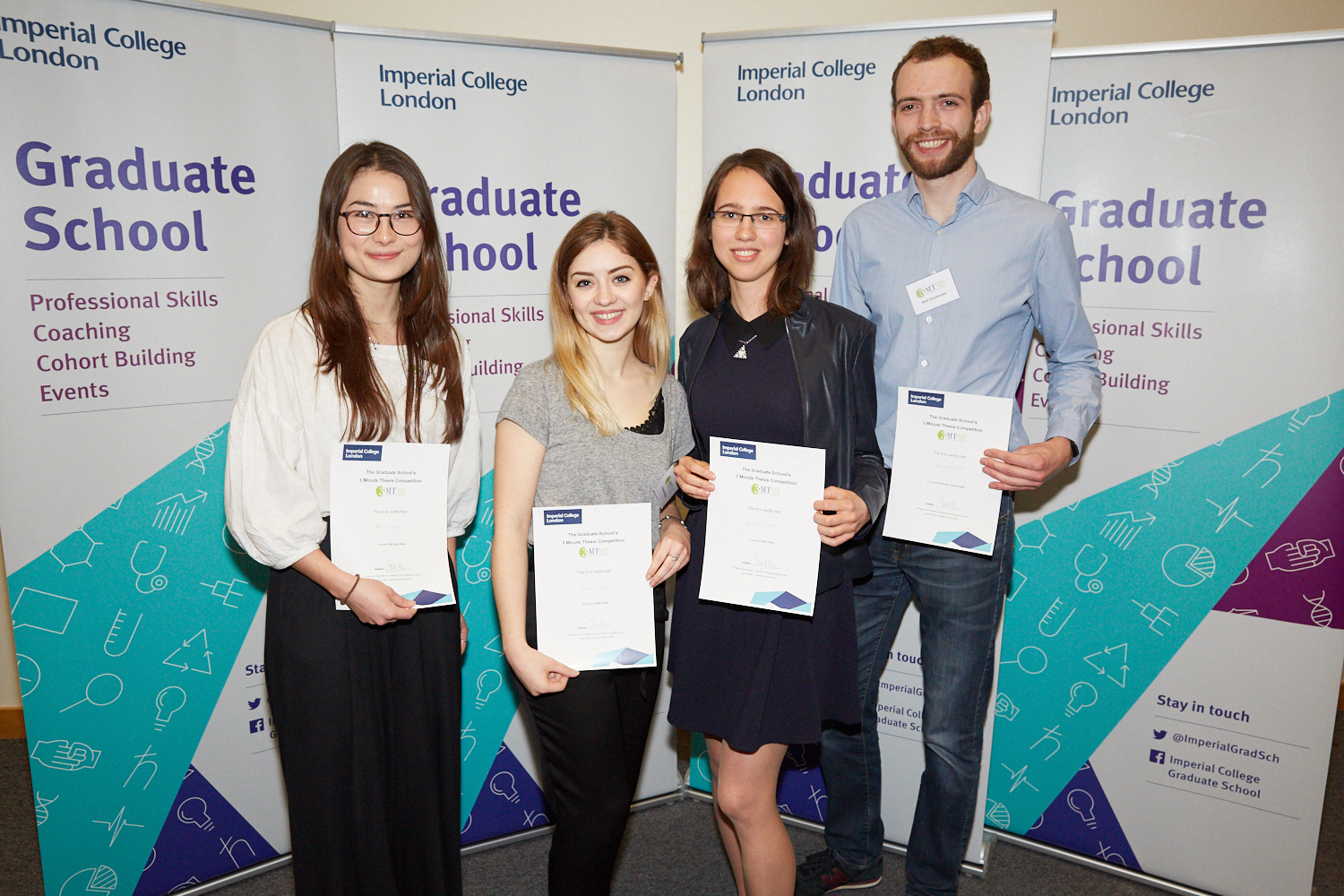
Maria Lucey (2nd place), me (3rd place), Paulina Rowinska (1st place) and Matt Douthwaite (People’s choice).