Tag: researchimpact

My experiences from conducting participatory research and as SPP for the Research Impact Programme – and tips to help you create impact from your own research

Blog by Chotiwat Jantarakasem, PhD student from the Department of Civil and Environmental Engineering and winner of Academic Excellence Award from the Anglo-Thai Society.

As a PhD student, I embarked on this journey to turn my research into something helpful for society. To address real-world problems, interdisciplinary work must be undertaken, involving extensive collaboration to translate research output into something practical and meaningful for people. I had planned to do this as part of my PhD, which meant that I had very limited time to make it happen, and I faced struggles and questions from many people who doubted whether what I was doing could be considered as PhD research in Engineering. I was almost ready to give up on my idea to pursue this topic. However, fortunately, I received abundant support from my supportive supervisors and the available resources at Imperial. It is important that you, as a student, know what is available to support you in your work, and be able to leverage this to make the most of your research and its potential benefits to society.

Here, I would like to share my story and key successes to help make your project impactful. Firstly, you have to clearly communicate your goal and firmly stand by your idea if you know that your work has the potential to be very useful for the public. In my case, as a PhD student developing a tool for people in low-resource settings, it is crucial to ensure that the innovation I created during my PhD is practical for people in developing countries. Without launching workshops and participatory programmes, it is almost impossible to gauge the feasibility of the application. Although we may not be able to successfully launch cutting-edge technology, it is still very worthwhile to learn about the limitations of current technology.

Remember to always seek help and support – this is the most important thing. Creating impact from your PhD research takes time and effort. At Imperial, many resources could help you transform your research into something impactful. There is a team helping you go through ethics preparation before submitting your work to the Ethics Approval Team. There is a Social Engagement team that organises masterclasses to help you learn about social engagement and how to conduct participatory research. The Enterprise Lab also has several programmes that could accompany you and help you cultivate the idea and turn it into something profitable via incubation and start-up competitions. Most importantly, for those who have no idea about what to do and where to start, the Graduate School has created the Research Impact Programme, which will teach you to understand what Research Impact is and why it is very important for PhD students.

The Research Impact Programme offers a wide range of courses to equip students with business skills, social engagement, and policymaking knowledge. I joined this programme because I know these courses are invaluable for PhD students who aspire to make a difference but may not know where to start. Thankfully, I participated in FUMO+ and attended courses under this programme. Now, I’m here to ensure that the programme can offer something to meet your expectations. Just like you, I’m a PhD student with ambitious dreams! I understand the challenges we face, but with the unwavering support of the Graduate School, my passion resonates, enabling me to effectively communicate my work to various stakeholders.

If there’s one thing I’ve learned after working closely with Imperial staff, it’s that they always listen to students’ voices. This isn’t just applicable to academic staff but also includes support staff. Imperial offers supportive staff who provide almost real-time assistance, which you can access by scheduling 1-1 coaching sessions.

I firmly believe that many PhD students at Imperial are pursuing high-impact research topics. By connecting and deploying with the various available resources offered by the Graduate School, you’ll be able to turn your project into something beyond what you can imagine. I have faith in my ability to make a difference, and I believe in yours too. Please access the links for further information on what the Graduate School can offer you and how to sign up for courses on the Research Impact Programme.

I have support as a Student Programme Partner from the Graduate School and received boundless support from Dr Victoria Crossley.
Three things I learnt at the Global Postgraduate Retreat

by Selina Cao

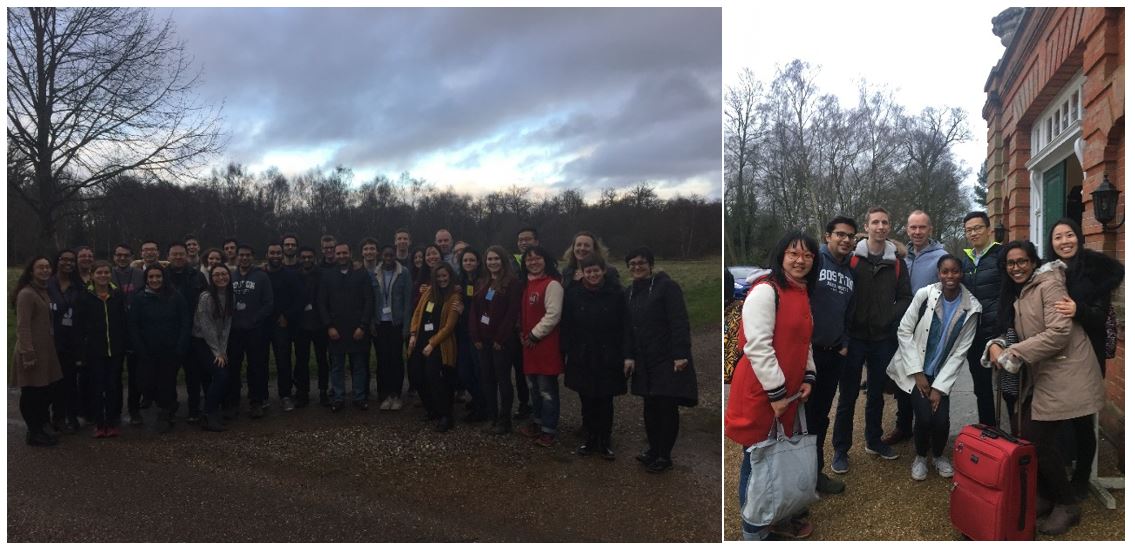
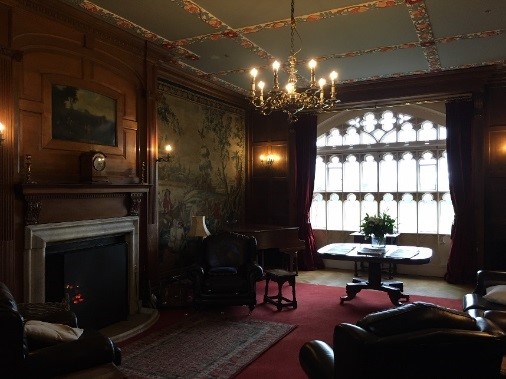
This January I signed up for the Global Postgraduate Retreat – Impact and influence at Cumberland Lodge, Great Windsor Park. It is such an elegant lodge with long royal history. This is my first retreat experience and I would like to share with you the three things I learnt from it.

Bold and systematic answer for why

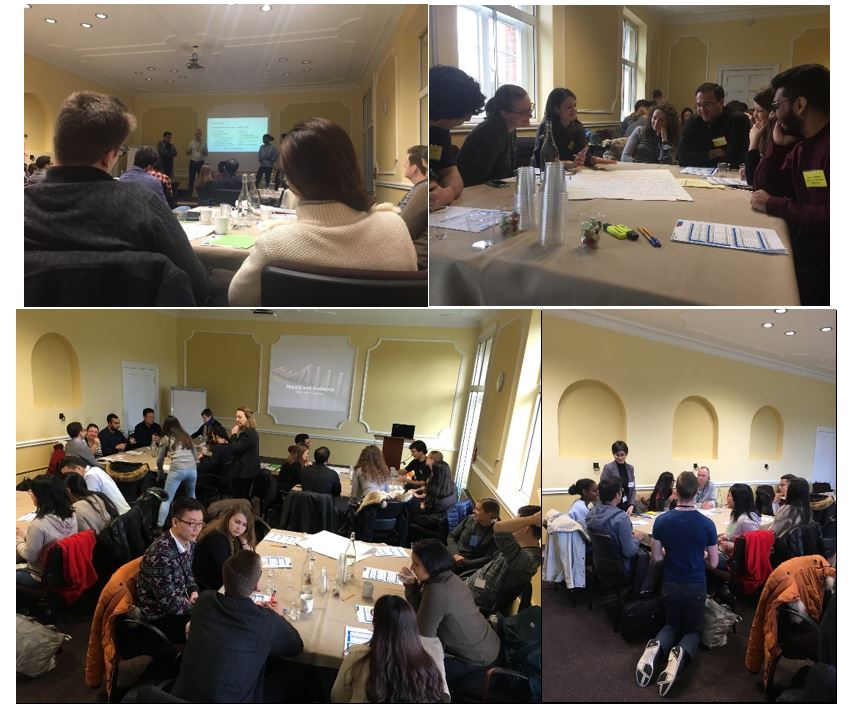
This retreat helps me start to think early in my academic career why I am doing what I am doing now – the potential outcomes and impact of my research. While you might think that we have this figured out already when we applied for Ph.D. programs or when we started our research, however, this retreat enables me to think more boldly and systematically how my research can make a difference not only in my chosen field but also, more importantly, for the whole society and human beings. Specifically, I found the four-audience framework (academic, business, government, and public) very helpful in guiding me to develop my impact statement and strategies for different audience. The group-based and interactive activities further deepened our understanding of our own research. For example, we were asked to draw our own impact statement and then present to team members in a straightforward and plain manner. Since the students came from a variety of disciplines, we are also developing our communication skills through describing our research and impact in a way that anyone without a related background can understand. This mirrors the real time scenario since most audiences in real life possess less knowledge in your field. For example, how can we convince government officials with less scientific background to provide funding by framing our research impact in an easy-to-understand manner and in line with their political objectives? What’s more, interactions and peer-learning enabled us to further refine our initial plan and expand our impact. In the end, answering this why question boldly and systematically built up my confidence and motivated me to make a contribution.

Real-life exercises for how

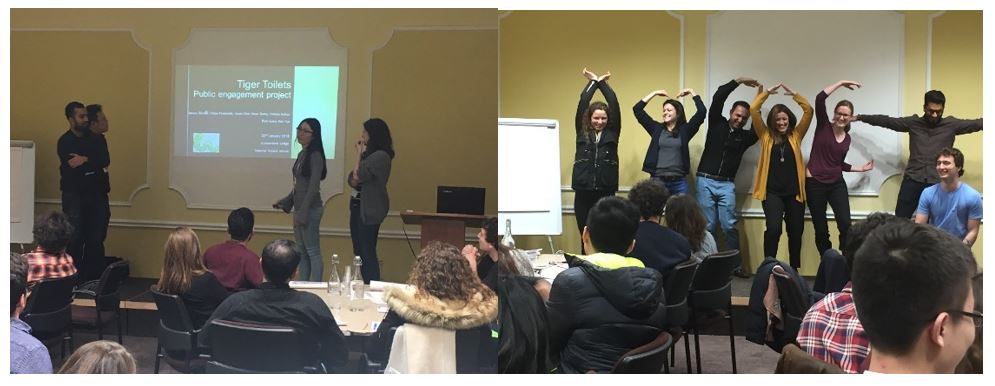
One of the most precious parts of this retreat is that the learning is very interactive and situated. Instead of walking through slides after slides of normative guidance, we are learning through real life cases and working in different teams to solve problems originated from our own research. For example, during the first day, each group was asked to provide detailed plan to engage one of the four audiences for a real life project called “Tiger Toilets”, a no-frills latrine which uses composting worms to convert human waste into useful fertiliser. The principle investigator of this “Tiger Toilets” project gave us feedbacks on our results after our presentations. For the second day, each group was asked to pick one research topic from their own team members’ fields and try to present to four audiences for funding. The one-hour preparation time put us under huge pressure. This activity is organized in a competition format and all judges are acting in a very professional and real-life setting. During the interactive exercise, we developed our negotiation and communication skills. I still clearly remember all the tough questions we obtained during the competition. Being the only Ph.D. student from business school with research interests in Entrepreneurship, I think the experiences I can gain from this competition are no fewer than the Dragon’s Den or Shark Tank pitching. Key takeaway is the importance of understanding audience’s need: different strategies for different audiences! Knowing your research is important but knowing how to sell your idea is equally important. The winner is the one who secures the most funding and luckily our group won the competition with a box of chocolate!

Opportunities arising from diversity and interactions

Lastly, this retreat impressed me with the backgrounds of the participants in terms of their nationalities and chosen disciplines. Diversity entails great opportunities to expand knowledge base, build network, and innovate through interdisciplinary collaboration. Personally, being the only one from business school, this is my first time getting exposed to so many interesting scientific research outside my field at the same time. Through discussion, their studies inspired me to think differently about the taken-for-granted principles in my field that no one ever asked me before. We were very often amazed by so many interesting facts about cultural differences. We were also enjoying each other’s company through playing Ping Pong, table tennis and other recreational games. Quite many students had a walk to the beautiful park and enjoyed a moment of quietness outside busy city life. These close interactions and knowledge sharing in such a relaxing environment indeed provided us great potentials for future collaborations. For the final part, we were asked to present in any format a summary of the learning from this retreat and our group provided this poem. Hope you enjoyed it.

We went to Cumberland house the 22nd and 23rd,

To do a bunch of stuff of which we never heard.

Making our plans bigger and bolder,

Thinking about all our stakeholders.

We heard about cancers, faeces and germs,

All gobbled up by hungry tiger worms.

We all stand in lines, us girls and us boys,

Trying to speed network despite the noise.

We worked hard and fast, ok with mistakes,

Worried we might miss out on the next round of cakes.

We all tried our best but when ready to can it,

We got another nudge from Bethan, Amy, Valentina, Elena or Janet.

Half of us met on the way from the station,

Proving invaluable for ensuring negotiation.

Connecting made here are no coincidence,

As we go out into the world to have impact and influence.

All in all, I had a fantastic time in this impact retreat and met many new friends there. I really appreciate ICL for providing me such a great training program. And I am very grateful for all the knowledge and encouragement from my teammates. Now I know who I can reach out to for a coffee break at campus through our “Martians of Cumberlodge” WhatsApp group chat!

Next Global Postgraduate Retreat – Impact and influence is from 19 July 2018 – 20 July 2018. So hurry up before it is fully booked!