Once again, London
[youtube https://www.youtube.com/watch?v=q4QnEu9D-bs]
[youtube https://www.youtube.com/watch?v=q4QnEu9D-bs]
I‘m still walking around the Imperial College every day and keeping a keen eye on every deviation from the German university system. In my last blogpost I gave my opinion of the professors, the learning atmosphere and the general concept. Today some other aspects follow 🙂
In London, the “you have to pass everything in this year” puts much greater pressure on students compared to at my university. If you don’t pass a subject at my university or you want to drop out by yourself (yes, that’s possible!), you can do the exam either in the same or the following semester. Here students are given more freedom of adjustment, which can have its advantages or disadvantages depending on one’s personal characteristics.
Again: free gym! I have already praised this greatly in a previous blog post. Anyone who wants to do sports can do so without any problems. In addition, having 1000 Sport Societies offers a platform for every taste. The fees for these are a little higher than at my university, but, therefore, the gym is not free of charge. The variety of courses offered at both universities is roughly the same.
The culinary diversity at Imperial College is outstanding. There is something for every culture and every taste, thanks to the various canteens and snacks on campus. For anyone who has enough money, of course. Compared to the prices of the German university canteen you actually pay almost double the price. It would be nice if the taste quality were also twice as good. Unfortunately, I cannot confirm this after several empirical experiments with different independent variables. In fact, the money and taste factor actually motivated me to cook more often myself, which is not necessarily bad, but a little more time expensive.
As I pointed out in the beginning, the direct comparison of fundamentally different systems is not easily done. But just seeing that the systems differ so much is a great experience and has broadened my horizons considerably. I also consider the stories of other cultures through exchange with other students to be valuable and not a matter of course. Generally speaking, I find the experience at Imperial College exciting in all aspects and I can highly recommend it to anyone who has the opportunity!
Before I jump right in- kindly note that it’s pronounced dis-section, and not di-(s)section. Literally the one thing I can recall from the intro to anatomy lecture from Freshers’ week.

Safe to say our very first dissection session was highly anticipated amongst my cohort. We’re currently learning about the thorax- part of the body between the neck and abdomen. At Imperial, we do full-body dissections rather than prosections. Each group consists of 10-11 students and we are assigned a cadaver per group for the whole of the anatomy course, which lasts into year 2. The dissections are done at our Charing Cross campus.
They started us off with a couple important rule reminders- place all personal belongings in lockers provided, shoes covering dorsals of our feet, long hair tied back, be respectful, etc. This was followed by a super informative presentation on how to put on and take off the gloves and protective gowns.

Not going to lie, I had a massive misconception about the whole experience. For some reason, I had ingrained in my head that the dissection room would be dark, cold and underground like in the films- but then I realise those are just mortuaries. Oops. The dissection room at Charing Cross is nothing close to that-it really is a pleasant environment for what it is.
Also, I can distinctly remember being told that loads of people leave the dissection room feeling… hungry? I haven’t really found that to be an issue, but I do find that the embalming chemicals (mix of formaldehyde and a couple others) smell alarmingly similar to turkey. My friend goes with pickled foods, though.

So getting down to business- we first unzipped the bag and positioned the resting piece of cloth to expose the area of the body which we would be working on. The face of all the cadavers are covered- for now. Our task was to make incisions in order to reflect the skin flaps of the thorax. This was to expose the ribs and intercostal muscle, followed by the removal of the anterior (front) section of the ribcage. To do so, we initially had to identify landmarks and trace out the lines which we would be making incisions along.
Non-medics + parents response when I describe what we do during dissection sessions.

The whole process was thoroughly guided- thank goodness. Some professionally dissected models could be found in the centre of the room for guidance.
FYI- you hold a scalpel like you would a pen, plus it has its own metal tray. Never pass a scalpel without the tray.
It really was an interesting thing to do. Sure I felt rather uneasy when I saw fluids seeping out at times, but I personally wouldn’t describe it as unnerving or too nauseating. Whereas on an emotional level, I suppose it could depend on your mindset going into it and how you approach it- whether you see the body in front of you as a cadaver or a person. As a rule of thumb, it may be good to acknowledge but not to go about it too deeply in thought.

If you have any apprehensions about this, I’d say try not to worry about it too much:) If it truly makes you uncomfortable, you’re definitely not required to be hands on in the dissection room and it is acceptable to just observe and provide moral support for your group mates.
Overall, it really is a fantastic learning experience for anatomy and there’s so much to be grateful for in terms of those who donated their bodies for our education.
Sending love and best wishes (as I cry over coursework)!
Alex (:


I don’t come from a background in science – my Bachelor’s is in History and I’ve spent the past five years working in marketing – so I often get asked how I’m coping with doing a science degree like Public Health.
And the answer is: not too badly, so far. At least judging from my results for term 1, especially statistics and epidemiology.
Part of this is definitely down to pure elbow grease: extra hours rewatching lectures, consulting YouTube tutorials and making sure I got all the homework done. But thankfully, it’s also because postgrad education is more about the application of technical knowledge to the real world than whether you can memorise formulas. For our assessments, for example, formulaic calculations only accounted for a small percentage. Instead, we were mostly tested on how we would apply what we’d learned to given healthcare scenarios.
The truth is that in Public Health, the science is often only the beginning. Healthcare issues typically involve a huge variety of stakeholders whose interests aren’t always scientific. Finding solutions to these problems depends on people being able to go beyond the science.
Over the past few months, we’ve learned that knowing how to plan a social marketing campaign can be just as important as understanding a disease model. Engaging stakeholders over a cup of coffee can be what determines the success of a health promotion programme. Last week, a concept from operations management – the Moving Range – was introduced as a way to understand hospital quality.
So if like me, you’re wondering if you’re cut out for it without a science background, don’t worry. The fact is that public health (and perhaps other science disciplines) needs people from all over for it to work.
I’m glad I gave it a go and I’ve learned loads in the process.

Your hall is your home for the first year and your flat mates shall be your family.
Every year, Linstead does a hall trip. This year we went to Budapest for a weekend.
Here’s to the memories that we will remember
Here’s to the people we won’t forget
https://www.youtube.com/watch?v=qwWYD0c6mjw&t=3s
https://www.youtube.com/watch?v=y9bjoOVHtyI&t=19s
I can’t believe we’re now already 5 weeks into term (6 if you count exam week)! So far I can say that I’m somewhat enjoying my degree (the lecture part at least, not so much for the exam/ assignment part) but there are times when I feel like I am so done with Geology and *flips table, throws papers/ notes everywhere*
When those times come, I know that I need a short break from all the rocks/ reports/ looking through polarising microscopes/ lectures and just take a breather. So what else can you do when you’re not going in and out of lectures? Well, there are a few options and here’s what I usually do in those times…
I’m lucky that South Kensington is home to three museums in London: the Natural History Museum (NHM), Science Museum and Victoria and Albert (V&A) Museum (they’re all very good museums). V&A is all about decorative art and design stuff while NHM and Science pretty much explain themselves. I’ve been to all three, although I can’t say that I went to all the exhibitions yet since the building is so big (and there’s too many exhibits to see \(>.<)/ )Good news is that since they’re so close by, I can visit anytime I want. I’m aiming to explore everything by the time I graduate (go me)
Oh, and the Science Museum organises these themed monthly lates on the last Wednesday of every month which are free to attend (some events require tickets though). They’re pretty cool but you need to be over 18 to attend. You get to see how everything is at night (sort of like Night at the Museum) and the lighting gives off a different vibe than how the museum usually is so you should try going to one.
2. Clubs
Who says you need to leave campus to have fun? You can still get involved in a lot of things on campus. I talked about the clubs I’m in in a previous post and there are still hundreds more to choose from if none of those strike your fancy (but seriously how hard to please are you? Kidding). So yeah, a lot of people I know join at least one club even if they never go to any of the meetings.
3. Sports/ exercise (aka take a walk in Hyde Park)
I don’t do sports (or even exercise yeah, I’m a couch potato cat) so I don’t know much about sports club and stuff (I do know that there are a lot of these though). But, I generally like taking walks. Unless it’s winter and/ or raining. In which case, you’ll probably find me baking something in the kitchen (see 6). Anyway, Hyde Park is quite a nice place to just go for a walk. It’s big and green and there are a lot of birds and squirrels (at least there was when I went there last year). From what I see, quite a number of sports clubs do their practice there too (so don’t visit on Wednesdays if you don’t feel like bumping into an Impy student and having to say hello).
Also, if you feel like playing sports but don’t want to commit by joining a club, you can take advantage of taster sessions thanks to Give It a Go) and try out different sports. I went to frisbee taster before and I ~sort of~ like it, but finally didn’t join because the membership was too expensive for me. There are also other things like taekwondo, karate and fencing but they tend to run out of places quickly and there aren’t as many as them anymore since we’re getting to the middle of our academic year.
4. Volunteering
Imperial offers you a lot of volunteering opportunities whether it’s a one-off no commitment volunteering or a longer affair. You can get involved through your department (I was a student helper during PalAss 2017 last December- and got a free t-shirt yay), clubs (I’m helping out for ICSF Picocon 35 this Saturday so pls come!) or Union/ Imperial Plus.
Imperial Plus lets you log in your volunteering time and you’ll be awarded a certificate when you reach a certain number of hours. You can even attend Imperial Plus skills workshops that helps you gain understanding on various qualities like Emotional Intelligence, Leadership, etc. They typically last around 1 to 2 hours and you get fidget toys to play with during the workshop. You have to sign up online to attend these though, and they get booked pretty quickly so be fast if you’re interested. I attended 3 workshops last term and they were quite interesting as you’d have to engage in a number of discussions with the other attendees there.
Whatever issue it is that you’re passionate about, I’m sure you’ll be able to find a community that are involved in it. For instance, SoupRun collects food from various shops and distribute them to the homeless. Pimlico Connection tutors (which I was a part of last term) provide tutoring to school (primary to secondary) children to help them achieve in STEM subjects (and are reimbursed for their travels). There’s even online volunteering opportunities like through Zooniverse.
Anyway, you get the point. There’s no excuse to not volunteer in Imperial. We take community service pretty seriously here 😀
5. Travelling
Travelling is popular among students here. Especially during Reading Week (technically you’re still expected to be here during RW but since there’s no lectures, some of my friends take this time to go travelling instead). Even your department don’t have RW, you can still go on a weekend trip somewhere and come back on Sunday evening/ Monday morning (perks of not having a 9am on Monday 😉 )
I went to Budapest about two or three weeks ago for a weekend trip (it was organised by Linstead and the tickets were subsidised so how could I resist?) and it was a good experience. I’d blog about it but then you’d be seeing not-so-good photos of the breathtaking sights so I’ll just refer you to Constança’s videos instead (day 1 and day 2).
Friendly reminders: Keep your tickets save and bring enough money! Also, you’re travelling by plane, make sure you get the luggage measurements right (for economy, if you’re having trouble with cabin luggage sizes and happen to have more than one bag, consider stuffing everything into the smaller bag and leaving the other in lockers, or post/ ship it back. The overall cost is usually cheaper than paying to check it in).
6. Baking
Well, this is what I do when I’m stressed or upset. I find it comforting that when I mix together flour, eggs, oil/ butter (softened/ melted), sugar (and a personal favourite is vanilla essence) in different proportions and orders and tadaaa… I’d end up with either some cake or cookies or pancakes. Plus, more dessert is always welcome. And sharing those is a good way to make people like you (unless they’re on a diet in which case they will probably hate you )
)
Oh by the way, I baked chocolate chip cookies today for Valentines (yayy)! My floormate, Sam baked brownies for Valentines (he’s a baking nerd too).
Anyway, if you need a recipe, or some science-y facts on the various types of flour (cake flour, bread, all-purpose, etc) or the difference between baking powder and baking soda or effects of using brown sugar and white sugar to make cookies or you want to hear about my Math IA project on the effectiveness using real egg white and egg white-substitutes in making meringue (complete with normal graph distribution and some statistical data), you know who to come to. Sometimes I wonder whether I should have became a patissier (or a food scientist) instead I mean, I even wrote a mini-paper centred on meringue… but then I did write one about minesweeper (yeah, the old default Windows game. I used to be obsessed with this thing) and two on geology/ environmental science, so geology won in the end (and I just revealed how weird I am… Shhh it’s a secret k) Don’t let those fool you, they’re definitely not as impressive as they might sound (they were all IAs for IB requirement after all)
7. Hobbies
Everyone has hobbies, right? Or at least something they tend/ like to do in their pastime. For me, it’s baking (see above), reading (plus maybe a bit of free-writing like this blogging gig) and anime. Well, I told you how much into anime I am before. And I told you about the story/ book me and my friend are working on. So, reading… I read anything really, although I have a preference for Fantasy/ Sci fi/ Young Adult books. Hit me up for book recommendations and feel free to suggest some too pls:3 (I’ve always wanted to say that!!! but am too much of a shy kitty cat… blame my social awkwardness/ anxiety)
I’m also trying to do artsy stuff (I dabble in painting but am just average at it). BTW, the Blyth Centre offers visual art classes and they even have open studio afternoons on Wednesdays. They’re free to attend for Imperial students and you can email Naomi for access. They also have practice rooms that you can book if you play any instrument (which I sadly don’t, as much as I would love to play the piano). They offer music lessons that cater to a wide range of levels from beginners to advanced too; but considering the fact that I don’t even recognise musical notes… I’ll pass on those, thank you very much.
So yeah, that’s it for now. Next time you’re feeling like banging your head against the wall or regretting your choice to come to Imperial, maybe go visit the NHM or Hyde Park or if it’s too cold or raining outside, come have a chat with me aka sitting together in comfortable silence (sorry, my mind tends to go blank in the presence of actual human company). Thanks listening (reading?) my ramblings… especially if you got through to the end (woohoo you deserve a cookie). Til next time. Bye!!!
P. S I’m curious… how many people even read these?
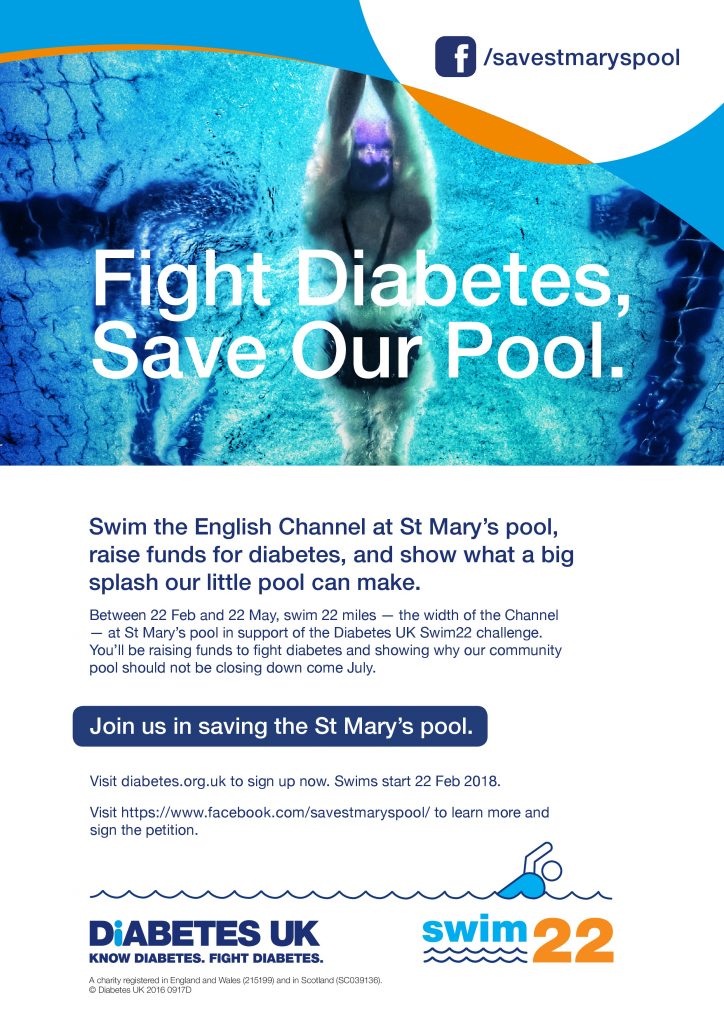
Going for a swim at the St Mary’s pool after a long day of classes has become something of a ritual for me now that I’m almost two thirds through my course. There’s nothing more therapeutic, and it’s also a bit surreal remembering that Alexander Fleming used to do laps here, as have generations of students since it first opened 80 years ago.
That’s why I don’t want to see it closing down this July. To save it, I’ll be swimming 22 miles – the width of the English Channel – at St Mary’s over the next 12 weeks as part of the Diabetes UK Swim22 Challenge. It’s a chance to show how big a splash our pool can make while raising funds for diabetes care at the same time.
If you can, I’d love for you to join me. The more of us, the more of an impact we make. Just click here to sign up or share our event to help us go the distance. See you in the water!
Hi everyone. So, my mentor had us do this time-management activity where we have to take note of what I get up to every 15/ 30 minutes and I thought it’ll be interesting to share the findings? results? with you guys. I actually did the original assignment last week over two days (Thursday and Friday), but I wanted to share my schedule on Monday instead as a message that, ‘Hey, Monday’s not too bad after all even if it’s the start of another week of lectures…’ and also because Friday’s baking day (because what better way to celebrate the end of schooldays other than a fresh-out-of-the-oven baked goods). Anyway, enjoy 😉
Thankfully, my Monday lecture for this term is in the afternoon so I don’t have to worry much if I overslept or something hehehe. Although that also means that I have a tendency to stay up late on Sunday nights doing random (sometimes work-related and sometimes not) things.
Around 7:30 to 8:00 am-ish Wakes up, shower (+ getting ready takes me 30 minutes; is that bad?), breakfast (the usual). Also cooks food for lunch and dinner so I can just microwave it later.
9:30 am Checks emails and social media, typically checking that any plans I made don’t clash with lectures and/ or other plans. Makes note of it so I don’t forget (because I usually do, sadly)
10:00 am Reads material for my 2:00 pm afternoon lecture. Usually this involves reviewing last week’s lecture (Panopto + lecture notes + practical sheets) and (sometimes) looking over this week’s lecture notes. I like searching for definitions of terms I don’t get beforehand…
12:30 pm-ish Famished. Microwaves lunch + eats lunch = 30 minutes (don’t judge, I’m a slow eater)
1:05 pm Is bored. WhatsApp-ed random friends and family in Malaysia since it’s like 9:00 pm over there and everyone is off work/ school.
1:40 pm Heads out to lecture at RSM 1.51 (thankfully I live in Linstead so that’s only a 5 minute walk away). Before, this would be Paleontology 1 but starting this week, it’s Optical Mineralogy and Petrology instead. Takes notes, finds seat, sets up microscope (we use a petrological microscope which is different from the light microscope you’d use in biology since it uses polarised light- either plane polarised (PPL) or crossed polars (XP).)
2:00 pm Lecture starts. There’s a short break in the middle before we continue with the second part of the lecture. And another break before practicals. I usually just stay in the lecture theatre and maybe stretch/ chat around a bit.
Around 5:00 pm Lecture ends. I usually get hungry again at this point so I grab a quick snack and drink either on campus or back at halls. And proceeds to play with my phone for about half an hour or so.
6:00 pm Anime time. Anime club organises regular screenings on Mondays where we watch the first episode of three different series with the same theme and vote which one we want to watch the second episode of. They send out weekly newsletters with the theme and series they’ll be showing on Sundays so I can decide whether I want to attend or not. I usually go if I haven’t watched 2/3 of the series. If not, I’ll stay in and watch the current airing season instead (it’s almost like watching in real-time… BTW Gogoanime is a good site to watch subs online for free). I usually watch 3-4 episodes and one episode is around 25 minutes while shorts are max. 5 minutes so that’s about an hour and a half of anime. (Yes, I take my anime seriously. I even consider different things like plot, drawing/ art styles, graphic style/ quality, sometimes even op and ending songs when choosing what to watch. Although I’m not so picky about genre because it’s good to see how different references attract to a variety of audiences)
7:30 pm Dinner (+ some socializing with my floormates).
8:15 pm Free time. Usually involves me reading random fiction/ young adult/ fantasy books. Or free-writing (a friend and I are ~sort of~ writing a story together). Or sketching (although I’m terrible at it :’) ). Or looking up recipes to cook/ bake.Or watching random videos on YouTube (because hey, everyone does this). Or a combination of those, could be all of those. While listening to music.
10:00 pm Starts prepping for tomorrow’s lecture and/ or tutorial. Involves doing the same thing I did for my afternoon lecture.
12:30 am Gets into bed. From this point on, it’s a definite no to all electronic devices (because it’s never a good idea to play with your phone when you’re trying to sleep). Although I mostly can’t go to sleep immediately, so I tend to roll on my bed, reflecting on the day’s work and everything I could/ should have done better (or sudden inspirations on how to solve practical problems) until I eventually fall asleep.
So, that’s how I spend my Mondays. I usually don’t stay up later than 1:00 am on weekdays because I have 9:00 am lectures every single day except Mondays. Did I spend my time wisely? IDK ¯\_(ツ)_/¯ It works for me at least. But everyone has their own way of doing things so there’s no ‘right’ way to do it. As long as you’re keeping up with things, I think you’re good to go.
Moral of the story, don’t worry too much about what others are doing and focus on your way of managing your time. Because we’re all different.
That’s all for now. Peace out See you next time (lol I sound like Dora the Explorer or something). Bye!!!
Twitter: @malamawks | Instagram: @malamawkin
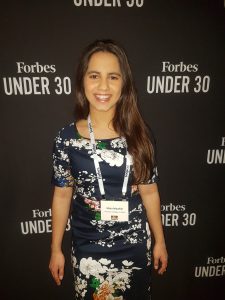
I was honestly over the moon to find out that I was included on the Forbes 30 Under 30 2018 List for Europe. What an absolutely amazing honour, and am so grateful for the team at Forbes for including me! It all started back in November when I was emailed explaining that I had been shortlisted and asked me for a bit more information about myself. I remember that morning I had been on a paediatric placement in High Dependency Unit and had been a part of my first paediatric “crash call”. I had been so down from the day and receiving this email completely changed it.
In Jan 2018 I was told that I was in the final 50 of my category (science and healthcare) and was to be invited to the launch party on the 22nd Jan in London. I bought a dress online just in case- but really did hold my breath and just considered it an honour enough to be in the top 50. Then, 2am on the 22nd Jan…the list came out. My dad said he slept 1 hour that night, and I really do echo this. I had ortho teaching that day and sitting through that knowing I had to rush home and get ready for the launch party made paying attention in teaching very difficult (but managed it!). It was such a whirlwind of a day, and I was just so happy! I was interviewed by Imperial (you can read more here: http://www3.imperial.ac.uk/newsandeventspggrp/imperialcollege/newssummary/news_23-1-2018-12-7-50) before the launch party too!
The launch party had some of the most inspiring and fascinating people I have ever met. It was incredible, and I left it feeling so motivated about keeping going with my goals. That is the thing here…Imperial encourages you to go for all of your ambitions. I have had my fair share of rejections and setbacks but honestly, if anything, I really have learnt resilience here. Being on the Forbes list with so many other Imperial alumni made me so, so proud to attend this University!
Onwards and upwards for now, and excited to see which new faces from Imperial appear on the list next year. We rock.
You can see me on the Youngest List and Science and Healthcare List at www.forbes.com/30-under-30-europe/2018/
In this blog entry I would like to start by briefly comparing my previous impressions of the educational systems in Germany & UK. It’s not that easy, it’s actually like comparing croissants with Berliners. Both quite tasty, but fundamentally differently conceived. I would like to emphasize at first that these are only my personal impressions. Of course, the factors outlined beneath cannot be generalized to whole systems. Hence, no system should be put in a bad light.
The concept at the Imperial College is fundamentally different from my educational institution. We have lectures and examinations over a period of six months. This is called semester, 3 months of lectures, 3 months examinations. One year has two semesters. Sometimes our exams are spread out over the entire period of three months, but sometimes everything is also the same as here in 2 weeks.
In London there are Trimesters and I’m curious to see how demanding the end will be. In addition, there is a lot of coursework that I haven’t heard of in Germany, at least in my course of study. This course work is mostly practical projects, which offer great experiences and are also relevant for the final grade. However, at my home university there are, depending on the subject, occasionally intermediate projects. Nevertheless, for these there is usually no reward (except experience) or sometimes a few “bonus points” for the exam. It’s totally flexible and dependent on the lecture. Thus, from my side this is a huge plus point for the system at Imperial, diligence during the semester gets rewarded!
I’m thrilled here too. Both rhetorically and personally, the professors are in their element. Due to the relatively small course size (200 vs. 1600 at my university), the contact is much more personal, both in the course and outside the university. Real example: I wrote to a professor regarding an urgent question Sunday night at 10:22pm. 10:33 I had the answer “sent from his iPhone”. That’s what I call commitment, I’ve never seen anything like that before at my home university! I also experienced very high technical affinity. All my lectures are video-recorded on Panopto or at least made available as PDF files. Anything else would be outdated, though, however, this is not self-evident.
Firstly, I would like to commend the design of the Central Library – modern, cosy and yet ergonomic, it’s perfect! Especially the separate tables on the 5th floor are one of my favourite places. The fact that you can book whole rooms is also pretty cool, therefore, you have no problem with group meetings because of missing rooms. That would be a great addition to my university.
My feeling in the lecture is quite similar to that in Germany. Some students are sleeping, others are attentive, but do not quite understand. One or two high-flyers, who have the answers to all questions, can also be found. Big plus point for small group sizes – the social pressure to answer questions is lower. Furthermore, probably everyone from the year has briefly spoken to each other at least once, which also creates a familiar atmosphere. Everything seems like a huge school class to me. In general, many things on site remind me of my school days.
In the second part I will take a closer look at some more factors (mensa/canteen, exams etc.). Stay tuned!
Best regards