I’m definitely a social animal. While I need some “me time” once in a while, I tend to surround myself with people. This is why when I embarked on my first PhD journey, I wasn’t too thrilled to learn that I’d be travelling alone. That sounded so scary, I was afraid that something would go wrong or, in the best case scenario, I’d just feel lonely and miserable for a few days.
Finally I don’t depend on anyone. I do whatever I want, I don’t need to consult my plans with anyone, I don’t even have to plan anything. I just walk whenever I feel like walking, stop when I need some rest, eat whatever and wherever I fancy, just enjoy the moment. No need to compromise, to suffer through art museums just because my mum loves them, to skip a lovely walk in less touristy places because my friend is tired or to get hangry when my boyfriend thinks it’s too early for lunch.
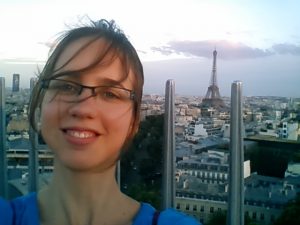
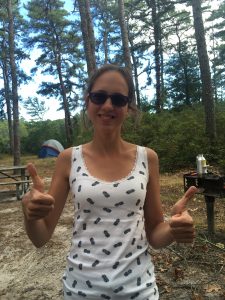
Travelling alone requires some selfie skills 😀
Good company is great, and who’s a better companion than the person I know and understand more than anyone else? Sometimes spending a lot of time just with myself is exactly what I need. Usually I don’t get many opportunities to read, listen to the music, go for long walks or just think. And I forget how much I enjoy these activities.
When I start the journey alone, it doesn’t necessarily mean I end it alone! Usually I spend a lot of time with strangers. Best places to meet them? Hostels or “free walking tours”, where many travellers are in a similar situation. Hostels basically guarantee meeting very interesting people from all over the world. If I don’t stay in a hostel, I like to google “free walking tour [city I’m in]”, walk around the city with a local guide and chat to other participants. Usually we form little groups afterwards and spend the rest of the day or weekend together. A few years ago in Cologne I even managed to meet one of my best friends on such a tour. Worth trying!
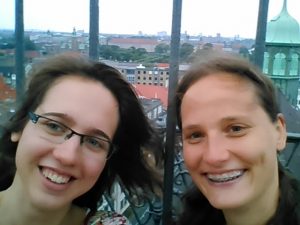
During one of my lonely travels I met a good friend!
My main concern used to be safety. However, I realised it’s not such a big issue as long as I’m not going to a jungle or a battle field. In European or American cities I feel perfectly safe, when in doubt I ask locals if a particular neighbourhood is fine to visit alone. I just make sure to stay in touch with my relatives, so that someone knows what I’m up to, in case I disappeared. Better safe than sorry, but don’t worry, it’ll be ok!
There are times when I wish I had a friend with me. For example, I felt a bit lonely spending a Friday night alone in Paris, while everybody else seemed to enjoy dinner with friends or family. I could have prevented it by making plans with other conference participants or using meetup.com, but I was just too tired to be bothered. But after a quick dinner (in a great vegan burger place, I doubt I’d drag there any of my meat-eating friends, so yay, lonely travels!) I ended up in Pompidou. After seeing a few pictures, I decided it’s enough modern art for one day, so I sat down on the terrace and enjoyed the view. Would I have done it with someone else? Probably not.
I could keep persuading you that travelling alone is great. But instead I suggest an easy exercise: find a cheap flight or train to a random place and find out yourself!
Just a few thoughts as I close the lid on two momentous terms at Imperial.
1. You don’t know what you can achieve until you try
I took a big risk doing this course considering the huge cost and my non-science background. Plus it’s been almost a decade since my undergrad days. Yet somehow I have thrived. Amid the flood of new concepts, information and working styles, I find myself with a fighting chance of a distinction (although maybe I’ve just jinxed it). Of course, I still have the massive challenge of my dissertation but this is already beyond what I imagined this time last year. If I hadn’t tried, all this would just be a bunch of ‘what ifs’.
2. Mature students seem to get more out of the MPH
Much of a public health degree is about practical application. As such, it’s a big advantage if you have real world experience to temper the theory taught in class. It’s not just about hard skills. During my course I’ve found that simple yet important things such as version control, keeping colleagues updated and time management are often overlooked. Having these habits already ingrained sets you up for success.
3. Going back to school can be hard for mature students
I’ve been told I look young but, at 34 years, I’m most definitely not. At times, it has been hard going to class with people often 10 years younger, and having to live like a student (ie no income) again. To get through it, I’ve had to constantly remind myself of the reason I’m here: to acquire new skills and open up new opportunities. Having the support of my wife has also been vital. I don’t know where I’d be without her. I’ve also tapped on the school’s free counselling service and that has been helpful, although it can take a long time to see somebody.
It’s been a roller-coaster ride so far. Let’s see what the final term has in store.
If you’re thinking of going to Amsterdam, go to Haarlem instead. No, seriously.
Haarlem is a smaller city just 15 minutes away from Amsterdam by train. It’s got far fewer tourists, cheaper and nicer accommodation, and way better food. PLUS, it’s a mere 20 minute bus ride to the beach!
With the final assignment of term 2 done and dusted, we decided to take advantage of Eurostar’s new direct train from London to Amsterdam (£35 one way). Well, almost direct. It does do a short stop in Brussels and the total journey is about 3.5 hours. Nevertheless, it’s still way more convenient than a flight.
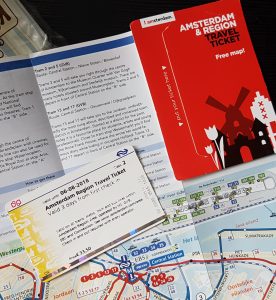
The train gets you right into Amsterdam Centraal Station where you can get a regional travel ticket, which basically opens up all of the little cities, towns and parks around Amsterdam to you. That includes Haarlem, the Keukenhoff Gardens, the beach at Bloemendaal, the little windmill village of Zaanse Schans.
The Sights
Okay tbh, my wife and I aren’t typical sightseeing travellers. To us, an authentic meal in a local restaurant is far more appealing than any old monument. But Holland is most definitely home to some beautiful sights.
The Amsterdam Regional Travel Ticket gets you unlimited rides on buses, trams and trains during your stay.
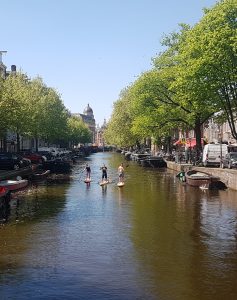
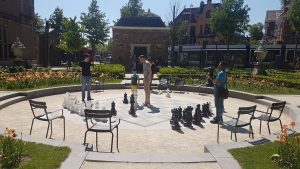
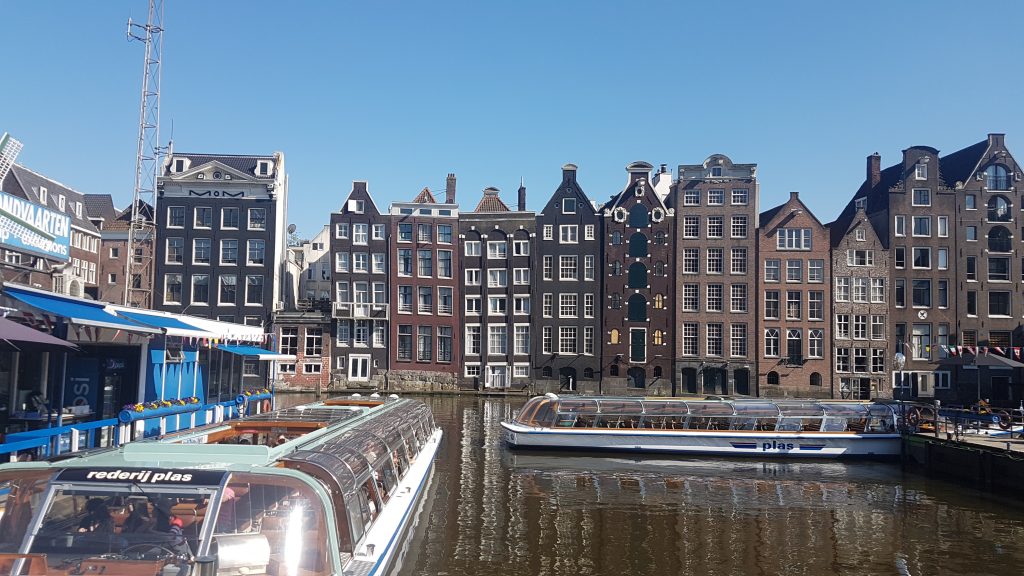
Amsterdam is a gorgeous city and, in the sunshine, it’s simply glorious. There are paddle boarders in the canals, leafy trees dappling the streets with sunlight, and people out and about, even playing giant games of chess. In fact, it was so sunny while we were there that the tulips were wilting in the heat, although even in death, they exuded a surreal beauty.
We spent a day in Amsterdam just wandering the streets without an agenda. Amid all the hustle and bustle, there were little pockets of tranquillity, like the old book market we found at Oudemanhuispoort, where second (or third or eighth) hand reads are still being peddled from old wooden booths bolted to the stone walls. Perhaps fittingly, the book market is just adjacent to the law faculty of the University of Amsterdam, whose gardens are worth taking a stroll in.
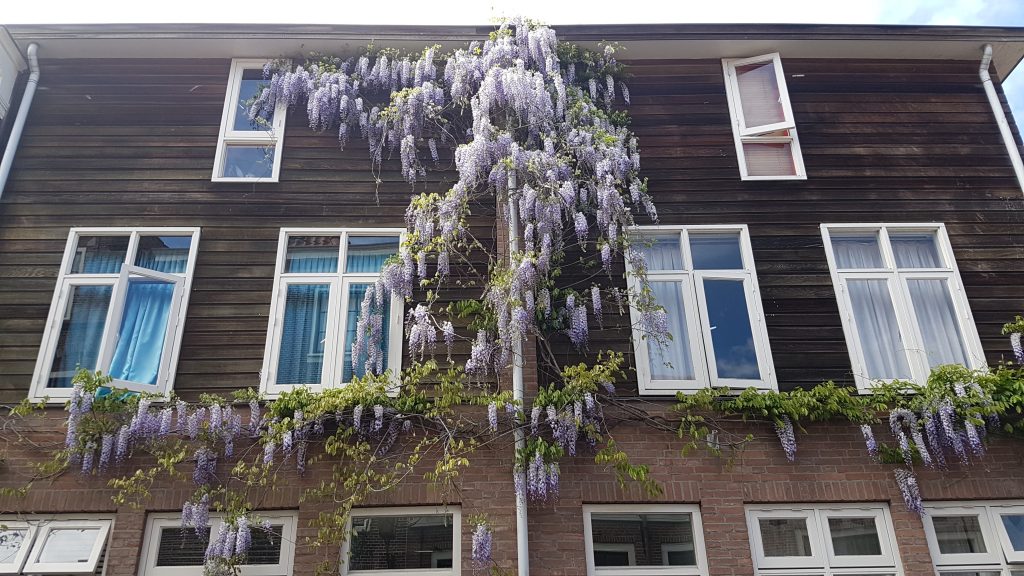
Is it a consequence of studying in a medical school that I thought the building was having a stroke?
Another treat was sitting down by the Oude Kerk and listening to its bells play, surprisingly, the Sesame Street theme song. It put a grin on the face of everyone in that square! Interestingly, the church is right smack in the middle of the famous Amsterdam Red Light District. The story goes that it was built there so sailors could pop over for some quick absolution before another long and dangerous voyage. Today though, the Red Light District is mostly closed. Only one or two windows were open as the city clamps down. If allegations of human trafficking and abuse are true, that’s definitely a good thing, but you’d better hurry if you still want to see the place for yourself.
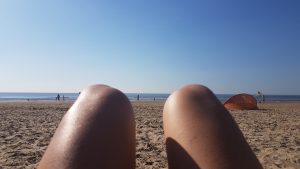
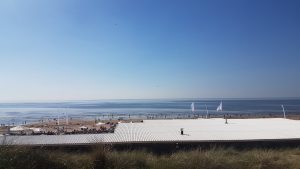
For all its charms though, Amsterdam is really only worth a day. There is so much else to see around it. We found a lovely loft apartment in Haarlem that could easily sleep three and made short day trips from there. First place on the list, THE BEACH. Bloemendaal aan Zee will never be able to compete with the likes of Portugal or Spain. But after 8 months in gloomy London, this was a dose of vitamin sea that was sorely needed. We got to soak up loads of sun, play in the sand and started to look vaguely Southeast Asian again.
The beach at Bloemendaal aan Zee. It’s not Ibiza but my sausage legs ain’t complaining.
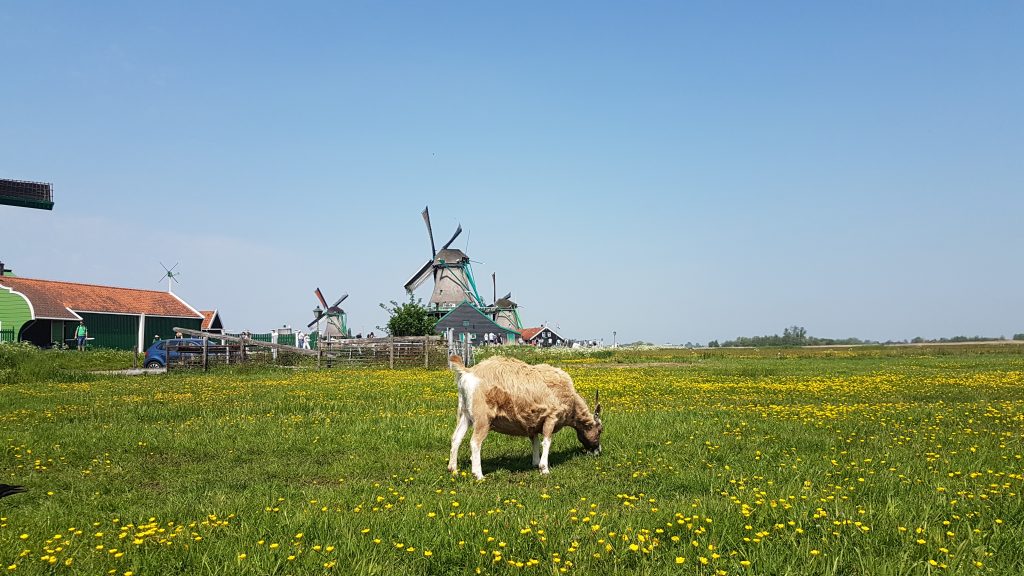
If you can spare the time, the windmills of Zaanse Schans are also worth a quick visit. They are still grinding out some delicious old mustard, and there is also a huge cheese shop where you can taste pretty much everything in the shop. We ended up with a delicious smoked cheese that we can’t wait to break into.
The old windmills of Zaanse Schans, still merrily churning out flour and mustard.
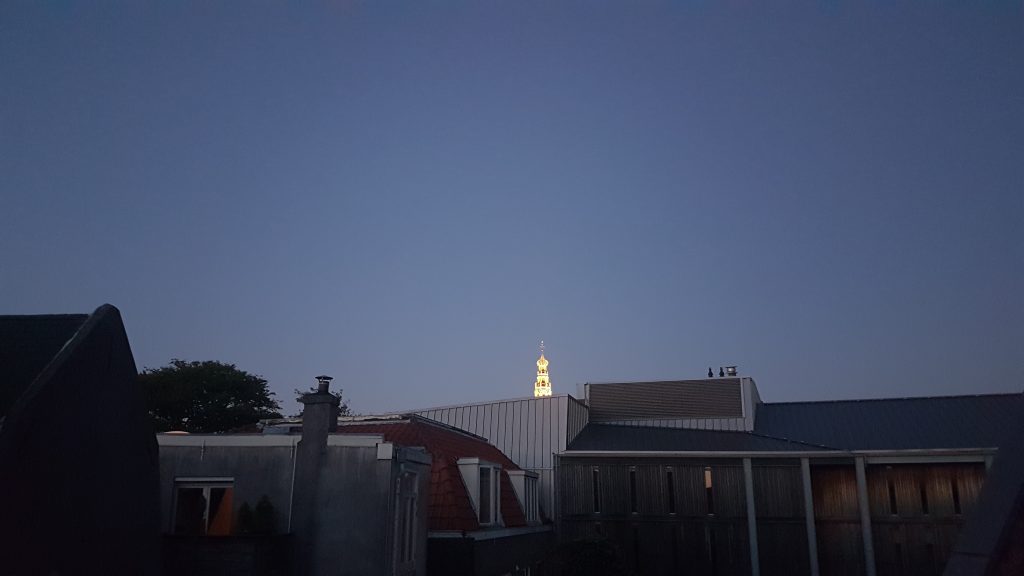
Sadly, we didn’t take many pictures of Haarlem but perhaps that is a reflection of how at home we felt there. Every night, we were serenaded to sleep by the softly chiming bells of the Grote Kerk, its tower brightly lit on the horizon. Since 1562, the bells have been rung between 9 and 9:30pm to signal the closing of the city gates and the tradition has carried on ever since.
The Food
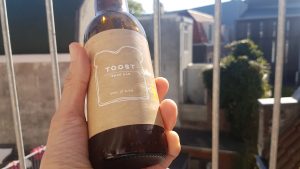
Holland, where toast comes in a beer bottle and coffee comes in a wine glass. Both tasted great.
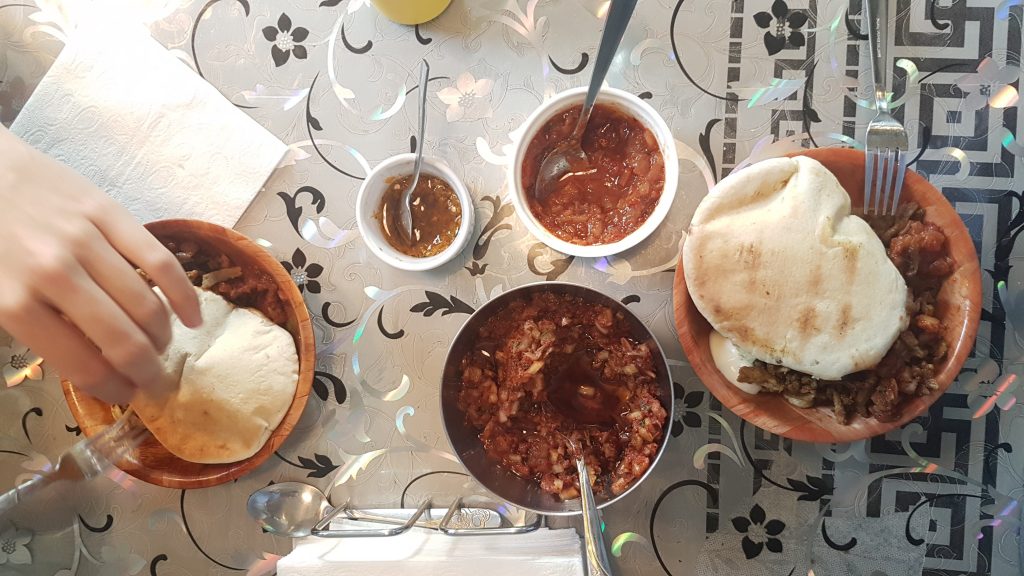
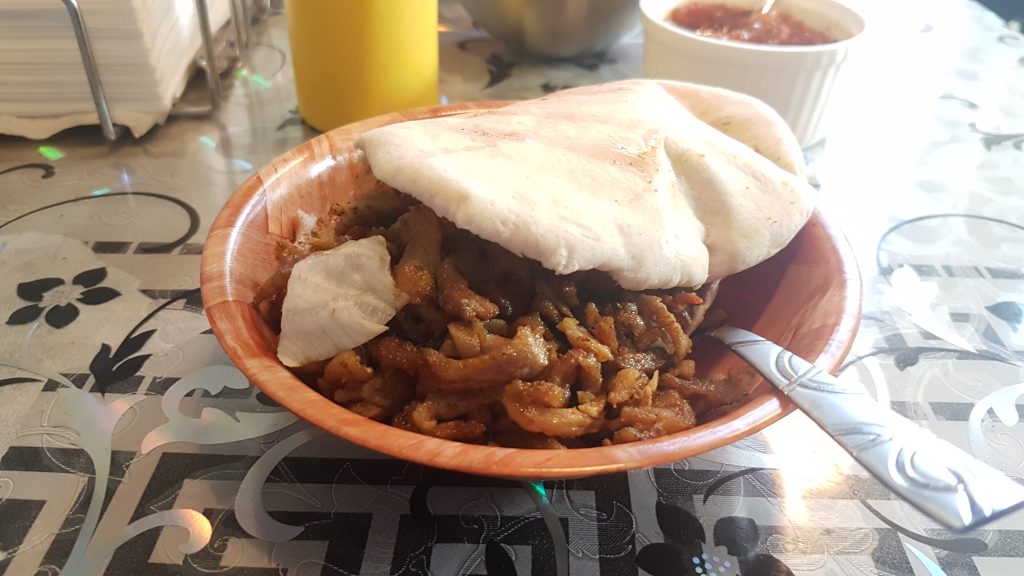
We are proud gastrotourists so no trip is complete without a huge serving of local food. I like having a good kebab on the first night in Haarlem and a quick Google search brought us to Shalom Grillhouse, which turned out to be a whole new culinary experience. Here the shawarma is served alongside plates of Middle Eastern “sambal” which you mix into the meat until it’s as tasty and spicy as you like. I love that it was proper spicy too. None of that middling Tabasco mildness. This was an absolute revelation and I really wish we’d had enough time to go back.
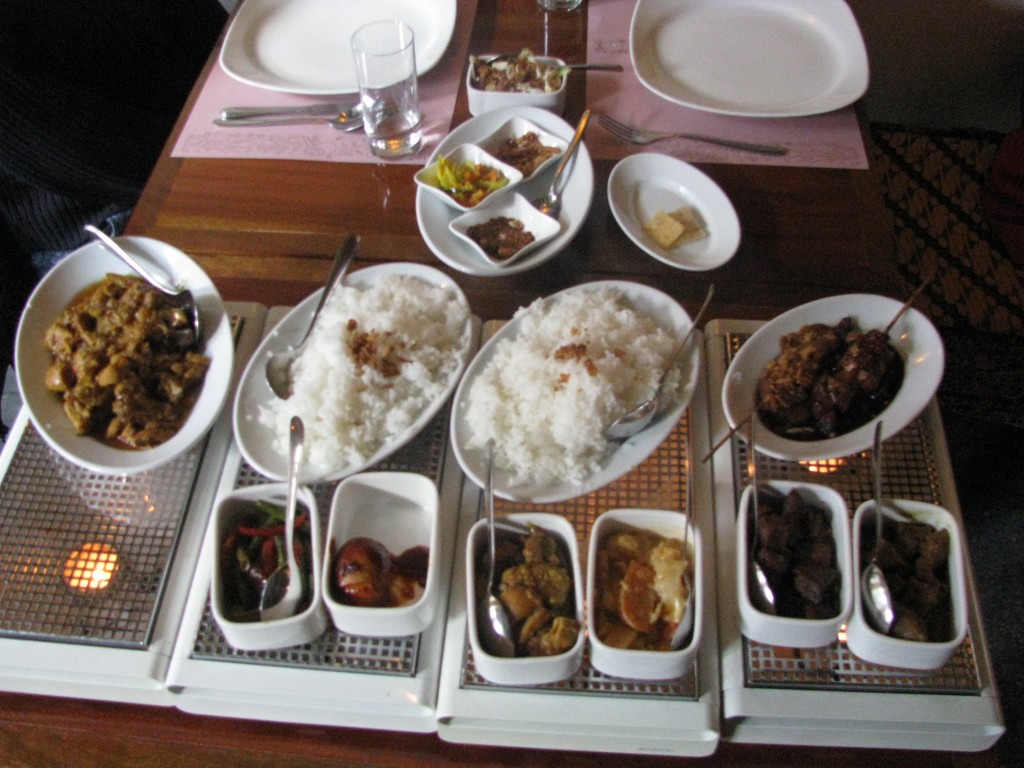
But Haarlem has treats galore. On our second night, we went for the famous Dutch rijsttafel. Literally translated as “rice table”, this is a set meal of rice with 10 to 12 Indonesian side dishes that the Dutch took home with them from their adventure in the Indies. De Lanchende Javaan is a Haarlem institution run by three brothers who moved to the Netherlands from Indonesia more than 30 years ago and are still cooking up a storm. Their version of rijsttafel includes satay, sayur lodeh (curried veggies), achar (spicy pickles), beef rendang (spice paste), gado gado (Indonesian salad with peanut sauce), sambal egg and much more. It was so good we literally forgot to take any photos. I could hardly believe I’d found better rendang in Holland than in most places in Malaysia and Indonesia.
The rijsttafel at De Lachende Javaan was so delicious that we forgot to take a photo, so I’m going to have to leave you this one from Pierre Vanderhout’s Travel Blog
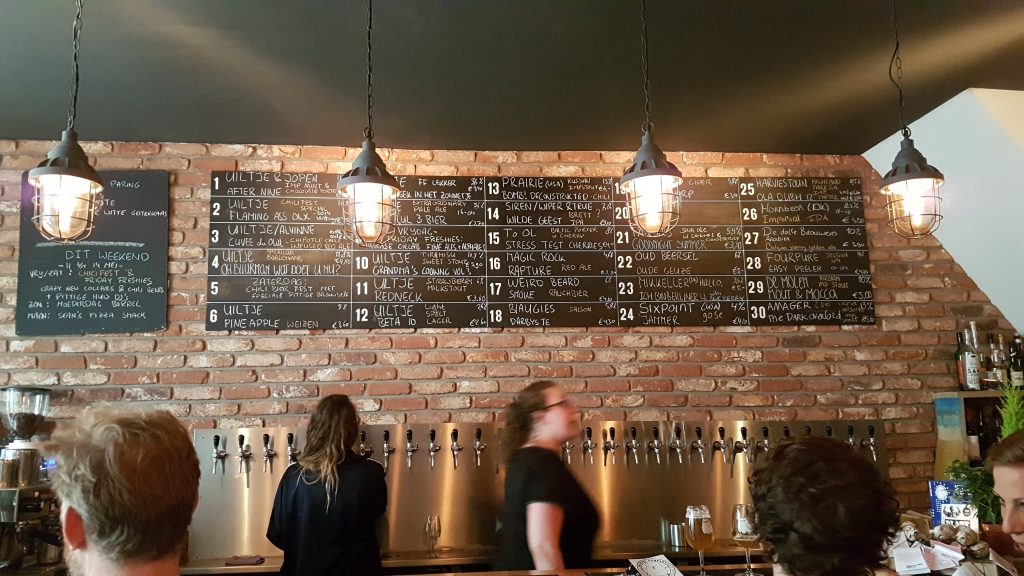
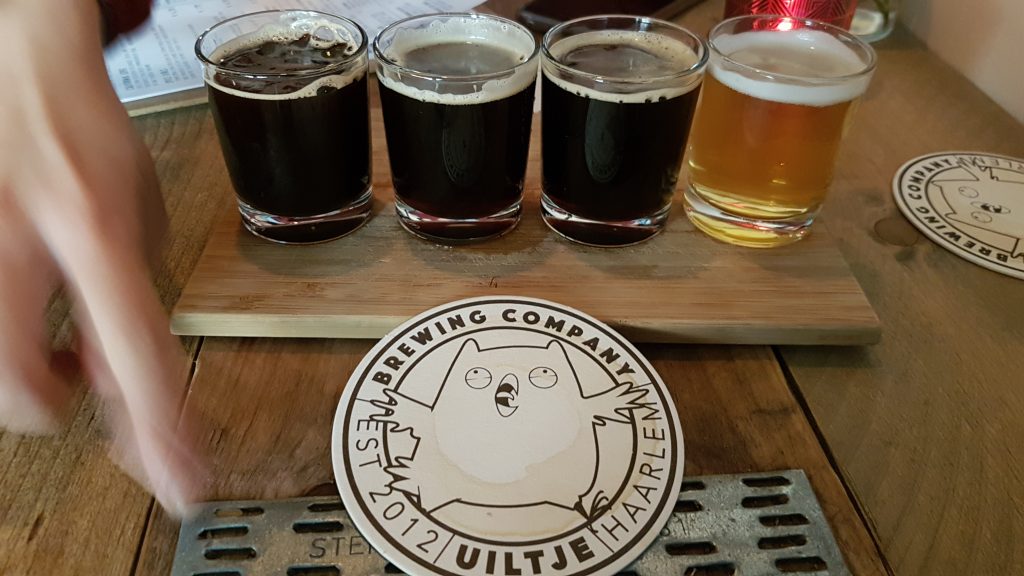
We needed something to wash down all that good food. Luckily, the Uiltje craft beer bar was just around the corner. Uiltje is Haarlem’s very own craft brewery who have 30 or so different beers on tap at any one time. You can get tasting flight for just €10 and they do some amazing things with stout especially. Before Uiltje, my experience with stout had been limited to Guinness. Then I spent an afternoon sipping stout laced with liquorice, cherries and tiramisu and now things will never be the same. I also had my first taste of smoked beer, which is made from malted barley dried over an open flame and fills your nose as it pleasures your taste buds.
Uiltje’s tasting bar in Haarlem has more than 30 beers on tap and tasting flights to get you through them. From L – R: Baltic Porter with Cherries; Tiramisu Stout; Heavy Stout with Liquorice; and Smoked Rauchbier
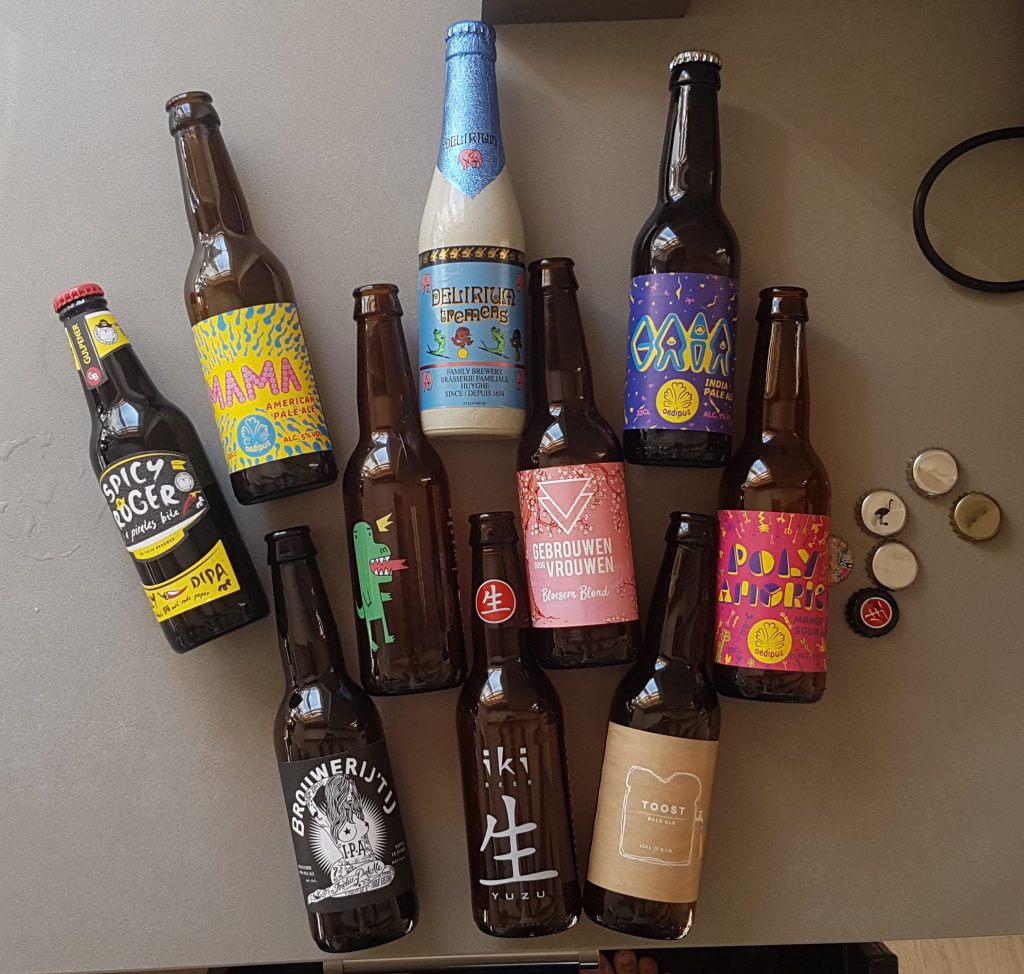
Perhaps the only downside to Dutch craft beer is its high alcohol content, usually 9 to 13%, which limits how much you can drink. But I suppose that’s a good thing. Dutch beer is for savouring, not getting sloshed. Still, that didn’t stop us from popping into the local supermarket and hauling some of the good stuff back home.
Data Spark is a student placement scheme at Imperial designed to uncover insights and solve real-world business problems. It lasts around 6 weeks and you’re able to work with students from different study programs. Throughout this journey, you get great advice from academic and industry mentors.
Having finalised the program last week, I wanted to share what I enjoyed the most:
Applying new skills
One of my favourite parts of this program was that I was able to apply several skills learned during my current study program (MSc Business Analytics). I was able to run different models, work on network analysis and and apply several visualisation techniques. These models led to several interesting insights that were relevant for our client.
This is now an example I can use to show the techniques I’ve learned and how I’ve applied them (very helpful when applying for jobs!).
Mentorship
My team and I had the great opportunity to work with Dr Rebecca Pope at KPMG as industry mentor and Dr David Birch as academic mentor. Their strong technical capabilities and consulting experience brought a lot of value to our team. We held weekly meetings that guided us on what technical analysis to perform and how to create a compelling story for our client. This was a unique experience to get close guidance on our work and ideas.
Team Work
We were five team members with different backgrounds and skills. We had different views and angles to solve problems. This became a great opportunity to learn from each other. At the same time, we could start developing project management skills to make sure that our collective work was meeting the project’s goals.
If you have any questions about the program, feel free to use the comments section below!
You can also find more information about this program here.
This week I celebrated my 25th birthday, which put me in a slightly reflective mood. Here are 25 things I learned in 25 years. Cliché warning!
Failing doesn’t make me a failure. The only way to avoid failing is to stop trying, and this won’t get me anywhere.
I fight for my friendships, but accept it when they die out. Throughout my life I’ll be able to keep only a few good friends, most of them will disappear at some point. I let them go and make the room in my life for new amazing people waiting for me out there.
Say ‘yes’ to life!
Saying ‘yes’ is much more powerful than ‘no’. I constantly step out of my comfort zone. It’s way better to regret having done something than missing out on new experiences. These three letters brought me to London, gave me amazing friends, let me travel the world and fulfil my dreams. These few times when I wished I had said ‘no’? They were valuable too, now at least I know what I don’t want.
If I really want to say ‘no’, I do, no matter what others say. Everyone else is getting drunk? If I don’t feel like it, a short ‘no, thanks’ is fine. People keep asking me to do something for them? I still struggle with it, but I’m learning to be assertive and politely refuse.
The vast majority of people are good. Trusting people, even strangers, makes my life much more pleasurable and easier. Yes, I did get hurt. But I still believe that one tear of sorrow for hundred tears of happiness is a pretty good ratio.
My body is my friend. No, it’s not perfect, I’d like to change a thing here or there. However, I have ten fingers to type this post and a pair of eyes to read it, which I’m grateful for. Every day I try to accept imperfections and take care of my body, because, guess what, I won’t get a new one.
Planning is overrated. I have dreams, even vague plans, but don’t stick to them at all costs as I used to. Best things in my life happened when I took the unexpected opportunities it offered.
I spend my holidays the way I want. I used to be a “proper tourist”, running between must-sees, mindlessly taking hundreds of pictures and sticking to a tight schedule. Now I’d rather ignore the Louvre just to get lost in random neighbourhoods, possibly with locals I met ten minutes ago. Pictures? I don’t care. If something is truly amazing, I’ll remember it anyway, or find plenty of better pics online. If I forget, it means it wasn’t worth a picture. I prefer to stay in the moment and just enjoy.
I don’t put all eggs in one basket anymore. Investing all my time and energy in one aspect of my life would surely backfire one day. A wonderful boyfriend? Great, but I don’t forget about my hobbies and friends. Exciting research project? Lucky me, now time to chat with my family. That way I make sure that even if something doesn’t go as planned, I still have plenty of valuable things in my life left.
The only people who can make me cry are the people I have a deep connection with. I care about them, that’s why their words or actions may be so painful. Otherwise I just shrug my shoulders, this person isn’t worth a single tear!
Hiking and camping in the nature – nothing could make me happier.
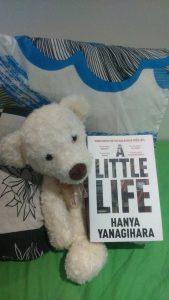
There’s no one single way to grow up. Some 16-year-olds are proper adults, some at 40 still behave like children. I decided to take my time, it’s not a race! Instead of fighting my inner child, I just let it be. Yes, I sleep with a teddy bear.
Comparing myself to others makes me truly miserable. I’m me, better in some aspects, worse in some, and mostly just different in general. I tend to compare myself to the prettiest, smartest and most successful, so I cannot win. That’s why for each negative comparison I try to find a positive thing in myself. Still struggling with it, but I keep trying!
Families can be a pain in the neck, but they’re the people who shaped me and will be there for me, always. Always, no matter what happens. For my parents I’ll always be this little 10-year-old who needs to be taken care of, so I learned to just accept it, it’s not worth fighting against.
Life without music, theatre and books would be really empty. A good song can make me smile in seconds, a visit to West End lets me forget about all my problems and a fascinating book puts everything into perspective.
Teddy bear and books make the life brighter!
Eating the cake is more fun than having it. Really, it’s not the last cake I’ll ever have, so I’d better stop delaying nice things in my life!
Learning languages lets me understand other people better. I don’t mean it only literally, I’m talking about understanding their way of thinking. Did you notice that Germans tend to behave differently than Italians? Spaniards and Brits don’t seem to be the same? Since I’ve been digging into their languages, I see why.
One can’t find many good news in the media. Wars, epidemics, earthquakes and hunger, everywhere. Since I stopped following, I’ve been feeling much better. I’ll hear about the important events and ways I can help the victims anyway, I don’t live on a desert in the end. Being bombarded by other people’s misery won’t make anyone happier, neither me nor them. Selfish? Maybe. But did I really do anything constructive with the bad news I kept hearing? Probably not.
Science is not religion. I verify scientific claims, to distinguish between true discoveries and fake news. It goes without saying that while we can choose which (if any) god we believe in, science is the same for everyone, wherever we live, whoever we are.
I try to avoid negative people. By negative I don’t mean people who are struggling (for example with depression), but those who don’t bring anything valuable into my life. Even if I don’t like someone, or they don’t like me, we still can learn from each other. However, if the only thing I get out of the relationship is seeing the negative aspects of myself and the world, it’s not worth it.
People should be free to do and think whatever they want as long as they don’t hurt others. I don’t care what you believe, what you wear, who you sleep with or where you come from, unless you want me to. If we stopped judging others, life would be so much easier.
All the time we change and discover who we truly are. Even if I can’t do or don’t like something now, I might enjoy it in a few years. Examples? I used to hate (and be terrible at) public speaking, now I do it all the time. I couldn’t run fifty meters, now thinking of a half-marathon. I wouldn’t touch peanut butter, now I open a jar of this delicious spread every day.
You don’t believe in miracles? Just go to the forest, visit the seaside, look up to the sky. Nature is a true miracle and it took me a while to appreciate it. It’s beautiful, it works perfectly and we, human beings, shouldn’t mess with it.
What doesn’t kill us makes us stronger. I didn’t believe that, but now I do. When years ago I got very sick, I kept asking: “Why me?!”. Now I’m grateful for the though experiences, because they taught me that I can survive anything.
Things work out in the end. No matter how desperate the situation seems, I’ll survive. It doesn’t mean it’s good to be passive, but worrying too much isn’t necessary either.
I look forward every single day. And week. And year. Who knows what the next 25 years will bring me!
…are paved with gold? Is that what Dick Whittington heard when he started his journey to London all those years ago? Well maybe there’s no gold paving, but there’s more to being in London than following the highways of learning and earning, and so there is surely plenty of opportunity for detours along the byways of cultural advancement as well. The legendary Whittington rose from a pauper boy to Mayor of London, via cats, rats and wealth, undoubtedly acquiring cultural improvement in the process. And now? What is there for a poor mature student to do in London when not under the academic cosh at Imperial? I have indeed had the opportunity to check out a few of the cultural delights available in the metropolis: theatre, museums and galleries, for a start.
There are of course the great museums on the college’s doorstep in South Kensington. The Natural History museum, which recently changed its iconic dinosaur skeleton in the atrium for that of a blue whale – maybe not as dramatic but backed up with a second specimen, a complete cetological effigy, so a more fleshed-out example than its extinct cousin. The Natural History Museum is very popular with families, so avoid school holidays when the queue to get in can be daunting. Once inside it’s worth any wait. My favourites are the galleries in the red zone, with a compact journey of discovery through the history of the universe. However, I prefer the other great museum next door to Imperial – the Victoria and Albert. The V&A is an artistic treasure trove, with everything neatly grouped in various themed galleries, so that on each visit I can select whether I’m interested in Korean art, jewellery or European art from 1600 to 1815, etc. There’s also a super little café in the Sackler courtyard off Exhibition Road – all glass and metal – offering interesting sandwiches, salads and snacks for an occasional off-campus change from the Imperial routine. I’m still to venture into the Science Museum – also extremely popular with families, as well as seemingly endless columns of primary-school children in crocodile pairs, so choose the timing of your visit with care. This houses many interesting displays, I’m sure, but there’s only one object which really motivates my intended visit: Stephenson’s Rocket, made in 1829 in Newcastle-upon-Tyne and becoming the first successful commercial railway locomotive. Other London museums on my list but not yet visited include the house of Victorian architect John Soanes on Lincoln’s Inn Fields which remains as it was during his lifetime almost 200 years ago.
There is of course the west-end for theatre. I’ve managed to see a couple of shows so far – as always the repertoire seems to be dominated by musicals, though it’s possible to find a few old-fashioned plays as well. The debating chamber of the old City Hall proved an unusual and authentic setting for Agatha Christie’s courtroom drama Witness for the Prosecution. I’m very excitedly looking forward to making my first visit to the Globe later in the summer, for Shakespeare’s Hamlet. I’m told that it’s possible to buy standing-only tickets at the Globe for a miserly £5, suitable for most student budgets, but do check the weather forecast first as the central standing atrium is uncovered. Splash out a little more and you can find yourself in the Royal Opera House, the Coliseum or Covent Garden. The Royal Festival Hall on the Southbank has an enormous stage – ideal for the massed ballet troupe for Prokofiev’s Nutcracker.
My personal cultural high spots are the many art galleries throughout London. I am now a member of the National Gallery, a venue of architectural splendour with a vast range of paintings and sculptures. I like to choose a single gallery per visit and immerse myself in the works of a single artist or school. You can also sign-up for weekly lectures on the history of art. My favourite however, and my respite during long dry days of revision, is to pop into the Tate Britain on Millbank to contemplate some Turner classics or find a new artist to explore – on many occasions I would break off from my studies walk the 20 minutes or so from my flat to the Tate, spend a half hour lost in contemplation and return refreshed and ready to take up the pen once again. Maybe there is indeed something complementary between the paths of learning and of culture?
“Imposter syndrome is a recognised phenomenon, first identified by psychologists in 1978, and describes a feeling that your achievements are undeserved and the fear of being exposed as a fraud. Those with imposter syndrome tend to feel that luck rather than ability lies behind their successes.”(1)
Getting into Imperial was a massive deal for me. I had not planned to apply at all- but I didn’t want to spend the rest of my life looking back with what ifs.
I didn’t think I was smart enough. I’ve always had a fluctuating impression of myself; ranging from borderline conceited to possessing a pretty low self esteem.
In terms of academic success in school, I often attributed it to being more of an efficient worker and having surprisingly good cramming skills rather than intelligence. At the time, it felt like all I did was memorise mark schemes and regurgitate them onto the exam papers.
I sometimes come across university students who say that A-Levels were a breeze- I’m not sure whether they’re just being pretentious or if they’re actually child/teen prodigies. I know for a fact that I really struggled through my final two years of secondary school, often rushing to the toilet in between classes so that other people didn’t see me breakdown.
I was particularly having a difficult time with Chemistry; I had achieved a B grade at AS and needed an overall A grade to get into medical school. That meant I needed to attain a really good grade at A2 level to pull up the average and thus final result.
Having focused most of my efforts on Chemistry throughout the year, it left much less time for the others- notably Biology. I recall having my first ever panic attack during my final Biology A-Level paper. I was extremely close to having a complete mental breakdown about half way in, but luckily I pushed through and just wrote down anything and everything that came to mind.
During the summer, when A-Level results day was getting closer, I was looking into clearing as I was semi convinced I had underperformed. Fortunately, I eventually found out that I had achieved AAAB. A in three sciences, B in Maths. It was the biggest relief to know I had gotten into my insurance choice- Newcastle medical school. To be honest, I had my heart set on going there anyway as from the start I heavily doubted I’d end up at Imperial.
And I was right- I didn’t achieve the grades to be here. The average A-Level offer for medicine at Imperial, as well as the one I received, was A*AA. In fact, I was so set on going to Newcastle that when I saw on UCAS that my place at Imperial had been confirmed anyway- I called up Newcastle to ask if they would still take me. They said yes, on the terms that Imperial would ‘release me’.
Flash forward to this week- I sat my first big medical school exam: Molecules, Cells and Diseases (MCD). What abloody nightmare :’) By the time I had finished my paper, there was still about 40 minutes remaining so I was left sat there in deep contemplation. It occurred to me how much my mindset had changed since I left secondary school.
Exams back them were the be-all and end-all of things; it was unacceptable to not score an A, or at least significantly better than the average cohort grade. Whereas now, my primary aim is simply to pass the exam- that in itself is enough for me.
N.B. I finished early not because it was a breeze and I knew all the answers, but quite the opposite.
There will always be someone who’s smarter than you and more hardworking than you, and being at Imperial has allowed me fully understand that. The whole Big fish, small pond to Small fish, big pond transition analogy is true and it’s daunting to be surrounded by actual geniuses every day. However, every day I am also surrounded by positivity and encouragement.
I cling on to what my personal tutor told me at the beginning of the year- along the lines of, “There’s a reason you’re here. They didn’t give you a place because they pity you, but because they believe in you. You are smart enough and you do belong here.”
So much love,
Alex (:
(1) NHS Employers. Tweet chat: Imposter syndrome- the enemy within. Available from: http://www.nhsemployers.org/events/2018/03/tweet-chat-on-imposter-syndrome [Last accessed: 5th May 2018].
It really is that time of year again…the stress levels are rising and 5th year exams are approaching. We have about 6 weeks left until our first exam and although that sounds a while away still, there is a lot to cover. On top of this, we are still attending our hospital attachments daily.
I wanted to share with you a few resources that I am using to help me through this revision period this year, hopefully it can help anyone else revising for clinical exams and not sure where to start!
Brainscape: Imperial Medicine students past and present have made flashcards on this amazing app that is a great revision tool. You can download the cards on your ipads and test yourself on them during journeys/lunch time on attachments.
DemDx: This has been a fantastic tool for me whilst revising for my specialities exam this year. It helps you organise your thoughts in a logical way and understand how you reach a diagnosis. I use this on the wards when I see a patient to help me understand all the differentials it could be and then understand how I can narrow them down.
Passmedicine and Pastest: Both are great question banks that you can test your knowledge with.
Imperial Blackboard resources: Watching lectures back for our pathology exam, our online e-modules and also quizzes that lecturers have put up are all invaluable.
Imperial online library: It has been such a treat not having to take out all the books I need for revision, but instead I can use the online library imperial has to access textbooks on my ipad!
Guidelines: Imperial gives us access to BMJ best practice which is a great tool to understand guidelines and management, and on top of this we are going over the online NICE and RCOG etc guidelines so we know the up to date stuff.
What is great this year is that as we have a practical exam (PACES) for Paediatrics, Obstetrics & Gynaecology and Psychology- which means that we are practising in groups and this is saving us all from being attached to our computers and textbooks 24/7.
Don’t get me wrong, it is not all heads down and work….we are still getting time to have a recharge in the evenings watching films and hitting the pub. But now that 5th year counts for our rankings when we apply for jobs after graduation, and revising for it will help us be safe doctors, it is getting more serious then ever…
For now, I am home with my family this weekend getting on with revision and enjoying the weather! Medical school is all about time management and “little and often”, and Imperial really do support us to ensure we are (hopefully!) well prepared for these exams and life as a doctor.
The Easter holidays have been and gone, punctuated by too much chocolate, lie-ins and the guilt of not working. All of this however, gave me a chance to sit and enjoy some quality movies. One evening, as I settled down to choose a film (it always takes me far too long) with my last remaining Easter egg, I stumbled across a good-old Will Smith movie. Now, you wouldn’t be mistaken for wondering where I’m going with this story, but bear with me…
Seven pounds is a 2008 Drama/Romance film featuring Will Smith, Rosario Dawson and Woody Harrelson among others. Without completely ruining the plot, the movie starts with the main character, Ben Thomas (Will Smith) phoning 911 to report his own suicide. Gripping stuff. The rest of the film is spent figuring out why he is committing suicide. It turns out, Ben did something he deeply regrets and so decides to do everything in his power to make up for it. To achieve this, he decides to change seven people’s lives for the better (hence the seven in the title). The catch is, Ben has to make sure they deserve it beforehand. Ben sets out to improve the lives of people from hugely different walks of life. The main way he achieves this is through organ donation. The end of the film is the most poignant, as the viewer witnesses the happiness Ben’s actions have on the people he has chosen – he massively changes their lives.
It got me thinking, although slightly morbid in parts, the film did a fantastic job of raising awareness to the power of organ donation and the huge benefits it can have on people’s lives. In light of this, I did a bit of research about organ donation and decided to dedicate this blog post to it.
Organ donation
According to the NHS Organ Donation website (https://www.organdonation.nhs.uk), organ donation is the donation of organs to individuals who require a transplant. However, a key aspect of the process is obtaining consent from both the donor and their family. This is required as much organ donation can only occur after death.
The need for organs
According to the NHS Organ Donation website:
“Around 6,500 people across the UK are waiting for an organ transplant.”
“Three people a day die in need of a transplant due to a shortage of people being willing to donate organs”
Donating organs is one way someone can make a lasting positive impact on another person’s life.
Ways to donate
Organ donation is done in three main ways; brain stem death, circulatory death and living donation. Organ donation following brain stem death is when a donor has lost consciousness or their ability to breathe. Circulatory death is when a donor loses the function of their heart or lungs, often after a cardiac arrest from which they could not be resuscitated. Finally, a living donation is when a living donor donates a whole or part of an organ/tissue.
The importance of consent
Organ donation can be an emotional topic. In many cases, it is the family of the deceased that have to make the final decision to donate, often at a very emotional time. In light of this, the NHS encourages people that want to become donors to either register as a donor on the NHS Organ Donor Register or tell a close family member of friend that they wish to donate their organs. It must be stressed, the NHS will not use a donor’s organs without the full consent of the donor (if alive) or their family.
What can be donated?
A huge range of organs can be donated, potentially changing countless lives for the better:
Kidney – Donors can donate their kidney when living or following death. Kidney donations mean someone stops needing daily dialysis, giving them a chance to lead normal life.
Heart – Donating a heart is only done following death. However, it can save a heart disease sufferer’s life.
Liver – Livers can be donated either when living (only part of the liver can be donated) or following death. Livers are valuable, as their work in the body cannot be replaced by a machine. Donating a liver can help someone with liver failure.
Lung – Lungs are generally donated following death and can help people living with cystic fibrosis, lung disease (COPD) and lung scarring.
Pancreas – Donated after death, pancreas donations can transform the lives of people living with treatment-resistant type 1 diabetes and/or kidney disease.
Small bowel – Donating the small bowel is typically done after death. It can help people who have short bowel syndrome (their small bowel is missing/removed/damaged) or Crohns disease.
Cornea – Donating a cornea could save someone’s sight, one of the most necessary senses in our modern age.
In some cases, if individuals can’t or don’t want to donate organs they can donate tissues and bone:
Heart valves – Donated after death, heart valves can save the lives of children born with heart defects and adults with heart valve damage.
Skin – Donating skin can help treat victims of serious burns.
Bone – Donated bones can be used when providing joint replacements.
Tendons – Donated tendons can rebuild damaged joints.
Making a decision
Despite the desperate need for organs in the UK, deciding to donate your organs isn’t a decision to take lightly. If you’re considering becoming a donor, do your research and take into account any personal wishes/religious beliefs you may hold. Even if you don’t go through with it, it’s not for everyone, at least have the conversation with family and friends. Raising awareness about the importance of organ donation is key to getting more people to help. Who knows, you could help save someone’s life even if you’re not around.
So all in all, from watching a film as procrastination during the Easter holidays, I learnt a lot about organ donation. This counts as revision right?
IMPORTANT NOTE:
All of the information about organ donation in this blog post was obtained directly from the NHS Organ Donation website. This blog post should NOT be used to make any decision, it was simply written to raise awareness. If you wish to obtain further information about organ donation visit https://www.organdonation.nhs.uk/.















 I cling on to what my personal tutor told me at the beginning of the year- along the lines of, “There’s a reason you’re here. They didn’t give you a place because they pity you, but because they believe in you. You are smart enough and you do belong here.”