Tag: PhD Students

4Cs Science Communication Writing Competition – People’s Choice Award

by Clavance Lim, MSc Student in the Department of Computing

Translating words to numbers

As humans, one way in which we are unique is our ability to communicate with complex language (arguably, science students possess this skill too). In contrast, computers ‘think’ not in language, but in binary numbers. Instead of the decimal system we count with, which uses the ten unique digits ‘0’ to ‘9’, computers ‘think’ only in ‘0’s and ‘1’s. This is because their hardware is controlled by tiny switches, which turn electrical current on or off. As it is difficult to control electrical current at such a microscopic level (switches can be as small as only 10x the size of an atom!), the hardware only works with two states, ‘on’ and ‘off’, which correspond to ‘0’ and ‘1’. So everything we do on a computer – from pressing a single key on the keyboard, to watching a movie – has to be converted to a series of instructions in the form of ‘0’s and ‘1’s.

In recent years, there has been some hype surrounding the pursuit of ‘artificial intelligence’, or the creation of computers or machines to perform tasks requiring human intelligence. To achieve this, any task must be represented in the form of numbers, for the computer to process it. Thus, one question the field of natural language processing faces is: how do we translate words to numbers, while allowing words to retain their linguistic meaning?

A key breakthrough has been to design algorithms which convert each word to a vector (which is simply a row of many numbers). A famous example of the success of this approach is when researchers managed to show that the vectors for ‘Man’ deducted from ‘King’ plus ‘Woman’ resulted in the vector for ‘Queen’.1
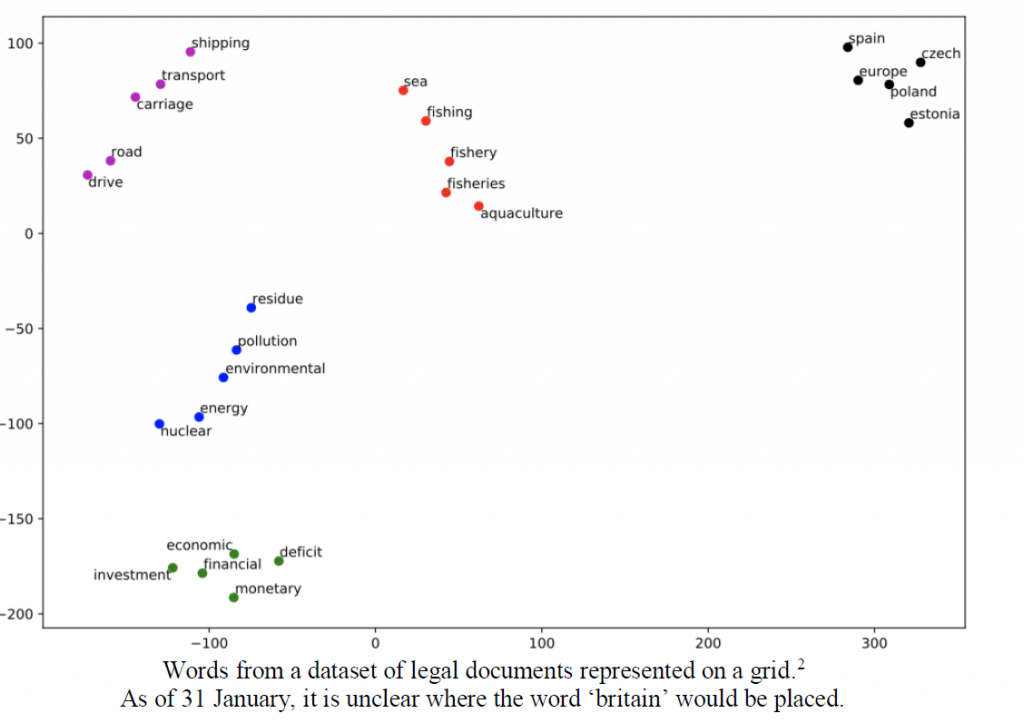


Part of my education at Imperial has been to examine the application of this to legal documents, a field in which language is particularly important. For example, we can see that even when mapped to a small grid, words which have similar meanings are placed closer to each other.

Meaningfully representing words as numbers unlocks the potential for computers to do much more. For example, using a much older method,3 the first paragraph of this essay was summarised as:

“Instead of the decimal system we count with, which uses the ten unique digits ‘0’ to ‘9’, computers ‘think’ only in ‘0’s and ‘1’s. So everything we do on a computer – from pressing a single key on the keyboard, to watching a movie – has to be converted to a series of instructions in the form of ‘0’s and ‘1’s.”

This already seems to capture the gist of the paragraph. With current research, the aim is to accurately summarise documents not only by picking out the most important sentences, but by rewriting the entire passage using words unseen in the text itself. From distilling complex articles to designing intelligent chatbots, the potential of this research is tremendously exciting.

References:

  1. Mikolov et al. (2013), Efficient Estimation of Word Representations in Vector Space, available at: https://arxiv.org/abs/1301.3781
  2. This diagram is from my dissertation, available at:
    https://www.imperial.ac.uk/media/imperial-college/faculty-of-engineering/computing/public/1819-pg-projects/An-Evaluation-of-Machine-Learning-Approaches-to-Natural-Language-Processing-for-Legal-Text-Classi%EF%AC%81cation.pdf
  3. Mihalcea and Tarau (2004), Bringing Order into Texts, available at: https://web.eecs.umich.edu/~mihalcea/papers/mihalcea.emnlp04.pdf
4Cs Science Communication Writing Competition – 1st Place

by Michelle Lin, MRes Student in the Department of Life Sciences

Cryptococcosis: The Silent Killer

The young patient presented to the hospital with a fever, headache, seizures, and both eyes bulging out of their sockets. Suspecting an infection, doctors first treated the boy with a common antibiotic, Penicillin, presumably to knock out whatever bacterial agent they believed was causing his symptoms.¹

With the boy’s condition failing to improve, doctors kept the boy hospitalized as they searched for a diagnosis and administered various antibiotic and antiviral medications.

As his hospital stay dragged on, the boys condition continued to deteriorate until, after 52 days of ineffective treatments in the hospital, the boy succumbed to his illness. Post-mortem, doctors were able to confirm the boy had been suffering from cryptococcosis, an invasive fungal infection that, without proper anti-fungal treatment, is almost uniformly fatal.

He was six years old.

——————————————————————————–

A fungal infection?

Pathogenic fungi (meaning they are disease causing) are the silent killers of the emerging infectious diseases. Rarer than bacterial and viral infections, invasive fungal infections are often overlooked as a major cause of mortality, while still accounting for approximately 1 million deaths a year.²³ The fungal infection that killed the young boy described above, cryptococcosis, is one of these “silent killers.” Caused by two species of fungi commonly found in the environment, Cryptococcus neoformans and Cryptococcus gattii, cryptococcosis is responsible for upwards of 181,000 deaths per year.⁴

How does infection occur?

Acquired through exposure in the environment, infection can occur years after the initial inhalation of airborne Cryptococcus particles. After traveling through the respiratory tract, these spores settle in the lungs and from there can infect virtually any organ in the body, with the most common targets being the brain, heart, eyes, and lungs. While cryptococcosis infections can be seen in patients with healthy immune systems, the majority of cryptococcosis cases occur in “immunocompromised” populations. ⁵

Yikes- so what is there to do?

With low- and middle-income countries disproportionately affected by cryptococcosis, disease prevention is often the most sensible public health strategy available.⁶ Knowing where Cryptococcus is in the environment gives public health officials the ability to set guidelines for where vulnerable individuals should avoid going and could even prove beneficial for patients by factoring high-risk locations into the differential diagnosis pipeline. The faster a diagnosis is reached with cryptococcosis the better, as timely delivery of anti-fungal medications can be the difference between life and death.


However, all of this requires knowing where C. gattii and C. neoformans are in the environment. That’s where my research comes in. Using field work, statistical modelling, and GIS, I map where in the environment Cryptococcus could be found.

By modelling known presence locations and environmental variables, we are able to uncover the environmental factors most important to each species’ geographic spread and can even create predictive maps depicting where Cryptococcus might be lurking.

By highlighting environmental reservoirs of infection, we are able to determine areas that pose a higher risk of disease transmission in the hopes of one day reducing infections and preventing premature deaths from this environmental scourge.

4Cs Science Communication Writing Competition – 2nd Place

by David Ho, PhD Student in the Department of Physics

A really strong magnet can dissolve Everything

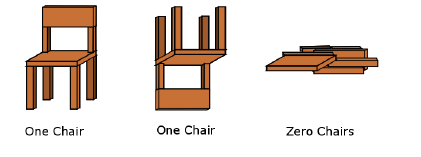
One wrong thing everyone knows about the universe is “conservation of matter”. It seems obvious: if you have a chair, you can move it, or turn it around, and you still have one chair. If these were the only experiments you did, you might proclaim that the number of chairs in the universe always stays the same.

Of course, it doesn’t take much thought to counter this: with a hammer you can easily change the number of chairs in the universe. But if you collect every splinter of leftover wood, you’ll find the same amount before and after the destruction. Is wood conserved? Of course not; just light a match. But if you count all the atoms…


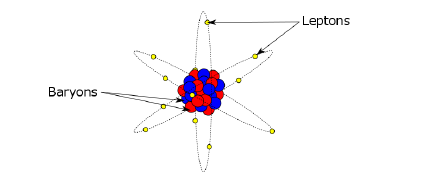
This example could continue for a while. The main theme is that certain things appear to be conserved, but if you put in enough energy you can break apart the original unit and find a smaller one. The natural question, then, is where does this end? To current physicists’ best knowledge, there are two endpoints to the chain of reduction: all matter is made up of baryons and/or leptons.

The baryons that most people are familiar with are protons and neutrons(1). The most familiar leptons are electrons (less familiar are neutrinos, muons and tauons). Every interaction ever observed conserves baryon and lepton number(2): you can change neutrons into protons, or neutrinos into electrons, but we have never seen a proton become an electron.

(1) Many readers will be aware that baryons contain quarks, though quarks are never found alone. This makes little difference here, but it may be reassuring to know quarks have baryon number 1/3. (2) More physics-inclined readers (or fans of Dan Brown) might protest that I haven’t mentioned antimatter. This keeps things clearer and briefer, but I’ll note that giving antiparticles negative baryon or lepton number keeps the conservation law working.


Baryon and lepton conservation seems, experimentally, to be unavoidable. But theoretical physicists have found a loophole: a process known as the sphaleron can transform baryons into leptons and vice versa. This is a type of quantum tunnelling: the strange rules of quantum mechanics allow a baryon to pop out of existence and a lepton to take its place. Like nuclear fusion in the lab, sphaleron processes are possible but haven’t been achieved yet. This is because they are phenomenally unlikely: the chance of seeing one is about one in 10160, so small lightning-striking-lottery-ticket analogies aren’t worth the effort.

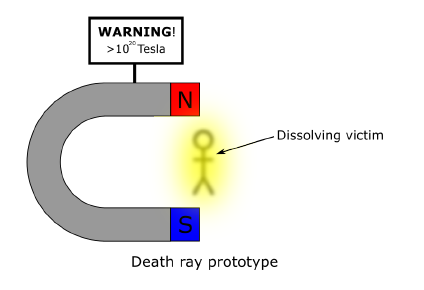
It turns out, however, that a magnetic field can help this process. In fact, a strong enough magnet would make sphalerons so likely that anything in the magnet’s field would have its baryons converted to leptons, and the object would dissolve. My recent research has been to calculate exactly how strong this is, and we’ve confirmed a long-held suspicion that it’s around 1020 Tesla. Unfortunately (or perhaps thankfully), our strongest permanent magnets are only about 10 T. My funding doesn’t extend to death-ray development, but perhaps one day supervillains will thank 21st Century theorists.


4Cs Science Communication Writing Competition – Joint 3rd Place

by Eva Kane, PhD Student in the Institute of Clinical Sciences

It is 23rd January 1922. Toronto is cold, and so are you. You stop at a tavern, hoping to warm your numbed hands. You take a seat next to two men, introduce yourself and settle down to thaw.

One identifies himself as Dr Charles Best. “And my mentor, Dr Frederick Banting”.

“You catch us on quite an evening. We’ve just changed the course of history! Have you heard of the fatal disease, diabetes?”

You have but are not well-versed.

“Within the pancreas are clumps of cells that, under a microscope, look different. These are the islets of Langerhans,” says Dr Banting. “These islets secrete something important. Our diabetic patients have no islets, and therefore no such secretion. Consequently, they are unable to use the sugar from their diet. Their blood and urine are full of sugar that cannot be taken up by their organs for energy.”

“What is this secretion?” you ask.

“Well,” he grins. “We thought we would call it insulin.”

It transpires that earlier that day, Banting and Best had finally isolated and purified this secretion, insulin. They injected it into a 14-year-old boy at the behest of his father, as he was in a diabetic coma and seemed not long for this world.

“He woke up!” cries Best, “He’s cured!”

“Well”, says Banting, looking into his glass. “This is not quite curative. I anticipate he will require injections, every day, for the remainder of his life – no small undertaking.”

“Preferable to a death sentence, but a life sentence” you comment, as Best lifts from his seat in indignation.

“A daily injection versus a slow and certain death is surely a fair price to pay!”

Banting waves him away. “Let us cast our minds forward! Given the destruction of islets in these patients, I wonder whether replacement of the tissue may be the best avenue. Skin grafts have been reported successful. Perhaps one day we will be able to transplant the islets of Langerhans from one patient to the other.”

Best is subdued.

“Have you read Wilson’s thoughts on the stem cell?1”, Banting asks you.
You have not.

“See, each cell has a speciality…an identity, I suppose. A muscle cell does not look or behave the same as the cells of the blood or brain. However, when you are conceived, and are merely a few cells in your mother’s womb, there is no such specialisation. Those few cells become every cell in the body. That, the cell with the capacity to beget all others, is a stem cell. Had we the technology to harness it, I wonder whether we couldn’t make new islets for our patients!”

“Now,” exclaims Best. “That would be the ticket!”

***

It is 2006, and you are very old. Long retired from an illustrious career in science inspired by a conversation on a cold night in a warm tavern, you still peruse the scientific literature. A title catches your eye: “Production of pancreatic hormone-expressing endocrine cells from human embryonic stem cells”2.

You smile.

References

1. Wilson, E.B. (1896) The Cell in Development and Inheritance. Macmillan: New York
2. D’Amour et al. (2006) Production of pancreatic hormone-expressing endocrine cells from human embryonic stem cells. Nature Biotechnology 24:11(1392-1401)

4Cs Science Communication Writing Competition – Joint 3rd Place

by Imanol Duran, MSc Student, Department of Life Sciences

Quarantine Connection – Grandma Calling

DRAMATIS PERSONAE

GRANDMA (with internet connection)
GRANDSON (with a STEM degree)

ACT I. SCENE I.
Spain. Each in their quarantine homes, awaiting the bending of the COVID-19 curve.

Grandma: Wait… I can’t see you, son.
Grandson: Grandma, take the thumb off the screen (laughs). Yes, that’s it.
Grandma: So what are those interesting things your mom told me about, you know, the ones to help uncle John’s lung cancer? (Accommodates in grandpa’s armchair, looking at the screen with the chin a bit too high).
Grandson: They’re called senolytics, and are tiny molecules that target some specific cells in cancer.
Grandma: Smaller than the new virus?
Grandson: Yes, smaller, they’re proteins. Anyway, when cells get old (they become senescent) and cannot do their function correctly, they stop dividing and take a resting attitude.
Grandma: So… they’re in retirement.
Grandson: Yes, basically! But sometimes they go rogue and they start to multiply and contribute to tumour growth, acting in exactly the opposite way to the wellbeing of the tissue!
Grandma: They are like the other cancer cells then…
Grandson: Not necessarily, but they can contribute to the aggressiveness of the disease, and worsen the relapse if it happens.
Grandma: And what do senolytic ‘things’ have to do with this?
Grandson: (leans towards the computer in his bedroom, with excitement). Doing big screening with a lot of drugs, molecules that specifically target and destroy these rogue senescent cells, which can be coupled with mainstream therapies of chemotherapy, radiotherapy and immunotherapy, and treat cancers from lung to liver. However, the development of these drugs and the process of their validation is quite complicated.
Grandma: You can’t have a rainbow, without a little rain.
Grandson: What?
Grandma: (laughs) You’re too young to know who Dolly Parton is. What I mean is that science, as all things in life take time. Back in the day we didn’t have apricots all year around you know? We had to wait, and work hard.
Grandson: You’re probably right.
Grandma: Of course I am! The presenter on the TV said that the virus trial would take more than a year even if they rush it, so I guess this will take even longer.
Grandson: The development of senolytics is quite recent, as well as the identification of cell targets that we can use to fight against them. Interestingly, some of these molecules have been used for years now, like some cardiac glycosides, used to treat other heart problems.
Besides, these drugs have shown, at least in mice, that they can rejuvenate tissues by killing senescent cells and even help you with your arthritis.
Grandma: Being old has its perk too.
Grandson: Unfortunately, coming up with functional and secure drugs to help with cancer treatments is still quite far; too far for many who need it now.
Grandma: Things take time son, you have plenty of it (stares with that gaze only age can provide) .

[Exeunt]

The End

PhD students are bringing science to your ears

Usually a medical tool used to check your ear canal, Otoscope is now also the name of a project led by PhD students at the MRC London Institute of Medical Sciences (LMS).

Learning how to surf the wave of podcast popularity, the students are producing interview-style episodes with the aim of discussing complex medical science topics in a way that is informative to other students who may not be familiar with biomedical jargon.

This activity, now sponsored by the Imperial Graduate School, is currently under preparation and the first episodes are expected to be released later this year.

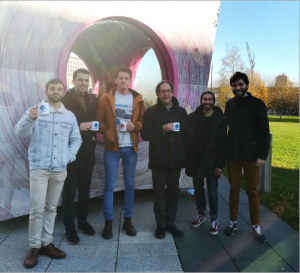
Photo after the first recorded episode at The Pod, White City Place. From left to right: Macia Sureda Vives, Eren Akademir, Matt Newton, Dr. Richard Festenstein, Manos Stylianakis, Eliano  Santos
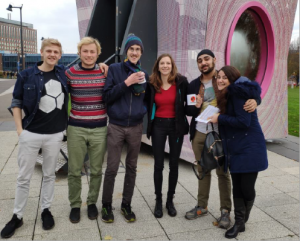
Second recorded episode at The Pod. From left to right: Saul Moore, Vassili Kusmartsev, Dr. Peter Sarkies, Radina Georgieva, Virinder Reen, Monica Della Rosa


Recorded at The Pod in White City Place, the podcast is bringing together in the studio experts on different fields of biomedical research with PhD students to discuss topics such as precision medicine, ageing as a drug target or how genes affect behaviour. These topics are discussed with the aim of being informative to the bioscience-curious individual and of providing both the students and the public with tools to think critically about evidence and science.

Recording session at The Pod. From left to right: Macia Sureda Vives, Dr. Richard Festenstein, Eren Akademir, Manos Stilianakis

Organising the activity are PhD students at the LMS, while other students are taking part as guests to pitch their own research in the segment ‘Publication of the month’. ‘We thought this project would be a nice way to learn how to communicate science effectively, while networking and having fun at the same time. But also learning key skills that could help us with our post-PhD careers’, says Eliano dos Santos, the PhD student coordinating the project.

This science communication project is supported by the Grants, Engagement and Communications team at the LMS. And the voice of Dr Sophie Arthur, the Science Communication Officer at the MRC LMS and author of the award-winning blog Soph Talks Science, will guide you through each episode.

The first episode is expected to be released later this year, and from then on monthly talks will be available on the usual platforms. To receive the latest Otoscope updates, follow @MRC_LMS on Twitter and @mrc.lms on Instagram.

Institute of Clinical Sciences – Greening LMS Launch Event

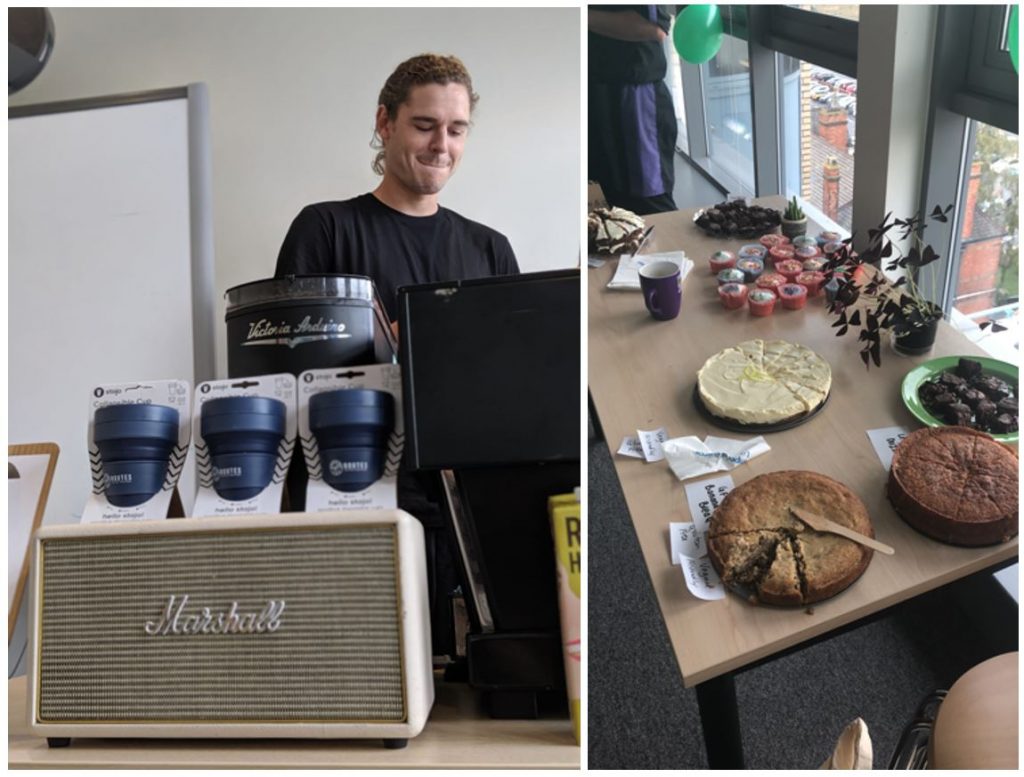
On a brisk Wednesday at the end of September we launched our programme to encourage sustainable practices within the MRC LMS at the “GreeningLMS launch event”. The main aims of our event were to give LMS members the opportunity to get to know the team and find out about its initiatives. This event also allowed important informal chats inspiring new ideas and collaborations! The suggestion box was full of lots of exciting thoughts of how the GreeningLMS and LMS staff members can come together to create the most impact.  It was a fantastic event with a great turnout including all LMS Imperial students on the 6th floor of the CRB building, Hammersmith Campus.

Routes coffee, an independent barista with an environmental conscience, generously donated their time. Needless to say delicious coffee was enjoyed by all! Members of the team made homemade cakes, catering for gluten intolerant and vegans alike.

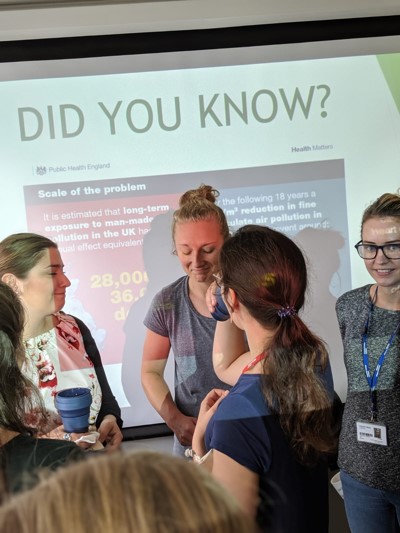
An informative presentation was projected and ran on loop in the event room, advertising the main aims and goals of the team, some practical tips for sustainable practices in and outside the lab. In addition, a plethora of frightening facts about the effects of the current environmental situation on health and the world’s ecosystems and how we contribute to it where shown. Feedback highlighted how many of the attendees were unaware of the current state of play.

Finally, the event saw the signing up of Greening representatives for each lab – a point of contact between the lab and GreeningLMS – ensuring that best sustainability practices are maintained by all. These representatives will also be key in the ongoing evolution of sustainable practice implementation and will provide constant feedback about the success of the different GreeningLMS initiatives.

This event engaged the whole institute, raising awareness of sustainable issues and it was wonderful to see the general enthusiasm and support from all. In particular, it was great to see so many students attending, especially the newbies, as you will be pioneers – doing lab work as sustainably as possible from the beginning with no bad habits ;).

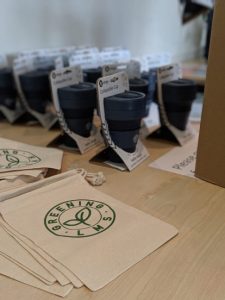
Due to the generous funding by the Research Community Fund, we were able to fund this event and buy sustainable freebies to pass out to attendees and bites to eat. Attendees were able to take a collapsible cup for their morning coffee on the go and a 100% cotton bag for their fruit and packed lunch. Without this funding the event would not have had record attendance or such widespread impact. So, a massive thank you to the Research Community Fund for helping to make our event possible and the success it was!

CDT Networking Events – Round One

What a better way to kickstart the beginning of the new term if not with a new series of social events?

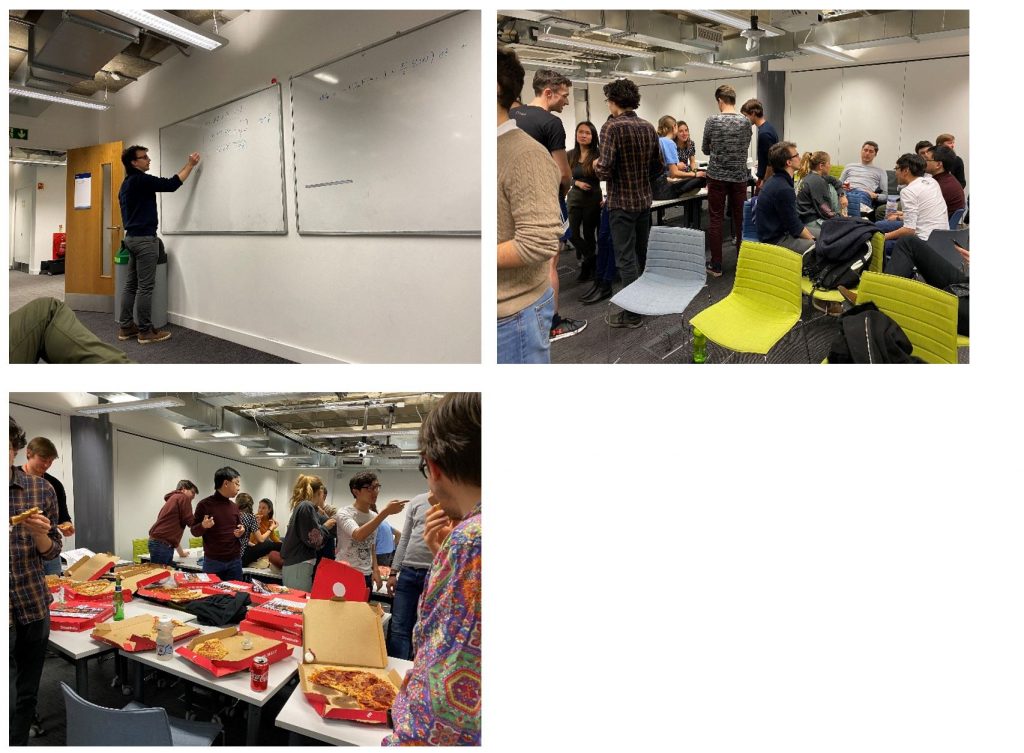
A CDT student-led committee has organised a schedule of “CDT Networking Events”, where students belonging to different CDT cohorts get to know each other in an informal setting. The first iteration of our CDT Networking events was held on Friday 17th of January in the EPSRC CDT Space. The events entail, in the first 30 minutes, an educational talk given by one of the EPSRC CDT students on a topic belonging to his\her research area. On the very first round, Alain Rossier (CDT Mathematics of Random Systems- Oxford Cohort) discussed about Maths and the game of Poker. Alain covered important notions of game theory, including Nash equilibrium and the optimality of strategies, which closely relate to his research topic.

The content and the quality of the talk given by Alain was widely appreciated by the audience and it led to further informal discussion during the second part of the event, where student had the chance to extend their professional networks and socialise with their peers. The event was accompanied by free pizzas, drinks and snacks for all the students. The event also had a large number of presences, counting at peak time more than 40 students. This really encouraged the event committee to organise the next series of event in a similar fashion and which are planned to take place in the months to come in the Spring and Summer terms.

The committee would like to the Graduate School as well as the participating CDTs who acted as financial sponsors for the events.

PhD Business School Research Dinner

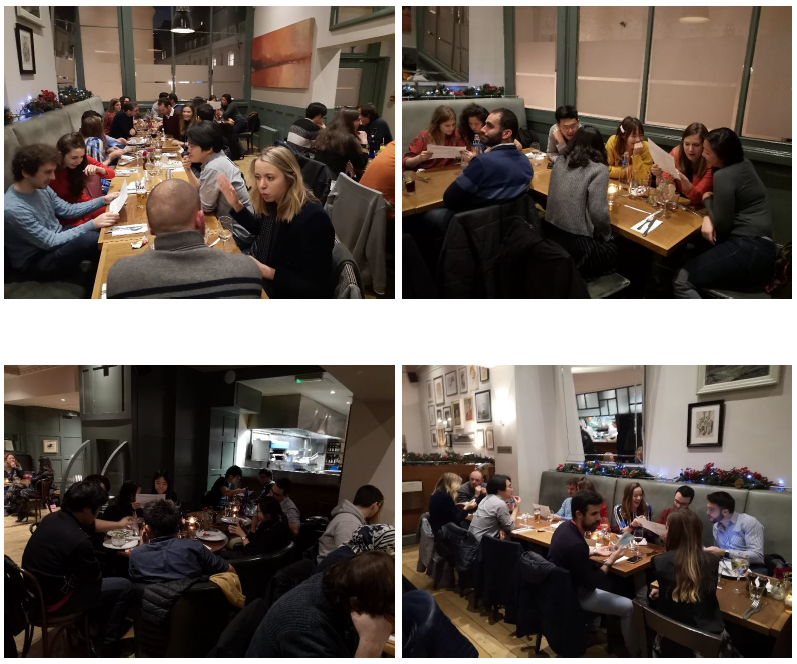
On the 4th of December, we, the Business School Research Graduates, shared research interests and a fun time with a Christmas dinner at Coco Momo. We are thankful to the Graduate School’s Research Community Fund to co-sponsor the event together with the Business School’s Student Staff Committee. It was a fantastic event with a large turnout across all departments and year groups.

The Imperial College Business School has a variety of PhD tracks including, amongst others, Management, Finance, Innovation and Entrepreneurship, Economics, Marketing, and Operations. Consequently, although we pursue a large array of research topics as a PhD cohort, we often are focused on research within our respective departments. The Christmas dinner offered a great opportunity for us to socialise across departments and year groups. In preparation of the dinner, we asked all attending students to submit their research interests/topics/titles. We created a table, outlining everybody’s research topic and shared this table with everybody on the evening.

Across a 3-course menu and a glass of wine or soft-drink, we had ample opportunity to get to learn each other’s interests. Operations students for instance learnt about the importance of herd immunity and the impact of social primers on vaccination decisions from health economists students, while finance students explained to marketing students about new research directions in Asset Pricing focusing on exploiting information in the cross section rather than in the time series dimension. At the same time, older PhD students gave helpful tips and tricks to younger students.

The Christmas dinner was a great success across all dimensions – food, drinks, research and banters. We got to know not only our colleagues and their research interests, but also picked up new dimensions to our own research as well as new research ideas.

Thank you, Graduate School, for supporting this event!

12th-15th September 2019 – Synthetic Biology Snowdonia Retreat

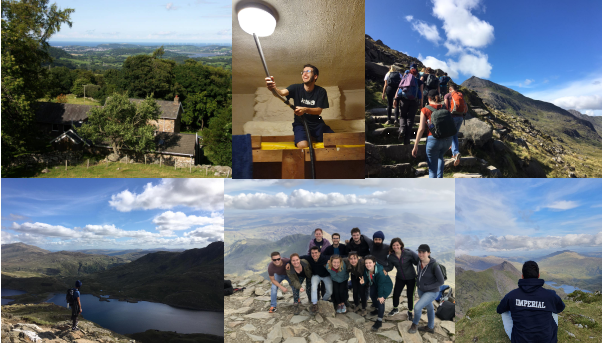
Successful early and late stage PhD assessment submissions mean only one thing… escape from the fast pace of University life is required. In mid-September, a dozen graduate students from the Centre of Synthetic Biology packed their bags and made their way to the beautiful and dramatic mountains of Snowdonia National Park in North Wales for a long weekend away from the city. The purpose of the trip was for the current graduate students to bond over some of the UK’s best hikes, while also spending some quality time with some of the 2019 master’s students before they leave Imperial to do their own thing, ensuring long lasting connections.

On the first day, they climbed the largest and most formidable mountain (in Wales), Snowdon. The unpredictable weather of the British Isles managed to hold out, and they all made it up, taking many stops along the way to absorb the magnificence of the Welsh outdoors. The day was finished off in one of the seemingly infinite number of awesome pubs Wales had to offer, to refuel and numb the aching legs.

(Top left) The hut on the north eastern edge of Snowdonia National Park. (Top middle) There were a lot of bugs in the bedrooms. Modern problems require modern solutions. (Top right) Hiking up the Pyg track to the top of Snowdon. (Bottom left) “Candid” photo opportunity overlooking llyn llydaw. (Bottom middle) Getting a quick group photo at the summit of Snowdon before the cloud came in. (Bottom right) Who?

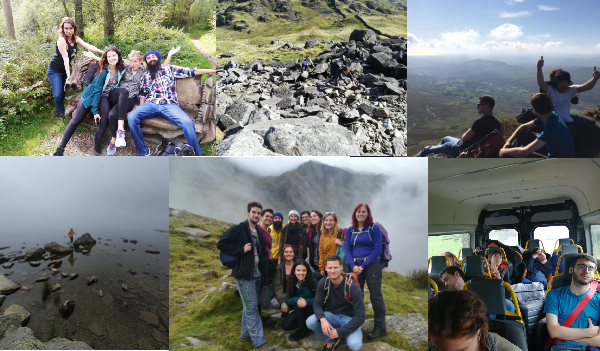
On the second day, they made their way to the quaint village of Beddgelert, where one group took a peaceful walk through the valley, past waterfalls, and around Llyn Dinas. The other group took on the challenge of the Moel Hebog loop, where the majority of the conversation was predicting the incline of the slope (between heavy breaths). That evening, they headed back to the hut to cook up a feast and to play board games.

Before heading back to London life, they made one last trip to one of the most picturesque lakes in Snowdonia, Llyn Idwal. Although luck had run out on the weather, the mist that slowly drifted past only added to the enchantment of the lake.

(Top left) It wouldn’t be a trip to Wales without at least one dragon themed bench. This one was well and truly conquered. (Top middle) Scrambling up the steep slopes of Moel Hebog was especially challenging. (Top right) Summiting Moel yr Ogof. The clouds had all cleared and celebrations got out of control. (Bottom left) With low visibility it wasn’t obvious some paths led to a wet ending. (Bottom middle) Walking around the beautiful Llyn Idwal. (Bottom right) The result of 3 long days of hiking. Maybe another retreat is needed?

Overall, the trip was a great success. A fantastic bonding experience for the graduate students and a well needed refresher before heading into the next academic year. Thursday to Sunday turned out to be the ideal length of time to enjoy a variety of the walks Snowdonia has to offer. 12 people was also the perfect number of people in regard to transport (minibus), accommodation, eating out, and organising the day trips. The Synthetic Biology summer retreat will definitely be a new annual tradition!

Thank you to the Graduate School for agreeing to sponsor this event.

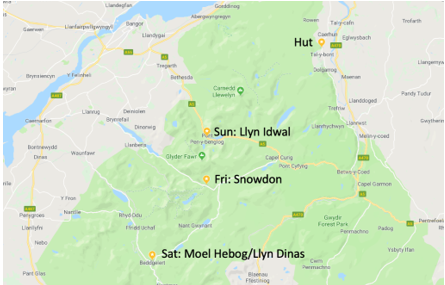
Key locations in Snowdonia National Park.