Author: Early Career Researcher Institute

PhD students are bringing science to your ears

Usually a medical tool used to check your ear canal, Otoscope is now also the name of a project led by PhD students at the MRC London Institute of Medical Sciences (LMS).

Learning how to surf the wave of podcast popularity, the students are producing interview-style episodes with the aim of discussing complex medical science topics in a way that is informative to other students who may not be familiar with biomedical jargon.

This activity, now sponsored by the Imperial Graduate School, is currently under preparation and the first episodes are expected to be released later this year.
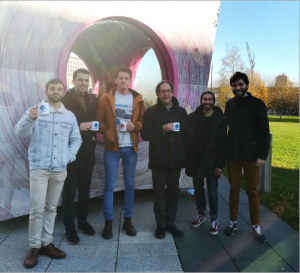
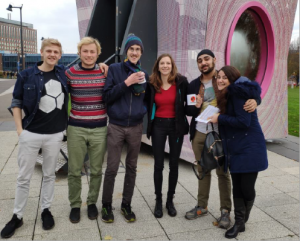
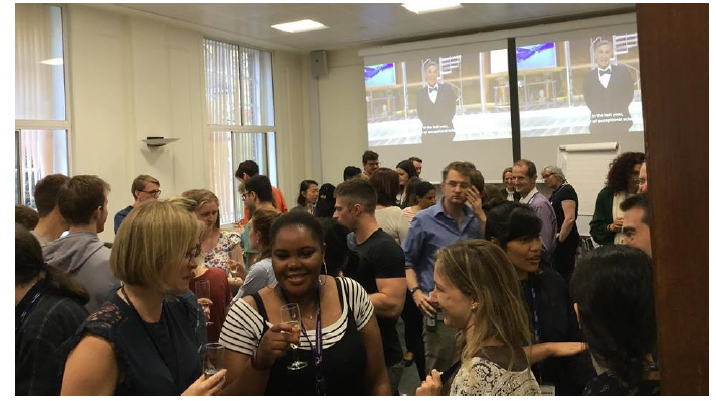
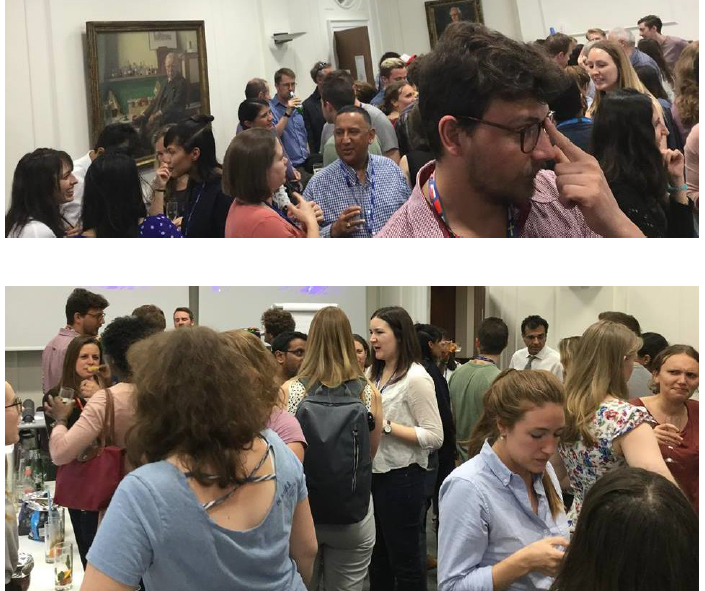
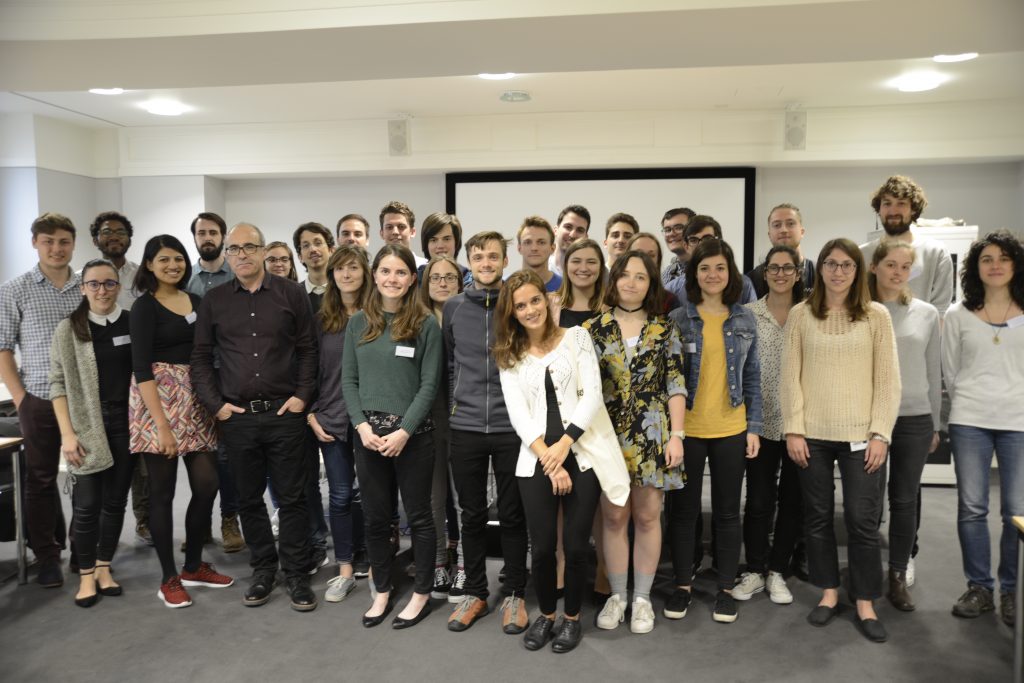
Photo after the first recorded episode at The Pod, White City Place. From left to right: Macia Sureda Vives, Eren Akademir, Matt Newton, Dr. Richard Festenstein, Manos Stylianakis, Eliano  Santos
Second recorded episode at The Pod. From left to right: Saul Moore, Vassili Kusmartsev, Dr. Peter Sarkies, Radina Georgieva, Virinder Reen, Monica Della Rosa


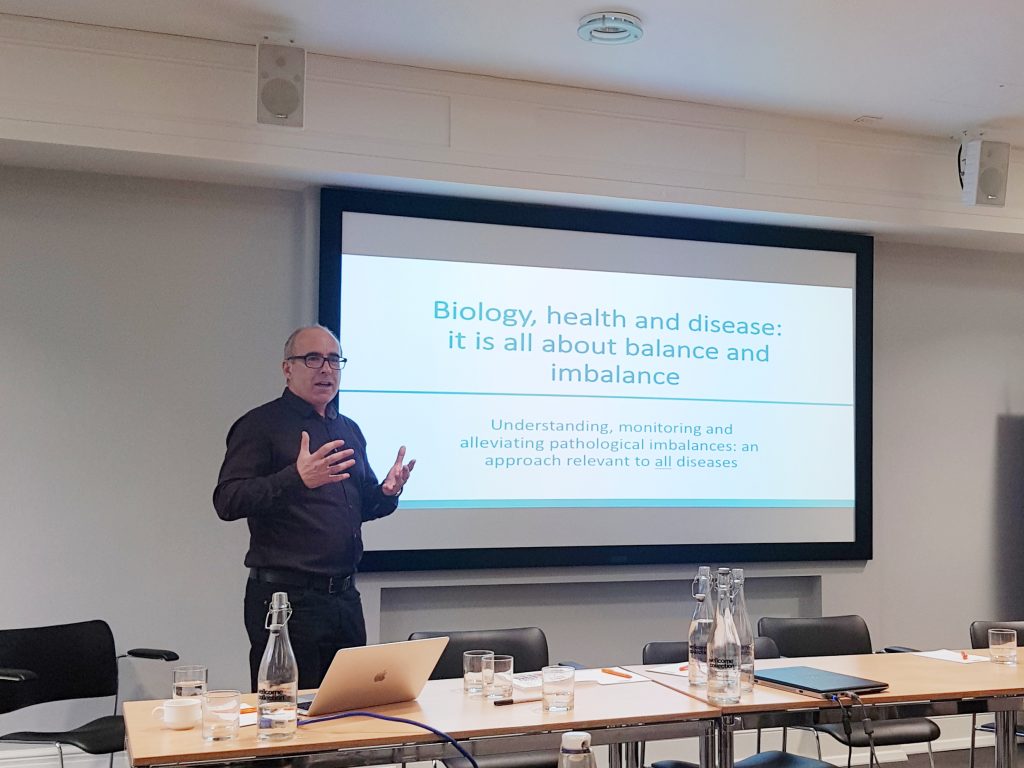
Recorded at The Pod in White City Place, the podcast is bringing together in the studio experts on different fields of biomedical research with PhD students to discuss topics such as precision medicine, ageing as a drug target or how genes affect behaviour. These topics are discussed with the aim of being informative to the bioscience-curious individual and of providing both the students and the public with tools to think critically about evidence and science.

Recording session at The Pod. From left to right: Macia Sureda Vives, Dr. Richard Festenstein, Eren Akademir, Manos Stilianakis

Organising the activity are PhD students at the LMS, while other students are taking part as guests to pitch their own research in the segment ‘Publication of the month’. ‘We thought this project would be a nice way to learn how to communicate science effectively, while networking and having fun at the same time. But also learning key skills that could help us with our post-PhD careers’, says Eliano dos Santos, the PhD student coordinating the project.

This science communication project is supported by the Grants, Engagement and Communications team at the LMS. And the voice of Dr Sophie Arthur, the Science Communication Officer at the MRC LMS and author of the award-winning blog Soph Talks Science, will guide you through each episode.

The first episode is expected to be released later this year, and from then on monthly talks will be available on the usual platforms. To receive the latest Otoscope updates, follow @MRC_LMS on Twitter and @mrc.lms on Instagram.
Two minutes with… Humera Ansari (Student Programme Leader – Research Communication Programme)

Two minutes with… Ester Anaya-Boig (Student Programme Leader – Professional Effectiveness Programme)

The Graduate School has appointed Student Programme Leaders in order to give doctoral students the opportunity to engage with our Professional Development Programme and shape its design and delivery.

In our new ‘Two Minutes with….’ series we will be introducing you to our current SPLs and finding out their thoughts so far on the role!

Name: Ester Anaya-Boig

Department: Centre for Environmental Policy

Introduce your research: I am studying what aspects of the built and the social environment influence in people’s cycling behaviour

Student Programme Leader: Professional Effectiveness Programme

Why did you choose to apply for this particular SPL role?

I had attended quite a few courses and a couple of retreats from the Graduate School and I had found them really useful. I found that the courses within the professional effectiveness programme were the ones that had made the bigger positive impact in my PhD life.

I thought I was motivated to review the programme in-depth, working with the team that created the courses and representing the views of my fellow students in order to contribute to how this programme is delivered.

Three things you’ve found interesting:

  • Knowing the contents of the courses in-depth and sometimes even do a bit of research about some specific aspect
  • Getting to know how the courses are created
  • Thinking about how to take into account the diversity of Imperial students that attend the courses.

Three things you’ve enjoyed most:

  • Providing feedback that is appreciated and recognised by the Grad School team
  • Working with a highly professional and knowledgeable team, that knows very well what they are doing!
  • Reading the feedback about the courses and extracting the highlights that I think can help make them better

What impact have you had on the programme?

Apart from the feedback evaluation, I have provided suggestions on the contents and on the structure of the course. Also I have provided notes on how it is delivered. Observing in one of the courses was really helpful and helped me provide feedback in detail.

What advice would you give to other students thinking of applying for the SPL role in future?

It’s a great opportunity to learn how the Graduate School creates their programmes, how they are delivered and also to train you in how to reach the diversity of the student population. You realise you can contribute with more than you thought and that your contributions are valued by the team.

Why do you think professional development training is important?

I have experienced how it has helped me and kept me grounded. It also provides you with resources available for whenever you need them, it’s like a safety net that you create by attending these courses. The professional development courses provide you the space and the tools to make you aware and reflect on how you do things and then be able to create change. Sometimes the courses can help you change your habits or introduce a new habit in your life.

Two minutes with… Katia Hougaard (Student Programme Leader – Master’s Programme)

The Graduate School has appointed Student Programme Leaders in order to give doctoral students the opportunity to engage with our Professional Development Programme and shape its design and delivery.

In our new ‘Two Minutes with….’ series we will be introducing you to our current SPLs and finding out their thoughts so far on the role!

Name: Katia Hougaard

Department: Life Sciences

Introduce your research: My PhD project focuses on the innate defence responses of plants against aphids, an economically important insect pest.

Student Programme Leader: The MasterClass workshop series with Dr Helal Ahmed

Why did you choose to apply for this particular SPL role?

While a MRes student at Imperial, I benefited greatly from the free Master Class programme offered to all Masters students. Based on my very positive experience as a student in the classes, I wanted to give back to the programme that helped me learn a variety of transferable skills. In addition, I am interested in gaining experience of being in an educator role for postgraduate students since one of my career interests is higher education.

Three things you’ve found interesting: 

Analysing and implementing student feedback, discussing wording and visual appeal of slides with Dr. Ahmed, and designing my own slides are 3 interesting aspects of this role.

Overall, being in the teaching role has been a new perspective on the learning experience.

Three things you’ve enjoyed most:

I enjoy co-delivering workshops on public speaking and presentation skills with Dr. Ahmed. Through this activity, I’ve gained experience in managing and leading a large group of students.

I also enjoy the planning discussions with Dr. Ahmed and other members of the graduate school.

I’ve additionally enjoyed reaching out to fellow students to learn their opinions on past and current Graduate School courses.

What impact have you had on the programme?

My contributions have made the public speaking / presentation skills workshop more interactive and hopefully more entertaining. I am also working on arranging a focus group to learn what students wish to see from the programme in the future.

What advice would you give to other students thinking of applying for the SPL role in future?

I would highly encourage any postgraduate student who is interested in being an educator to apply for this role. I would advise to approach the role with an enthusiastic and cooperative attitude to get the most out of working with your supervisor.

Why do you think professional development training is important?

I feel it is extremely important for postgraduate students to develop their transferable professional skills for any career they choose after their education at Imperial. The free courses are a valuable addition to any postgraduate studies, and an opportunity to meet students from across disciplines at Imperial.

Two minutes with… Marie Rider (Student Programme Leader – GTA Programme)

The Graduate School has appointed Student Programme Leaders in order to give doctoral students the opportunity to engage with our Professional Development Programme and shape its design and delivery.

In our new ‘Two Minutes with….’ series we will be introducing you to our current SPLs and finding out their thoughts so far on the role!

Name: Marie Rider

Department: Physics

Introduce your research:  I work in the condensed matter theory group, and I study topological nanophotonics, where we’re working to understand how light interacts with topological materials at the nanoscale.

Student Programme Leader: Graduate Teaching Assistant Programme

Why did you choose to apply for this particular SPL role?

GTAs are a crucial bridge between students and academics. We can have a massive impact on the student experience and the GTA programme provides vital training on how to approach the role. We’re the next generation of academics, and the approach to teaching and learning we develop now will stay with us throughout our careers so I really wanted to be part of the professional skills programme teaching those skills.

Three things you’ve found interesting: 

  1. The way the GTA role is defined varies massively between faculties and departments, so it’s an interesting challenge to make the programme relevant and useful for GTAs across college.
  2. GTAs have really different experiences of teaching and there’s as much to learn from each other as from the programme leads.
  3. Co-leading sessions for the GTA programme is a lot different from teaching a STEM subject!

Three things you’ve enjoyed most:

  1. Working with SPLs from other faculties.  Under ordinary circumstances we might never had met!
  2. Getting the opportunity to co-lead some of the programme sessions. Peer-run sessions are really fun and very different to the usual teaching I get to do
  3. Working with the programme leader, Richard. He’s so passionate and informed about what he does, so it’s been great to learn from him

What impact have you had on the programme?

We’ve been collating information from all departments across college on how they define their GTA roles and what skills they want their GTAs to have, so that we can tailor the content of the programme courses better

What advice would you give to other students thinking of applying for the SPL role in future?

Do it! Find a programme you’re passionate about and jump in.

Why do you think professional development training is important?

Being a scientist or engineer is about much more than our technical skills. The things you learn in professional development training help you grow as an academic and as a person.

Two minutes with… Daryl Ma (Student Programme Leader – GTA Programme)

The Graduate School has appointed Student Programme Leaders in order to give doctoral students the opportunity to engage with our Professional Development Programme and shape its design and delivery.

In our new ‘Two Minutes with….’ series we will be introducing you to our current SPLs and finding out their thoughts so far on the role!

Name: Daryl Ma

Department: Electrical Engineering

Introduce your research: Designing monolithic wireless electrochemical sensors for biomedical applications for blood or sweat monitoring.

Student Programme Leader: Graduate Teaching Assistant Programme

Why did you choose to apply for this particular SPL role?

I enjoy GTA work as I find teaching quite fun. I felt that applying for this role allowed me to learn more about other aspects of teaching.

Three things you’ve found interesting: 

  1. Speaking to other departments in the engineering faculty on how they run their GTA programmes.
  2. Understanding the different roles played by various GTAs in different departments.
  3. Conducting lectures for the GTA program.

Three things you’ve enjoyed most:

  1. I liked how different departments had their various viewpoints on how GTA work should be like.
  2. Talking about more in-depth teaching techniques applied, which probably bordered the field of psychology.
  3. Speaking to fellow GTAs and learning from their experiences.

What impact have you had on the programme?

We’ve managed to make some changes to the GTA program across departments by simply comparing them and explaining to these departments what the college standards are.

What advice would you give to other students thinking of applying for the SPL role in future?

Do it, it’s fun!

Why do you think professional development training is important?

It provides you with the soft skills required to perform your required administrative roles in whichever field your career path takes you.

St. Mary’s Summer Party

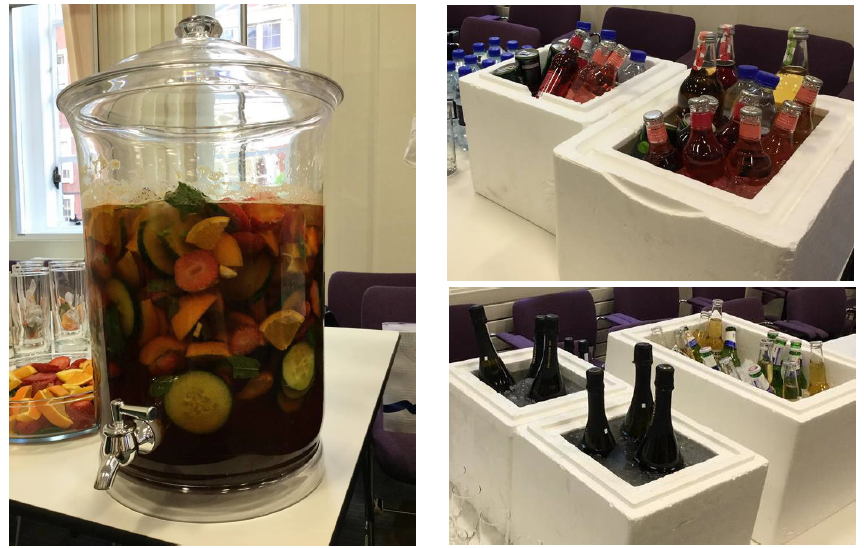
St. Mary’s Campus does not really have a common room where students from different research groups get to know each other. Trying to break down the barrier, there was a Christmas party organised for all students working in the Medical School Building. Based on the huge success and numerous thank yous for organising this party, we decided to put together another party. A summer party this time, with the presence of the British summer drink of choice: Pimm’s with fresh fruit.

Besides Pimm’s, we provided prosecco, two kinds of beer, non-alcoholic bubbles and lots of water thanks to the Graduate School Cohort Building Fund, who sponsored this event. Because of the high temperatures, everything was kept cool with ice and people could enjoyed a cold beer, refreshing prosecco or the very popular Pimm’s. At 5 pm on Tuesday 22nd of May 2018, everything was ready to receive guests in the Committee room on the ground floor of the Medical Building at St. Mary’s Campus. Drinks were cold, some nibbles were on the tables and Bill Nye the Science Guy started explaining science on screen.

Within 5 minutes the first people showed up to start celebrating summer and looking for those people they talked to last time. Several people thanked us for organising even before they got their drinks. By starting at 5 pm, we managed to catch the people with families before they went home and we also got people that work late by having the party still going at 7 pm. People from the School of Public Health, Virology, Respiratory Medicine, Infectious Diseases and Paediatrics all showed up. Master students joined the party as well and could casually ask those questions about PhDs they did not want to ask in the lab.

At 8.30 pm it was time to start cleaning up and everyone that was still hanging around helped out by throwing out trash, collecting glasses and bottles, and cleaning the tables. Within 15 minutes, all signs of a party were gone. I’m already looking forward to the next one!

MetID workshop

By Erika Dorado and Kiana West, STRATiGRAD PhD programme, Department of Surgery and Cancer

A workshop focused on the identification of metabolites was organised by the STRATiGRAD PhD programme in collaboration with the Centre for Metabolomics and Bioanalysis (CEMBIO). The MetID workshop took place between 12th and 15th June 2018, in Madrid.

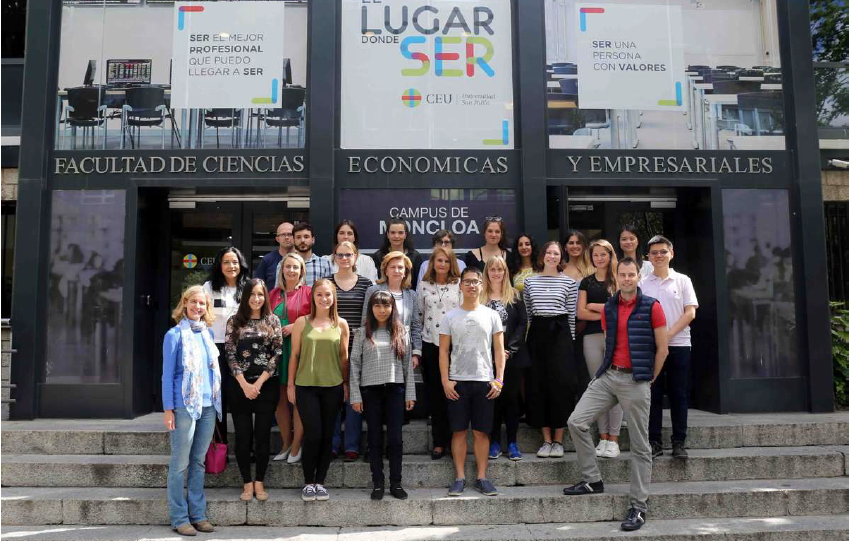
MetID workshop participants

The MetID workshop started with oral presentations given by PhD students from both Imperial and CEMBIO. The PhD students had the opportunity to present their research projects in seven minutes to an audience composed of recognised researchers in this field. We had the opportunity to practice our presentation skills and share our research experience by providing concise information about our PhD projects. On the second day, the workshop started with an introduction by the director of CEMBIO, Dr. Coral Barbas. During the second and third days we attended lectures given by researchers from CEMBIO about fragmentation rules and mechanisms (Dr. Ana Gradillas), data curation (Dr. Javier Ruperez), as well as theory-practical lectures about annotation on MS and MS/MS level (Dr. Joanna Godzien). In addition, Dr. Joram Posma from Imperial presented two lectures about statistical experimental design, bias and confounding, as well as MetaboNetworks and graph theory.

Dr. Coral Barbas from CEMBIO giving an introduction to the workshop

On the third day, after finishing the lectures, we attended an exhibition on extended reality space offered by the Telefonica foundation from Madrid. We had the opportunity to experience different realities such as augmented, mixed and virtual reality. After this interesting activity, we enjoyed some sightseeing in the centre of Madrid on our way to have dinner together. During these activities the students from both universities had the opportunity to do some valuable networking.

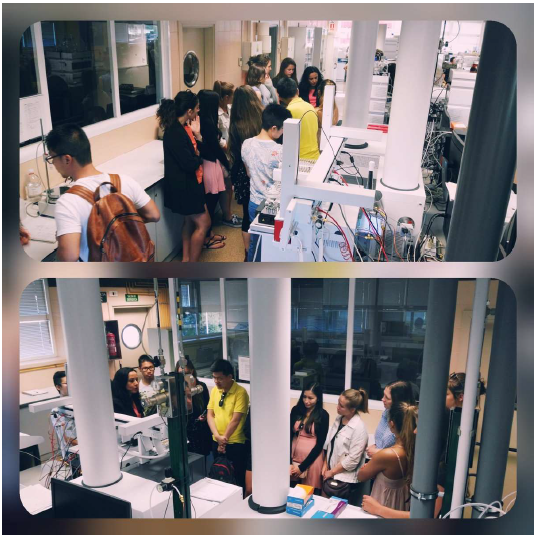
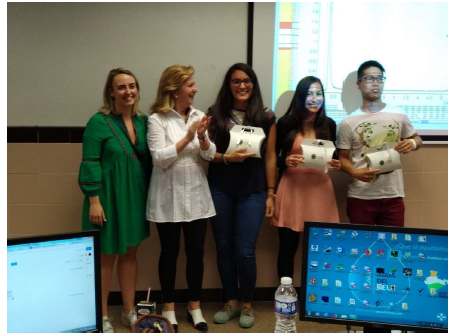
On the final day, we visited the laboratories at CEMBIO. Dr. Antonia Garcia gave us a tour and showed us all the equipment in their laboratories, including liquid chromatography and mass spectrometers. The final day was concluded with a contest about metabolite identification to allow the students to apply all the knowledge acquired during this MetID workshop. Groups composed of students from Imperial and CEMBIO were organised randomly by Dr. Godzien, each group had the great opportunity to apply what we had learned about annotation on MS and MS/MS level by identifying 12 different metabolites. This contest allowed us to apply our communication and team work skills. The group that won the contest was composed of Vincen Wu and Erika Dorado from Imperial and Cecilia Barbas from CEMBIO.

Visiting the laboratories at CEMBIO
Dr. Isabel Garcia from Imperial, Dr. Coral Barbas from CEMBIO, and the winners of the contest: Cecilia Barbas, Erika Dorado and Vincen Wu

We want to thank the Graduate School for providing generous funding jointly with the STRATiGRAD PhD programme to carry out this workshop. We want to thank Dr. Isabel Garcia (coordinator of the STRATiGRAD PhD programme), all PhD students and researchers from Imperial and CEMBIO for all their effort organising and participating in this workshop. This workshop not only encouraged critical and independent scientific discussion on metabolite identification, but also showed us the importance of networking and scientific collaboration at an international level.

MRC-LMS PhD Workshop & Careers Forum at the Wellcome Collection, Euston Square

The second annual Medical Research Council (MRC) London Institute of Medical Sciences (LMS) PhD Student Retreat took place on Friday 25 May 2018. Held at the iconic Wellcome Collection in Euston Square, this event offered PhD students from all year groups the chance to engage and socialise with students from outside of their immediate research section.

Building on the success of the inaugural 2017 retreat held at Kew Gardens, this year’s event had a renewed focus on ‘Career Development and Networking’; prompting students to start considering what future avenues they may wish to explore upon completion of their PhD studies.

In this vein, the day began with a Networking Workshop delivered by Katie Dallison from the Imperial Careers Service, which provides students with free help and advice regarding career advancement, like CV checks and interview preparation. Katie highlighted the importance of making connections in all types of professional events, and shared tips to reduce pre-networking anxiety. During the workshop, students also had the opportunity to practice and refine their “elevator pitches”, get further ideas of recruitment processes, and recognise uses and downfalls of social media.

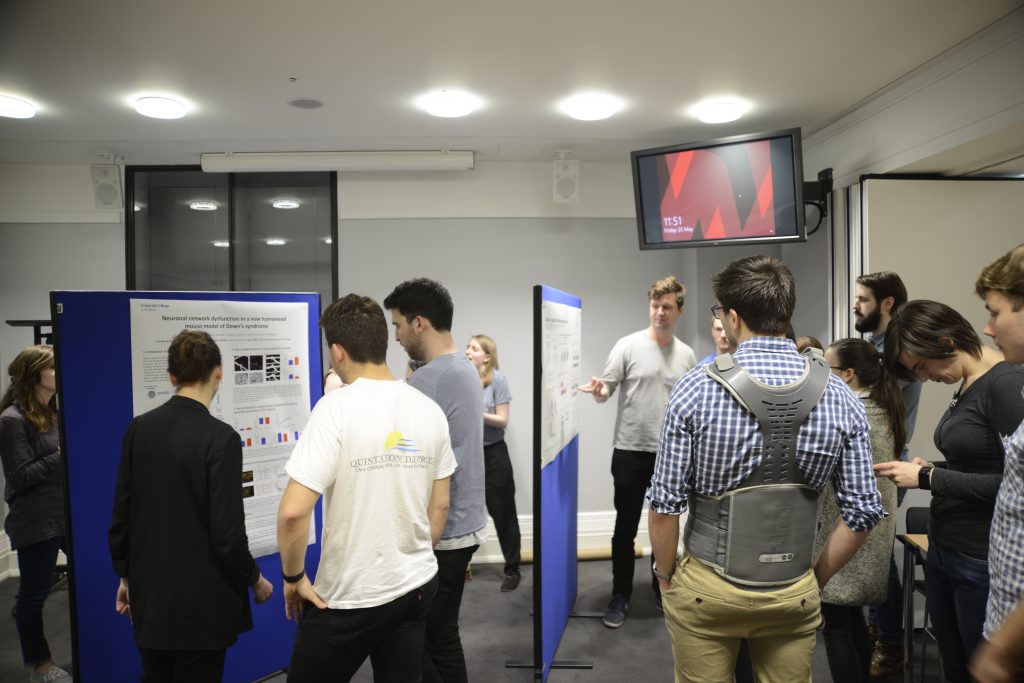
The students had the ability to use these newly acquired skills in the PhD student poster presentations, facilitating discussion based on current research that PhD students are carrying out at the LMS. The topics ranged from patient-derived neurons to study Down syndrome, to 3D genome architecture and gene regulation, to the evolution of transposable elements. Particularly outstanding posters were acknowledged by the Poster Awards, where this year, the first place was awarded to Helen Paterson for her poster entitled ‘The role of splicing factors in metabolic health and disease’, followed in close succession by Toni Beltran and Holly Simpson Ragdale, in 2nd and 3rd place respectively.

This also gave time for students to visit the vast collection of medical based artefacts from all over the world, collected at the Wellcome Collection. Especially noteworthy in the collection, is the presence of all volumes of the printed version of the first sequenced human genome.

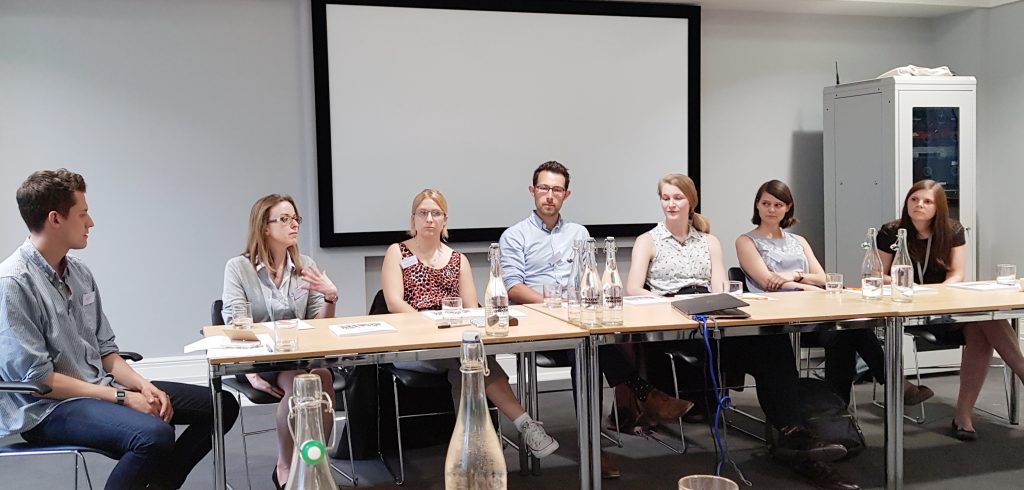
The unanimous highlight of the day however, was an afternoon careers panel which brought together a unique collection of individuals who have gone on to follow a range of post-PhD career paths. The panellists represented diverse fields, including the biotechnology, pharmaceutical, scientific editing, management consulting and patent law industries. Chaired by our own Social Representative, Matt Newton, the panel discussion allowed the speakers to share with us industry-specific insights, whilst also being open to discuss the factors that helped shape and influence their decisions at key moments of their respective careers.  We would like to send a huge thank you to the following individuals for sharing their time and knowledge with us all!

Following the panel, the students received a talk from the day’s keynote speaker, Professor Steve Jackson, who is currently a senior group leader at The Gurdon Institute (University of Cambridge), and fellow of the Royal Society. His talk entitled “Cellular responses to DNA damage: mechanistic insights and applications in cancer therapy” illuminated how basic molecular understanding of cellular processes can be translated into clinical applications, and how he was able to follow the success journey of a drug from the lab bench to the patients in clinic.

The day culminated with a networking reception, where students had the opportunity to continue discussions with panelists and speakers from throughout the day. All in all the day was a triumph for the LMS Student Committee, who put together this event, and we very much look forward to the 2019 Student Retreat!

Finally we would like to take this opportunity to acknowledge generous funding from both the Imperial College Graduate School and Medical Research Council.

How interventions are spread: Winning second prize at the Research as Art Summer Showcase

By Sophie Spitters, PhD Student, Department of Medicine

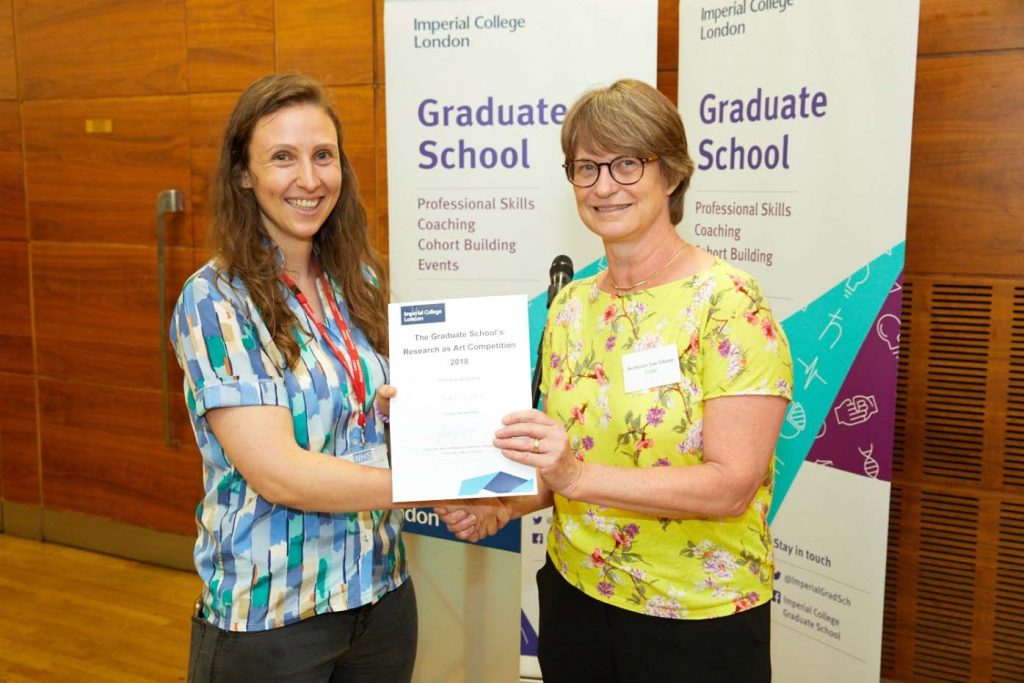
The Imperial College London Graduate School organised their annual Summer Showcase on Friday July 13th. The showcase aims to celebrate research undertaken by PhD students at Imperial and invites staff, students and visitors to find out more about their work via a poster and a research as art exhibition. I joined the research as art exhibition, showcasing my NIHR CLAHRC NWL research, and won second prize! First prize was won by Iman Ibrahim, who demonstrated what it takes to get clean drinking water to our taps in her mandala called ‘the ripple effect’. And third prize was won by Laura Braun for her ‘sludge cake’ made from sewage, demonstrating the value of faecal waste treatment in order to return it safely to the environment as a natural fertiliser.


How interventions are spread

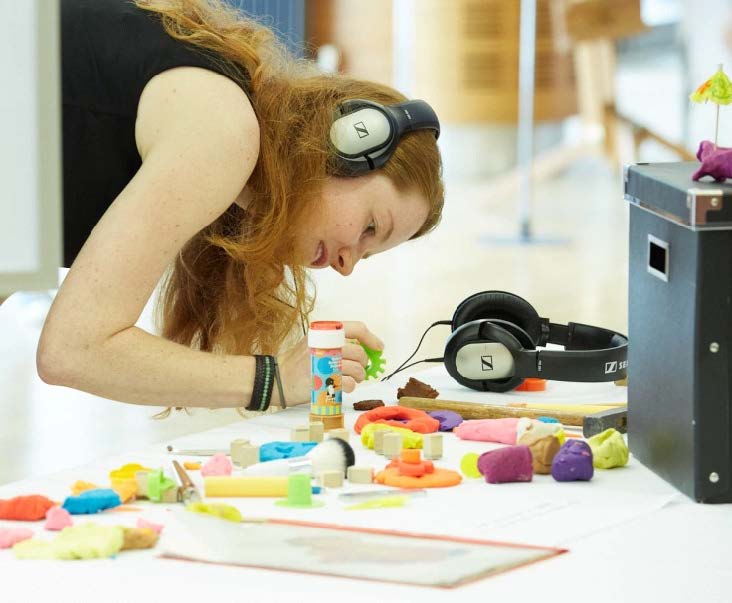
My art installation, titled ‘How interventions are spread’, aimed to communicate the reality of spreading healthcare improvement interventions, which often does not follow the expected trajectory. Healthcare improvement is often depicted as a linear straightforward process. First, a problem is identified. Then, a potential solution or intervention gets implemented in one area. Finally, if that intervention has shown to be successful, it is spread to other areas. The aim of spread in this context is to replicate the successful intervention exactly as is. Big investments are made to demonstrate that positive outcomes are linked to a particular intervention. So why change a winning formula? Why change an evidence-based intervention?

My research shows how in reality, the process of spread is a lot more complex. Evidence-based interventions often get presented as nicely packaged products with a clear step-by-step manual, not reflecting the messiness of interpersonal relationships, hard work and contextual dependencies underpinning its development. Hence, interventions do not just get picked up in one place and dropped off in another. When spreading to other areas, interventions change and develop depending on local priorities, capabilities and resources. This work is based on the spread of an allergy service improvement initiative.

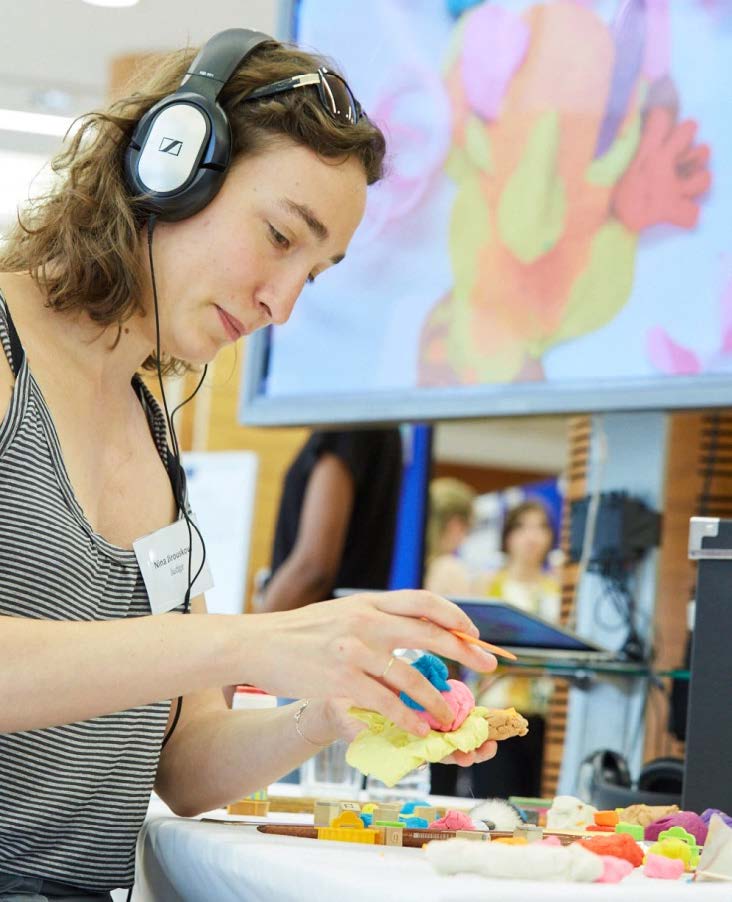
I tried to communicate these issues through my art installation via two components: the video below and an interactive element encouraging people to build their own intervention with the (flawed) information and materials provided in the black box.


Exhibiting at the Summer Showcase

Joining the research as art competition was a great opportunity for me to communicate one of my research findings in a creative way. During the creation of the project, I realised that replicating a simple playdoh sculpture (which I used as a visual analogy) had many subtleties in common with replicating interventions in real-life quality improvement efforts. I never actually expected to see that. The Summer Showcase gave me the chance to explore these similarities and differences further with the visitors. It was great talking to people from different disciplines and different backgrounds about my research and to hear about their thoughts and insights. The art installation proved to be a great vehicle to start discussion, explore connections with people’s own experiences, and to visually demonstrate a key take home message from my research.