Blog posts

Introduction to Mathematical Models of the Epidemiology and Control of Infectious Diseases 4th-15th September 2017

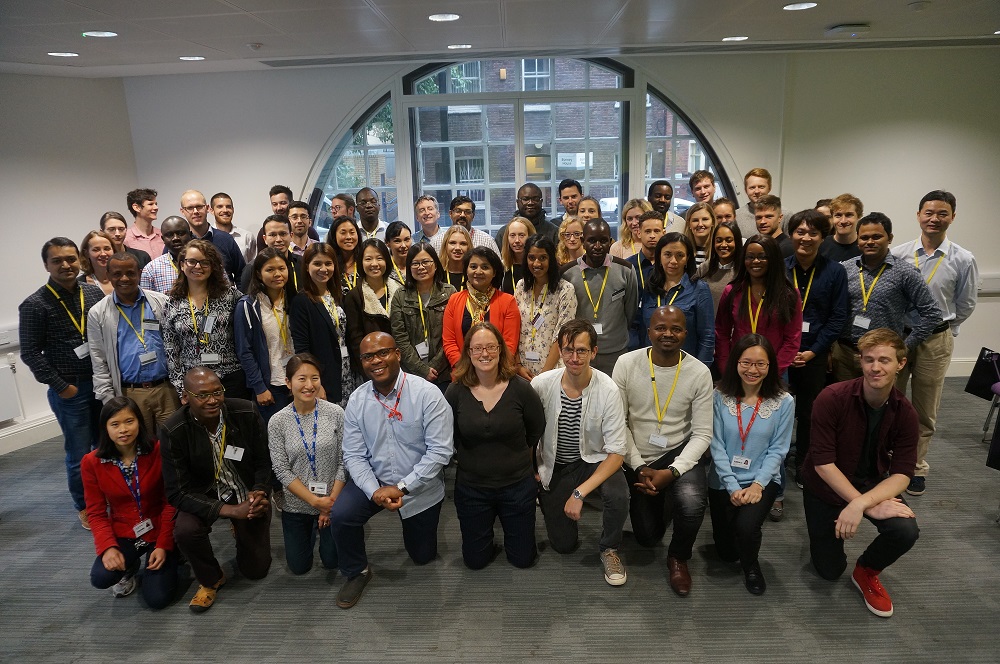
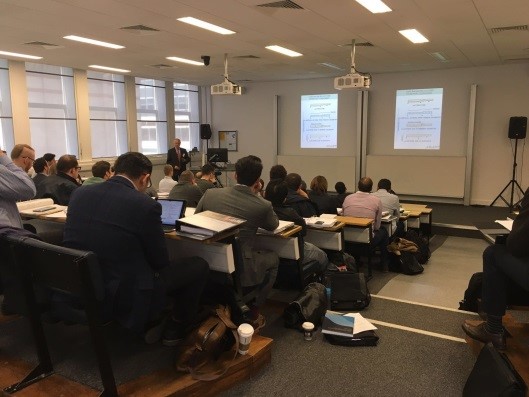
35 delegates from across the world attended this annual 2-week short course run by the Department of Infectious Disease Epidemiology. Bringing together policy makers, clinicians, economists, veterinarians, mathematicians, and biologists, the course provides a thorough, but accessible and demystifying introduction to the essential elements of mathematical modelling with an emphasis on the use of mathematical models for policy making. With infectious diseases frequently dominating news headlines, public health professionals, policy makers and infectious disease researchers increasingly need to understand the transmission patterns of infectious diseases. This allows them to interpret and critically evaluate both epidemiological data and the findings of mathematical modelling studies.
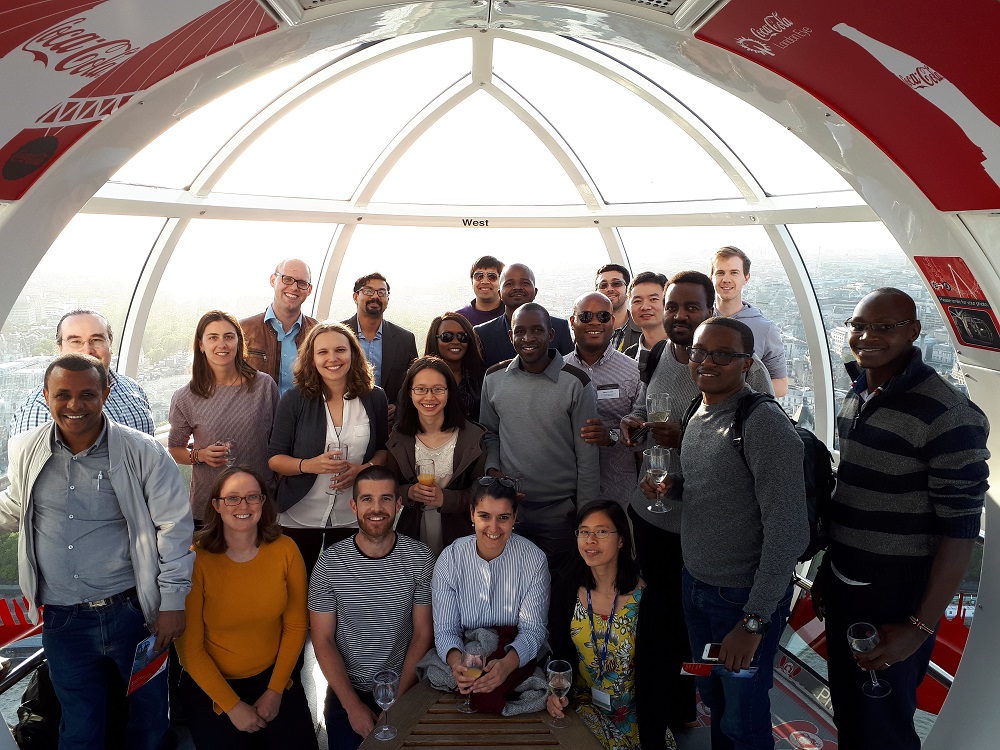
Highlights of an intense first week of lectures and practicals included a trip on the London Eye followed by the course dinner, and a taste of British culture with a pub quiz to end the week.

Delegates chose two projects in the second week, applying methods and concepts taught in week one to build their own disease-specific models. This year’s invited lecture was given by Dr Chris Dye, Director of Strategy in the Office of the Director General at the World Health Organization, addressing “What will the Sustainable Development Goals do for health?”.

CMOS Analog Integrated Circuit Design e-learning

This course was taught as a 5 day short course over the past 25 years at Imperial.  It was improved each year as new topics were developed and over 1000 students from industry and academics have taken the course.  The experience and feedback of those courses has been updated and captured in the present online offering.

The course provides a bottom-up, hierarchical approach to the subject of analog circuit and systems design using standard CMOS technologies.  Simple modeling techniques are used to gain an understanding of and insight into the function of circuits.  Appropriate use of the computer for simulation is discussed.  Techniques suitable to enhanced performance using integrated circuit technology are used.  In addition, the implications of IC fabrication are used whenever possible to associate the electrical performance with the physical attributes of the circuit.

Who the course if for?

This course has been designed for circuit designers who need to implement analog integrated circuits using CMOS technologies.  The course will provide experienced analog circuit designers with a valuable update on the latest and upcoming developments in the field.  It will give novices and those considering entering the field, an indispensable foundation in the fundamentals of the technology, and ways in which it can be implemented successfully.  Participants should have a general knowledge of analog circuits, electrical circuit analysis, and familiarity with integrated circuit technology.

Why is the course important?

  • It will provide a state-of-the-art review of the principles, concepts, and techniques needed to carry out the successful design of CMOS analog integrated circuits.
  • It will expose the participants to the methods used in the processing and design of such circuits, including modeling, characterization of the process parameters, SPICE simulation techniques, testability considerations, and methods of experimental verification.
  • It will help the participant understand the operation and expectations of CMOS circuits.
  • It combines an academic viewpoint with practical examples and industry experience.

Quotes (based on the previous face-to-face course)

“The course content and support documentation was very good”

“Detailed circuit analysis”

“Prof. Allen has an excellent way of presenting the course material”

“Excellent coverage of a huge subject in short time. An excellent 12 week course neatly fitted into 5 days”

“Informative, enjoyable, full of insights…I learned a lot!”

“Highly recommended for experienced and new engineers requiring an improvement in analog design”

“Several new design ideas which I as a bipolar designer, found very useful…”

“An excellent choice of course for an excellent choice of career”

”Best feature of the course is the explanations of the concepts required for analog design without all the equations”

“I am now far more confident of success with my analog CMOS designs”


To register for this online course, go to

http://www.imperial.ac.uk/continuing-professional-development/short-courses/eng/electrical/cmos/

Power Minimization in low-noise analog IC’s, given by Prof. Willy Sansen of the KULeuven, Belgium

This annual course, held 14-17 November 2017 at Imperial College London is an insight in analogue IC design. Insight is developed by the analysis of some of the most important circuits, followed by the use of design plans or algorithms to obtain the best Figures of Merit (FOM).  This is worked out for circuits such as multi-stage amplifiers and class-AB amplifiers. Considerable attention goes to the noise trade-off with power consumption. Both continuous-time and switched-capacitor filters are also discussed and compared, to be used in Sigma-delta Analogue-to-Digital Converters.

This course is thus for expert designers who want to become more competitive in their field. This course is however also for novice designers who are already acquainted with some design aspects but who want to broaden their portfolio in design knowledge.

Low-power Analogue design is a niche design expertise, which has never failed to lead to ever more job opportunities. At the same time it is a life-long learning activity, which perfectly fits the present-day career development goals.

It is at the core of all portable electronics, such as portable phones, medical monitoring systems, etc., but also the coming Internet of Things.

The Next 10 Years: Challenges, Innovation and Diffusion of Medical Robotics

The annual Hamlyn Symposium on Medical Robotics came to a close during UK Robotics Week 2017.

Over 350 Surgeons, clinicians, engineers, business leaders and academics recently came together at the Royal Geographical Society for the annual Hamlyn Symposium.  Celebrating its 10th year and coinciding with the 2nd annual UK Robotics Week, the Symposium is hosted by the Hamlyn Centre for Robotic Surgery and offers an opportunity to test, watch demos and hear talks about the latest innovations in medical and surgical robotics.

Medical robotics have come a long way over the past 10 years and because there is less pain and recovery time for the patient and the surgical robotic instruments are able to be much more precise and minimally invasive, there is a win-win for both the patient and surgeon.

Marking the Symposium’s 10th birthday, the theme this year was to look at the future of medical robotics and the steps to take to allow us to further innovate, diffuse and overcome barriers throughout the next 10 years.

This year’s keynote lecture was presented by Dong-Soo Kwon from the Korea Advanced Institute of Science and Technology (KAIST) and addressed ‘Efforts Towards the Minimum Invasive Surgery’.

Catherine Mohr

Invited speaker Catherine Mohr of
Intuitive Surgical.

Other highlighted speakers included Catherine Mohr of Intuitive Surgical who discussed ‘USA Surgical Robots as a Technology Platform’ and Andrew Turberfield from the University of Oxford who addressed ‘UK Programming Autonomous Molecular Machinery’.

The Karl Storz – Harold Hopkins Lecture was presented by Joseph J. Y. Sung from the Chinese University of Hong Kong (CUHK), who talked about ‘China AI and Robotic Surgery: What is the Role of Future Medics?’.

Some segments of the event were live streamed on Periscope, which meant remote viewers were able to watch and interact with the Leaders Forum live as it happened.  Chaired by Director and Co-founder of the Hamlyn Centre Professor Guang-Zhong Yang and sponsored by Science Robotics Magazine, the Leaders Forum offered a platform for experts from across the globe to provide their views on the way forward for medical robotics in the years to come.  Experts included Professors Nikolay Vasilyev,  Russel Taylor, Bradley Nelson and Rick Satava.


By Jo Seed

Communications Manager,

Institute of Global Health Innovation

Imperial College London


For full report see

http://www3.imperial.ac.uk/newsandeventspggrp/imperialcollege/centres/globalhealth/newssummary/news_12-7-2017-9-15-45


Mining Finance Continuing Professional Development Courses

Imperial College offers a range of continuing professional development (CPD) training courses through the Centre for Professional Development.  These provide a comprehensive guide to understanding the main factors involved in securing the financial support for mining projects through equity, debt, or entering into a joint venture.  This involves addressing the underlying technical principles, applying these to mineral projects and demonstrating how these influence the financial modelling.

The programme attracts a wide international participation from professionals from the financial institutions as well as the minerals industry. In addition to the long-standing ‘Introduction to Mining for Bankers’ course that runs in July each year, we also run the Metals and Energy Finance course.  Launched in November 2016, this new, modular course in mining and energy finance identifies and examines the investment opportunities offered across the extractive industry’s cycle, from exploration through evaluation, pre-production, development and production.  The course addresses the similarities of a range of mineral and petroleum projects while identifying their key differences.

There is  a growing recognition that conventional engineering must be blended with financial engineering with many mining operations at the transition from open pit to underground mining based on sub-level, panel and block caving methods. The tradition in the mining industry is to fund these types of projects from the cash flow generated by an existing operation.  The alternative is to ring-fence the project as a discrete investment based on allocation of capital made up of a combination of debt and equity and then to demonstrate the level of return that can be generated. In any geared financial model the use of debt in funding the capital expenditure permits discounting based on an equivalent to the corporate cost of capital which should further enhance NPV.   This results in much greater transparency in decision-making which must enhance business development. The CPD courses also cover the transition from technical and financial to business leadership roles in the mining industry.

There is an important narrative around timing where delay in initiating development of the underground mining will result in a fall-off of ore to the plant which adversely impacts on cash flow.  Some develop a shaft system based on cash flow generated from the open pit operation while others make use of debt in funding major programmes of capital expenditure. Where shaft sinking has been funded from equity this should allow treatment of this major cost as sunk capital that provides early access to the ore. As a consequence delays in pre-production infrastructure production during construction will be short and ramp-up to full production will be steep.

The courses include a session on the feasibility study.  The traditional engineering approach will simply treat this as a study which determines if a project is technically possible. Any investment in a mining project needs, however, to generate a revenue stream that not only covers the cost of extraction but also an Internal Rate of Return (IRR) that exceeds the discount rate selected. In the case of a major mining company this would be the corporate cost of capital. If the IRR does not exceed the corporate cost of capital then it would not be feasible to proceed with the investment in the project as mining is not then a commercially viable option.

If debt is to be used and project finance arranged then the investment banks and independent engineers will be involved in construction monitoring. Once the project is brought on stream the independent engineers will again audit actual performance against design expectations. A major mining company with existing production capabilities would be in a better position to ensure economic completion tests will be passed on time.  Loans will then go non-recourse on schedule and future risk is then shared with the investment banks. Those elements will be included in the courses.

Where project finance is used and the lending goes non-recourse the only remaining security for the investment bank is the ore reserve.  The role of ore resource evaluation in mining finance will therefore be reviewed. This material together with the concepts involved in project finance is also covered in the EduMine on-line course “An Introduction to Modelling Metal  Project Finance”  which will be made available to delegates prior to the start of the course.

The key theme emerging within the mining industry is the role of technical innovation needed to release value through replacing labour intensive mining methods with mechanisation. Before the full productivity from the investment in equipment can be achieved, given the level of technical sophistication involved in a modern mechanised mining operation, skilled human resources are needed and these aspects are also covered in the courses. Significant technical risk is often associated with the performance of the processing plant and to reduce this the design must take into account the specific mineralogical characteristics of the ore.  The courses therefore include an introduction to extractive metallurgy.

All deposits will eventually be mined out so the role of exploration and evaluation must be part of the narrative and this cycles back to the Value Creation session covered in the courses – geologists must be supported in their exploration efforts.

Workshop sessions are also an integral part of the course delivery and use will be made of the IC-MinEval software which automates the generation of Excel™-based spreadsheets to produce models for a wide range of mineral projects. These models can be saved as fully-linked workbooks and continued use is quite independent of the software. Attendees can generate their own models which can be preserved indefinitely and have normal Excel functionality.

Analysis will be undertaken during the workshop sessions on the financial performance indicators generated and there will also be a determination of the valuation that could be placed on the asset. Sensitivity analysis will be undertaken on key variables. Consideration will also be given to the role of financial models in identifying those technical variables that have the greatest impact on financial performance and then back-engineering that to the corresponding technical risk.

Upcoming courses

Introduction to Mining for Bankers 3- 5 July

Metals and Energy Finance course, 20-24 November 2017

Please see our website for further information.

Medical Ethics Intensive One Week Course, 11-15 September 2017

By Professor Raanan Gillon

In 1983 I started a one week CPD course in medical ethics to  introduce doctors to several different  approaches to ethics (currently deontology, consequentialism, virtue ethics, ‘the four principles approach’). The course  considers a variety of problems in medical ethics including end of life issues, double effect, acts and omissions, killing vs allowing to die, paternalism versus respect for autonomy, truth-telling in medical practice, a session on ‘practical aspects of medical ethics’,  fair distribution of resources, the relation of ethics and law,  human rights and medical ethics. A half-day session is aimed at helping participants to understand opposing perspectives by means of an exercise in developing arguments explicitly opposing participants’ own viewpoints concerning cases that they have found troubling. Overall satisfaction of previous participants has always (over the last 33 years!)  been at an average level of 9+ on a ten-point scale so  I am confident that doctors who come on the course do find it very worthwhile. Comments from participants have included “The best post-graduate experience of my career” and “A first class course to put your ethical thinking into perspective and relate [it] to present day healthcare…”.

The course is in English and UK doctors are the main attenders but we usually have some international visitors whose perspectives add value to the experience,  as do the various others who come- among them nurses clinical ethics committee members, medical ethicists, health managers and even the occasional vet.

If you are interested in attending please visit the CPD website www.imperial.ac.uk/cpd

Professor Raanan Gillon
Emeritus Professor of Medical Ethics,
Imperial College London

Post-Tensioning Design and Construction Course Completes 12th Year

This April we completed our 12th annual course on post-tensioning design and construction. Over the years, the course has taken on its own legendary status and has become a highly sought after event by UK and international delegates. Consistently, engineers calling from over 10 countries participate in the course to learn about the basics of post-tensioning and sharpen their design skills. Many of the larger design offices have also made it standard practice to send new hires to the course. As lecturers, we have been very pleased with the logistical support we receive from the Center for Professional Development. Imperial College has proven to be a great venue and creates a collegial atmosphere among the delegates. One of the highlights of the course has become a dinner we invite delegates to between the first and second days of lectures. This social event has turned into a great networking opportunity and forum for practitioners from different parts of the world to share ideas and forge new friendships. Dr. Bijan, the course Director, and I have also had the chance to meet many interesting individuals and maintain ongoing contact with quite a few of them.

Each year we strive to provide up-to-date course content and deliver relevant information to the attendees. The optional hands-on software workshop that is offered on the third day gives delegates the opportunity to learn new structural design software skills. It has been a real pleasure for us to be part of this CPD program and look forward to many more years of giving the course. The next course is in 23- 25 April 2018, so make sure you keep an eye out on the CPD website for details. www.imperial.ac.uk/cpd

Florian Aalami – Course Lecturer

Medical ethics as applied to paediatric practice

Law and Ethics in Paediatrics is a two day course looking at medical law and ethics as applied to paediatric practice. This important course will cover topics such as negligence, confidentiality, child protection, research, end of life care, organ donation, reporting of deaths and the Coronial process; delegates will get the opportunity to visit Westminster Coroner’s Court.

Course aims include enhancing the problem-solving skills necessary to solve practical problems in paediatric practice through debate and discussion and to provide familiarisation with the Coroner’s Court and the Coronial process.

The course is open to doctors, nurses, paramedical staff and students of medicine or law and has recently been added to the modules available on the MSc Paediatrics and Child Health programme offered at Imperial College London.

Delegates who previously attended the course described it as an ‘Excellent overview of major paediatric issues in law and ethics.’ and ‘Extremely thought provoking and interesting!’

 If you would like to know more about the course please visit:
www.imperial.ac.uk/cpd/lawethics/ or contact cpd@imperial.ac.uk

Laryngectomy: rehabilitation and surgical voice restoration (Advanced Level)

Leading experts Yvonne Edels and Margaret Coffey recently delivered another successful advanced level Laryngectomy course for speech therapists.

The course is a joint venture between Imperial College London (ICL) and Imperial College Healthcare NHS Trust (ICHT).  It is specifically designed for speech and language therapists (SLT’s) who have specialised in the field of Head and Neck Cancer, specifically cancers leading to laryngectomy (removal of the larynx).  Course applicants must have previous working experience in the field. Numbers are limited to around 30 delegates to maximise the learning experience.

The focus is on surgery for standard laryngectomy and options for extensive surgical reconstruction; changes to the anatomy and physiology, their effects upon breathing, swallow and voice production and complications associated with these procedures.

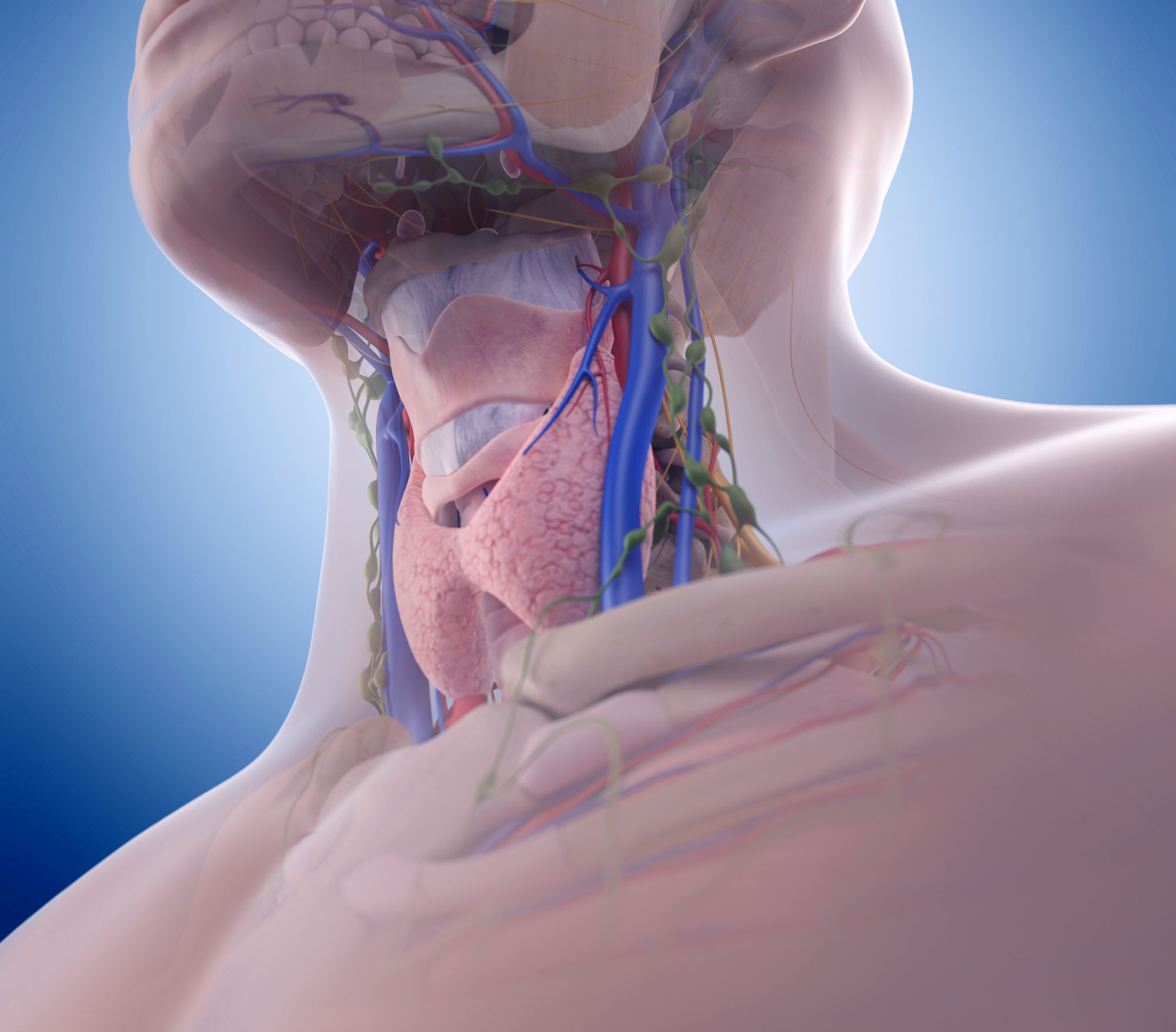
The multi awarding winning E-Learning Module “Understanding laryngectomy surgery to optimise swallow and voice outcomes” is a compshutterstock_309796568_cropped2ulsory pre-requisite.  It concentrates exclusively on surgery for standard laryngectomy and includes some procedures and suggestions to maximise rehabilitation outcomes including detailed illustrations with explanatory text, 2D animations, labelled surgical photos and “live” videos of actual surgery. A series of nine innovative 3D animations with explanatory voice-over, summarise the stages of the surgery itself, as well as the pre and post-operative functions of breathing, voice production, swallow and prosthesis placement.


Why is it important?

Removal of the larynx together with the cancerous tumour necessitates the surgical construction of a stoma through which the patient must permanently breathe. An additional trauma is the loss of the vocal cords, the normal means to produce voice.  The ability to communicate verbally can be seen as a fundamental human requirement. Advances in treatment, improvements in surgical technique and the development of modern voice prostheses mean that post-operative outcomes have significantly improved. This course aims to present the advances in knowledge to speech and language therapist in order to maximise patient outcomes in particular voice rehabilitation but also such surgical corollaries as breathing and swallowing difficulties.

If you would like further information on the Advanced Laryngectomy course or the e-learning module, please contact cpd@imperial.ac.uk or visit

www.imperial.ac.uk/cpd/svr
www.imperial.ac.uk/cpd/svrelearn

Alumnus returns to Imperial after 50 years, to deliver a CPD course

1

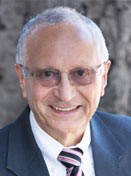
Imperial alumnus Professor Bijan Aalami recently delivered a CPD short course on ‘Post Tensioning Design and Construction’, to 50 civil engineers, in Lecture Theatre 201 Skempton Building.  It was in this very room, 50 years ago on the same day, where Bijan was awarded his PhD degree.

2

He said “this day has brought back lovely memories of my student days at Imperial!  The civil engineering department has not changed a bit after all these years, and the lecture theatre looks exactly the same”.  The Alumni Office interviewed Bijan during the course about his return visit.  We hope this will encourage more successful alumni to come back to Imperial, to deliver CPD short courses.