Category: All courses

CPD and DSI’s Winter Schools in data science “going from strength to strength”

As Gemma Ralton of  Imperial’s Faculty of Engineering reports, CPD’s ongoing collaboration with the Data Science Institute continues to go from strength to strength, with over 80 students attending two different winter schools in January and February, to learn more about data science and artificial intelligence.

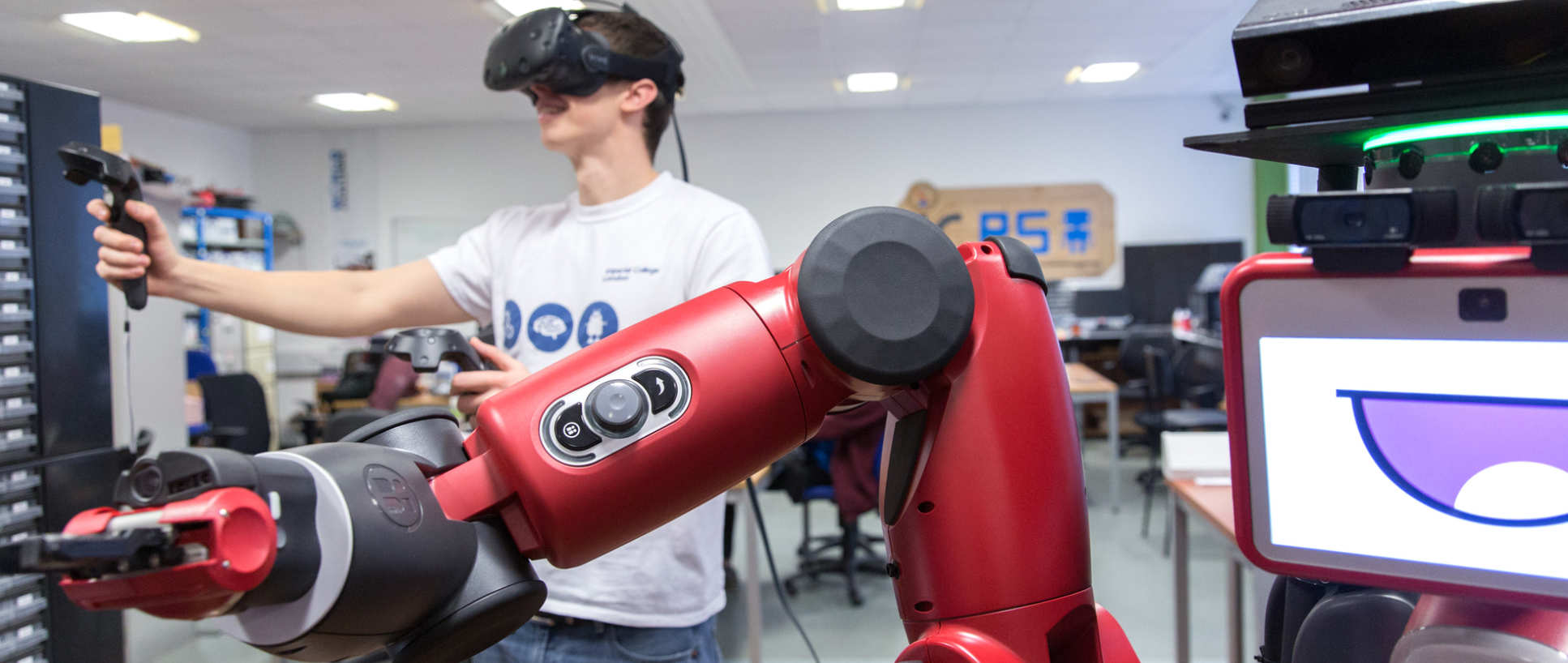
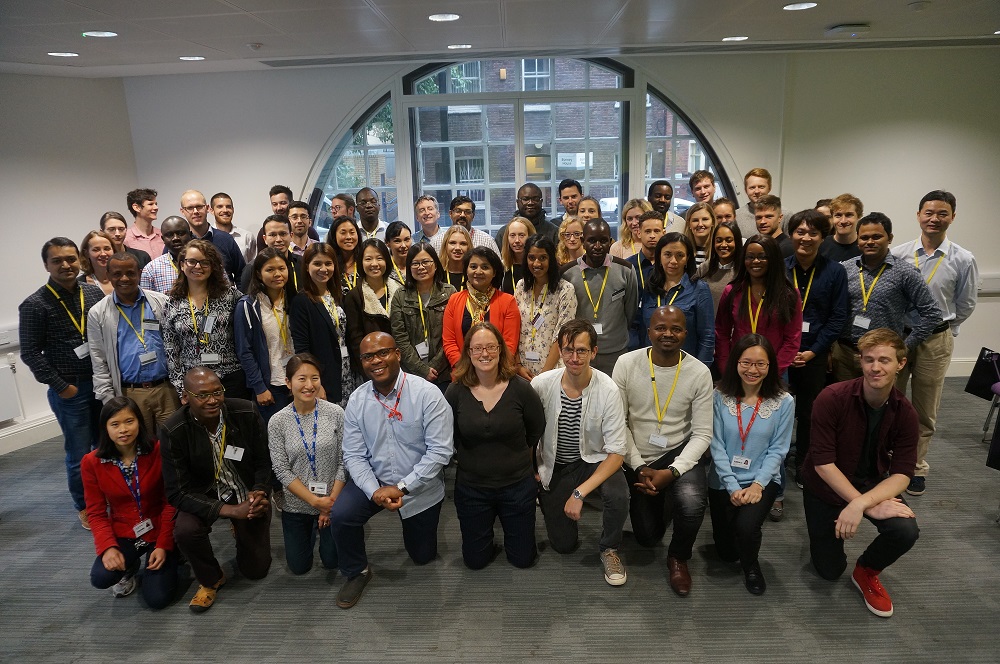
Both Winter Schools recruited the top student talent from universities in the UK and China; with 49 students attending the Data Science Online Winter School, during which they were introduced to the concept of data science by hearing from industry experts on common data science applications and worked in teams towards a technical project.

38 students took part in the Artificial Intelligence and Data Science for Business Innovation Winter School and learnt about the role of AI and data science in driving a new era of innovation in many fields including industry and business.

Lectures were delivered by various members of the DSI team and included introductions to natural language processing by Dr Jingqing Zhang, machine learning by Dr Yves-Alexandre de Montjoye and blockchain technology Dr Kai Sun. Students also heard lectures in artificial intelligence from Professor Yi-Ke Guo, data science entrepreneurship from Dr Mark Kennedy and robotics and AI in engineering design from Professor Peter Childs.

Our Head of CPD, Betty Yue continues to be impressed with the quality of students and high standard of work produced,

“The winter schools are going from strength to strength, attracting quality students from top China universities as well as from UK Russell Group universities. I’m particularly impressed with the students group project presentations, seeing the high standard of the work they produced in such a short time frame.  Thanks to the DSI teaching faculty and supervisors for giving their time and dedication to provide an excellent learning experience for the students.”

Further information on the winter schools, can be found on our website.


Back on campus for Metabolomics short course students! 

CPD began working with the Division of Systems Medicine and the Imperial Phenome Centre in Autumn 2019, with a view to deliver a number of short training courses on metabolic profiling studies. 

Due to the COVID 19 pandemic, our first course Hands-on Data Analysis for Metabolic Profiling, which was due to take place on campus in April 2020, had to be delivered live online in June 2020.  This popular course was a great success and continued to be delivered online remotely twice annually until November 2021. 

Despite the advantages of online delivery, it was so exciting to be back at our Hammersmith campus after 2.5 years for our most recent course on 11-15 July. The 5-day course, led by Professor Tim Ebbels, Course Director and Professor of Biomedical Data Science, offers comprehensive, hands-on training in processing and analysing metabolomics data from LC-MS and NMR technologies. 

In addition to the lectures and Hands-on practical sessions, the course provided the face-to-face networking opportunities we have all missed, with a chance to socialise at the drinks reception and course dinner and it was so refreshing to see delegates and tutors in person again! 

 We do however see merit in both formats of delivery and as such this particular course will be adopting a multi-mode approach, delivering the course twice annually; on campus in the summer and online during the winter and we look forward to seeing delegates online on 21-25 November!  

Registration opens soon: www.imperial.ac.uk/cpd/hands-data-analysis 

Training Organisations in Climate Change Risk Management

COP26, the UN Climate Change Conference hosted recently in Glasgow, saw a delegation from Imperial College London join this major global summit to put their expertise and research to use in support of ambitious climate action.

No matter what sort of organisation you work in, you will be impacted in some way by both the physical effects of our changing climate and the wealth of regulations and targets we are increasingly required to meet.

In 2020, during the build-up to COP26, the Centre for Continuing Professional Development teamed up with The Institute of Risk Management (IRM) and The Grantham Institute to successfully deliver our first go-to practical online training course on Climate Change Risk Management.  Building on world-leading expertise in the science of climate change, business management and enterprise risk management, this practical course not only allows learners to explore why managing climate change risk is important to their organisation but also how to do it.

Since the launch of the first online course in April 2020, our partnership with the IRM is going from strength to strength, and we will continue to deliver this important and popular training programme 3 times annually.  The next course is 8-9 December and we now have confirmed dates for 14-15 March 2022

Climate Change Risk Management online training course 


Continuing medical education online

At the Centre for Continuing Professional Development we continue to successfully adapt and deliver short courses online. Medical courses have been particularly well received and at times have become more interactive as a result of the new delivery format which has enabled a wider audience to benefit from Imperial’s invaluable expertise. Last month, after a year’s hiatus the Introduction to Mathematical Models of the Epidemiology & Control of Infectious Diseases course was delivered with the Department of Infectious Disease Epidemiology. The course, which has been taking place at St Mary’s Medical School since 1990 was delivered entirely online for the first time. Taught by leading researchers who advise policy-makers internationally including Prof Sir Roy Anderson FRS FMedSci and Prof Neil Ferguson OBE FMedSci, the course covered “At the Centre for Continuing Professional Development we continue to successfully adapt and deliver short courses online.”
8 highly topical subjects including HIV, TB, malaria, Ebola, pandemic influenza, health economics, vaccination programmes, and stochastic models. Participants attended from across the globe from as far wide as Japan, Malawi and Colombia to name but a few.In October, we have also delivered courses in medical ethics, medico-legal skills, and research development for healthcare workers. Many of these courses have had to be redesigned without compromising the quality of content or teaching. This has been a valuable learning curve for the Centre although we look forward to delivering some face-to-face courses again in the future!
By Stephen Godfrey

Medical Ethics course 16-20 September 2019

By Professor Raanan Gillon

In 1983, as a hybrid of NHS GP and philosopher, I started the Imperial College one week CPD course in medical ethics to introduce doctors to several different approaches to ethics (currently deontology, consequentialism, virtue ethics, ‘the four principles approach’). The course considers a variety of problems in medical ethics including end of life issues, double effect, acts and omissions, killing vs allowing to die, paternalism versus respect for autonomy, truth-telling in medical practice, a session on ‘practical aspects of medical ethics’, fair distribution of resources, the relation of ethics and law, human rights and medical ethics. A half-day session is aimed at helping participants to understand opposing perspectives by means of an exercise in developing arguments explicitly opposing participants’ own viewpoints concerning cases that they have found troubling.

This year the last day of the course – which always looks at issues of justice in medical ethics- will be in the form of a stand-alone one day conference to which people interested to explore this complex component of medical and health care ethics can subscribe if they are unable to attend the entire intensive five day course. Seven plenary speakers will approach the subject from their varied perspectives- philosophy (James Wilson), care ethics (Ann Gallagher), health inequalities (Sir Michael Marmot), health economics (Richard Cookson), medical law (Emily Jackson), human rights (Julian Sheather) and medical ethics (Albert Weale). There will be no small group discussions but time is built in for audience participation.

For further information and to register for this course please visit http://www.imperial.ac.uk/continuing-professional-development/short-courses/medicine/ethics/medical-ethics/


2019 – an exciting year ahead!

If in 2019 you are thinking about attending a Professional Development course to update your skills, refresh your knowledge or change your career path, then Imperial CPD is the place for you!

As ever we have a full and diverse portfolio of high quality short courses, within the disciplines of Science, Technology, Medicine and Business led by academics at the very top of their fields. Here are some of the highlights…..

Researcher Development Course

Previously called Starting out in Research, this popular course designed specifically for healthcare staff involved in research projects will now be directed by Dr Caroline Alexander, the Lead Clinical Academic for Therapies at Imperial College Healthcare NHS Trust and Adjunct Reader. The course is offered in two 2 day modules:

  • Module 1: 11 – 12 March
  • Module 2: 13 – 14 June

The gap between the modules is intended to allow you time to use and develop the skills taught during days 1 and 2, and to spend time developing a research question and start to formulate a proposal. We’re sure that with Caroline’s wealth of experience, this course will prove to be a successful as ever!


Improving Voice is back!

Previously held in 2017, don’t miss the chance to attend the very popular Improving Voice: management and therapy for voice disorders 25 & 26 March, a 2 day course with Christina Shewell, internationally recognised expert in the spoken and singing voice. Early bird rate available until 26 February 2019!

Specific course content includes:

  • Overview of common voice disorders
  • Optimising voice evaluation
  • Introduction to 7 areas of management and therapy tools
  • Experiential voice and pair-based practical work 


Further your skills and broaden your opportunities in cardiovascular and respiratory healthcare.

The Faculty of Medicine’s new and exciting Cardiovascular and Respiratory Healthcare Master’s programme offers the following modules as stand-alone short courses:

Civil Engineering

Within the field of Civil Engineering, our 1 day course Systems Engineering leadership will be held on 22 March. Organised through the UK Collaboratorium for Research on Infrastructure and Cities (UKCRIC), the Centre for Systems Engineering and Innovation at Imperial College and the Systems Centre at the University of Bristol, this course enables you to develop your systems engineering leadership skills – to lead the use of systems engineering in infrastructure delivery in your own organizations and in the projects on which you work.

Now in its 14th year, our annual Post tensioning Design and Construction course, will be held 3-5 April, so if you’re looking to update your knowledge on the latest developments in construction technology and are  Interested in the economics of post tensioning, design procedures and software, this is the course for you!


Petroleum Engineering

Within the field of Petroluem engineering, is our established international course Using Special Core analysis in reservoir engineering 5-7 June. Led by the highly esteemed Jess Stiles, this 3 day course is designed primarily for reservoir engineers involved with reservoir simulation and/or classical hand calculations. A comprehensive manual accompanies the course which includes numerous examples from the North Sea and elsewhere in the world.

We also run short stand-alone courses from the MSc Petroleum Engineering programme. The remaining short courses within Modules 3- 5 are scheduled until 11 March 2019 and cover Reservoir Characterisation/ Engineering and Field Development. See our detailed course brochure for further information.


Mining Finance Courses

The courses offered provide a comprehensive guide to understanding the main factors involved in securing the financial support for mining projects through equity, debt, or entering into a joint venture.  This involves addressing the underlying technical principles, applying these to mineral projects and demonstrating how these influence the financial modelling.

In addition to the long-standing annual Introduction to Mining for Bankers 1-3 July, we also run the Metals and Energy Finance course, 18-22 November. Launched in November 2016, modular course in mining and energy finance identifies and examines the investment opportunities offered across the extractive industry’s cycle, from exploration through evaluation, pre-production, development and production.  The course addresses the similarities of a range of mineral and petroleum projects while identifying their key differences.


Summer schools

As ever, we have a busy summer planned, with a full programme of summer schools including World challenges and innovation summer school, 5-16 August, now in its 2nd yearApplications are now open, so join us for a summer of discovery!

 

Medical Ethics – now includes a one day standalone conference!

This year, our long-standing Medical Ethics Course 16-20 September will include a one day stand alone on day conference on day 5, which will focus on Justice and fairness in medical and health care ethics – to which people interested to explore this complex component of medical and health care ethics can subscribe if they are unable to attend the entire intensive five day course.


Please feel free to browse our webpage for further information on these courses and our full programme of events at www.imperial.ac.uk/cpd or follow us on twitter @imperialCPD for fast course updates.


Medical Ethics Intensive One Week Course in London, 10-14 September 2018

By Professor Raanan Gillon

In 1983 I started a one week CPD course in medical ethics to  introduce doctors to several different  approaches to ethics (currently deontology, consequentialism, virtue ethics, ‘the four principles approach’). The course considers a variety of problems in medical ethics including end of life issues, double effect, acts and omissions, killing vs allowing to die, paternalism versus respect for autonomy, truth-telling in medical practice, a session on ‘practical aspects of medical ethics’,  fair distribution of resources, the relation of ethics and law,  human rights and medical ethics. A half-day session is aimed at helping participants to understand opposing perspectives by means of an exercise in developing arguments explicitly opposing participants’ own viewpoints concerning cases that they have found troubling. Overall satisfaction of previous participants has always (over the last 34 years!)  been at an average level of 9+ on a ten-point scale so  I am confident that doctors who come on the course do find it very worthwhile.

Comments from participants have included “The best post-graduate experience of my career” and “A first class course to put your ethical thinking into perspective and relate [it] to present day healthcare…”.

The course is in English and UK doctors are the main attenders but we usually have some international visitors whose perspectives add value to the experience,  as do the various others who come- among them nurses clinical ethics committee members, medical ethicists, health managers and even the occasional vet.

If you are interested in attending please visit the CPD website www.imperial.ac.uk/cpd

Professor Raanan Gillon
Emeritus Professor of Medical Ethics,
Imperial College London

Introduction to Mathematical Models of the Epidemiology and Control of Infectious Diseases 4th-15th September 2017

35 delegates from across the world attended this annual 2-week short course run by the Department of Infectious Disease Epidemiology. Bringing together policy makers, clinicians, economists, veterinarians, mathematicians, and biologists, the course provides a thorough, but accessible and demystifying introduction to the essential elements of mathematical modelling with an emphasis on the use of mathematical models for policy making. With infectious diseases frequently dominating news headlines, public health professionals, policy makers and infectious disease researchers increasingly need to understand the transmission patterns of infectious diseases. This allows them to interpret and critically evaluate both epidemiological data and the findings of mathematical modelling studies.

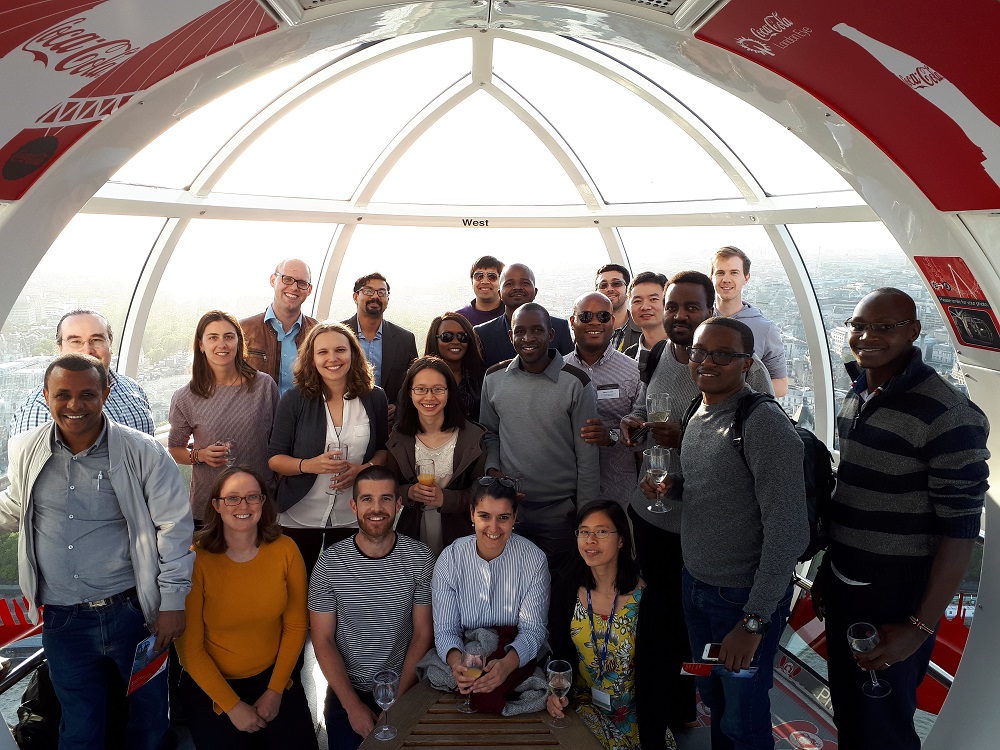
Highlights of an intense first week of lectures and practicals included a trip on the London Eye followed by the course dinner, and a taste of British culture with a pub quiz to end the week.

Delegates chose two projects in the second week, applying methods and concepts taught in week one to build their own disease-specific models. This year’s invited lecture was given by Dr Chris Dye, Director of Strategy in the Office of the Director General at the World Health Organization, addressing “What will the Sustainable Development Goals do for health?”.

Power Minimization in low-noise analog IC’s, given by Prof. Willy Sansen of the KULeuven, Belgium

This annual course, held 14-17 November 2017 at Imperial College London is an insight in analogue IC design. Insight is developed by the analysis of some of the most important circuits, followed by the use of design plans or algorithms to obtain the best Figures of Merit (FOM).  This is worked out for circuits such as multi-stage amplifiers and class-AB amplifiers. Considerable attention goes to the noise trade-off with power consumption. Both continuous-time and switched-capacitor filters are also discussed and compared, to be used in Sigma-delta Analogue-to-Digital Converters.

This course is thus for expert designers who want to become more competitive in their field. This course is however also for novice designers who are already acquainted with some design aspects but who want to broaden their portfolio in design knowledge.

Low-power Analogue design is a niche design expertise, which has never failed to lead to ever more job opportunities. At the same time it is a life-long learning activity, which perfectly fits the present-day career development goals.

It is at the core of all portable electronics, such as portable phones, medical monitoring systems, etc., but also the coming Internet of Things.

Medical Ethics Intensive One Week Course, 11-15 September 2017

By Professor Raanan Gillon

In 1983 I started a one week CPD course in medical ethics to  introduce doctors to several different  approaches to ethics (currently deontology, consequentialism, virtue ethics, ‘the four principles approach’). The course  considers a variety of problems in medical ethics including end of life issues, double effect, acts and omissions, killing vs allowing to die, paternalism versus respect for autonomy, truth-telling in medical practice, a session on ‘practical aspects of medical ethics’,  fair distribution of resources, the relation of ethics and law,  human rights and medical ethics. A half-day session is aimed at helping participants to understand opposing perspectives by means of an exercise in developing arguments explicitly opposing participants’ own viewpoints concerning cases that they have found troubling. Overall satisfaction of previous participants has always (over the last 33 years!)  been at an average level of 9+ on a ten-point scale so  I am confident that doctors who come on the course do find it very worthwhile. Comments from participants have included “The best post-graduate experience of my career” and “A first class course to put your ethical thinking into perspective and relate [it] to present day healthcare…”.

The course is in English and UK doctors are the main attenders but we usually have some international visitors whose perspectives add value to the experience,  as do the various others who come- among them nurses clinical ethics committee members, medical ethicists, health managers and even the occasional vet.

If you are interested in attending please visit the CPD website www.imperial.ac.uk/cpd

Professor Raanan Gillon
Emeritus Professor of Medical Ethics,
Imperial College London