After the daunting week of exams after a relaxing Christmas break, you can heave a big sigh of relief that exams are over. Or can you?
If you’re like me, as soon as you leave that hall you’re already second guessing all your answers and thinking about what mark you might get. Just because the exam is done doesn’t mean that the stress has gone away, you’re just stressed about receiving your mark now instead of the task of actually completing the exam. All the while you have to carry on with the rest of your lectures and in-course assessments. The stresses of work can seem never-ending, but its important to remember that even though university is for extending your learning, it’s also about having fun with everything else there is to offer. Try not to get too bogged down by exams and results.
Throughout A-Levels and my first term here at Imperial I have been working on the balance between my perfectionist side and believing that my work is ‘good enough’. It’s a hard battle. To be able to accept when your work is at a good enough standard to hand in and realise that anything else that you add, or any further proof-reading, will probably not add to the quality of your work. Yet there is still that part of you that can’t quite trust that you have done enough.
One way that I try to reason with myself is to remember that my first year is only worth 5% of my overall degree, and getting 100% on every assignment or exam is just unrealistic at university. Firstly, there is a reason that a first is 70%, university exams are challenging and its okay to not be consistently scoring in the 90’s anymore. Secondly, first year is about learning how to study effectively and about the different styles of assessment that you are being asked to complete, in this respect I feel that the feedback you receive is much more important than the overall mark. Make sure you understand how to improve for next time so that you can make the pieces of work that count for more of your overall degree the best they can be. If you’re not happy with feedback you receive, talk to your lecturers and ask for more specific feedback or guidance on how to improve, they are there to help you and you should make use of their knowledge and expertise.
Finally, put everything into perspective. You are at Imperial. If you feel like you’re not achieving as highly as your classmates, or you’re down about a mark you received that is lower than what you’re used to, remember where you are. Not just physically but in comparison to other students around the country, you have had to work really hard to get here and everyone here is intelligent and interested in what they’re studying (hopefully!). So keep that in mind and remember what made you want to pursue your degree in the first place.
I hope this helps you all out as you receive exam results and submit coursework during this term. Its natural to feel a little disappointed if you don’t achieve as highly as you wanted, but the important thing is to not let it get you stuck down. Understand your feedback, learn from your mistakes for next time, and get out and do something you enjoy to take your mind of it.
It has been two weeks since I finished my first ever hospital placement or firms as we call them at Imperial. 2nd year has been going at full speed, so it was really nice to spend the last three weeks of term in hospitals seeing and talking to patients as opposed to lectures or tutorials.
I was based in the acute stroke unit in Charing Cross Hospital with three other students. Although, we had a general induction from Imperial the day before we started and a Charing-Cross-Hospital-specific induction on the first day of firms. It still felt daunting to go into the ward as we all felt that we didn’t belong there yet. This placement ended up being my best academic experience at medical school so far. Here is what made my experience as great as it was in the form three tips:
Always introduce yourselfusing yourfull name and year of study
This is because hospital have medical and nursing students coming and going constantly. Therefore, it is important for staff to know what year you are in. This is vital as it will determine what clinical skills they expect you to confidently perform on your own. However, they may be unfamiliar with how your course works. So, if you get asked to do something which you don’t know how to do, explain that you haven’t been taught that. You can turn it into a great learning opportunity by asking them to teach you the specific task so you can do it for them. This way you can learn and help at the same time!
Never be afraid to ask questions and create your own learning opportunities
Teaching at hospitals is fundamentally different to lectures and tutorials. You are completely independent and it is your responsibility to lead and manage your learning. You are not entirely alone as there are teaching fellows and staff to support you. The transition may be overwhelming initially but everyone gets through it. Furthermore, you get told exactly what you need to learn. In some hospitals, they may timetable teaching sessions for you while in others they may not. Regardless, you can always ask staff to teach you. Don’t get discouraged and take it personally if they say no. They may be extremely busy or they may not enjoy teaching.
Make time for self-care
Just like you are responsible for your learning, you are responsible to find time for you to take a break and to have lunch. It is in nobody’s best interest if you starve yourself or overwork yourself. However, don’t take constant breaks or leave early everyday in the name of self-care.
It is perfectly natural to feel out-of-place and nervous in your first clinical attachment. It will take you time to adjust but you’ll get there. At the end of the day, it may be your first placement but it won’t be your last. So as long as you reflect and learn from it, you will be fine. Don’t be afraid to be independent and proactive about your learning and try to be helpful as much as you can.
Studying at Imperial; one of the best universities in the world, is certainly not easy. It can get tough sometimes. Catching up with lectures and tutorial sheets, meeting report deadlines, rushing projects, all the while trying to maintain a decent social life and sleep. Sounds impossible doesn’t it? It doesn’t help that I’m the kind that cannot stay still and do one thing at a time!
“You’ll only focus on studying and not join anything else this term!” It’s been 3 terms and it certainly hasn’t worked out AHAHAHAH. I TRIED but at Imperial, there are just so many exciting things to do! From all the clubs and societies to join, and the fact that we’re in London, opportunities are endless. I’m currently part of a student organisation focussing on entrepreneurship and I’m working at a startup! It’s exciting for sure, but it hasn’t been easy.
I’m not saying this to brag but I just want everyone to know that it’s okay to say no. It’s important to acknowledge that we can’t do everything and that’s okay. Everyone who knows me knew how much I was struggling half way through the last autumn term. I was at least 3 sheets behind every single subject, multiple lectures to catch up (I had food poisoning and was down for a whole week), multiple meetings in a week (for the student organisation) and multiple projects to handle (student organisation and startup). Halfway through I really felt like drowning. If one more speck of dust landed on top of my head, I’d drown.
At some point, I genuinely knew I had to say no to some things and focus what’s ahead of me. My mental health was not in a good place but through it all, I’m blessed enough to have colleagues and teammates who were understanding. I also had an amazing support system with friends checking-in on me every now and then, and forcing me out to take breaks with them. These little things helped a lot and eventually I could set my mind in a better place.
What I want to say here is, it’s okay to fall back. It’s okay to say no when everything spirals out of our own control. Everyone seems to be doing well but the matter of fact is that everyone is struggling in their own way, fighting their own battles. There certainly are some who are doing really well, that’s for sure but there’s no shame in asking for help and support, no matter how simple it is. Imperial has a robust support system so if you’re in any position to need help, please reach out!
Important factors to consider when flat-hunting in London
Before coming to Imperial, I was concerned about how there is no campus accommodation after your first year. However, this offers flexibility for you to decide how you want to live. There are many options, living alone, with friends, in halls…so what are some factors you must consider?
Staying in halls close to campus
If you haven’t gathered the courage to find friends to live with, don’t worry. Evelyn Gardens is an accommodation for returning undergraduates that has similar layouts to first-year halls, letting you make friends with people on your floor whilst having your personal space in one-person bedrooms. These do go quickly so make sure you sign up early, you can always cancel later. The contract lasts for a year so you have a convenient place to stay for UROP or summer placements. If you have a medical condition you can consider applying to stay in first-year accommodation through the Disability Advisory Service.
Leave fretting over accommodation for after exams
If you are thinking about flat-sharing with friends there’s no need to worry about that – most private properties don’t have free properties for October until over the summer. The Student Hub offers an annual student housing fair for you to find flatmates and get to know landlords not affiliated with letting agents – the properties they offer are often more affordable and it’s always useful to build a good relationship with landlords since you might need to ask them for repairs or any help in the future. To find properties approved by Imperial you can browse Imperial Home Solutions. These are more reliable than third party sites like SpareRoom or RightMove that are susceptible towards scams but useful to check out regardless to research on existing flatshares.
General rules of thumb I stick by
Always view properties before signing a contract.
Age range of flatmates. Even if you don’t know your housemates well the most important thing is to know they have the same kind of interests and mindset as you, and being in the similar age range makes it so much easier. Best friends do not always make the best housemates. Who you want is a housemate that is understanding and respectful of your habits.
Signs of pest infestations. The building exterior is just as important as its insides. Is the pavement clean? Are there holes in the walls? The last thing you want during exam season in the summer is to hear continuous timid squeaks from the roof or scurrying along the floor.
Bills included? Check the average rent of the area. Sometimes the bills included option can be a trick which makes a property more expensive than others with bills you have to pay for yourself but has cheaper electricity and heating or includes amenities that you may not use such as TV licence (which can easily be substituted for by Netflix/Amazon Prime Student).
Location, location, location. Because of its huge population, London is a wonderful place to get accustomed to different cultures but you need to make sure you’re safe at night after a terrific night out. These are trivial but easy to forget like how bright your street is at night, access to public transport.
(PS. Weekday cinema showings and gigs are much cheaper than those on weekends. If you love music, take advantage of how much artists tour the UK capital compared to other cities.)
Don’t feel bad or singled out if you can’t manage to find housemates – an excellent way to do that is to join clubs. There is no stigma around joining clubs after freshers. Imperial’s 300+ societies are always eager to recruit. University is a place of personal development so don’t shy away from new interests.
For theatre addicts London is like a bar for alcoholics: a paradise and a hell at the same time. Since the beginning of my PhD I’ve spent a bit too much money and time on plays and musicals — more than I’d ever publicly admit. Meanwhile I’ve mastered the art of getting cheap tickets, so if you’re also a theatre lover on a student budget, read on! This article isn’t sponsored by any of the companies I mention (unfortunately).
The Globe, one of my favourite London theatres.
Install TodayTix on your phone. You’ll be able to book tickets with one swipe, get some additional offers (e.g. 24-hour-long sales) and, most importantly, participate in lotteries. This way I managed to get affordable tickets for “Everybody’s Talking about Jamie” just a few hours before the show — and the seats were great!
Check out Shakespeare’s Globe. In the summer season standing tickets cost only £5, the price of lunch in the student canteen. Yes, you’ll have to queue before the play to get a good spot. Yes, your legs will hurt after three hours of “Macbeth”. And yes, you’ll get cold and wet in case of bad weather. But you’ll also get a chance to interact with the actors and literally get inside the play. Even if you’re not a fan of Shakespeare, give it a go, as the theatre features plays by other authors as well.
Join Entry Pass at the National Theatre. If you’re 16-25, you can sign up for free to get £7.50 tickets for all plays, from ancient to modern, from funny to tragic, from classic to experimental. Some plays took my breath away (“Amadeus”), some almost bored me to death (“Follies”); all in all, I book for every season, before I get too old.
Consult the Theatre Monkey. Especially if you decide to splurge on some must-see play, make sure you get the best possible seat for your money. This website contains advice on choosing seats in all London theatres.
Get £10 tickets at Young Vic. For under 25-year-olds they offer £10 tickets for each play as well as “lucky dip” tickets: you find out your seats on the day of the show.
While London isn’t the cheapest place to live in, here you can enjoy theatre even if on a budget, especially if you’re lucky enough to be young and a student. Now, enough writing, time to book some tickets!
“Here’s your first summative assignment.”
03/11/15
“1st term’s over! Merry Christmas and a happy new year!”
18/12/15
“Welcome back. How were your holidays?”
11/01/16
“This term’s tough. More assignments and labs!”
15/02/16
“Yeah, I’m going home for Easter.”
23/03/16
“How are exam preparations coming along?”
25/04/16
“The first exam actually went pretty well.”
29/04/16
“I’m really glad they’re over.”
01/06/16
“Congratulations on passing the year. See you in the 2nd.”
19/07/16
I finished my 1st year at Imperial several months ago, and it truly went by too fast. Maybe it’s because as I’m getting older, every other year is a lesser fraction of my life, but who knows in fact.
Besides that, I tried to make the most of it, and in some aspects, I did. That makes me really happy, but there are other things that I wanted to try out or accomplish (like rock-climbing or a more regular club attendance), but did not in the end.
Of my first year at least.
So, from all my highs and lows over this past, eventful and simply wonderful year at Imperial, here are 11 tips for you to own your 1st year.
1.Be the one to say “hi” first
At Imperial, you will come to meet lots of new people from many different places, and make some pretty good friends. I say, be the one to muster up the courage to walk up to the cool guy or pretty girl you have your eyes on, and simply introduce yourself without expecting anything in return.
Be as glamorous as you need to be.
You may end up as friends, or you may not click with that person. Anyway, you will come to develop your courage and conversational skills. Soon enough, you’ll learn how to approach different people and how to start and lead a conversation.
2.Try as many new things as humanly possible
If you’re moving to a large city like I did, then there will probably be many more activities or opportunities available to you as a university student. This may include activities like calligraphy, pole-dancing, kendo, photography, skydiving, or even archery.
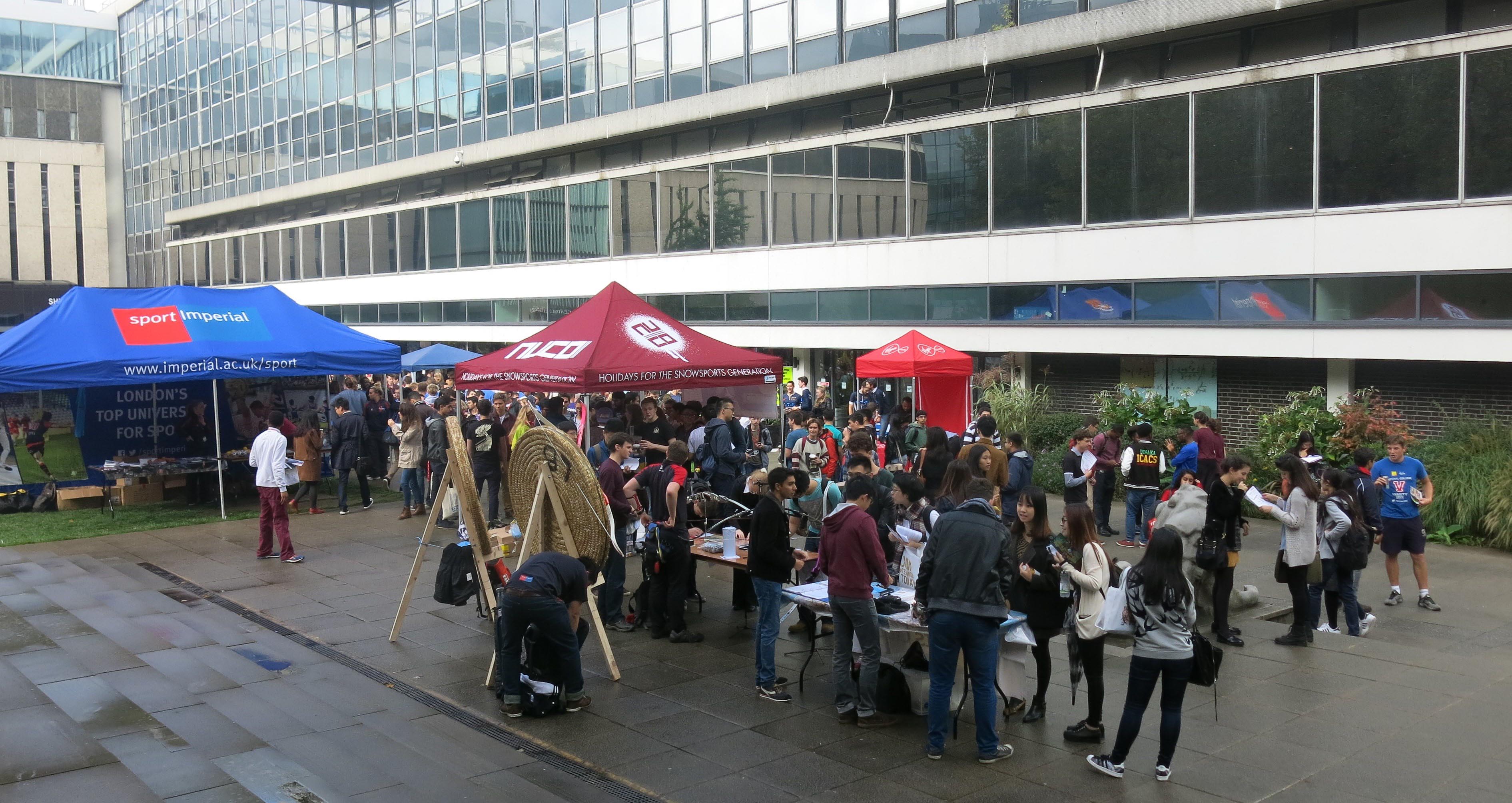
Your No. 1 mission is to go to ALL the stalls at the Freshers Fair on October 4th.
In a bigger city, there are also many charitable causes to volunteer for, and many opportunities for a part time job, like bartending or tutoring.
The point of trying lots of new things is to genuinely learn what you’re into and not, rather than saying “I don’t think I’ll like it.”
3.Learn how to learn
The lecture starts, and you pull out your paper and pen, but you see your classmate across the room with a Microsoft Surface Pro 4 with his stylus ready to jot notes down on MS Word.
We all have our learning styles – these are whichever helps us learn more effectively. See what things you have available to aid your learning, apply them and evaluate how helpful they are, in order to find out your most effective learning method.
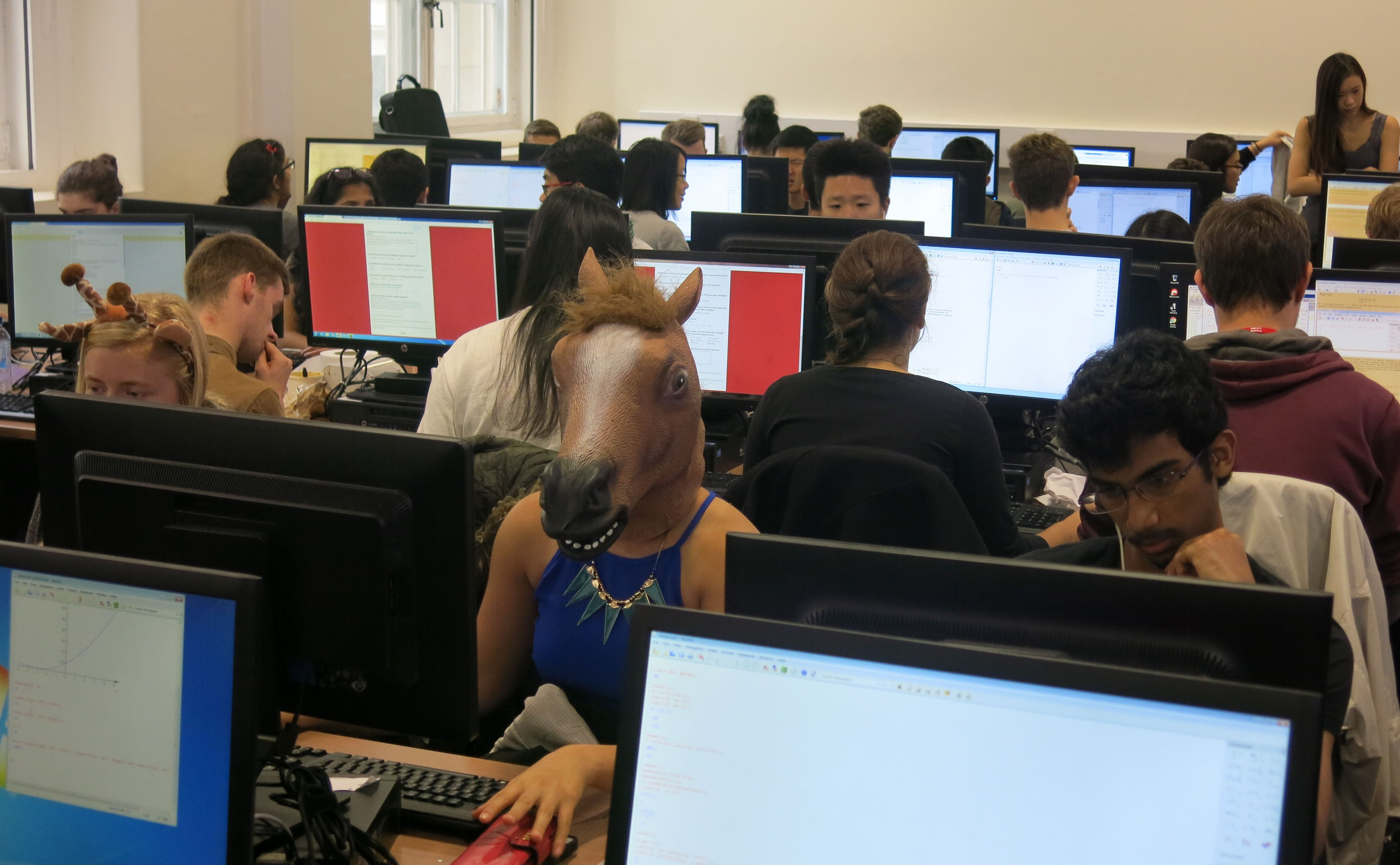
And I mean whichever method aids your learning. (Taken during our Halloween dress-up)
Personally, writing things down helps my learning a lot. I vary from using pen and paper to a laptop depending on the pace at which the lecturer speaks. If lecture notes are already provided, then I would print them or work on an iPad or other device to edit the .pdf file.
4.Not everything is a competition
If you’re sportive, you may understand the competitiveness of a race – from start to finish, your efforts are invested into the steps you need to take in order to win. But at university, I don’t believe there should be competition where your academic performance is to be compared to those of your classmates. Sure, you may want to get good/great grades, but don’t seek to get the best grades.
When I started my 1st year, I felt I had get (one of) the highest grades in my year group. I did for our first summative (graded) assignment. Afterwards, however, I felt unnecessarily stressed in trying to maintain that standard. Instead, I felt I was not performing as well as I knew I could. Took me a while to realize and accept this as I am within a group of students who normally perform academically excellent.
5.Figure out what you want out of your time at uni
You may be starting your studies at university because you want to become a doctor and open up a hospital, or you want to contribute to the development of bionic prosthetic devices (this one’s mine). If your goals are crystal clear to you, and advancing your education at university is the next step, then figure out the following steps you need to take to get to your goal at whatever pace you want.
However, you may not be 100% sure about what you want. And that’s fine. Your first step is not to worry too much about it. Then spend some time exploring the many opportunities available to you. One of them must resonate at your frequency. When you’ve got it, take massive action on those first steps and accelerate towards your goal.
6.Keep a budget and track your expenses
As you’re moving out of your home, leaving your parent(s) or guardian(s), you will need to be on top of your finances if you want to survive.
Just kidding, you will definitely survive! However, knowing exactly where you’re spending your money allows you to cut back on the unnecessary costs and save up for what really matters to you.
Want to purchase a new computer/camera? Then start saving up a couple pounds a day by, for example, making your own food rather than buying food at the cafeteria.
7.Don’t be afraid of disappointing anyone
Give it your honest, best shot. You’ll realize you’re more capable than you think.
In your years ahead at university, you will come to face great challenges that will test your will. These may be mostly academic, but they may also involve another person, group, business/company, etc. Whatever the case, lose the fear of what anyone will think about you if you don’t get that job, or fail the test, or not end up as the top student, or simply lose.
Honestly, it’s a toxic feeling that will eventually break your will, no matter how try you hard to fight it. I experienced it during my exams. As I was afraid of disappointing one particular person, I did not perform as well as I really could on two exams. I’m glad I still passed both, but I learned my lesson the hard way.
But I didn’t lose. No. Battles are only lost if you learn nothing from them. But I definitely did.
You may be asking yourself how. I asked myself that so many times. It all boils down to accepting yourself as you are at any moment, and simply focusing on the task at hand and nothing else. Sounds easier said that done; it is, but it also becomes easier with practice.
8.Be encouraged, rather than discouraged
Here at Imperial, you will come to meet people who have a deep passion about what they do – whether that is their degree course, a sport, or even an art – and they’re really good at it.
But instead of “comparing your chapter 1 to someone else’s chapter 20” (Yahya Bakkar) and feeling discouraged, talk to that person about their passion and learn from them. Ask them what makes them passionate, and how they’ve been able to keep at it for however long.
So if you share an activity as a mutual interest with someone else, learn from that person instead of distancing yourself from the activity altogether. Trust me, I understand that it could be quite scary being honest, but if you truly want to grow in that area, then have faith it will all be alright, because it will.
9.Cherish your time at university
Make friends and spend valuable time with them.
I was once hiking through the Seven Sisters Country Park toward Eastbourne, and I came to meet a UCL graduate. Curious to know what advice she had for a fresher like me, she told me this: Cherish your time at university.
She helped me to remember the position I am in, that after 3 years I may start working for a company and may no longer get to experience the spontaneity and liveliness of a university campus. I have come to know that I greatly enjoy it, and I will dearly miss it.
So I give you the same advice as you’re about to start uni. From start to finish, spend every second doing something significant to you, be happy and appreciate what you’ve got.
10. Do more than the expected minimum
While being around London, I once met an Imperial alumnus who studied Physics and later on went to do a PhD at Oxford in Physics as well. At such encounters, I always try to ask for advice a new student like me could use. He told me that though I receive a minimum amount of work in my course, which is expected of me to complete/do, to go beyond that and seek further knowledge.
This means that, for example, though your lecturers will assign problem sheets for the next session, do not only complete those, but also seek extra problems from the list of supplementary books. And more! Your lectures will probably be a collection of specific details from different sources, like mines were, but do search for those reading materials and read up on extra details, which may help you understand the whole subject!
Remember to never do less, but more.
11.Love and develop yourself
I am beautiful no matter what I wear, do or have.
You are a body, mind and soul, and you can develop all of these three with appropriate training.
Body: As a university student, gym memberships are normally cheaper, so set up a routine, go with a more-experienced friend, or whatever else may work out for you and build the beautiful temple that is your physical body.
Mind: Here you will come to learn new things that will challenge all that you’ve learned previously, which you also may find truly interesting. If so, invest the necessary amount of time to expand your knowledge and understanding of your degree course or anything else that may interest you.
Soul: As for your soul, happiness is key. Carefully pick the activities you take part in, the people you spend time with, the places you visit, and how you spend your time in general. Make sure that whatever you’re doing, you are genuinely happy or know that you will be happy after having finished/overcome something.
Note that I am not an expert in any of the three. I am still learning of ways to develop myself in these aspects, and I’ve come to realize that there is also no deadline. Anyway, for further inspiration I would suggest meeting those that are experienced in person, or following them online.
As I post this, it’s September 30th and the final batch of freshers arrive at the halls tomorrow. For my 2nd year at Imperial, I chose to be a hall senior and have worked with the other hall seniors, sub-wardens and wardens of the Woodward Buildings (and the Costume Store this year!) to organize a fortnight of daily events that we’re sure our freshers will enjoy.
This year, I aim to be much more consistent with my studies and extracurricular activities, which also includes blogging. Though my 1-year term as an Imperial blogger is coming to and end, and I am uncertain that I will get the opportunity to continue. Though for the length that this blog is up, I’ll try to promote it as much as I can. If I could help to spread some advice to at least 1 fresher, I’ll be more than happy! 😀
If you have found any of these tips useful in any way, please let me know in the comments! I like comments. 😀 It lets me know people actually read this stuff (because I have no way to track views) and appreciate it enough to say it or ask a question.
Before my interview, I called anyone I knew who had anything to do with Imperial and read every student blog that even mentioned the word. If that’s why you’re here, hey. Hopefully an extra insight will prove useful.
Outline of the day
This can obviously change between subjects and years, but the general outline is likely to stay the same.
The general idea is that you get a tour of the university from a student, along with a lunch, before meeting the human that decides your fate interviewer. This is the opportunity to ask questions about student life, stresses, work load and living in London, which may be more helpful answered by someone freshly going though it all. Also, I’ve done some of these tours since I came here and they are really fun, interesting and rewarding, but frankly awkward if no one asks anything.
After that you meet the interviewer and get a tour of the department, which is there to show you what the university can offer you. You get a brief look at the facilities and an idea of where and what you learn.
The actual interview is then there for you to show what you can offer the uni. Achtung: no, the interviewer does not directly decide anything! They make a comment/recommendation and it is one of the things considered when taking you into account. Basically, the interviewer could hate you, but you still get in, and vise versa.
How to prepare
– Bring the correct documents. You’ll be told what they are before the day. Don’t be the one that forgets them.
– Make sure that if anything in your personal statement isn’t true, it becomes true damn golly fast!
– Even if it is true, go over books you’ve read and projects you’ve participated in, to ensure you can talk about them comfortably.
– Be fairly up to date on what you’re learning, as problems to solve may involve such knowledge.
What you’ll be asked
WHO KNOWS? It’s just a massive mystery. Some people on my course only got asked about their personal statement and what they’d done before. I was only asked to integrate for 25 minutes and explain some assumptions I had made.
– Be prepared to answer questions like “Why physics?”, “Why Imperial?” and any about your personal statement in case it goes like not mine.
– Be prepared to use your prior knowledge in case it goes like mine.
What to wear
This is pretty much the least important aspect that has the least effect on anything, but people seem to care. Feeling comfortable on the day is naturally important and feeling like you’re dressed out of place may of course ruin that entirely.
Something comfortable, professional and simple is the best. I wore a black and white skirt with a navy blouse. Partially because it’s the only smart-ish clothing I own, but also because it sort of fulfills the criteria.
After the interview
Just don’t stress. Whether Imperial is your first choice or not, just concentrate on the other bits of life. Good grades always come in handy, so working on those may be best anyway.
I was stupid enough to stress out about the interview for ages, so when I got the offer, I had to suddenly start preparing for exams again.
General tips
– Sometimes the correct answer is “I don’t know”. I was asked for examples of an event that doesn’t exist.
– Don’t panic and make sure you know where your towel is. (If you don’t get the reference, then you’re silly, but please don’t actually bring a towel to your interview.)
– Try to talk any thoughts out loud, as it shows that you can think through a problem, which is important.
– You’ll be fine.
As we approach the final stretch of a very busy year, I would like to take a moment and reflect upon what I believe were good and perhaps not so good decisions that I have made during its course. Hopefully this would help Freshers of 2015 and any future Imperial Chemical Engineering students so that you won’t repeat my mistakes. So, instead of a to-do list (which I think is quite presumptuous-me telling you what you should do), I compiled a ‘what-NOT-to-do’ list. Here it is:
What-NOT-to-do-list:
Leave everything until the Easter break.
You might think that a month is more than enough time to catch up with 6 months’ worth of material, but, trust me, it is not.
And I know it is partly my fault for not listening to our seniors’ advice. Okay, fine it is TOTALLY my fault. Though perhaps I can only learn the hard way; procrastinate, panic and vow not to repeat this next year.
Not participate in any societies or clubs.
In my defence, I went to the Netball taster session, so I DID put some effort. However, I quickly realised it was not for me; spending two hours travelling to and fro to practise once a week and running in the cold, dark night, AND go to lectures at 9 am (all my lectures start early-yes 9 am is now considered early!) the next day was just too much for me.
In hindsight, I wish I volunteered throughout the year with different charities. There is quite a number of charity related societies which I am planning to get involved with next year (assuming I pass the exams in June; fingers crossed!).
Stay indoors during the first term.
I am VERY lazy; my idea of a perfect evening is lying on my bed, with some hot chocolate to drink and a good book to read. So, it is safe to say that I did not take full advantage of my strategically located abode. Don’t get me wrong, I don’t regret not doing anything during the first term. I would even advice against it; go out, party, chill, even embark on a road trip. Just don’t stay home and watch movie marathons all the time.
And if you think that this is a good way of avoiding catching Freshers’ flu, you cannot be further from the truth; no matter what precautions you take, the days of being bed stricken are inevitable, I am afraid.
Avoid cooking at all costs.
After more than six months of living by myself, I can confirm that I have yet to cook my first dish. Admittedly, I did not make any effort; I couldn’t stand the heat so I stayed out of the kitchen (at least I am following SOMEBODY’S advice!). At this point I am not even certain whether I’ll ever learn how to cook. But, hey, never say never, right?
Not apply to be a student blogger.
During the first few weeks, I saw countless advertisements around campus all encouraging students to apply to be student blogger for Imperial. I thought to myself, ‘Well, I like to ramble a lot, and quite opinionated so why not share that with a bigger audience?’ And here I am doing exactly that! I hope you have been entertained by my ramblings (my friends and family are sick of it by now) and have gained an insight to what it is like being a student here-at least, from my perspective.
So when you see those adverts the next academic year, go for it; you have nothing to lose and everything to gain.
That marks the end of my ‘what-NOT-to-do list’. It is quite succinct but I feel it covers all the essentials. Should you follow my advice? YES!! Would you? It is entirely up to you, but, readers, you have been warned…
So, interviews have started. Yipee!! We have seen lots of fresh faced applicants wandering around SAF and it has been pretty exciting. I was having a think about things that I wish I had known when I was getting ready for my interview and I hope that this will help you guys (this is only my opinion though!).
1) Why do you actually want to do medicine? No seriously. We know you like people and that you hope the world will be cured by your skills…but that’s not a full answer. Come up with something original and really think about it. This question is a pretty important one and if you haven’t worked out a valid reason about why you want to study Medicine, why would anyone want to let you?!
2) Keep hobbies to a minimum…really. Two or three hobbies is a good number. One of my friends discussed 13 clubs he wanted to join at University. Although this may show you are keen…it isn’t very realistic and to be honest I have only joined one of the 3 clubs I thought I would when I came to Imperial. Show interest but don’t go overboard and start wearing an Imperial hoodie to the Interview.
3) EVERYONE AT THE INTERVIEW IS A GENIUS. No one has got this far into the process without having silly amount of A Stars and extra curriculars. Ignore the boasters. Some of the people there in your interview waiting room will have even gone to Africa and helped a 14 year old girl give birth to twins. Don’t let any of this put you off. You go in there with your one day of work experience at the local GP and you sell it better than the Africa Story. You make your GP day sound like the best day of your whole life. You can do this.
4) Was your stressful situation really stressful…or are you just showing off? Here is an example of what I mean by this:
Interviewer: “Tell me about a time when you were leading a team during a stressful situation”.
Student: “This one time on my gap yarrr I was climbing up a set of rocky mountains. I was leading a team of 12 walkers as I had the map at this time. Suddenly it got really stressful because we all couldn’t decide what to have for dinner. I took charge in this stressful situation and got my archery kit out and shot a passing deer. I was named a hero for the rest of the trip”.
5) Bring some food/drinks to keep you going during the day in case there is a waiting time. If you have any extra chocolate after your interview please just leave it under a white table in SAF with a label saying “Mala” on. Cheers.
Good luck folks. You’ll be great. Sit up straight and just smile and nod if you don’t know the answer.