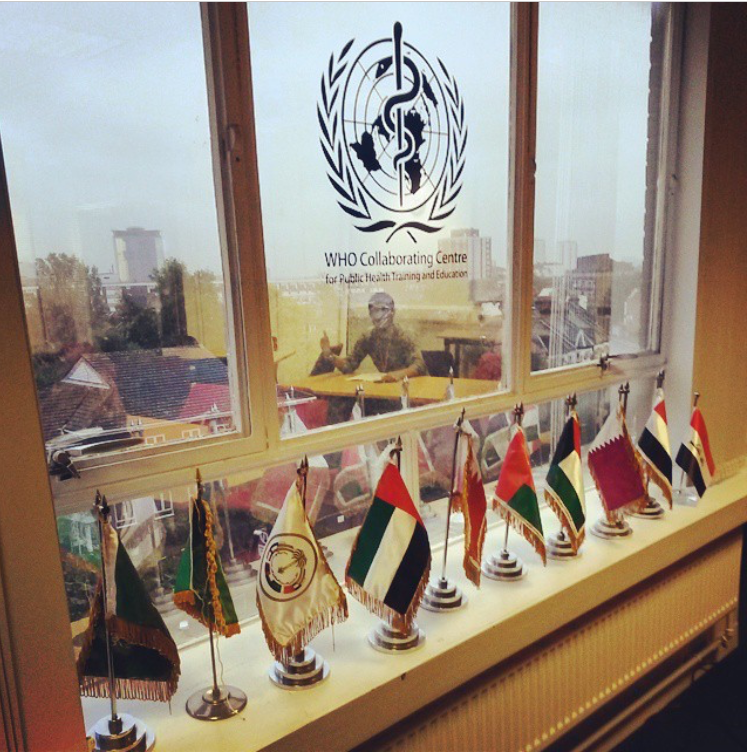
One of the highlights of the MPH is the optional Health Systems Development (HSD) course offered by the WHO Collaborating Centre for Public Health Education and Training. When we were first told about it back in October, it garnered quite a lot of interest for its hands-on approach to professional development and health systems management. It was the opportunity to learn the operations of international health systems while at the same time maintaining a focus on the English NHS, incorporate crucial management & leadership skills, and finding out more about key stakeholder interactions within health systems that initially caught my eye. After ten weeks of Wednesday afternoons on the course, I have to say that it is was time well spent.
So, I’ve just got back from Cheltenham Science Festival. It was a really fun and hectic week!
Like most volunteering experiences, a lot of the work we were doing was basic slave labour—cleaning venues between talks, getting water for speakers, clicking people in and out of venues, making tea, carrying messages etc etc. Even while doing these routine tasks however, we were surrounded by such great communicators and lovely people, from the speakers in the talks we attended to the stall holders in the drop-in zones, and the other volunteers.
There was a wonderful atmosphere of inspiration and urgency in many of the talks—most of the speakers were funny and excellent at communicating, but even the ones who seemed initially slightly dumbfounded by the large audiences, had such a depth of knowledge and passion for their subject area that their talks were really brilliant. It was amazing to be surrounded by people who were trying their best to reveal to you incredible things—look, look at what my lab does and how it is going to make things so much better for people! Look at what we are starting to understand!
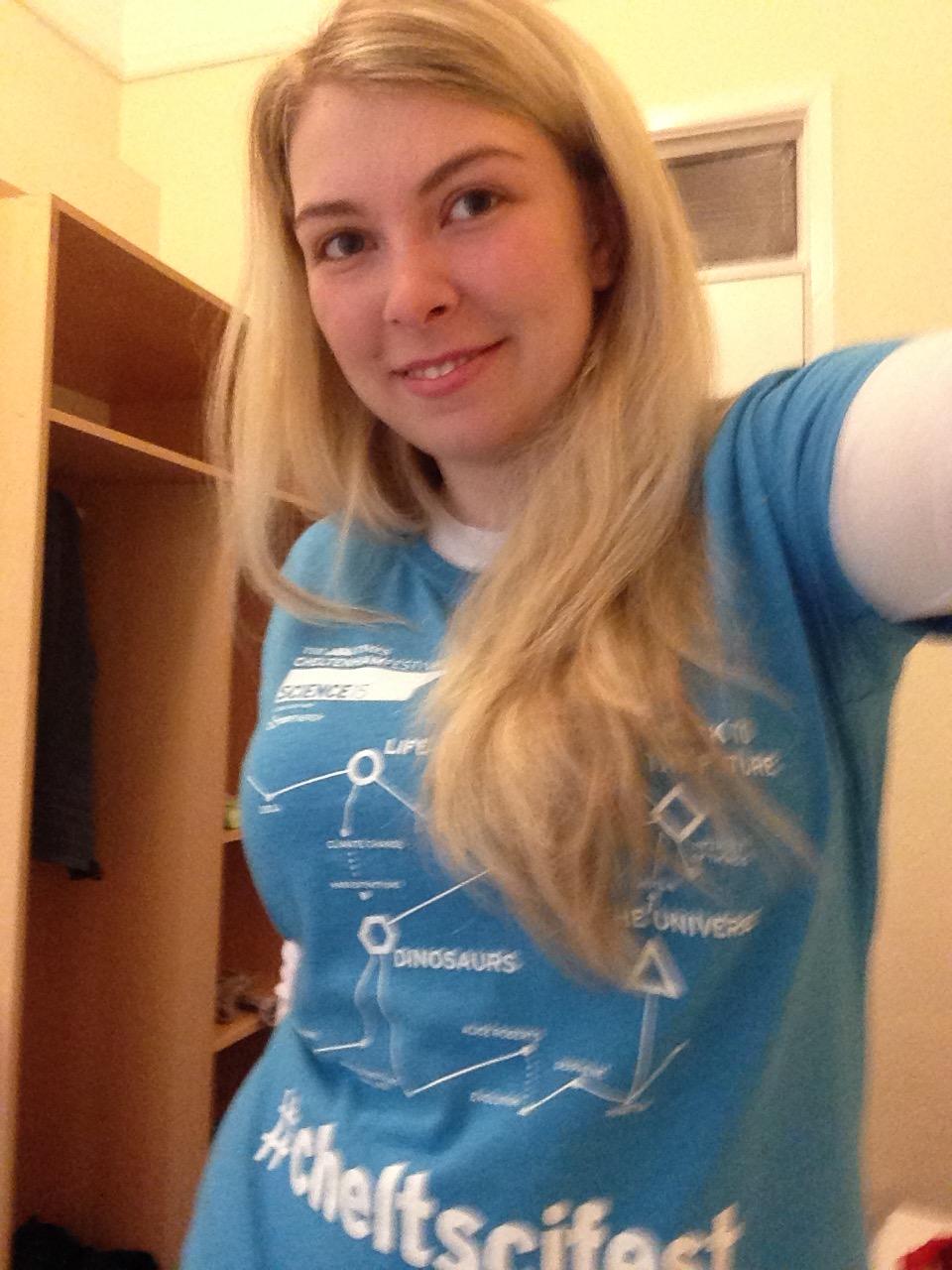
Science Festival T-Shirt!
There were opportunities for us to do some actual science communication to the public as well. In the Discovery Zone for example, the main drop in area, we helped to run a stall inside a structure built to look like Doc. Brown’s invention shed from back to the future. Our table was covered in balloons and tissue paper and bits of pipe cleaners and the idea was to give each child a plastic car and let them use whatever materials they liked to try and keep it in the air for as long as possible.
Some children really got into the swing of thinking like inventors and managed to fire the car into the air using deflating balloons. Others made parachutes and paper aeroplanes to fit onto the car, and it was a great chance to show them how a quick experiment (dropping a modified car and unmodified one at the same time) could help them out, as well as introducing ideas like air resistance and drag and the fact that heavy things don’t fall faster than light things—which some adults really took a while to accept!
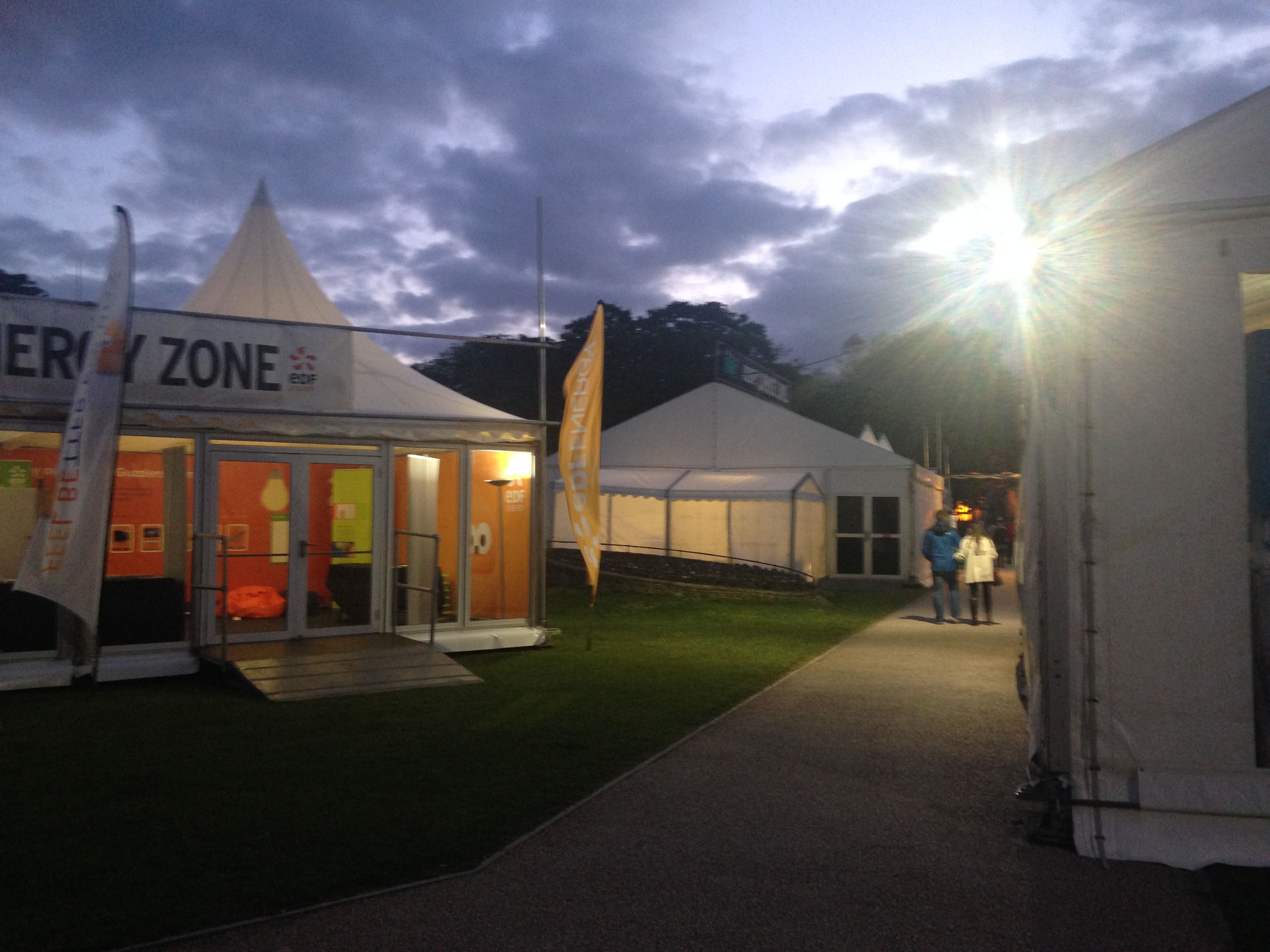
Some of the event tents
I ended up staying at this table for four hours straight on the first day because it was so much fun talking to the children about their ideas.
Working with the public non-stop for a week of fifteen hour days (yes really fifteen —we started at 8.30 and didn’t finish until after 11.30 most nights) was also a good experience, as before this I was not sure that I would enjoy interacting with new people all day. In fact, I actually found that I enjoyed being cheery and helpful and could deal, by the end of the week, with the silliest people and the worst complaints.
The experience of helping set up in venues was also invaluable in learning about the difficulties and dramas involved in staging events—I think almost everything that could have gone wrong, short of the tents actually catching on fire, did at some point!
Just in the events I was in, we had a virtual reality talk with lost virtual reality goggles and no screen for the presentation, a full evacuation, a lost child, someone throwing up, and an event where the speaker turned up late and hadn’t written the talk he was due to give in five minutes! In one event some of us even ended up running round the kitchen helping pipette fancy sauces onto plates and arrange fish artfully that we were meant to be serving to the audience, because the chef hadn’t given himself enough time to prepare.
In the world of event management I now feel like I’ve seen a pretty decent cross-section of what can go wrong behind the scenes. After a while you stop panicking though, because everything turned out fine in the end, and most of the time the audience were blissfully unaware.
Roar
Working behind the scenes and in the front of house, for example running up and down the seating with microphones in audience Q&A’s, has also allayed a large portion of the nerves I have for any future speaking on stage, because the transition from backstage to onstage now doesn’t feel like such a terrifying thing.
One of the best parts of the week was the chance to attend so many wonderful talks. It has really given me motivation to continue to pursue a career in science communication and science in general, as well as opened my mind to so many topics that I didn’t even know I didn’t know about!
Meeting the other volunteers, staff and speakers was also a real pleasure—many of them have been working in science for a long time, and it was great to hear about their experiences. Almost all of the science communicating greats were around the festival at one point or another—Brian Cox, Robert Winston, Martin Rees, Alice Roberts, and so many more, and with almost everyone I met having interesting science backgrounds it was easy to accidentally network!
Doing some Astronomy
Between the long days and the late nights socialising after the events, I am now even more sleep deprived than I was when I finished my exams!
Anyway, Cheltenham was amazing. You should all at least go to visit the festival next year even if volunteering may not be for you. 🙂
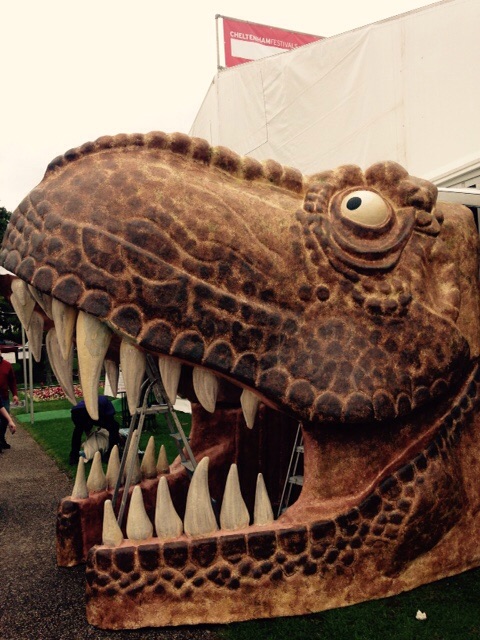
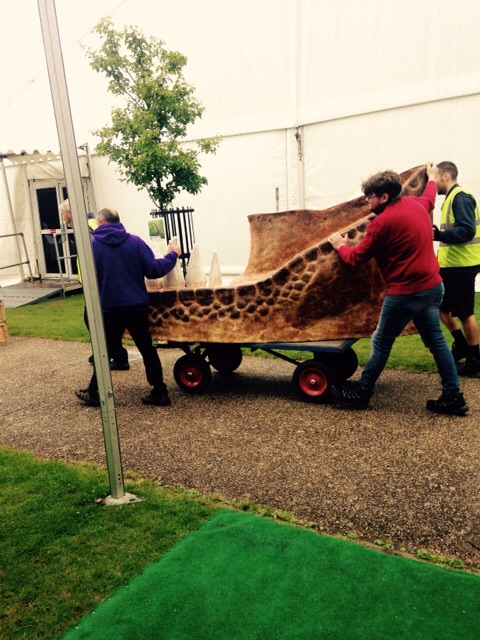
I’m volunteering at Cheltenham Science Festival this week and have just got back to the YMCA where we are staying after a long day of unloading chairs and tables and sofas and fridges off lorries and distributing them around the venues. I am not a very strong person (!) so this has been a tiring day, but absolutely worth it, because the venues look incredible now, and one of the things I got to help lift was a giant dinosaur head!
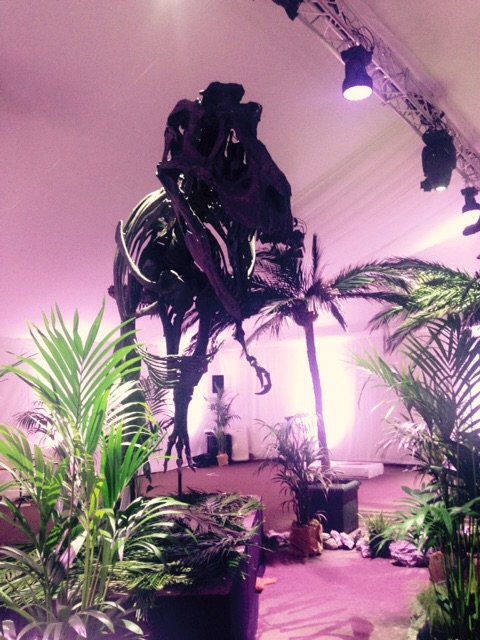
Dave!Dave’s jaw
Cheltenham Festival looks like it is going to be a great experience– if anyone is interested in science communication I would thoroughly recommend applying next year. There are lots of chances to help run experiments, see some great communicators, and even help engage speakers and the public in dialogue in the Talking Point.
This is a space where the public can chat and debate science and the topics of some of the talks they have seen, and after their talks speakers can come down too and join in. The whole point of it is to extend the Q&As after the events into more of a dialogue, with the public also putting forward their opinions and the speaker asking questions. This is such an interesting idea– I am really excited to see how it works. In many lectures and festivals I have been to, the Q&A parts have not worked that well, and it is clear that the audience really want to continue the conversation for longer than the allocated time.
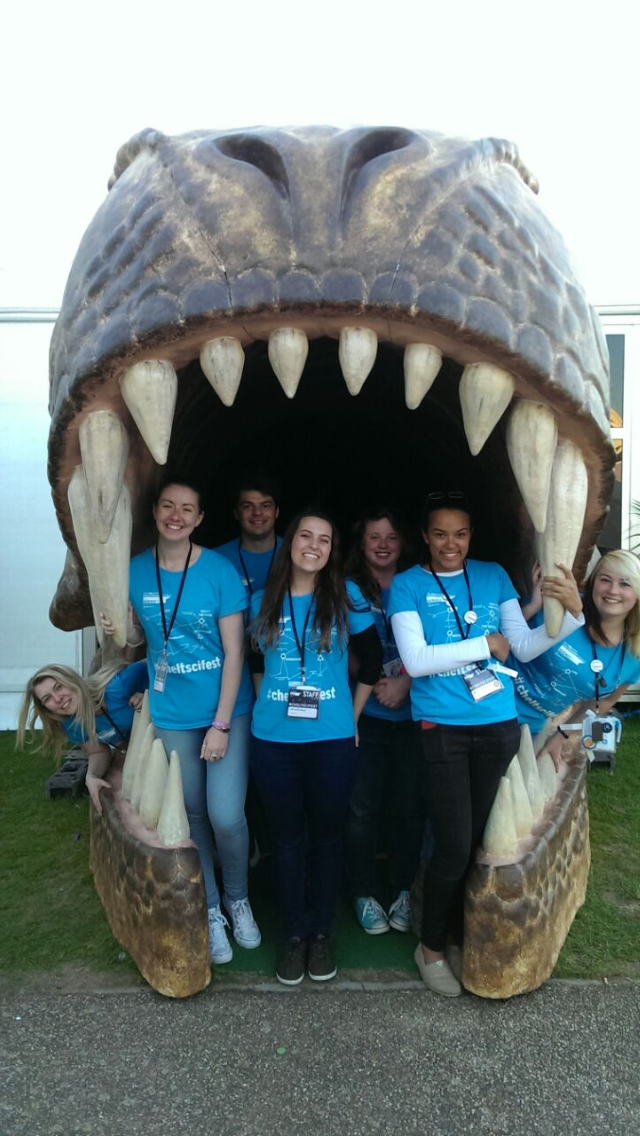
One of the themes of the festival this year is dinosaurs– the idea is that they are the ‘gateway drug’ to science for a lot of kids (and adults)! The Dino Zone– the part with the giant Dino head entrance– also has sections on cosmology and the history of the universe linked through the asteroid that may have ended the reign of the dinosaurs, as well as particle physics, from the use of synchrotron radiation to examine fossils. It’s a brilliant area that also has a rather dramatic surprise once an hour on the hour which I won’t give away just yet!
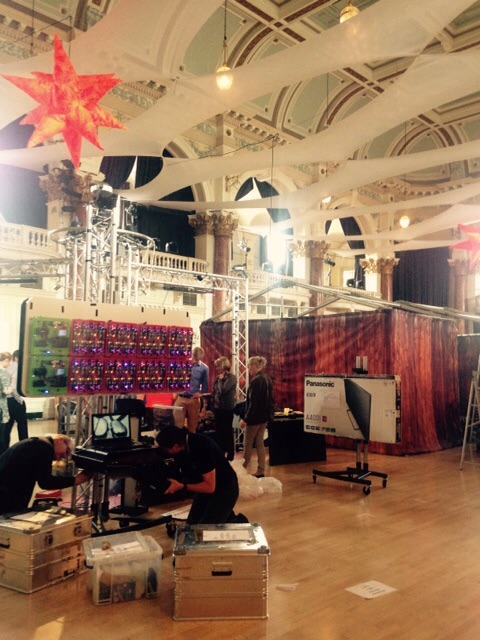
Setting up the Discovery Zone 🙂Dinoroar
As well as a lot of furniture moving, all the volunteers have had loads of training in how to help run events, where to take the VIPs, and how to help on various stalls. It’s been really good fun and we are well looked after 🙂 The other volunteers are lovely– a lot of them have done the Festival multiple times, which gives it a great atmosphere and has also been good to get the dirt on some of the famous speakers! The festival starts tomorrow, and I am spending my day split between the Discovery Zone, the VIP room and an event on Genetics 🙂 exciting times!
If you want to get more of the inside gossip on Cheltenham Science Festival (and more pictures of dinosaurs) follow me on Twitter @42EmmaWills 😛
It’s about 1am, I can’t sleep, so I thought I might as well blog.
The blog’s been a bit quiet lately – the opposite of everything else in my life. I can’t believe it’s been over two months – it feels more like two minutes.
Since then, ICSM will have made all their offers to potential Freshers. So, to all of you who received offers…. CONGRATULATIONS! Welcome to the best medical school on the planet (I’m not at all biased…)
For those of you who didn’t, don’t give up. I didn’t get into med school first time round, so I took a gap year and worked as a healthcare assistant. I’m so glad I had that opportunity – I learnt so much, which has come in pretty useful. So, my advice to anyone who didn’t get a place is to not give up – do something which will make medical schools desperate for you to choose them, and have some fun along the way.
It’s exciting and weird thinking about the new Freshers. A year ago that was me, getting really excited about the six years ahead of me at ICSM, and now the first is nearly over. I can’t wait for second year – the stuff we study sounds really interesting, I’ll be living with my best friends (if we ever get round to finding a house…) and hopefully I’ll adopt a medic kid or two. My medic mum has been really supportive this year – my aim is to be as good a mum as she is 🙂
I can’t remember when all the deadlines for everything are, but I’m guessing that the new freshers will be starting to choose accommodation, fill in the vast quantities of forms that get sent out, etc etc etc? I didn’t actually get the chance to look inside any of the accommodation before I applied. All the halls have their pros and cons, but most people are really happy with wherever they end up. I’ve been lucky enough to live in Willis Jackson, one of the Evelyn Gardens halls (never again will I be able to say that I live in Chelsea…) All five EG halls are closing at the end of this year, which is such a shame – they have the advantage of being a 20 minute walk from campus, and cost a lot less than the halls in Princes Gardens. Weeks hall, one of the other less expensive halls, is also closing. New ‘budget’ halls have been built out in Acton to replace them – Woodward hall is really modern, has a gym, restaurant, bar and plenty of social space, and single ensuites cost only £126/per week. It has a lot in its favour – but then there’s the issue of having a 40 minute commute to campus. As I said before, pros and cons.
I have so much from the last couple of months that I’ve not quite got round to blogging about, so over the next few weeks I’ll try to blog a bit about everything that’s been going on. Exams start on the 8th of June, so at the moment life is revise, eat, sleep, repeat. Hopefully a bit of blogging will keep me sane…
Good luck to anyone else who has exams coming up soon 🙂
Blog again soon,
Em xx
p.s. I’ve just found half a blog post that I wrote over Easter and never got round to putting up … oops.
p.p.s. if what I’ve written is incomprehensible, please remember that it’s 1.30am….
So.. recently in my course I’ve experienced some changes.
Research Project
My MSc in Preventive Cardiology is a taught course where we have to do a research project worth a 3rd of our overall grade. Those who want to do a PhD or go into research after their masters understand the importance of the research project and choose something that they may like to follow up afterwards. As I’ve said in a previous post, I am interested in cardiovascular disease and mental health, and I was hoping that as part of my research project I could actually have patient contact and carry out some interviews. Sadly, that didn’t happen due to a little thing called ethics.
I may sound bitter, but ethics is really important to make sure that any study you do involving humans is done in a way that causes as little harm as possible. Unfortunately for me, I didn’t apply in good time, and it was suggested I forget about that part of my project. It was hard to let go of as I thought it would have really given me an edge into what it’s like to carry out research in the real world. Nevertheless it was necessary for me to let go, as it would have been time consuming and it may have been too much for me to handle.
So I’ve realised sometimes it’s better to see the bigger picture and accept change – things may not always work out the way you plan, but it’s not always a bad thing to let go. As long as I do my best with my project it can still contribute to the scientific literature out there, as it may show information that nobody has explored before!
Preventive Cardiology Staff
Another change that happened during our course, is that our lovely course coordinator – Anna – and I.T. technician – Katie – are leaving *cries*. Although hasn’t even been a year yet, it’s easy to grow quite attached to people around you, and even though my course is more than half way through, it will be strange not to see them in university any more.
A picture of us all during their leaving party.
Nevertheless, I know they’re moving onto better things, so I embrace all of this change with joy! 🙂
I think they went pretty well in general, although third year exams are hard (as you might expect!)
This was the first exam season where I’ve consistently struggled for time during the exams—normally I finish with a bit of time to spare and check things over, but this year has been a mad rush right until the end for almost every exam, which was disconcerting.
Except for one day of lectures related to next year (that I am accidentally missing by going to Cheltenham Science Festival next week) and the summer balls, I am now done with uni for the year! However, with Cheltenham starting in two days and me beginning my Independent Visitor scheme properly tomorrow, there are no lie-ins on the horizon…
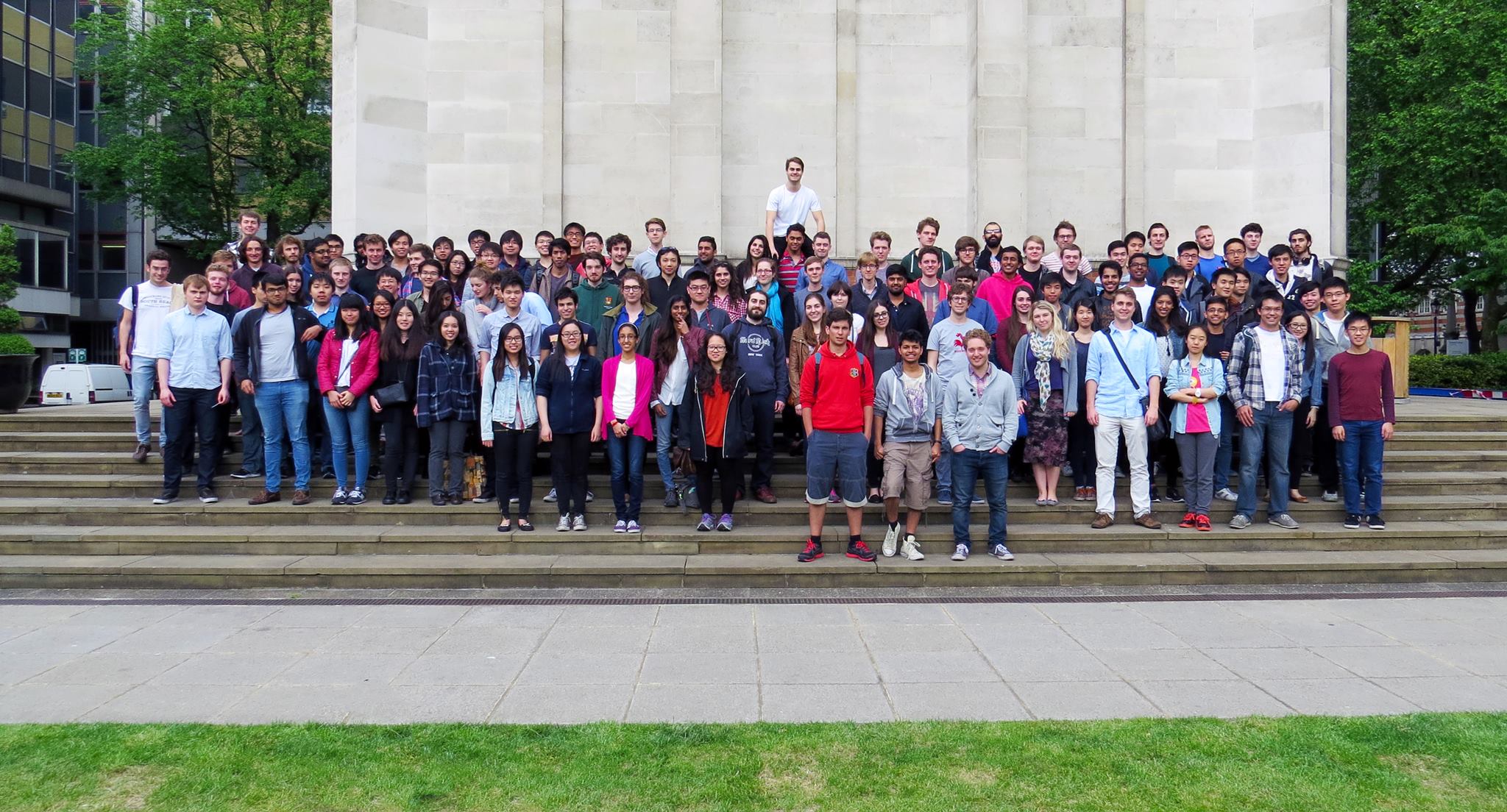
Here is an ‘unofficial’ photo of our year:
(The official one was re-scheduled right before an exam so no one went unfortunately!)
The summer won’t be completely free from university work however, as we have been given a Literature Review for our Masters project to complete over the summer to get us up to speed with the topic we will be researching. I’m really excited to start to look into the Physics of Food and perhaps do some tasty experiments of my own 😉
I’m also hoping to some kind of Horizons extension project this summer.
If you are looking into choosing universities or trying to find work experience and considering careers you might want to check out this new website (on which I also happen to have an interview on hehehe)
I am a strong believer in the study break. As the weather gets more gorgeous and my exams get closer, I think I would end up hating life if I didn’t make time to get outside and enjoy it. Some people prefer to power through the exam season in the library but that’s just not my style. So here’s a run down of my fave ways to enjoy a break from revision.
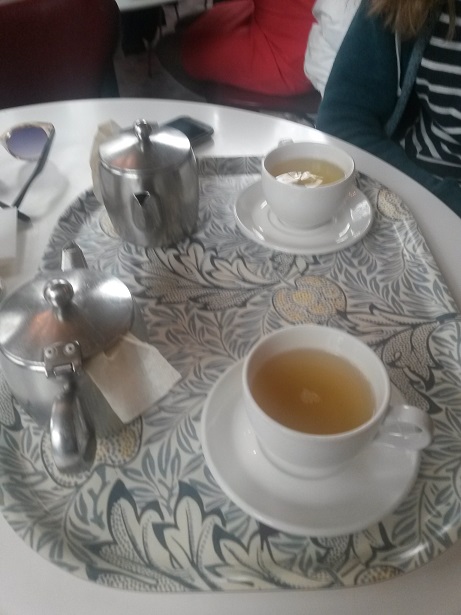
Tea at the V and A seems like something that you would only do as a tourist or when your parents come to visit but this amazing, beautiful museum is literally next door to us so I think it makes a great break from revision to have a little wander and enjoy a delicious cup of tea in the café.
I love the William Morris print on the trays!
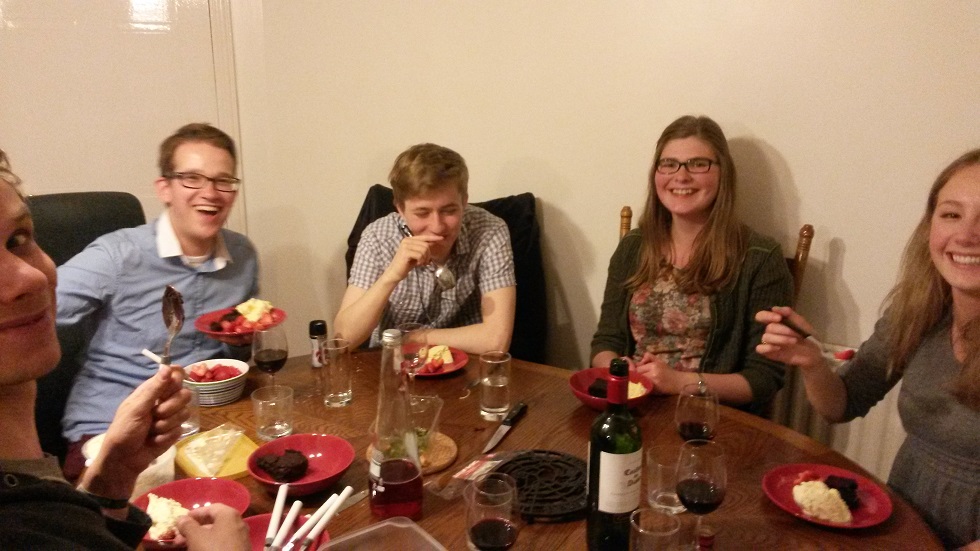
Dinner with friends is one of my favourite things to do anyway but during exams it’s even better. You all have to eat so why not eat together? That way you can make time to see your buddies without taking too much time out of your day.
Something hilarious was evidently happening when I took this photo
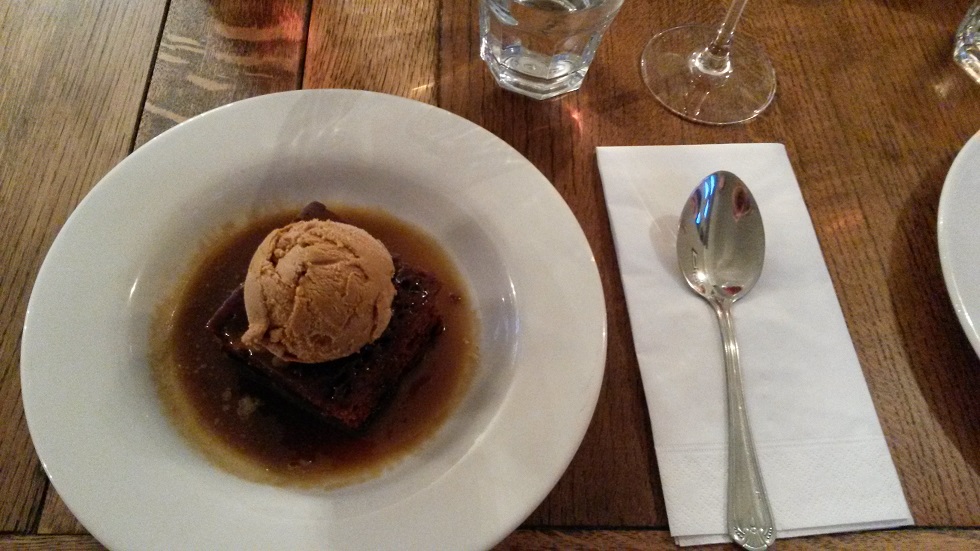
The pub. Again, you have to stop revising at some point in the evening so why not hit the pub for a pint? (Or rosé and dessert if you are as cool as me)
Sticky toffee pudding mmmm
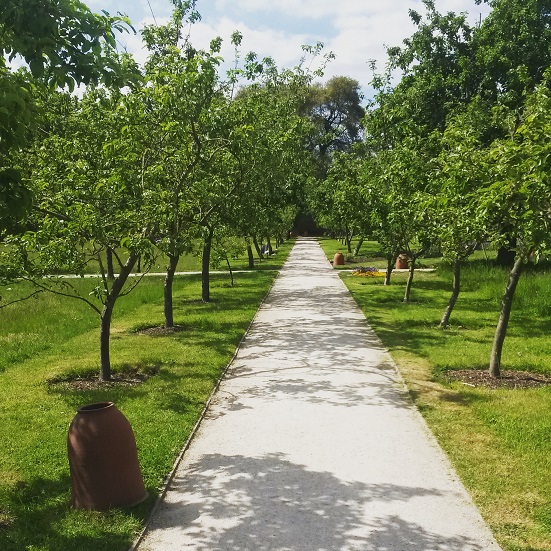
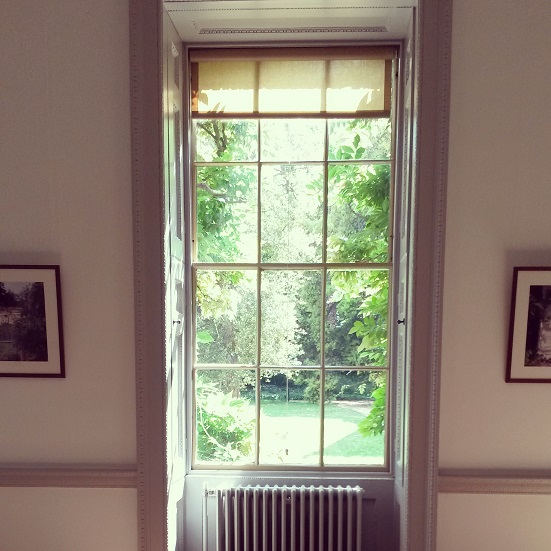
Going for walks. Probably my favourite revision break is to just walk around. I recently discovered that I live much closer to the Thames than I thought I did so the other day I walked along the river with a friend and we had a mini adventure to Fulham Palace. The palace itself was more of a stately home (and wasn’t massively interesting) but the gardens were amazing. Definitely need to go back.
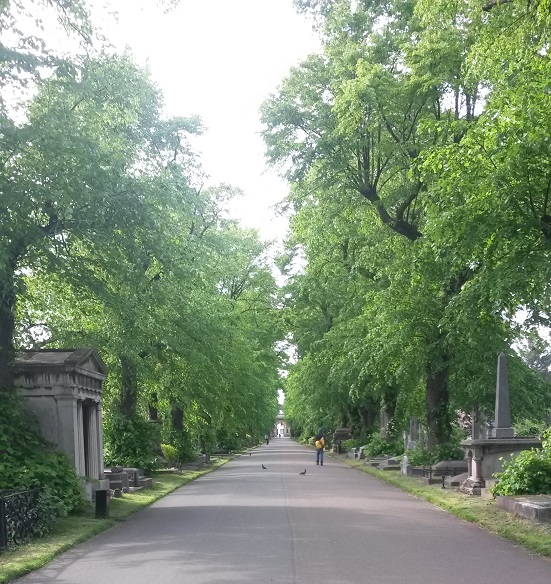
Part of the beautiful walled garden at Fulham PalaceInside Fulham PalaceAnother walk through Old Brompton Cemetry
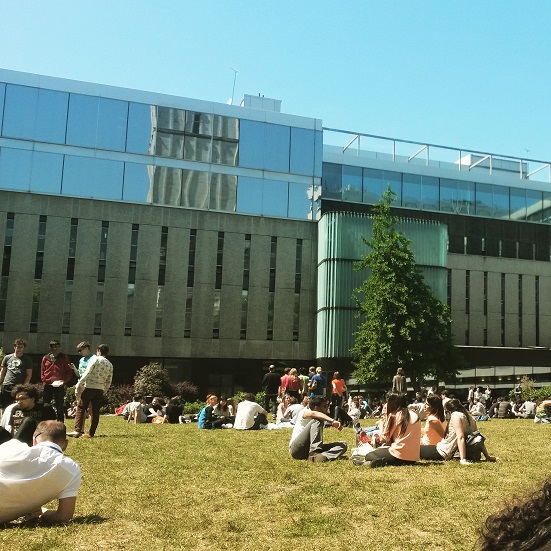
Just get outside in general. Have lunch on Queens Lawn instead of in the computer room. You won’t regret it.
The Imperials come out in force when the sun peeks through
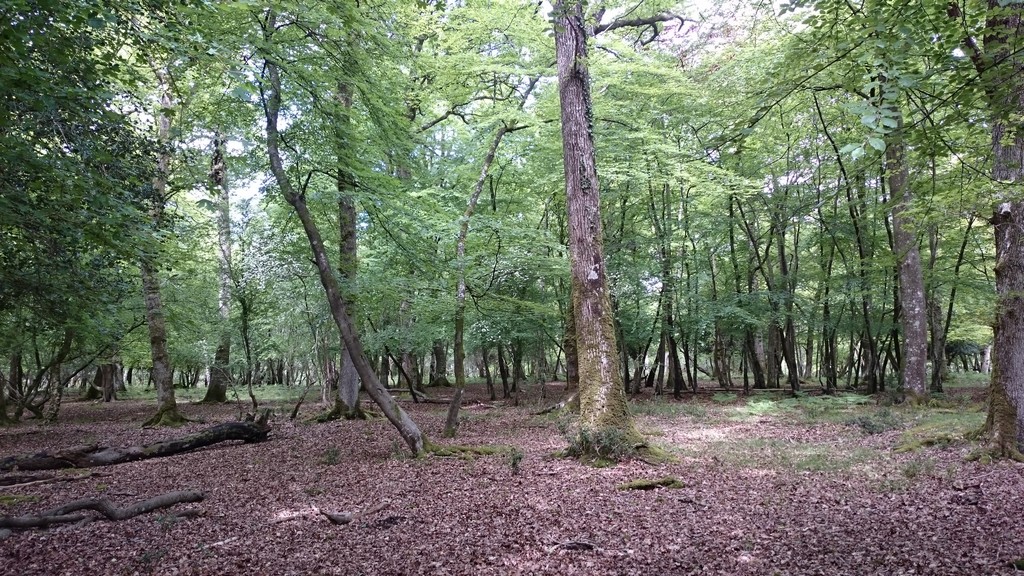
Last week I was pleased to have another day of fieldwork, this time in the New Forest National Park in south England. The New Forest includes one of the largest areas of pasture, heathland and forest in south east England and the site we visited is Whitley Wood, a oak-beech wood pasture woodland with grazing deer and ponies. The Natural History Museum Soil Biodiversity Group have been sampling at this site for soil and leaf litter invertebrates nearly every month since 2002.
Whitley Wood
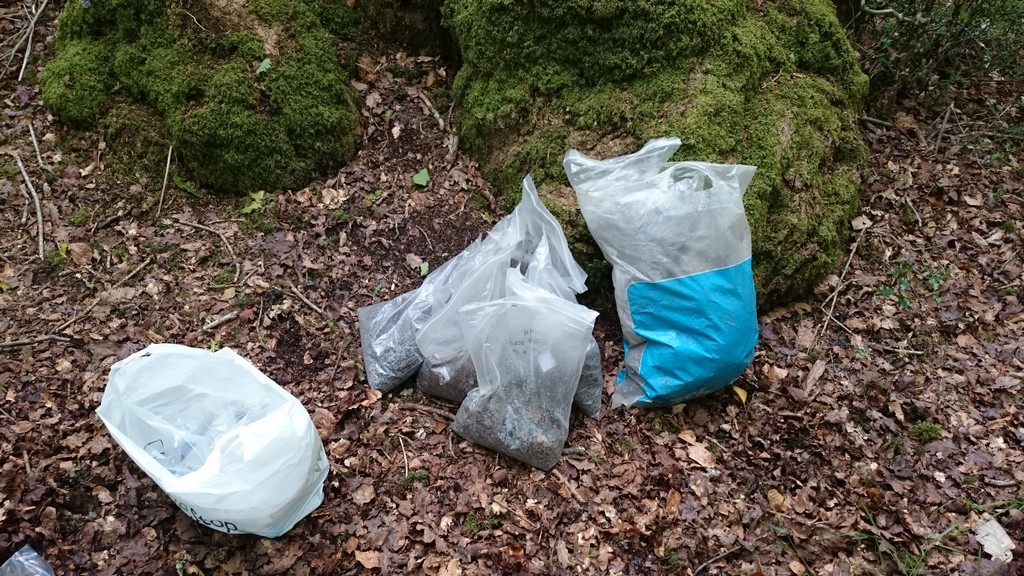
A 100 meter transect line is laid at random in the forest and a sample is taken every seven meters. This comprises a measure of soil moisture and temperature and what plants are growing in a 1 m quadrat. Then a pit is dug and any earthworms collected and the leaf litter from the 1 meter square is sieved and put into bags to take back to the Museum. From this month onwards we will also be collecting soil samples which I will be analysing for microbial DNA, I will then use this to investigate how microbe diversity changes during the seasons and the relationship with invertebrates.
Bags of leaf litter after sieving
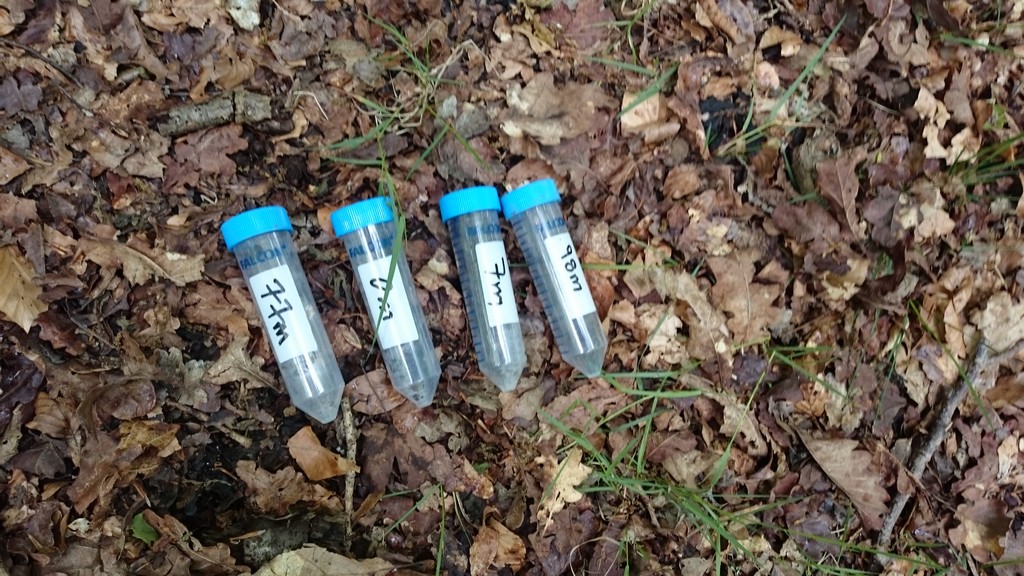
Using a syringe barrel as a soil corer I took four samples per quadrat which were then mixed together in a tube, both syringes and tubes had to be sterile to avoid contamination with microbes from other places and each quadrat had its own tube – this will also give an idea of how variable soil microbes are across the woodland.
Soil cores from Whitley Wood – there is one for every 7 m over a 100 m transect
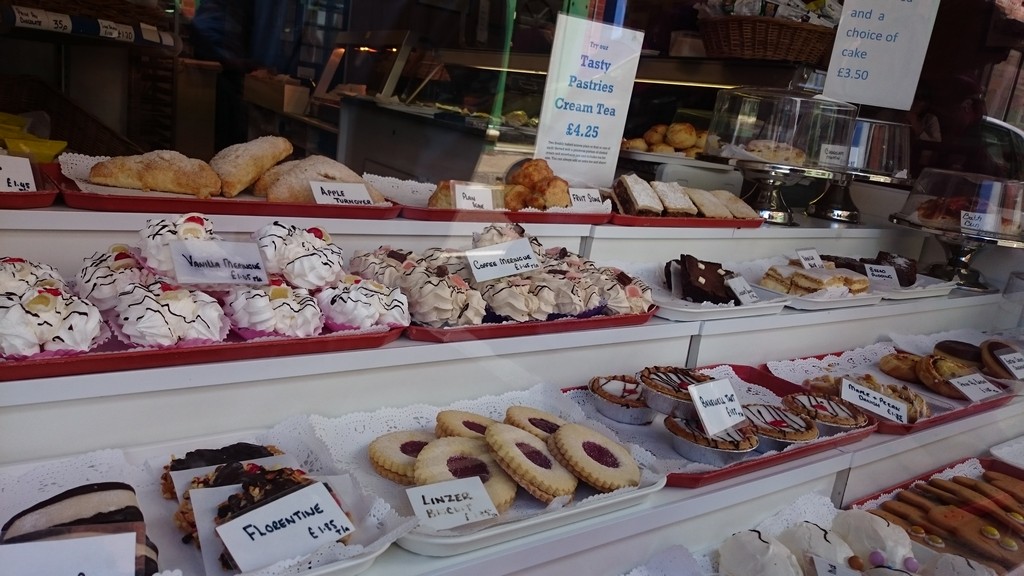
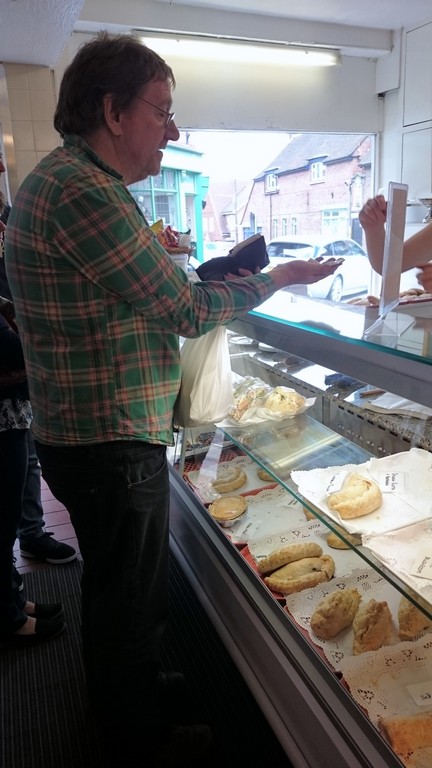
Whitley Wood fieldwork is popular with Soil Biodiversity Group volunteers and students because at the end of the fieldwork we visit a pastry shop for lunch. Then its back to the Museum to process the samples.
Post-fieldwork pasty and cakeThe most important job of the day! Soil Biodiversity Group head, Dr Paul Eggleton buys us lunch
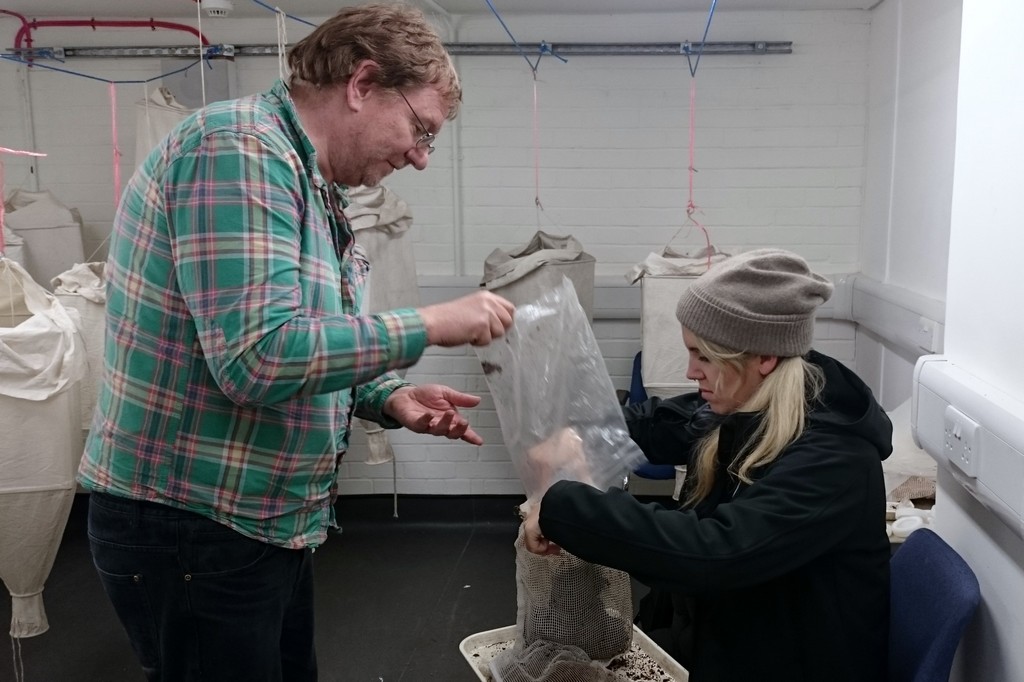
To extract the invertebrates the sieved leaf litter is placed into Winkler bags, these are made up of two parts – the inner bags are made of mesh and look a bit like laundry bags, these are then suspended in a fabric funnel which is hung up in a room for three days. The top of the bag is tied up to stop the invertebrates escaping and at the bottom there is a bottle of alcohol. As the leaf litter dries out the invertebrates move down the funnel into the bottle to be preserved for later counting and identification.
Filling the Winkler bags with sieved leaf litter
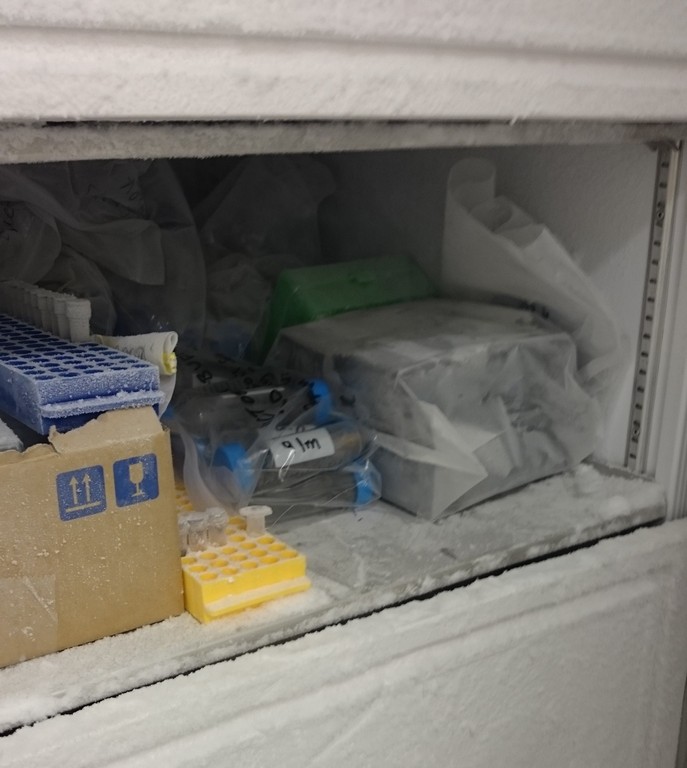
Of course this time I also had my soil samples to store. The DNA extraction and analysis will require travelling to my co-supervisor’s laboratory at Imperial College Silwood Park so rather than going every month I am storing them up to process in bulk. To preserve the microbes they are stored in a freezer at -8o°C ready for when I need them.
My first lot of soil samples stored in the freezer
At the beginning of May I had the opportunity to go with my friend to see the Lion King for her birthday! I often tend to talk about cheap and frugal things to do around London, as I’m often pinching pennies due to working part time and paying for my own rent while studying my masters here at Imperial.
With tickets starting from £30, this would be considered a very special treat for me and not considered within the normal “Hey – let’s hang out!” type of activity. Nevertheless, it was a great experience, and if you liked the movie at all, I would suggest you go and see it! Some parts were funny, some parts cheesy, but most would agree that the music was phenomenal!
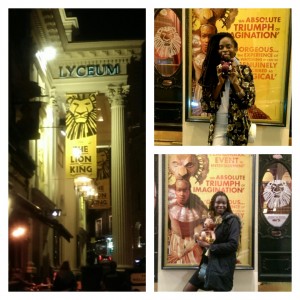
Wish I could get you pictures or footage of the actual performance, but there was an angry looking woman who used her torch-light to blind anybody who tried to film, so you’re just going to have to make do with these pictures of my friend and I.
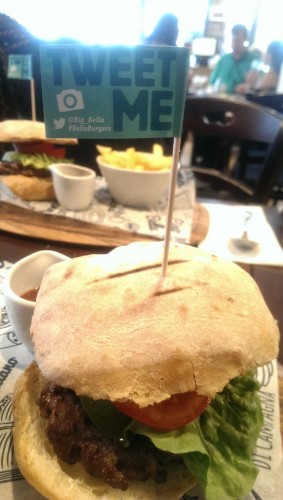
When I searched online for cheap restaurants to dine at while we were in the West-end, I could only find very expensive 5 star-esq restaurants. So I went exploring around the area the morning before the show and found a whole cluster of restaurants next to the Lyceum theater with decent prices – such as two courses for £9.95! My friend and I ended up settling at a place called Bella Italia, and although it obviously served Italian food, we both settled for a decent portion of chunky chips and hand-made burgers with ciabatta buns. It was very tasty and we both agreed a great price for what we got.
It was a grand start to May for me, and nothing has been able to ruin it, not even the three pieces of coursework that were due in the next day (Yes. Three pieces of work… all due on the same day… thank you Preventive Cardiology).



 A picture of us all during their leaving party.