I have an unusual routine every Thursday night. I pull on a pair of swimming trunks, a dive mask and snorkel, and a pair of fins before diving into the deep pool at Putney Leisure Centre. I am an underwater rugby player.
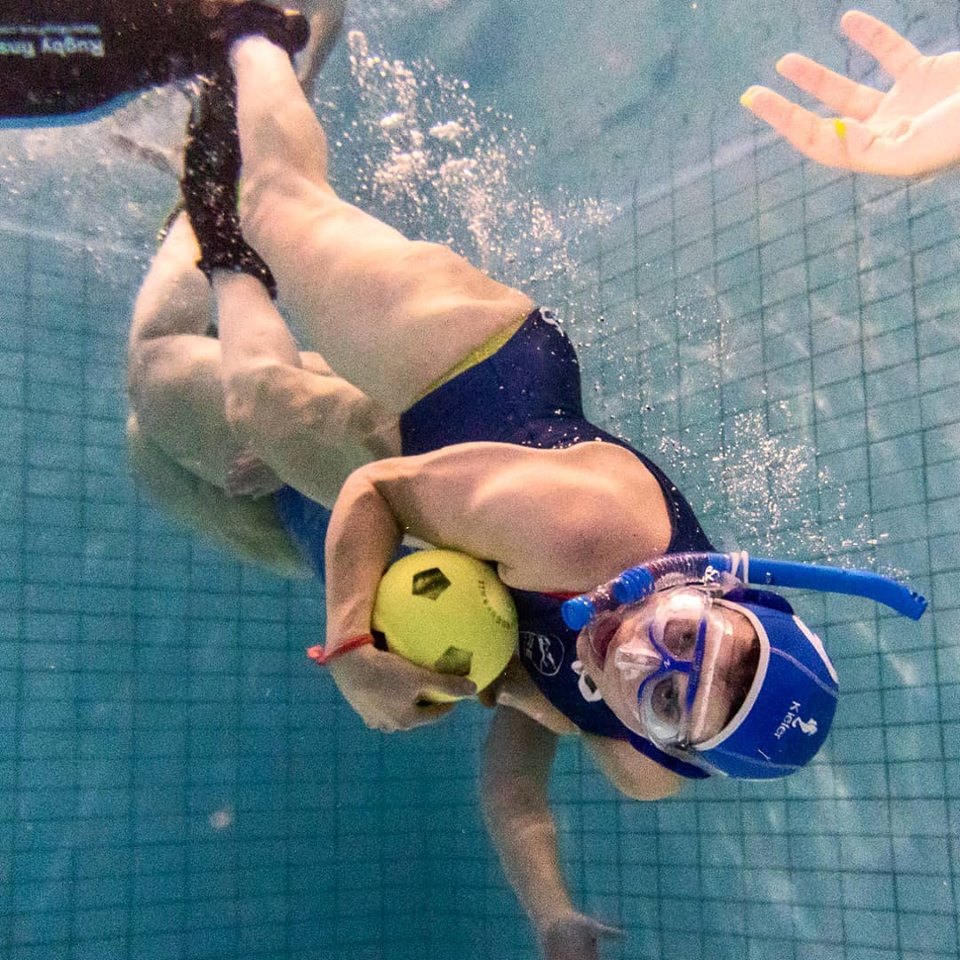
Underwater rugby is played in a 3D-environment where attacks can come from anywhere: above, below and all around you.
Underwater rugby (UWR) started life in Germany in the 1960s as a way for divers to stay fit during the winter. It quickly took on a life of its own and today, it is played in much of Europe, as well as the US, Australia, Colombia and Singapore. There are 6 players on each team and the aim is to put a salt water-filled ball into your opponent’s goal basket at the bottom of a 3.5-5m deep pool.
Scoring a goal in UWR involves carrying the ball to the other side and placing it in the opponent’s goal basket
In London, I play with PURE Underwater Rugby, the only UWR club in the city, and my time with them has led to some of my most treasured experiences here.
First, joining a club outside of Imperial means I get to meet people I wouldn’t normally encounter. Londoners from all walks of life play with PURE and our roster includes a hairdresser, an accountant, a stand-up comedian, a future Catalonian firefighter, and a British anthropologist who hitchhiked his way through the Congo in early 1990s. We also have players who come down from Cheltenham, Gloucestershire, to play with us on Thursday nights. That’s a three-hour drive each way and makes me embarrassed I ever complained about the commute to training back in Singapore.
Some of PURE’s players travel three hours each way to make it for Thursday night training
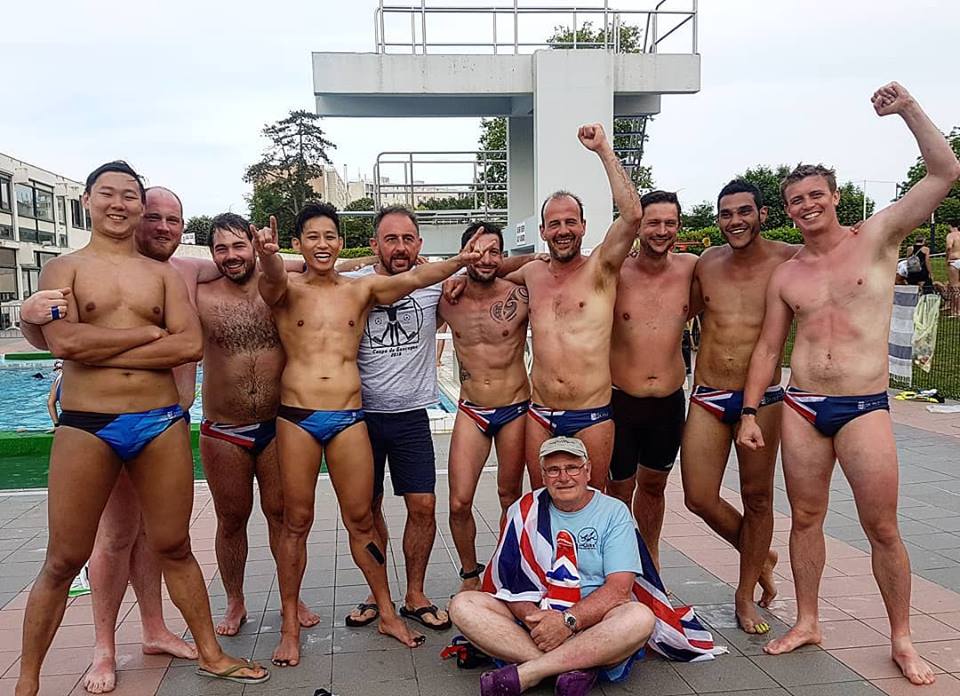
Being in London has also allowed me to pit my UWR skills against players from all over Europe and it has been a truly eye-opening experience. My club in Singapore is the only fully-established one in Asia so we don’t normally have much variation in opposition. By contrast, since I started playing in London, I’ve faced players from Hungary, Italy, Spain, Colombia, Finland, and of course the UK. I’ve also had the privilege of taking part in international tournaments with PURE, where we’ve faced teams from France, Germany and Spain. Perhaps my most memorable experience this year will be clinching third place with PURE at the Coupe de Gascogne in Bordeaux.
Taking 3rd place at the Coupe de Gascogne in Bordeaux with PURE, one of the most memorable experiences I’ve had in Europe.
Finally, playing with PURE lets me be at the forefront of growing the sport in the UK. Compared to other parts of Europe, where there is a formal, fully live-streamed Euroleague, underwater rugby is still a new sport in England. To raise its profile, I have been given the chance to drive the club’s social media efforts, launch its Instagram account, and lead recruitment efforts for the 2019 UWR World Championships in Graz, Austria. Not only has this helped to hone my marketing skills but it also means I have extra reason to cheer when Team GB plunges into the pool next year.
Ever wanted to represent Great Britain? Team GB underwater rugby is looking for new recruits to train up in time for the 2019 World Championships in Graz, Austria. Give me a holler if you’re interested.
Ultimately, if there is one take home message I have from my experiences with PURE, it’s this. Get out of your comfort zone and don’t be afraid to look for experiences outside the safety of Imperial. Your time here will be so much the better because of it.
Don’t worry, I was calling it “Bait” right until the moment when my hall senior greeted me on move in day and I’d just made a fool of myself by pronouncing it wrong for months! My time in halls this year has absolutely flown by. Do I feel like I made the most of my time here? Probably not, but with 3 weeks left I look forward to enjoying the benefits of living in such a prestigious and lively area in the heart of London. I’ll split this post into 2 sections what I’ve liked and disliked about Beit, and what to consider when choosing halls.
It’s on the main South Kensington campus2 minutes away from most departments, including campus eateries and the 24/7 library. Short commutes mean a better chance of getting into lectures even after a night out and thus more productive use of time
Convenient to get to Ethos, Imperials onsite gym, pool and sports hall
Ability to use the library through the night and not worry about getting home
Location
Hyde park (our extensive back garden) is super convenient for a quick walk or run, or even a picnic in the summer
Evenings at Hyde Park
The hub of South Kensington is just a five minute walk away, whether to use the station to get into town, or to get food from one of the many cafes and restaurants in the area
Museums on our doorstep meaning you can visit throughout the year and by getting there early can avoid queues
great night bus connections into/ out of central London after nights out (the N9 is a saviour)
Bedrooms on the east floors have views of the Royal Albert Hall, so you get a front seat to all of the red carpets of the awards
Having the union in the same quad means you’ll never have to worry about how to get home after sports night
Convenient access to curly fries (strongly re
commend) and plenty of other good but not money burning food
Many societies are based out of the union so its always quick to get somewhere
Feel at the centre of life at Imperial
Lunches at the Union
It’s one of the largest halls
Plenty of people to meet means you have ample opportunity to find “your people”
Flats of 10-12 people means you don’t always see the same people but it’s also small enough group that you all become
genuinely good friends
It’s a very social hall with two large common rooms that can be used, and many hall-organised predrink events with free alcohol
Lots of events including BBQs, free cake, ice cream and film nights, karaoke and free breakfasts every Sunday
Offers 4 types of rooms: single and shared ensuite and single and shared with shared bathrooms
My only qualms about Beit would be:
noisy on sports nights till 2am, so often you have to se the library to work on louder nights
It’s not one of the new purpose built halls, but still much nicer than other halls I’ve visited in Imperial and other universities
What to remember when choosing accommodation
Price – Consider what you can actually afford, as on top of halls you’ll have other expenses such as food, clubs and societies, going out and travel. For halls that require a commute it’s worth considering the cost of taking the tube each day.
Sharing a bathroom – Bathrooms get cleaned nearly everyday so would it be that bad to share a bathroom?
Whether you’ll have the motivation to commute in or will you only come in if you live next door
If you think you’ll do a lot of clubs, especially sports or performing arts its great to be near the main campus so you can get back easily after training/matches which can end late
Do you want to get some fresh air and exercise and walk through the park each morning? If yes then consider Pembridge and Wilson in Notting Hill and Paddington respectively as commutes both involve a short 15 minute walk through the park
Wherever you get to live next year I’m sure you’ll enjoy it as everyone I know has enjoyed their halls this year, whether it was their first choice or not!
I’ll leave you this ridiculously cheesy welcome video to the life at Beit from this year’s Hall Seniors
As the academic year comes to an end, I thought I’d reflect on my first year at university.
Here’s the thing- we all have a tendency to sugarcoat. We share all the good, but seldom the ‘bad’ times. Sure, there’s the occasional (or frequent) posts about workload and stress; but how many of us actually openly share our experiences when the goings get really tough? Following my last blogpost, I’d really like to keep the honesty streak going.
First term was a bit of a nightmare for me- it was almost a process of trying to rediscover myself in a sense. Maybe it had something to do with coming to terms with the fact that I no longer had to be the same person that everyone knew me as back home. This blanket of expectation had been lifted; it was a breath of fresh air, yet I was struggling to take it in. I had a tight grip on the past and I didn’t really know how to let go.
I started off Fresher’s Week (fortnight, actually) just fine but quickly began finding all of it both overwhelming and underwhelming. Underwhelming because honestly, the whole Fresher’s Week thing kind of felt overrated and way too hyped up; but overwhelming because there was so much going on- so many new names and faces. It came to a point where I honestly had close to no interest in socialising with people in general. And this scared me. All my life, I had been tagged as the social butterfly of the bunch.
Everything seemed to keep getting worse. I felt like Alice- falling down what seemed like this unending rabbit hole of gloom. Next thing I knew- I was practically not going in for anything because the only thing I wanted to do was curl up in bed, watch Netflix and video call my boyfriend. (Long distance sucks- even though he’s only at Southampton for uni. HI JOHN, MISS YOU! Medicine at Imperial > Medicine at Southampton. Fight me.)
It reached a point where I was becoming overly demotivated and began losing interest in the one thing I had worked so hard for- Medicine. I’m struggling to put how it felt into words but it was almost like being stuck in time as everything and everyone else carried on past you. I spent days on end questioning whether I belonged at Imperial and whether I belonged at medical school. I was petrified that I was ‘burning out’ already and that maybe the best option for me was to drop out before I proved to be even more of a disappointment. Like nobody mentioned frequent breakdowns and existential crises as part of the uni life description, am I right? Or maybe I just missed the memo- huh.
As I desperately need to get back to cramming for exams, I will unfortunately have to put off elaborating on my journey to the ‘light side’ for the time being.
As a quick overview- I have since pulled myself together with the help of my boyfriend; some counselling at Imperial; seeing a GP and being put on medication; and most importantly, finding my best friends here. Shoutout to Anush, Trish, and Prak- who have so graciously put up with my bossiness and mad google sheets for our current property search. Love you guys :’)
In the GIF above, you will find footage of me being attacked by tube doors. I am actually Carrie Bradshaw.
Sending all my love (and all the luck in the world for those of you who have exams),
Alex (:
It’s no secret that London can be expensive to live in but thankfully, having a good meal doesn’t have to burn a hole in your pocket. Here’s a quick guide to getting tasty treats at wallet-friendly prices.
1. Supermarket meal deals
Every supermarket and also Boots chemists do meal deals that bundle a sandwich, a snack (e.g. chocolate bars, crisps, side dishes), and a drink for anywhere between £3 – 5. Tesco’s is the cheapest but I generally prefer the stuff at Boots and Co-Op.
2. Ready-to-eat/cook meals
London favours the supermarket savvy. Most places have loads of delicious ready-to-eat/cook meals at bargain prices. I love Tesco’s curries at 2 packs for £4 with a tasty naan alongside. Waitrose has an amazing selection too and you can also get a meal bag with enough food for 3 or 4 people for £10.
3. Markdown hour
Around 6:45pm to 7:30pm, most supermarkets start clearing out their fresh sections. That means you get fresh sandwiches and ready-to-eat meals for a fraction of the original price. I once got a whole pizza for £2 with a £0.39 pot of chocolate ganache. Timings differ every day though so you’ll need to get in sync with your local. If you’re at St Mary’s campus, going down to Mark’s & Spencer at Paddington Station around 6:30pm will get you dirt cheap pastries.
4. Lunchtime deals
Many restaurants do great lunchtime bundles for £5-7. If you’re at the St Mary’s campus, Lena’s Cafe on Paddington does an amazing lunchbox with rice/pasta, three dishes and a roti for £5. There’s also Bonne Bouche with great sandwiches from £3, and the chicken rice set from Warisan Cafe for just £3.50.
Fancy places do great lunch sets too. The two Michelin-starred Dinner by Heston Blumenthal does an amazing three-course set lunch menu for £45. If you’re looking for something cheaper, there’s also Bar Boulud’s (by two starred chef Daniel Boulud) at just £25. Being Asian, I also love the set lunch menu at XU that lets you dig into their excellent mushroom dumplings, xian bing and shou pa chicken for £18 per person.
5. Street food markets
Street food can be quite hit and miss in London. There’s the whole romance of getting stuff from an itinerant vendor but honestly, most street food in London doesn’t measure up. That said, there are some places that still give a legit hankering. The first place I’d go to is Acklam Market along Portobello Road. It’s hidden away from the touristy bits and has 20-30 vendors, with a drinks/stand-eat area made out of recycled packing crates. I highly recommend the Jamaican jerk chicken and the Cubano pork sandwiches. The latter are £7 and big enough for two. I also like Borough Market for the chorizo sandwiches from Brindisa’s; the pulled pork sandwiches (more crackling with that, luv?); and the Ethiopian food.
6. Old school eateries
Some places clearly haven’t changed their menu, decor and their prices for a long time. My favourites are all from around my hood. The first is Cockney’s Pie & Mash, a historic place on the corner of Golborne and Portobello Road that has been serving up traditional meat pies with gravy and parsley liquor (£4-5) for almost 20 years. After you’re done with lunch, head down Golborne Road to Lisboa Patisserie for the best egg custard tarts (£1.50) I have ever had in my life. I also love taking in a pint at the Prince Alfred pub in Maida Vale. This has been around for 160 years and still has “snob screens”. which used to separate the middle-class from the lower, although you have to do mini squats while holding your drink to go through them today.
7. Too Good To Go
People in London don’t like seeing food go to waste. Thankfully, if you download the Too Good To Go app, you can grab a delicious meal for £3-5 while helping to lessen the amount of food thrown away. The app tracks your location and tells you what’s available around you, along with prices and collection times. I’ve not done it yet but some of my classmates have and they tell me it’s extra awesome when a hotel starts offloading its breakfast buffet on you.
The second term was tough with five separate two-week modules and two one-week half-modules, all with their own coursework and deadlines, plus we all had to complete a literature review for our research project and submit a 20 page write-up. As well as intimidating, this was very exciting as it marked the transition from the taught components of the course to the research element, which is exactly why I embarked upon the course in the first place: to test out my ideas for research into the energy system transition to see if they have any validity, if I can ‘do research’, if I find it interesting and feel it can be useful. So enormous effort went into the literature review and by the end of term, I was whacked. In fact the whole class needed a break, especially given the inevitability of revision for our final exams coming up at the start of the third term. (As an aside, I thought it was only death and taxes considered to be the inevitabilities of life – I now realise that the list is different for students and starts with revision for exams.)
So take a break is exactly what most of the class did, heading out to various locations after Easter for a spot of R&R to sustain our energies before the excitement of launching into sustainable energy research. Facebook, WhatsApp and Messenger were lit up – nobody seems to be using Instagram or Twitter, maybe that’s a generational thing?
Morocco, Florence, Paris, Lisbon, Mallorca, Cairo were all in the mix. For many of the international students this was an opportunity to see more of the UK with classmates venturing outside of London as far as the Kent coast, Bath, Somerset, Edinburgh (invariably pronounced with only three syllables), Glasgow and the Lake District.
That end of term euphoriaAn opportunity to explore the UK outside London
As for me, I decided that a little sun and blue sky wouldn’t go amiss and so headed off with my wife to Muscat to revisit old haunts from the 1990s. My trusty Imperial College satchel made it all the way to the top of Oman’s highest mountain, Jebel Shams at just under 3,000m…
I’m definitely a social animal. While I need some “me time” once in a while, I tend to surround myself with people. This is why when I embarked on my first PhD journey, I wasn’t too thrilled to learn that I’d be travelling alone. That sounded so scary, I was afraid that something would go wrong or, in the best case scenario, I’d just feel lonely and miserable for a few days.
Finally I don’t depend on anyone. I do whatever I want, I don’t need to consult my plans with anyone, I don’t even have to plan anything. I just walk whenever I feel like walking, stop when I need some rest, eat whatever and wherever I fancy, just enjoy the moment. No need to compromise, to suffer through art museums just because my mum loves them, to skip a lovely walk in less touristy places because my friend is tired or to get hangry when my boyfriend thinks it’s too early for lunch.
Travelling alone requires some selfie skills 😀
Good company is great, and who’s a better companion than the person I know and understand more than anyone else? Sometimes spending a lot of time just with myself is exactly what I need. Usually I don’t get many opportunities to read, listen to the music, go for long walks or just think. And I forget how much I enjoy these activities.
When I start the journey alone, it doesn’t necessarily mean I end it alone! Usually I spend a lot of time with strangers. Best places to meet them? Hostels or “free walking tours”, where many travellers are in a similar situation. Hostels basically guarantee meeting very interesting people from all over the world. If I don’t stay in a hostel, I like to google “free walking tour [city I’m in]”, walk around the city with a local guide and chat to other participants. Usually we form little groups afterwards and spend the rest of the day or weekend together. A few years ago in Cologne I even managed to meet one of my best friends on such a tour. Worth trying!
During one of my lonely travels I met a good friend!
My main concern used to be safety. However, I realised it’s not such a big issue as long as I’m not going to a jungle or a battle field. In European or American cities I feel perfectly safe, when in doubt I ask locals if a particular neighbourhood is fine to visit alone. I just make sure to stay in touch with my relatives, so that someone knows what I’m up to, in case I disappeared. Better safe than sorry, but don’t worry, it’ll be ok!
There are times when I wish I had a friend with me. For example, I felt a bit lonely spending a Friday night alone in Paris, while everybody else seemed to enjoy dinner with friends or family. I could have prevented it by making plans with other conference participants or using meetup.com, but I was just too tired to be bothered. But after a quick dinner (in a great vegan burger place, I doubt I’d drag there any of my meat-eating friends, so yay, lonely travels!) I ended up in Pompidou. After seeing a few pictures, I decided it’s enough modern art for one day, so I sat down on the terrace and enjoyed the view. Would I have done it with someone else? Probably not.
I could keep persuading you that travelling alone is great. But instead I suggest an easy exercise: find a cheap flight or train to a random place and find out yourself!
Just a few thoughts as I close the lid on two momentous terms at Imperial.
1. You don’t know what you can achieve until you try
I took a big risk doing this course considering the huge cost and my non-science background. Plus it’s been almost a decade since my undergrad days. Yet somehow I have thrived. Amid the flood of new concepts, information and working styles, I find myself with a fighting chance of a distinction (although maybe I’ve just jinxed it). Of course, I still have the massive challenge of my dissertation but this is already beyond what I imagined this time last year. If I hadn’t tried, all this would just be a bunch of ‘what ifs’.
2. Mature students seem to get more out of the MPH
Much of a public health degree is about practical application. As such, it’s a big advantage if you have real world experience to temper the theory taught in class. It’s not just about hard skills. During my course I’ve found that simple yet important things such as version control, keeping colleagues updated and time management are often overlooked. Having these habits already ingrained sets you up for success.
3. Going back to school can be hard for mature students
I’ve been told I look young but, at 34 years, I’m most definitely not. At times, it has been hard going to class with people often 10 years younger, and having to live like a student (ie no income) again. To get through it, I’ve had to constantly remind myself of the reason I’m here: to acquire new skills and open up new opportunities. Having the support of my wife has also been vital. I don’t know where I’d be without her. I’ve also tapped on the school’s free counselling service and that has been helpful, although it can take a long time to see somebody.
It’s been a roller-coaster ride so far. Let’s see what the final term has in store.
If you’re thinking of going to Amsterdam, go to Haarlem instead. No, seriously.
Haarlem is a smaller city just 15 minutes away from Amsterdam by train. It’s got far fewer tourists, cheaper and nicer accommodation, and way better food. PLUS, it’s a mere 20 minute bus ride to the beach!
With the final assignment of term 2 done and dusted, we decided to take advantage of Eurostar’s new direct train from London to Amsterdam (£35 one way). Well, almost direct. It does do a short stop in Brussels and the total journey is about 3.5 hours. Nevertheless, it’s still way more convenient than a flight.
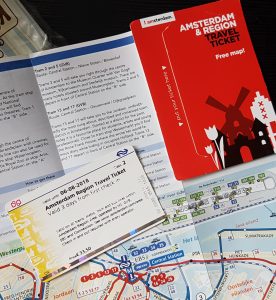
The train gets you right into Amsterdam Centraal Station where you can get a regional travel ticket, which basically opens up all of the little cities, towns and parks around Amsterdam to you. That includes Haarlem, the Keukenhoff Gardens, the beach at Bloemendaal, the little windmill village of Zaanse Schans.
The Sights
Okay tbh, my wife and I aren’t typical sightseeing travellers. To us, an authentic meal in a local restaurant is far more appealing than any old monument. But Holland is most definitely home to some beautiful sights.
The Amsterdam Regional Travel Ticket gets you unlimited rides on buses, trams and trains during your stay.
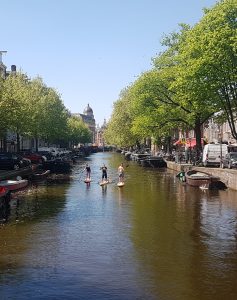
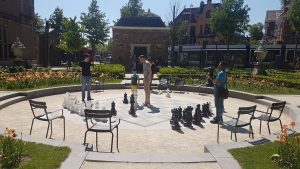
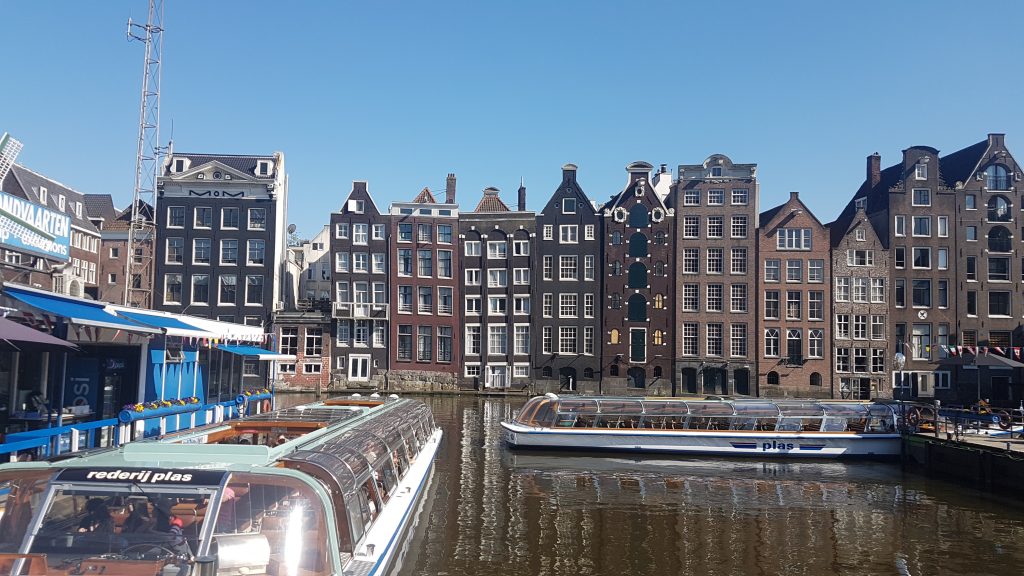
Amsterdam is a gorgeous city and, in the sunshine, it’s simply glorious. There are paddle boarders in the canals, leafy trees dappling the streets with sunlight, and people out and about, even playing giant games of chess. In fact, it was so sunny while we were there that the tulips were wilting in the heat, although even in death, they exuded a surreal beauty.
We spent a day in Amsterdam just wandering the streets without an agenda. Amid all the hustle and bustle, there were little pockets of tranquillity, like the old book market we found at Oudemanhuispoort, where second (or third or eighth) hand reads are still being peddled from old wooden booths bolted to the stone walls. Perhaps fittingly, the book market is just adjacent to the law faculty of the University of Amsterdam, whose gardens are worth taking a stroll in.
Is it a consequence of studying in a medical school that I thought the building was having a stroke?
Another treat was sitting down by the Oude Kerk and listening to its bells play, surprisingly, the Sesame Street theme song. It put a grin on the face of everyone in that square! Interestingly, the church is right smack in the middle of the famous Amsterdam Red Light District. The story goes that it was built there so sailors could pop over for some quick absolution before another long and dangerous voyage. Today though, the Red Light District is mostly closed. Only one or two windows were open as the city clamps down. If allegations of human trafficking and abuse are true, that’s definitely a good thing, but you’d better hurry if you still want to see the place for yourself.
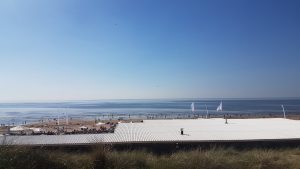
For all its charms though, Amsterdam is really only worth a day. There is so much else to see around it. We found a lovely loft apartment in Haarlem that could easily sleep three and made short day trips from there. First place on the list, THE BEACH. Bloemendaal aan Zee will never be able to compete with the likes of Portugal or Spain. But after 8 months in gloomy London, this was a dose of vitamin sea that was sorely needed. We got to soak up loads of sun, play in the sand and started to look vaguely Southeast Asian again.
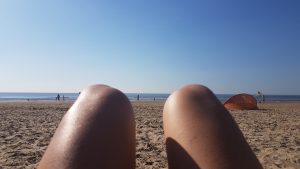
The beach at Bloemendaal aan Zee. It’s not Ibiza but my sausage legs ain’t complaining.
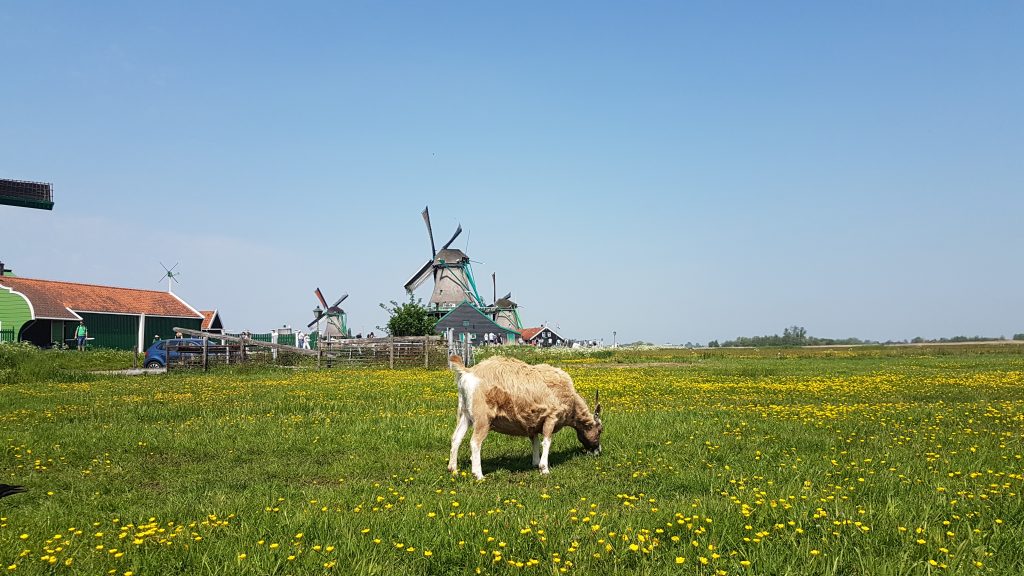
If you can spare the time, the windmills of Zaanse Schans are also worth a quick visit. They are still grinding out some delicious old mustard, and there is also a huge cheese shop where you can taste pretty much everything in the shop. We ended up with a delicious smoked cheese that we can’t wait to break into.
The old windmills of Zaanse Schans, still merrily churning out flour and mustard.
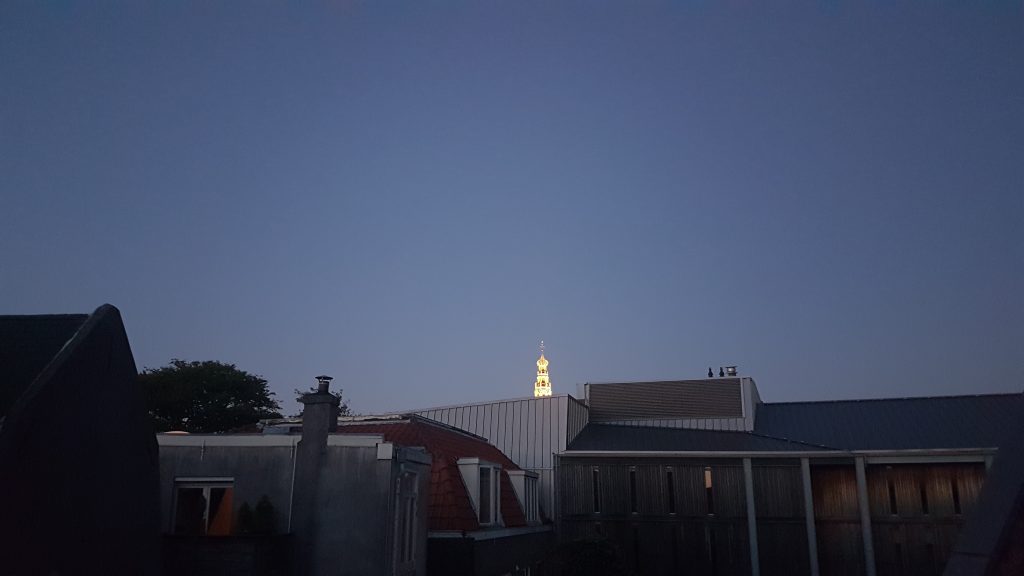
Sadly, we didn’t take many pictures of Haarlem but perhaps that is a reflection of how at home we felt there. Every night, we were serenaded to sleep by the softly chiming bells of the Grote Kerk, its tower brightly lit on the horizon. Since 1562, the bells have been rung between 9 and 9:30pm to signal the closing of the city gates and the tradition has carried on ever since.
The Food
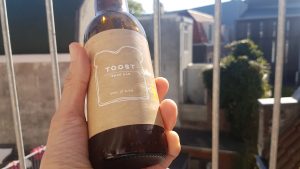
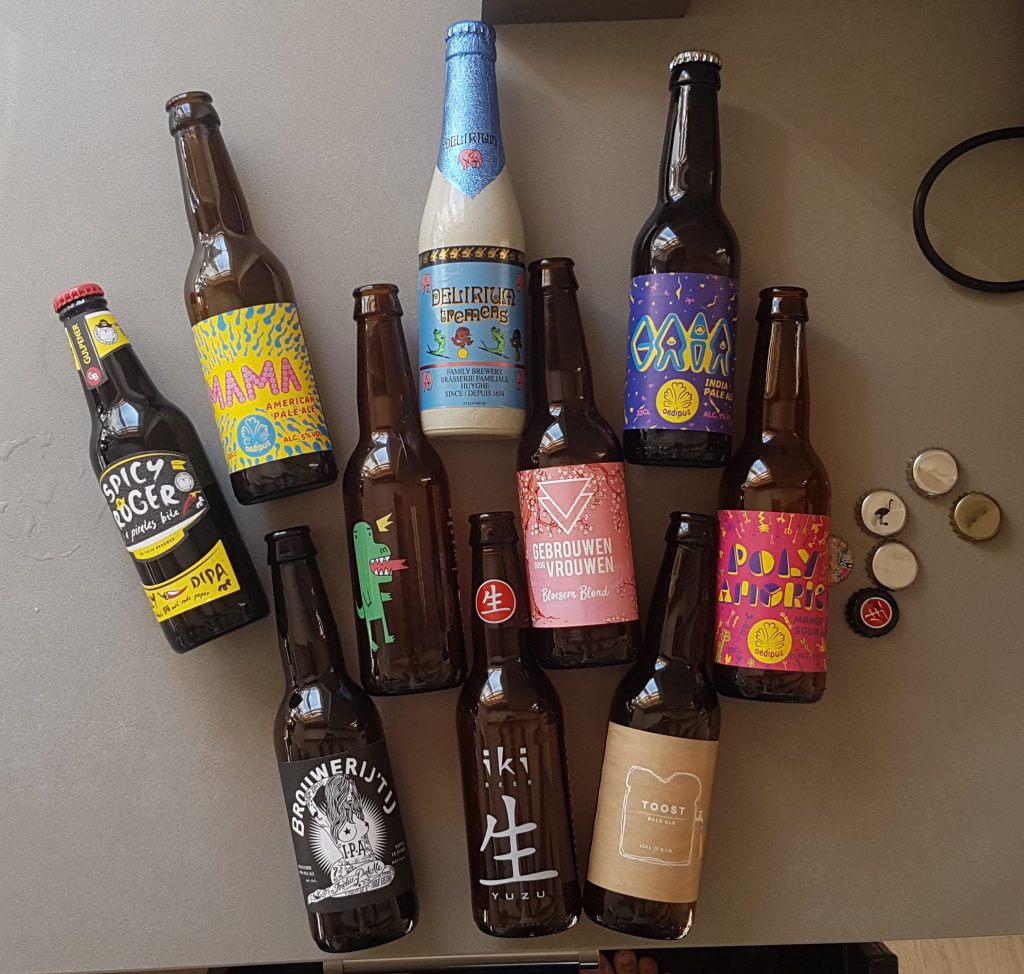
Holland, where toast comes in a beer bottle and coffee comes in a wine glass. Both tasted great.
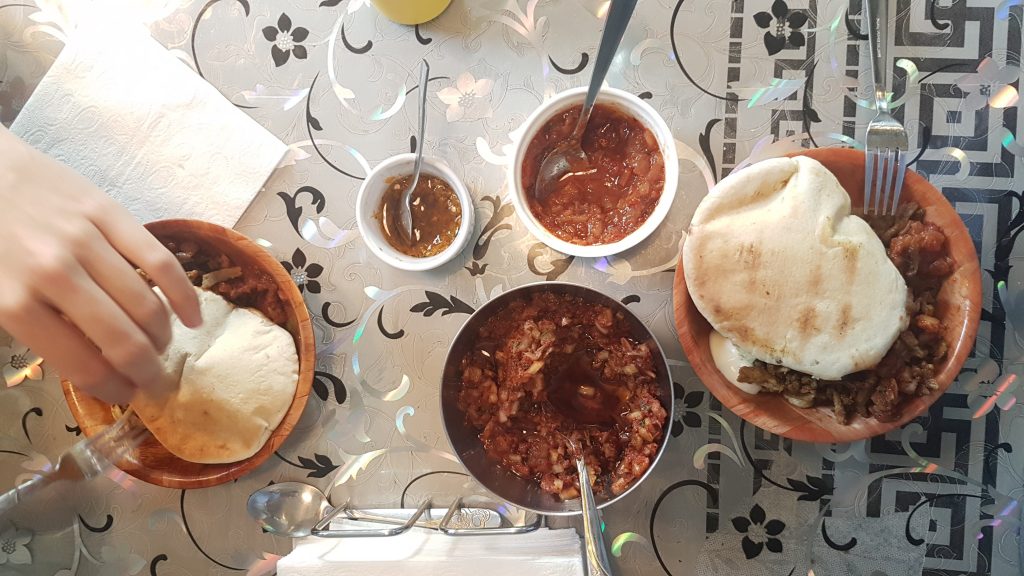
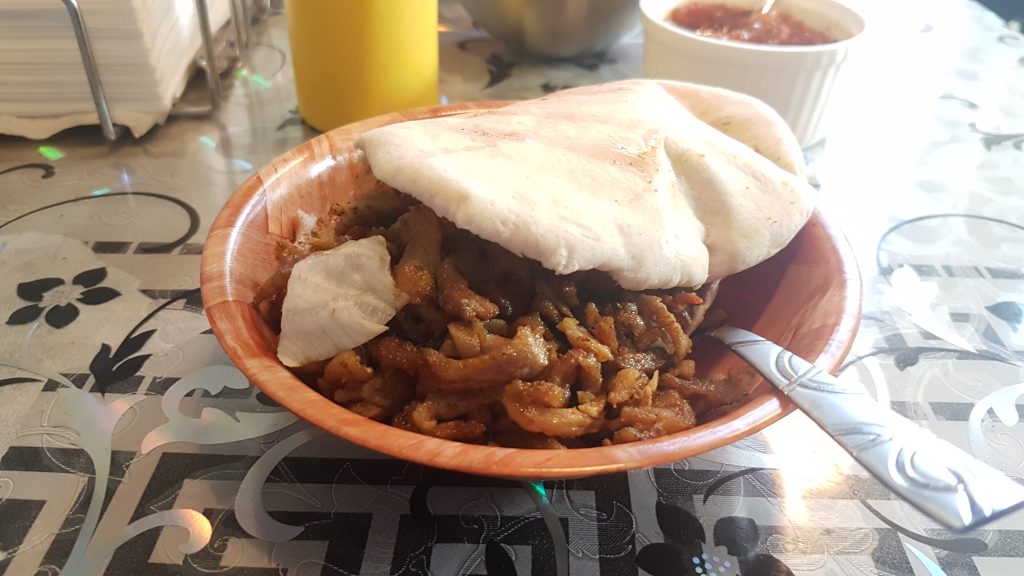
We are proud gastrotourists so no trip is complete without a huge serving of local food. I like having a good kebab on the first night in Haarlem and a quick Google search brought us to Shalom Grillhouse, which turned out to be a whole new culinary experience. Here the shawarma is served alongside plates of Middle Eastern “sambal” which you mix into the meat until it’s as tasty and spicy as you like. I love that it was proper spicy too. None of that middling Tabasco mildness. This was an absolute revelation and I really wish we’d had enough time to go back.
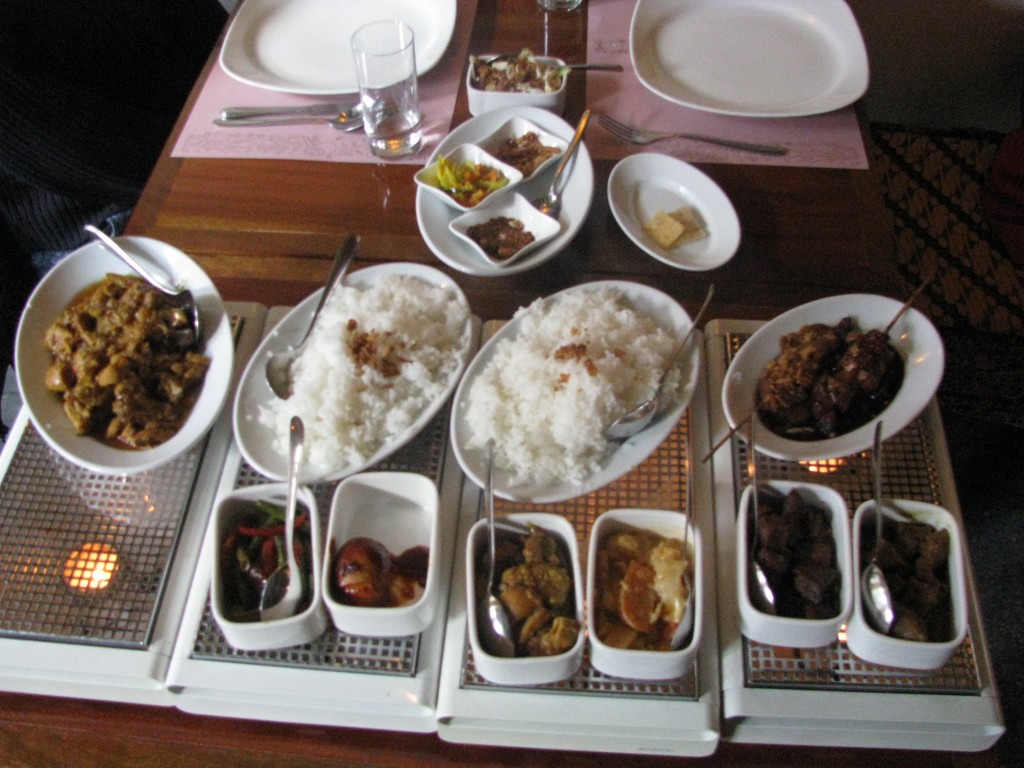
But Haarlem has treats galore. On our second night, we went for the famous Dutch rijsttafel. Literally translated as “rice table”, this is a set meal of rice with 10 to 12 Indonesian side dishes that the Dutch took home with them from their adventure in the Indies. De Lanchende Javaan is a Haarlem institution run by three brothers who moved to the Netherlands from Indonesia more than 30 years ago and are still cooking up a storm. Their version of rijsttafel includes satay, sayur lodeh (curried veggies), achar (spicy pickles), beef rendang (spice paste), gado gado (Indonesian salad with peanut sauce), sambal egg and much more. It was so good we literally forgot to take any photos. I could hardly believe I’d found better rendang in Holland than in most places in Malaysia and Indonesia.
The rijsttafel at De Lachende Javaan was so delicious that we forgot to take a photo, so I’m going to have to leave you this one from Pierre Vanderhout’s Travel Blog
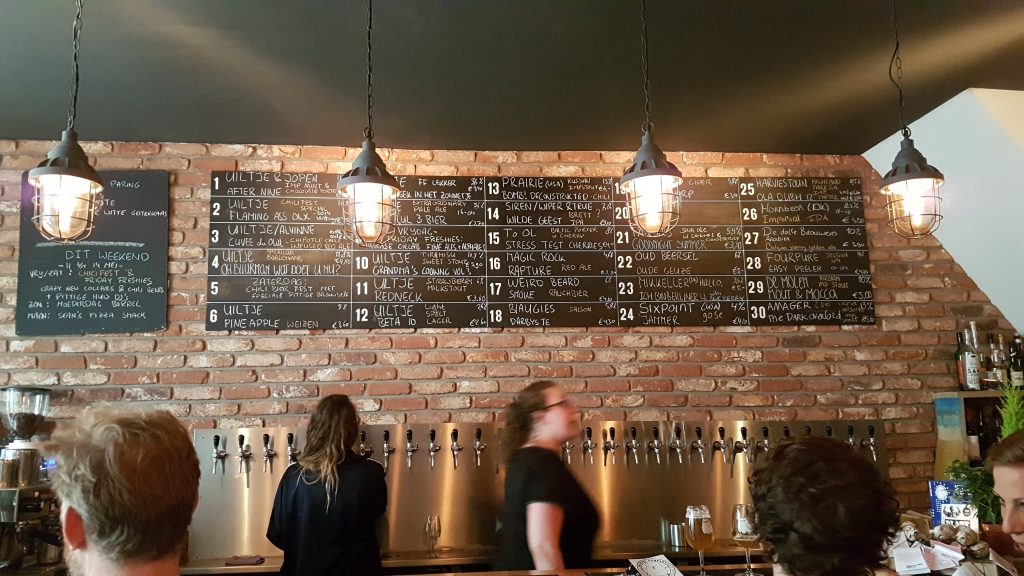
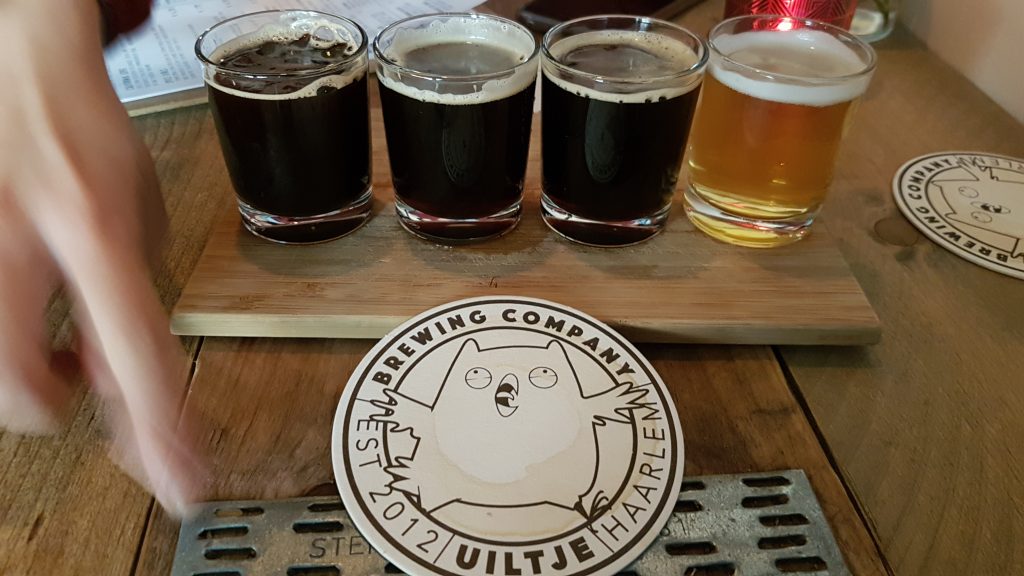
We needed something to wash down all that good food. Luckily, the Uiltje craft beer bar was just around the corner. Uiltje is Haarlem’s very own craft brewery who have 30 or so different beers on tap at any one time. You can get tasting flight for just €10 and they do some amazing things with stout especially. Before Uiltje, my experience with stout had been limited to Guinness. Then I spent an afternoon sipping stout laced with liquorice, cherries and tiramisu and now things will never be the same. I also had my first taste of smoked beer, which is made from malted barley dried over an open flame and fills your nose as it pleasures your taste buds.
Uiltje’s tasting bar in Haarlem has more than 30 beers on tap and tasting flights to get you through them. From L – R: Baltic Porter with Cherries; Tiramisu Stout; Heavy Stout with Liquorice; and Smoked Rauchbier
Perhaps the only downside to Dutch craft beer is its high alcohol content, usually 9 to 13%, which limits how much you can drink. But I suppose that’s a good thing. Dutch beer is for savouring, not getting sloshed. Still, that didn’t stop us from popping into the local supermarket and hauling some of the good stuff back home.
Data Spark is a student placement scheme at Imperial designed to uncover insights and solve real-world business problems. It lasts around 6 weeks and you’re able to work with students from different study programs. Throughout this journey, you get great advice from academic and industry mentors.
Having finalised the program last week, I wanted to share what I enjoyed the most:
Applying new skills
One of my favourite parts of this program was that I was able to apply several skills learned during my current study program (MSc Business Analytics). I was able to run different models, work on network analysis and and apply several visualisation techniques. These models led to several interesting insights that were relevant for our client.
This is now an example I can use to show the techniques I’ve learned and how I’ve applied them (very helpful when applying for jobs!).
Mentorship
My team and I had the great opportunity to work with Dr Rebecca Pope at KPMG as industry mentor and Dr David Birch as academic mentor. Their strong technical capabilities and consulting experience brought a lot of value to our team. We held weekly meetings that guided us on what technical analysis to perform and how to create a compelling story for our client. This was a unique experience to get close guidance on our work and ideas.
Team Work
We were five team members with different backgrounds and skills. We had different views and angles to solve problems. This became a great opportunity to learn from each other. At the same time, we could start developing project management skills to make sure that our collective work was meeting the project’s goals.
If you have any questions about the program, feel free to use the comments section below!
You can also find more information about this program here.












 In the GIF above, you will find footage of me being attacked by tube doors. I am actually Carrie Bradshaw.