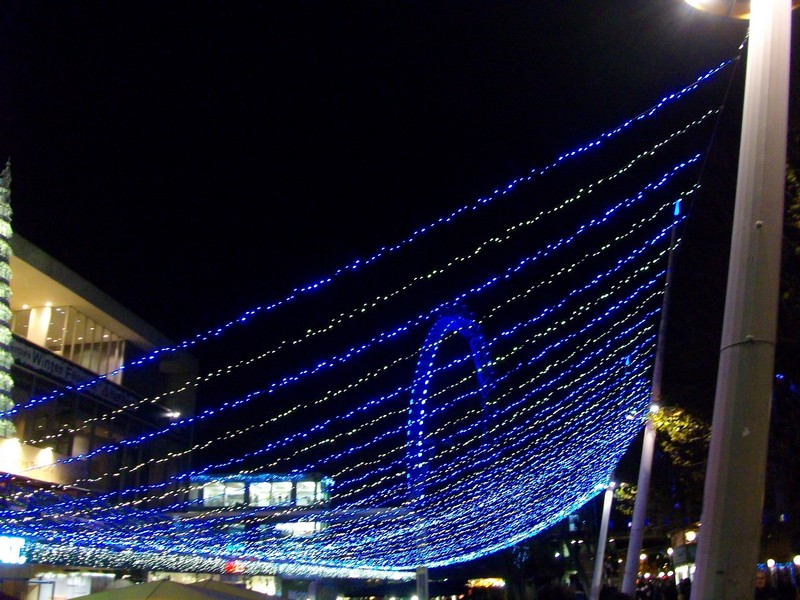
My friend Andrew loves Christmas, so it would be cruel if I didn’t let him visit the Winter Festival at the Southbank Centre after the trip to Tower Bridge (although mercifully I avoided taking him to see the Christmas lights in Oxford Street this year!).
After enjoying some traditional roast Chestnuts by the River Thames I said goodbye while I spent a few days finishing up some university work before heading home for Christmas and the New Year.
Christmas lights with the London Eye behind, at the Winter Festival, Southbank Centre
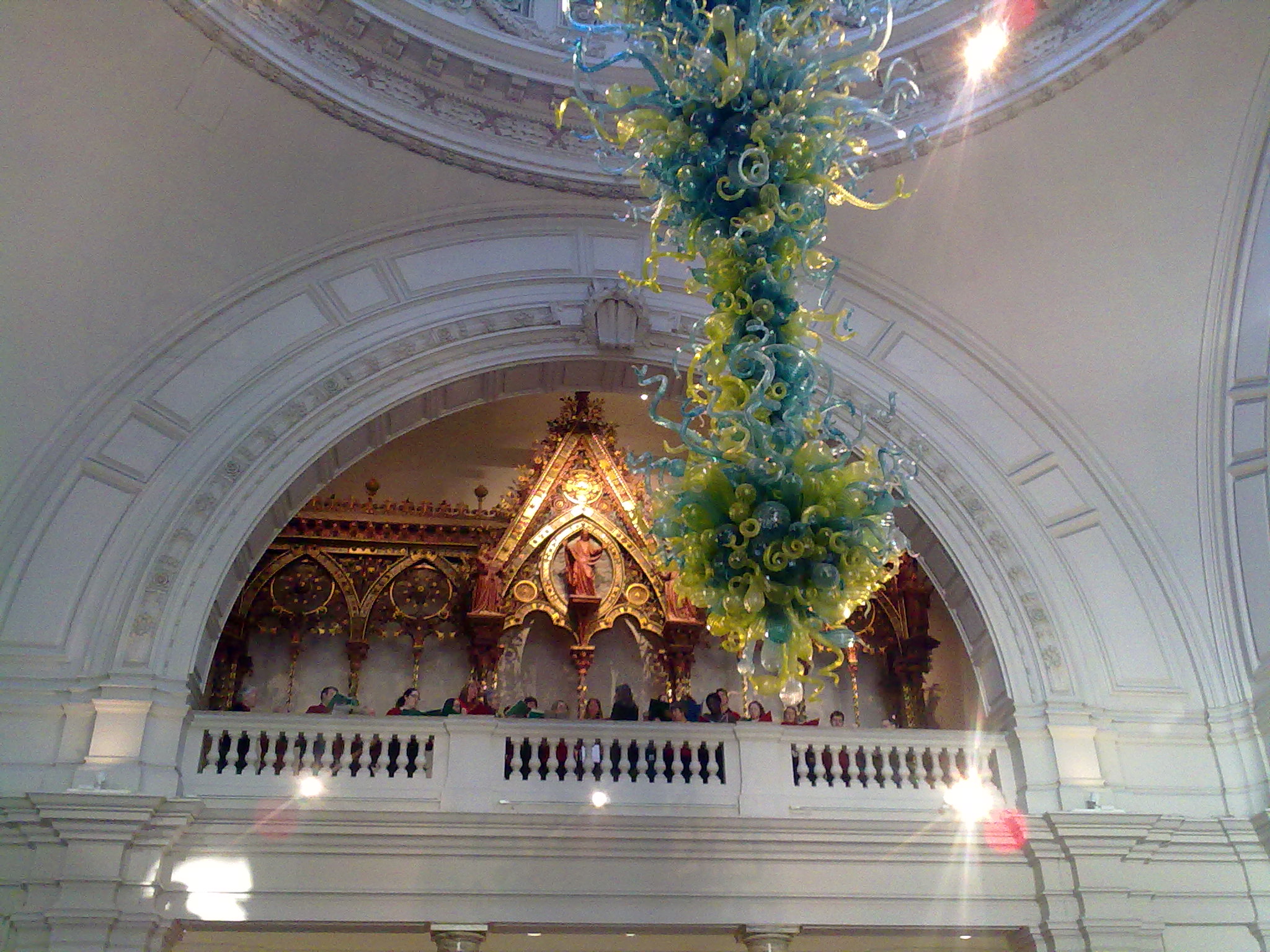
On the 16th December the PREDICTS team had planned a Christmassy day which included a visit to our neighbours the Victoria and Albert Museum where the joint-museum choir was performing. Afterwards we went for a meal at a local restaurant and exchanged secret Santa presents (no discounted Museum gifts allowed!).
The V&A and Natural History Museum choir
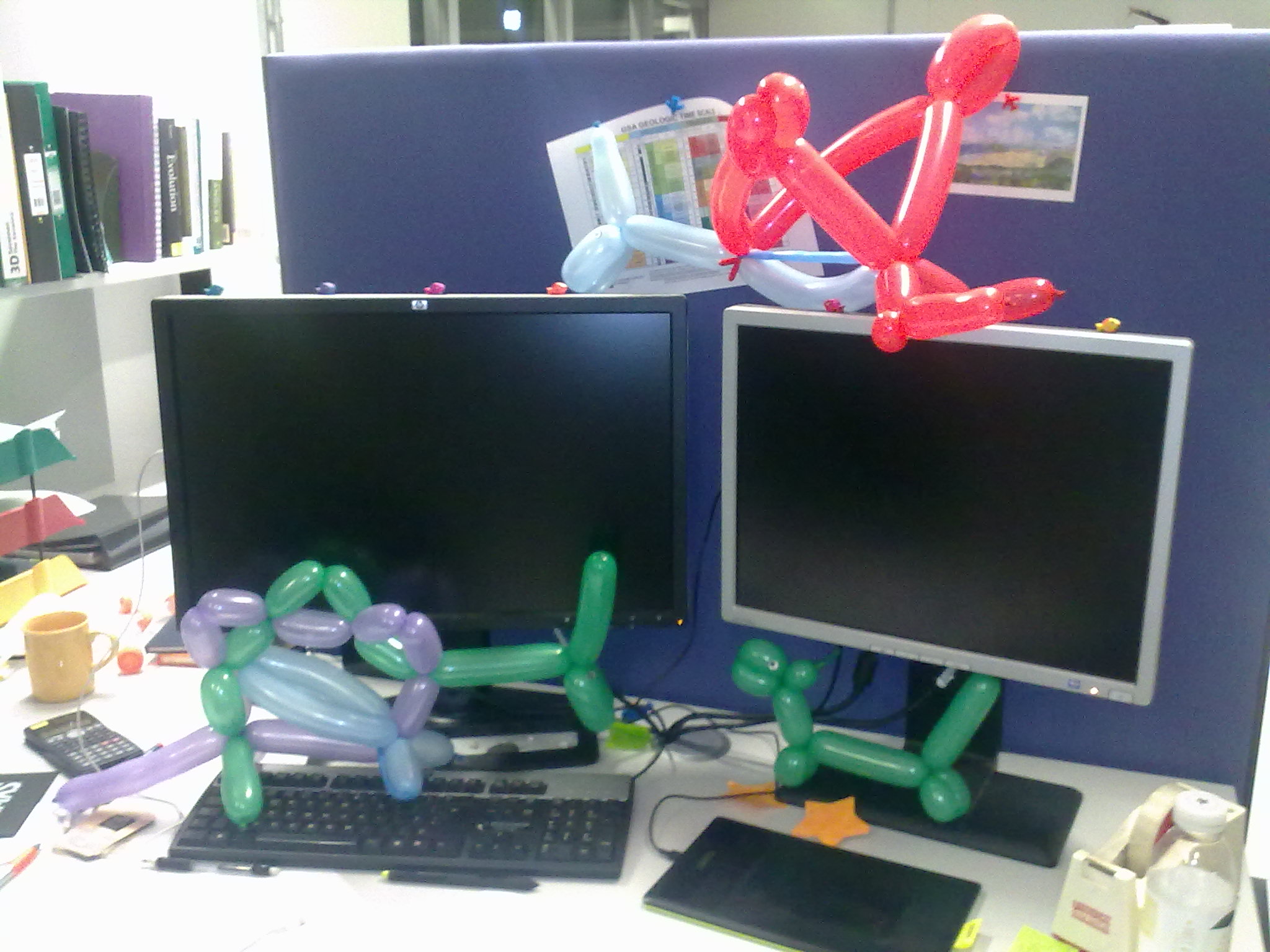
One of my colleagues got prehistoric balloon animals for her Secret Santa gift, which was an excellent excuse for procrastination!
Christmas in the PREDICTS lab
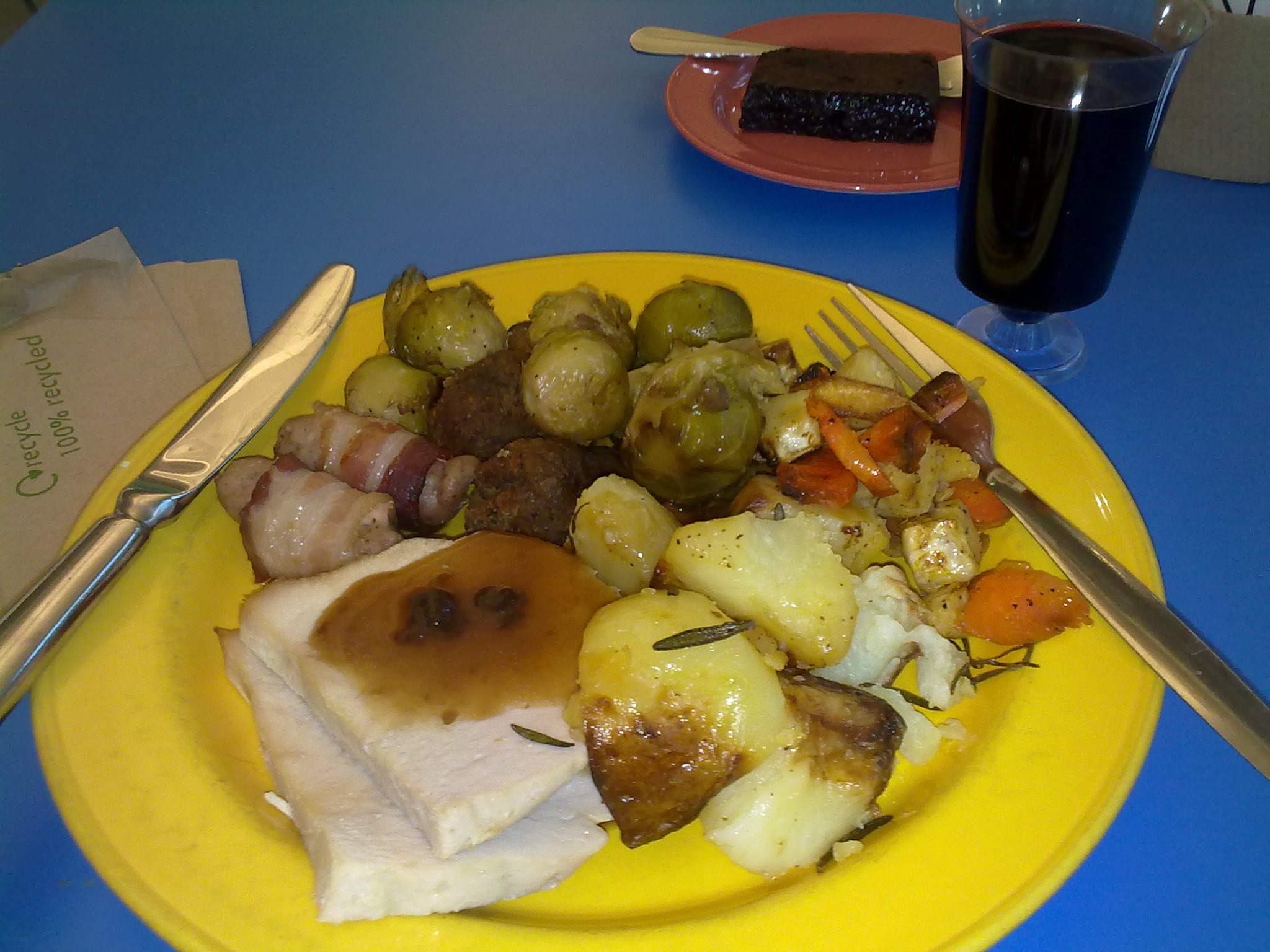
Finally, the Friday before Christmas I was treated to a complementary Christmas dinner at the Natural History Museum staff cafeteria for my volunteer work identifying earthworms (more on that another time). The glass of wine was particularly welcome to help endure the busy trains as I headed back to Hampshire to spend Christmas and the New Year at home.
As I mentioned in my first post, I actually had a whole post about my experiences over the first few weeks. Here’s part 1 of 2 (respecting chronological order of course) !
“Hey!”
“您好!”
“Γεια σας!”
A barrage of languages greeted my ears as I walked into the college bar. After completing my backbreaking ten mile journey from the suburbs of north-west London to Imperial, I suddenly felt as if I had entered a different world. Three weeks into the term, the wide diversity of people on campus is still astonishing.
But let’s backtrack .
Fresher’s Week has been elevated to an almost mythical status by students across the UK, but it’s no exaggeration to say that it’s an experience unlike anything else. At the Mingle and Fresher’s Ball it felt as if I was meeting someone from a different corner of the world every ten minutes. I’ve definitely learned a lot more about some cultures in the past few weeks than I have in the last few years. Within all this variety we share the common backdrop of South Kensington, a neighbourhood with world renowned museums, a perpetual flock of visitors, and an eclectic mix of street performers. Whether it’s a flaming trombonist or a break-dancing monkey, you never quite know what you’ll see!
Then came the Fresher’s Fair which was an assortment of practically every activity known to man. Like everyone else, I was hit by a wave of euphoria and keenly signed up to anything and everything that caught my attention. A 1000 emails later, I realise this was probably a miscalculation on my part. Nevertheless, I did manage to find quite a few clubs which genuinely interested me and just last weekend I went on a photo walk with PhotoSoc around Borough Market. The results were hunger inducing to say the least, but it was a nice way to meet other photographers and learn a surprising deal about exposure and composition. The “work hard, play hard” mentality is definitely a motto most Imperial students take to heart, with a great deal of people knowing as much about their interests as they do their fields of study.
Disclaimer: Do not go to Borough Market if you are broke and hungry.
The “word hard, play hard” way of life is a two-sided philosophy and would be nothing if we forgot about the work! The first week was fairly gentle and consisted primarily of introductions to my various courses, but from the second week we hit the ground running. It’s a big change from secondary school where it was expected for teachers to stop and clarify content during lessons and provide individual help. It definitely takes time to get used. At the same time it’s been fun to approach the so-called “simpler” areas of mathematics such as logic and probability with a lot more rigour and formal, mathematical language.
And now, just like that, three weeks have gone by. In between lectures, problem sheets, societies, hall events, and catching up on sleep (or, at least, attempting to) there’s hardly any time to catch your breath. I’m starting to understand why people liken university life to a whirlwind. It feels like 2015 is right around the corner.
Only one day, one tutorial and one lecture to go before Christmas holidays! We had our house dinner yesterday, which was awesome, but this blog is on something a bit different…
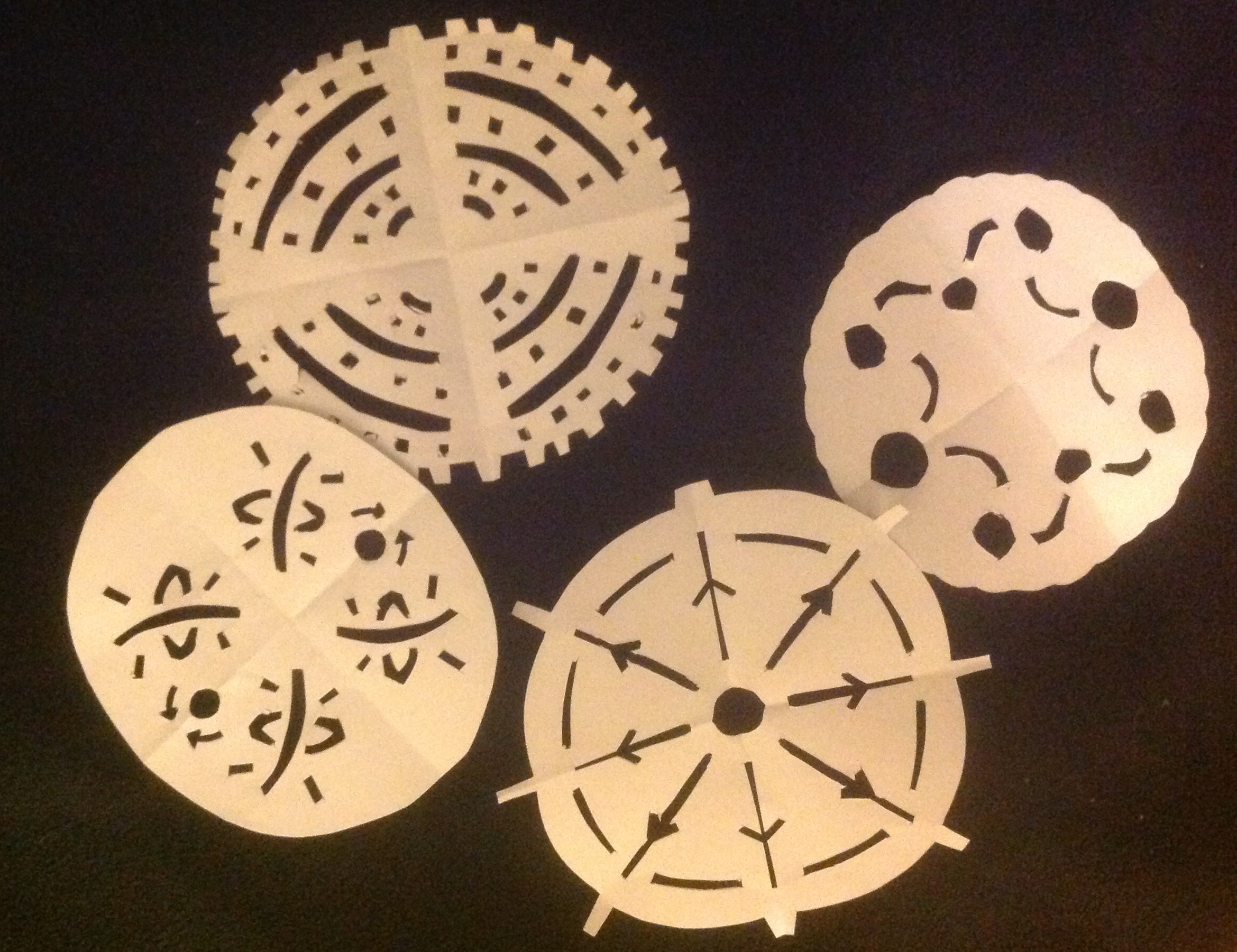
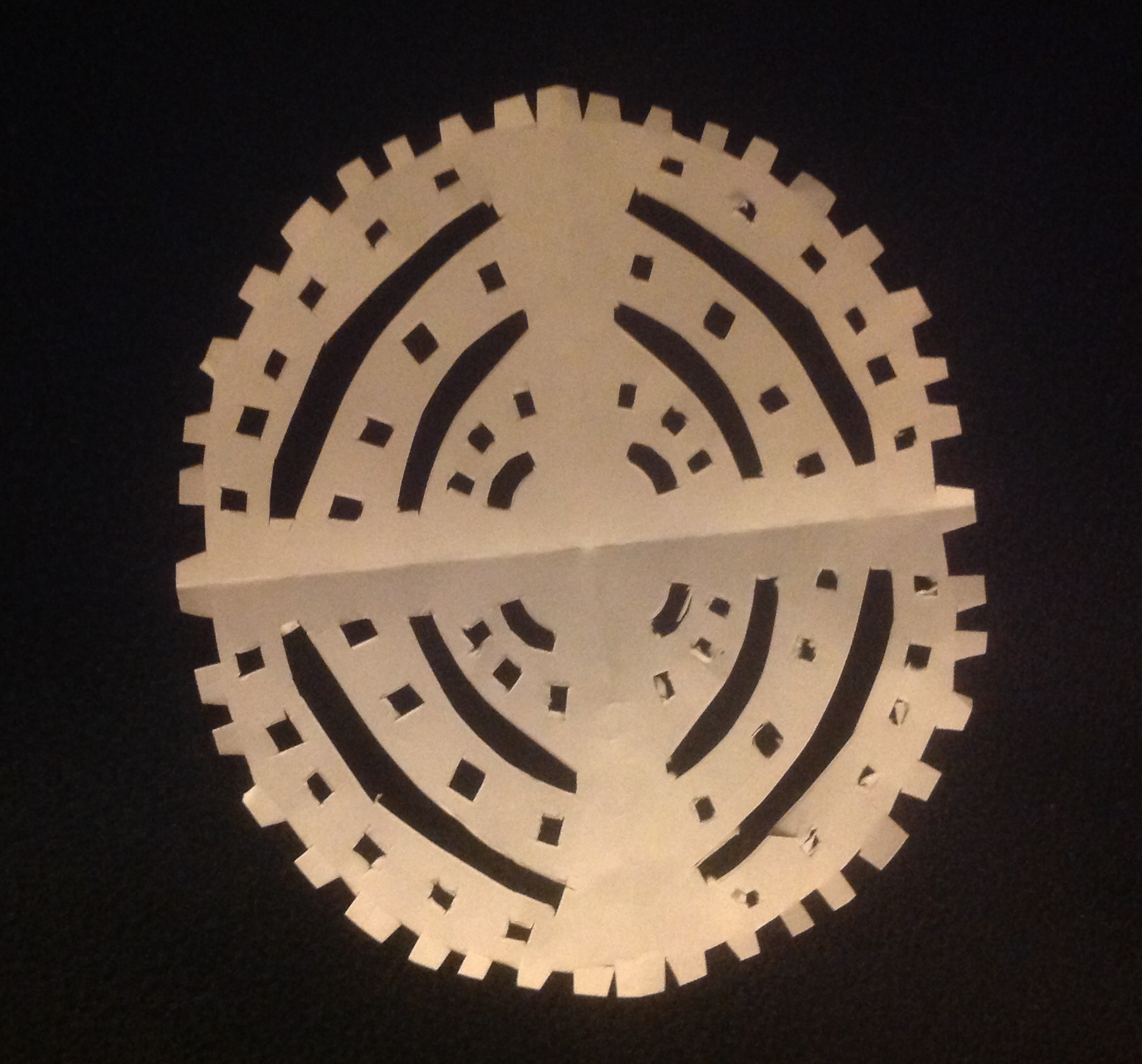
Basically, I was trying to listen to a lecture on matter reacting to magnetic fields, when I noticed a great tweet by symmetry mag showing their paper snowflakes in the shape of famous scientists. They look amazing, but are pretty intricate, and I don’t have a craft knife—also I was pretty sure I could make them even more nerdy, so I decided to come up with my own science inspired snowflakes.
So what part of science to choose?
As the lecture was on Magnetism, I decided on that Physicist’s firm favourite, Maxwell’s equations 😛
If you’re up for a challenge try and match the snowflake to the equation without reading on…
These are four equations (though ACP at the moment is trying to convince me you can introduce some nightmarish notation to write them down as one) that describe how the Electric and Magnetic forces behave and relate to each other. Check out these snowflakes to find out more 🙂
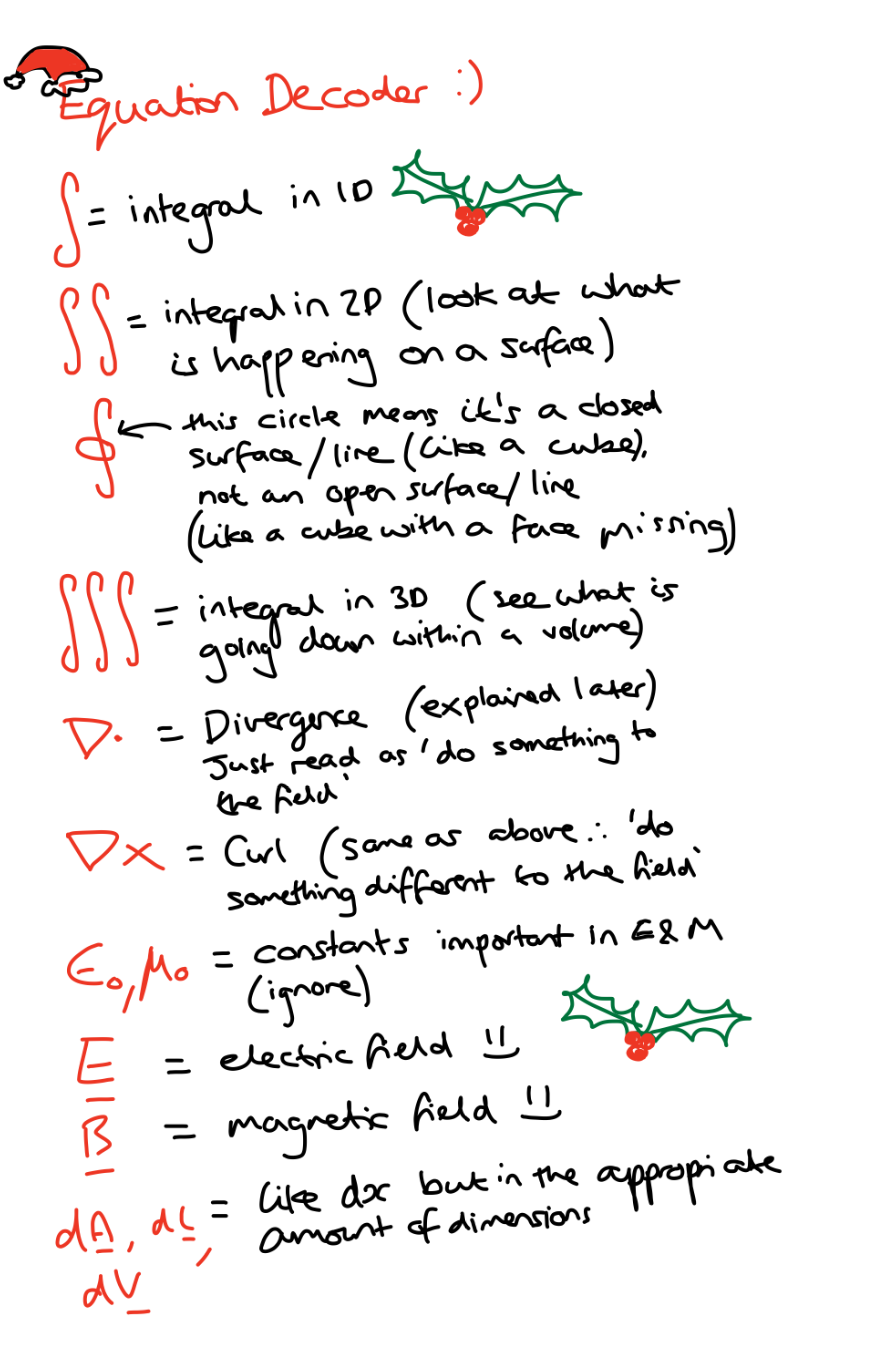
Before we begin, here is a handy equation decoder for the tricky bits of the equations:
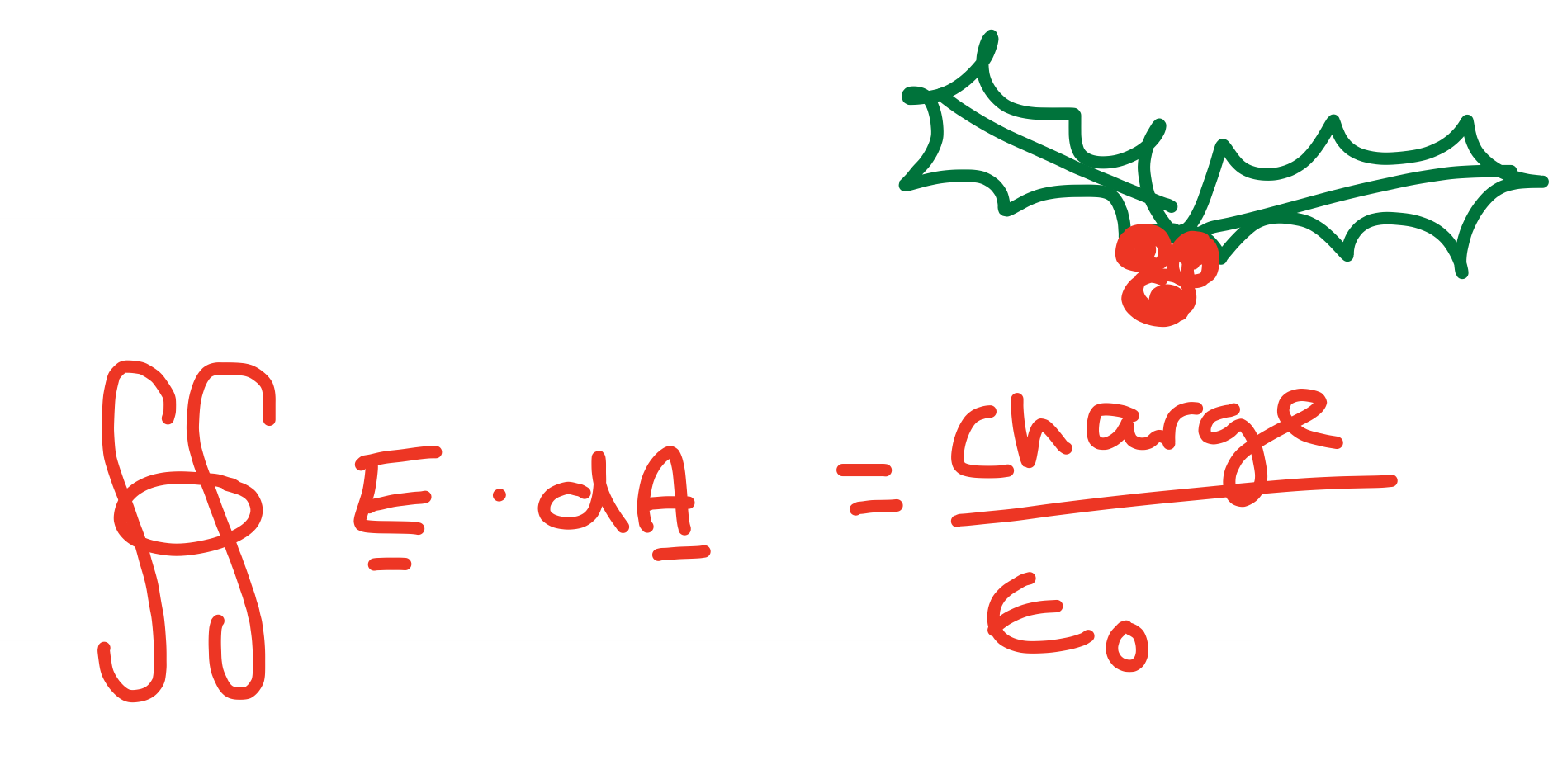
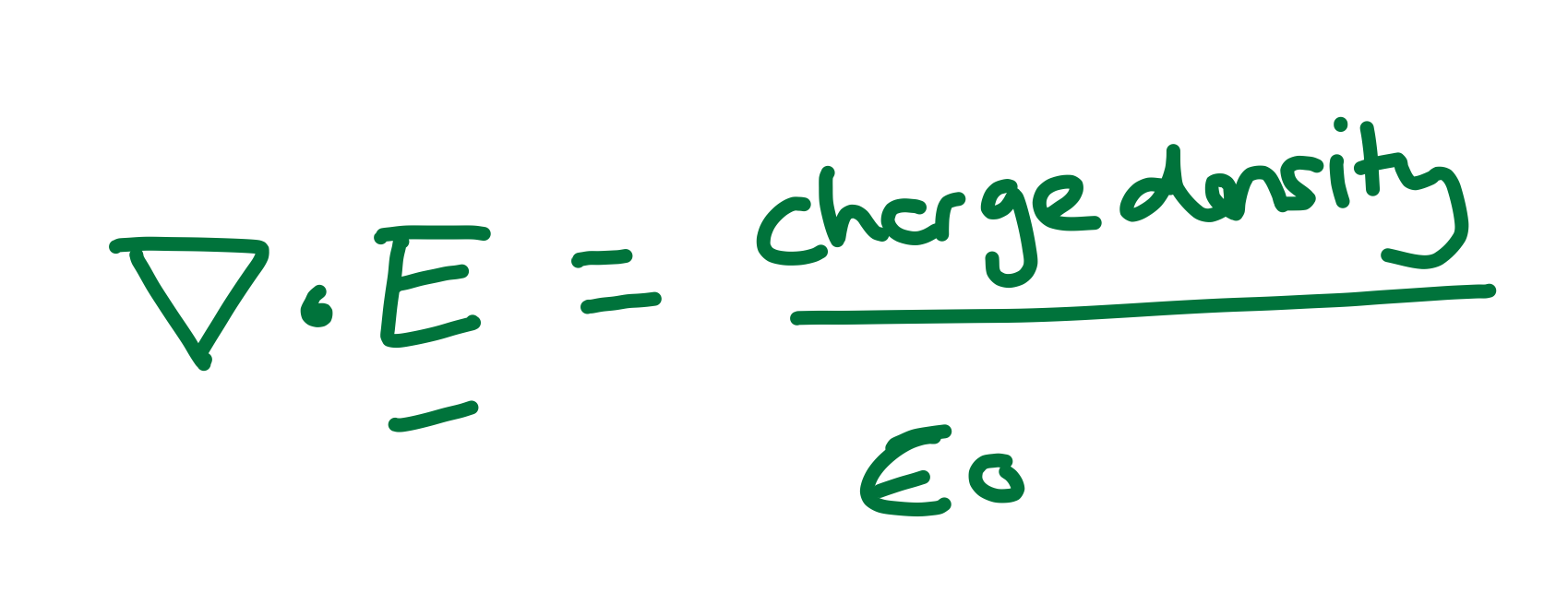
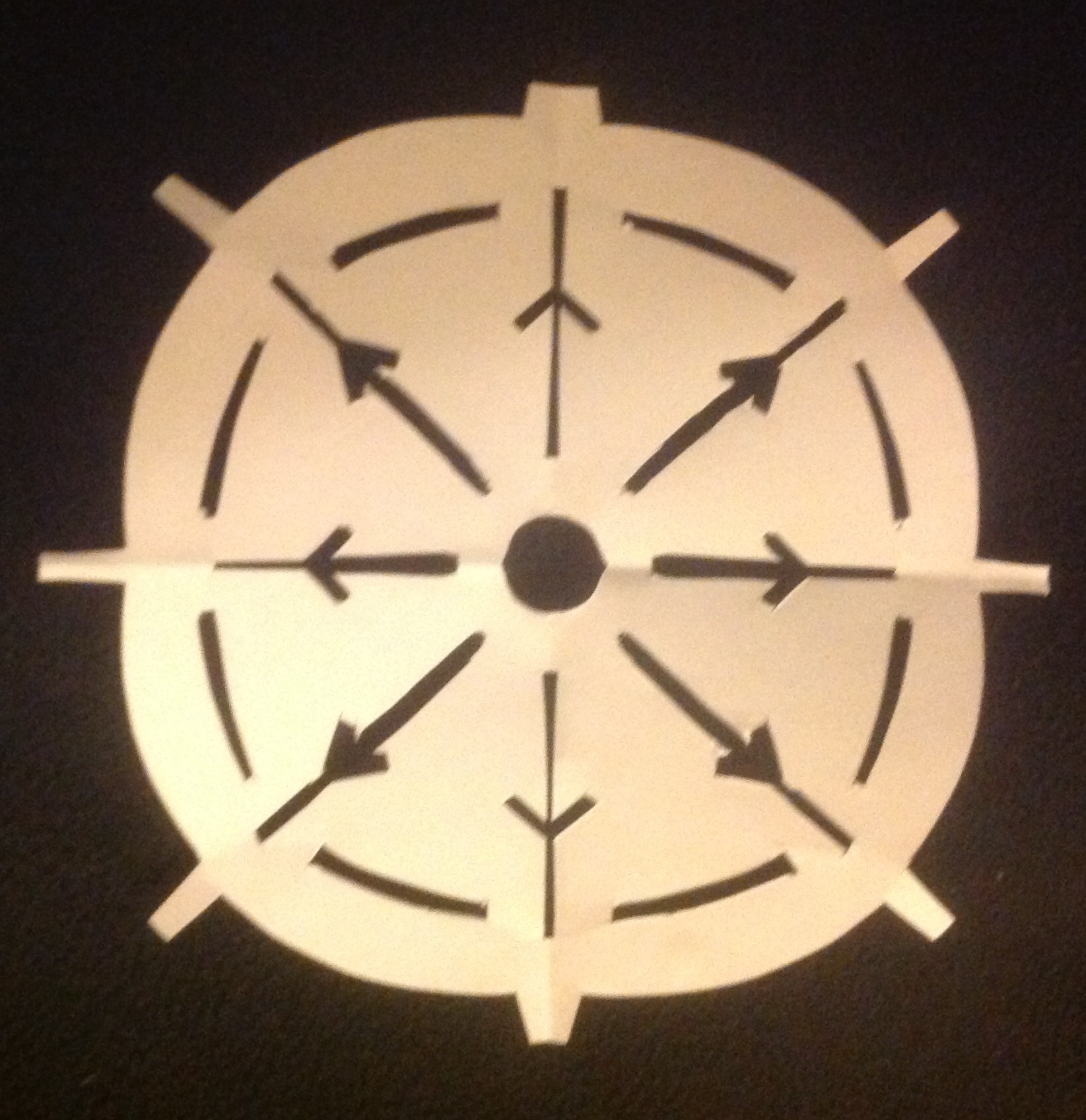
Gauss’s (Christmas) Law
This can be written as:
or:
or:
What the snowflake represents is a central positive charge with electric field lines radiating outwards from it (this is the ‘charge’ side of the equations). The circle round the edge represents the sphere you are integrating over, which is the other side of the red equation with the double integral sign on.
In practice, you can use Gauss’s equation to solve a situation where you know the charge (Q) inside a shape, to find an expression for what the electric field looks like. You try and pick a nice surface like a sphere which is easy to write down and in this case meets the field lines at 90 degrees so the maths all turns out easier 😛
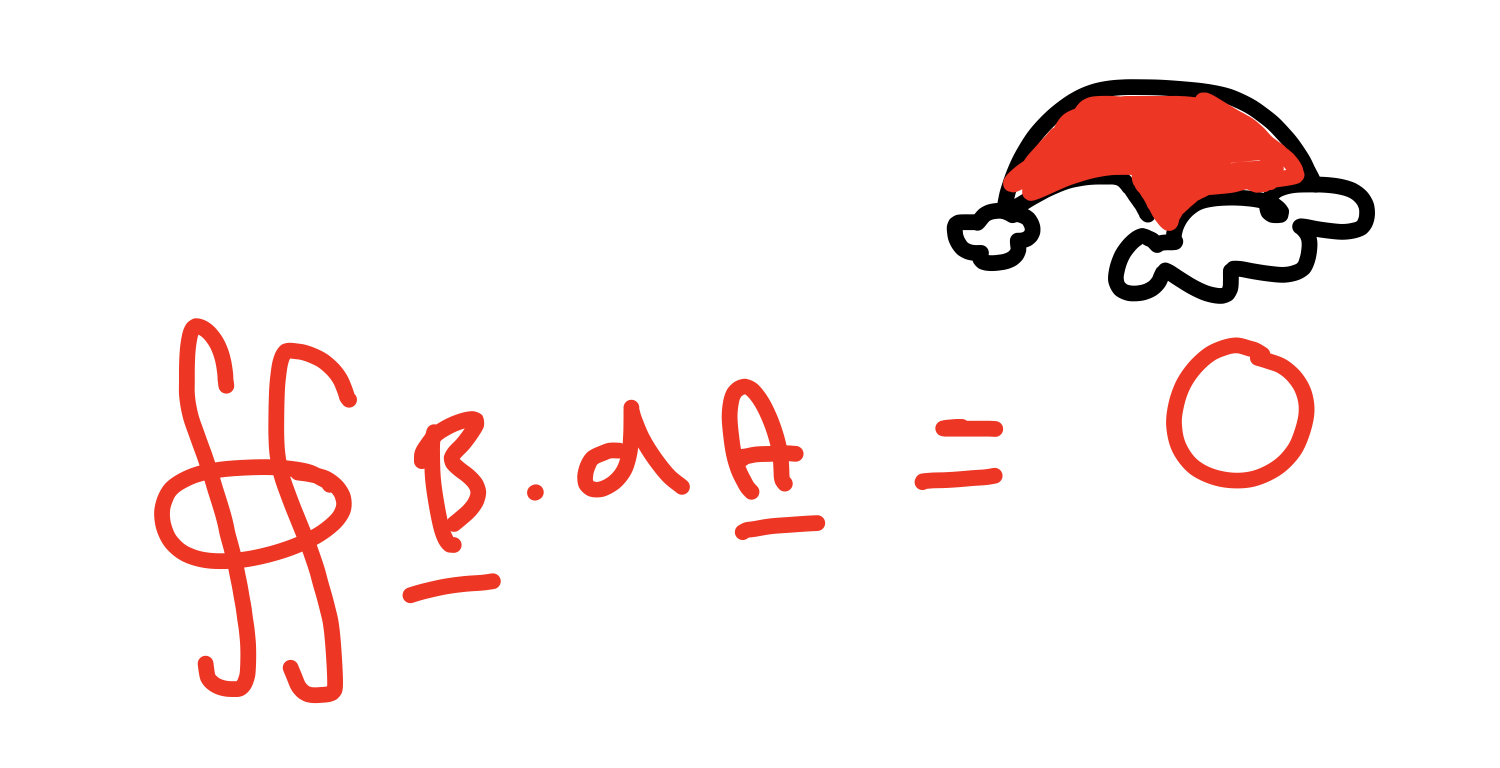
Gauss’s (Santa Claus is coming to town) Law for magnetism
This is always the first Maxwell equation people say when trying to remember them all because it only has one non-zero side 😛
You might think that this makes it a useless equation, but actually it’s pretty cool because it is basically a statement that there are no magnetic monopoles. A magnetic monopole is like having the North end of a magnet without the South end (and it turns out you can’t just chop a magnet in half—that was the first thing they tried :P)
It is written as:
or:
or:
The non-zero side is kind of the same as Gauss’s electrical law, which exposes a difference between electric and magnetic charges. You can obviously have a positive electric charge without a negative one right by it, which is why the electric equation is non-zero.
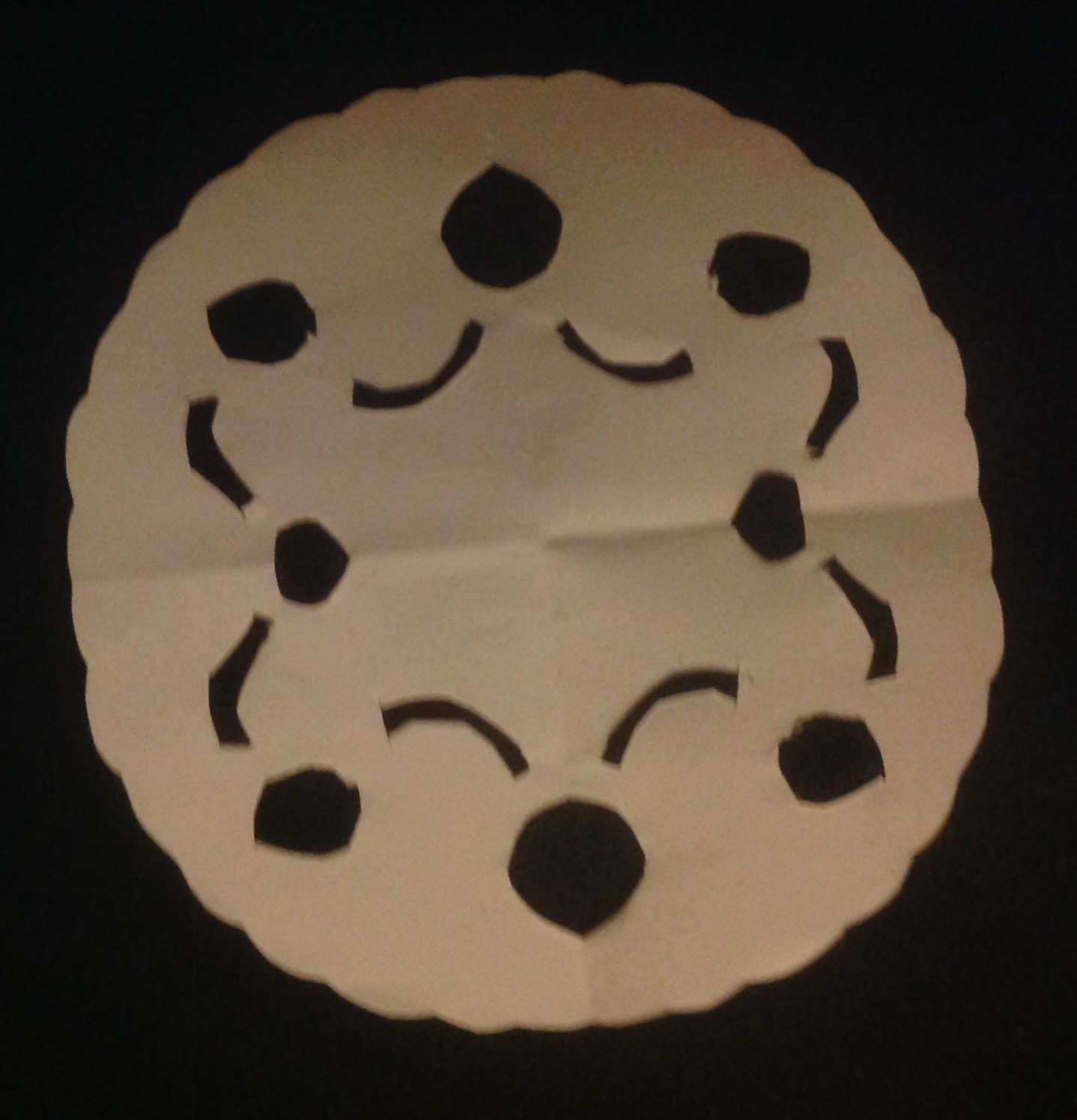
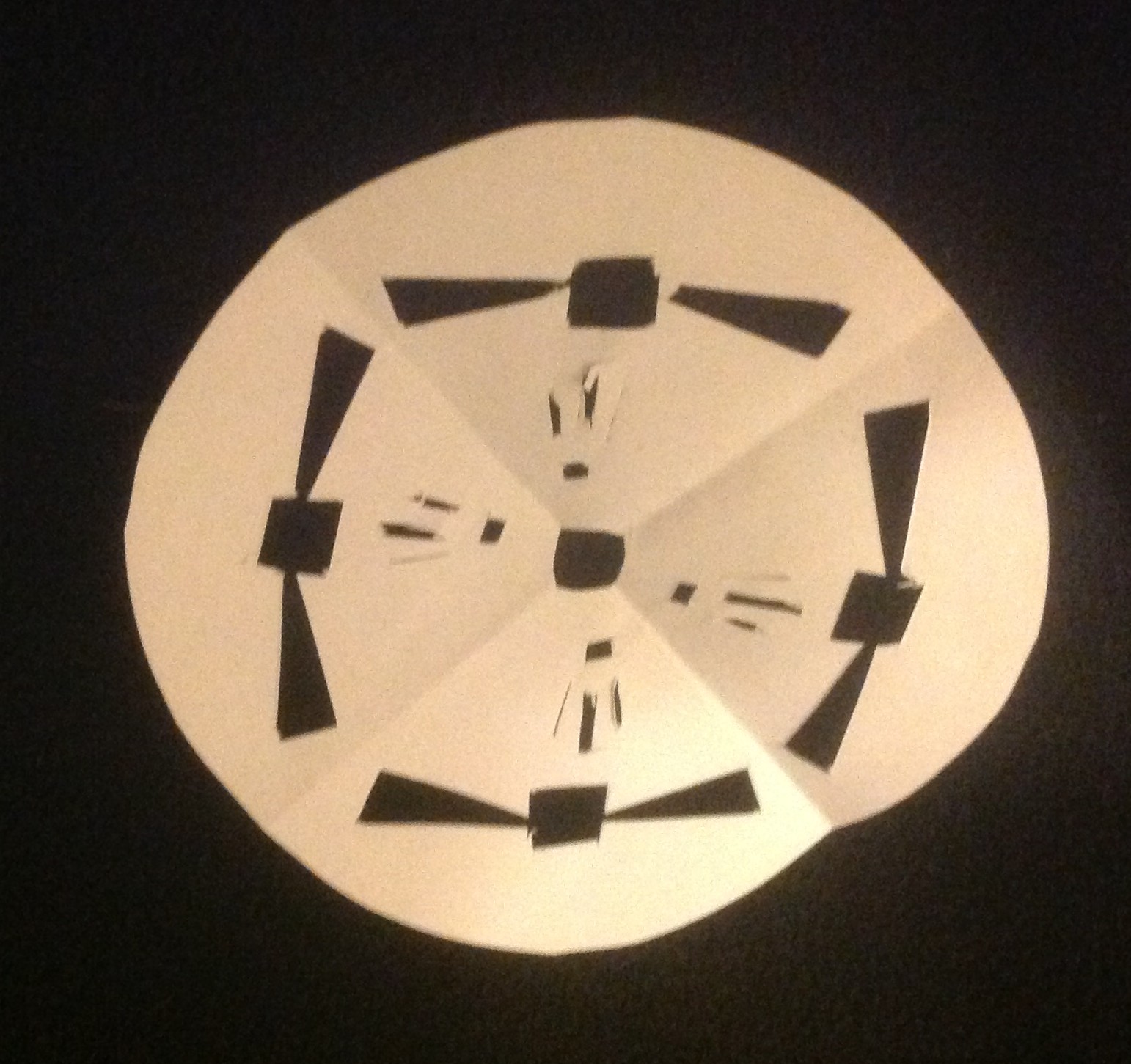
You can think of it in another way—that electric field lines start and end at the positive and negative charges as you can see from the first snowflake—the lines are starting right at the surface of the charge (well not really as the snowflake would have fallen apart, but in theory!) Magnetic field lines on the other hand, are always little loops. They never start or end anywhere, so when you try and make a nice surface to integrate over like before, you always get the same amount of lines coming into the surface as going out. This means the total ‘magnetic charge’ within any surface adds up to zero, because if you include a north pole (+1) you also have to take in another south pole (-1).
This is what this snowflake represents 🙂 The circles are the little loops of magnetic field lines and the wiggly line joining them is a desperate attempt to make some crazy path that takes in an uneven number of field lines, but of course, fails 😛
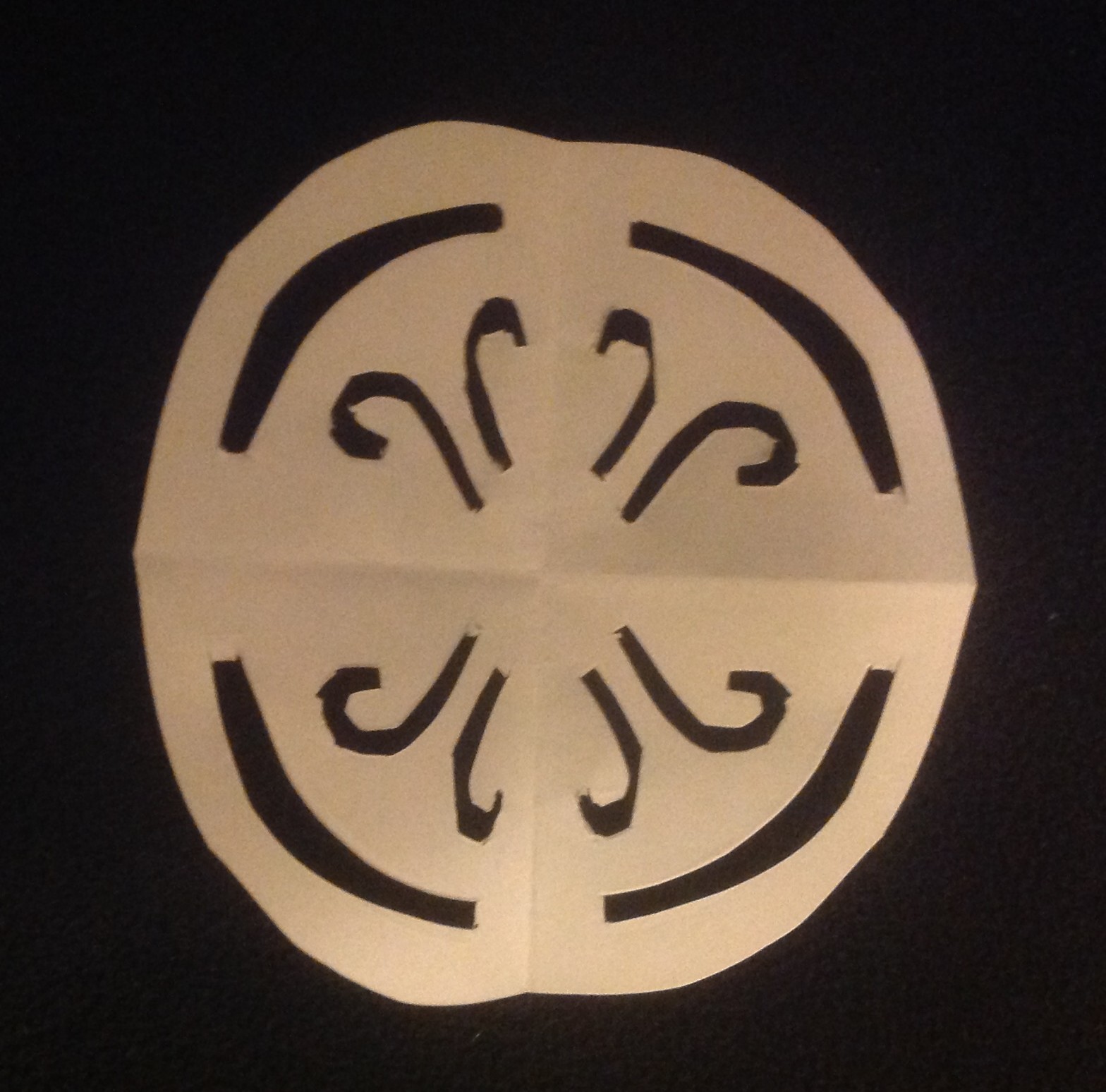
Faraday’s (Deck the halls with boughs of EM radiation) Law
This is a law you might have come across if you do A-level physics— it is the first equation on our list to contain both B and E (electric and magnetic fields) and relate the two together.
It is written as:
or:
or:
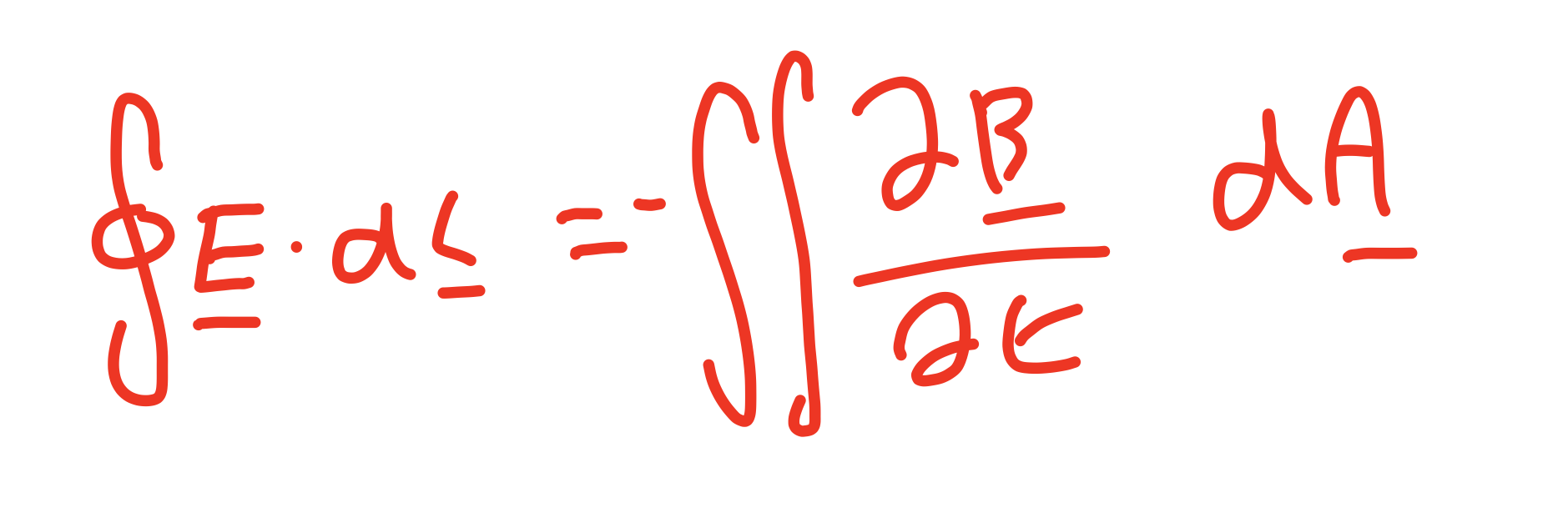
It simply says that if you have a changing magnetic field, then you get an electric field generated. This is probably the most abstract snowflake—imagine time starts at zero at the centre and goes out towards the ends. The expanding circles are meant to be the increase in magnetic field, and the little flicks are meant to be the electric field lines generated 🙂
(Alex was least convinced by this one :P)
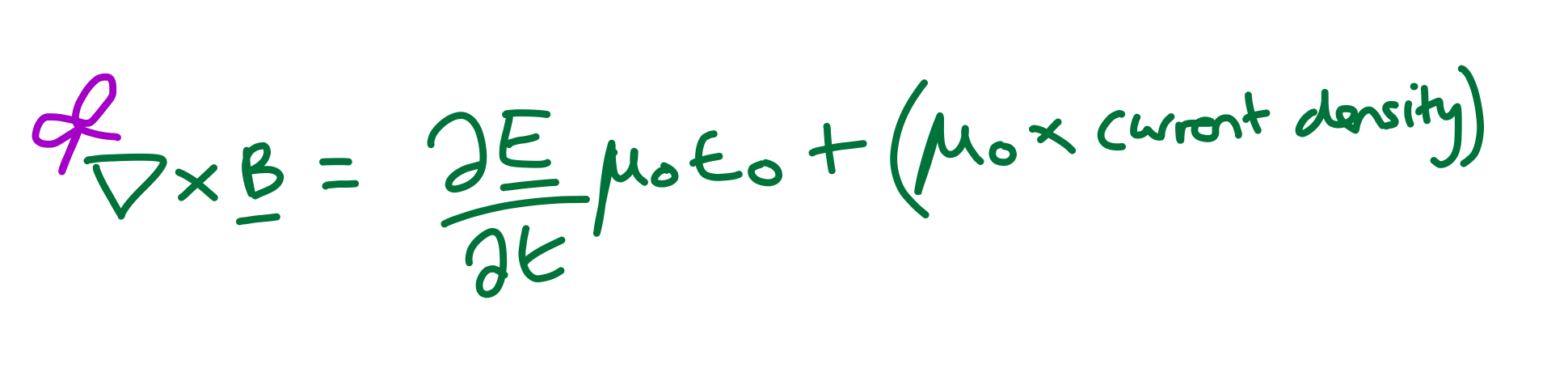
Ampere’s (Be merry and mathematically bright) Law
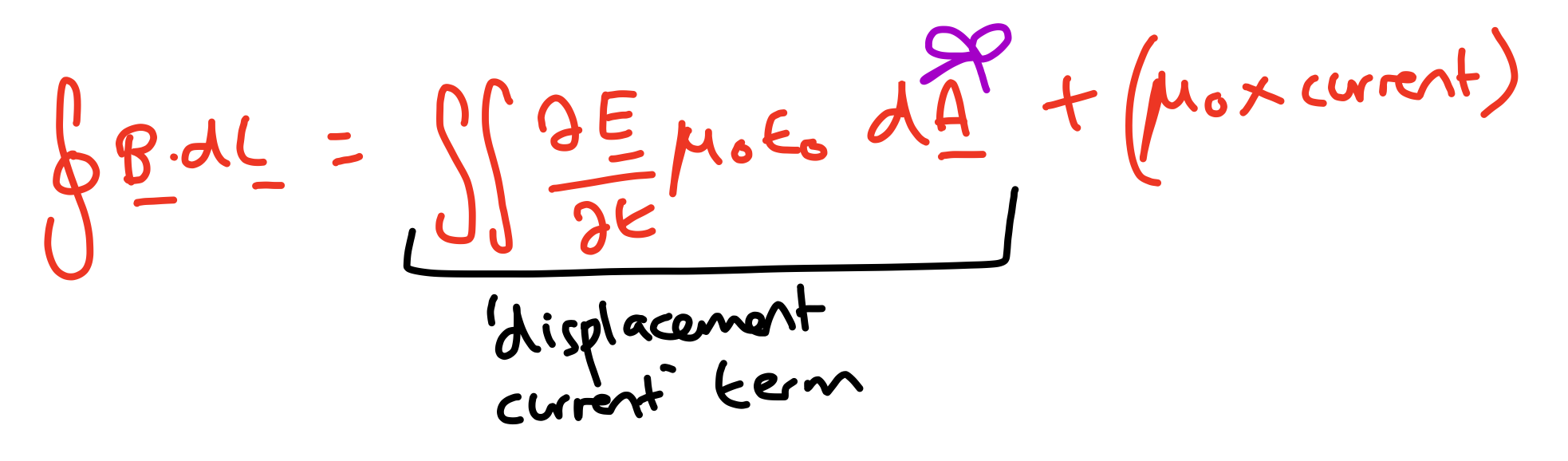
This is the final equation and I’ve decided to go the whole hog and use the full version that has a term to take into account ‘displacement current’—basically a changing electric field.
It can be written as:
or:
or:
The bendy lines on the snowflakes are wires carrying current (as demonstrated by my signature flicks for the electric field lines of course), and the circle demonstrates the magnetic field that has been generated by the current flow. To factor in the fact we need to be wary of changing electric fields, I’ve put in two little dials with arows which are meant to demonstrate that the electric field is changing…:P
And that’s all of them!
You might be confused as to why I have written out two forms of all the equations… Surely one or the other version would have done? Well, the main reason is that I really like the differential (non-integral) versions, and the two relations you need to change one type to the other 😛
These two relations are called ‘Stokes’s Theorem’ and the ‘Divergence Theorem’ and I’m pretty sure I’ve mentioned them in blogs many times before because they are cool <3
So, in the spirit of Christmas (?) I have decided to make snowflakes to explain these guys too, because maths relations need holidays as well… 🙂
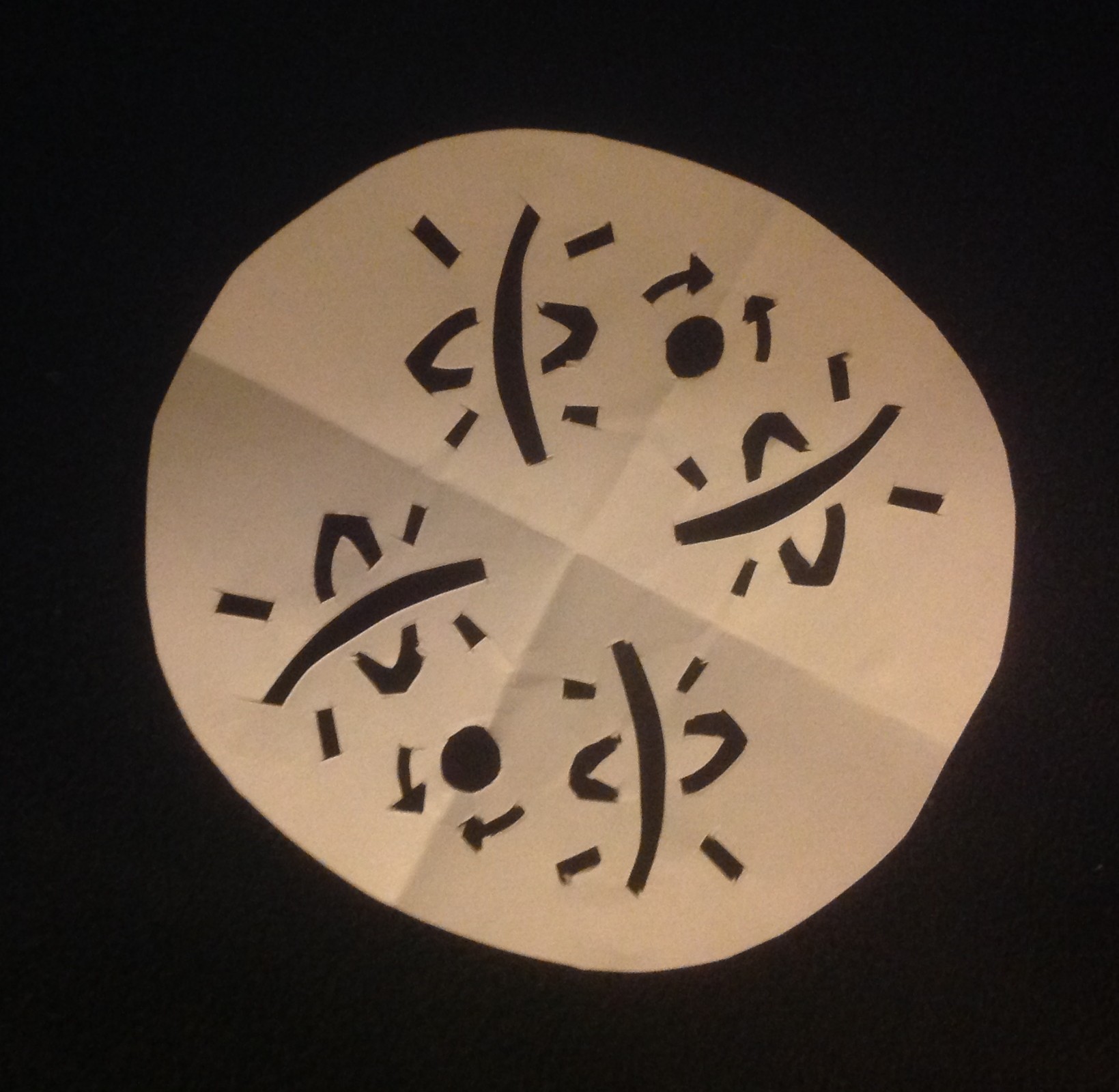
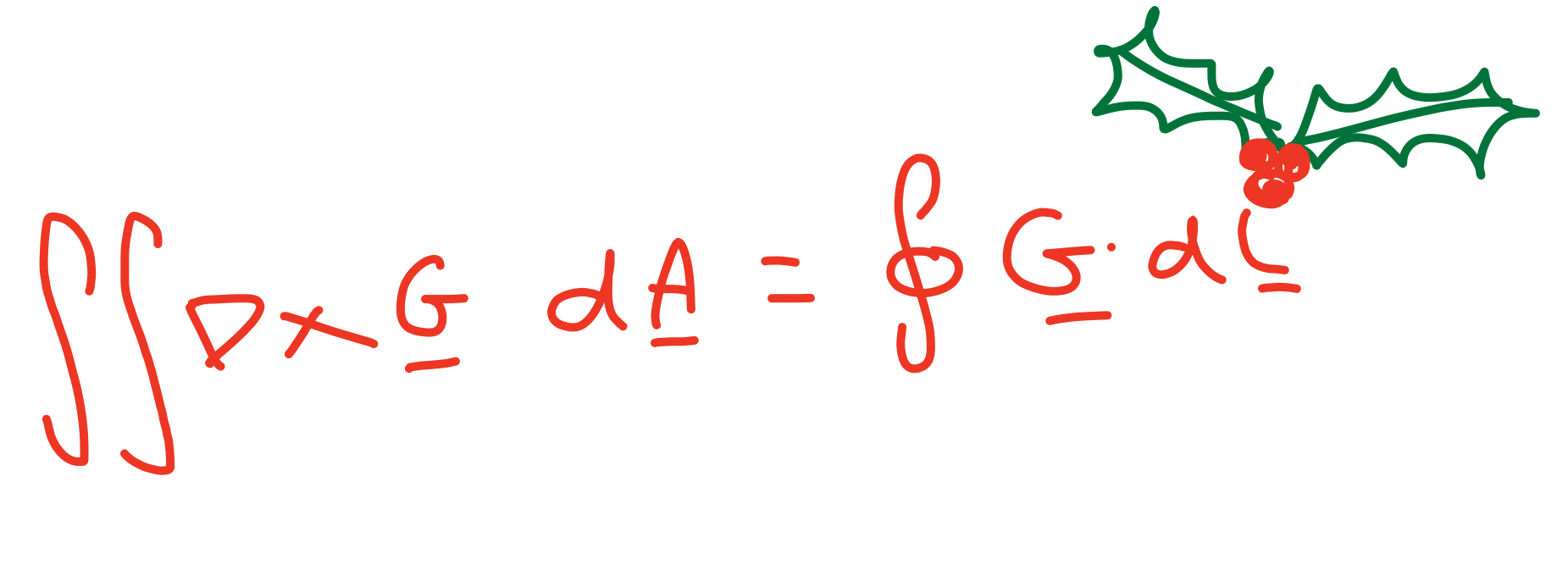
Stokes’ (Oh I wish it could be Christmas everyday [but that’s not mathematically possible]) Theorem
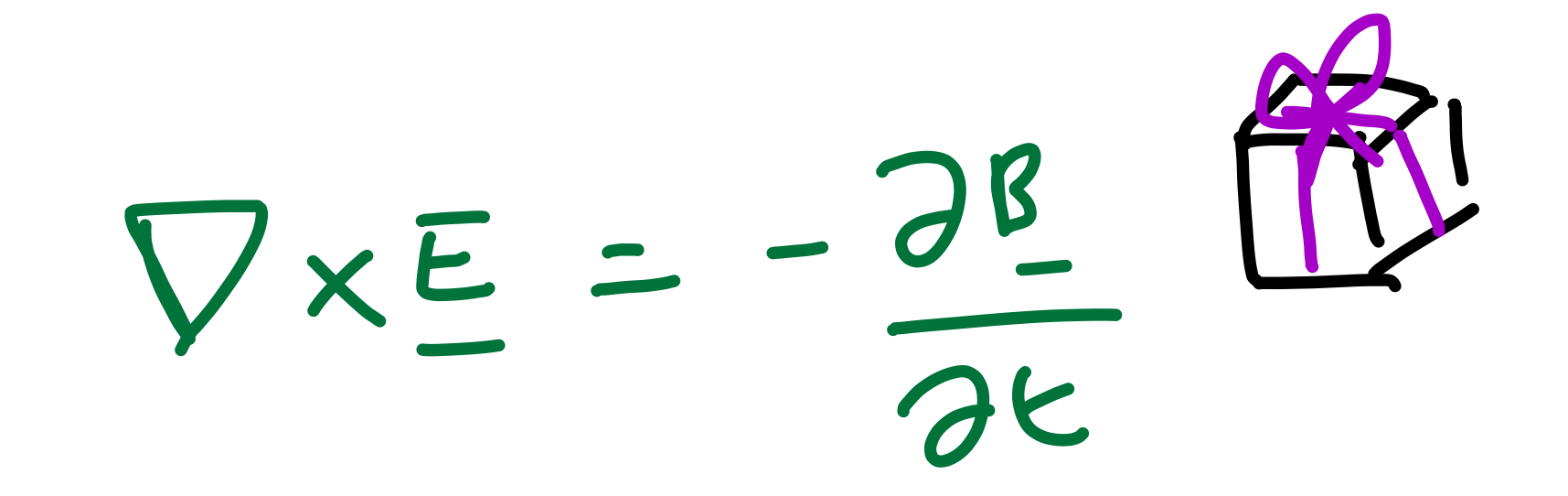
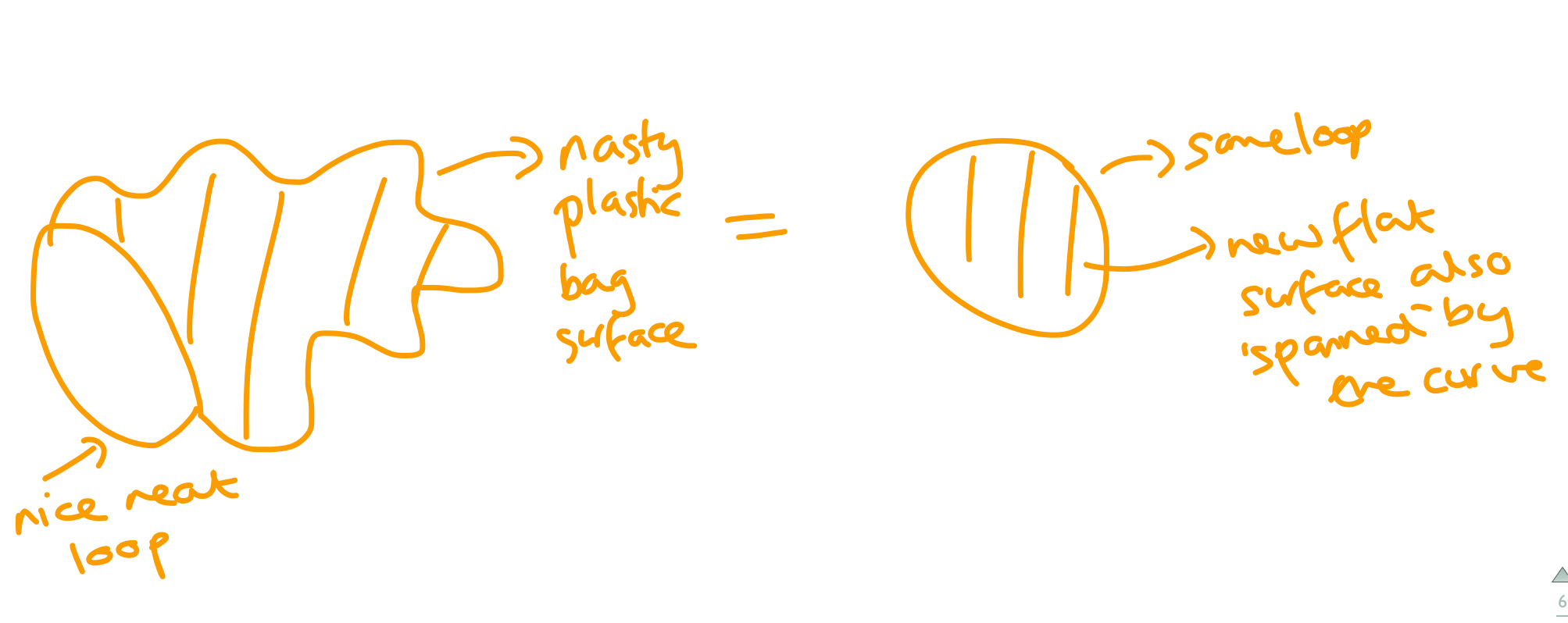
Stokes’ theorem says that if you find the curl (the triangle with the x next to it) of a field—here an electric or magnetic field—over an area, you can also get the same result by integrating around any curve that encloses that surface.
It can be written as:
or:
You can see the curl on the snowflake (the curls in the middle) and also the nice round curve that encloses them. 🙂
This theorem is pretty crazy because you can have a legit mental surface like a plastic bag, all crumpled up and folded over and be like omg this is going to take ages to write down as an equation… but you can instead just integrate around a nice circle at the opening of the bag that bounds it. Phew.
Also, even more weirdly, that means that that crazy surface must end up with the same result as a flat surface across the curve.
It’s like a Delia Smith cheat’s recipe for Physics. If it ain’t a straight line or a square you don’t want to know. Even with ellipses (squished circle) you usually perform a co-ordinate transform so you can get it back into a circle and breathe easy.
The (Rudolph the 620–750 nm-wavelength-light-nosed reindeer) Divergence Theorem
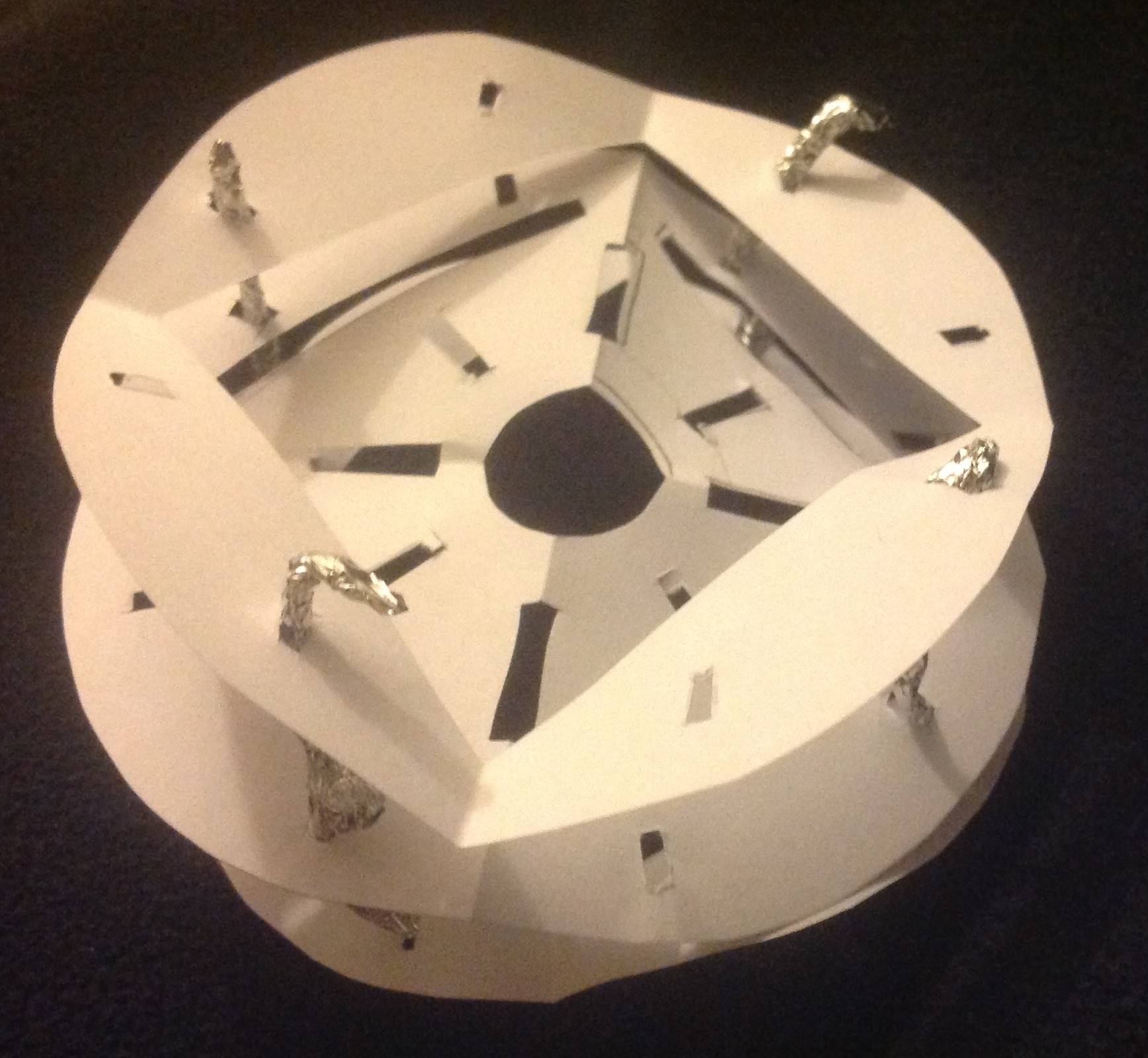
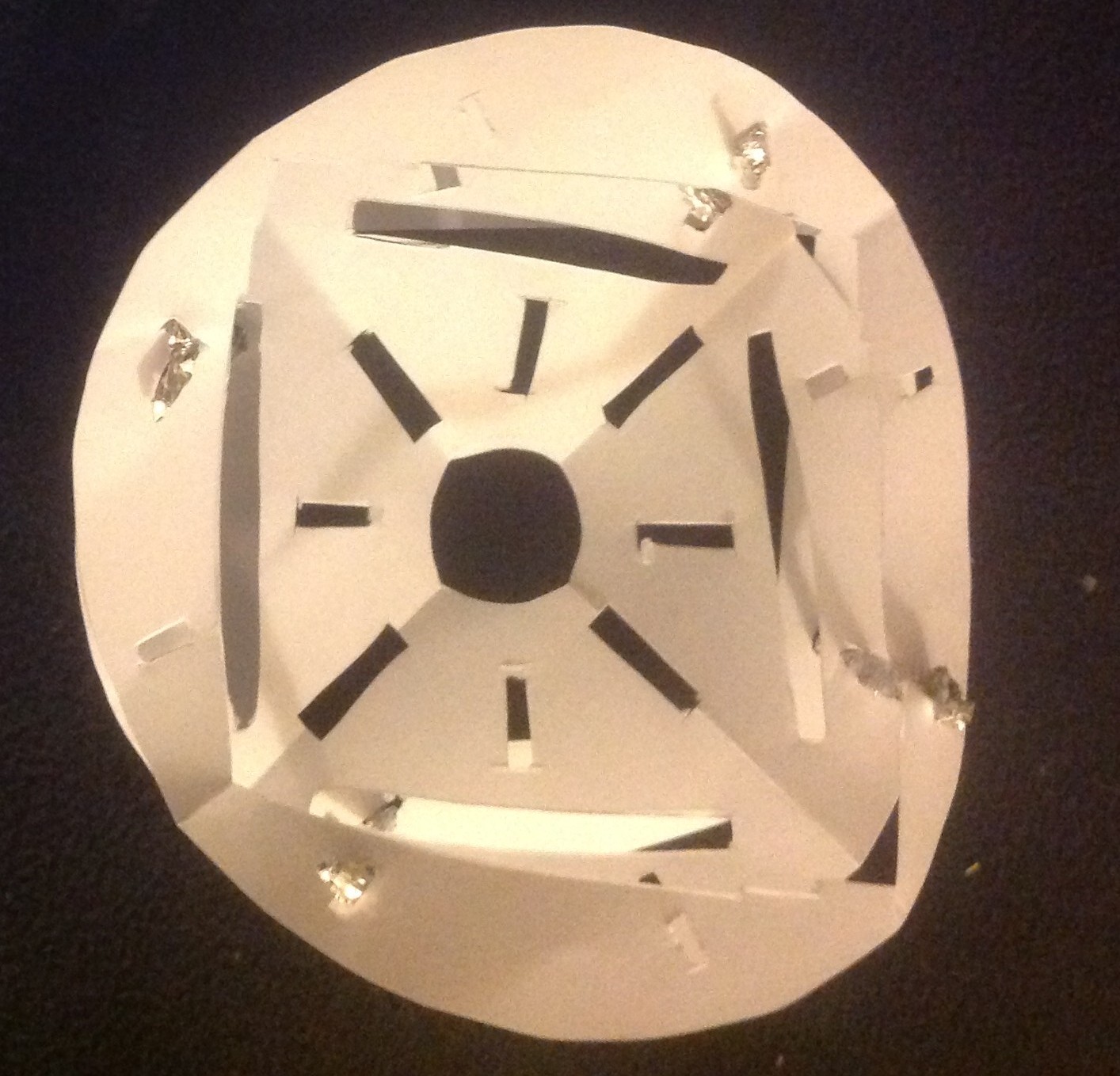
This is my most ambitious snowflake, no doubt. To demonstrate that this one is an integral over a volume, I thought I’d try and make it 3D so I stacked three snowflakes on top of each other. 🙂
It can be written as:
or:
What you can see in the snowflake is a little sun-shaped thing in a box that is putting out rays that are meant to look like they are escaping through the surface of the box.
The divergence theorem says that if you take the divergence (the triangle with the dot next to it) of the electric or magnetic field over the volume, then you get the same result as if you integrate the amount of field lines coming through the surface of the box.
(As you might have guessed you can try this for the magnetic field but you will always get zero [one line going in (-ve) for every line going out (+ve)] so give it up now ;))
Oh, and I also made this Rosette and Philae one, because #2014
I haven’t posted about French in a while so I thought that now would be a good time to talk about Horizons. If you select the average biology second year and ask them their opinion on Horizons, you will most likely be met with a loud groan and possibly screams of horror. I’ll say off the bat that in the life sciences department and I think a few others as well, doing an extracurricular Horizons course becomes compulsory after first year and counts for credit, meaning that the marks you get go towards your overall degree. I don’t want to freak anyone out by saying this but what I will say is that as long as you choose your course carefully, you don’t have to be filled with terror at the mere mention of the word ‘extracurricular’ and I actually quite enjoy my course.
So what is Horizons? It’s a program of extracurricular courses offered by Imperial to supplement our degree programs. Read as: the powers that be at Imperial are worried that we will become reclusive and unemployable if we spend all our waking hours in the lab and so they want us to do some humanities courses to prevent this from happening. You have the option of picking one long course that will run over Autumn and Spring terms or two shorter ones that last a term each. The courses available are extremely diverse (click around here to check out the course lists) ranging from lanugages to creative writing to philosophy to politics to stuff like Engineers Without Borders. You’ll have one, two hour lesson once a week with coursework to complete as well. In my French class, we do about six pieces of coursework throughout the year, including in-class tests, but in other classes you’ll have maybe one big essay to turn in or a presentation or project to complete. The aim of Horizons is to equip you with transferable skills outside of the lab which are valuable in a myriad of different situations and if you choose something that you enjoy and can get really get stuck in to, you’ll have a great time!
Personally I am something of a linguaphile and I adore French. Having completed A Level French to a decent standard, I didn’t want to give up at uni and so I enrolled on a Year in Europe course. I think the name of this course has changed slightly but if you’re interested in spending time abroad, definitely think about applying to do a year abroad whilst you’re at Imperial! It’s an incredible opportunity and talking to people who either have done it or are currently doing it, you will have a fab time and won’t regret it. Due to some slightly unfortunate circumstances I’ve had to leave the Year Abroad program but I am carrying on with French for Horizons and loving it, so I guess I’ll try and give you my argument for doing a lanugage as your extracurricular
1. Employers love lanugages. The job market is tough as it is, having a second language under your belt can only benefit you, espeically if it’s a less widely spoken second language such as Mandarin, Japanese or Arabic, all of which you can learn in Horizons!
2. It gives you a break from the grind of science. Obviously I love biology or I wouldn’t be here but there’s something so great about being able to tap in to a completely different part of your brain to engage with languages. You get to look at real life issues in the country of the language you are studying and discuss current events and popular culture. It also sounds pretty cool when your friends ask you what’s going on in Horizons and you can tell them that you were discussing secularism in the French education system… in French.
3. Improves your confidence loads. I’ve found in my French classes that there is a lot of emphasis on conversation practice and debate where you are forced to have an opinion and talk in your chosen language. I definitely lacked confidence in speaking but the regular conversation practice has helped me to improve. Although one time we were discussing Facebook and I mistook ‘amis’ for ‘années’ and told my partner that I only had three Facebook friends when I thought I was saying that I’d been on Facebook for three years. Slightly awkward.
4. Opportunity for creativity and becoming more cultured. You just don’t get the opportunity to read French short stories and do translations in everyday life (and I really love translation because it feels like such a responsibility to preserve the meaning of a passage whilst converting it to comprehensible English and when you do it right you feel really great).
In conclusion, French is amazing and my Horizons is great. The only downside is that my teacher has a fondness for making us sing strange French songs in class. And when I say ‘making us’ I mean ‘making a condition of leaving class singing the song.’
Do Horizons but make sure you pick a good course that you’re really interested in and can get excited about!
Studying in London gives plenty of opportunities for ‘going tourist’ and visiting attractions in London, so for a treat after two busy weeks away in France my friend Andrew visited and we went to see the Tower Bridge Exhibition. The Exhibition had been in the London newspapers recently as it had just opened a glass floor on the high level walkways, giving views from over 100 feet above the River Thames, and so we wanted to pay a visit – despite Andrew being afraid of heights!
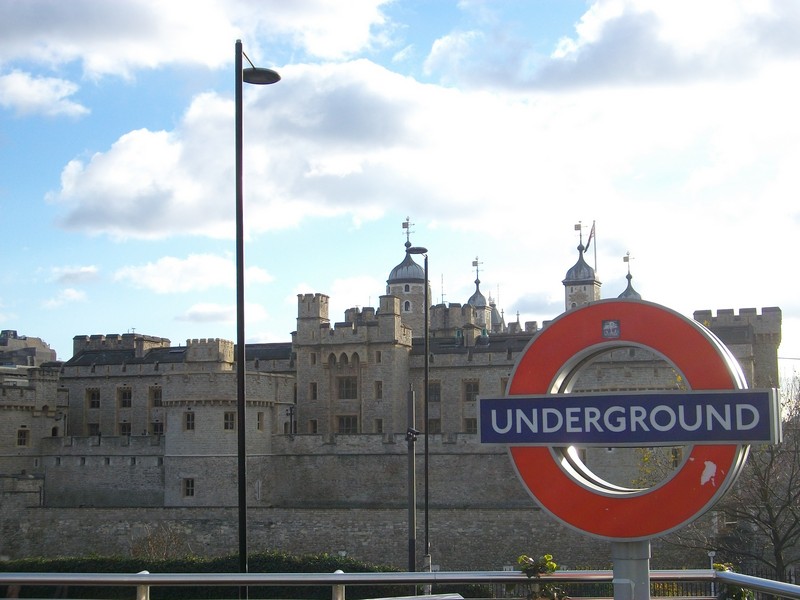
The Tower of London
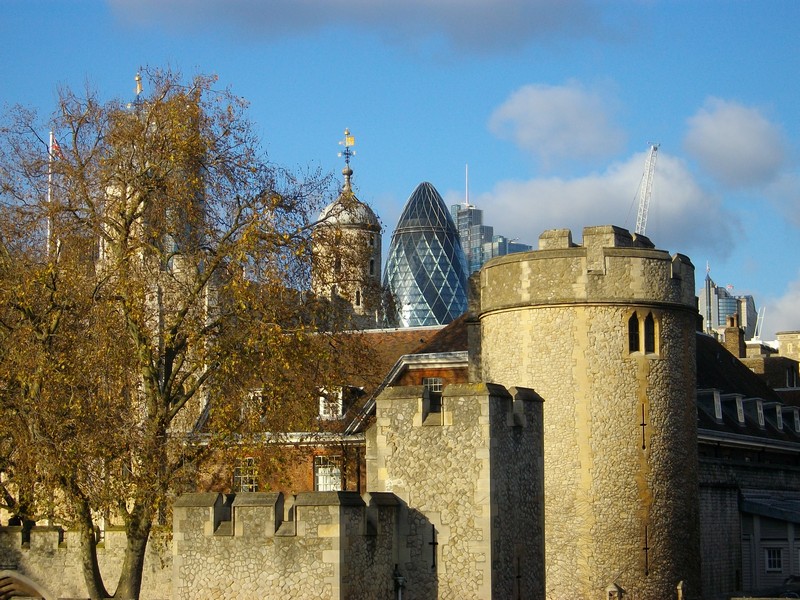
Tower Bridge is in the eastern part of London so it was exciting to see a part of London I am not familiar with, emerging from the Tower Hill underground station we saw the Tower of London – another attraction on the list to visit while I am here studying. This area is an eclectic mix of old and new, with the 11th Century Tower mingled with modern iconic buildings such as The Shard and 30 St Mary Axe (better known as the Gherkin).
Tower of London with 30 St Mary Axe aka The Gherkin behind
Tower Bridge is one of over 200 crossings of the River Thames, and was built between 1886–1894 to relieve pressure on London Bridge due to increased industrial development in the East End. However a fixed bridge was not possible as it would prevent tall ships from accessing port facilities downstream. A public competition resulted in 50 designs for a river crossing, the winning design being a combined suspension and bascule (drawbridge) design – some of the alternative designs are featured at the Tower Bridge exhibition.
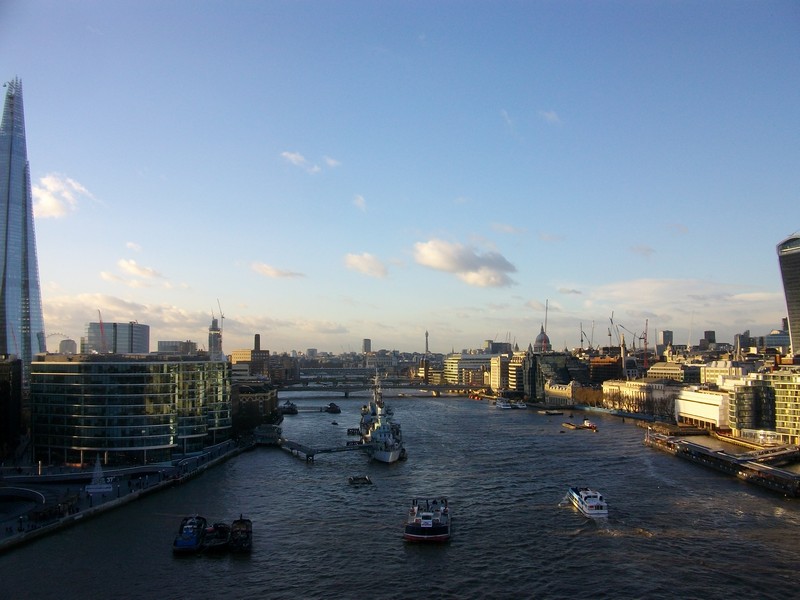
View from Tower Bridge
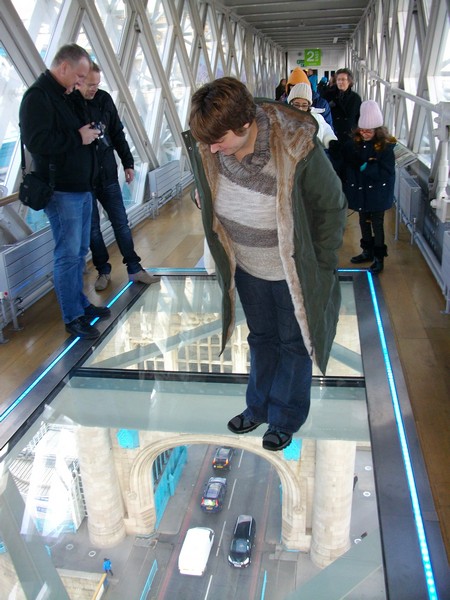
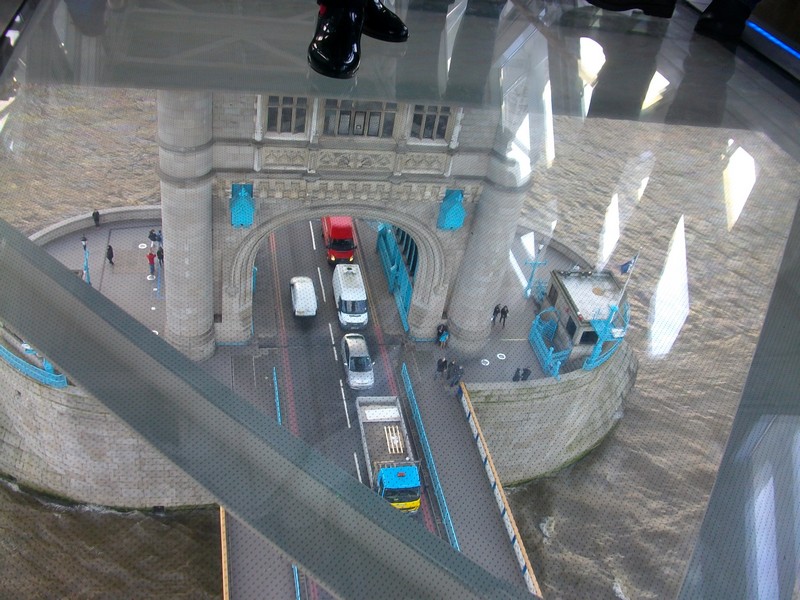
The high level walkways originally allowed people to move across the Bridge when the bascules were raised to allow ships to pass, but it was found people preferred to wait for them to close rather than climb up so public access was discontinued in 1910. In 1982 they were re-opened as part of the Tower Bridge Exhibition and more recently glass floors were installed, which Andrew and I enjoyed walking along and looking down onto the Bridge and River Thames from 42 metres above!
Me looking down on the River Thames from the Tower Bridge glass floor.View onto Tower Bridge through the glass floor.
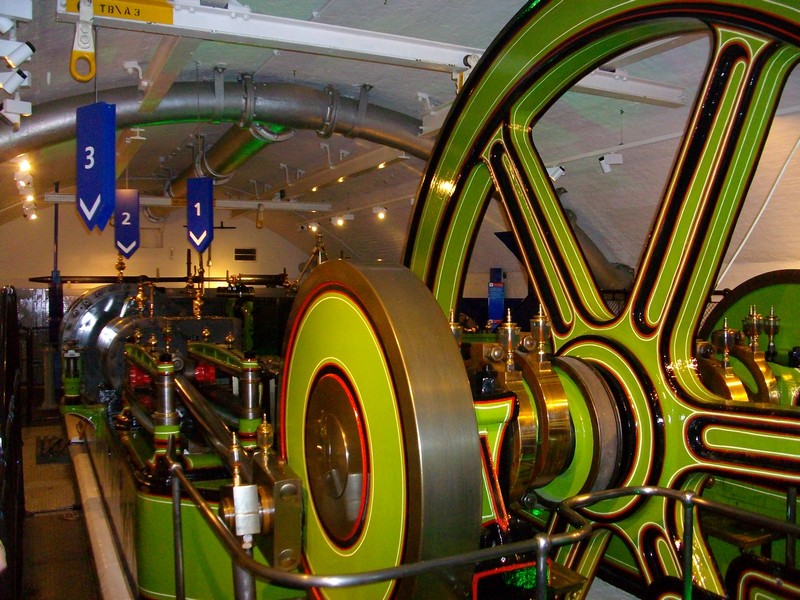
When it opened in 1894, Tower Bridge was the largest and most sophisticated bascule bridge ever built, the bascules being raised by hydraulic power generated by steam engines. They are still hydraulic but are not powered by oil and electricity, with the original engines now exhibited in the Exhibition’s Engine Rooms. If you time your visit right you can even view the bridge being raised through the glass floor!
Barely recovered from the First Global Soil Biodiversity Conference in Dijon I was back to France the week after to attend the Joint Annual Meeting of the British Ecological Society (BES) and the Société Française d’Ecologie (SFE), in Lille Grand Palais, Lille, from the 9th to 12th of December. This time I was not only presenting my poster but attending as a BES student helper which not only gave me free entry but would increase my confidence as I would have a ‘job to do’ and be working with other student helpers (my supervisor calls this ‘activity-based socialisation’ and it is ideal for introverts and those with autistic leanings).
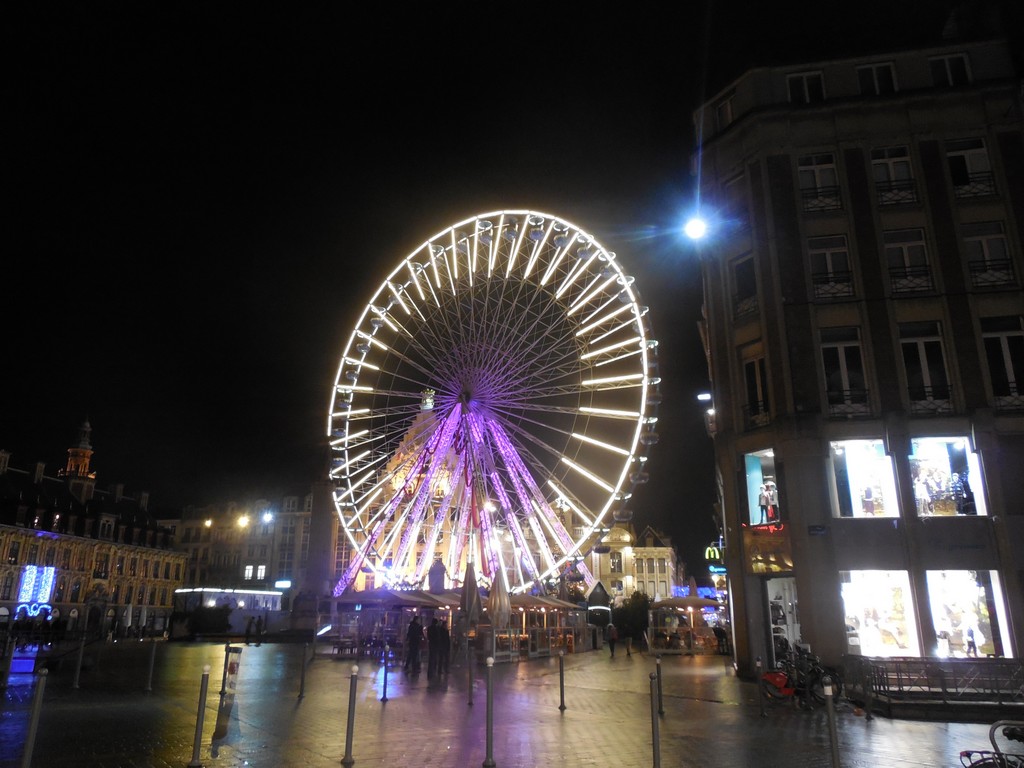
Another Ferris wheel!?
Like Dijon, Lille also had a Ferris wheel set up for Christmas but this time I had a day and night to settle in before my poster presentation. Social media was even more in use in Lille than it was in Dijon so do check out the Twitter hastag #bessfe and the collections on the BES Storify page, in particular the final day of the conference when Christmas attire was encouraged and the Storify features fellow PREDICTS students Adriana and Helen in their marvellous Christmas jumpers!
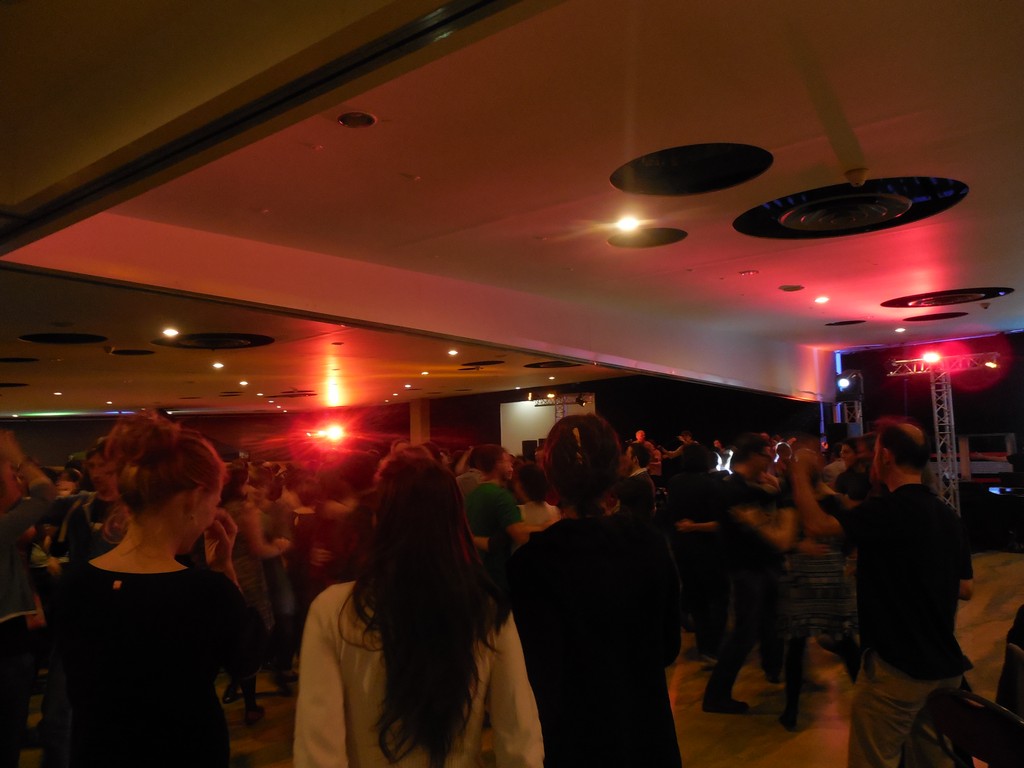
The conference was not all work though, we had the night off to attend the awards ceremony and Gala Dinner which was complete with music and dancing from Warblefly, not that I joined in but it was rather enjoyable watching a crowd of highly educated individuals failing to folk dance without collision!
BES-SFE Gala dinner
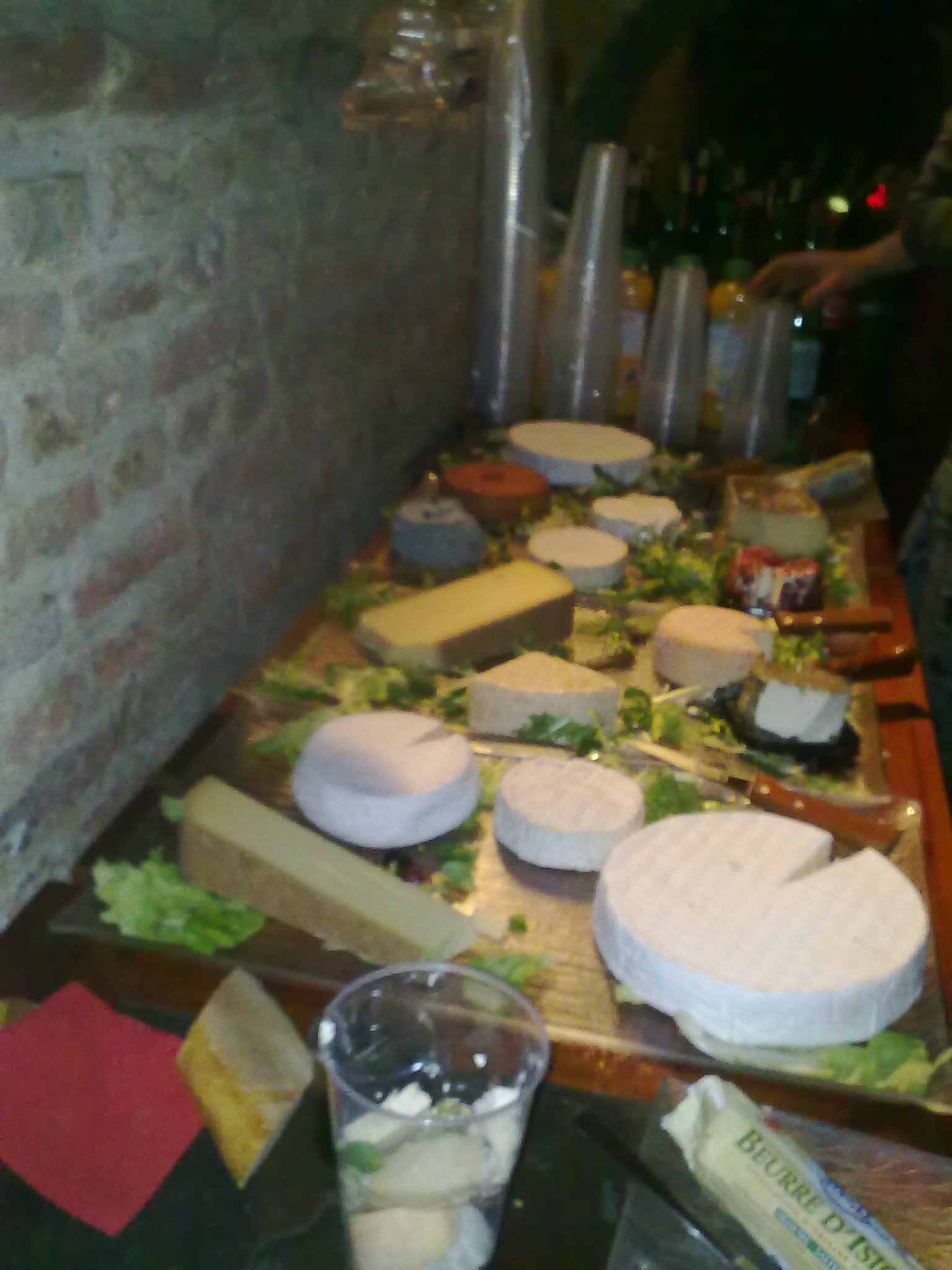
I also had an evening off to attend the Plants, Soils, Ecosystems Special Interest Group social, which featured an impressive selection of cheese and wine! So the conference was a good mixture of work and play, giving me more experience in presenting my research. Hopefully by the next one I will have some results from my PhD research to present and my confidence in presenting will have increased – maybe I will even do a talk!
To-do list:
• MATLAB coursework due on Friday
• Thermodynamics deliverable due next Friday
• 3 Problem sheets to be completed this week
• Complete Mastery Sheet 2
• Revise for Christmas test
• Figure out Properties of Matter
With every passing day, my work pile grows exponentially (my Maths lecturer should be proud that I am using his lingo). I do not even know where to begin. Should I waste five hours puzzling over MATLAB and going nowhere or should I try to comprehend quantum physics? It seems that both tasks should be made into one of those Mission Impossible movies.
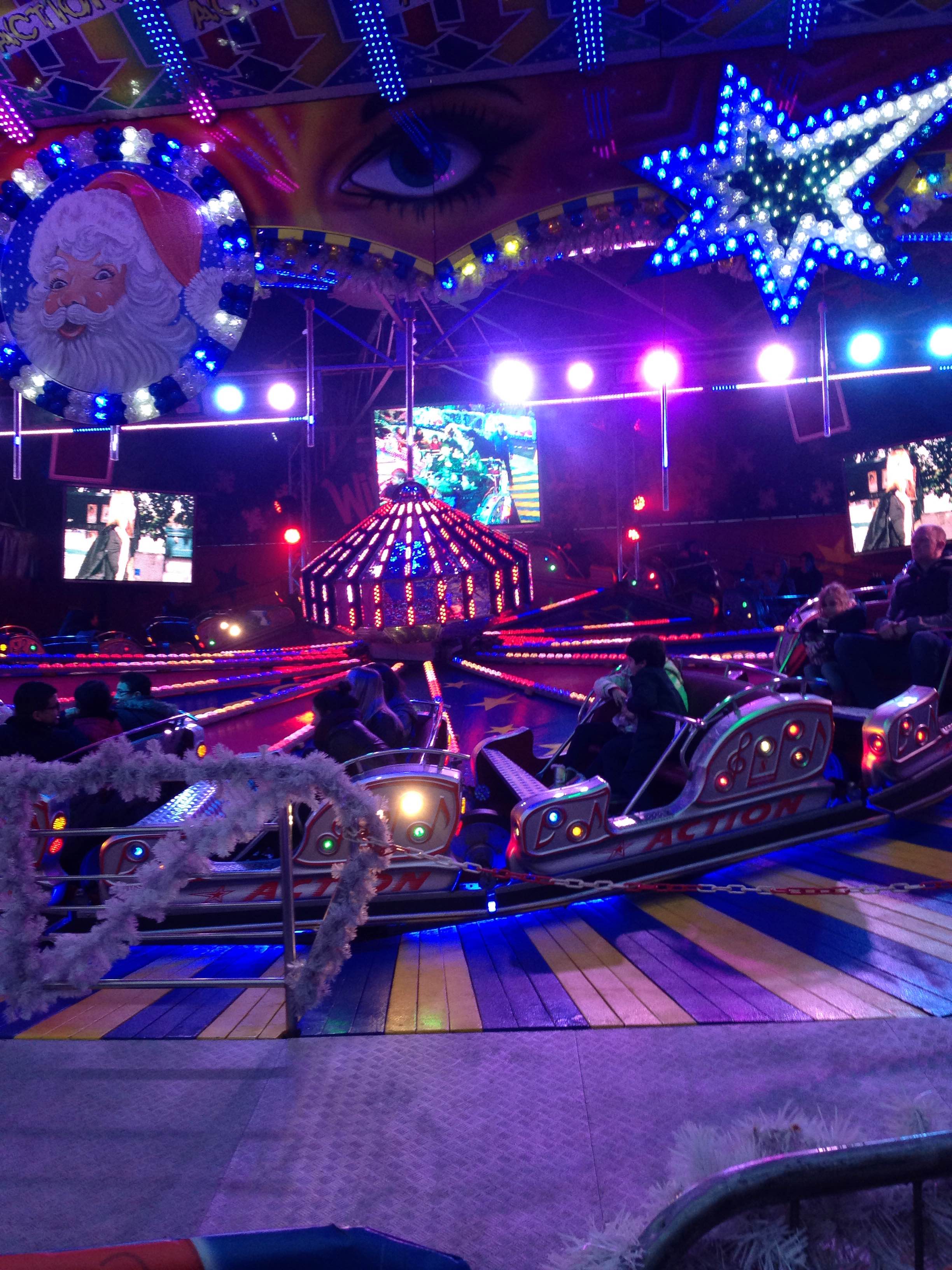
Forgive me for complaining about my workload, I am sure it is not very interesting but it is consuming my life at the moment. And what annoys me is when people keep saying, ‘Enjoy first year.’ Clearly I cannot enjoy it when I have this burden on my shoulders. But somehow I still managed to escape solving Schrodinger and go out with my friends to Winter Wonderland.
It was a great way to forget about everything for a few hours. Sharing laughs and almost vomiting after going on rides sure does take your mind off of things. I have to confess that after the first ride I solemnly swore that I will not go on anymore rides for a very long time. My friends convinced me that it wouldn’t be that bad since 4 year olds were permitted to go on and, naturally, I fell into their trap. The first minute went by fine but the last ten seconds (felt like ten hours) we were travelling so fast I could not see anything before me. My brain just didn’t have enough time to register what I was seeing before the next image popped up. My head was pushed backwards that my neck almost snapped. My friend next to me didn’t seem to be experiencing the same thing since she was barely holding on to the safety bar whilst I was clinging on it for dear life. I couldn’t even stand unsupported after it was done and walked around like a drunk until the dizziness finally wore off.
However, the spell was broken the moment I stepped back into my room and was reminded how far behind I am with a mere glance at my messy desk. Though I strongly encourage you escape your problems once in a while.
As for this Christmas test, in order to pass it you have to score EIGHTY per cent. Yes, just to pass. I mean, I know it should be easy as it will only test the ‘basic’ concepts that we should have grasped by now, but when there is an interview with three doctors awaiting you if you fail, it seems a lot more daunting. I will do whatever I can to not have this interview. I MUST pass this test. I simply must.
I must rush off now; I am going to go watch The Hobbit. Uh, I mean study for my Christmas test!
The last couple of weeks have been… interesting. To start with the negatives, mice have invaded my house. They have chewed though the sink (!) and broken it, as well as tore up the bin in the bathroom and woken me up in the night with their horrible scratchy mouse feet partying in my bedroom. Our landlord has ordered us some electronic mouse repellers which I am slightly sceptical about so I have ordered in addition a whole host of things designed to get rid of mice.
I would like to do an experiment to see which ones work as they have so many mixed reviews, but the fact they are in my bedroom adds a level of urgency and drives out all thoughts of being a good scientist, so I will be deploying all methods at once!
Student houses in general can be quite depressing—the house we are in this year is theoretically very nice but it is obvious that no one has taken care of it for years and years, and is also literally the dampest place I have been indoors short of a swimming pool. You have to wipe water off the walls, and I’m pretty sure there are moulds on my roof that are unknown to man. Mind you, I do realise that I am in a very lucky position being able to rent any kind of house in London at all, so I am completely thankful for that, and will try not to moan!
In other bad news, Foundations of Quantum has (some [everyone] would say predictably) got completely incomprehensible these past few lectures. Unfortunately, I have no one to blame but myself for taking this course, but will keep telling myself that once I get it, it will be brilliant. I hope… 😛
Good things i: ACP, Satellites & Solar Storm presentations
Now for some more positive stuff! Advanced Classical Physics is still as mind blowing as ever. When I am revising it over Christmas I promise to write loads of blogs on why it is so cool, and explain where Newton’s laws come from and everything.
I’ve also joined the PR team for an Imperial group who are building a satellite that will be able to detect the position of distress signals to within a metre precision from anywhere on the Earth. Everyone working on the project is a student at Imperial, which is pretty amazing. When their website goes up I will definitely link to it, and tell you more as I find out the details of the design—I am meant to be PRing after all 😛 The deadline for launch is in two years, so I will actually have left Imperial, but will be desperate to come back and see if it has worked!
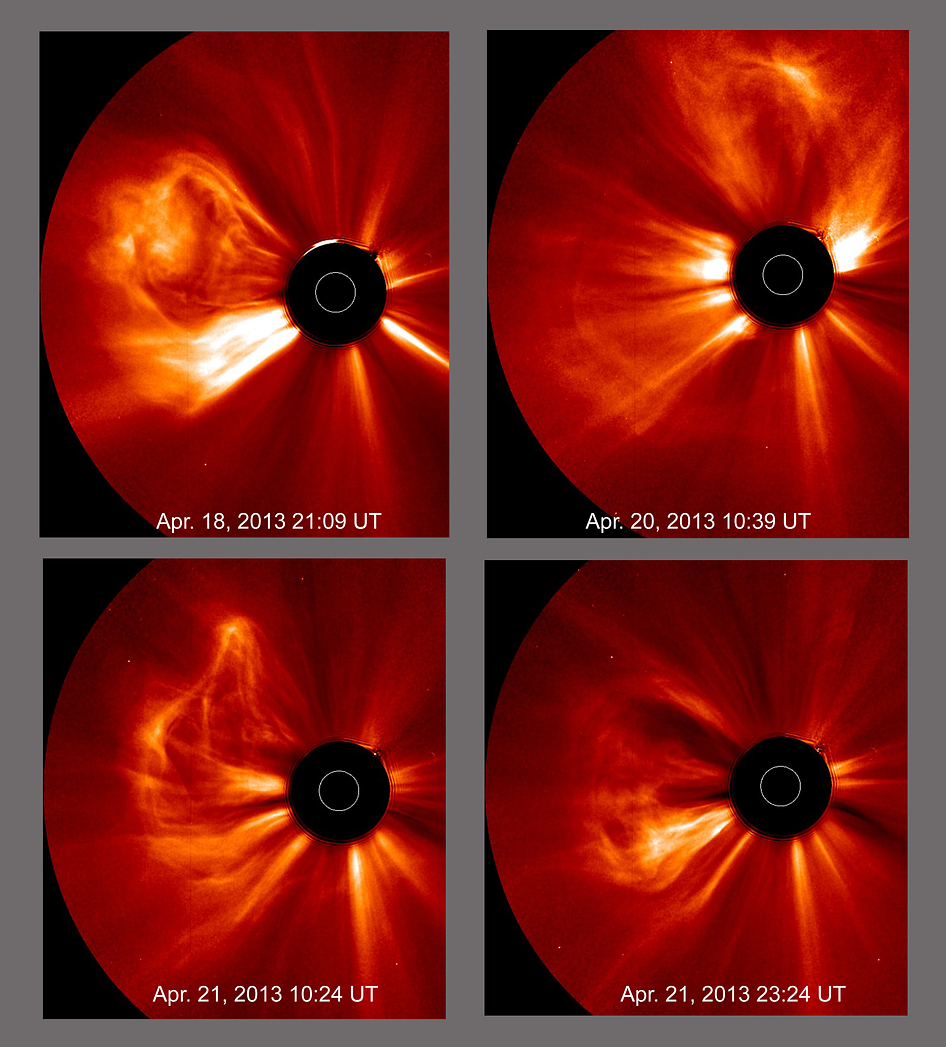
Coronal Mass Ejections! Credit: NASA http://www.nasa.gov/mission_pages/sunearth/news/gallery/CMEs_galore.html#.VIsVXjGsWSo
A couple of weeks ago I had to do a ten minute presentation for the professional skills module this year. I was initially pretty nervous as ten minutes alone talking on one topic seemed like a long time, but as soon as I started writing down ideas I realised it would actually be difficult keeping it less than ten minutes. We could pick any topic we wanted to talk about—the idea was to base it on a long article in Physics World or the Scientific American. I picked this article about the effects of a solar super storm on earth to talk about, because a potential catastrophe always keeps people’s interest!
(You have to be a member of the Institute of Physics to see the article by the way—this is free for Physics students of any age and worth signing up for!)
Anyway, my talk went well in the end I think 🙂 Everyone else had some pretty interesting ideas too—I heard talks on the Physics of Cocktails, how fast could Usain Bolt run, exoplanet detection, the struggle to accurately measure the radius of the proton and a whole lot of other cool things. It was a really fun morning in the end actually.
Good things ii: Science London & The Hobbit
With Science London I helped out at another event recently—this one was again about the science of sex and attraction (I promise I don’t try to only pick events about this) and was held in a very tasteful sex shop in Central London. It was actually a great idea for a science event because it got a whole different audience thinking about some of the scientific research that is going on and how it is carried out. The event was sold out, and had two great speakers—the first talking about a website that she had helped create designed to encourage the use of contraception, and the second talking about the National Sex Survey which was a massive project carried out all across the country.
The most interesting thing about both talks I thought was their focus on the methodologies involved in targeting the website to the audience, as well as the rigour with which the survey had to be carried out—it cost multiple millions of pounds to do, and gave some pretty interesting results. If you want to find out more about it is being included in the Wellcome Trust’s new free exhibition: The Institute of Sexology, which I really really must go and see. 🙂
Also last night I went to the midnight viewing of the new Hobbit film: battle of the five armies. It is so good! The cinema was practically empty though, so not exactly the massive hype you might expect from a midnight viewing, although there were no adverts… 😛
This was my previous ‘About me’ section from a year ago:
Helllloooooo 🙂
My name is Emma and I am a second year Physicist. I love reading and writing all kinds of things and have recently become interested in science journalism. I come from a little town called Bridgnorth in Shropshire (which is not in the north but yeah, OK fine is kind of close to Birmingham), and love living in London.
I play clarinet, want to use too many smiley-faces in semi-formal writing, and like to cook over-ambitious things. I’m not terribly sporty, but go running, climbing and play tennis with my boyfriend, who I should probably thank for making me do all these things!
In the future I plan to win Nobel Prizes in Physics and Literature and go skiing.
I’ve kept the picture…. 😛
In a year a lot of things have changed! I still want to go skiing and win those Nobel Prizes, but after realising just how much I hate most of the content of science in the newspapers, I definitely don’t want to be a science journalist anymore. The vast majority of daily science coverage in British newspapers really is atrocious—I am realising this even more now after looking in depth at news coverage for my extended essay.
I am still interested in science communication and writing though, and this year I have seen a whole lot of different ways science is communicated—from Scientific Murder Mysteries and festivals to science policy in the government. However, when I tell people that I want to do ‘science communication’ people generally give a puzzled ‘oh OK. What is that then?’
So to clarify to them haterz, here is a list of cool jobs you might not have thought about in science communication:
1) University Communications and Public Affairs
Here is the Imperial department. They help scientists at Imperial communicate to and deal with media inquiries, as well as writing press releases of research and making sure it gets noticed. They also run the Imperial Fringe festival. Jobs like this appeal to me because they require knowledge of both how science and the media work so that the two can be successfully brought together to make science more engaging and accessible to everyone.
The aim of the British Science Association is to make science part of our culture, not set apart from it, or only relevant to people who want to study and work in science. It does this in lots of ways—holding the British Science Festival, British Science week, running regional events and holding the CREST awards.
In fact I am volunteering with the London Branch of the BSA at the moment, which is so much fun—everyone there is amazingly creative and so full of ideas it is genuinely intimidating to sit around a table with them. 😛
3) Writing/Filming for Science Documentaries, TV shows, radio programs, podcasts, YouTube Science Shows…
I don’t have a specific link for this one, so I’ve kind of lumped a vast range of things together. I am hopefully working with a production company next year on researching ideas for a series on medical science innovations, which should give me a bit more insight into what opportunities are available for writers in this kind of area. Also I must write another blog on YouTube Science shows because I am obsessed with them—there are so many brilliant ones out there–have a search for Periodic Videos, Veritasium and SciShow, just for a start!
4) Astronomer for hire :0
This is a rogue one—I found the website of this guy the other day when I was looking for astronomy holidays (because I am cool). I defy anyone to think this isn’t up there with most awesome jobs ever, though it would be awkward if it was cloudy—as I am sure happens regularly.
5) Science Festivals
This is one that has been included in some of the previous jobs above, but as part of my Communicating Science course last year we met someone who worked on designing the science section of the Green Man Festival, and it sounded brilliantly interesting—finding science performers and designing and creating a whole science themed area.
6) Science think tanks
There are a whole range of science think tanks out there that generate policy ideas. Some do their own research and some look at the research that is already out there and try to collate it into something useful for policy. I really enjoy the idea of the second type—looking at literature reviews and trying to draw useful conclusions from the millions of scientific paper on a certain topic.
I suppose this is more communication between scientists and doctors, but it is vitally important, and it’s whole ethos is about being objective and open to everyone. This is an organisation that publishes systematic reviews of health research papers—it looks at hundreds of studies done in a certain area and tries to draw the best conclusions that it can. This is something that I really nerd out over, as it is the closest we can get to the ‘truth’ of an idea—especially in complicated fields that involve so many variables and real-life-messiness as medical research.
I’ve stopped at seven on this list, but there are obviously loads more: working in museums and other science exhibits, editing and science publishing, writing for magazines like the New Scientist etc etc.
On the point of the Cochrane Collaboration and getting the most accurate data out of medical trials—you might not realise that about half of all medical trial results are never published, not even to doctors or researchers. If you think this is a bit dubious, you might want to check out the All Trials Campaign. I wrote an article for Felix on this topic a while ago, but for some reason it isn’t up on their website… so maybe I will post it in another blog, although the ‘news’ factor of it is a bit out of date now!
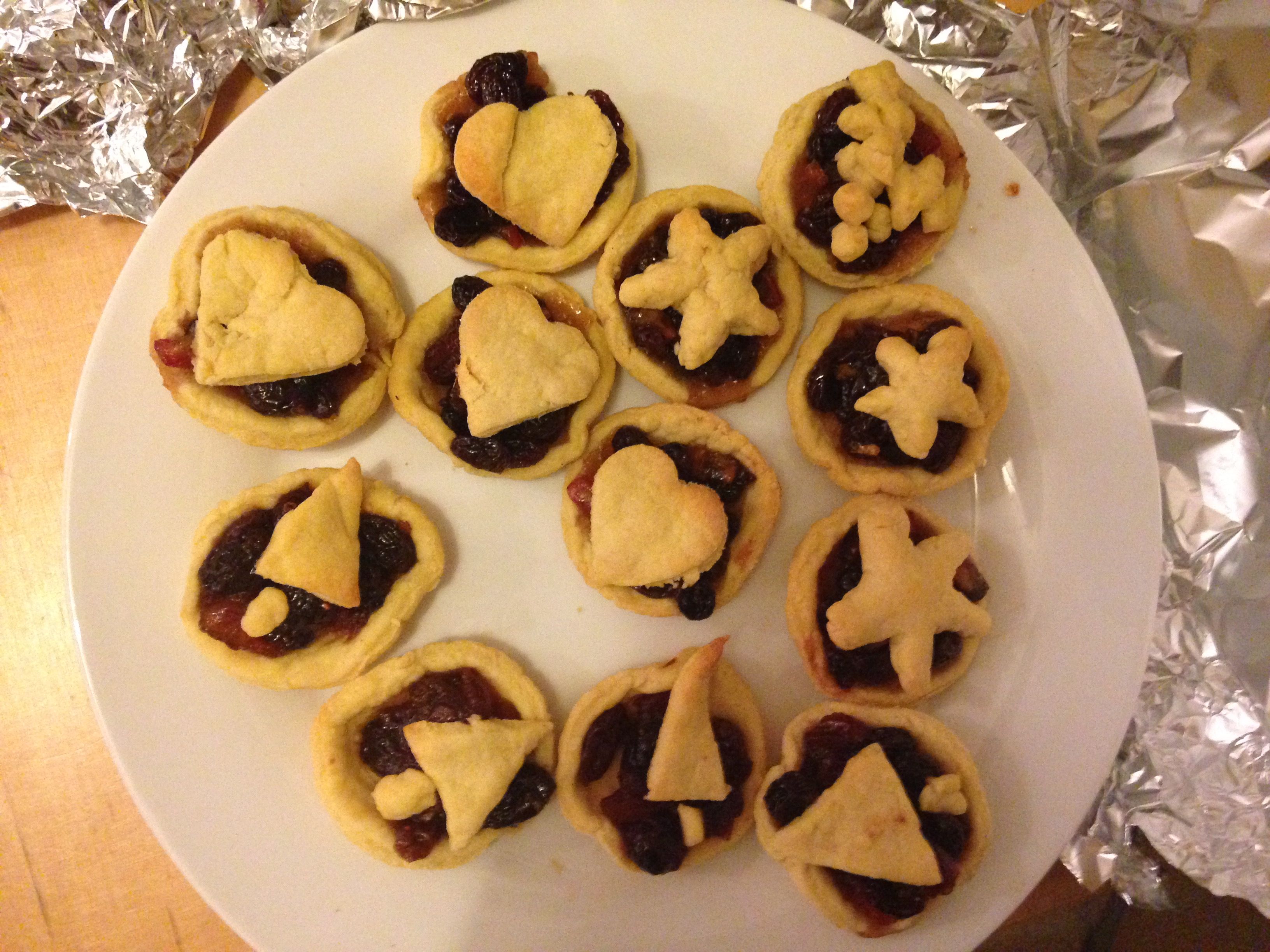
That is kind of a tangent to what this blog was meant to be about, but anyway, I hope the list of jobs had a few you might not have thought about before. Also mince pies. Happy December!
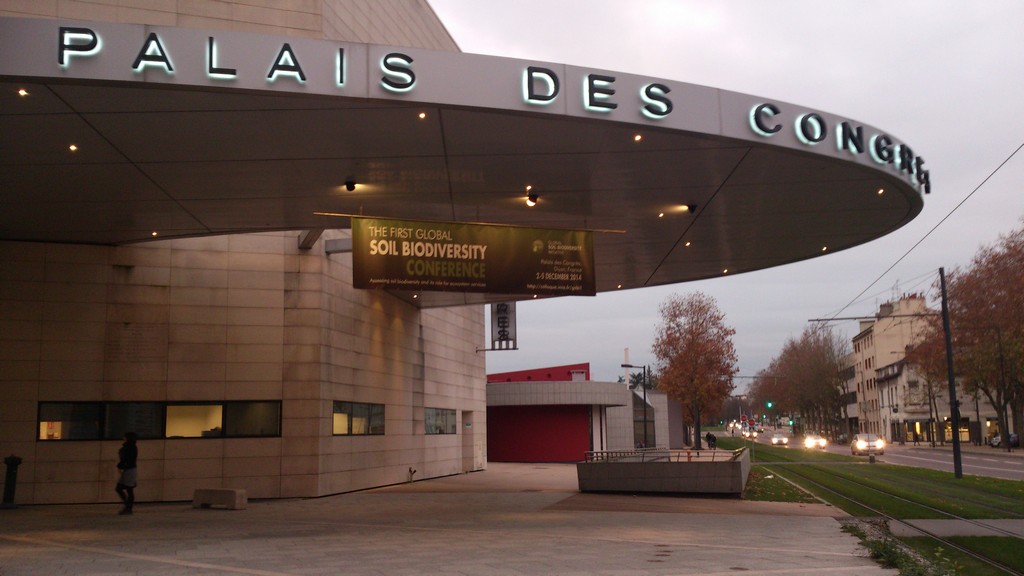
It’s barely two months into my PhD research and I have been to an international conference in France to present a poster on my research. This was the First Global Soil Biodiversity Conference held at the Palais des Congrès in Dijon, for four days between the 2nd and 5th of December. I find conferences really scary, which is part of my motivation to attend as many as possible during my research to increase my confidence in presenting my research and networking. The week before I attended a very helpful course on networking organised by the Imperial College Graduate School so was armed with techniques to get the most out of the conference and to reduce my anxiety.
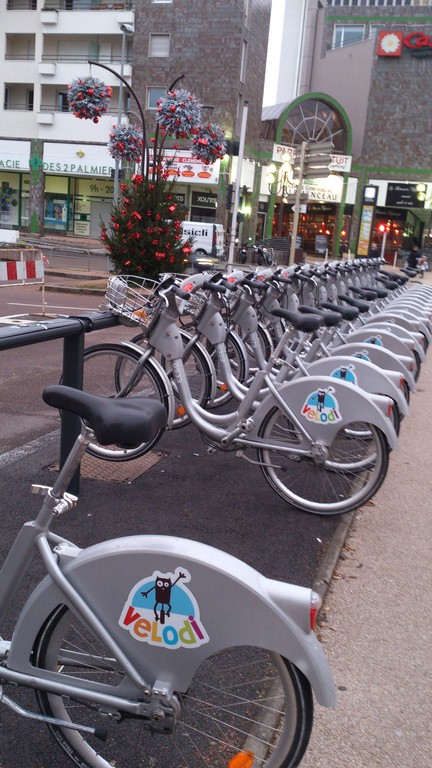
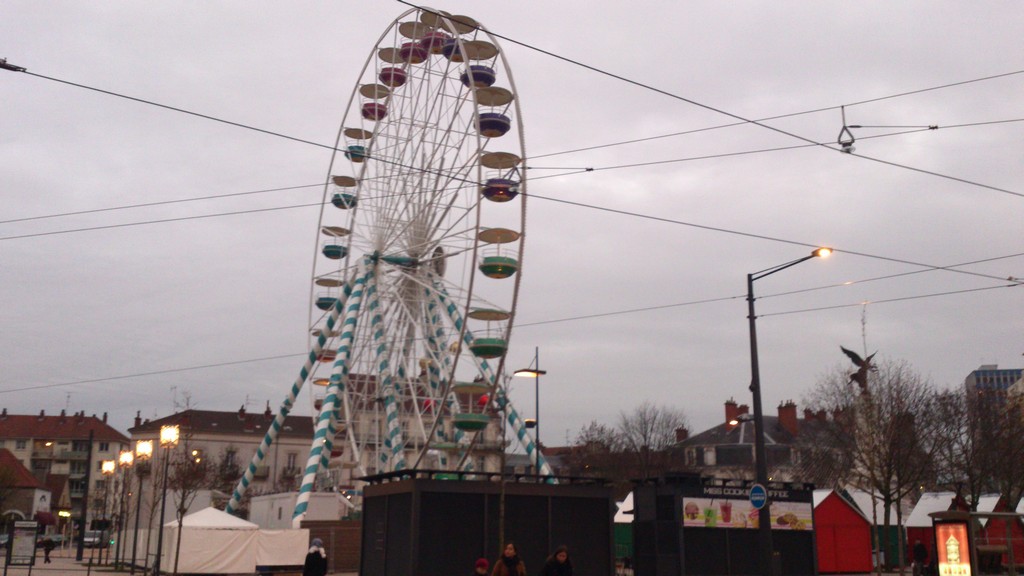
I arrived in Dijon via Paris, one of my supervisors, Dr Paul Eggleton was also attending and chairing a session so together we managed to navigate the Metro and arrive in Dijon. My first impressions of Dijon were that it was not so different to the UK, only, well, French. There were bicycles to hire just like London’s ‘Boris Bikes’ and a Ferris wheel in the Place de la République that reminded me of the London Eye and made me feel quite at home.
Le Bike de Boris?Place de la République, Dijon
After finding and checking into my hotel I arrived at the conference venue ready to put up my poster for the poster session later that evening. Creating a research poster is not easy, I find it tempting to put too much information on it while the aim is to convey the most important points with as few words as possible, but lots of illustrations. They are also in some ways more stressful than a talk, as the poster session lasts 90 minutes and gives delegates more opportunity to ask questions about your research (they also have the disadvantage of not being able to be finished in a hurry on the train journey there!).
Palais des Congrès, Dijon, venue for the First Global Soil Biodiversity Conference
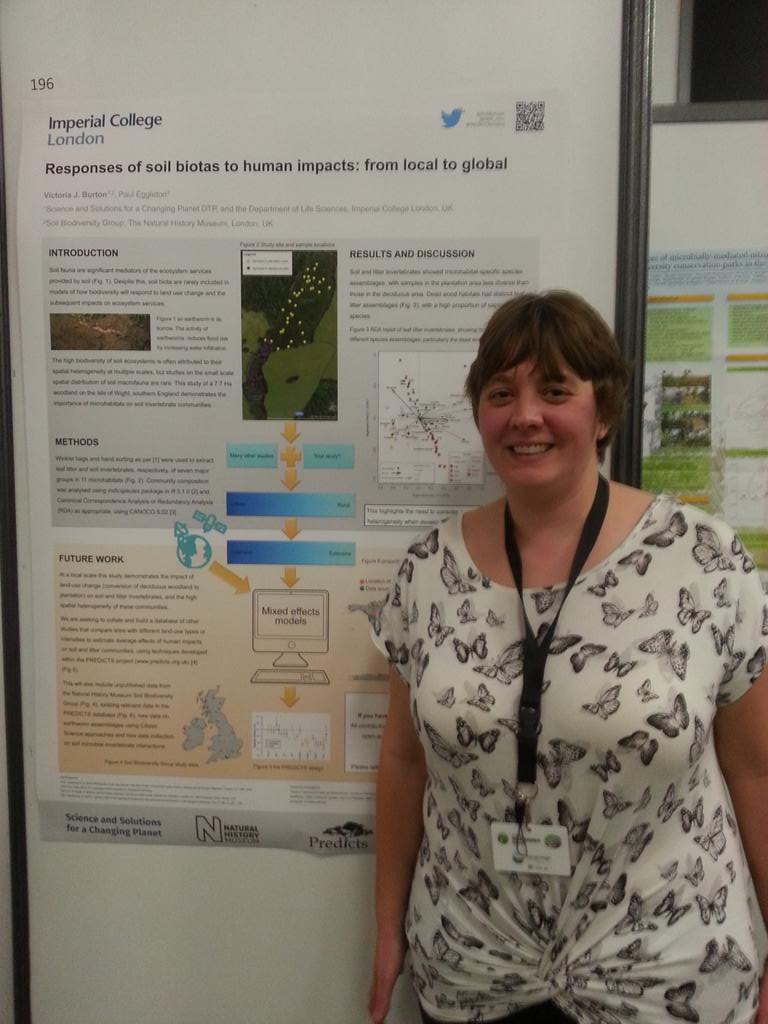
Part of my PhD research involves collating data from other researchers, so as well as presenting results from my Masters course in 2012/13 my poster presented the aims of my PhD project and a gave a ‘call for data’ to make connections with researchers who may able to provide data, and generally give some visibility to my project.
Me and my poster: Responses of soil biotas to human impacts: from local to global
Despite my nerves and travel-weariness I did not do too badly presenting my poster and spoke to some researchers who may have data suitable for my project or who may have study sites to sample. It was a shame that the posters were taken down at the end of the session – usually they are left up for the duration of a conference which gives more opportunity for delegates to the see them, but the number of posters at this particular conference meant they needed to be moved ready for a new session the next day. Using the Internet however I increased exposure by publishing my poster on ResearchGate (a website researchers use to share their work) and tweeting during the rest of the conference, using hashtag #GSB14 (well worth a look if you want to know more about the conference).