Throwback Thursday – A day in the woods with the Soil Biodiversity Group (July 2014)

This week’s #throwbackthursday looks back at fieldwork as part of the Natural History Museum Soil Biodiversity Group NVC project.
This week’s #throwbackthursday looks back at fieldwork as part of the Natural History Museum Soil Biodiversity Group NVC project.
I must apologise for the long hiatus in blog posts, I have been under a lot of stress from phd work and an illness in the family. It is now September and soon Imperial College will be filling up with students again. As a phd student working at a host institution I am not so aware of semesters and holidays and have been working right through the summer. Phd students do not get official holiday but we are recommended to take the statutory amount, which is 4 weeks per year. Depending on your supervisors you might have to arrange this with them, but I generally take it when I want. Unfortunately I am not very good at this! I have had no holiday this year and really must plan to take some, block it out in my diary and put my out-of-office on!
So here is what I have been up to over the summer ‘holidays’:
* Dipterists Forum field trip to Canterbury – the Society of the Study of Flies, of which I am the Treasurer, organises a summer field meeting each year where a group entomologists get together to visit sites and collect flies to add records to recording schemes. This year we stayed at Canterbury Christ Church University and visited various locations in the area.
* I finally finished my late stage review – just the viva to do now (gulp!)
* Bug Club Camp – the Amateur Entomologist’s Society, of which I am the Membership Secretary, organises a camp for young entomologists every couple of years. This year it was at Dr Beynon’s Bug Farm in Pembrokeshire and I went along to help out.
* Conference number one – the two NERC DTPs got together to showcase their students’ work at King’s College London, I presented a poster.
* Conference number two – my first Royal Entomological Society annual meeting (Ento16) – I presented a poster and two talks(!)
So I am now suffering from conference fatigue although I will try and blog them both when I have recovered.
Hope you had proper summer break!
Twitter: @malamawks | Instagram: @malamawkin
So there is a brand new cohort of thousands of students starting at Imperial. Imperial has buildings all over London (Halls, hospitals, research labs…!) and so it can get a bit daunting to have to leave the luxury of your mum and dads car to now travelling by yourself through London.
So I have come up with some top tips for students travelling around London!
Number 1: Make sure you download CityMapper! It honestly will save your life when you are lost on the “blue line” and 30 minutes late for something. It will get your location and let you know how/how long it will take you to get to your destination. The app even explains which exit to leave out of so you don’t get lost outside tube stations- amazing! Great app and really recommend!
Number 2: Make sure you have sorted out your 18+ student oyster card. I always say this one but really important you get your photocard sorted from the TFL website. You can also combine your oyster with your student railcard for some discounts!
Number 3: Download UBER…before you need it! Ordering a taxi when you are leaving a nightclub at 2am, leaving the library at 5am or late for lectures at 10am…it can be a difficult task. Having UBER on your phone ready to go from day 1 at university will be a life saver. All you have to do is download the app onto your phone, plug in your card details so you are ready to go from that point on and then when you need your first ride you are set up. No faffing about outside a nightclub, just safely can order and track your ubers arrival, journey and price estimates! If you use the code: IMPERIALUK you can get £15 off your first ride- really good deal!! Anyone in UK can use that code by the way, not just Imperial students!
Number 4: Travel in groups if you can, and try not to travel on your own too late. Safety first in London, it really isn’t worth the risk!
Number 5: Use the shuttle busses that Imperial provide from campus to campus- check them out online they are super helpful and save you a lot of money in the long run.
Number 6: Just remember, you do NOT need to tap out of a bus with your oyster card! Navigating around the oyster card system can be hard to pick up at the start so do not be afraid to ask TFL people and other students for advice. I would recommend getting a travelcard if you are spending a lot of time on public transport as you will save yourself a lot in long run.
Number 7: Try alternate, healthier modes of transport. I, believe it or not, actually walked 40 minutes every morning for a while into one of my hospital sites. Was really refreshing and saved loads of money. Some people even cycle- make sure you get a good lock and get a feel for safe places to park your bike though! Even give Boris biking a go!
There you are! London is a really fun place to explore, but make sure you are safe and be efficient with your spending!
Mala

In Medicine, like many other jobs, we tend to subconsciously stereotype. We rely heavily on pattern recognition for diagnosis, and being a certain age/ sex/ gender is part of that pattern. For example abdominal (tummy) swelling in a 20-30 year old woman has different likely diagnoses that the same swelling in a 70 year old man.
However I was recently challenged about my subconscious stereotypes. I was visiting a HIV clinic in the heart of Soho. When the first patient arrived I found myself surprised- they weren’t the patient I had expected. In fact none of them were.
I saw high flying city workers, happily married couples, internationally renowned performers, hard working shopkeepers and smiling children from all over the world, including many different parts of the U.K.
I’m not quite sure what patient I expected to walk through the door, but meeting this range of patients really challenged my stereotypes. I hadn’t realised exactly how much the media and stigma of society had coloured my way of thinking.
I was upset recently to realise that in the midst of studying I had lost sight of why I went into Medicine.
It’s easy to do. Placements are hectic, stress builds around exams, studying in the library disorientates you and finding opportunities for sign-offs and achieving competencies become your first priority. Recently I found myself stressed in theatre on a Friday afternoon frantically trying to sort out achieving my last competencies on that placement and make sure I had all the paperwork for them sorted.
I was stunned to see the attitude of the student nurse and staff nurse, and how different this was from my own. Instead of worrying or stressing they were attending to the patients. Whereas I was concentrating on their surgery, they were concentrating on the small things that would make a massive difference to their hospital care.
The staff nurse was making sure that every patient who was waiting was warm enough and had enough blankets. Later, the student nurse held a patient’s hand through the whole operation to help her feel better. I discovered that she’d spent the whole afternoon chatting to the patient and alleviating their fears.
It made me realise that it’s so easy for me sometimes to get bogged down in the big things- studying, sign offs, exams- that I miss doing the little things that really make a difference to the patient. I went into Medicine to care for my patients and make a difference. After seeing this attitude of care I am more resolute to forget my own priorities and serve my patients as well as I can.
As term draws on and first years begin to prepare for exams, I thought I would share a few thoughts on Medical Student Syndrome.
Medical Student Syndrome… what is that?
Defined by wikipedia as a condition where medical students students “perceive themselves to be experiencing the symptoms of a disease that they are studying”, this is a very common issue faced by medical students all over the world!
Put simply, when you study a disease for a long time, you begin to persuade yourself that you probably have it and need to go to your GP. However by the time you get to your GP you have forgotten about that disease, and now think you have something else that you are studying.
How does it present?
This condition typically begins in first term when students start learning about the thyroid (an endocrine gland in the neck). Their first lecture on the thyroid one week is about an over-active thyroid. After being taught about the presenting symptoms (feeling hot, palpitations, hyperactivity, anxiety, insomnia, fatigue, weight loss…) students begin to diagnose themselves with an over-active thyroid.
“I must see my GP,” they remark, “that lecturer perfectly described how I feel all the time… I do feel tired, sometimes I get anxious and I do sometimes feel hot and find it hard to sleep”.
However, being early in the year, the GP is busy, so they get an appointment for a couple of weeks time.
The full symptoms of medical student syndrome begin to show the following week however, when the thyroid lectures begin to cover an under-active thyroid gland. Once again sufferers get that sinking feeling when the lecturer begins to explain the features of the condition (fatigue, weight gain, cold intolerance, constipation, dry hair, dry skin, muscle aches…) and they start once again to diagnose.
“Gosh, I am glad I booked that GP appointment,” they remark, “an under-active thyroid explains all of my problems… I do get tired sometimes, and I occasionally need an extra jumper because of the cold, and I have gained a little weight.”
Musing on the way home, they begin to consider that they might have symptoms of both an over and under-active thyroid. Perhaps they are the first person to have this they explore, perhaps they could write an article in a journal about it.
The next day whilst studying the biochemistry of thyroid disease they begin to realise that perhaps their thyroid is normal (as it’s not possible to have both an over and under active gland at the same time). They sensibly cancel the GP appointment, only to regret it during the next lecture, when they self-diagnose diabetes.
I live with some medics/ sometimes enter SAFB, is it contagious?
This can be contagious, particularly when discussing conditions in a group. Prophylaxis can involve singing loudly whilst medics talk, or simply not letting them diagnose you- if you are worried and have some symptoms go and see a doctor instead!
That sounds serious… is it fatal?
Most of the medical school suffers from this at some point or another, including myself, and we’re still all here!
If you are worried about symptoms you’ve experienced go and see a doctor, don’t try and diagnose yourself!
Warning: This is what I have gathered from this all. I could have bits and bobs completely wrong here, so please do correct me.
So today I was on student finance England, trying to work out how much debt I was in. Luckily for me, if you log into www.studentloanrepayment.co.uk you can check it out.
The below is a very honest account of my debt, hopefully will be able to lay it out honestly for prospective students about what they are facing.
So, I have a grand total of: £45,274.67 debt after just 3 years of studying, and 3.9 interest rate.
Wow. I am only halfway through.
So let’s work this out numbers wise. Between my maintenance loan and my tuition fee loan over the last 3 years (+ interest) I have this devastatingly big number for a 21 year old. Luckily for us, NHS England will cover years 5 and 6 tuition fee (maintenance loan is a different story..).
-I have worked every summer holiday, and during term times to fund this degree
-I haven’t gone travelling on some expensive trip around the globe, nor bought myself a pirate ship. I have just been spending normally!
-I have been trying to save up…sigh. But am still struggling to just cover rent with my summer jobs.
So I looked a bit further into how I am going to have to pay this off. Let’s assume I have a salary of £30,000, and I will be paying off my loan on “plan 2” as my fees were the 9K ones.
This is, according to student finance, how I will repay:
For example, if you were earning £30,000 per year:
So your monthly student loan repayment would be £67.
In real life terms, that is £810 a year. Now lets say I have a loan of 14k year 4, 2.5k year 5, 2.5k year 6. This means that at the end of medical school I will have: approximately £71,779 (assuming interest rates stay the same, they won’t). This means it would take me 89 years to pay off my medical degree on a £30k salary. This is…without interest.
Interest rates will be completely dependent on RPI, and in 2012/2013 that was 3.6% which meant that it was a 6.6% interest rate on loans. In 2015/2016 its been 0.9% so an interest rate of 3.9%. Yeah…did you know our loans increase with interest WHILST we are at uni, not just when we are working! Heaven help us. If the interest rate stays the same, on graduation I will be gaining debt of £2.8k a year in interest for my first year. I will therefore need to be earning over £52.1k a year to ensure that my debt does not get bigger each year.
Let’s say I earn 30k as a grad in my first year, it means that my debt will increase by just around £2k, so the salary I now need in my second year of being a grad to make sure that I break even and don’t increase my debt is now £52.9k. Gulp. I need to be paying back the interest rate to make sure I break even and don’t increase my debt. This 9% over my 21k base salary therefore needs to be more than the interest that my debt is earning. Let’s assume I don’t get a pay rise from Mr J Hunt, this could rack up.
I actually have zero idea how, when I have got another 3 years of debt, how I am going to pay this off. This repayment plan means that if I ever want to save up for a house or anything I have to find a savings account that gives more than my student loan interest. Otherwise, I need to pay off this loan asap before I start saving.
Is there any way out? According to student finance you don’t have to pay it off if:
-30 years after you become eligible to repay
-if you become disabled and permanently unable to work
-if you die
Is this degree worth it? 100%. Education is always a good investment in my eyes.
Are there ways for anyone struggling to get some financial help? Always. Imperial is awesome at this. If you ever find yourself in financial need the medical school, and imperial in general, have some great hardship funds and some great sources of money. Check it all out online.
Until then, I am closing my browser and making sure that I try and figure out a way to win the lottery!
Please excuse if I have made any errors here, this is all a bit confusing to understand!! Had a bit of help on this from one of my engineering mates who calmed me about this all!
So it all started with an email…
I was in the middle of exams, when I got an email back in May. The subject: “Summer communications work”. It was from the ChemEng Communications Officer… Ohh well, I thought it’s like a one-day something, some promotions, whatever. Then I read the email…
“…I am looking for someone to do some part-time work on departmental communications…”
“…The work would be quite varied, essentially assisting me and would consist of things such as writing short news stories, managing social media channels and putting together the newsletter…”
“…given your great work on the blog I thought I would approach you first…”
“…Please let me know if you’re interested…”
My first reaction was: OH MY GOD!!! Then my second reaction was: OH. MY. GOD. Me. Working. For the department. OHMYGOD. It took me an hour to write a reply, because every time I started, I used way too many exclamation marks, and I didn’t want the guy to have second thoughts. You know, he could realise I am actually terrible at English and the next email would be something like “Ahh well, sorry, I found someone else who doesn’t use exclamation mark as the only form of punctuation…” So I wrote back and the next thing I know, we are arranging a meeting to discuss the details…
Dora-June16.docx
My first day at work was… interesting. And scary. And I was super-nervous. And I didn’t know what would happen. I was expecting that by the end of the day my boss would realise I am quite terrible at English and he would say something like “Well, I think maybe you are not ready for this job yet. Please do not come in tomorrow.” But he didn’t say that 🙂
We went through my to-do list and I got access to things like the social media profiles of the department. A couple of months ago when I liked the departmental Facebook page, I thought “Oh wow, this is such a cool page, posts almost every day, interesting content, nice pictures…” And now I was suddenly in charge of it!!! OMG!
Originally we agreed that I would work 10 hours a week. On my second week, I realised 10hrs/week will be impossible to do… I wanna work at least 168! [It must be quite annoying to my boss that no matter how many times he says I should take the day off, I still show up. My family is actually worried that my boss will fire me because I am annoyingly crazy…]
The number of words you understand: 5. The number of words you have to write about it: 500.
Part of the job is to write about newly published papers written by members of the department. Ok, I am studying ChemEng and they are writing about ChemEng, so it can’t be that difficult, right? Well… When I opened the first review, I had to take a half-hour break after the first paragraph… 🙂 So how do I do these?
1. Read the paper. Translate the most-used word.
2. Read it again. Try to understand what the title means.
3. Copy it to Word. Decide how many paragraphs you want.
4. Read it again. Highlight the key bits with different colours according to which paragraph they are relevant to.
5. Read it again. Get the feel of it.
6. Take a deep breath. Write.
Layer opacity and other animals…
Apparently, those display screens around the department don’t fill themselves up with content. (How strange…) And apparently, the website headers are not magically generated, either. (Interesting, very interesting…) So I met with Adobe Photoshop… To those who think Photoshop is about “you have a spot on your face? just photoshop it out”, well, I thought that, too. When I opened it, I was like “haha, this is just some fancy version of Paint, right?” How bloody wrong… It took me an hour and two tutorial videos just to save a file… 😀
But when you see your work back on the website, it was worth every moment.

“Minor edits to your nice piece”
So how is my summer job after one and a half months?
I LOVE IT.
When I walk into the foyer and my powerpoint is on the display screens…
When I open the website and my headers are on the top, my articles are on the bottom…
When I open the facebook / twitter / instagram, and I remember when I scheduled the posts…
It’s just amazing.
One year ago, I was checking the ChemEng website every day, because I was desperately waiting for the “Imperial experience” to start.
And today, I am checking the ChemEng website every day, because I am working on it.
It’s like a dream… And I don’t want to wake up…
Hello! Sorry it has been a while since we last posted- Internet has been very limited in Rushere as the shops had run out of data for our network, and we had spent too much of our data spending money on cups of tea and accidently ringing up the talking clock!
We are now in Entebbe- the town by the airport relaxing before we fly tomorrow afternoon. It is a luxury to be here after the last few weeks – we even have a fan, a TV and fast wifi!
The last couple of weeks at Rushere have been busy. We have enjoyed helping with more theatre cases- one week we had nearly one caesarean and one gynaecological operation a day, which is a lot here- it got to the point where we had nearly run out of clean instruments!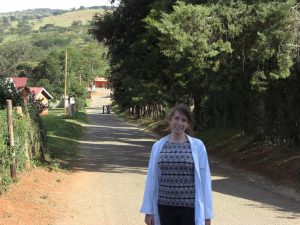
I particularly enjoyed more outreach trips out into remote villages in the bush. My husband Sam was relieved to see me return safely after one of the midwives suggested leaving me out there to see how he would react!! Another highlight was helping a lady deliver on the grass area in the middle of the hospital as she couldn’t make it to maternity in time- fortunately she had brought a midwife with her!
We have also enjoyed getting to know the staff better particularly the doctor on call. His family recently came to visit and we enjoyed spending time with them. It was sad to leave our friends of the staff at the hospital, but we are most looking forward to seeing our family and friends in the UK!
Sorry for the lack of blog posts. We have been having Internet issues. We bought some more data for our modem only to find less than 5 minutes later it had run out (it was to last us a fortnight!)- turns out our Imperial ipad had used all the data to update it’s apps. As a result it is banished to the suitcase!
The last couple of weeks here have been interesting.
Medicine-wise we have spent a lot of time in theatre seeing lots of caesarean sections (done to prevent serious problems, not cosmetic!) and a finger amputation!
On the wards we have helped manage lots of challenging cases of malnutrition which at times has been heartbreaking, as well as lots of paediatric and neonatal cases which has been great revision.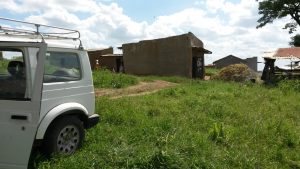
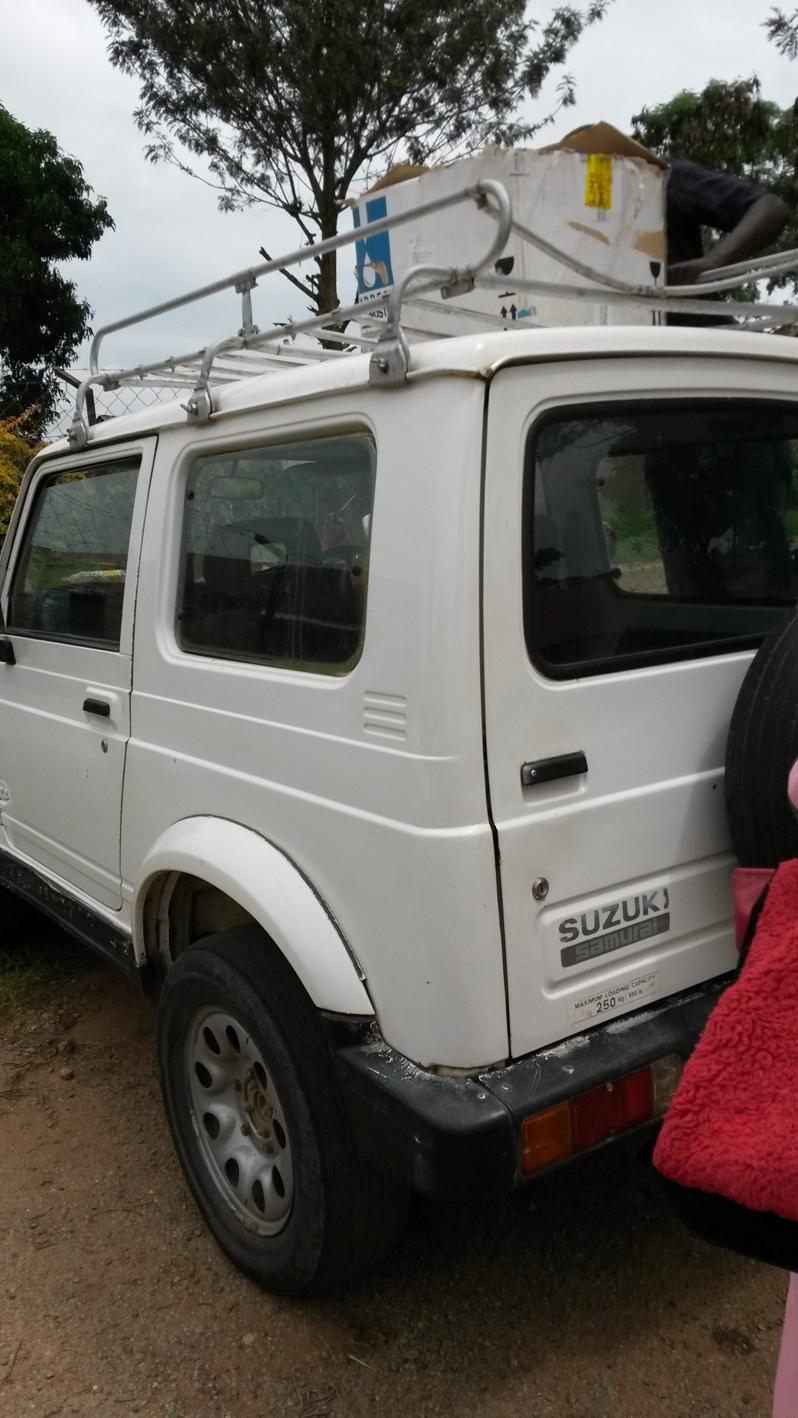
I have really enjoyed going out on an outreach day-trip to a nearby village this week. I joined a team going to the next village along the road to weigh babies, vaccinate children and do antenatal checks on expectant mothers. It was an experience, with a squeeze to get there in the hospital vehicle, equipment strapped to the roof, nearly getting stuck in potholes on the way and stopping to pick blueberries on the way back! It was however a huge privilege to visit rural villages and provide healthcare free of charge.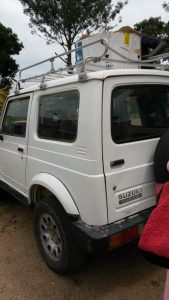
We have had many trauma cases recently which, as well as convincing us to never go on a boda boda here at night, have also shown us the radiology department. The hospital is fortunate to have a x-ray machine, which was an old one brought over from the UK many years ago. Once they have been taken they are developed in a dark room (which is very dark as the light doesn’t work) and then rinsed and hung on a barbed wire line outside to dry. To interpret them you can use the official light box in radiology or just hold them up to the sun!
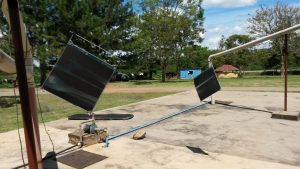
In other news last weekend we visited a local cultural museum. We learned about the history of the tribes in this area, as well as seeing houses they would have lived in and items they would have used. We realised these are still very similar today.
Fortunately the museum also has a great restaurant so we got our fill of coffee and pizza!