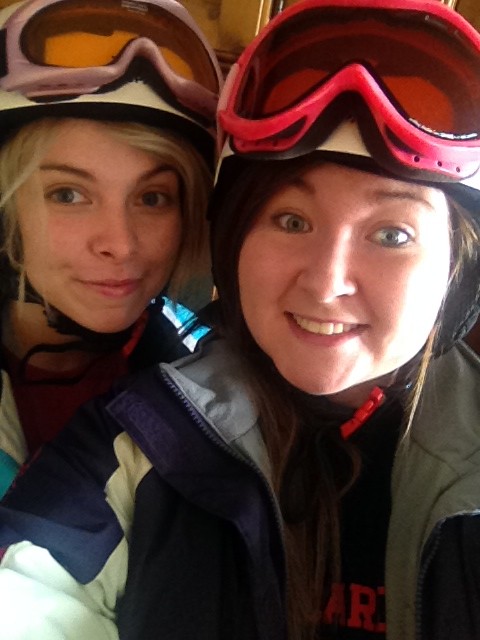
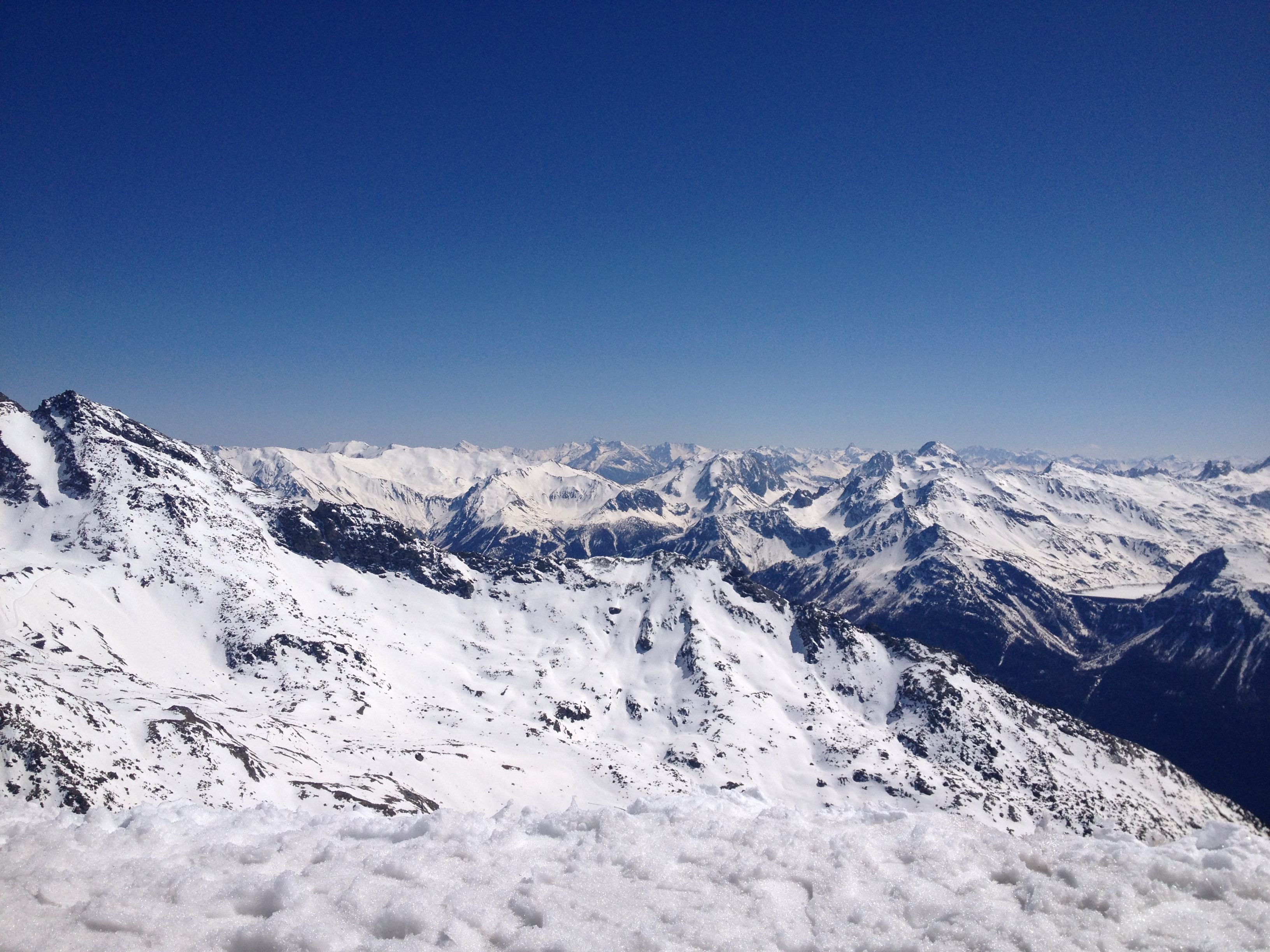
Happy Easter everyone! I have just got back from skiing last week with my family in France which was brilliant fun 🙂 🙂 It is almost the end of the skiing season now, but we were high up in a resort called Val Thorens, which is full of ugly buildings but great skiing! We had beautiful sunshine on every day except for the last, plenty of snow and I managed to keep the small French ski-school child sat next to me successfully on the chair-lift . It also has the highest zip wire in the world which was frustratingly closed every time I tried to jump on.
It was a refreshing break from everything, though I did (somehow) manage to do a bit of revision too, and so Atomic Physics exam look out- I am now coming for you!
This holidays I have also been indulging my Kurt Vonnegut obsession—today I finished his novel Bluebeard, which I have wanted to read for ages and ages and did not disappoint. If anyone hasn’t read Kurt Vonnegut then you really really really should consider it—I started with Breakfast of Champions and have been absolutely hooked ever since, to the extent that after finishing this blog I am pre-ordering a new book of his collected drawings and deciding how to spend some of my Science Challenge prize money on a print of his. Exciting times!
Anyway, I am now off to master Statistical Physics and order much Kurt Vonnegut :P. Enjoy the rest of the break everyone and if you are worried about exams try to distract yourself by remembering that a new potentially habitable planet has been discovered, (http://www.sciencemag.org/content/344/6181/277) which is cool and also somewhere to relocate to if everything doesn’t go to plan.
🙂
Skiiiiiiing!The tiniest plane I have ever seen…Mountains! And beautiful weather!
I am now one week into my Easter Holidays, and deep into revising quantum mechanics. Those of you who are hoping to study Physics at university are probably a bit confused by my constant moaning about it. Quantum, after all is a strange and enticing subject, the topic of many interesting popular science books and promises to provide deep insights into the counterintuitive and fundamental nature of everything. 😮 I can empathise. I too was super excited to learn about quantum, but it turned out not to be really what I was expecting, especially last year when learning all the names and equations without really getting into it left me completely baffled. This year, since re-reading the notes and problem sheets, it is actually an interesting subject—still very confusing!—but still nowhere near the stand-out favourite I thought it would be.
This has made me realise quite how much my opinions about Physics have changed since coming to university (not all of them in a negative way!) so I thought I would share with you how some of the courses I have taken have been different to what I expected. So, I present to you my rough guide to the first two years of Physics at Imperial:
Quantum
Let’s get Quantum out of the way for starters. The postulates are vague and ridiculous. Postulate three is basically ‘this is what position and momentum look like in Quantum. Other operators are similar lol’. It’s not exactly relativity’s snappy ‘the speed of light is constant in all inertial reference frames.’ And don’t even get me started on if you want to try and combine two operators—I spend half an hour learning the finer points of what commutators are only to find that they aren’t Hermitian and so you have to combine them with imaginary numbers and anti-commutators and even then you don’t know which of the infinite possibilities is the real one until you try out an experiment! Turns out the uncertainty principle isn’t all it’s cracked up to be either—of course you can’t simultaneously measure position and momentum to an arbitrary precision when they don’t share eigenstates, I mean Jeez. (The second year course is actually brilliantly taught—the lecturer was great and his notes are literally the dream of notes, but still boooo quantum.)
Electromagnetism
Onto something less negative: Maxwell’s equations are all they are hyped up to be! I found Electromagnetism completely bemusing in the first year, but now we know enough about vector calculus to actually know what is going on, I love this course. Provided you can remember Maxwell’s equations you can derive every result from there (though admittedly that would take you a while if you did it every time) and satisfyingly, I think they are as elegant and neat as everyone has always promised.
Vector Calculus
Vectors are a lot more fun than you would think! This could be down to the awesome lecturer we had last year for vector calculus which I think this was actually my favourite course of last year. That was a complete surprise, considering it was a maths course and had quite a few long (and I mean whole lecture long) proofs which I usually tend to find a bit dull. Anyway, it turns out I really like visualising scalar and vector fields and integrating in weird shapes over them. I can live with that.
Thermodynamics
Thermodynamics is fascinating! It seems ridiculous that working at a time when atoms were not even commonly accepted as existing that people were able to derive this hugely mathematically accurate theory that describes pretty much everything. As well as making me periodically excited and then frustrated about the second law of thermodynamics, this course has re-evaluated how I see the whole of Physics. Prior to it I was a hard-core reductionist who thought that the only hope of truly understanding a system was to work from the very very base up. A combination of how simple and effective thermodynamics is and the mess that is quantum has shaken-up this view pretty drastically
Sun, Stars and Planets
I have now considered a very unsatisfactory model of the Sun’s interior in more depth than I could ever conceivably have wanted to. However, the second half of this course was spent blissfully thinking about exoplanet detection and the possibility of contacting alien life and having a chat with them, though frustratingly the problems are still things like ‘show that this is indeed the eccentricity of the ellipse’ and not ‘what would you say if you were an ambassador representing the Earth on first contact’.
Vibrations & Waves
Top tip for first year Physicists: vibrations and waves may seem really confusing and like it is just learning a lot of trial solutions for equations that you haven’t really heard of, but oh my do they come up again and again! It turns out that everything is a plane wave. I really struggled with this course last year and I read through the notes so many times I can still remember which page has which derivation on. I’m not sure this is actually a tip, as I am not convinced that this course can quite be made sense of the first time around, but it does turn out to be important!
There are a lot of other courses too, but they have mostly been as I expected! In another two years my opinions will probably have completely changed again. It will be interesting to look back and see…
I’m sure you’ve all heard about it by now, but gravitational waves are literally just that—waves in space-time which require huge precision to be found as they are teeny tiny. The remains of them may have been observed in the cosmic microwave background, which is the earliest light that exists in the universe, coming from just after the big bang. These signals can tell us about what happened at that time, and are thought to prove that inflation (a period of super-fast expansion that some theorists made up to explain why everything was so uniform) did happen, and could also potentially provide evidence that we are living in a multiverse. The links above go into much better (and more accurate) detail, but I will definitely be following this story as the results are analysed and other team’s results presented. But well done to all those physicists who have spent their time working at the south pole where the telescope (BICEP2) was based!
Happy last week of Imperial term! Aside from my lab report deadline on Friday, a lab interview and some assessed problems that I almost forgot existed somehow (although we have them every week) the end of term for me has been pretty free of the language exams and hideous coursework deadlines that a lot of my friends have been plagued with.
It’s quite sad to say goodbye to E&M and Sun Stars and Planets, though I am not sure I can say quite the same for Solid State. Next term promises Optics and Particle Physics, both of which I am a little bit hesitant about declaring my love for yet, but hopefully Optics will be a continuation of E&M properties of lenses and things (maybe?) and of course after an Easter of revision I will definitely be up to speed with Quantum Mechanics and Atomic Physics and all the nasty things that are sure to be lurking under the fun sounding surface of Particle Physics…
But enough about compulsory Physics! On Tuesday in SSP we had a guest lecturer from the magnetometer lab at Imperial who was really enthusiastic and inspiring about the details of her job. Magnetometers are devices that detect the strength and orientation of magnetic fields, and the lab designs and makes them for various spacecraft, both for NASA and the ESA. Each one takes years to design and rigorously test for the gruelling conditions that it must survive in in space, for example in extremely radiative or ridiculously cold areas.
It must be sensitive enough to detect minute magnetic fields, but also be held far enough from the rest of the spacecraft that the magnetic fields created by its other equipment can be easily factored out of the results. Once the design has finished, it takes more years for the spacecraft to be put together and the magnetometer with it. Then the optimal time for launch must be waited for, and then come the years of waiting for it to get to its destination. It must be crazy to work on one project for so long, especially with the relatively high chance of something going wrong in take-off or once in space where no one can get to it.
It was also pretty amazing to learn that in the building where I have lectures there are people controlling and building instruments that orbit around Saturn (a mission called Cassini which took the famous picture of Earth as the pale blue dot a few pixels wide seen through Saturn’s rings) and Jupiter (a planned mission looking for possible habitability of Jupiter’s moons).
And that is the end of my Physics news for this term! The end of term has also brought with it my housemate’s Musical Theatre production (The Producers) which was hilarious! The singing and dancing and costumes and everything were very professional, and Oscar went all out with his super-camp character, wearing that full-on leather (but still chest-bared) outfir with style. I would recommend this show to everyone—sadly not from MTSoc at Imperial, because it finished last weekend, but it was so funny I would see it again tomorrow.
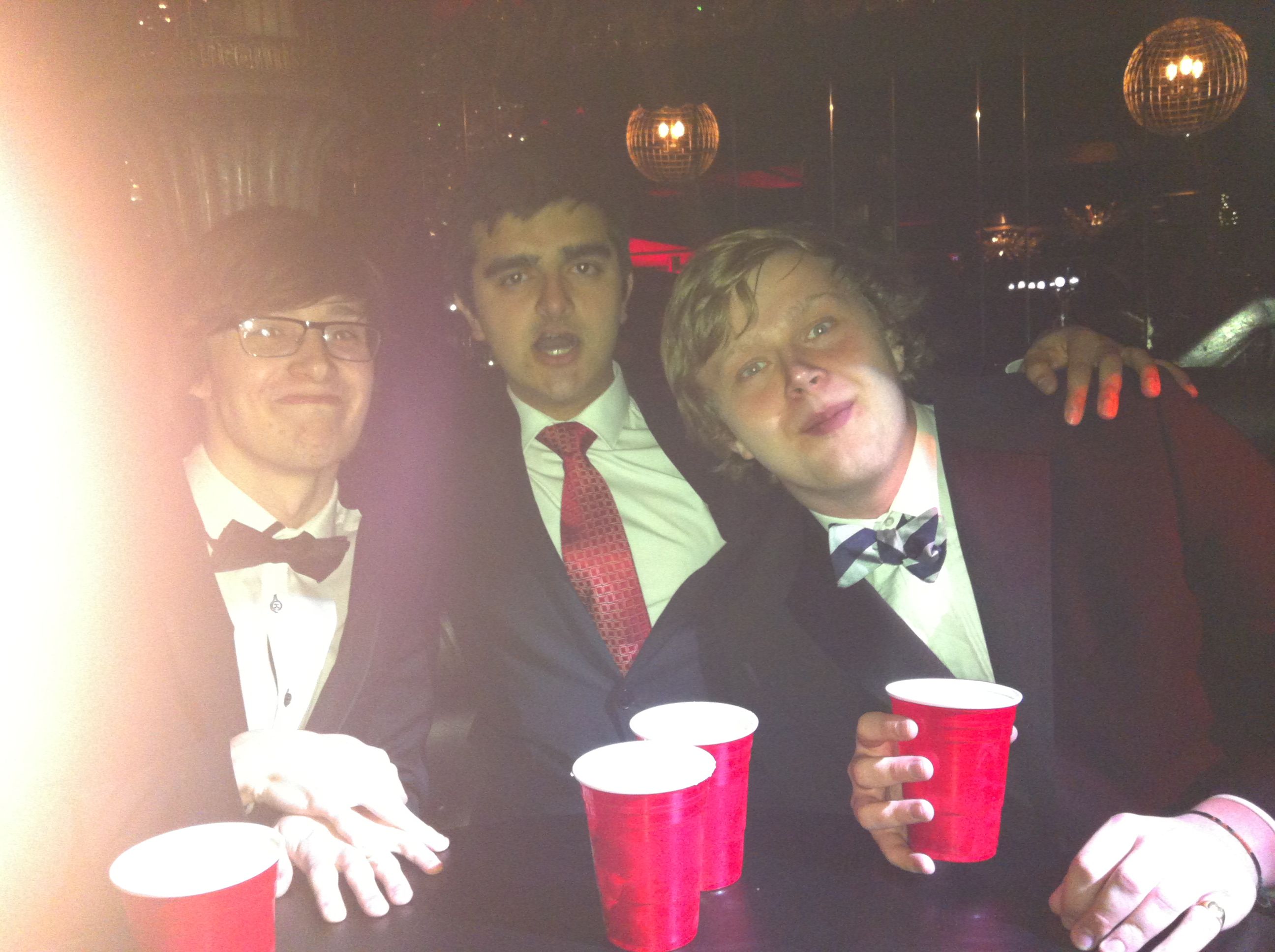
Tuesday was Imperial’s RCSU (Royal College of Science Union, which is basically scientists of Imperial) Spring Ball, which was, as usual really fun and in a ‘groovy wonderland’ off Oxford Street. The balls always come with three free drinks, but with my friends knowing most of the RSCU committee, we didn’t pay for anything all night and even ended up giving away drinks vouchers to confused freshers.
The next day was Wednesday (my day off) but I ended up getting up at seven to go to Thorpe Park with some friends at Physics. It’s about an hour-and-a-half tube and bus away from Hammersmith, and so fun I am thinking of upgrading to an annual pass! The queues weren’t as short as we thought they’d be—I think maybe some schools have finished for Easter too, but we still managed to get on a couple of the big popular rides (Swarm and Nemesis Inferno, which were really really worth waiting for) and didn’t miss out on classics like ‘Mr Monkey’s Banana Ride’, which is more fun for four twenty year olds than it sounds.
I think I got two hours sleep between Spring Ball and the Thorpe Park adventure, which made for an interesting bus ride there, but luckily by the time we got on the rides we were all feeling a little less grim.
The best thing about the end of this term though, has been the chance to catch up with people from last year in halls. With everyone dispersed and doing their own thing, it was really nice meeting up for a meal in South Kensington and getting to chat with everyone (well, almost everyone- I think that would be an impossible feat of organisation) like we were all carefree Freshers again! Jacob had even come back from America for his Spring Break to see us.
And so we come to the terrifying Easter holidays of revision (and skiing). Expect the next few posts to be either extremely revision-based or to completely ignore that Physics exists at all in an attempt to procrastinate…
Spring ball chic! For next term I must get better at taking photos… I have none of the meal, my gorgeous self at Spring Ball, or of Thorpe Park!
Yesterday evening I went along to the Science Challenge final in the Cabinet War Rooms. It was a lovely event with lots of free drinks and tasty little foods in bowls, and a great chance to meet some of the other people who had entered the challenge too. The venue was also cool —the Cabinet War Rooms are the underground bunkers where Churchill and other World War Two characters pushed planes around on maps, planned the war and sheltered from air raids.
If you haven’t read my previous blogs this was the final of an essay competition open to Imperial and school students, though there was a video section too, which I am quite interested in attempting next year. Basically, there were three categories set by three different judges. As you’ve already probably read the spoiler in the blog summary, I won’t try and keep you in suspense about if I won or not! (I did) 😀
It was a completely surreal experience, having to go alone to Westminster on a Monday night in black tie on the tube and even odder hearing my name read out as winning and then having to go back carrying cheques for a thousand pounds (!) and two big shiny trophies. I got to meet Pallab Ghosh who set my question, which was exciting, though I couldn’t locate him afterwards to say thanks to him and his daughter (who my essay was aimed at, see previous blog posts) for picking me. I also got to meet the Provost of Imperial (am not entirely sure what a provost is but I think it is important) who is a theoretical Physicist and have a good conversation about CERN where he had worked and the CERN exhibition in the Science Museum. All this CERN chat was relevant because another part of my prize is that I get to go to on a trip there, somewhere I have been desperate to go for years! It’s all still too crazy to take in.
I have absolutely no idea what to spend my prize money on! So far I have had a very sophisticated meal of some celebratory sushi and ice-cream (mmmm) but I haven’t yet done anything extravagant like buy the sushi restaurant or get a sculpture of myself made out of ice-cream. We will see.
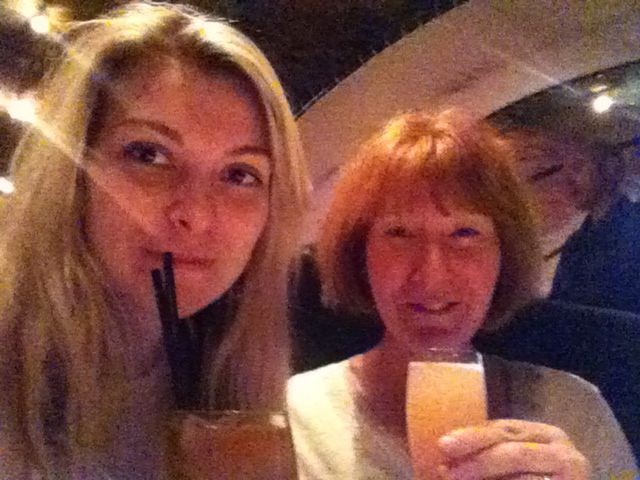
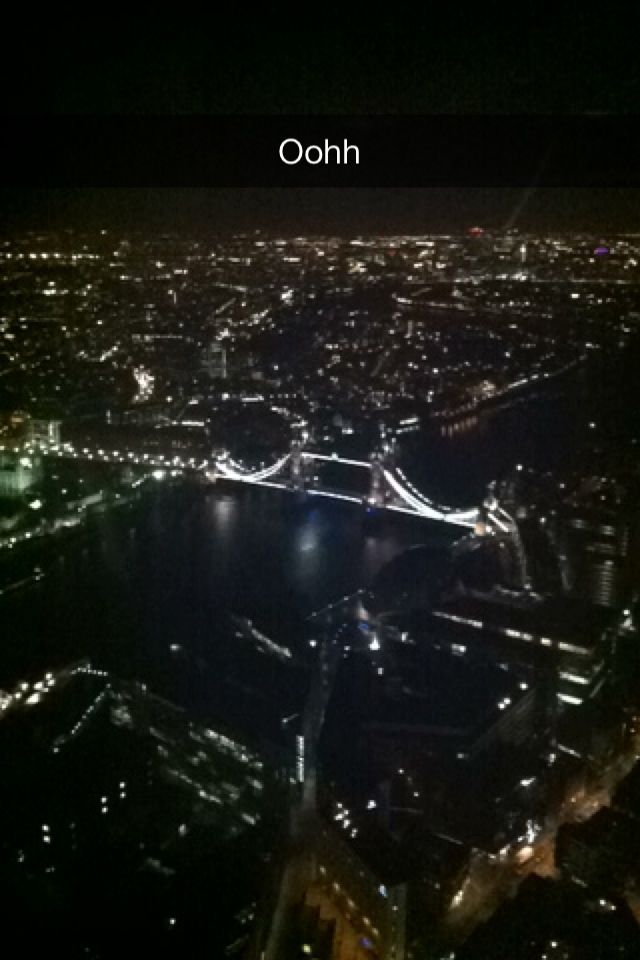
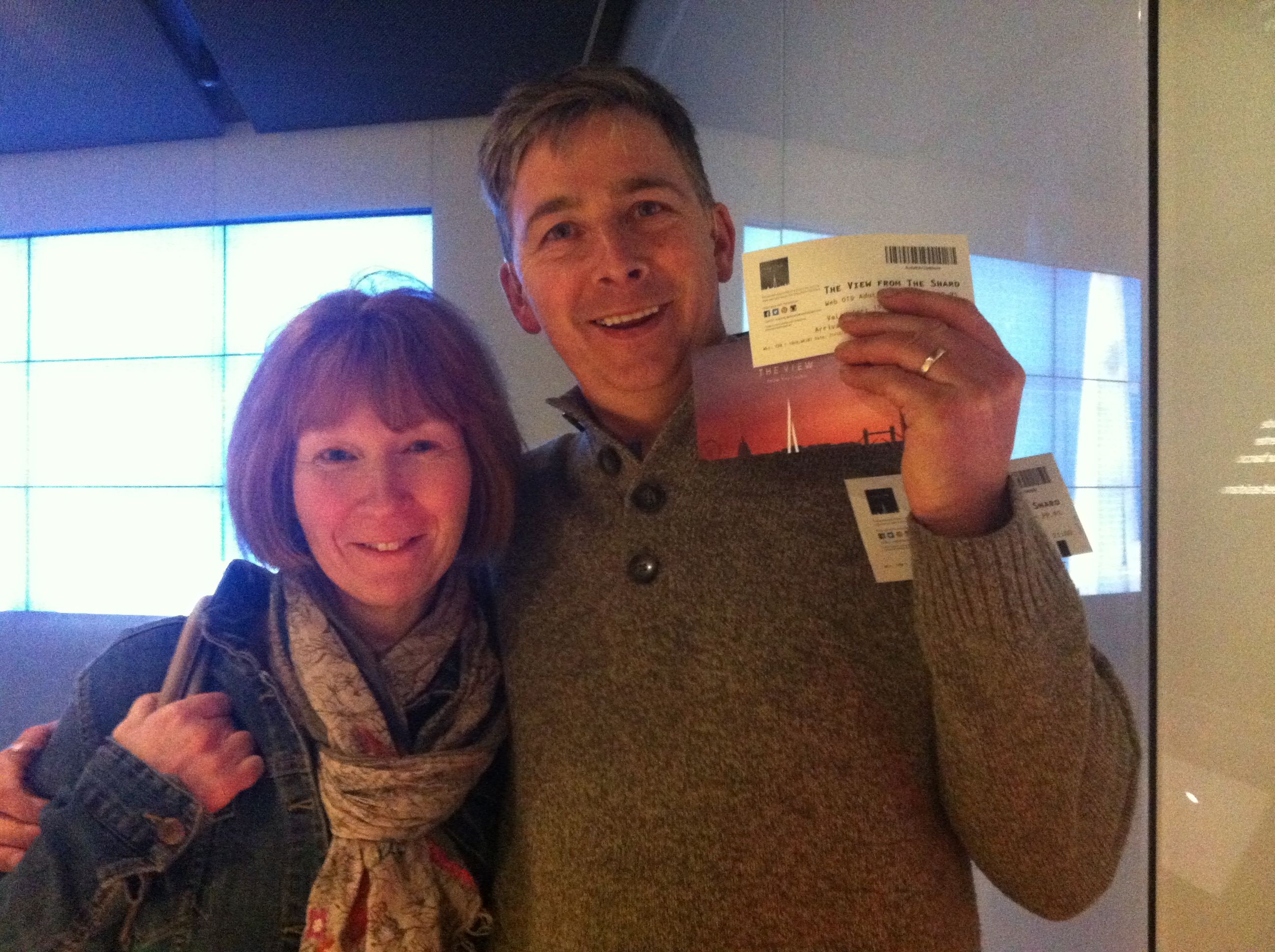
This weekend, my parents came down and we biked around Hyde Park, went up the Shard and ate in a cool jazz and cocktail restaurant under an arch of a railway bridge. London is awesome. Alex’s parents also very kindly took us to The Big Easy for his birthday meal where I managed to stuff myself on tasty ribs and had a crab’s pincer (terrifyingly, they still pince!)
Finally, I thought I should probably mention that I have been struggling with stress and anxiety this term. I find it difficult to talk about, but as my tutor said today, a lot of people are experiencing the same problems as me and maybe it would help someone else to know that they are not alone or going insane!
It has definitely felt at points like there is not really any help out there, which was difficult as I felt my depression was having a negative effect on my family and friends (especially Alex who has been exceptionally kind and patient with me). I visited Imperial Medical Centre, and have now signed up to an Exam Stress workshop which I have heard really encouraging things about. I also spoke to my personal tutor today, and after having researched a little bit into how to treat anxiety myself, I am feeling much more positive.
I am really determined to put in the work I can to address these problems which are stopping me from doing things that I want to do. This feels like a huge weakness in myself, but hopefully with some practice at controlling how I think and feel, I can get over this and maybe find that this experience increases my empathy for and ability to help other people experiencing similar things in the future.
I hope that this hasn’t come across as too self-helpy or overly personal—I just thought that I should let any of you know that are experiencing similar problems, that they are very common and nothing to be ashamed of. Anyway. Thanks for reading. 🙂
Cocktails selfie!Oh my! The view! The most penthouse of penthouse!Tickets to the shard!Looking up at the tip of the top of the shard! Terrifying!Trophies! I look a bit shocked…
Appropriately for such a sunny day, this is a good news blog 😛
Good news i)
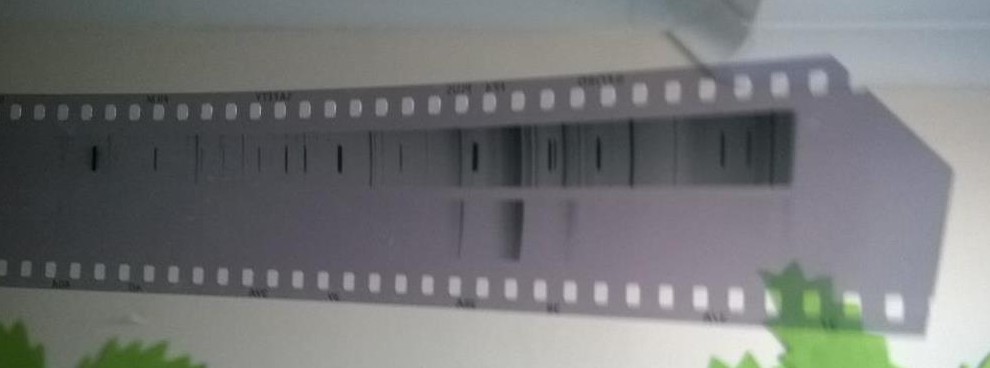
We retook the film from our experiment the other day, and now have excellent results! Here is a picture of our second-best film (my partner has the other one!):
Ooooooooh.
The top wide grey stripes contain the lines from Lithium and necessarily a bit of Carbon as that was what the electrodes are made out of. The smaller lines in the middle of these are from Mercury, which we will use as a reference to help identify the important Lithium spectra, and finally, the bottom row of greyish blurs are the pure Carbon emission spectra.
You might think they seem a little blurry for emission lines (which are the discrete wavelengths of photons given off when an electron jumps down into a lower energy state) and you would be partially correct, because most of what you can see in the Carbon spectra are continuum regions. This is where the Carbon in the source has been ionised (lost one or more electrons) and is then getting repopulated by another electron joining its state and giving off energy as a photon to do so.
This didn’t make any sense to me until I thought about it as literally the reverse of ionisation—when an element is ionised it must absorb photons with energies above a certain minimum value which is needed to escape. Here we see the electrons re-joining the atom and giving back off a photon with that same amount of energy. The Carbon continuums have been recorded so that we can differentiate them from the Lithium lines.
Yey results! Also yey for the fact that we didn’t drop or lose our films in the dark room, which is actually pitch-black.
Good news ii)
I have got into the final of the Science Challenge! If you are an attentive follower of my blogs you will remember that I wrote an essay for Imperial’s essay competition, the Science Challenge about the hunt for exoplanets.
Today I got an email saying that I am in the top three for my question so on Monday I am going to the cabinet war rooms (the underground world war two bunkers) for the awards ceremony where they announce the winner! Excite!
Good news iii)
In my astrophysics lecture today we did something interesting called orbital resonances, and now I know why the Moon and Earth are tidally locked (why we only ever see one side of the moon). In case you didn’t know, I will tell you too.
The gravitational force between the Earth and Moon causes both bodies to bulge out towards each other. The bulge on the Moon gets moved around as it rotates, but since it is closer to the Earth it is more strongly attracted, so the Earth tries to pull it back and keep our bulges in line. Over time this slows down the Moon’s orbit until we are always facing the bulge e.g. only one side of the Moon is visible to us.
Since forces are equal and opposite, the Moon is having the same effect on the Earth—just a lot more slowly. That means our days are slowly lengthening—though this small change in time is only noticeable from fossils.
That this can be measured is also crazy—you can apparently tell how many days there were in a year 350 million years ago from looking at the bands of growth in corals like tree rings. It turns out there were about 385 days in a year back then, meaning that days were less than 23 hours long! (I found this out from this article: http://www.scientificamerican.com/article/earth-rotation-summer-solstice/)
Complete tidal locking has taken place between Pluto and its moon Charon, which orbit always facing one part of each other like there is a giant rod between them.
Good news iv)
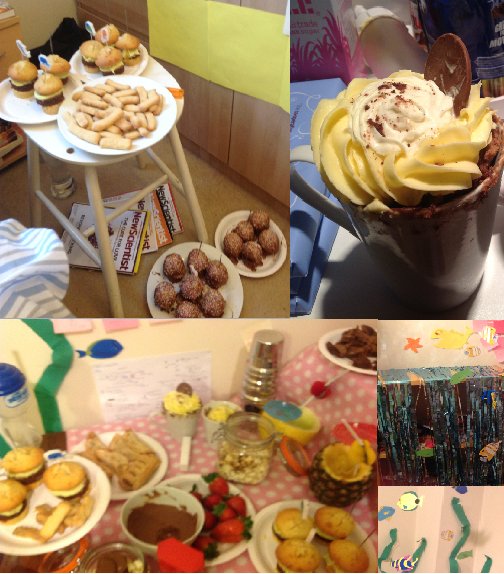
It was Alex’s birthday yesterday so I got to spend the morning sneakily turning his room into a desert island (long story) and making burger cakes and chips. Mmm.
Which leads me smoothly into this hilarious joke:
Why does hamburger have a lower energy than steak?
Three weeks ‘til the end of term but the excitement just continues at Imperial! My room has reached peak mess now, to the point where a jam-packed surprise awaits me inside every drawer. On the up side there have been some days of actual proper, real sunshine, so I’ve had time to brush off my tennis finesse (by which I mean trying not to catch the ball when it is hit to me because I think it’s gone out…. ahhh).
I realise I’ve not actually explained what thrilling lab cycle I am currently in the middle of (not that much sarcasm by the way, it actually is pretty exciting). Before this week, my partner and I were analysing data from the U.S.A’s first ever space station—Skylab. We were given graphs of emission spectra from different parts of the sun and a data booklet, and told to work out the temperature and composition of the sun. This involved much pencil-and-ruler style precision line drawing and deep thoughts about the photons and things bouncing around and how on-(or rather off, aha) Earth you are supposed to see the surface of the sun anyway, through all that atmosphere. Our results seemed realistic, in that they revealed the bizarre fact that the sun heats up as you get further away from its surface, as I’ve mentioned in a previous blog.
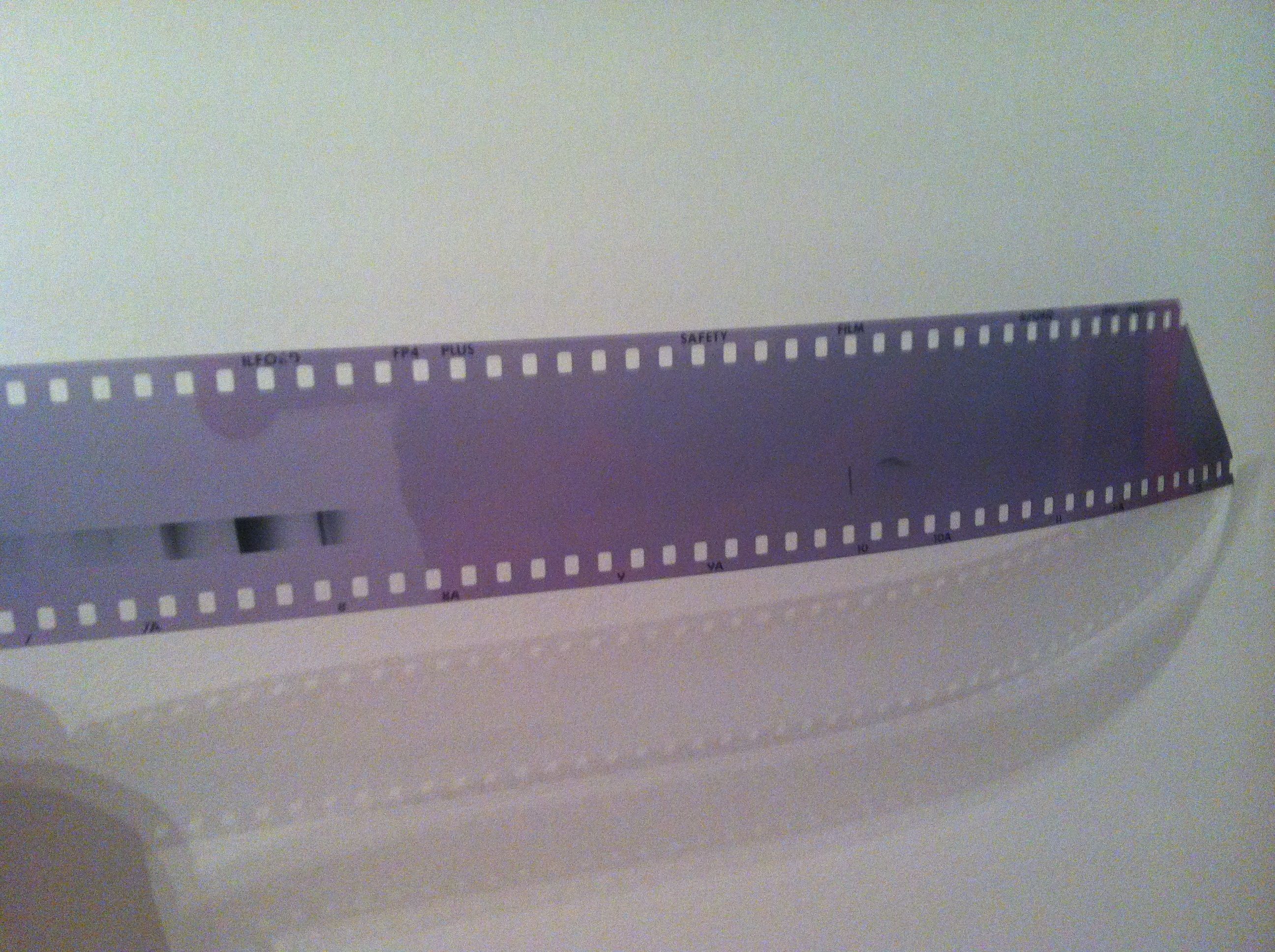
Now that’s um, lovely and all, you are probably thinking, but not exactly the thrilling edge-of-our-seat ride that you hinted at. Well, steady yourselves as my sister would say, because you have yet to hear about what I am doing this week. To continue the spectroscopy theme, we are now doing REAL SPECTROSCOPY. With real UV light things that spark and smoke and that you have to file down the electrodes for and dab Lithium on them and wear purple disposable gloves and go in a real dark room and splish about with film developer and fixer and things. So far my only film looks like this:
Real spectroscopy! You can hold it in your hand!
This isn’t great because there are meant to be three visible spectra displayed, and so far there is only one, which we are fairly sure is carbon. The point of the experiment is to be able to measure the emission spectra of Lithium, but since the aforementioned UV-lamp-exciting-spark-thing runs on carbon, you also take the spectra of pure carbon so you can eliminate those emission lines. Mercury is then superposed on top of the Lithium line for calibration, making three spectral lines in all.
I’m not too sure yet what happened to the other two— I think we may have moved the film too much when they were being exposed so that they missed it… Hopefully we’ll have better luck/ability to estimate position of photographic films tomorrow!
The lab report only has to be written on one of the parts of the experiment this time, so there is slight pressure off (as long as I keep my lab book up to date, of course.) It is all soberly written in blue ink this time too, as apparently pink is too frivolous for what is meant to be a legal document. Sigh.
In other news, I have applied to an internship at last! Last term the thought of writing CVs and covering letters and researching was hugely terrifying, but really it’s not so bad once you get down to it. Imperial offers research internships too in different research groups, if you know what area you are interested in, and apply early enough.
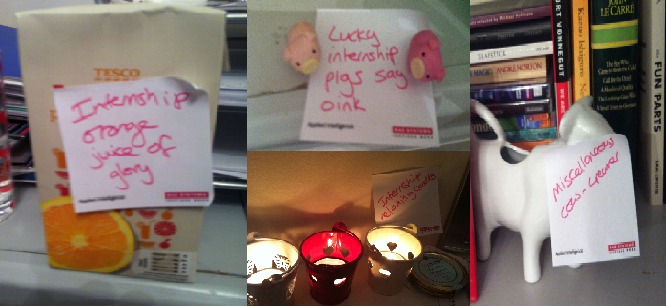
A spoonful of sugar helps the internships go down… I was researching as a team with Alex by the way, not that one needs to excuse writing cheerful post-its to one’s self.
I already had to write a practice CV for a professional skills course this year, and I made an appointment with Imperial careers service to help me polish it up a bit, so now we’ll just have to wait and see! If this doesn’t pan out, I have several volunteering things lined up. Everyone needs free science writing, right? I won’t wish the summer on too fast though… not with all the exams lurking in between then and now…Hmm. Maybe I should go and stare at some solid state.
This is a bit of a disjointed blog catching you up on a few odds and ends. Some more interesting Physics will be coming soon—I have decided that I am going to try and write a blog summary of some of the courses we are doing— after all, if I can explain them coherently then I must understand them, right?
Last week I started my last lab cycle of second year! That is a slightly terrifying thought. Also I finally have a lab partner again! I am fairly confident she won’t read this blog so will say that she is lovely and if you look away for ten seconds starts working out uncertainties, which is probably the best quality you can hope for in a lab partner (damn those uncertainties).
Horizons has been very interesting recently—we have had two great speakers, one who runs the science section of The Green Man festival and a radio presenter. They were both so enthusiastic about their jobs and their method of communication that they brightened a couple of otherwise very long Mondays. The deadline is fast approaching for my horizons essay which involves comparing a citizen science website to a museum exhibit, so I have been frequently popping next door into the Science Museum to examine the Exploring Space gallery.
In other science writing news, I hopefully have an article about the limits of space travel in I, Science (Imperial’s science magazine) coming out soon, and have finally entered my essay into the RCSU Science Challenge. I have also discovered the perfect internship for this summer, but more on that later! I think internships might well deserve a whole blog of their own…
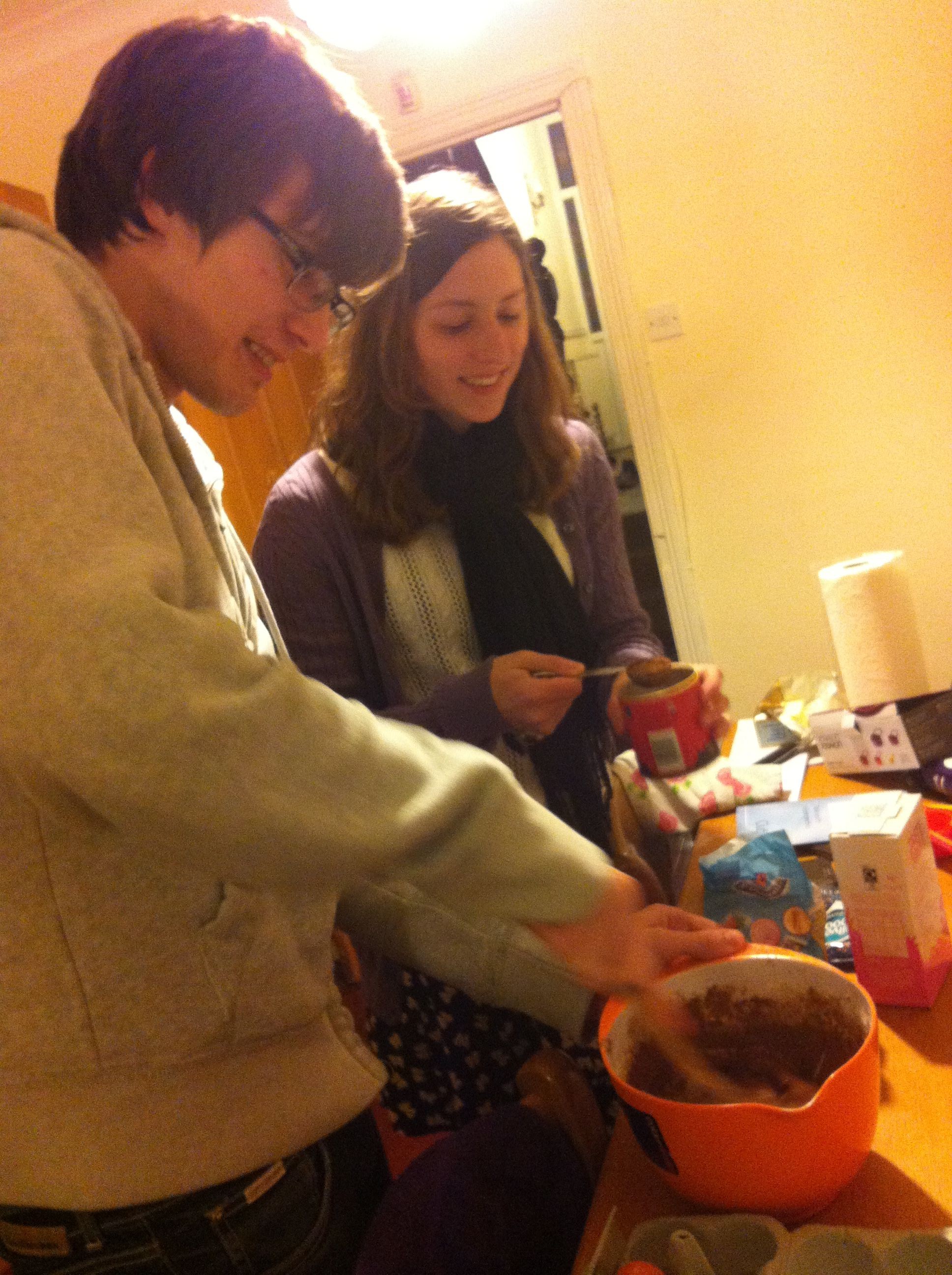
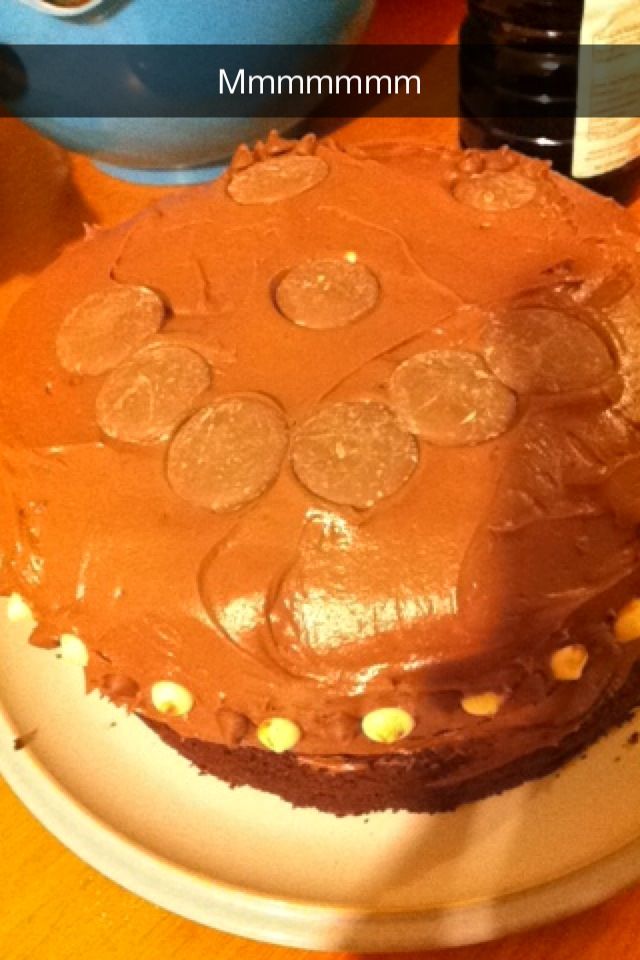
This weekend I went back home for a bit of a catch up with my family. I did some shopping, absolutely no washing up and made some tasty welsh cakes, it being St. David’s day, which takes us nicely into the miscellaneous baking section of this blog. This evening we belatedly celebrated the birthday of one of my housemates with copious amounts of cake and ice cream.
Teamwork : )The finished product. You can’t say that Imperial doesn’t have artistic talent.
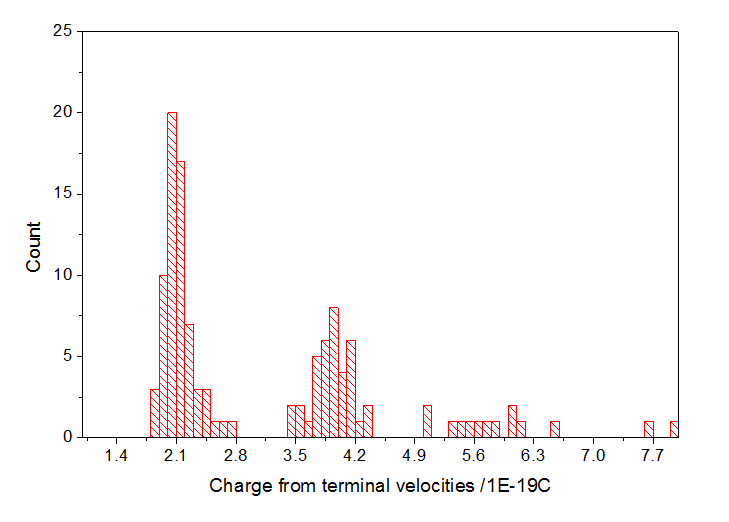
Only one more experiment to go this year and I am hopefully getting a lab partner again! I said I would tell you my final value of e so here goes: (1.93 ± 0.13) x10^-19C, within which you may notice, the currently accepted value does not fall. Oh well. Hurray for unknown sources of systematic error (potentially the oil droplets acting as a dielectric in the capacitor and changing the value of E?). My estimates of the Earth’s magnetic field were better I promise…
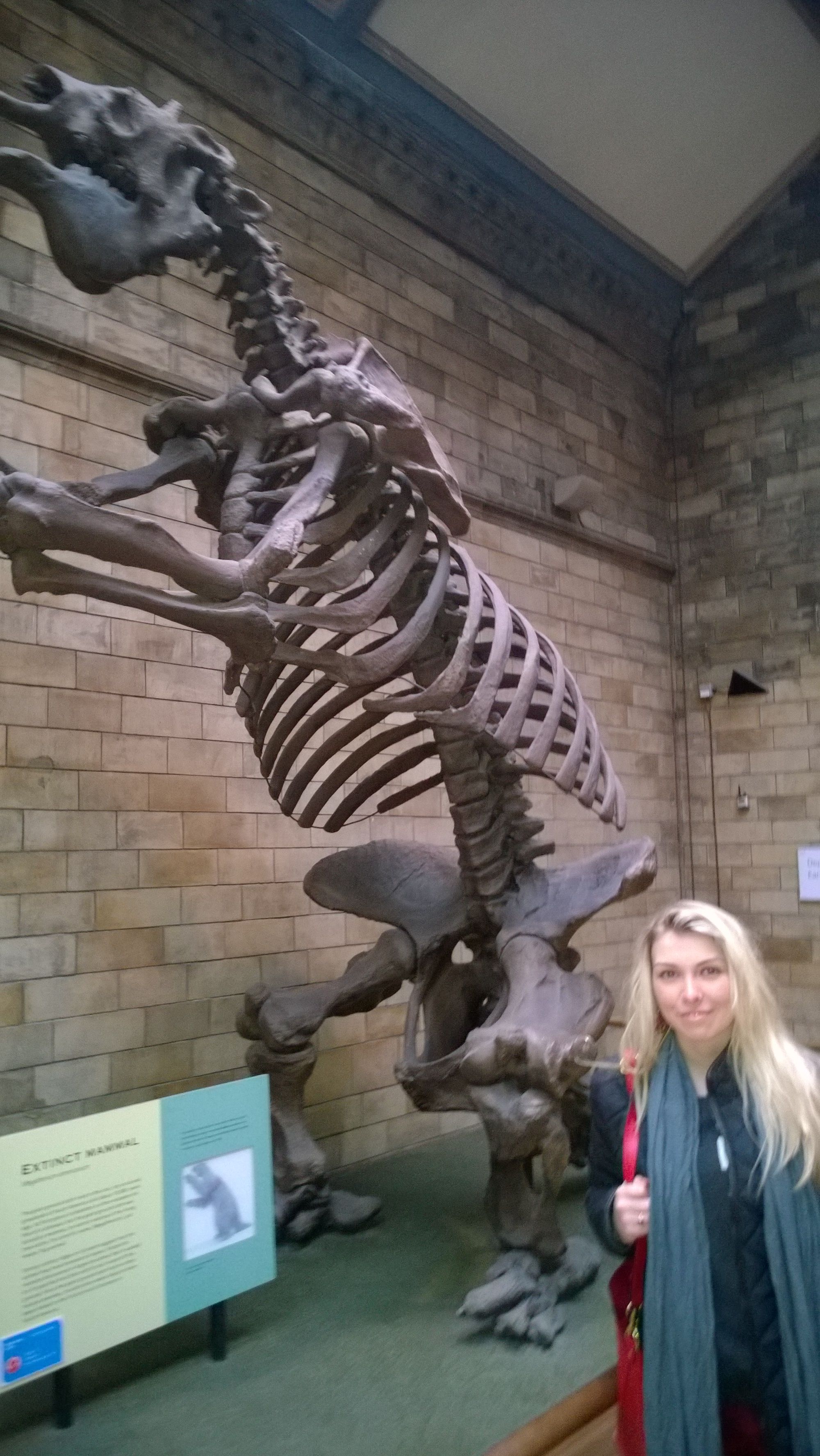
Now that that’s over it’s party time! And by party I mean making use of South Kensington’s proximity to sushi, Nutella pancakes and dinosaurs. I think me and Alex’s regular trips to the museum gift shops is single-handedly paying for exhibitions by this point—but really how can you resist buying dinosaur shaped ice-cube trays and ant robots that change direction when you touch them?
My new BFF the giant slothOh museum gift shops
In boring house news, everything has been broken, the washing machine, the internet and most definitely my will to spend hours on the phone complaining about things.
Anyway, I thought I would spend a little bit of time in this blog talking about Imperial Horizons, which are courses Imperial runs that aren’t necessarily directly related to maths, science or engineering. They can be taken for credit as a module in some courses (Chemistry and Biology are the ones I know of), or as an optional extra after lectures.
They are a term or two terms long, and range from learning a language like Japanese, from scratch or to a higher level, a humanity like Creative Writing or Music Technology, introductions to business or Global Challenges. Like anything, in general I think they can be a bit hit or miss—some people love their courses and some people find them a lot of extra time spent for something not so fun. I think last year was the first year they were introduced, so I am sure the courses are still being improved upon—Imperial are usually pretty good at taking feedback.
I love my Horizons though! As I’ve mentioned before I do Communicating Science, which involves studying how science is presented to the public, and how effective each method is. So far we have seen a museum exhibition, written a press release, looked at science in the newspapers, and in pictures, seen how science communication can go badly wrong and a lot more. Next week we are analysing science in literature—I am re-reading Solar for it tomorrow.
No matter how hectic my Monday, I always look forward to Horizons and getting to argue about how apt a choice Professor Brian Cox is for every possible form of TV. Though I enjoy a nice differential equation as much as the next person, it is also comforting to know that every so often I get to think about writing an essay or taking notes about philosophers.
I am now quite nervous of catching my EM lecturer’s eye after blogging about how cool he was— so I won’t be too effusive about my professor this time—but it is great to be taught by someone with such an interest and background knowledge to each topic that we study. She almost convinces me to transfer to the Science Communication Masters!
Last year I did Ethics, which I also enjoyed, but didn’t always actively look forward to like Communicating Science. Each week we studied a different philosopher’s take on how we should live and finally wrote an essay on an ethical dilemma at the end.
In conclusion, if you are coming to Imperial, you should definitely check out the Horizons programme.
On a final note, hello to Aunty Lizzy and Dorothy who came to visit me this week! It was lovely to see you and to show you my house a little bit. Hopefully next time it will be less horrific weather!
The last week has been fun—one of my friends from home came down on Tuesday and we went to see Taylor Swift in the O2! One of the best things about living in London is that you don’t have to force people to come and see you—they come themselves for the attractions and then can sleep on your floor. Taylor, as I now affectionately call her, was brilliant—a very professional performer and though she did talk some rubbish in between her music and dancing she was so compelling about it that I was completely swept along.
Terrible photo of the day award goes to me Yes, we were quite far back! I had to wear my glasses like the cool that I am.
Tubing there was easy—straight from labs to North Greenwich tube station, but unfortunately by the time we were heading home the infamous tube strike of last Tuesday/Wednesday had begun so we and a million other confused pop fans were stranded at the O2. Luckily, our carefully honed D of E skills set in, so we were able to navigate to alcohol and then, eventually home.
Continuing the good news theme, Atomic Physics has finished! Yey! *tiny celebration* It has been replaced by a new lecture course called Soild State, which so far seems to be about crystals and things.
Also I have discovered another physics mystery! In last week’s astrophysics course our lecturer announced that the sun’s temperature gets hotter the further you go away from it, and nobody really knows why.
I planned to elaborate on this, but the summary papers I tried to read are a bit beyond me at the moment (or else the fact they don’t know themselves makes it badly explained, but probably the beyond me thing). The exact problem is that what we think of as the surface of the sun (the photosphere) is about 5800K hot. This is fine, but the sun actually has three more chunks of atmosphere extending beyond that bit, called the chromosphere, the transition region and the corona, which stretch far out into space. The weird thing is that the temperature in the corona reaches 2 million kelvin.
That heat is not coming from the sun’s surface. My favourite second law of thermodynamics says that hot stuff can’t continuously heat up hotter stuff. So where is this energy coming from?
Well, if you read the sort of layman’s section of the NASA website about this topic it says something very intriguing. Most scientists think that the main source of heat comes from the rapidly changing magnetic field lines in this area of space generated by the swirling plasma in the sun. The laws of physics say that magnetic field lines cannot cross, so every time they are about to, something must intervene and rearrange them to stop this occurring, producing heat.
This effect is seen in other stars too, and seems to be more dramatic in those that are spinning faster, which does seem to suggest that the stretching and reshaping of magnetic field lines may have something to do with it.
I will probably have a look at some more papers on this later, because writing that down has made me interested again—but for the life of me I couldn’t tease out any explanation from all the maths that I saw. Hmm. The only thing I really understood was a tentative explanation for why no explanation has yet been found (an excuse in other words). It is likely that the important heating effects seem to happen at all scales—both incredibly large and incredibly small, which are almost impossible to simulate simultaneously on a computer and the small scales hard to observe by satellites.
And so it remains a mystery…
By the way, the histogram I showed you last time has turned out not to be quite as neat as I thought… I am just about to go and finish writing up the experiment, so I will fill you in on the final value of e that I manage to scrabble to.
I just realised I haven’t told you anything about my lectures this term! So much for this being an informative and insightful blog about life at Imperial…
We are now almost three weeks in, and the structure of the term is starting to reveal itself. Firstly I have Wednesdays and Friday mornings off, which makes my week very on-off intense, with nine ‘til six on a Monday and nine ‘til five on a Tuesday and then a day of pure pure rest. I have fewer lecture courses than last term to add to the relaxation—Sun, Stars and Planets, Electromagnetism and Atomic Physics, which you should read as interesting, awesome and evil respectively.
Electromagnetism is—surprisingly—my outstanding favourite so far this term. Last year I found it confusing and struggled with the many different equations which I couldn’t seem to make a coherent framework out of in my head. This year, so far, it has been completely inspiring. The equations are now all vector-y and there are divs there and curls here and I still think vector calculus is like magic, so it it surprises me every time that the curl of a vector field coming out through a surface (like the turning force of water out of a tap) can be described by integrating for the field around a closed loop around any boundary curve (and I mean ANY boundary curve). That is a very ‘touchy-feely’ version of Stokes’ law by the way, as my EM lecturer would say.
That’s another thing—the lecturer we have is amazing! His notes are compact and well-written, his jokes are funny, his way of explaining complex things makes them seem so, so simple that you actually want him to hurry up because something exciting might happen, like the wave equation dropping out of Maxwell’s equations with c in place of the velocity, and oh look we’ve discovered electromagnetic waves. Sigh.
Professor Steven Cowley is his name and as well as being a great lecturer he is also quite a cool man—in fact he is Director of the Culham Centre for Fusion Energy, has his own TED talk, and was voted the 81st most influential man in the country by GQ-magazine last year which is awesome, if problematic if he spots you googling him in lectures.
Atomic Physics is this course’s antithesis. It does, in fact, follow on from the quantum course of last term, which is enough to make me shiver, but it also adds lots of nasty things like wrong models of the atom that are partially right and lots and lots of things concerning angular momentum and lists of solutions to equations that look suspiciously like solving them yourself would make you go mad and end up quitting to become a soothsayer or a homoeopathist or something.
Outside of lectures, some good things have happened like stuffed aubergines, watching Breaking Bad as a house and cycling on the newly installed Boris bikes all around Fulham, and some bad things too, like spending hours on hold to British Gas and then having to talk to someone from British Gas about gas and stuff.
To follow up on the lab post from the other day, I now have all my data collected, and am proceeding to bash my head against the analysis. Here is a histogram—the first two little peaks which are teasing me by looking a little tiny bit like they might turn out to be nice Gaussian distributions, are—fingers crossed—showing the number of oil drops with one times and two times the charge of an electron on them.
At one point in my analysis it looked like I was about to live up to my blog tagline and have well over a hundred percent uncertainty… but now…we shall see!


![IMG_2958[1]](https://blogs-staging.imperial.ac.uk/student-blogs/files/2014/02/IMG_29581.jpg)