10080 – a week at home vs uni

[youtube https://www.youtube.com/watch?v=vBCX-PMHQA0]
[youtube https://www.youtube.com/watch?v=CoHAkzpaypg]
[youtube https://www.youtube.com/watch?v=vBCX-PMHQA0]
[youtube https://www.youtube.com/watch?v=CoHAkzpaypg]
This weekend I was back at The Regent’s Park helping with their project Mission Invertebrate. This project is funded by the People’s Postcode Lottery and is investigating what invertebrates live in The Regent’s Park and how this relates to where the Park’s hedgehog population lives.
The project is a citizen science project – members of the public have been recruited to take soil cores, put in pitfall traps and count the number of slugs and snails in a set area. Myself and my colleague Anthony Roach were helping the volunteers identify the invertebrates collected in the pitfall traps. This involves picking each invertebrate out of each pot, identifying and counting them, and then putting them into a tub of alcohol to preserve them.
I have mostly been analysing data and writing at the moment so it felt really good to get outside and identify some invertebrates for a change – it reminded me why I am doing a PhD in the first place (I love the diversity of invertebrates!) and lifted my mood greatly.
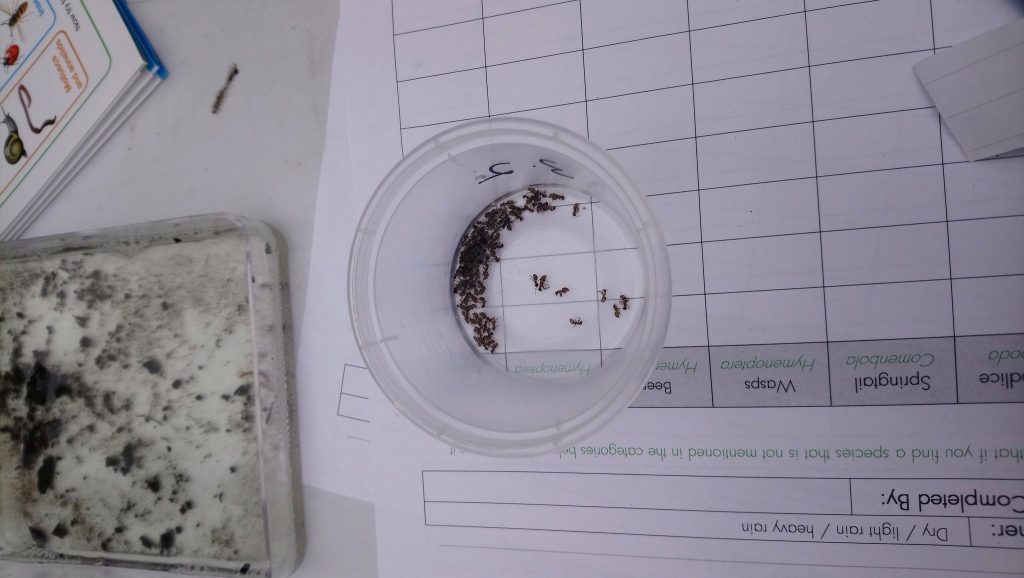
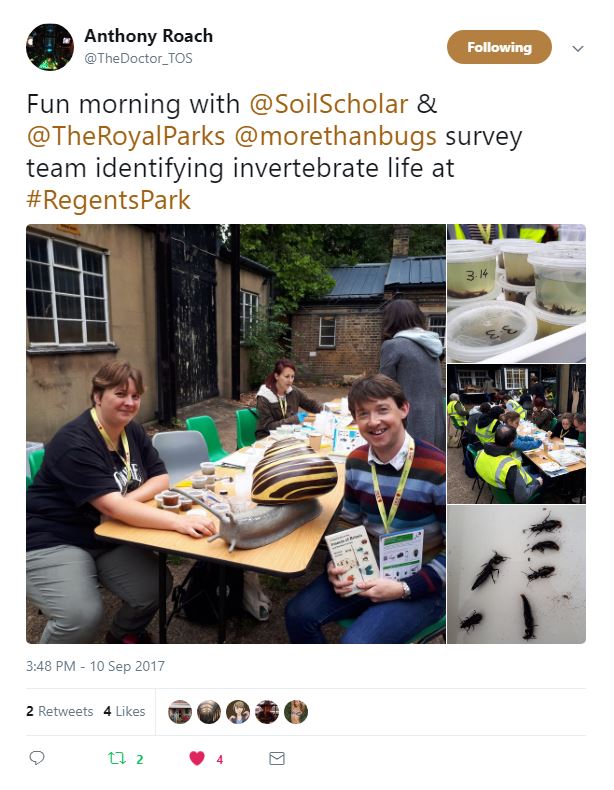
Today I look back at my volunteer work sorting leaf litter samples with the Natural History Museum Soil Biodiversity Group.
A day late for #wormwednesday this post looks back on the earthworms I identifying during my volunteer work on the Natural History Museum Soil Biodiversity Group BESS Earthworm Project.
I started species identification of earthworms after attending a course in 2013 which proved very useful when I went on to sample earthworms and other soil animals during my MSc project. (more…)
Just in time for UK Fungus Day this week’s #throwbackthursday looks back at a training course on the identification of fungi I attended in October 2013.
This week’s Throwback Thursday covers a course on hoverfly identification I attended in August 2013 as part of a qualification in Biological Recording and Species Identification.
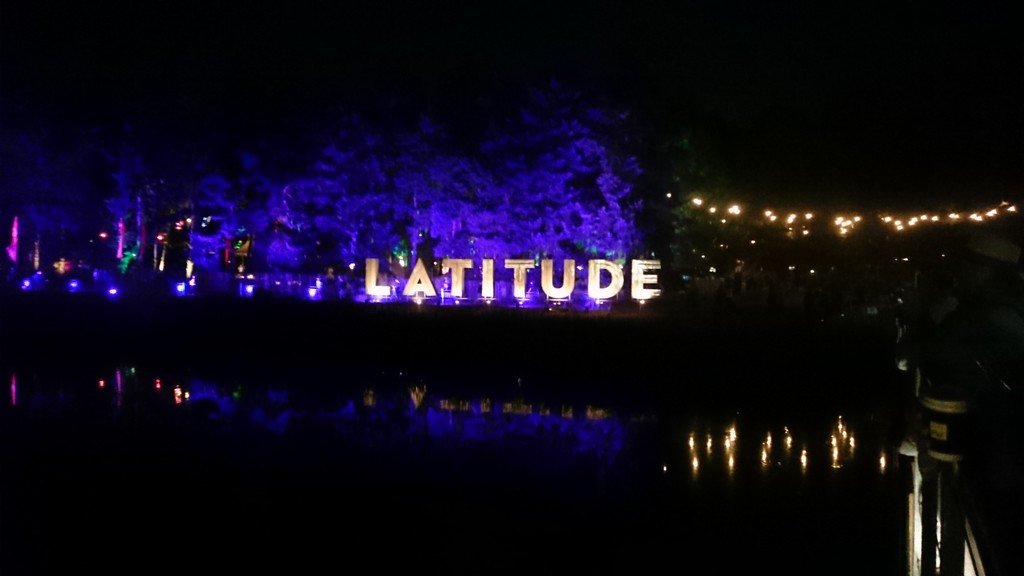
I enjoy music, but until now had never been to a music festival, all those crowds of people, loud noise and camping was not something I thought I could cope with. However I was aware from talking to my colleagues at the University of Reading last year that festivals are not just about music, and often have stands and science activities run by universities and other institutions. This felt like something I would enjoy so I put it on my mental list of ‘things to do while studying for a PhD’. I was very excited to see a call from the Royal Society of Biology and British Ecological Society for volunteers to help run ecology themed activities and bioblitz (an event where you try to identify as many species as possible) at Latitude Festival in Suffolk. I duly applied and a few weeks later was off on a big adventure with my tent and sleeping bag!
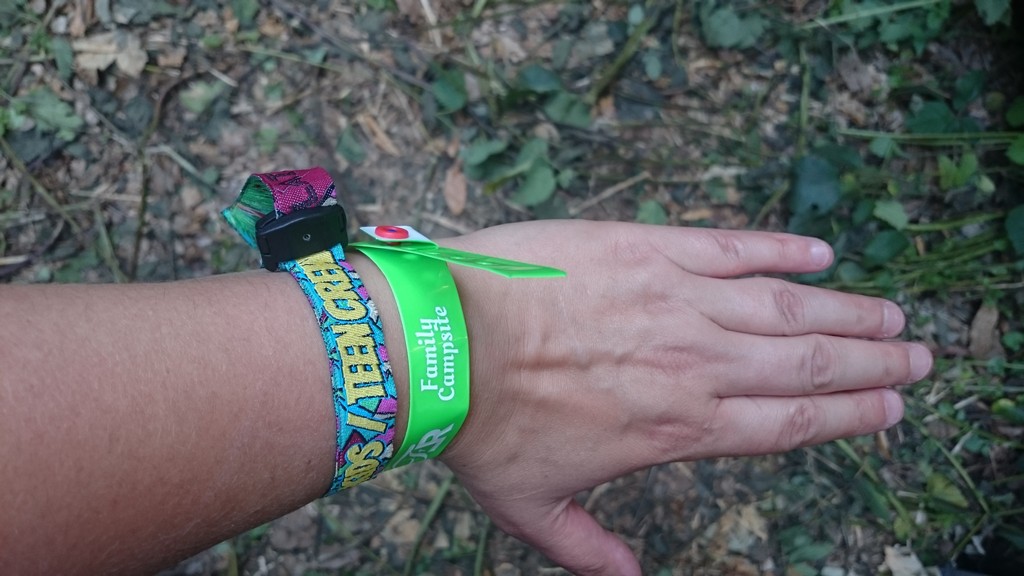
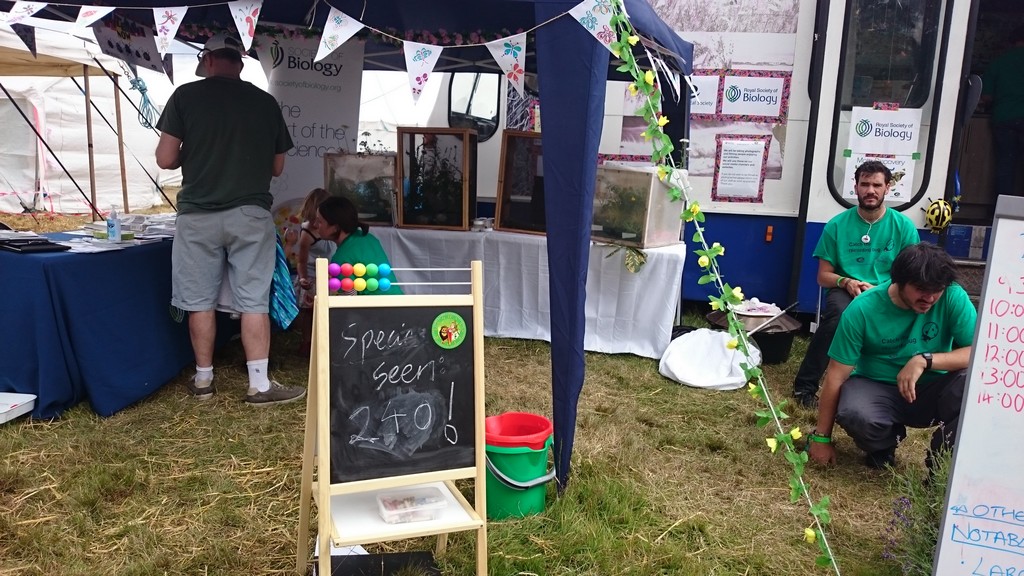
I picked up my festival wristbands and met up organiser Penny Fletcher and some of the rest of the team I would be working with the for the next few days – getting introduced to the ‘Big Biology Bus’ – a mobile home decked out with insect photographs and information to be used for activities. The first evening was spent preparing for these activities, cutting out plants for the ‘Power of Plants’ activity where children choose which plants and features to include in their virtual garden made of paper and learn about what makes a wildlife-friendly garden.
Then followed my first night in a tent since my family holidays as a young teenager, it was not a very restful sleep and the portable toilets and showers were as grim as I expected, although better than usual I was told, since we were in the performers’ area. I could have paid for b&b or ‘glamping’ but considered coping with camping to be part of the experience! The day before we officially opened to the public was spent scouting out suitable areas for bug hunts and setting up more activities, including making a butterfly life-cycle mobile from Butterfly Conservation and dragonflies out of pipe-cleaners and lolly sticks – it was good fun!
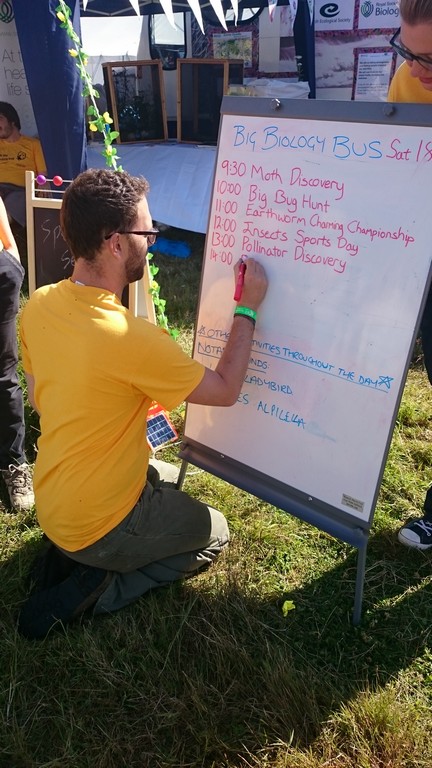
The day started with opening the moth trap, with expert Marc Botham from the Centre for Ecology & Hydrology showing members of the public the moths and other insects trapped in the light trap which was left over night and adding to our species list for the Latitude site. Then it was off to inspect the pitfall traps that colleague Sara Ball had set out to catch beetles and see what other insects could be found on a public bug hunt – demonstrating beating (hitting a tree with a stick to knock insects off), sweep netting (sweeping a net through vegetation) and looking under logs.
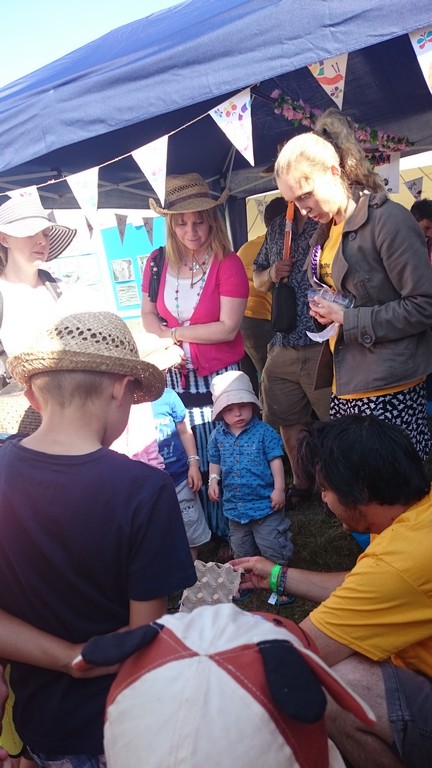
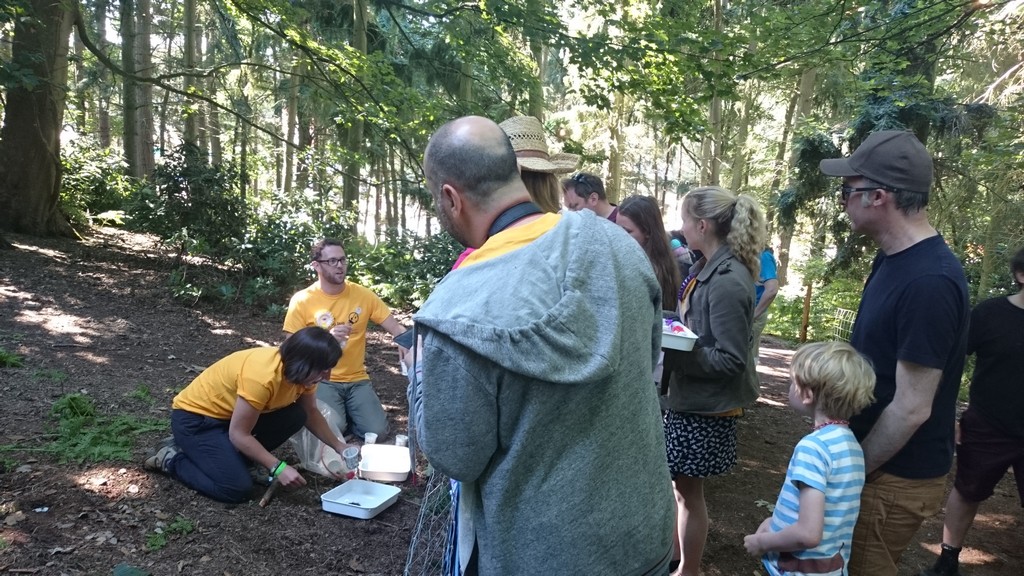
Kieron Brown from the Earthworm Society of Britain ran earthworm charming competitions, where the public has to make noise to drive earthworms out of the ground (it is thought to mimic the noise of moles or rain and force them to move upwards to escape). The soils here were very dry and sandy so not many earthworms were found but people still enjoyed learning about them and making lots of noise!
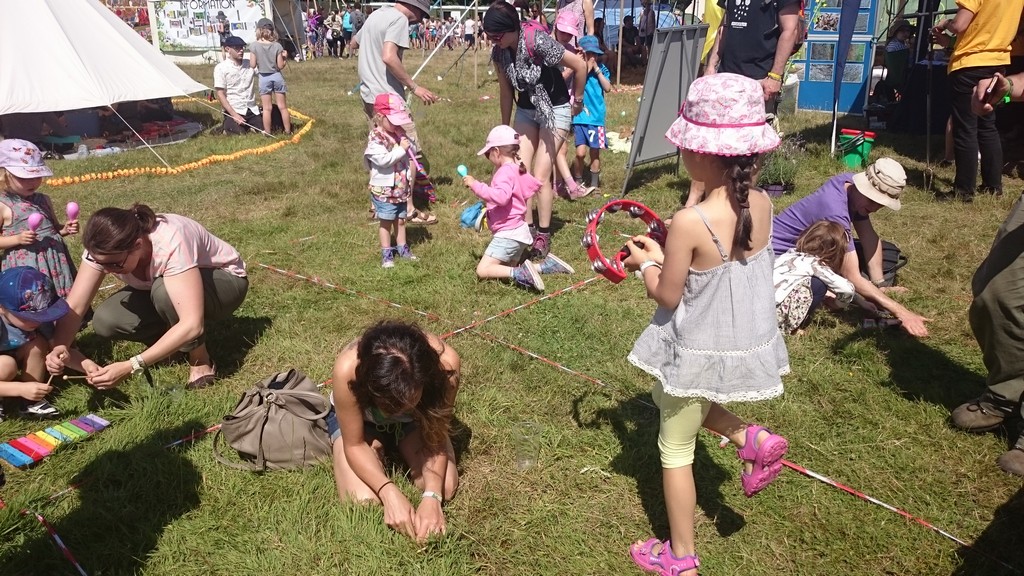
Ladybird expert Helen Roy of the UK Ladybird Survey gave talks on ladybirds and their parasites, accompanied by singing parasitised ladybird David Urry. In addition to craft activities, another event throughout the day was an insect sports day were people chose insect species to ‘compete’ in events such as high-jumping and sprint to see who would win and then see how they measured against them (my long jump was a pathetic 60 cm!). The public were also invited to vote for their favourite insect and could examine some of the invertebrates we had found during our bug hunts.
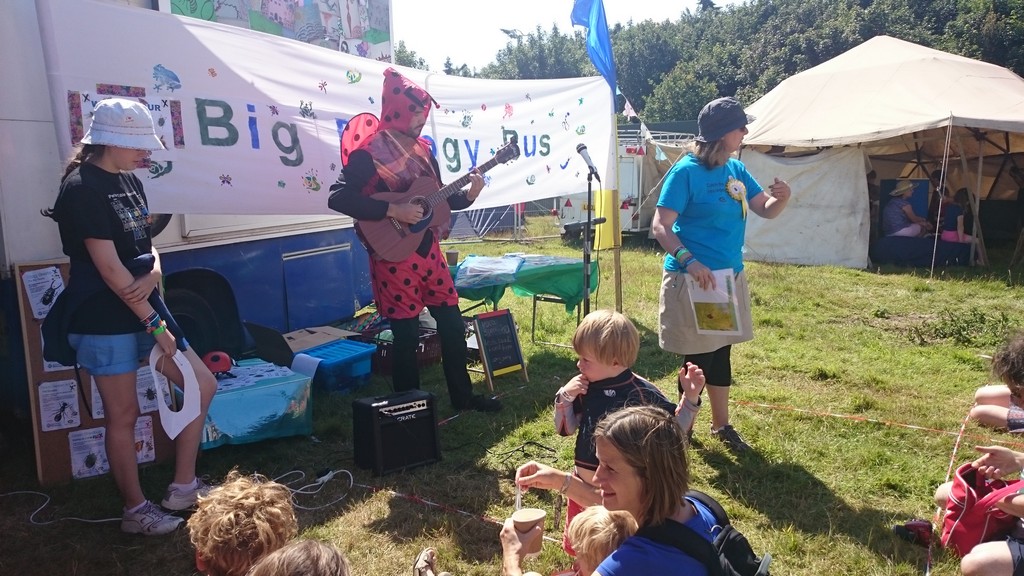
It sounds like I didn’t really see much else of the Festival, and to be honest I didn’t really! I was much happier hunting for insects and adding to the species list for the bioblitz than going to see the acts, although I did go see a comedy show and listened to Portishead and The Vaccines from a safely muted distance.
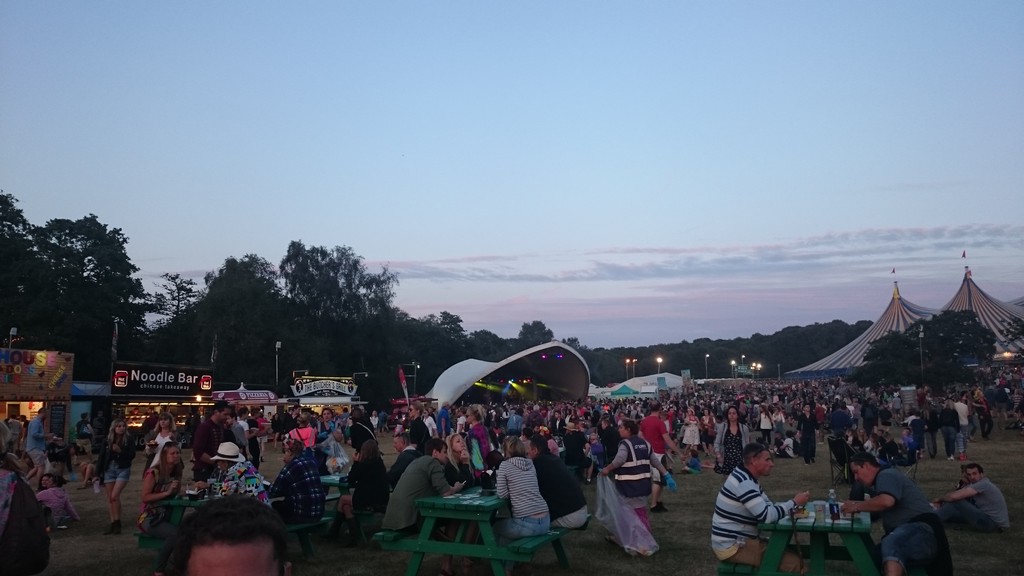
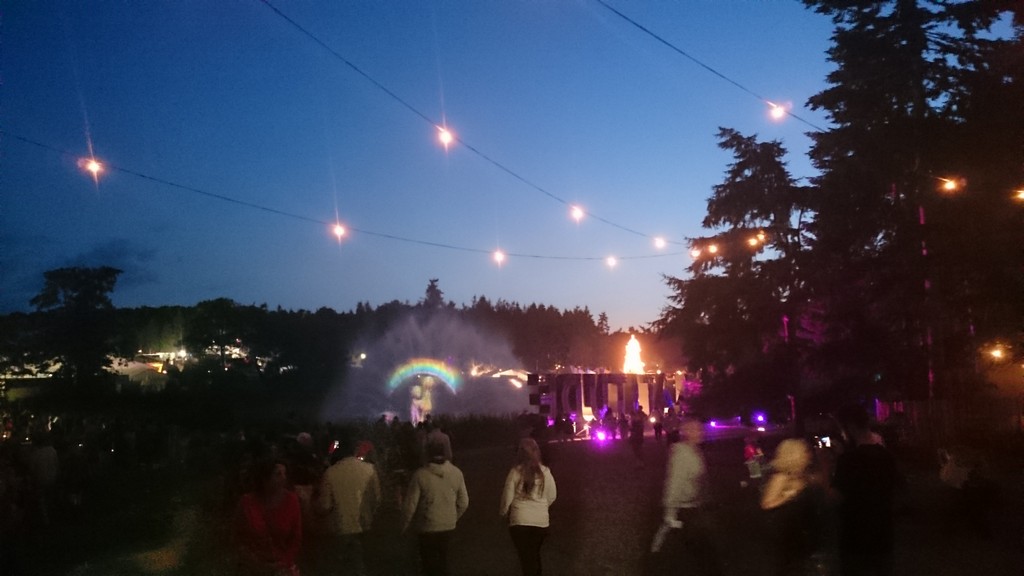
After three days of insect activities, bioblitzing and portaloos I was back off home, and sensibly I had taken the Monday off to recover. I had a fantastic experience – challenging, exhausting and fun in equal measure! and would definitely do something similar again. For more photographs and videos check out Twitter and Vine.
I really enjoying learning how to identify wildlife, so not only do I spend time identifying soil invertebrates as part of my PhD project but I like to attend identification workshops and courses in my leisure time. On Saturday I was at a workshop organised by the British Entomological and Natural History Society (BENHS) learning how to identify land Heteroptera with Tristan Bantock and Jim Flanagan. Many people use the term ‘bug’ to refer to any invertebrate but in strict entomologist sense a bug is a member of the order Hemiptera. These are characterised by having a straw-like mouthparts (a rostrum) which they feed on fluids of various kinds, often plant sap but some on other insects and even blood. They include familiar insects such as aphids, bed-bugs and shield (stink) bugs. UK bugs species are split into three major groups and today I was looking at the Heteroptera which include shieldbugs/stinkbugs and assassin bugs. There are some bugs that live in water, such as the pondskaters and water boatmen, but this workshop was just to identify species which live on land.
Like most insects bugs are identified using keys, which provide a set of questions about features of the insects, progressively narrowing down possibilities until (hopefully!) the correct species is arrived at. There are several types of identification keys but the most commonly used is a dichotomous key which offers two options at each step (called a couplet). Unfortunately keys can be problematic, firstly they rely on knowing what you are looking for, which in some cases can be straightforward e.g. leg black or yellow but in others subtle or open to interpretation e.g. leg thickened towards base or leg equal width. With small species you will need a microscope to see the differences! Keys also have problems that new species may have be found since the key was published, sometimes a very variable species will not fit the description, your specimen may not be an adult, missing the part that you need to look at, or even deformed or unusual in some way. On occasion the keys can just have errors!
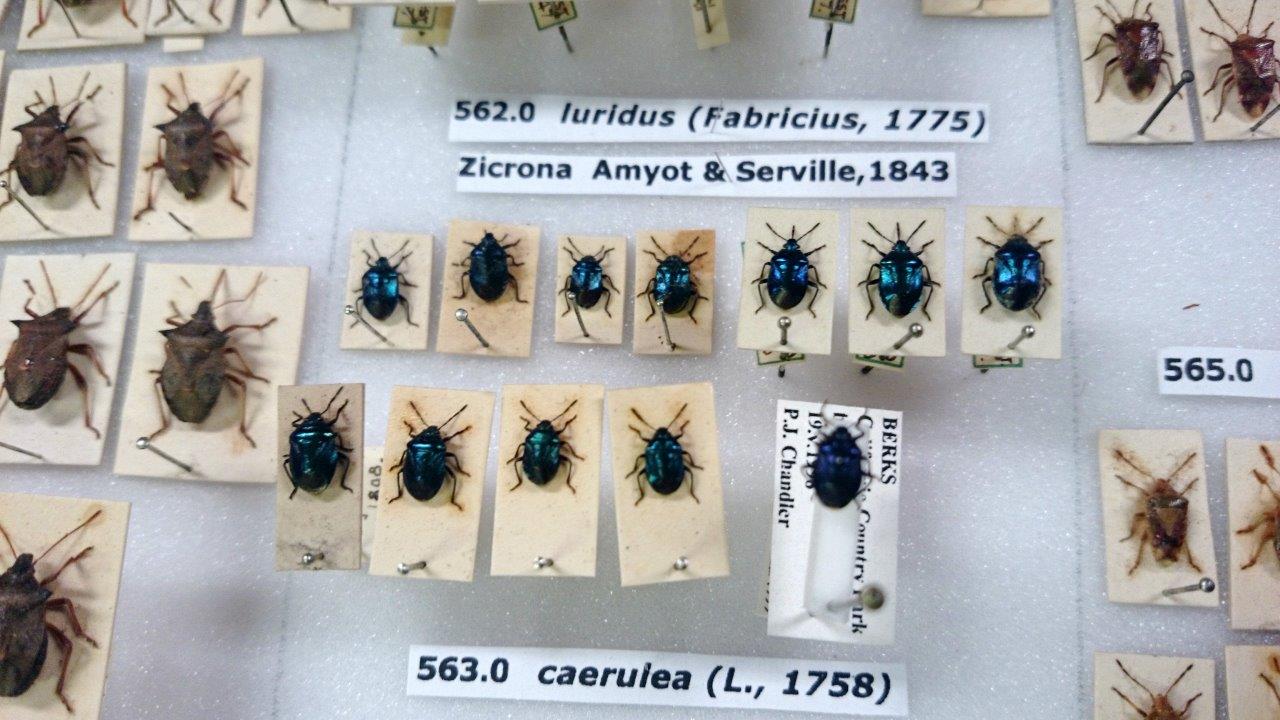
Identifying using keys can be frustrating, but I rather despite this I rather enjoy it, it’s like a puzzle. It helps enormously to have someone who knows the group and a reference collection to refer to, and that is where BENHS is very useful, their headquarters at Dinton Pastures Country Park has a library and labelled specimens which can be used to compare against your specimen to check if your identification is feasible.
During the workshop I identified a few bugs which I found in leaf litter during my MSc Taxonomy and Biodiversity project, I didn’t have very many but it is particularly satisfying to work on your own specimens, and I can add to the species list for the site. The first bug I identified was a small brown specimen which I found in leaf litter from a rotting tree stump}, I got stuck keying this specimen as the couplet asked if the head was heavily punctured (lots of small round dents) or less heavily punctured. Mine seemed to have a lot of punctures but I soon came to a dead end following that route. After asking one of the tutors for advice it transpired this was one of the less punctured species, but of course without the contrasting one to check against how would I have known that!
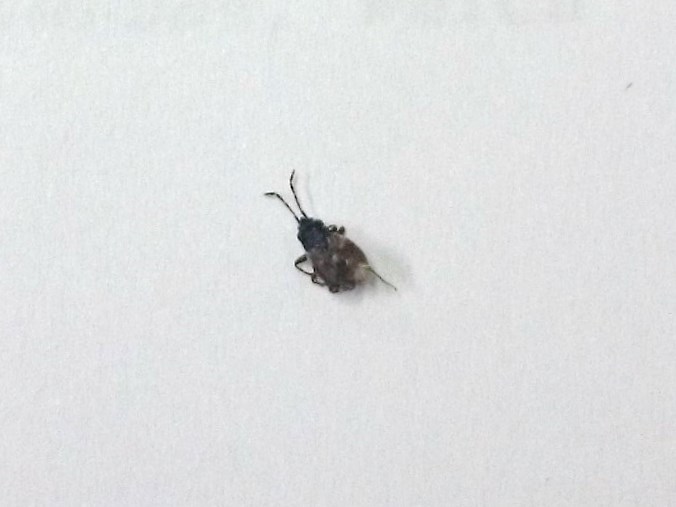
I finally successfully identified the bug as Drymus brunneus, a common bug in leaf litter. Next I identified some even smaller bugs which I sieved from moss during my MSc. These were only 2-3mm in length, but under high magnification were immediately identifiable as a species of lacebugs (Tingidae), which as the name suggests have lace-like wings. These keyed much more easily to Acalypta carinata, which was then confirmed by Jim. The rest of the afternoon was spent practising using the keys on specimens in the BENHS collection, I will have to find time to go through more of my insect collections to see if there are more to identify!