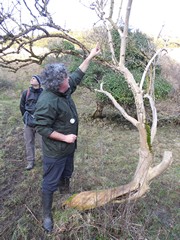
Category: Fieldwork

Throwback Thursday – Chasing flies in Scotland
This Throwback Thursday is from my trip to Scotland with the Dipterists Forum in September 2013, a wonderful week in the highlands collecting flies which I wrote up as a guest post for the Natural History Museum Curator of Diptera’s Blog.
Chasing flies in Scotland
Between handing in my MSc thesis and my viva voce, I was fortunate enough to have the opportunity to join Dipterists from the Natural History Museum on a collection trip to Scotland as part of the Dipterists Forum Autumn Field Meeting. Despite the daunting prospect of a long journey and sharing a cottage with people I barely knew I couldn’t pass up the opportunity for an intensive week studying flies which was also my first trip across the border.
I had a fantastic time, proving to me yet again that no matter how scary something seems it is always worth doing it anyway. I even had the honour of writing up the trip for Erica McAlister’s Curator of Diptera’s Blog, so rather than blog the trip here is
Field trips through the eyes of innocents….
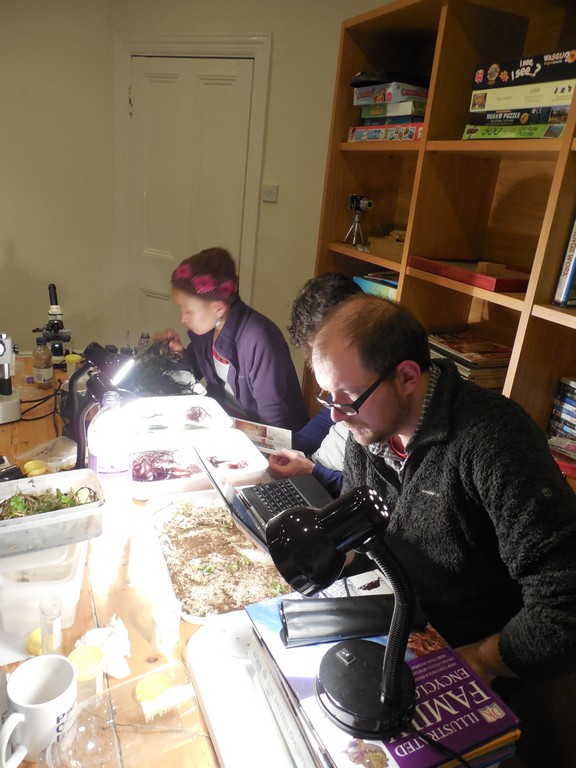
Dipterists under the (double) rainbow, Knappach Cottage, Kingussie

Since the trip I have joined the Dipterists Forum committee and am now Treasurer. Sadly I have not had the time or money to go on another fieldtrip, but next summer’s is local to me in Kent, so hopefully I might be able to take a couple of days out and switch earthworms for flies!
Throwback Thursday – A weekend of hoverflies (August 2013)
This week’s Throwback Thursday covers a course on hoverfly identification I attended in August 2013 as part of a qualification in Biological Recording and Species Identification.
Soil, microbes and pasties
Last week I was pleased to have another day of fieldwork, this time in the New Forest National Park in south England. The New Forest includes one of the largest areas of pasture, heathland and forest in south east England and the site we visited is Whitley Wood, a oak-beech wood pasture woodland with grazing deer and ponies. The Natural History Museum Soil Biodiversity Group have been sampling at this site for soil and leaf litter invertebrates nearly every month since 2002.
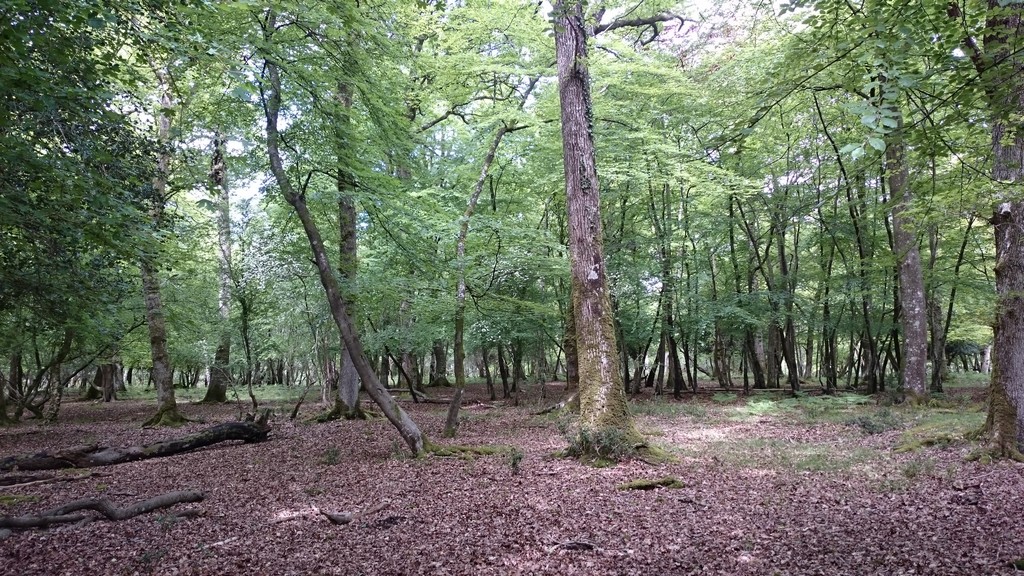
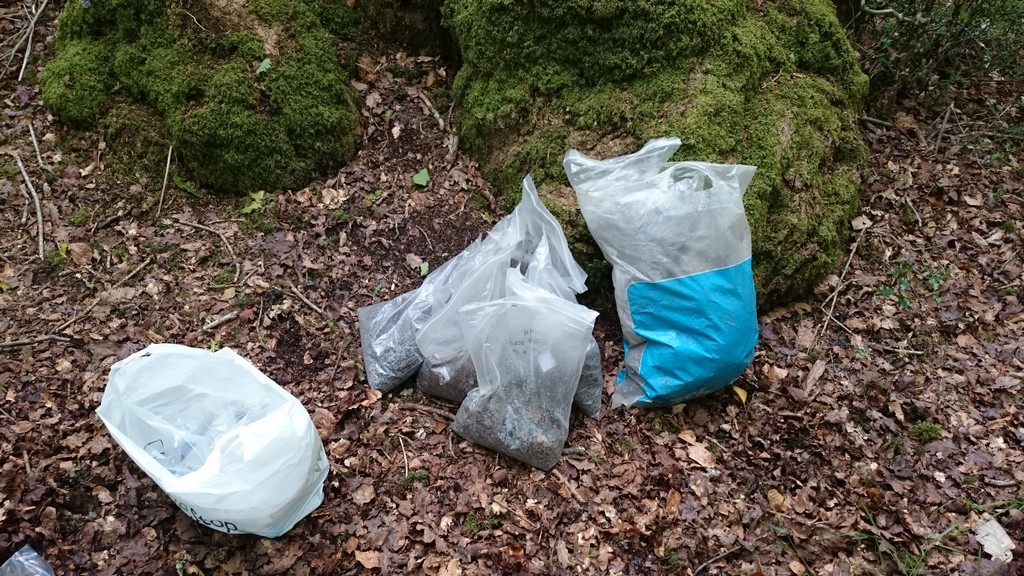
A 100 meter transect line is laid at random in the forest and a sample is taken every seven meters. This comprises a measure of soil moisture and temperature and what plants are growing in a 1 m quadrat. Then a pit is dug and any earthworms collected and the leaf litter from the 1 meter square is sieved and put into bags to take back to the Museum. From this month onwards we will also be collecting soil samples which I will be analysing for microbial DNA, I will then use this to investigate how microbe diversity changes during the seasons and the relationship with invertebrates.
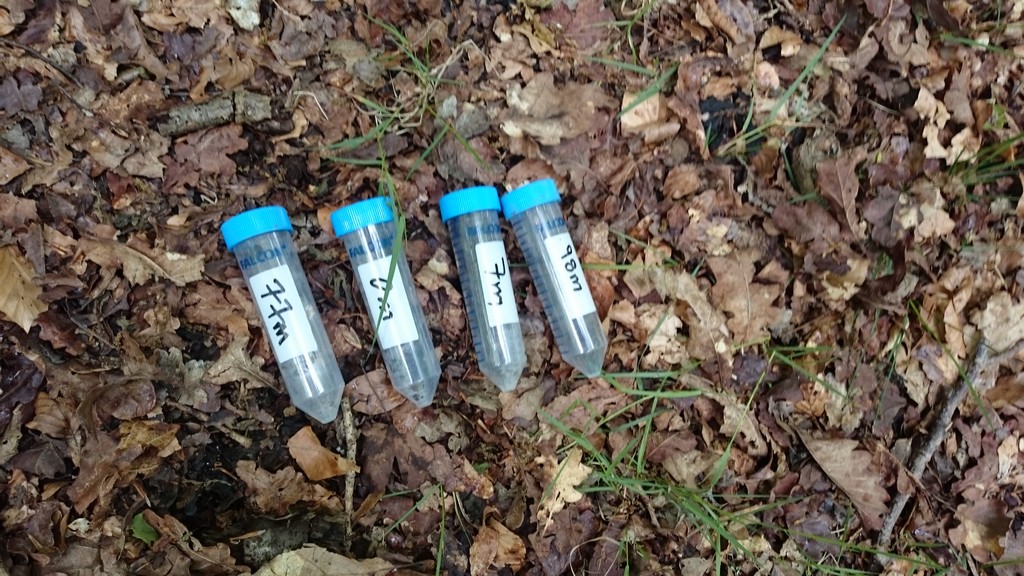
Using a syringe barrel as a soil corer I took four samples per quadrat which were then mixed together in a tube, both syringes and tubes had to be sterile to avoid contamination with microbes from other places and each quadrat had its own tube – this will also give an idea of how variable soil microbes are across the woodland.
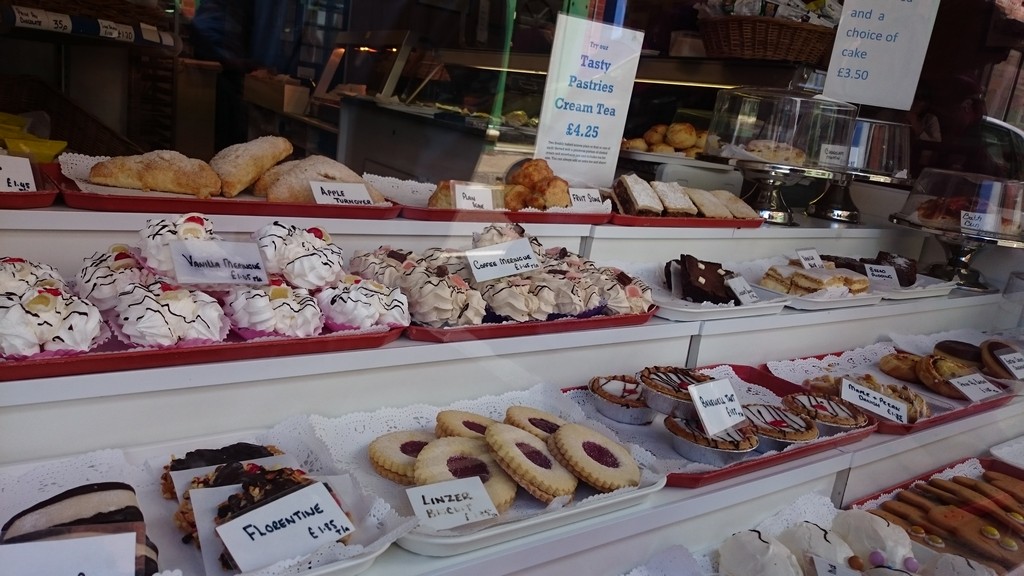
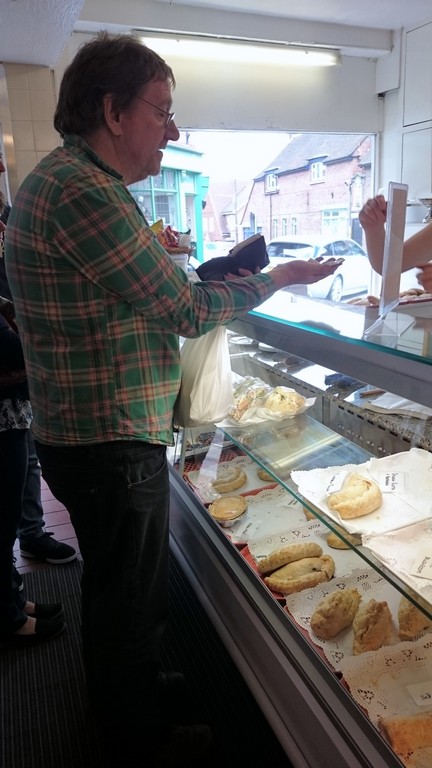
Whitley Wood fieldwork is popular with Soil Biodiversity Group volunteers and students because at the end of the fieldwork we visit a pastry shop for lunch. Then its back to the Museum to process the samples.
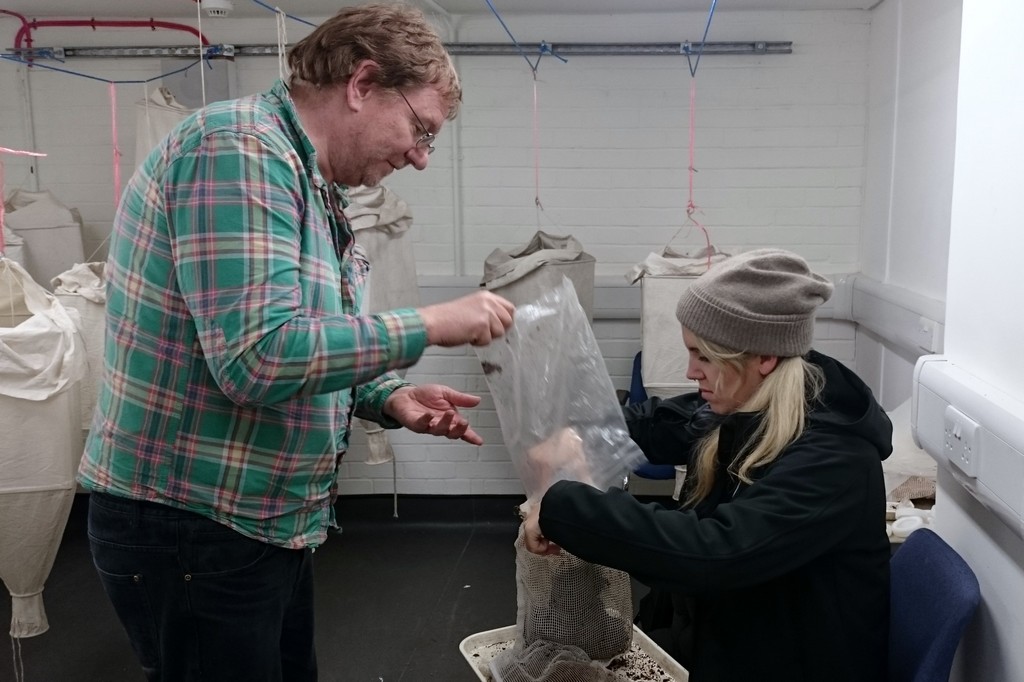
To extract the invertebrates the sieved leaf litter is placed into Winkler bags, these are made up of two parts – the inner bags are made of mesh and look a bit like laundry bags, these are then suspended in a fabric funnel which is hung up in a room for three days. The top of the bag is tied up to stop the invertebrates escaping and at the bottom there is a bottle of alcohol. As the leaf litter dries out the invertebrates move down the funnel into the bottle to be preserved for later counting and identification.
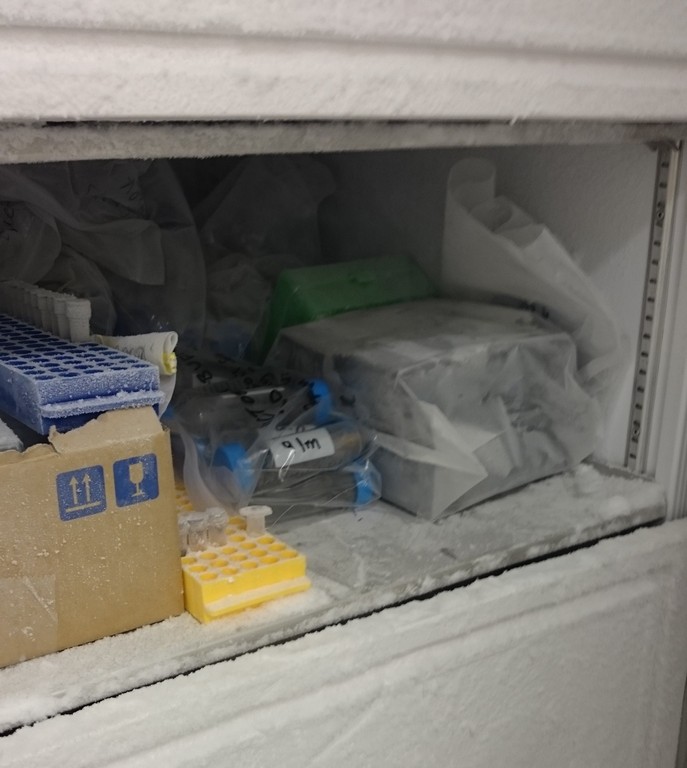
Of course this time I also had my soil samples to store. The DNA extraction and analysis will require travelling to my co-supervisor’s laboratory at Imperial College Silwood Park so rather than going every month I am storing them up to process in bulk. To preserve the microbes they are stored in a freezer at -8o°C ready for when I need them.
Digging for earthworms in Dorset
As much as I enjoy working at my computer analysing data, it felt good to get out to get outside and collect some data of my own recently. I was sampling earthworms in Purbeck, Dorset with the help of Soil Biodiversity Group volunteers John Chesebro and Fevziye Hasan (https://twitter.com/fezidae), Rachel Efrat of the British Geological Survey (https://twitter.com/RachelEfrat) and my boyfriend Andrew.
The study site is part of a long-term study into heathland restoration. Heathlands are found in areas of free-draining infertile, acidic soils, and are dominated by shrubs such as heather and gorse. Part of this heath was converted to agricultural land in the 1950s by the application of large quantities of fertiliser to increase nutrients, and lime to increase the pH of the naturally acidic soils. Since then there has been a move to restore the original heathland vegetation, which is a habitat for rare species.
The original study compared different methods of making the soil more acidic, by removing the topsoil, adding sulphur or iron sulphates, these were then sown with cuttings from the nearby heathland. Not all the plots were successful, but it did result in a long gradient of different soil pH levels, which I am using to investigate the influence of pH on earthworms.

Earthworms are known to prefer alkaline conditions, and species vary in their tolerance to pH levels but the data we already have is confounded by being collected across different soil types and locations. At this site the plots are on the same soil type, so hopefully the data will show the pattern of earthworm abundance and species with pH which can then be compared with the overall data set to see if the patterns are similar or different.
I had a GPS device with the co-ordinates of the plots, and had chosen ones with a good range of pH measurements. Once we had found them the fieldwork was straightforward, we take measurements of soil pH, moisture and temperature and then dig a standard sized hole and collect any earthworms we find.

Any earthworms found in the soil were preserved in methylated spirits to be identified back in the laboratory.

We were fortunate to have three days of good weather, which was a novelty as my previous experiences of earthworm sampling has been in the cold and rain! The dry spring did mean the soils were not as wet as I expected however, which necessitated some changes to the sampling in order to maximise the number of earthworms sampled – hopefully it will be enough.


Dirt Science
Having a PhD funded by NERC (the Natural Environment Research Council) means that I have priority booking on advanced training courses related to their remit of environmental research. I was fortunate enough to find a place on Dirt Science: An Introduction to Soil System Science held at Cranfield University collaboration the British Society of Soil Science and the James Hutton Institute.
My background is in soil biodiversity rather than soil itself so I was pleased to be able to attend the course to learn more about soil functions and how to excavate a soil profile and describe the different layers. The week started with lectures and discussions on soil functions and an introduction to a research challenge which we would be working on within groups during the week. The next day comprised the BSSS ‘Working with Soils’ course – a hands-on field day were we exposed a soil profile and were shown how to use an auger (a tool for extracting a soil core).
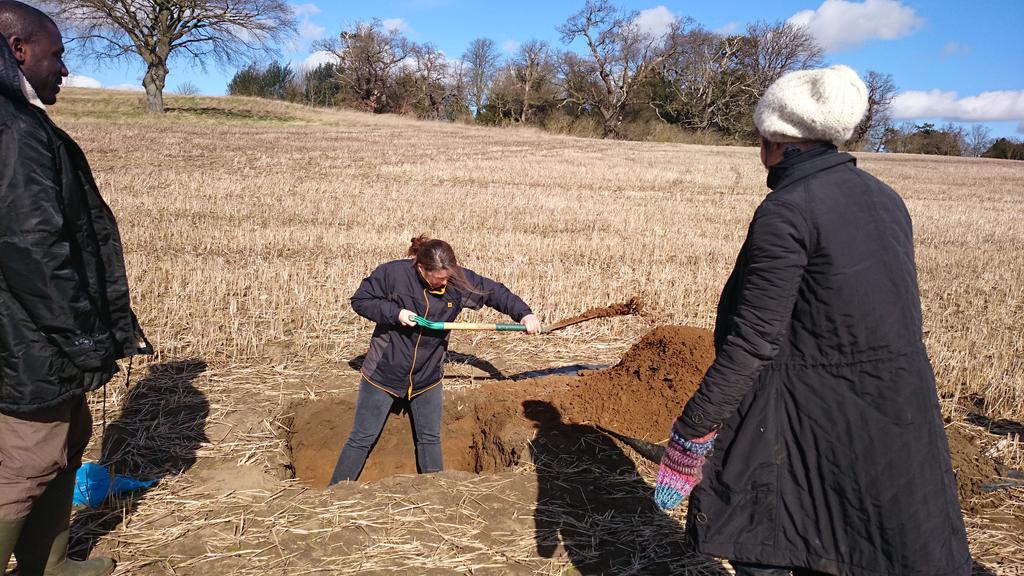
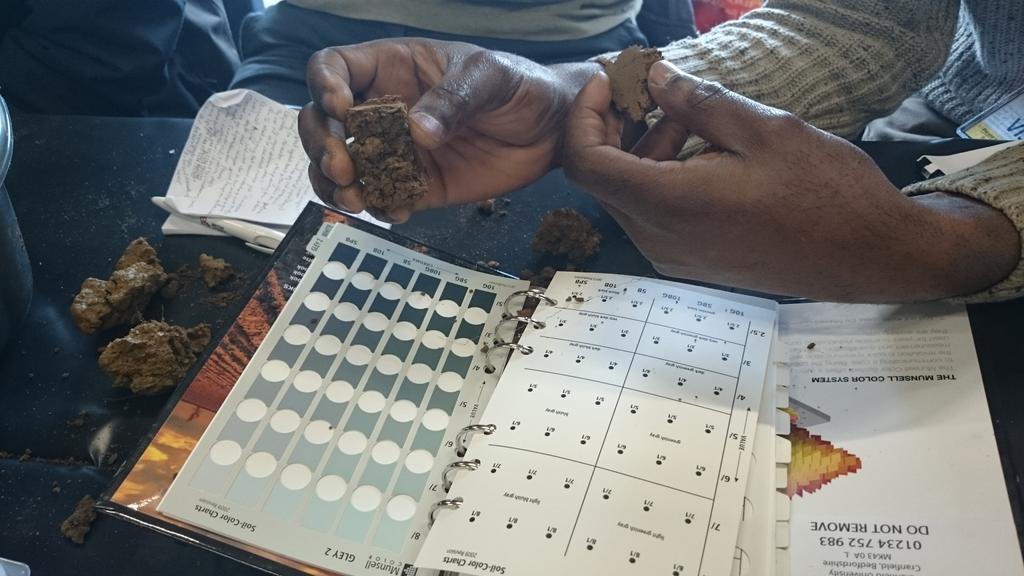
Once we had dug the hole we were shown how to identify the different soil horizons (layers), including colour (using a colour chart), texture (by handling the soil and identifying whether it is sandy, loamy or clayey).
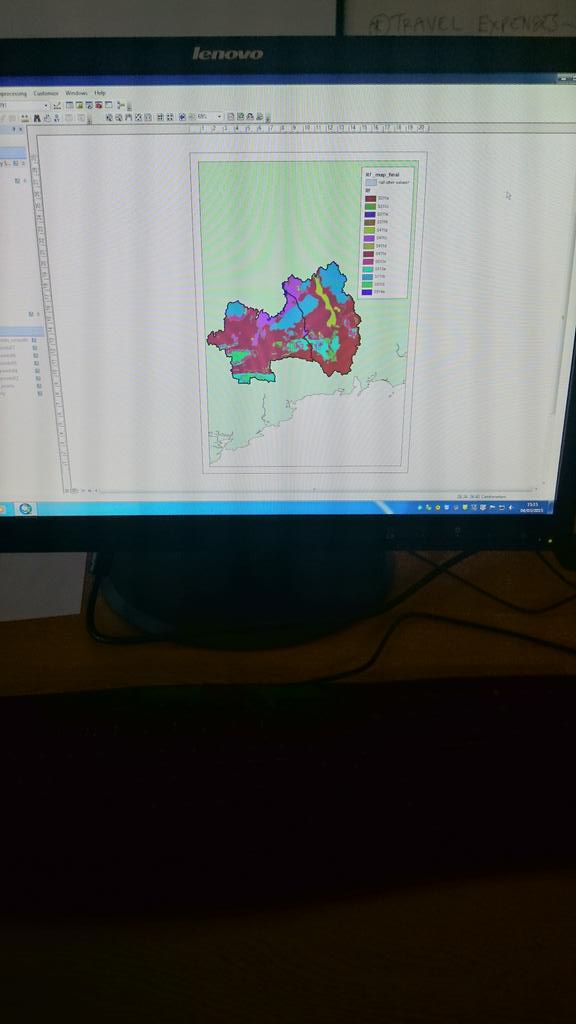
The next day we were introduced to soil data sources available in the UK and some of the software and applications that have been developed to interrogate these data. This was particularly interest to me as my research will be collating data on soil biodiversity from different sources and if I can incorporate some of the data available on soil properties into my computer modelling this could be very useful. The afternoon was spent using computer modelling techniques to predict soil properties and types and creating digital soil maps.
The next day covered the using of sensing technologies to estimate soil properties, including a tour of the some of the equipment developed at Cranfield University to do this. Sensors attached to a plough can be used to collect data on soil properties as it is moved across the field. This gives farmers detailed information on which part of their fields need more fertiliser etc. allowing targeted application. The final session was on how to develop a ‘pathway to impact’, this is a document often requested by funders, which provides specific plans on who are the beneficiaries of the proposed research and how to engage and communicate with them. So overall it was a really useful course for me – not only to improve gaps in my knowledge about soil but how I can communicate my research to others and what funders are looking for when I eventually make the next step and apply for future projects.
Check out my Storify for more pictures from the course:
A break from London (with science!) part 4 – splish splashing around
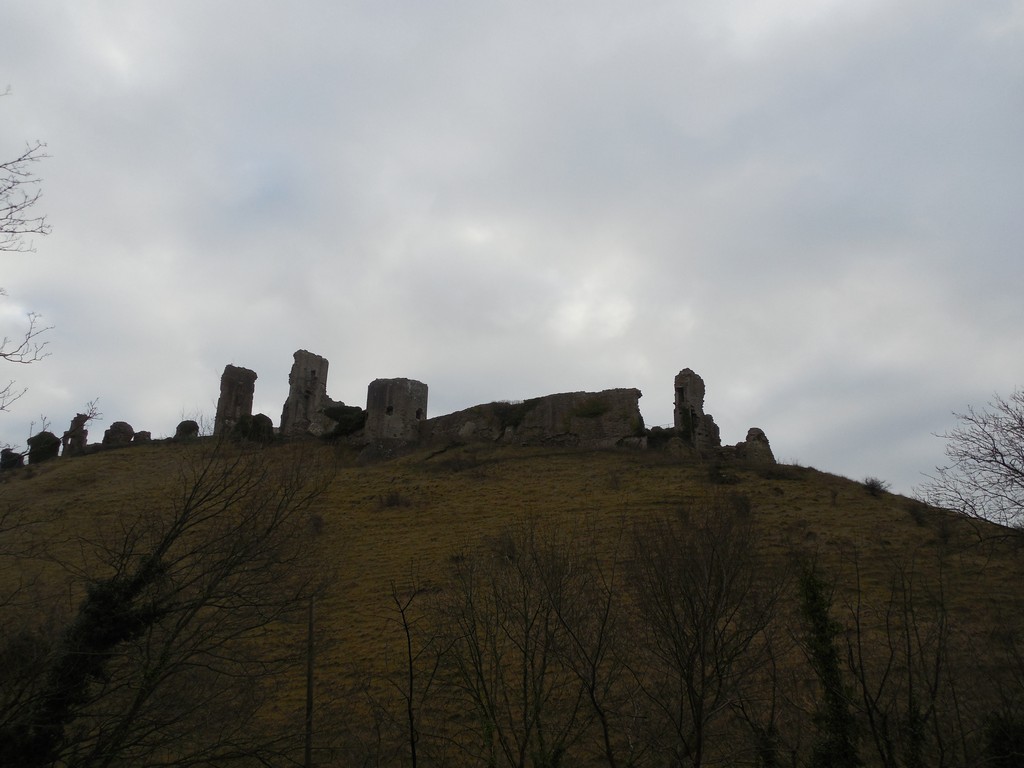
For the final day of the Natural History Museum postgraduate field trip we were off to look for aquatic invertebrates and algae, first in some freshwater and later at the coast. The first stop of the day was at the Corfe River where we had a great view of the ruins of Corfe Castle, an 11th Century fortification built by William the Conqueror (and popular destination for my childhood holidays).
Eileen and Polly demonstrated the technique of kick-sampling, where you hold a net under the water and kick the sediment for a set amount of time, this dislodges animals living on the river bed and they are then collected in the net. This method is used to test the health of freshwaters, as each animal collected is identified, counted and assigned a score based on how sensitive they are to water pollution.
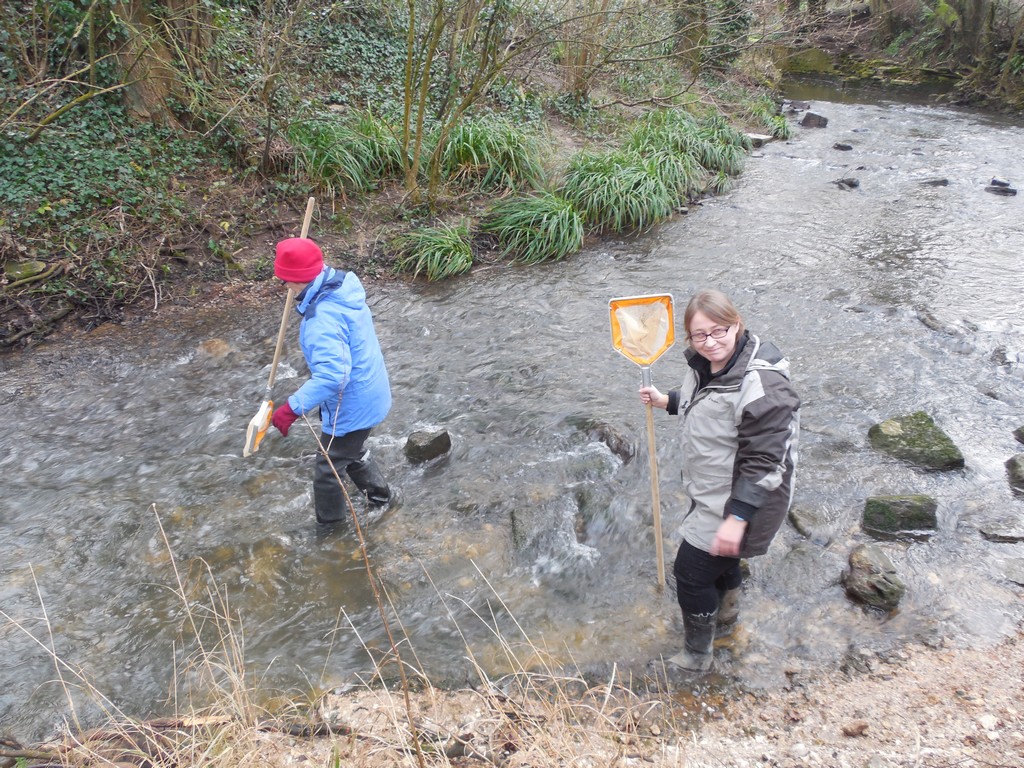
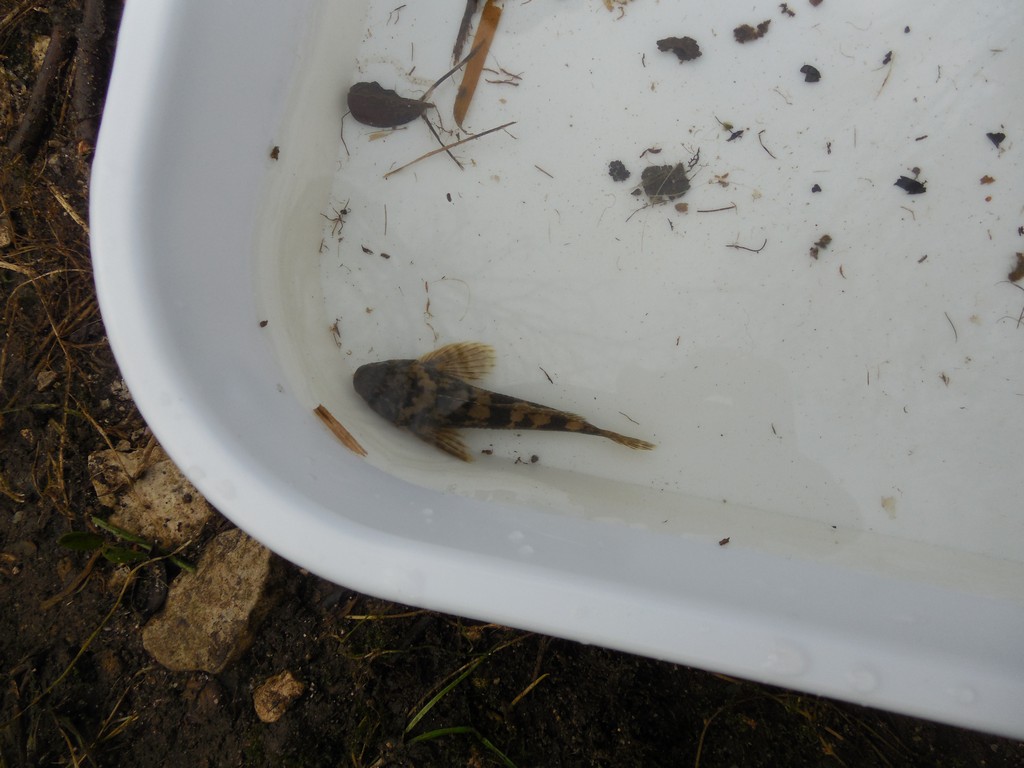
Despite being the middle of winter there were still plenty of animals living in the river, including snails, freshwater-shrimp (actually a type of amphipod, more closely related to woodlice than the shrimp people eat) assorted insect larvae and we even a Bullhead fish (Cottus gobio).
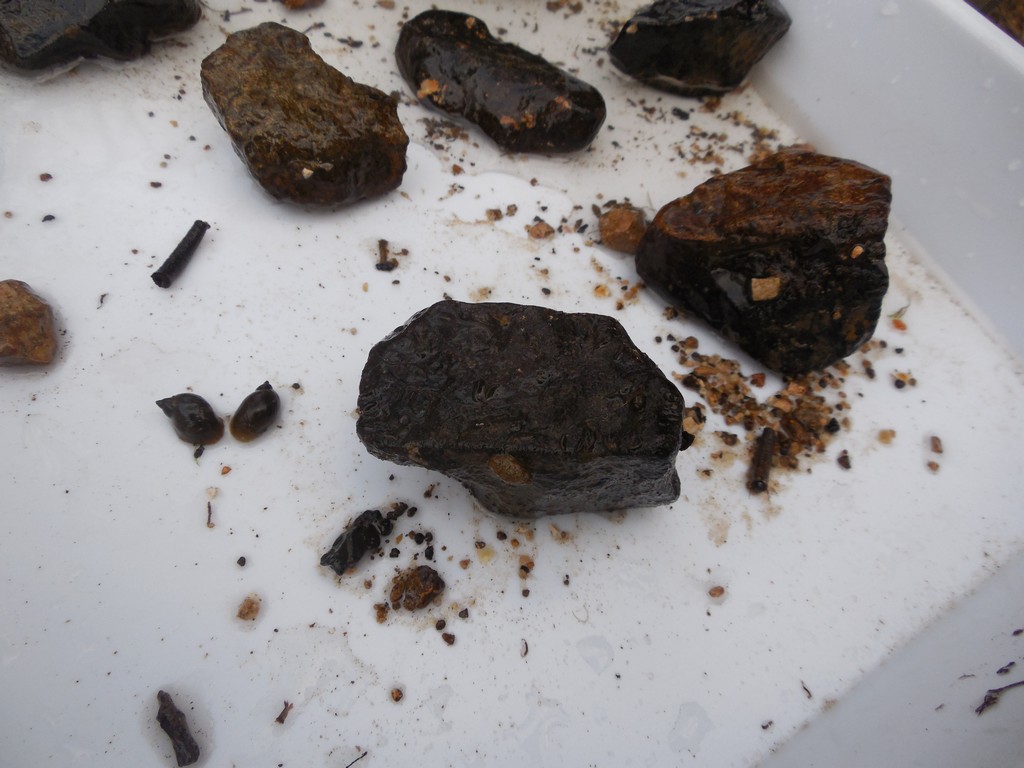
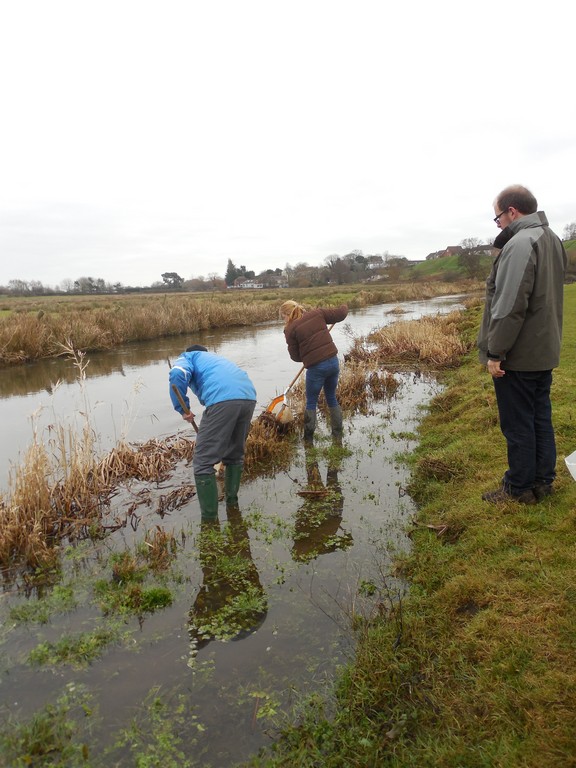
Next it was off to the River Piddle (*snigger*) in Wareham. A larger river but which had unfortunately recently been partly dredged and had most of the vegetation cut back, but we did find plenty of Minnows (Phoxinus phoxinus) and I had a dig around the banks to find some earthworms to identify later.
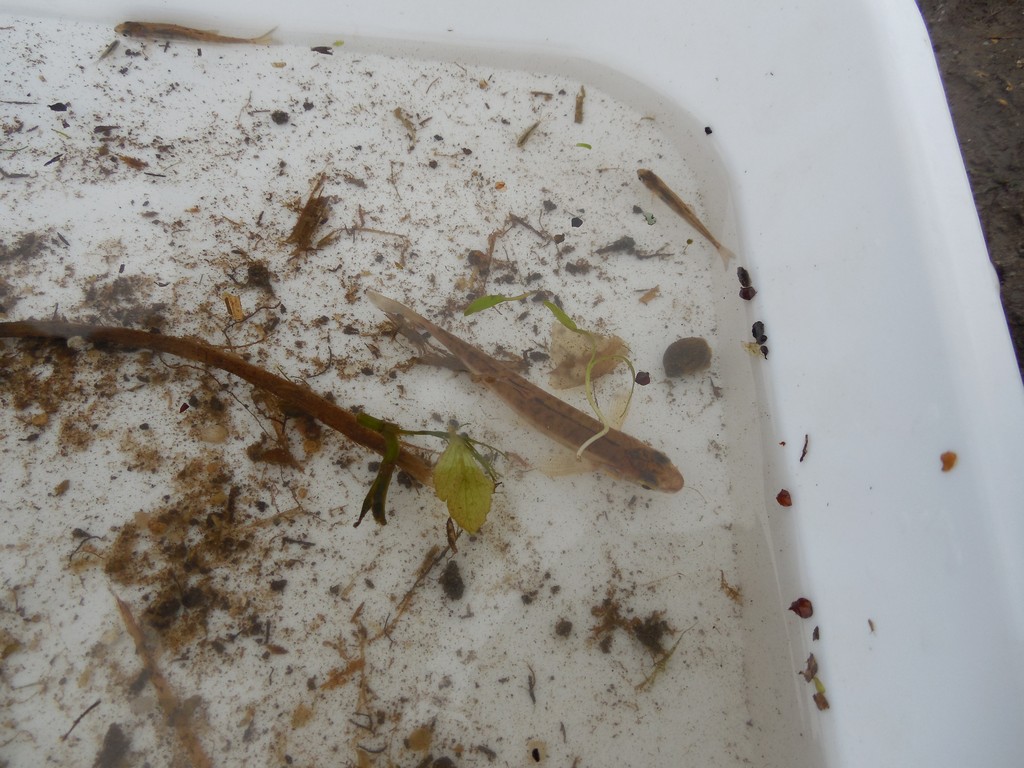
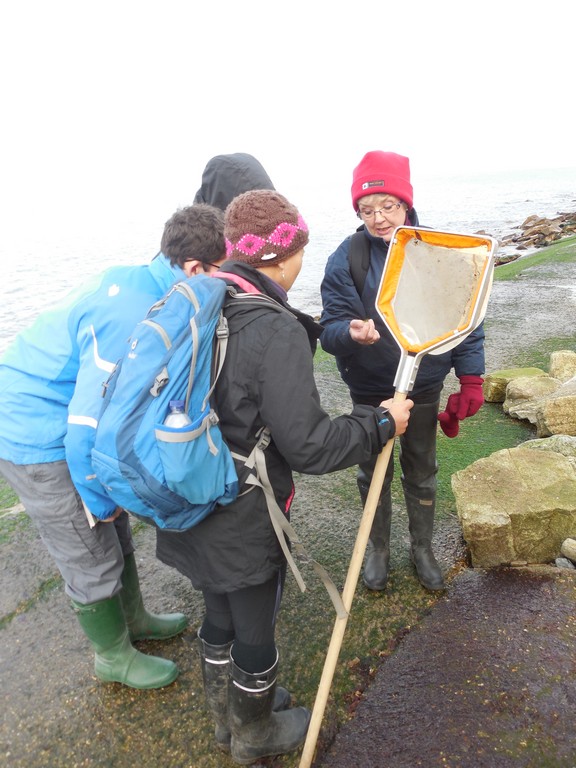
After going back to the Old Malthouse to have lunch (and warm up) plus do a little identification of some of the specimens we brought back from the Corfe and the Piddle wet set of to the coast at Swanage to do some rockpooling.
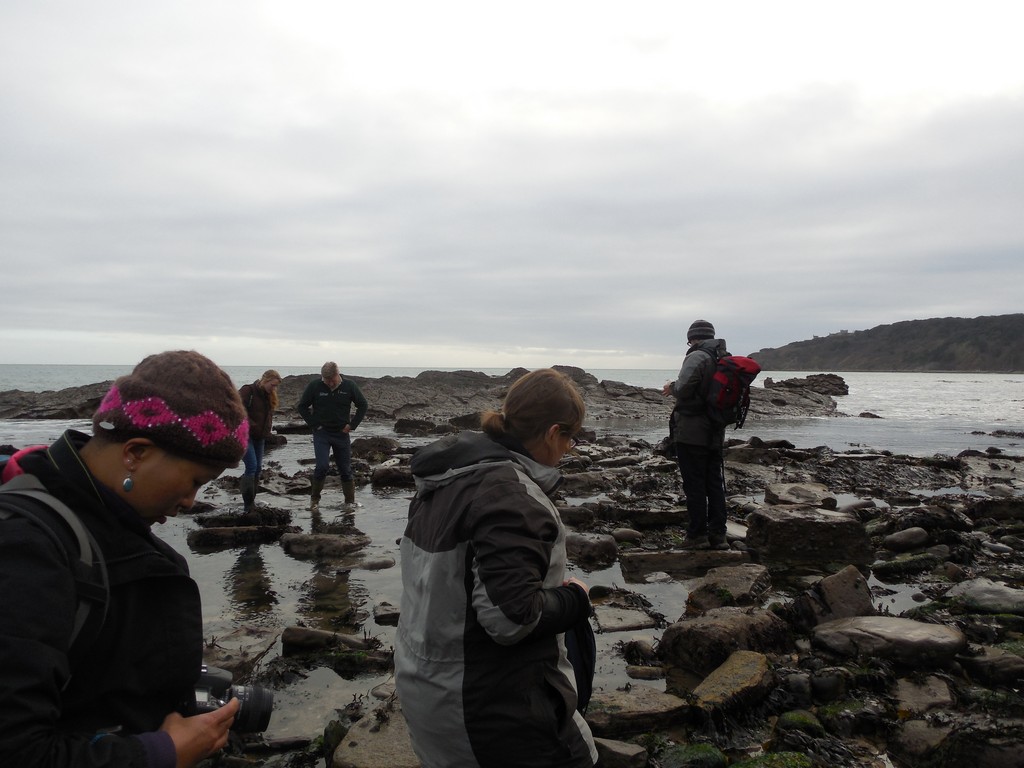
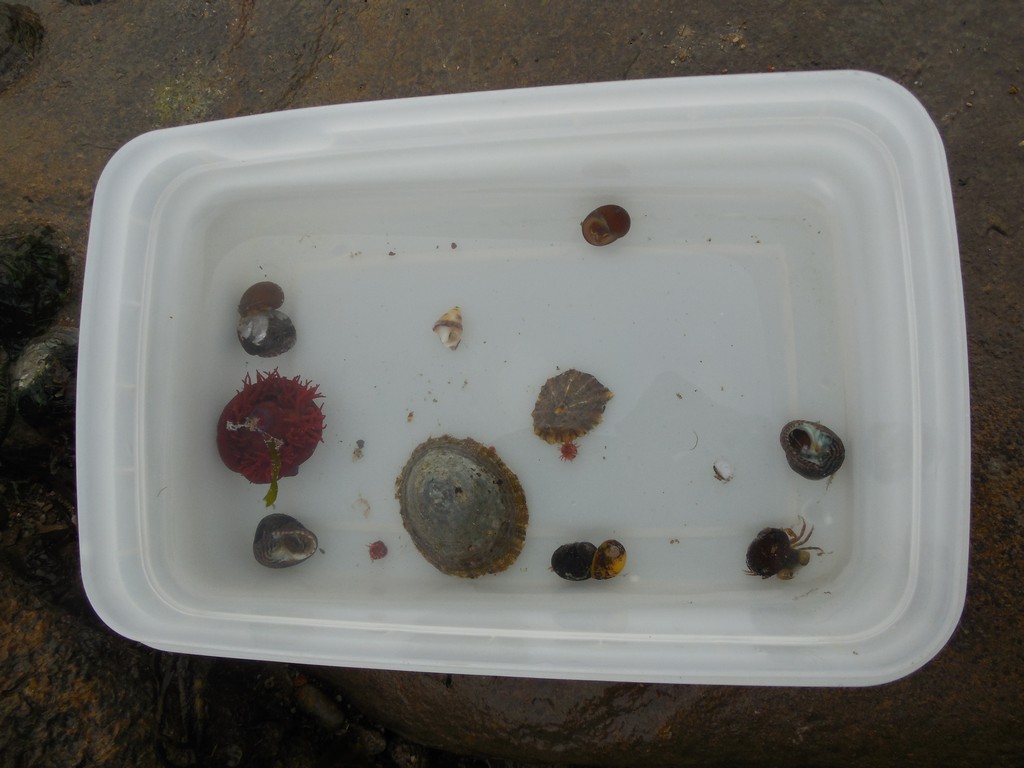
We found two species of limpets, assorted periwinkles and topshells. There were Beadlet Anemones (Actinia equina) in several colours, you can see one below which had ‘babies’ budding off from it. There were also some tiny Shore Crabs (Carcinus maenas). We also recorded many seaweed species which Eileen helped us identify later back in the lab.
A break from London (with science!) part 3 – something’s fishy
Two attendees on the Natural History Museum field trip to Dorset were parasitologists, and they brought along some herring and a dogfish for us to dissect and look for parasites. Firstly we inspected ‘our’ fish for external parasites such as fish lice or leeches, but every fish was clean. Next we removed the gills and looked at them under a microscope to see if any parasites were attached. Again, none of the fish contained any parasites, leading to complaints of them ‘being too healthy”(!)



The next stage was to open up the body cavity and remove the organs to look for parasitic worms. I could immediately see that my herring was female, due to the large pair of roe, but at first could not see any parasites in the organs. After looking carefully I eventually found some small, white worms curled up into tight balls, which when removed with forceps into water started to uncurl and wiggle around. I eventually collected around 10 of the worms from the herring, quite a small number, so I was told. These nematode worms were probably the larvae of a nematode belonging to the genus Anisakis, a very common parasite in marine fish and mammals. It is harmless to humans when the fish has been frozen or cooked but can rarely cause an illness called anisakiasis when ingested with uncooked fish. The worms were preserved in alcohol to go of for genetic sequencing, hopefully we will later get some feedback on what they are identified as.
A break from London (with science!) part 2 – a stony reception
Dorset is the location of some fine geological sites, known as the Jurassic Coast, and designated as a World Heritage Site so we spent a day there with Richard Twitchett, a geologist from the Natural History Museum. The evening before Richard gave an overview of some geological concepts and an introduction to the geology of the area.
The rocks of this area are the sedimentary type, which are formed by accumulation of material compacted and cemented together over millions of years. These type of rocks may contain fossils of plants and animals that died and became trapped and preserved between the layers. The exposed rocks of the Dorset coast are Jurassic (200-145 million years old) and Cretaceous (145-65 million years old) in age. The rocks of Cretaceous age would have originally lain on top of the older Jurassic ones but earth movements have titled them so they become younger as you move east along the coast – like a walk through time. This entertaining video tells the story better than I.
First of all, we stopped by the Square and Compass pub in Worth Matravers to visit it’s small museum, sadly it was closed but Richard gave us a tour of the garden furniture which are constructed from slabs of local rock, including examples of dinosaur footprints and mud cracks.
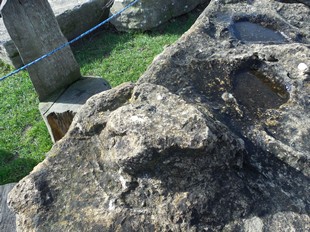
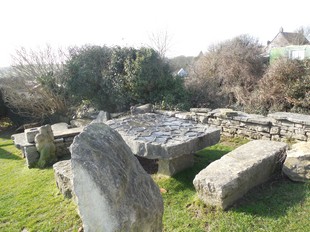
Then we were off to Lulworth Cove, with Richard refreshing our minds on the age and type of rocks in this area from his introduction the night before. Lulworth is one of my favourite sites, but I’ve mostly had the misfortune to visit in the pouring rain, luckily today was beautiful day. Coves form when there are layers of rocks with different resistances, so a sea breach, maybe through a weakness in the rock, carves out the softer rocks behind. West of Lulworth Cove is Stair Hole, a smaller example which provides a glimpse of how Lulworth Cove formed.
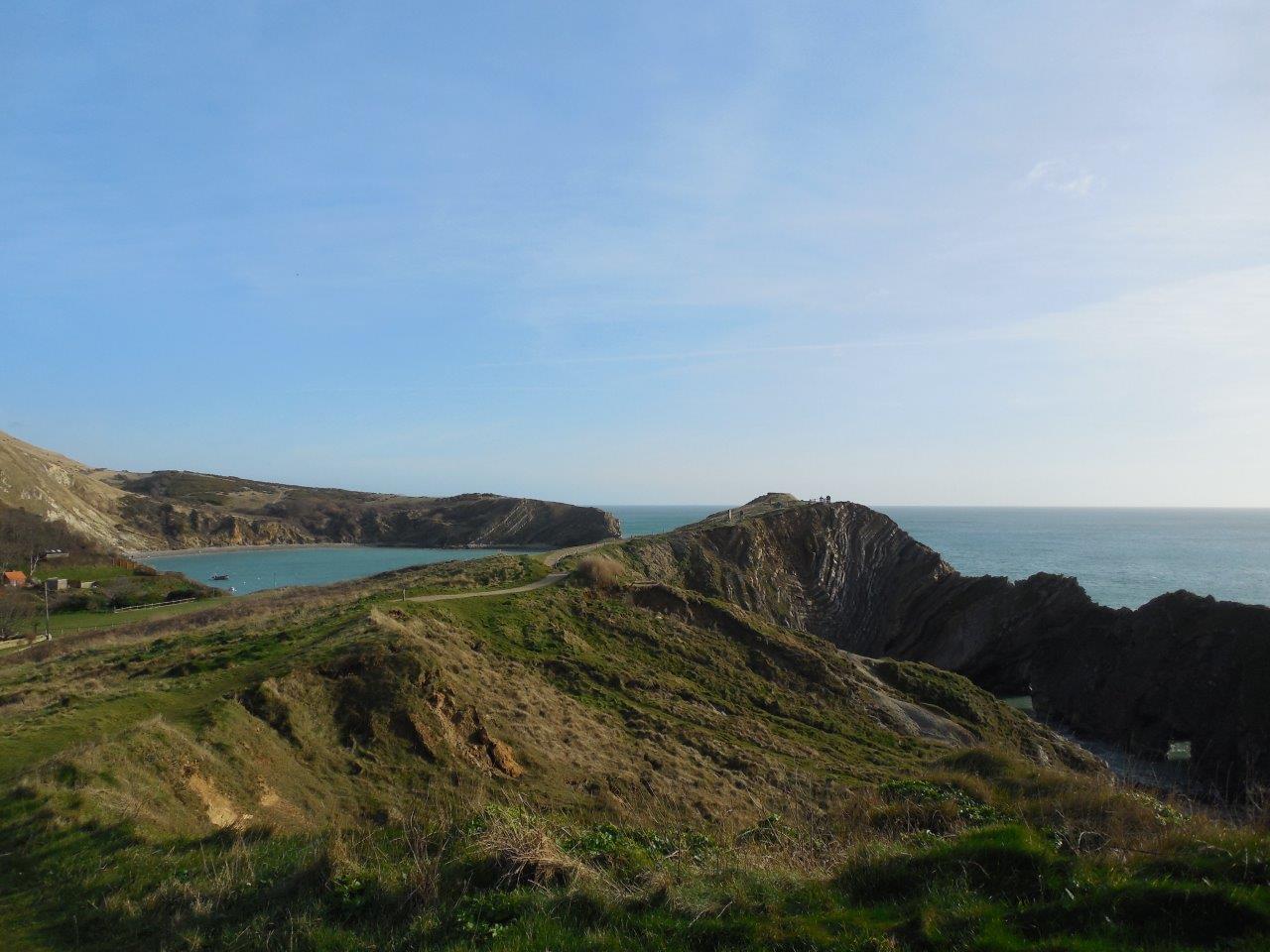
Stair Hole features some amazingly tilted and folded rocks (called the Lulworth Crumple), so that in some places they are completely turned over.
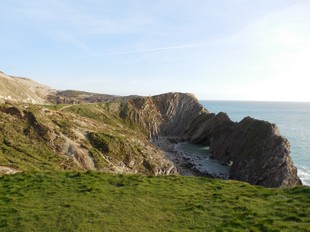
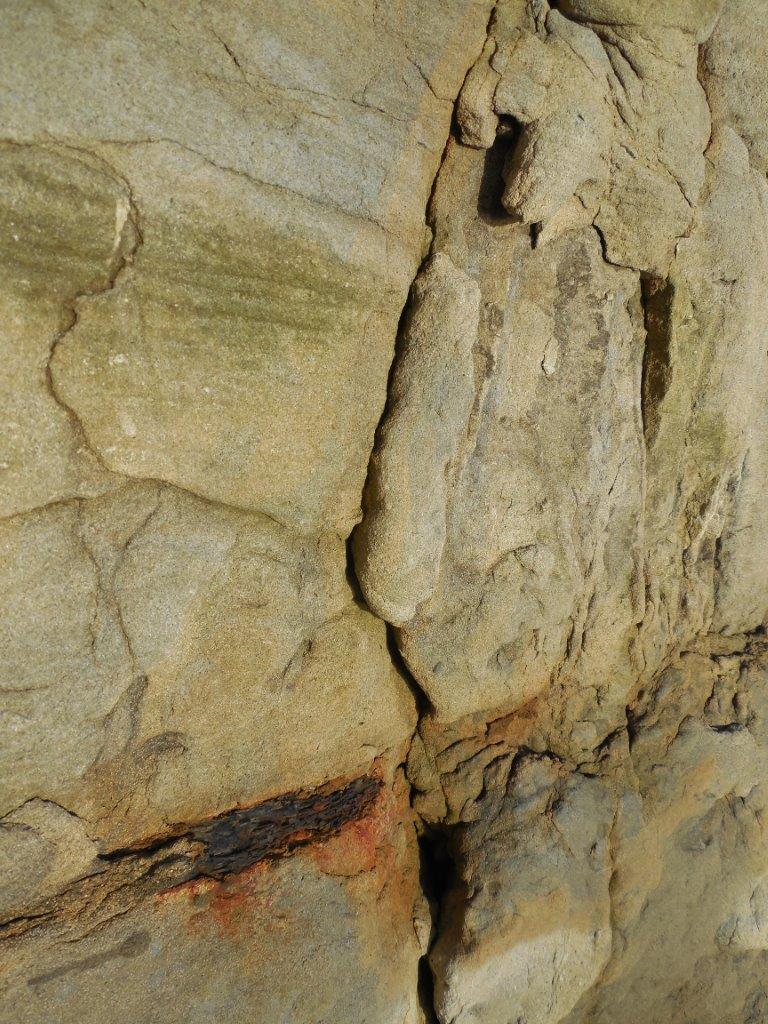
Next we travelled West to Osmington Mills, were the cliffs form a rock sequence called the Corallian. As we walked along the shore Richard explained the different features of the rock and what this told us about the environments they formed in.
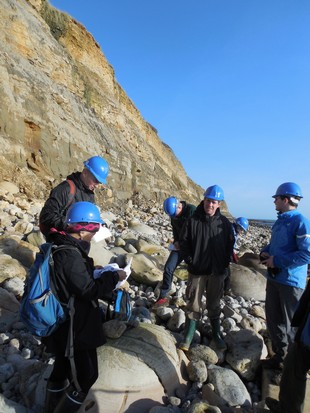
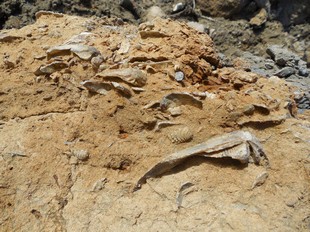
Some layers were full of fossil shells, dumped during ancient storms. Others were finer grained mudstones with many fossil traces of burrowing animals.
After a walk back along the top of the cliffs, admiring the views we set off back to the Old Malthouse for a very different evening activity – parasitology!
A break from London (with science!) part 1 – meetings with tiny plants
The Natural History Museum organises a field trip in Dorset for its postgraduates each year, and I couldn’t pass up the opportunity to get out of London and spend a weekend in the countryside. A group of PhD students and post-docs from a variety of disciplines set of to the Old Malthouse on the Isle of Purbeck (which is not a proper island but a sticky out bit of the southern coastline of Britain).
After settling in at our accommodation and being fed a good lunch we set off to Hartland Moor National Nature Reserve with Museum botanist Fred Rumsey. We were introduced to the plants that inhabit the Moor, and I was particularly excited to meet Dorset Heath Erica ciliaris, a type of heather, which I had not seen before. We also learned lots about the different species of mosses of Hartland Moor. The UK is particularly rich in mosses and their relatives (bryophytes as they are collectively known) with 8% of the world’s known species found in the British Isles.
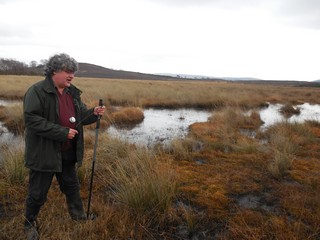
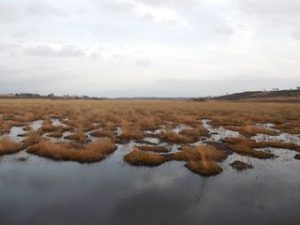
In wet areas sphagnum mosses are particularly important, holding large quantities of water and as dead plants accumulate they produce peat. I knew there were quite a lot of species of sphagnum in the UK but was surprised that we found seven species within just a small area of the boggy areas of Hartland Moor.
In the evening, Eileen Cox, who is Head of Postgraduate Studies at the Museum and an expert on a group of algae called diatoms, gave us an introduction to the many varied forms of algae. We also had a look under the microscope at some algae which had been collected from the Moor.
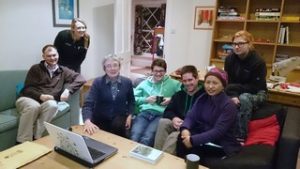
The next day we went out with Fred again to the last recorded location of a rare moss called Habrodon perpusillus, to see if it was still there. Unfortunately we did not manage to find it, but perhaps a more thorough search another time will rediscover it.