The Isle of Skye will ruin scenery for you forever.
You have been warned. There is no place more dangerous for your sense of beauty, especially if you go when the sun is out. After that, no other scenery will seem to measure up. Future holidays will be spent passive-aggressively trying to get fellow travellers to look at pictures of Skye on your phone.
I mean, just look at these photos from Talisker Beach.
Blue skies, crystal clear water, black sand and green pasture behind us. Just shocking.
And the scandalous seafood lunch with Talisker Bay oysters going at ~£1 a piece.
We also visited the Fairy Pools in Glen Brittle, which is a huge misnomer because they were not fair at all. Not to any other place with “scenery” anyway.
Two beautiful dogs appearing at the right place, right time, right pose with sunbeams streaming into the aperture? Well played Skye. Well played.
That’s not all. We took a boat ride out from Elgol to Loch Caruisk and there were dolphins and seals flopping around on the ride.
And again, more scenery to spoil all other holiday plans.
The bottom line is, if you still want to be awed and amazed in this life, don’t go to Skye. You’ll only miss the most ridiculous scenery on earth and I’m sure you won’t mind that.
Studying at Imperial College can seem like the perfect recipe for falling ill. One part stress, two parts exhaustion and liberal dashes of damp, pollen and air pollution mean that lots of students – myself included – have to deal with being sick in London at some point.
Thankfully, the NHS is around to offer quality care, but navigating it can be tricky, as I’ve since learned. For example, many people think that the NHS is free but that’s not exactly true. It’s free at the point of care. This means that only the services you access at NHS clinics or hospitals are free. If you’re given a prescription to fulfill at a pharmacy though, you’ll have to pay for the medicine.
I’ve had the fortune (or is that misfortune) of experiencing the various healthcare options here first hand, so here they are.
1. GP Clinics / Surgeries
One of the first things Imperial will have you do when you start school is to register at a GP clinic. (They also call them “surgeries” over here, which until recently, I had thought described an action, not a place.) Most students will be registered at the Imperial College Health Centre and this is located in the area across the street from the Biz School. It’s very important that you’re registered as you can’t make appointments otherwise. It’s near impossible to walk in and see the doctor over here.
That said, you don’t need to take the default option, especially if you don’t spend that much time at South Kensington. Take your time to decide which clinic works best for you and then send in your registration. You can switch GPs later on but processing can take a long time.
Once you’re registered, appointments can be made online or by phone. Note that it can take two to three weeks before you see the doctor so it’s only for illnesses that can wait. If it’s a minor thing you need done (e.g. wound dressings), you can also walk in to see the GP Nurse. These are very qualified nurses, some of whom can also prescribe medicine. However, since it’s walk-in only, you’ll need to be prepared to wait. It really depends on how busy they are that morning and I’ve waited anywhere between 15 minutes and 1.5 hours.
One more thing to note, GPs can prescribe medicine but they don’t dispense it. Instead, you’ll get a prescription chit to fill at a pharmacy such as Boots or Superdrug.
2. Pharmacies
Under the NHS, all drug prescriptions cost £8, regardless of the drug. This is obviously great if you’re getting relatively expensive medicines but not so much if all you need is some paracetamol, which can cost £0.25 over the counter. Luckily, pharmacists will usually advise you on the most economical option.
Pharmacists in the UK are also the most highly qualified ones I’ve encountered. Back in Singapore, pharmacists are mainly restricted to dispensing drugs – a practice I disagree with – but here, they often act like community healthcare professionals. They can even deliver vaccination shots! If you’re just starting to experience symptoms, I recommend going to see your nearest pharmacist first. If it’s not something they can handle, then you can go see your GP.
3. Hospitals
Personally, I really don’t like going to hospitals. I feel like it means something really serious is happening. However, with the pace of healthcare in the UK, you’ll need to go to the A&E if you have something that can’t really wait. I learned that when I got a hair follicle infection and my leg started swelling up like a balloon. It wasn’t serious but I couldn’t wait two weeks to go to a GP either, so I went to the St Mary’s Hospital A&E department.
If there’s one piece of advice I’d give to any one going to a London hospital, it’s this: Be patient. There will be a lot of waiting and being frustrated is just going to make it harder. Here’s a quick breakdown of what I went through.
Registration (5 minutes)
Nurse triage (10 minutes wait)
Doctor triage (10 minutes wait)
Sent to UCC (1 hour wait)
Sent to Ambulatory Emergency Care unit (AED) => this is where they send patients with more serious conditions but don’t need a bed
Blood test (2 hour wait)
Test results and consultation (4 hour wait, so I went home to have dinner and came back)
Antibiotics infusion (1.5 hour wait after I came back)
Minor surgery to cut out the abscess (2 hour wait)
Yes, I waited more than 10 hours just to get an abscess lanced. But throughout, I also saw just how busy and harried the hospital staff were. At first, I was frustrated about all the waiting for my surgery, then I found out that the doctor was delayed because he’d just come out of the operating theatre. Despite starting work on me at 11 pm, he was all smiles, friendly yet professional. I learned my lesson there.
And perhaps the best part about studying at the St Mary’s campus is that I bumped into him a few weeks later in the library and got to thank him again.
4. Telehealth
To ease the burden on GPs and hospitals, the NHS has rolled out a couple of apps that allow you to see the doctor over your phone. The first is GP At Hand / Babylon, where you can see a doctor over video consultation in minutes. If needed, the video doc can also refer you to a physical clinic, which you can then pop into on the same or next day. My main experience with this is of the chatbot function. My wife had severely cut her thumb and I needed to know what to do to stop the bleeding and prevent infection. The app gave me the advice I needed and also offered to have a nurse give me a call on the next working day, which I declined. However, one key issue with GP At Hand is that you need to transfer your GP practice registration to it. This can take a while so it’s best if you do it before you fall sick.
The other telehealth option out there is NHS 111. This is basically an app version of the NHS 111 hotline. If you’re not familiar, dialing 111 gets you a phone consultation with a trained NHS adviser for urgent medical issues. I called it when I had a splitting tension headache and the consultation I had was pleasant, informative and also non-judgmental. To supplement the hotline, the NHS 111 app is now being piloted with a chatbot and will save you some phone waiting time. I’ve yet to try it but I’d love to hear your opinions about it!
I have an unusual routine every Thursday night. I pull on a pair of swimming trunks, a dive mask and snorkel, and a pair of fins before diving into the deep pool at Putney Leisure Centre. I am an underwater rugby player.
Underwater rugby is played in a 3D-environment where attacks can come from anywhere: above, below and all around you.
Underwater rugby (UWR) started life in Germany in the 1960s as a way for divers to stay fit during the winter. It quickly took on a life of its own and today, it is played in much of Europe, as well as the US, Australia, Colombia and Singapore. There are 6 players on each team and the aim is to put a salt water-filled ball into your opponent’s goal basket at the bottom of a 3.5-5m deep pool.
Scoring a goal in UWR involves carrying the ball to the other side and placing it in the opponent’s goal basket
In London, I play with PURE Underwater Rugby, the only UWR club in the city, and my time with them has led to some of my most treasured experiences here.
First, joining a club outside of Imperial means I get to meet people I wouldn’t normally encounter. Londoners from all walks of life play with PURE and our roster includes a hairdresser, an accountant, a stand-up comedian, a future Catalonian firefighter, and a British anthropologist who hitchhiked his way through the Congo in early 1990s. We also have players who come down from Cheltenham, Gloucestershire, to play with us on Thursday nights. That’s a three-hour drive each way and makes me embarrassed I ever complained about the commute to training back in Singapore.
Some of PURE’s players travel three hours each way to make it for Thursday night training
Being in London has also allowed me to pit my UWR skills against players from all over Europe and it has been a truly eye-opening experience. My club in Singapore is the only fully-established one in Asia so we don’t normally have much variation in opposition. By contrast, since I started playing in London, I’ve faced players from Hungary, Italy, Spain, Colombia, Finland, and of course the UK. I’ve also had the privilege of taking part in international tournaments with PURE, where we’ve faced teams from France, Germany and Spain. Perhaps my most memorable experience this year will be clinching third place with PURE at the Coupe de Gascogne in Bordeaux.
Taking 3rd place at the Coupe de Gascogne in Bordeaux with PURE, one of the most memorable experiences I’ve had in Europe.
Finally, playing with PURE lets me be at the forefront of growing the sport in the UK. Compared to other parts of Europe, where there is a formal, fully live-streamed Euroleague, underwater rugby is still a new sport in England. To raise its profile, I have been given the chance to drive the club’s social media efforts, launch its Instagram account, and lead recruitment efforts for the 2019 UWR World Championships in Graz, Austria. Not only has this helped to hone my marketing skills but it also means I have extra reason to cheer when Team GB plunges into the pool next year.
Ever wanted to represent Great Britain? Team GB underwater rugby is looking for new recruits to train up in time for the 2019 World Championships in Graz, Austria. Give me a holler if you’re interested.
Ultimately, if there is one take home message I have from my experiences with PURE, it’s this. Get out of your comfort zone and don’t be afraid to look for experiences outside the safety of Imperial. Your time here will be so much the better because of it.
It’s no secret that London can be expensive to live in but thankfully, having a good meal doesn’t have to burn a hole in your pocket. Here’s a quick guide to getting tasty treats at wallet-friendly prices.
1. Supermarket meal deals
Every supermarket and also Boots chemists do meal deals that bundle a sandwich, a snack (e.g. chocolate bars, crisps, side dishes), and a drink for anywhere between £3 – 5. Tesco’s is the cheapest but I generally prefer the stuff at Boots and Co-Op.
2. Ready-to-eat/cook meals
London favours the supermarket savvy. Most places have loads of delicious ready-to-eat/cook meals at bargain prices. I love Tesco’s curries at 2 packs for £4 with a tasty naan alongside. Waitrose has an amazing selection too and you can also get a meal bag with enough food for 3 or 4 people for £10.
3. Markdown hour
Around 6:45pm to 7:30pm, most supermarkets start clearing out their fresh sections. That means you get fresh sandwiches and ready-to-eat meals for a fraction of the original price. I once got a whole pizza for £2 with a £0.39 pot of chocolate ganache. Timings differ every day though so you’ll need to get in sync with your local. If you’re at St Mary’s campus, going down to Mark’s & Spencer at Paddington Station around 6:30pm will get you dirt cheap pastries.
4. Lunchtime deals
Many restaurants do great lunchtime bundles for £5-7. If you’re at the St Mary’s campus, Lena’s Cafe on Paddington does an amazing lunchbox with rice/pasta, three dishes and a roti for £5. There’s also Bonne Bouche with great sandwiches from £3, and the chicken rice set from Warisan Cafe for just £3.50.
Fancy places do great lunch sets too. The two Michelin-starred Dinner by Heston Blumenthal does an amazing three-course set lunch menu for £45. If you’re looking for something cheaper, there’s also Bar Boulud’s (by two starred chef Daniel Boulud) at just £25. Being Asian, I also love the set lunch menu at XU that lets you dig into their excellent mushroom dumplings, xian bing and shou pa chicken for £18 per person.
5. Street food markets
Street food can be quite hit and miss in London. There’s the whole romance of getting stuff from an itinerant vendor but honestly, most street food in London doesn’t measure up. That said, there are some places that still give a legit hankering. The first place I’d go to is Acklam Market along Portobello Road. It’s hidden away from the touristy bits and has 20-30 vendors, with a drinks/stand-eat area made out of recycled packing crates. I highly recommend the Jamaican jerk chicken and the Cubano pork sandwiches. The latter are £7 and big enough for two. I also like Borough Market for the chorizo sandwiches from Brindisa’s; the pulled pork sandwiches (more crackling with that, luv?); and the Ethiopian food.
6. Old school eateries
Some places clearly haven’t changed their menu, decor and their prices for a long time. My favourites are all from around my hood. The first is Cockney’s Pie & Mash, a historic place on the corner of Golborne and Portobello Road that has been serving up traditional meat pies with gravy and parsley liquor (£4-5) for almost 20 years. After you’re done with lunch, head down Golborne Road to Lisboa Patisserie for the best egg custard tarts (£1.50) I have ever had in my life. I also love taking in a pint at the Prince Alfred pub in Maida Vale. This has been around for 160 years and still has “snob screens”. which used to separate the middle-class from the lower, although you have to do mini squats while holding your drink to go through them today.
7. Too Good To Go
People in London don’t like seeing food go to waste. Thankfully, if you download the Too Good To Go app, you can grab a delicious meal for £3-5 while helping to lessen the amount of food thrown away. The app tracks your location and tells you what’s available around you, along with prices and collection times. I’ve not done it yet but some of my classmates have and they tell me it’s extra awesome when a hotel starts offloading its breakfast buffet on you.
Just a few thoughts as I close the lid on two momentous terms at Imperial.
1. You don’t know what you can achieve until you try
I took a big risk doing this course considering the huge cost and my non-science background. Plus it’s been almost a decade since my undergrad days. Yet somehow I have thrived. Amid the flood of new concepts, information and working styles, I find myself with a fighting chance of a distinction (although maybe I’ve just jinxed it). Of course, I still have the massive challenge of my dissertation but this is already beyond what I imagined this time last year. If I hadn’t tried, all this would just be a bunch of ‘what ifs’.
2. Mature students seem to get more out of the MPH
Much of a public health degree is about practical application. As such, it’s a big advantage if you have real world experience to temper the theory taught in class. It’s not just about hard skills. During my course I’ve found that simple yet important things such as version control, keeping colleagues updated and time management are often overlooked. Having these habits already ingrained sets you up for success.
3. Going back to school can be hard for mature students
I’ve been told I look young but, at 34 years, I’m most definitely not. At times, it has been hard going to class with people often 10 years younger, and having to live like a student (ie no income) again. To get through it, I’ve had to constantly remind myself of the reason I’m here: to acquire new skills and open up new opportunities. Having the support of my wife has also been vital. I don’t know where I’d be without her. I’ve also tapped on the school’s free counselling service and that has been helpful, although it can take a long time to see somebody.
It’s been a roller-coaster ride so far. Let’s see what the final term has in store.
If you’re thinking of going to Amsterdam, go to Haarlem instead. No, seriously.
Haarlem is a smaller city just 15 minutes away from Amsterdam by train. It’s got far fewer tourists, cheaper and nicer accommodation, and way better food. PLUS, it’s a mere 20 minute bus ride to the beach!
With the final assignment of term 2 done and dusted, we decided to take advantage of Eurostar’s new direct train from London to Amsterdam (£35 one way). Well, almost direct. It does do a short stop in Brussels and the total journey is about 3.5 hours. Nevertheless, it’s still way more convenient than a flight.
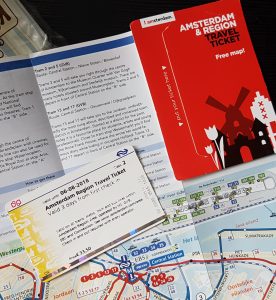
The train gets you right into Amsterdam Centraal Station where you can get a regional travel ticket, which basically opens up all of the little cities, towns and parks around Amsterdam to you. That includes Haarlem, the Keukenhoff Gardens, the beach at Bloemendaal, the little windmill village of Zaanse Schans.
The Sights
Okay tbh, my wife and I aren’t typical sightseeing travellers. To us, an authentic meal in a local restaurant is far more appealing than any old monument. But Holland is most definitely home to some beautiful sights.
The Amsterdam Regional Travel Ticket gets you unlimited rides on buses, trams and trains during your stay.
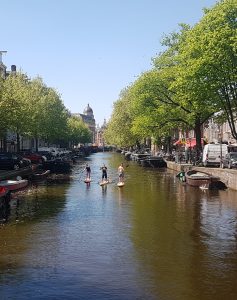
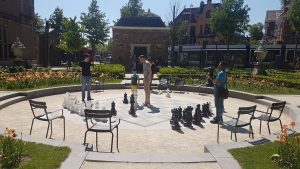
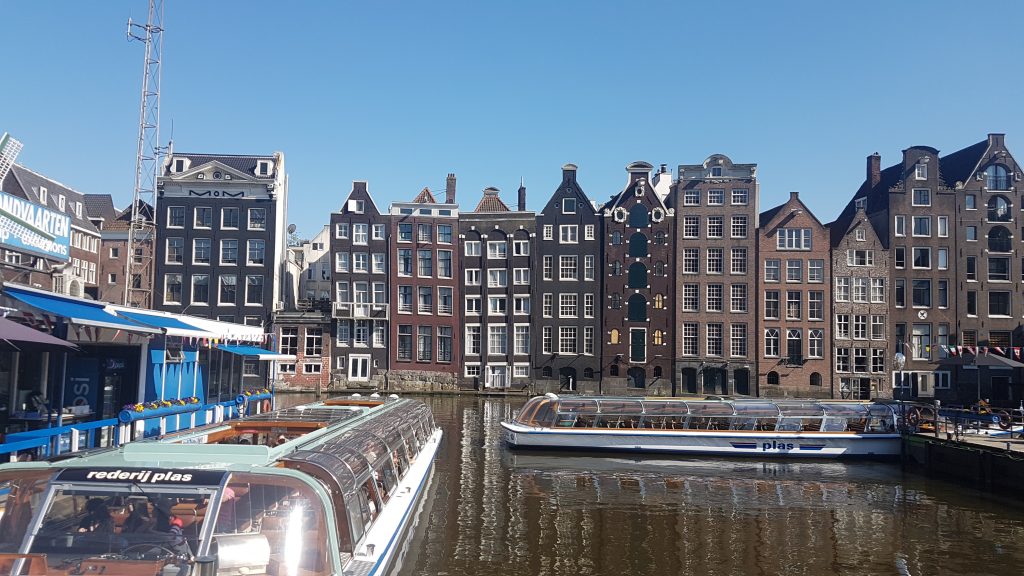
Amsterdam is a gorgeous city and, in the sunshine, it’s simply glorious. There are paddle boarders in the canals, leafy trees dappling the streets with sunlight, and people out and about, even playing giant games of chess. In fact, it was so sunny while we were there that the tulips were wilting in the heat, although even in death, they exuded a surreal beauty.
We spent a day in Amsterdam just wandering the streets without an agenda. Amid all the hustle and bustle, there were little pockets of tranquillity, like the old book market we found at Oudemanhuispoort, where second (or third or eighth) hand reads are still being peddled from old wooden booths bolted to the stone walls. Perhaps fittingly, the book market is just adjacent to the law faculty of the University of Amsterdam, whose gardens are worth taking a stroll in.
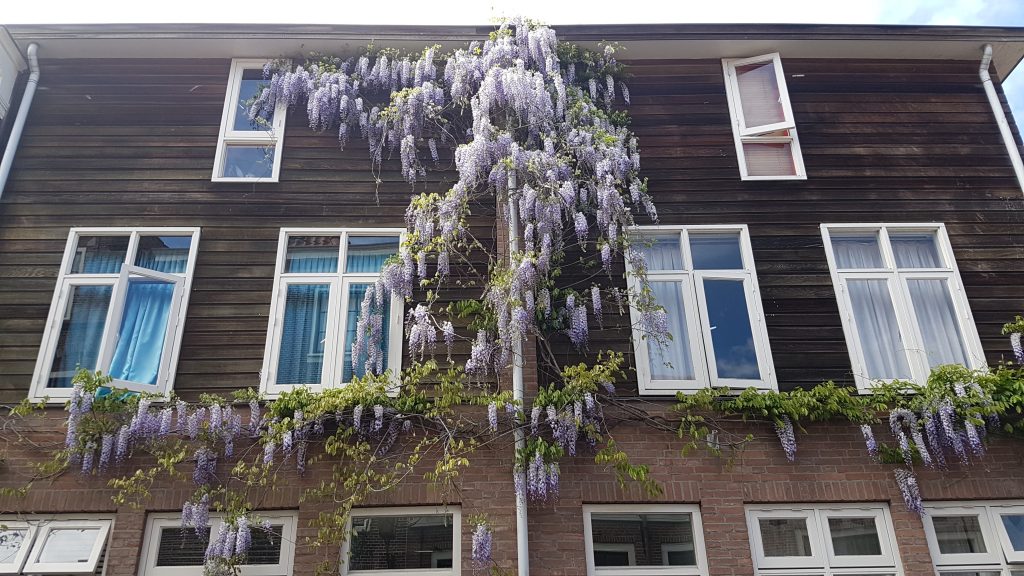
Is it a consequence of studying in a medical school that I thought the building was having a stroke?
Another treat was sitting down by the Oude Kerk and listening to its bells play, surprisingly, the Sesame Street theme song. It put a grin on the face of everyone in that square! Interestingly, the church is right smack in the middle of the famous Amsterdam Red Light District. The story goes that it was built there so sailors could pop over for some quick absolution before another long and dangerous voyage. Today though, the Red Light District is mostly closed. Only one or two windows were open as the city clamps down. If allegations of human trafficking and abuse are true, that’s definitely a good thing, but you’d better hurry if you still want to see the place for yourself.
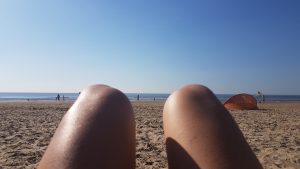
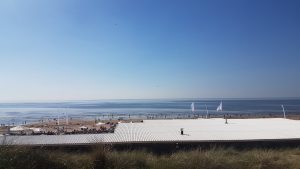
For all its charms though, Amsterdam is really only worth a day. There is so much else to see around it. We found a lovely loft apartment in Haarlem that could easily sleep three and made short day trips from there. First place on the list, THE BEACH. Bloemendaal aan Zee will never be able to compete with the likes of Portugal or Spain. But after 8 months in gloomy London, this was a dose of vitamin sea that was sorely needed. We got to soak up loads of sun, play in the sand and started to look vaguely Southeast Asian again.
The beach at Bloemendaal aan Zee. It’s not Ibiza but my sausage legs ain’t complaining.
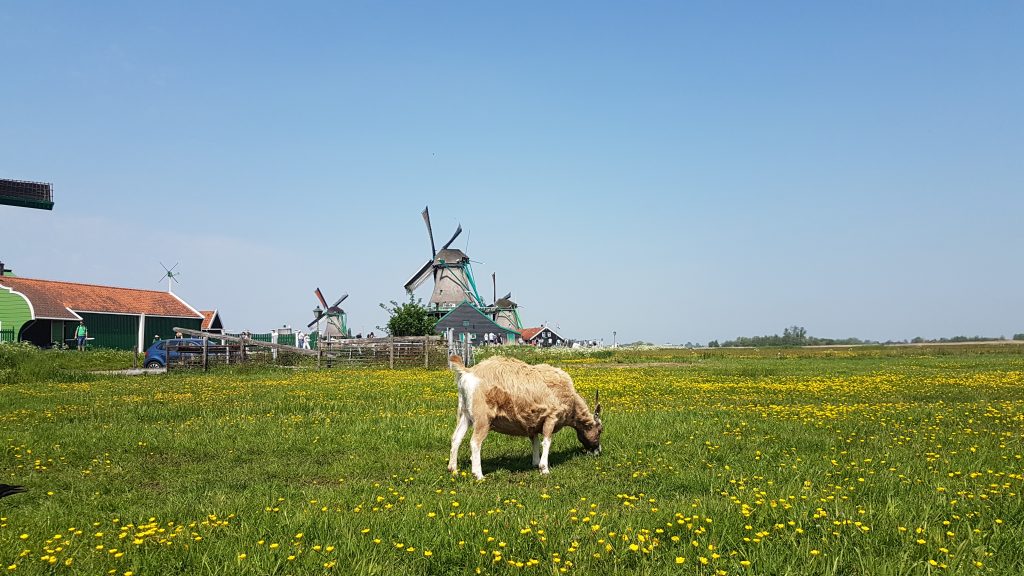
If you can spare the time, the windmills of Zaanse Schans are also worth a quick visit. They are still grinding out some delicious old mustard, and there is also a huge cheese shop where you can taste pretty much everything in the shop. We ended up with a delicious smoked cheese that we can’t wait to break into.
The old windmills of Zaanse Schans, still merrily churning out flour and mustard.
Sadly, we didn’t take many pictures of Haarlem but perhaps that is a reflection of how at home we felt there. Every night, we were serenaded to sleep by the softly chiming bells of the Grote Kerk, its tower brightly lit on the horizon. Since 1562, the bells have been rung between 9 and 9:30pm to signal the closing of the city gates and the tradition has carried on ever since.
The Food
Holland, where toast comes in a beer bottle and coffee comes in a wine glass. Both tasted great.
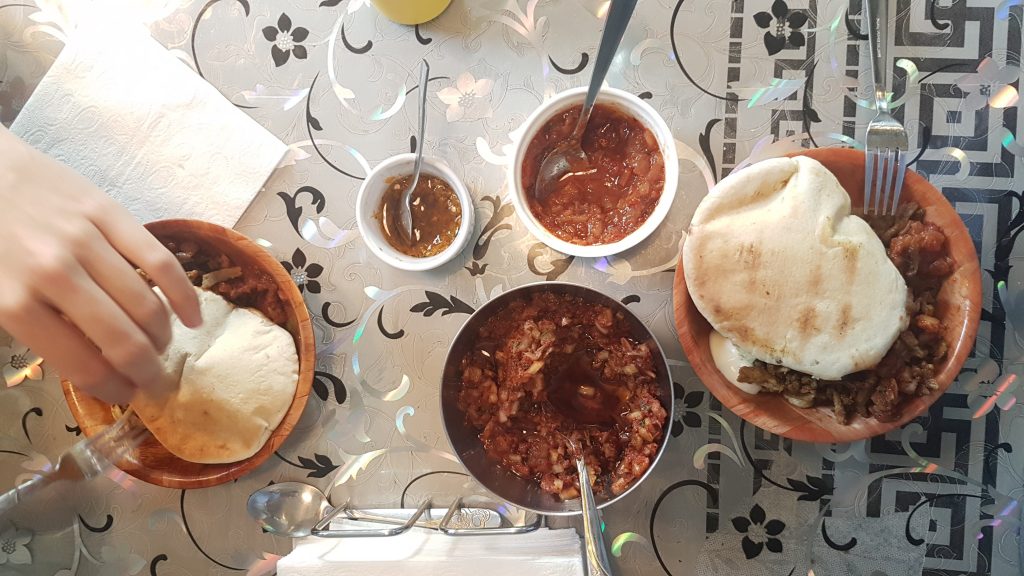
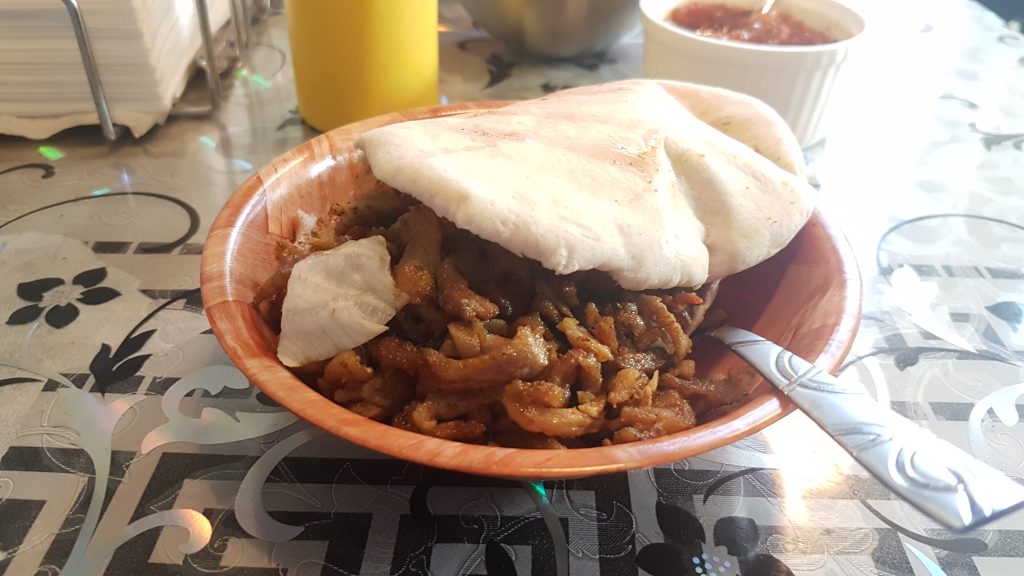
We are proud gastrotourists so no trip is complete without a huge serving of local food. I like having a good kebab on the first night in Haarlem and a quick Google search brought us to Shalom Grillhouse, which turned out to be a whole new culinary experience. Here the shawarma is served alongside plates of Middle Eastern “sambal” which you mix into the meat until it’s as tasty and spicy as you like. I love that it was proper spicy too. None of that middling Tabasco mildness. This was an absolute revelation and I really wish we’d had enough time to go back.
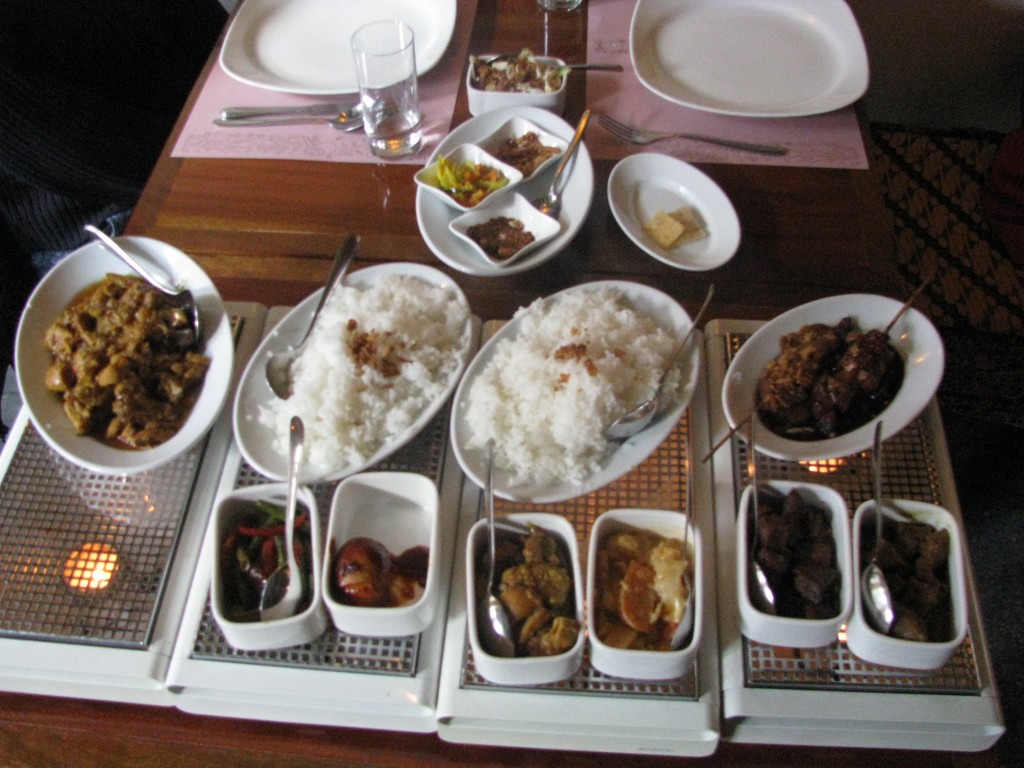
But Haarlem has treats galore. On our second night, we went for the famous Dutch rijsttafel. Literally translated as “rice table”, this is a set meal of rice with 10 to 12 Indonesian side dishes that the Dutch took home with them from their adventure in the Indies. De Lanchende Javaan is a Haarlem institution run by three brothers who moved to the Netherlands from Indonesia more than 30 years ago and are still cooking up a storm. Their version of rijsttafel includes satay, sayur lodeh (curried veggies), achar (spicy pickles), beef rendang (spice paste), gado gado (Indonesian salad with peanut sauce), sambal egg and much more. It was so good we literally forgot to take any photos. I could hardly believe I’d found better rendang in Holland than in most places in Malaysia and Indonesia.
The rijsttafel at De Lachende Javaan was so delicious that we forgot to take a photo, so I’m going to have to leave you this one from Pierre Vanderhout’s Travel Blog
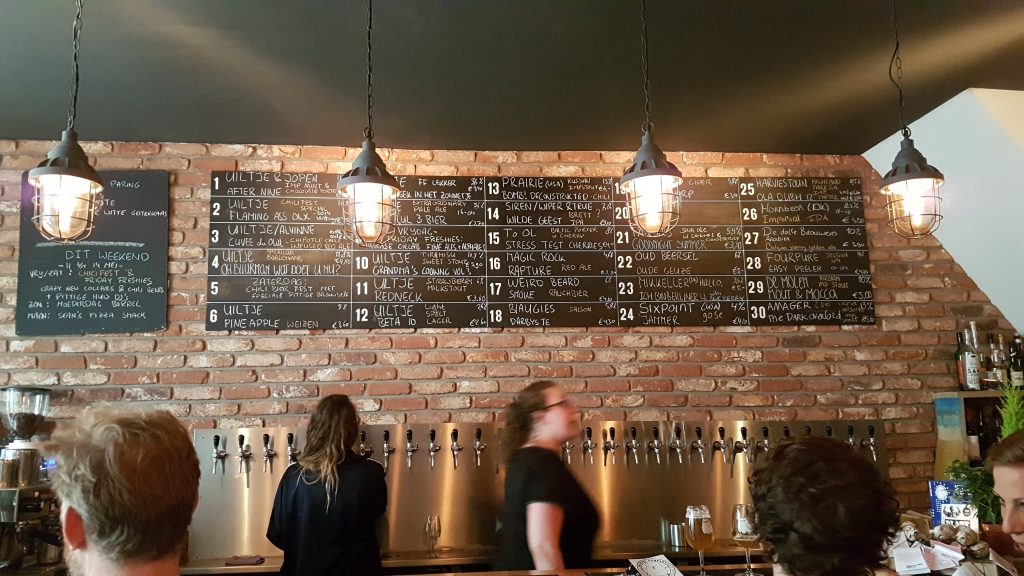
We needed something to wash down all that good food. Luckily, the Uiltje craft beer bar was just around the corner. Uiltje is Haarlem’s very own craft brewery who have 30 or so different beers on tap at any one time. You can get tasting flight for just €10 and they do some amazing things with stout especially. Before Uiltje, my experience with stout had been limited to Guinness. Then I spent an afternoon sipping stout laced with liquorice, cherries and tiramisu and now things will never be the same. I also had my first taste of smoked beer, which is made from malted barley dried over an open flame and fills your nose as it pleasures your taste buds.
Uiltje’s tasting bar in Haarlem has more than 30 beers on tap and tasting flights to get you through them. From L – R: Baltic Porter with Cherries; Tiramisu Stout; Heavy Stout with Liquorice; and Smoked Rauchbier
Perhaps the only downside to Dutch craft beer is its high alcohol content, usually 9 to 13%, which limits how much you can drink. But I suppose that’s a good thing. Dutch beer is for savouring, not getting sloshed. Still, that didn’t stop us from popping into the local supermarket and hauling some of the good stuff back home.
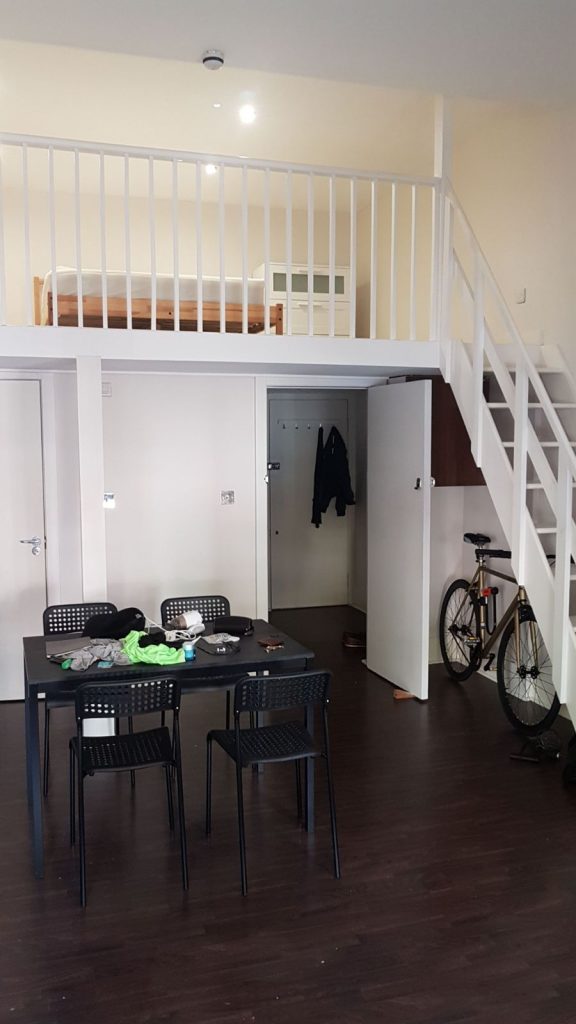
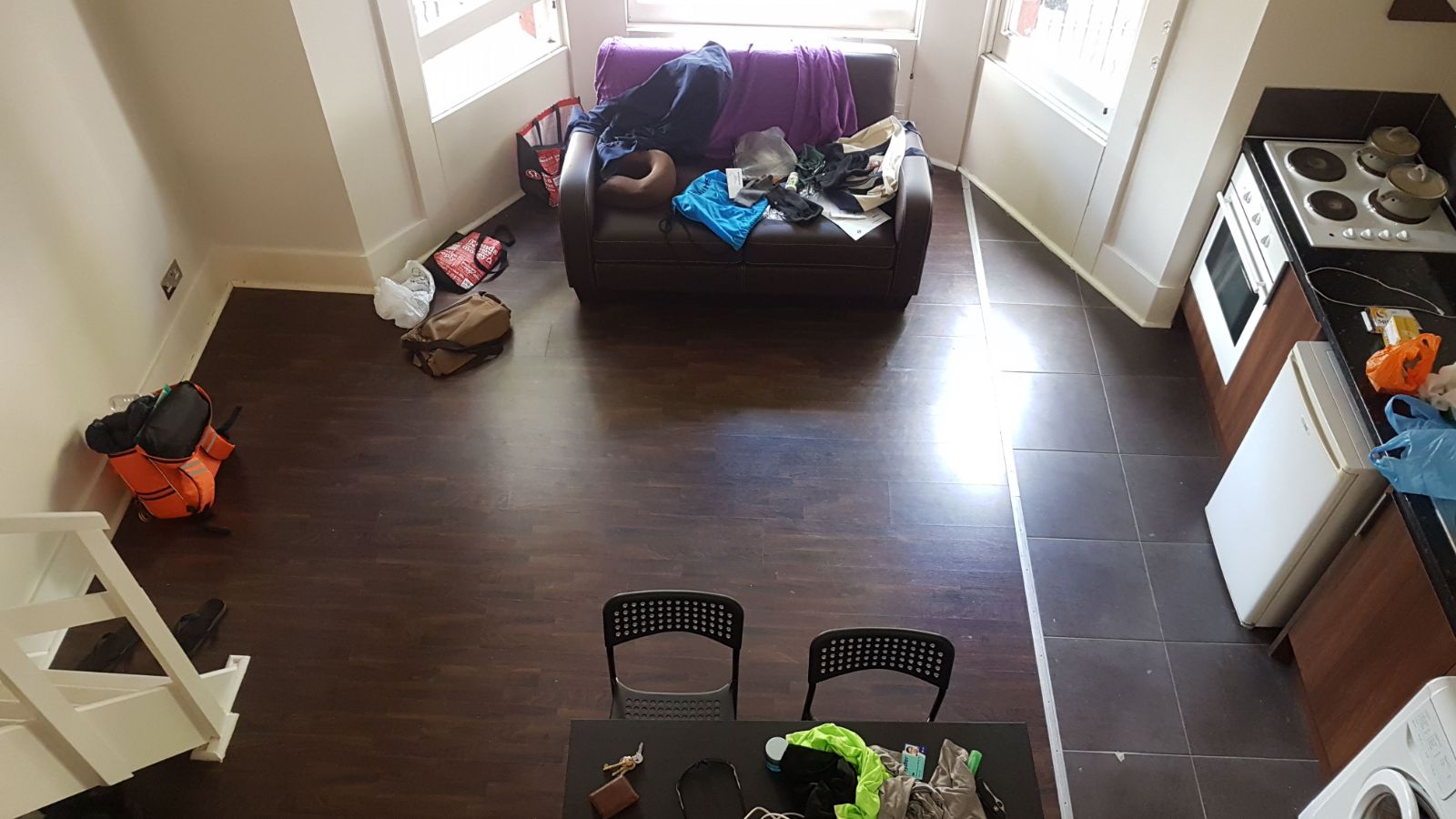
One of the things I love best about London is the flat that I share with my wife in Maida Vale. It’s small but it’s got enough room for the both of us with its loft design. It’s in a lovely area with amenities all around. And it’s a 7-minute bicycle ride to school. Can you blame me for liking it so much?
Finding the perfect place to rent, however, wasn’t exactly a cakewalk. I saw 18 different flats, trekked all over London, lost sleep and definitely grew a few white hairs over the two weeks I was house hunting. I learned a few things in the process and hopefully sharing them here will make the private renting process easier for you.
The apartment my wife and I share before furnishing
1. Get a head start, but not too early
Websites like RightMove, Zoopla, GumTree, OpenRent and Imperial Home Solutions are great for checking out potential places before you even arrive in London. However, if it’s still more than a month from when you hope to move in, don’t have your heart set on those saved places just yet. The market here moves so fast that most of the good flats/rooms (i.e. nice, reasonably priced) are gone in a few days. According to a housing agent I spoke to, many of their listings on RightMove are snapped up before the professional photos are even ready. Still, that doesn’t mean you can’t start getting a sense of the market beforehand and that’s where those housing websites really come in handy.
2. Get in with the agents, or find a service that will do that for you
Most of the time, letting agents quite literally hold the key to your dream home. Few of the places I found online were available when I sent an enquiry. Instead, I got a call from a letting agent who took down my requirements and budget, then arranged several viewings from his/her list. These “letting tours” allow you to cover a lot of ground at once and all you need to do is show up and hop in their car. The larger letting agents like Foxton’s, Dexter’s and Black Katz are especially helpful as they have big networks and can show you a wide range of options. Smaller ones will be more neighbourhood-specific. You can also try a service aggregator such as Homie, who set up multi-agent tours, so you don’t have to deal with 10 agents at once like I did. Homie is free for Imperial students and I really wish I’d known about them when I was house hunting.
Case in point about the importance of letting agents: I found my current flat only because a letting agent brought me to see it before it got listed online. I quickly made sure it never did.
3. See it with your own eyes
I learned first hand how properties can look very different from the pictures posted online. I viewed a 1-bedroom flat on Edgeware Road that looked great in pictures but turned out to be located in a crumbling building on a dingy back alley with graffiti all over the stairway. The online images were accurate, no doubt, but they didn’t say anything about the flat’s surroundings. Another place I found on OpenRent had no pictures but turned out to be a beautiful large studio in Shepherd’s Bush. The bottom line is, if you haven’t seen it with your own eyes, don’t even think about settling.
4. Take time to weigh the costs and benefits
Halfway into my search, I very nearly sprung for a flat directly opposite St Mary’s campus, literally a 100 m walk to school. However, after taking time to talk it over with my wife, I realised it was much too small and also, located right above a kebab shop’s kitchen. We eventually settled for a place that was further away but in a much nicer location.
That said, transport is a key consideration in London. Taking the Tube to and fro every day is very expensive and it may turn out to be cheaper overall if you find a place within walking distance from school.
5. Understand the terms and costs involved in renting
Using an agent typically comes with a bunch of administrative fees on top of the rent. These can vary a lot from agent to agent so always read the terms carefully. The ones on my contract are:
Six months rent upfront: This is standard practice if you’re an international student without a local guarantor
Admin / Referencing fee: Each person moving into the place needs to be vetted by the letting agency. Besides the fee, you’ll need to send in contact details of your former landlord or anybody who can vouch for you, plus a bank statement showing you have sufficient funds.
Inventory fee / Check-out fee: It can sound silly to pay for someone to count how many things there are in the flat but that’s just how it’s done in the UK.
Fees can vary significantly depending on letting agent. Here are a few I encountered during my own search.
Agent A
Agent B
Agent C
Admin Fee = £156 per person
Referencing Fee = £144
Check-Out Fee = £120
Admin Fee = £180 per person
Inventory Fee = £125
Tenant Fee = £250 per person
Inventory Fee not stated
Alternatively, if you can find a place on OpenRent, you can usually avoid paying some of these fees since you deal with the landlord directly.
6. Have enough cash in hand to pay the deposit
Making a deposit on my home was a very stressful exercise that would have been resolved if I’d had enough cash on hand. Basically, I needed to do a bank transfer to secure my tenancy, but I couldn’t open a bank account until I had a residential address. Fortunately, the bank staff realised the Catch-22 situation, called a bunch of managers and managed to get me all set up after an hour. Save yourself the drama if you can.
7. Don’t panic, there are always more options
You do need to move fast but try to avoid making a panic decision. Remember that an active market also means that new properties are getting listed all the time, so if you can wait, wait.
It’s also important not to despair. After 10 days of searching, I thought I’d found the perfect place in Shepherd’s Bush, only for the owner to give it to someone else because she didn’t like renting to students. I was in a real slump for a couple of days after that, and ready to spring for the first property that came my way. Luckily, my awesome wife advised me to take a break and be a tourist for a couple of days before starting again. That’s what I did and my current place found me soon after.
For more tips, I recently did a bunch of videos with the Imperial Student Hub. Happy to answer any questions about the renting process if you have them 🙂
One of the best things about being at St Mary’s campus is that it’s a unique crossroads of both the healthcare community and the people who live and work in the Paddington area. All at once, the campus is a graduate school, historical landmark, fully functioning hospital and community resource.
That’s why it’s really cool when the different communities here unite for a common cause.
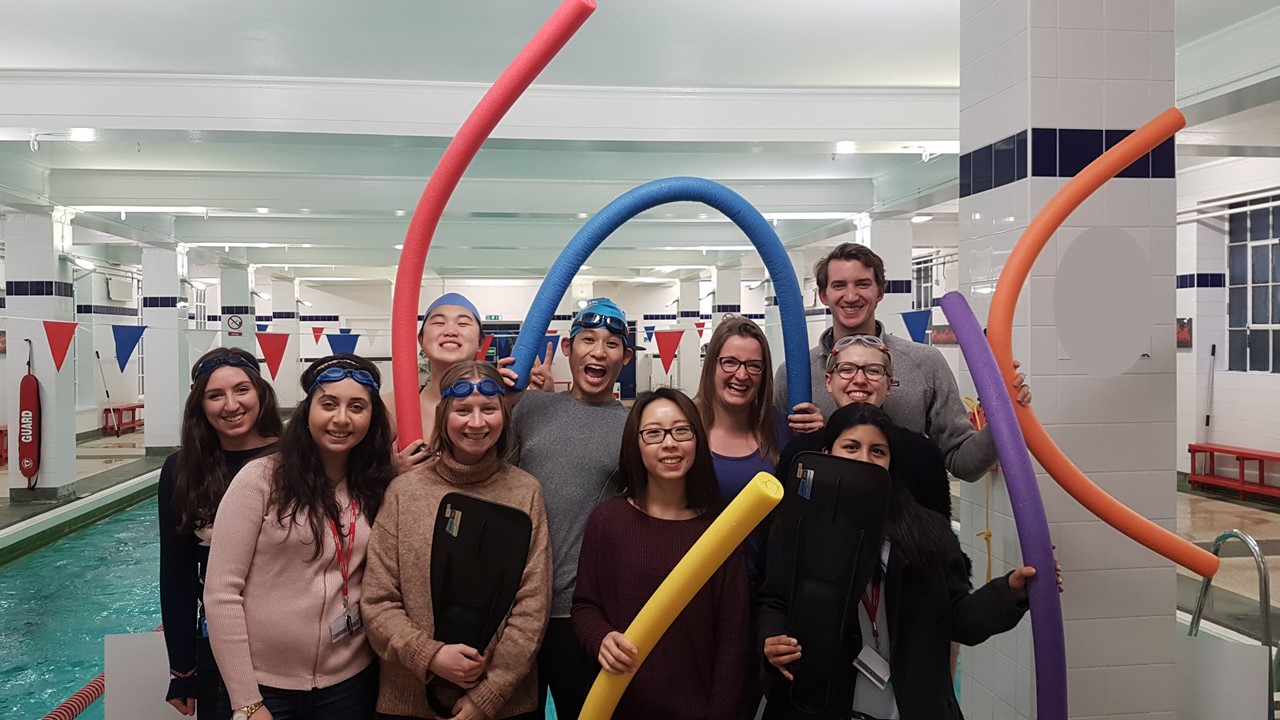
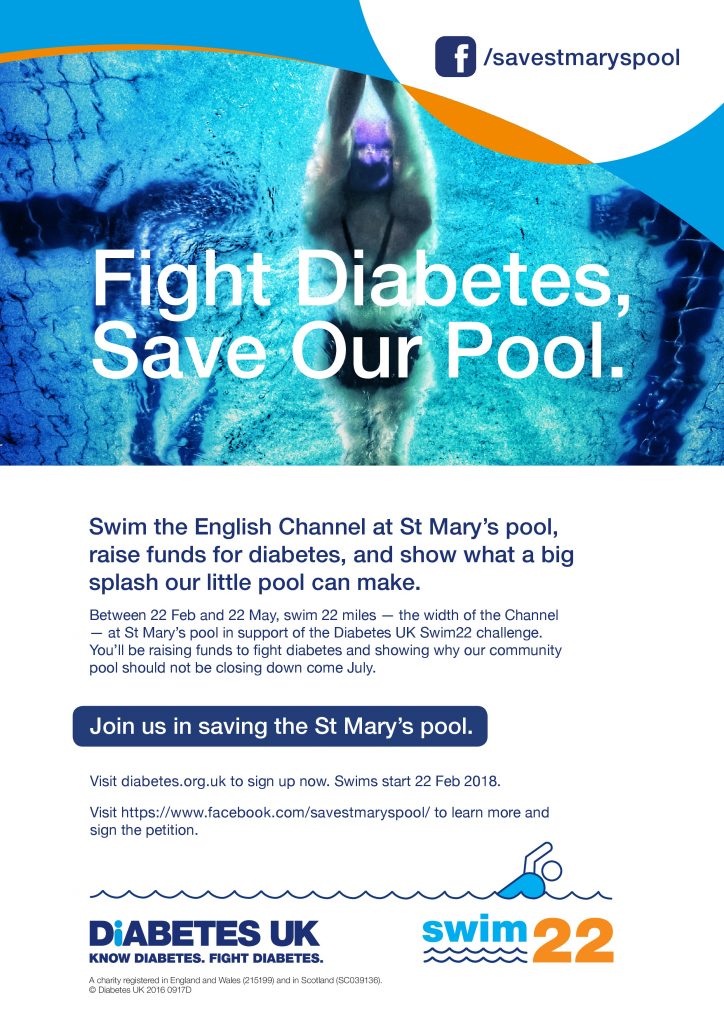
From March till May, St Mary’s folks are taking the plunge and swimming 22 miles in support of Diabetes UK. That’s the width of the English Channel and helping us get there are an awesome band of postgrad students, medics, diabetes researchers and the ICSM water polo team!
By doing so, we hope to raise loads of money for the charity, and also let the world know how much our pool means to us. (Sadly, it’s slated to close in a few months).
Please, please help us make a difference! Click here to donate and thank you in advance 🙂
I don’t come from a background in science – my Bachelor’s is in History and I’ve spent the past five years working in marketing – so I often get asked how I’m coping with doing a science degree like Public Health.
And the answer is: not too badly, so far. At least judging from my results for term 1, especially statistics and epidemiology.
Part of this is definitely down to pure elbow grease: extra hours rewatching lectures, consulting YouTube tutorials and making sure I got all the homework done. But thankfully, it’s also because postgrad education is more about the application of technical knowledge to the real world than whether you can memorise formulas. For our assessments, for example, formulaic calculations only accounted for a small percentage. Instead, we were mostly tested on how we would apply what we’d learned to given healthcare scenarios.
The truth is that in Public Health, the science is often only the beginning. Healthcare issues typically involve a huge variety of stakeholders whose interests aren’t always scientific. Finding solutions to these problems depends on people being able to go beyond the science.
Over the past few months, we’ve learned that knowing how to plan a social marketing campaign can be just as important as understanding a disease model. Engaging stakeholders over a cup of coffee can be what determines the success of a health promotion programme. Last week, a concept from operations management – the Moving Range – was introduced as a way to understand hospital quality.
So if like me, you’re wondering if you’re cut out for it without a science background, don’t worry. The fact is that public health (and perhaps other science disciplines) needs people from all over for it to work.
I’m glad I gave it a go and I’ve learned loads in the process.
Going for a swim at the St Mary’s pool after a long day of classes has become something of a ritual for me now that I’m almost two thirds through my course. There’s nothing more therapeutic, and it’s also a bit surreal remembering that Alexander Fleming used to do laps here, as have generations of students since it first opened 80 years ago.
That’s why I don’t want to see it closing down this July. To save it, I’ll be swimming 22 miles – the width of the English Channel – at St Mary’s over the next 12 weeks as part of the Diabetes UK Swim22 Challenge. It’s a chance to show how big a splash our pool can make while raising funds for diabetes care at the same time.
If you can, I’d love for you to join me. The more of us, the more of an impact we make. Just click here to sign up or share our event to help us go the distance. See you in the water!