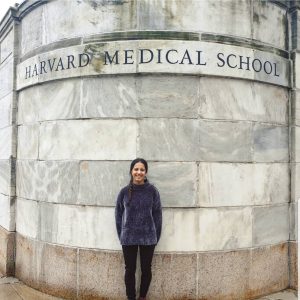
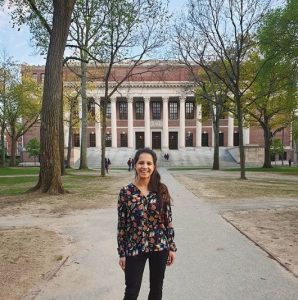
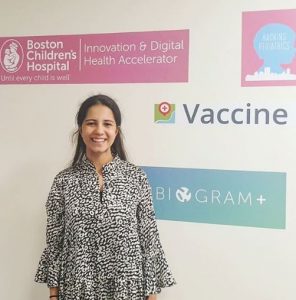
In my final year as an Imperial Med Student I have been super fortunate to have the opportunity to join the Harvard/Boston Children’s Hospital Innovation and Digital Accelerator Team here in Boston. I was linked up to this placement by researchers at Imperial, and so far it has been fantastic!
I am working as a Digital Health intern looking at how we can use #bigdata to enhance healthcare delivery, especially when related to infectious diseases and health inequalities. I have also been looking at the differences in implementation of digital health strategies here in comparison to the UK. The team here are so incredibly welcoming and the discussions we have had have already taught me so much.
Already, we have held phone calls linking the teams from my department to back with the faculty at Imperial Med School to see how we can share our learnings from this placement (especially re: data in their health research).
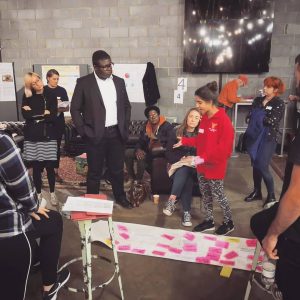
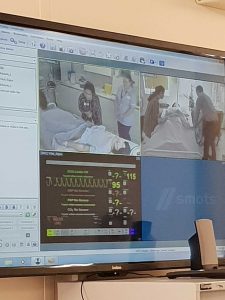
The opportunities given to us at Imperial are honestly superb, and this funded placement to Harvard has been the most incredible way to end medical school. More to come, but for now here are a few pictures from my first week!
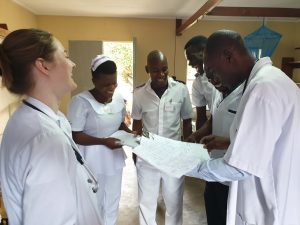
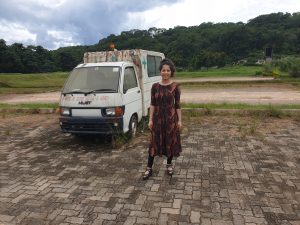
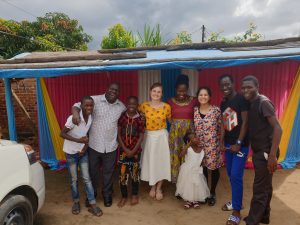
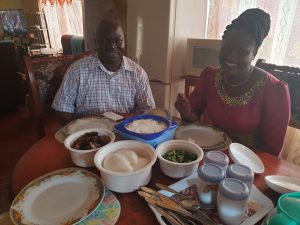
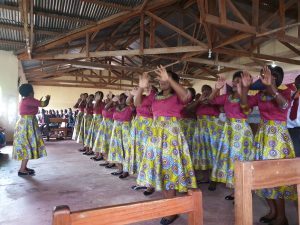
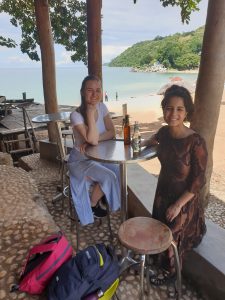
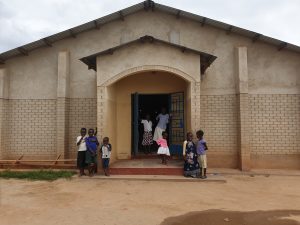
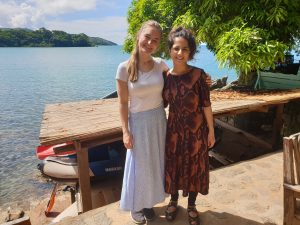
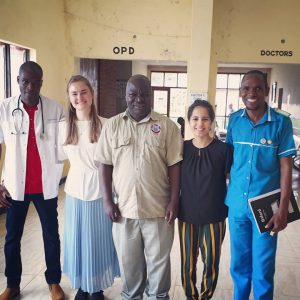
It has been a fantastic few days here in Malawi. We travelled up to Nkhata Bay hospital and saw first hand how a hospital functions with only one employed doctor. We visited Lake Malawi and also enjoyed being welcomed into the local church for a lively Sunday Morning service! We have also tried the traditional Malawi food kindly cooked by our hospital guide and served at his family home.
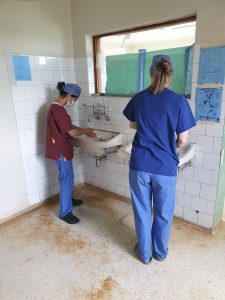
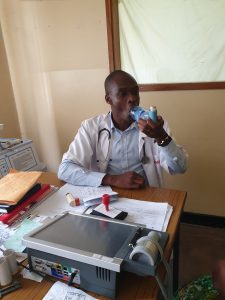
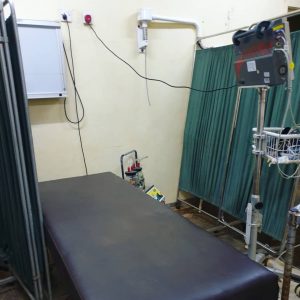
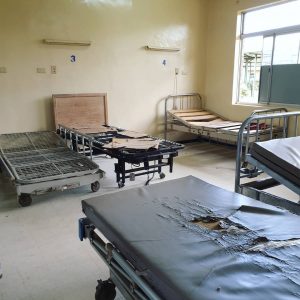
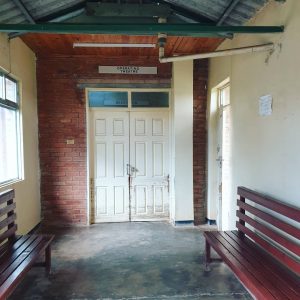
In ward rounds, we observed what it was like to not have curtains and privacy between patients. We saw how patients had to bring their own linen in as there was none in the hospital. We also saw the dedicated work ethic of the staff to band together despite such limited resrouces. In theatre, the equipment was frail during c-sections and skin grafts. In clinics, patients would have to re-use equipment that is made to be single use only due to shortages.
Things that we completely take for granted in England like oxygen saturation probes are rare to find. Even things like soap and hand sanitiser is rare.
We have started on our project to support the e-health Malawi team too, who we originally met at Imperial. We have been working to enhance the delivery and follow up of asthma patients in Malawi and we now spend our evenings on this work.
Finals are done! Now we get the exciting task of going on our medical electives to finish off med school. Imperial have kindly funded partial bits of it and first stop: Malawi.
I am travelling with my good friend in my year, Emma Larsson. We are joining an e-health research project here in Malawi. To put it into perspective on the Human Development Index, Malawi is placed 171 out of 189 countries.
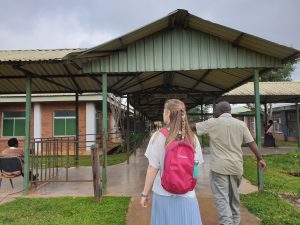
We travelled around the local hospitals today, meeting the teams we will be working with. I have done 2000+ days of med school but today was the most important day of them all. Truly eye-opening.
The hospitals are severely under-resourced but the enthusiasm from the workers and the dedication they have is admirable.
Really looking forward to getting stuck into work here, but for now here are some images of our days so far.
We are now a week away from finals, and revision is at it’s peak. But before we headed off into this revision hole the faculty made sure that we were all feeling confident about our practical skills. This is really key, as so much emphasis is put on by students about written exams when really we need to also be preparing to practically be a doctor!
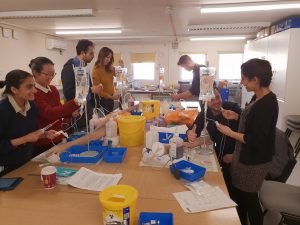
We have great clinical skills teams across each of our different hospital sites here at Imperial. I was based at West Middlesex Hospital for my final placement and we had a session to ensure we were safe to administer IV drugs and take blood culture samples properly. As you can see in the image we all get small group teaching which is fantastic for hands on practical skills. We are able to rehearse our core skills on model arms etc, so that when we are faced with a real patient we can feel more confident with our skills! This is all alongside prescribing sessions, life support skills training and simulation scenarios!
I do believe that this repetition of our practical skills is key, and Imperial gives us an abundance of opportunities to keep them ticking over. The sessions are interactive and so useful for us. But for now, back to the books I go…
It has been a busy end to the term and it really is getting close to the end now- I only have 4 weeks of clinical time left on the wards after Christmas before finals. There is so much going on right now. I have been busy at interviews for my foundation programme, getting my final competencies done on wards and we recently did the Situational Judgement Exam (which counts 50% to allocations for junior doctor training)! However, this term I have also been feeling how close we are to becoming actual doctors (hopefully). This was made even more clear a few weeks ago when I did CPR for the first time.
I think medical school prepares you so well for clinical practice, but really nothing can prepare you to the emotional toll of watching a patient pass away. As a final year medical student you can no longer take a huge step backwards when they ask “can you help with chest compressions”. Instead, if you don’t take the chance to help the team, the next time you are faced with this could be when you are the doctor responsible. I can’t begin to tell you how many thoughts were going through my head when the consultant asked for our help. But the “autopilot” mode steps in and all of the 6 years of training suddenly comes to life. We had a de-brief after we stopped chest compressions- an opportunity for the members of the team working on the patient to come together and touch base which was hugely supportive.
I was also lucky enough to work for 3 weeks with the Health Inequalities Team at Imperial. The insight into homeless medicine, prison medicine and refugee medicine was eye opening into the impact health inequalities really has on patients’ lives.
Homeless Health Conference
The patients, the family, the wider team. Getting nearer to the end of medical school makes me think about how much of a privilege it is to work in the NHS. I am nervous for what 2019 will bring- finals, elective, being a real doctor. But also I am comforted by the fact that Imperial has got us to this place. I look back on my 5.5 years so far at Imperial and I can’t believe how far our year has come and how far we are yet to go.
For current and future med students: Take all the opportunities you can. Build a good support network. Make the most of the whole medical school journey (clubs, societies, wards, lectures….). Medical school really flies by.
Final year is going at full speed- with only (gulp!) 7 months to go until our finals exams are done. We have received our GMC numbers now and from Monday will have our account details to apply for our first job in the NHS.
So as the real life stuff is ramping up, so is the training to help us be junior doctors. I am currently on my emergency medicine attachment and as part of this we had a simulation daybased at West Middlesex Hospital. It was fantastic!
The aim of the day was to give us experience handling emergency situations in a “safe”environment. In pairs, we were placed in a simulation room with a student nurse too. Thesimulation dummy patient had a voice (someone was speaking through a microphone nextdoor), pulses and breath sounds in their chest. We were given a situation such as “You arethe F1s and have been called to see X patient on the ward as the nurses are worried abouther, please assess”. Then we had about 10 minutes to play out the acute situation and seehow we would handle it when left to our own devices. Meanwhile, our peers were watchingour every move in the room next door and would feedback on our return having “saved” thesimulation dummy. The simulation room was set up like a normal ward and a useful partabout it was we could call for help on the phone to our teaching fellows who would give usadvice as if they were the medical registrar on call.
Honestly, simulation training in our final year has a huge impact on us. It gives us the chanceto make the mistakes and be more confident in our own skills before we hit the wards soon.Imperial has combined clinical skills, patient safety and simulation technology to create usfab teaching sessions – and it must be an absolute mission to organise them for our wholeyear.
For now, it is interesting for me to reflect that in first year (back in 2013!) all I wanted to dowas to go and see patients and get out of lectures, but now all I want to do is improve on myknowledge and fundamental skills before I go out and see the patients as a doctorsoon…Scary!
This week marks the 70th anniversary of the NHS and the celebrations are really inspiring. A couple of years ago when the junior doctor contract strikes occurred in my 3rd year the outlook felt quite bleak for a career in the NHS. Many of my friends considered switching career paths and I think we all felt quite unsure of how our working life would be shaped by the changes. However, 2 years on and now about to start final year…there really is a different mood in the air.
We know that the life of a junior doctor is going to be hard, and we know that it will be a shock from medical school life. We also know that we won’t be clocking off at 5pm every day, or earning enough to be able to afford a house asap. But, we also know that we will have a fulfilling and rewarding job no matter what changes occur to the NHS or our training (obviously to an extent that is!). If one thing trickled down to medical students after the junior doctor strikes it was that a career in medicine is one that makes a difference. The consultants on the wards would reassure us students that we did make the right career choice and that they do really love their job.
With the NHS turning 70 this week it does make me reflect on how the NHS (despite it’s rocky patches) is an incredible organisation that it is full of hardworking, dedicated people. Our training at Imperial College Hospitals has been a daily reminder of this- and we are so lucky to be trained by some of the most caring and knowledgeable doctors around. Studying medicine at Imperial- and in the NHS- really is inspiring and I can’t believe I am only months away now from medical school finals. Final year starts in 2 weeks time, applications for a real graduate job begins in 2 months and junior doctor life in the brilliant NHS is now fast approaching…!!
As you know, Imperial gives all of us medical students an iPad which we use to get a whole range of resources. This includes eBooks for modules, we complete our sign offs for hospital placements on it and even have revision tools on it. However, this was the first time I have completed an actual end-of-year summative exam on the iPad and it was really interesting.
So the exam was the Pathology exam (5th year exam) on Monday which covered Microbiology, Immunology, Haematology, Histopathology, Chemical Pathology and Ethics & Law. It was 175 questions with 50 of them being very short answer questions (vsa). The set up of the exam worked exactly the same as a normal exam- we all sat on normal exam desks and had a plain sheet of paper we could write notes on as we filled in the exam on the ipad. The exam begun by our screens locking in the Practique app so we could not flick to google mid way through the exam. Then we all put in our unique ID codes and off we went (I was so nervous!).
Obviously as it was an online exam there was bound to be a few people with technical troubles but I was so so thankful that all ran smoothly for my Ipad. For those that did have problems there were several staff there to resolve it/give a new iPad to use (which you would just re-login to).
I felt that the app was super user friendly and it was easy to flag questions and return to them later. You could also monitor your own progress throughout the 3 hour exam as every time you answered a question the question number would change colour on the progress bar.
I am yet to find out my results (*cross all fingers*) but hopefully now it is on this online system and not a handwritten exam we can all get better feedback on how we did and also get our results faster.
This is just my view point and I am sure there are some that think this move to iPad is an awful move for exams- but it really is the future of exams and it is exciting to be at a University that strives to keep improving its assessment and feedback model. Imperial’s science and technology core shines through with this exam format. Although… I would be lying if I said I didn’t have nerves about using an iPad for the exam when it was first announced.
My specialties exam on Friday is on normal paper again, but I do wonder what this will hold for my exams next year. Hologram Patients? Virtual reality OSCEs?…probably not yet.
*This blog will have spelling/grammar errors in as I am just quickly writing this on a revision break- please excuse! Just wanted to write it while it was still fresh.*
It really is that time of year again…the stress levels are rising and 5th year exams are approaching. We have about 6 weeks left until our first exam and although that sounds a while away still, there is a lot to cover. On top of this, we are still attending our hospital attachments daily.
I wanted to share with you a few resources that I am using to help me through this revision period this year, hopefully it can help anyone else revising for clinical exams and not sure where to start!
Brainscape: Imperial Medicine students past and present have made flashcards on this amazing app that is a great revision tool. You can download the cards on your ipads and test yourself on them during journeys/lunch time on attachments.
DemDx: This has been a fantastic tool for me whilst revising for my specialities exam this year. It helps you organise your thoughts in a logical way and understand how you reach a diagnosis. I use this on the wards when I see a patient to help me understand all the differentials it could be and then understand how I can narrow them down.
Passmedicine and Pastest: Both are great question banks that you can test your knowledge with.
Imperial Blackboard resources: Watching lectures back for our pathology exam, our online e-modules and also quizzes that lecturers have put up are all invaluable.
Imperial online library: It has been such a treat not having to take out all the books I need for revision, but instead I can use the online library imperial has to access textbooks on my ipad!
Guidelines: Imperial gives us access to BMJ best practice which is a great tool to understand guidelines and management, and on top of this we are going over the online NICE and RCOG etc guidelines so we know the up to date stuff.
What is great this year is that as we have a practical exam (PACES) for Paediatrics, Obstetrics & Gynaecology and Psychology- which means that we are practising in groups and this is saving us all from being attached to our computers and textbooks 24/7.
Don’t get me wrong, it is not all heads down and work….we are still getting time to have a recharge in the evenings watching films and hitting the pub. But now that 5th year counts for our rankings when we apply for jobs after graduation, and revising for it will help us be safe doctors, it is getting more serious then ever…
For now, I am home with my family this weekend getting on with revision and enjoying the weather! Medical school is all about time management and “little and often”, and Imperial really do support us to ensure we are (hopefully!) well prepared for these exams and life as a doctor.
In 5th year we are all given a compulsory one week of teaching skills. It is hard to imagine why we need to learn how to teach- surely everyone knows the basics?! But actually, what I found over the week was how little I actually knew about teaching and how vital it is for being a good doctor- whether you are training medical students, teaching colleagues about cases or even presenting at a conference.
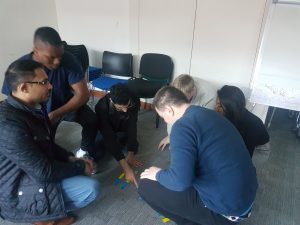
We learnt the basis on teaching skills and theory behind practical methods on the Monday, which lead us to be split into teams to design and teach each other how to make a paper airplane (very competitive!). On Monday afternoon we all had to come up with something to teach in 5 mins and teach a small group- I learnt how to use chopsticks, how to make a paper boat…and I taught everyone some practical tips on haircare (very amusing for me to teach!).
On the Tuesday we were all assigned a 3rd year student to teach, and me and my partner spent a few hours with our student running over cardio examination and then going up to the wards and practicing it on some patients. Was great to see the student improve, and we definitely improved our teaching style!
Wednesday was intense, we learnt about what learning styles we all had and then planned a teaching session directed at that. It was the first time in medical school people stayed an hour late on a Wednesday out of…fun. It was really interesting and interactive and I have even learnt tips I can use in my revision!
On Thursday we created a pathology tutorial in groups that we delivered on Friday. Ours was very interactive with a game for everyone to play within it. We all got individualised feedback and completed our own reflective log. All in all, a fantastic week ran by a superb teaching fellow and her team. I did not think I would enjoy teaching skills week as much as I did, but I reckon that all medical schools (if not already doing so!) should follow Imperial and implement this as it really is a great programme.