Tag: PhD Students

Theoretical Physics Student Research Seminars, Winter Term, Oct – Dec 2017

by Scott Melville

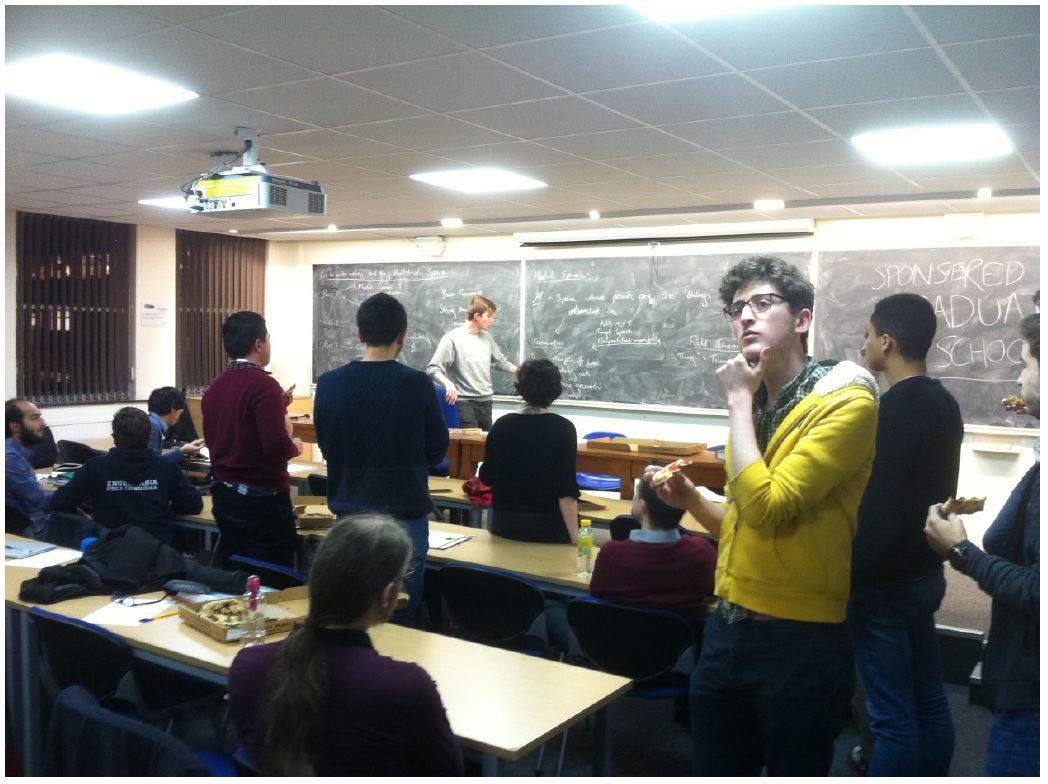
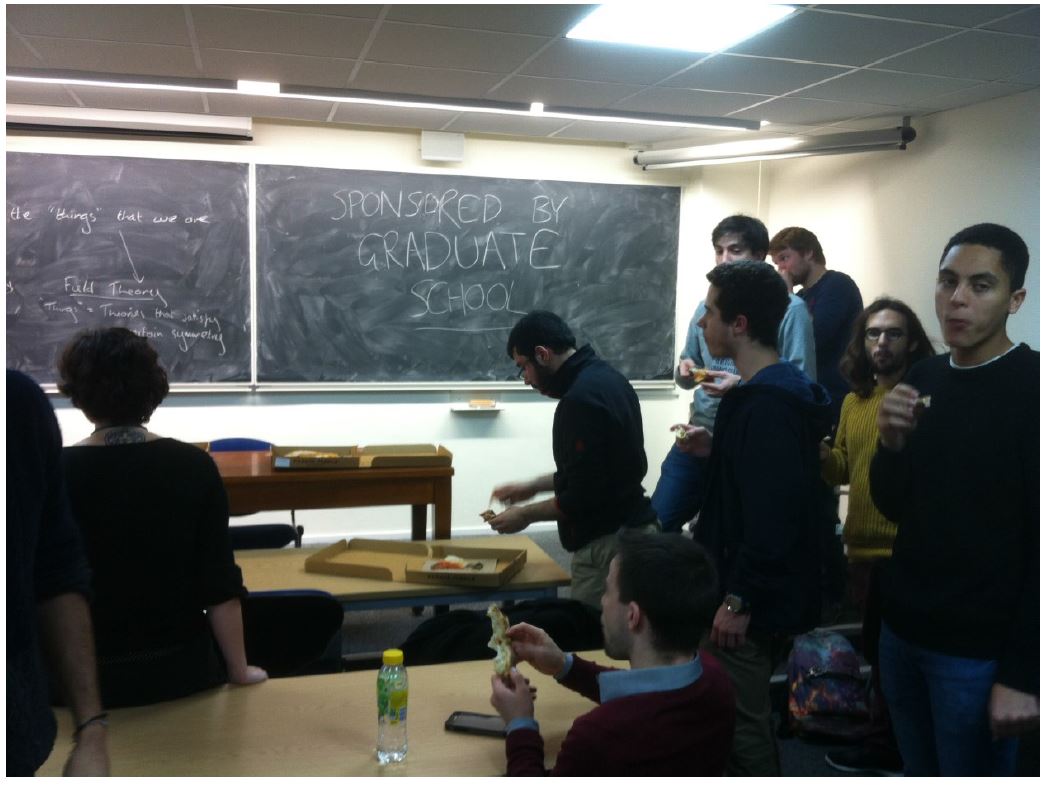
The Theoretical Physics cohort are a reclusive bunch. But nothing brings them out of their shells better than the promise of knowledge (and pizza). Thanks to the generous support of the Graduate School, this term saw the Theoretical Physics PhD students come together each week for a heart-warming exchange of ideas and discussion of how their research is progressing, bringing together not only the graduate students, but also a great number of Master’s students and postdocs to share in the fun.

The seminars took place every Thursday from 17.00-18.00 in Huxley 503. On average, 16 PhD students, 15 Masters students and 2 postdocs attended.

One particularly successful session was a Master’s students Q&A, in which the current undergraduate students could chat informally with the PhD students about their favourite physics, and what it was like doing a PhD. This really helped solidify a sense of community among the cohort.

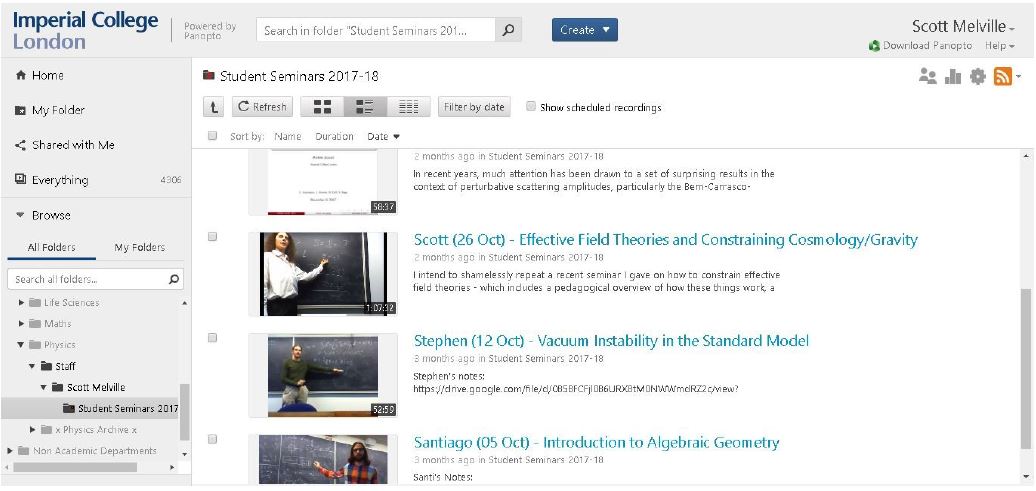
The event was given visibility through posters in the department and a weekly email. The presentations were recorded, and made available online through a dedicated folder on Imperial’s Panopto system. This not only allows participants to relive the heady joy of the event, but also serves as a useful tool for the speakers to review their own performance and think critically about how they can improve.

The invaluable support of the Graduate School was acknowledged both on the posters advertising the event, and at the beginning of each seminar.

Overall, the seminars succeeded in bringing together the cohort and establishing lasting links both with each other and with the wider physics community at Imperial. We look forward to continuing the Student Seminar series long into the future.

Meet the Scientist – Open Days at the Division of Brain Science

By Luigi Montibeller

The laboratories of Brain Division of Imperial College London (ICL) opened its doors on the 23rd and 25th of October to display it’s state-of-the-art technology, experiments and research through interactive talks and guided tours run by its researchers, specializing in the field of neurodegenerative diseases.

More than 100 people including patients, relatives and members of the public attended the event. The tour and presentations gave attendees the opportunity to talk to leading researchers and medical professionals, exploring the latest research, tackling conditions like Parkinson’s disease, Alzheimer’s disease and brain injury.

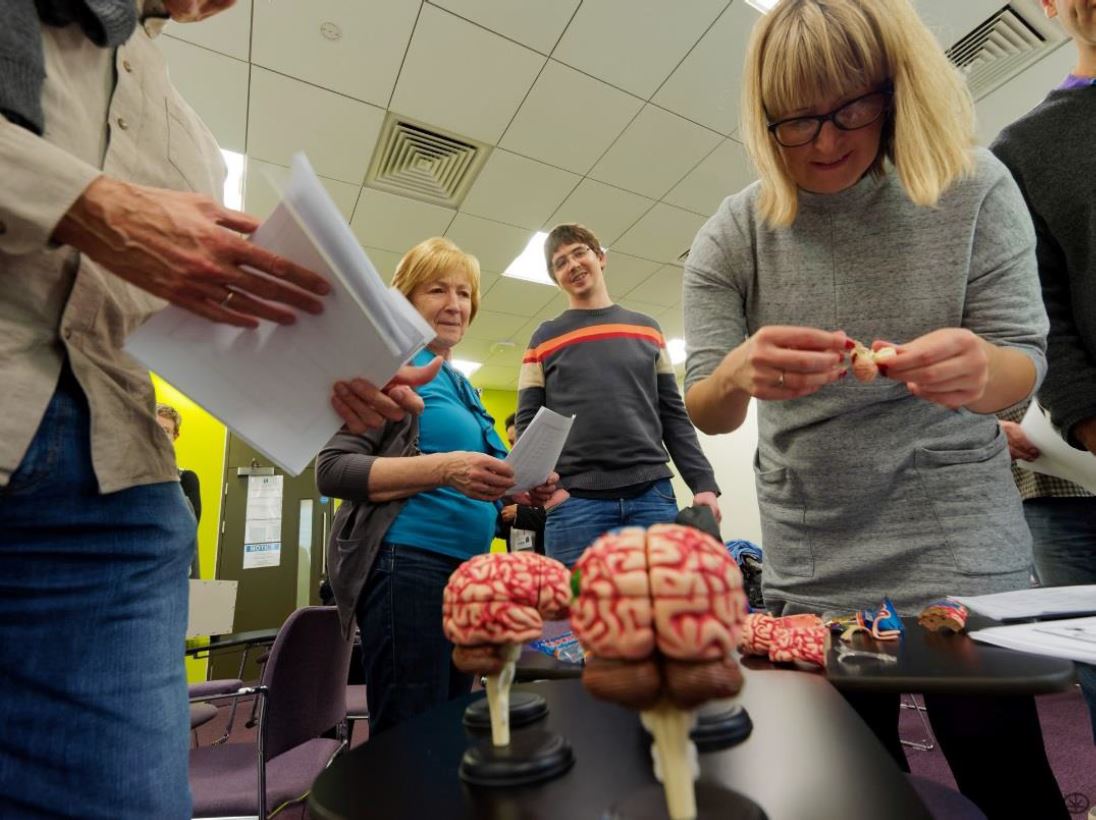
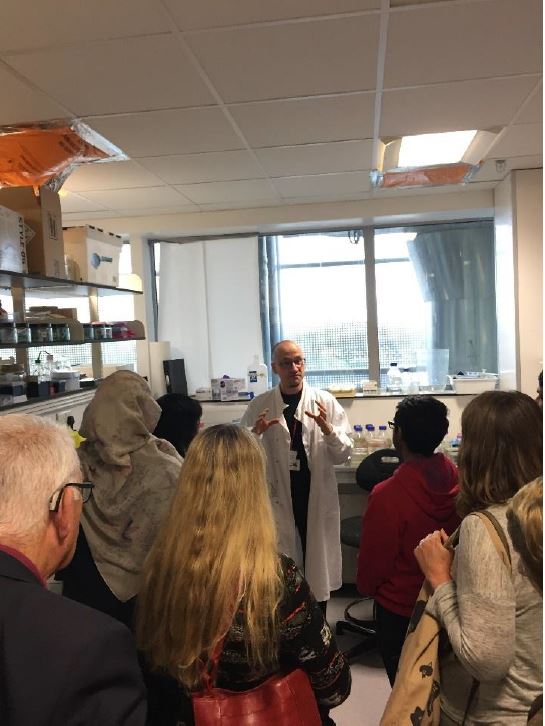
A presentation about each specific neurological disorder was given followed by a visit through the labs and the Brain bank. For example, visitors witnessed the dissection of a human brain by Dr. Steve Gentleman, highlighting brain function and it’s impairment in such diseases.

With additional ‘hands-on’ demonstrations, the participants had the unique opportunity to participate in experiments that researchers conducted inside the labs. These included learning about cell culture, immunohistochemistry and microscopy.

The event received great feedback from attendees. With comments like “Very well organized. Complicated research presented in plain English. Very enthusiastic stuff. Thank you all”, “Super day: excellent, translated well for lay man’s language”.

Diversity in Physics Ice Skating Group

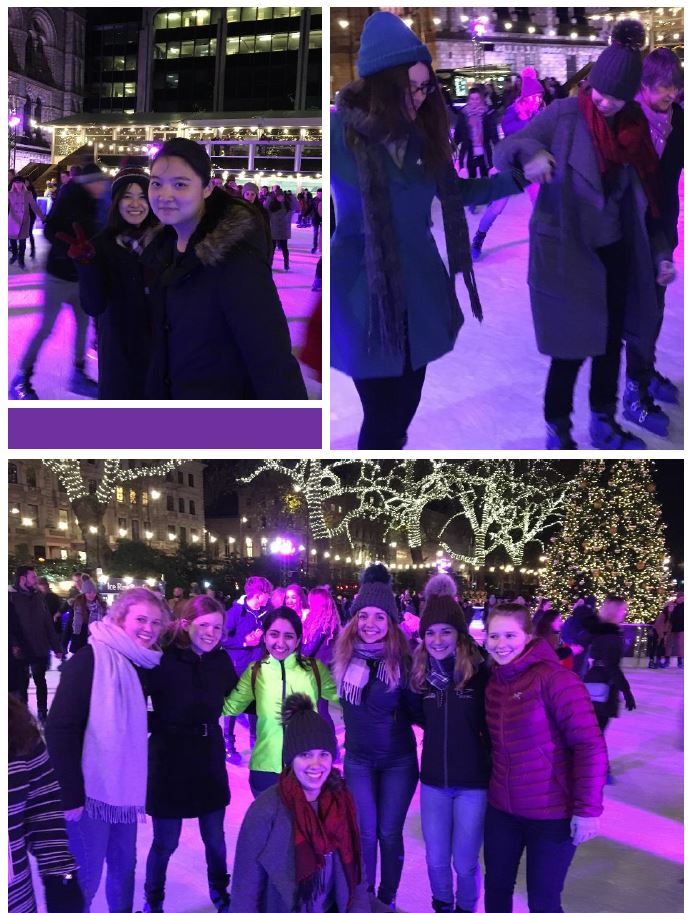
For the post-grad Women in Physics Christmas social we organized an ice skating outing to the rink at the Natural History Museum. This event was also open to PG women in Computing, as we hope to run many events together in the future. The group was a mix of physics, maths and computing students and we had a mixture of all years of students and a couple of post docs. This was the first event combining the two departments. We all met and introduced ourselves in the Physics Department before walking over to the Natural History Museum together. Within the group there were a few girls who have never ice skated before and the rest of us have been at least a few times before. This made for a nice group. The inexperienced skaters were shown what to do and helped around the rink by various other girls. Everyone really enjoyed the skating! We skated for 50 minutes and then headed up to the bar for mulled wine to warm up and chat. The event was a great success and we will be holding it again next year. It was also a positive start for what we hope to be a collaborative and supportive community between the PG women in physics, maths and computing.

Cross-CDT Fair – Pain Relief for Scientific Computing

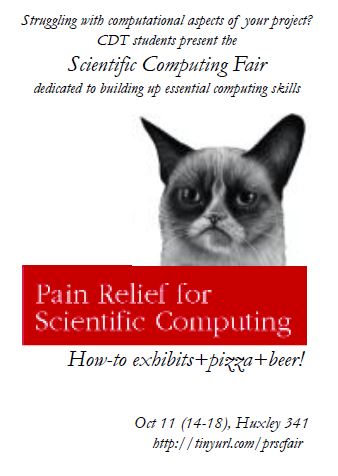
Did you ever wonder what most of PhD students at the College have in common? They need to compute to finish their degree. The task can be as simple as a quick data analysis or as complex as creating a new software package. Did you also know that most of the students arrive with a minimal background in computing? A lot of them find themselves in a “sink or swim” situation. After experiencing this ourselves, we decided that we don’t want others to suffer the same fate and make the same mistakes. To bring the issue into the spotlight, we decided to organise a Fair that featured exhibits dedicated to essential computing skills that every student should know before they attempt to “swim”.  

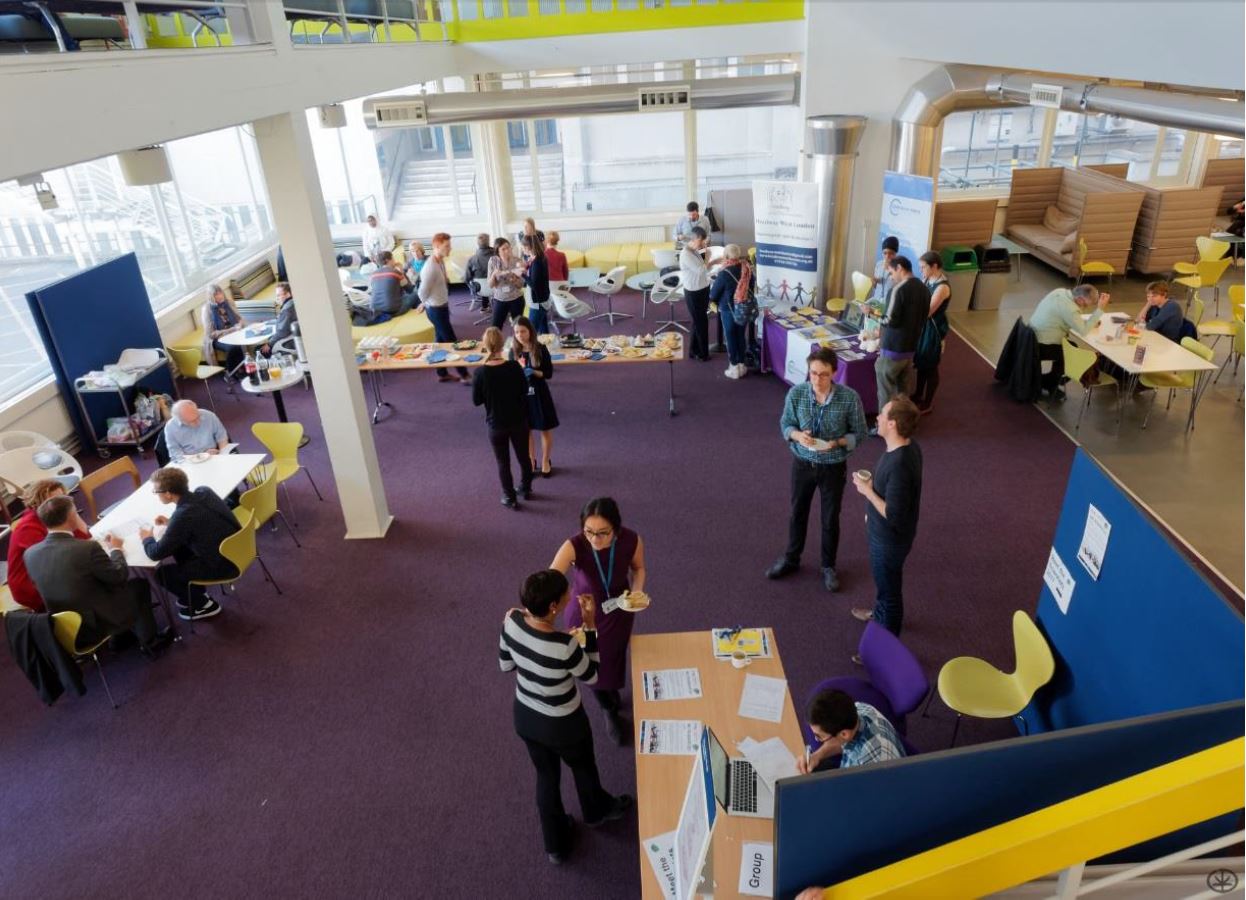
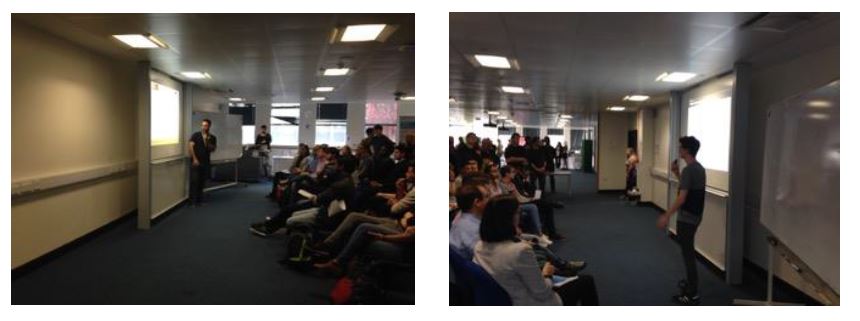
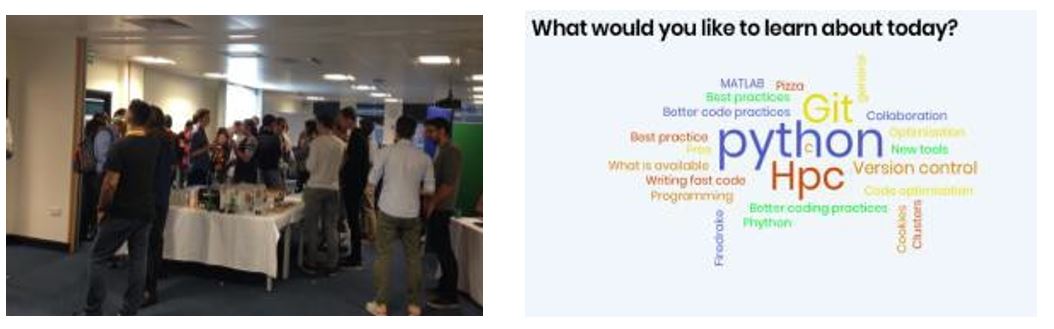
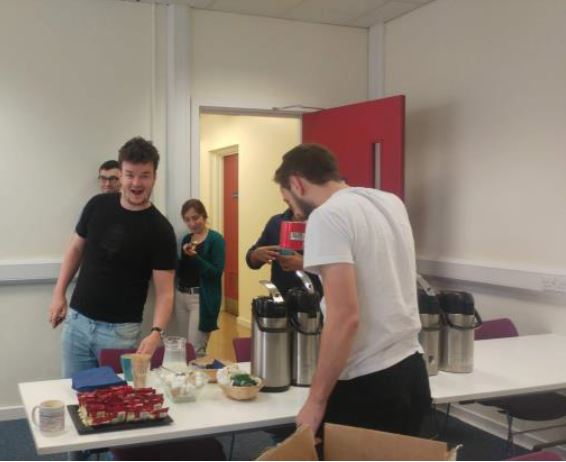
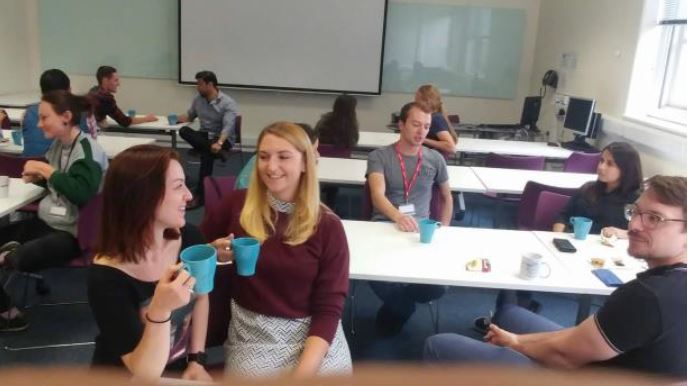
The Fair happened on October 11th, 2017 and it was a success. We had at least 60 visitors – after that we lost count. We invited CDT cohorts as well as PhD students across the College to come, network and pick up useful tips. The event started on a high note, almost everyone showed up right when the door opened. The visitors dispersed around the exhibits and listened to what we had to say. The ones that needed a bit of help with getting enthusiastic got cookies coffee or tea. We had an incredibly busy three hours at the exhibits as well as giving short talks.

After picking up useful computing tips and hints, the audience had a chance to visit a poster session at the Fair. We invited open source software projects from the College to present to the students. Many of these packages can be applied to various types of projects. Who knows, maybe we encouraged future collaborations.

The pizza and beer arrived just in time, one could not keep this pace much longer. The networking part that followed went very smoothly.

With the Fair out of the way, we intend to continue our effort to educate the cohorts via the Scientific Computing Support Network. There is a good chance that we’ll organise the Fair again. Note to self – keep it simple and order more pizza.

Many thanks to the Graduate School, Platform for Research in Simulation Methods and the Research Computing Service for funding and many thanks to everyone who contributed to the poster session.

Thomas Bendall, MPE
Eduardo Ramos Fernandez, TSM Matthew Garrod, MPE
Thomas Gibson, MPE Michael Haigh, MPE
Hemant Khatri, Math Department Smitha Maretvadakethope, Fluids Josephine Park, MPE
Sergio Perez, Fluids Matthew Taylor, HiPEDS
The Computational Methods Hub

ESE Stress Less Campaign: a resounding success, valuable for all

Abstract
On Thursday 22nd June 2017, Earth Science and Engineering Graduate Society (Grad Soc) begun their Stress Less campaign, made possible by funding received from the Graduate School’s Research Community Fund. A recent Grad Soc survey had highlighted the number of PhD students within the department who felt that work-related stresses had a significant impact on their daily lives. This campaign aimed to foster discussion about such issues and provide activities that introduced coping techniques.

PhD “stress less” lunch
A sandwich lunch was set out informally on picnic blankets and was very well attended, drawing more than 30 PhD students, and providing an opportunity for all to voice concerns relating to any aspect of PhD life. One of the most positive aspects was the number of students present who had not previously attended any Grad Soc event. On the whole the mood was positive but concerns as to finance, demonstrating pay, the tidiness of the department and general organisational issues affecting welfare of students were raised. These issues have now been brought to the attention of staff and the head of department. Lunch also gave time for newer students to integrate into the departmental “social scene”, contributing to a peer support network.

Mindfulness
The mindfulness session though short was enjoyed by attendees. It also gave the opportunity to raise awareness of the regular mindfulness sessions run by the college.

Yoga
Maria provided an excellent introduction to yoga for stress relief. Attendees had varying degrees of experience from complete beginners to experienced yogis. Talking afterwards to those who went, the class was enjoyed and a few people are now considering taking Maria’s regular class at Ethos. A follow up email will go out to students providing details of this.

PhD Coffee
PhD coffee was well attended by around 25 students. Materials for known activities to reduce stress were provided, such as mindfulness adult colouring. It was hoped that by introducing students to these activities some might implement them into their routine as a way to provide stress relief. A comments box was also provided for students to anonymously voice any concerns they were currently having relating to their PhD. Comments were then processed by Grad Soc and referred to the head of department. As we have no common space for PhD students within the department, coffee enabled students a rare chance to talk freely of their concerns.

Massages
All of the massage sessions on the day were booked out, 18 students receiving a 10 minute hand and forearm or neck and shoulder massage each. The feedback from this was extremely positive!

The success of the day is also now to be published in the Departmental Newsletter raising awareness of student welfare and mental health.

Continuation of the Campaign
Within the department, Grad Soc have continued the Stress Less Campaign on a monthly basis by providing an afternoon PhD-only coffee session. During the summer months this has been extremely well attended and enjoyed. As a PhD-only event it provides a safe, friendly environment to voice concerns. We are all realising that stress and difficulties with work-life balance affect many people and there is a more open attitude to discussing this with peers among the PhD Students.

A word of Thanks
Grad Soc would very much like to thank the Graduate School for the funding they provided; without it this campaign would not have happened. Through the discussions facilitated by the Stress Less series, we have seen evidence of the classic statement “a problem shared is a problem halved”. It is refreshing to have a more open attitude to discussing problems that affect so many people, and we hope the mental health of the PhD students will improve as a result of this.

The Future of the Graduate Students’ Union – a Note From Your President

by Luke McCrone, GSU President

Getting Started…….

It’s been quite the ride so far. Since being elected into the role, it seems the Graduate Students’ Union has undergone quite the transformation, hopefully destined for something new and exciting. Thanks to the hard work of both th e outgoing and incoming committee, we’ve developed a new logo, promotional flyers, a website and more recently a strategy for our year ahead! And we are only getting started…
Yet I must be honest, it’s been quite the challenge. As a Constituent Union representing 7000 postgraduate students, our productivity has been limited by having only 3 members of our committee elected over the summer period: Paul and Alex, our two Vice Presidents, and I. Thank goodness, we now have the rest of our committee in post, ready to execute our plans for the year ahead.  We thank Imperial College Union and the Graduate School for their continued support in that respect.

Despite challenging circumstance, I’m realising more and more how much potential our postgraduate members truly have. My impression is that these are bright, talented individuals admitted from all corners of the globe, working day in day out to contribute to the ever-growing repository of knowledge at Imperial and beyond. The question which puzzles me is how we can truly bring together people with differing perspectives to make amazing things happen?

What does the GSU Stand For?

It was this very question which led me to believe what I felt the Graduate Students’ Union stands for. That for me was the breaking down of barriers, and it was the capture of this vision in a formal manner which ultimately led to the recent development of our strategy for the year ahead.

I’ve been at Imperial for 5 years now and I must be open and honest about how intense this place can be at times; that’s the inevitable reality of putting a population of driven, ambitious individuals under the same roof for a prolonged period! We may all have our own ambitions and plans, but there’s no excitement in hiding all that energy and creativity! I compel you to reflect on your life as a student so far and remember at which points in the past your best ideas have been sparked. For me, those moments have occurred in the presence of others, whether that’s a group of friends in a bar, or during a discussion with a supervisor guiding me through my work. There’s something quite special about collaboration, the merging of minds, the formation of ideas.
Get Involved and Meet Other Students

So how can we develop a culture which is more collaborative and perhaps a little different to institutions elsewhere? Well we must start by seeking comfort in leaving our disciplinary silos. We also need to recognise that difference is the root of innovation; whatever nationality, gender or culture, we all have something unique to offer, and it may just be that your offering is the missing piece to the jigsaw.

So, our efforts as GSU this year will be led by our aim to bring people together. We have an exciting series of events planned – one of which is centred around forming research connections, the other of which is related to enterprise and the final of which will entail multidisciplinary activity with industry members! I encourage you to watch that space and look out for our promotions…

Despite making some progress so far, we acknowledge that there is always room for growth and improvement as a GSU. We therefore invite you to share ideas and get in touch: contact us at gsu.president@imperial.ac.uk

Environmental and Sustainability Mixer

by Daniel Hdidouan, PhD student in the Centre for Environmental Policy

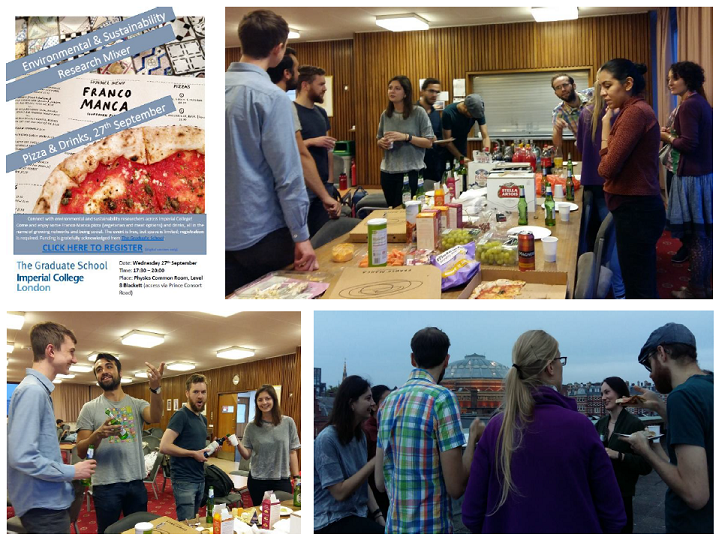
The second annual Environmental and Sustainability Mixer took place on Wednesday 27th of September. The mixer is a cross-departmental initiative, the aim of which is to encourage the postgraduate research student community working in environmental and sustainability research to get to know each other. It was a fantastic event which saw high turnout for the social; students enjoyed pizzas and drinks in the Physics common room on Level 8 of the Blackett Building.

Purpose

The event was devised because students in the past have found it difficult to find informal events for research students to build cross-departmental and cross-College relationships. As such, the event was funded by the Graduate School’s Research Community Fund.

From previous experience shared by the alumni, a College-wide neutral platform (i.e. funded by the Graduate School) with students from other departments was needed to facilitate interaction and foster collaboration at an earlier stage in our careers. A lot of work is done in the environment and sustainability at Imperial but often people don’t realise the wealth of the network until it’s too late.

Numbers

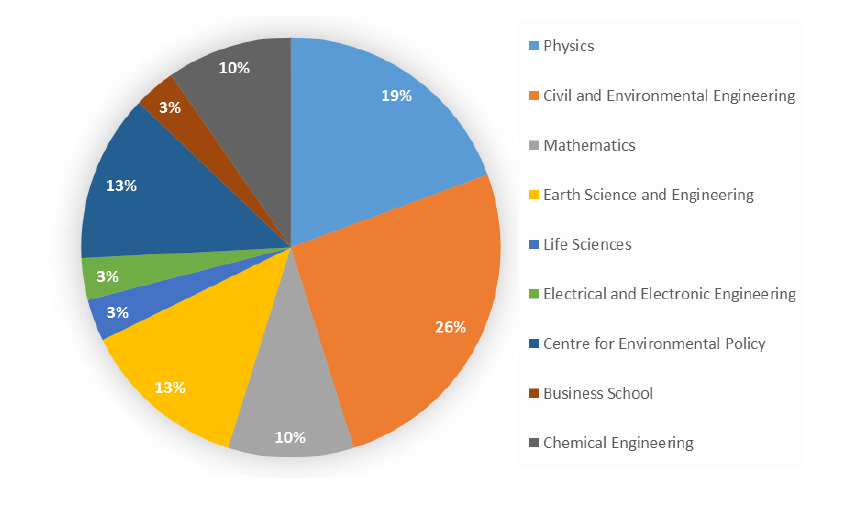
With over 45 registered attendees, and a turnout of 71% (32) we were able to welcome in the new academic year with some familiar and fresh faces to Imperial’s environmental and sustainability research area. The mixer was designed to encourage Imperial’s environmental and sustainability research community to get to know each other and increase awareness of the breadth of research undertaken in this field across all of Imperial’s departments. A total of 9 departments were represented across Imperial’s four faculties, including: the Centre for Environmental Policy, Physics, Mathematics, Business School, Earth Science and Engineering, Public School of Health, and Civil and Environmental Engineering.

Pie chart showing break down of registered attendees’ departments

Outcomes

This cohort building exercise introduced attendees to other departments, topics of research and new friends. We are in contact and are aiming to meet up again in the next few weeks. There is also an initiative to formalise an environmental and sustainability network here at imperial that was further floated at the mixer. We also have some leftovers which we plan to put towards another mixer in the coming weeks! If you would like further information regarding the mixer, or potentially organising your own cohort building activity and would like to learn from our experience, please get in touch: d.hdidouan15@imperial.ac.uk (Daniel Hdidouan).

ICL-TUM Global Fellows Programme 2017

by Seth Wilson, PhD Student, Mechanical Engineering

After the successful completion of the ICL-TUM Global Fellows’ Programme 2017, entitled Cities of the Future, I was fortunate enough to remain in Munich, Germany for a further three-weeks. During this time, I carried out a short research project within the Lehrstuhl für Nuckleartechnik (Chair for Nuclear Technology) at the Technische Universität München (TUM) under the supervision of Professor Macián-Juan.

Germany has decided to discontinue its use of nuclear energy and will have phased-out its remaining functioning nuclear power plants by the end of 2022. Without wanting to completely abandon nuclear, research within this field has become more general to processes and systems, such as to have a wider range of applications.

During my research internship, I worked with two best-estimate thermal-hydraulics systems codes: TRACE, developed by the Nuclear Regulatory Commission (NRC) in the United States; and ATHLET, developed by the Gesellschaft für Anlagen- und Reaktorsicherheit (GRS), Germany’s central expert organisation in the field of nuclear safety and radioactive waste management.

These computer codes are used to simulate typical pressurised-water (PWR) and boiling-water (BWR) nuclear reactors during normal operation; and more interestingly for the general analysis of abnormal transients and accident situations, in particular the Loss of Coolant Accidents (LOCA). Furthermore, ATHLET couples neutronics and nuclear reactor physics with thermal-hydraulic engineering for a coupled multi-physics analysis.

At the very best, computer codes provide good approximations; it is therefore necessary to quantify and rank any sources of uncertainty that may propagate through into the output. I performed such uncertainty and sensitivity analysis with SUSA, another piece of software developed by the GRS.

I am very grateful to have had this opportunity to collaborate with researchers from further afield. As a result, I now have a better appreciation for my own work at Imperial College. I have increased my network of engineers and researchers, as well as maintained old contacts; I was pleased to discover an old colleague of mine, from my school in Paris, was working on his PhD in the Nuclear Technology department at TUM.

ICL-TUM Global Fellows Programme 2017

By Firdous Ul Nazir, PhD Student, Electrical Engineering

I got a chance to participate in the ICL-TUM global fellows programme: Cities of the future, thanks to the Imperial Graduate school. This was a week long course involving 51 participants from 7 globally renowned institutions. The first day of the course was mainly aimed at acquainting the participants of the practical challenges and expected transformations in cities of the future which was aptly conveyed through presentations by experts of the field. In the remaining four days we were involved in a lot of group activities which culminated in a collaborative group project from each group. The groups involved students from different universities and diverse disciplines which helped us to improve our communication, team work, idea generation and collaborative skills. During the course of time the efficiency of each group improved drastically as the group supervisors were constantly helping us to overcome our mistakes in the previous tasks. We also had a guided visit to the Munich city which helped us to understand its digital transformation planning.

I completed my three week research visit in renewable and sustainable energy systems group which is under electrical and computer engineering department TUM, thanks to my host supervisor Prof. Thomas Hamacher. I got to know about the research activities in Prof. Hamacher’s group and had a chance to discuss with his students about their upcoming micro-grid lab in the department which helped me to have a better understanding of micro-grids. I was given the freedom to carry out my own PhD research during the research visit. This was a very unique experience and would certainly like to recommend the course to all the future aspirants.

Finally I feel highly grateful for being given this wonderful opportunity to participate in the global fellows workshop and undertake a three week research visit.


A Multi-Disciplinary Communication on Climate Change and Energy

By Dapeng Chen,

Tsinghua University

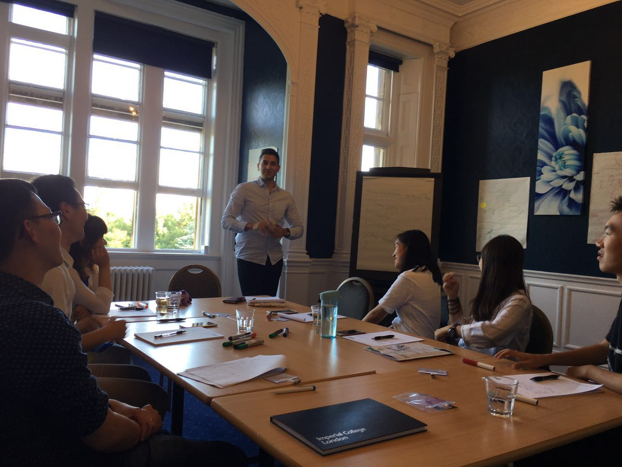
As the Intergovernmental Panel on Climate Change claims, the warming of the climate system is unequivocally supported by scientific evidence. It is a vital task of human beings to work out practical solutions and put them into real effect in this century. This year, the Imperial-Tsinghua Global Fellows Programme, co-organized by Imperial College London and Tsinghua University, focused on climate change and energy, through 5 days of intense communications and collaborations amongst early stage Ph.D. students in multiple disciplines from both universities. As a third year PhD candidate in finance, I was honoured to be part of the programme. It impressed me in three important aspects.

First, highly interactive and inspiring group challenges. We were separated into groups to take part in some well-designed interactive activities. In one, we had a simple collaborative task. It did not take long before all groups figured out an efficient way to achieve it, but suddenly, the coaches made some alterations. We soon started conversations, built up mutual trust and carried on with the task. This challenge put me in deep thought and reminded me of my own experience of joining a new research project two years ago. Such changes had put me under huge pressure but I finally managed to fit into my new surroundings. Positive communications and active adaptations are the keys to successful accommodation in a new research project with new collaborators.

Second, jargon-free academic communications. With the poster fair, we got opportunities to learn about each other’s research while improving our own presentation skills to tell research ideas to a general audience. The students are indeed from a variety of disciplines, from chemistry to electrical engineering to arts and design. I had my doubts at the very beginning over how we should present academic research to someone not in the area. But luckily, the organizers put an emphasis on “no jargon” and everyone followed it. With a finance and economics background, I found little difficulty in understanding presentations about electricity generating systems or ultrasound therapy to cure cancer. Also, I followed the very useful researcher pack provided by the programme to frame a presentation in an academic way: from the question it aims to answer, to the impact it may have, to its methodology and how it is related to climate change.

Third, remarkable collaborative research proposal presentations. For the final presentation on collaborative research, we chose teammates and came up with our own research ideas to offer possible solutions to climate change. In my team, we had one engineer, one policy research expert, one business model analyst and one financial analyst. We set up a research plan to evaluate the economic and political feasibility of substituting coal with natural gas in China’s energy consumption, via a new pipeline system. Shortly after our presentation, on July 12th, the National Development and Reform Commission in China released a report on “medium to long term plan over oil and gas pipeline system”. Although there seems to be not much causality here, we are glad that what we aimed to research into is actually what the government cares about. Other teams’ presentations were also more than great, of which a particularly interesting one was a video game incorporating data simulations about global climate change and providing players with realistic experiences of the catastrophes caused by global warming. I would definitely invest in this game if I were a venture capitalist.

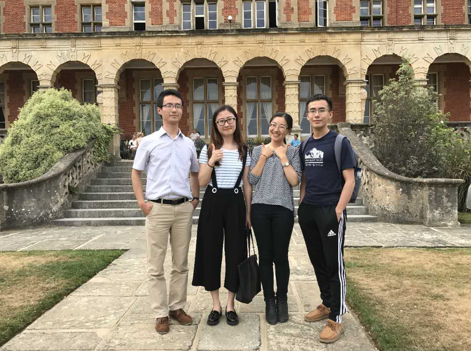
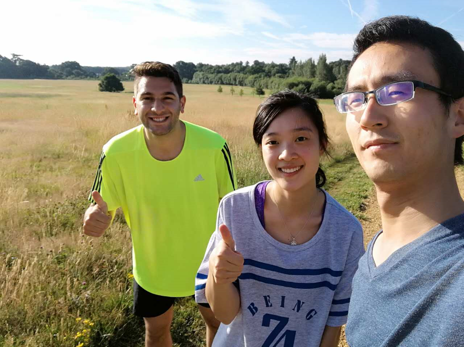
All in all, the 5-day program was a most rewarding experience for me. Besides the training and academic communications, I made quite a few nice friends. I want to offer my special thanks to my teammates. They encouraged me to be bold in expressing my ideas whenever I wanted to shy away. Also I’m grateful for their company every morning when jogging around the most beautiful Easthampstead Park area.

Next July, the Ninth Imperial-Tsinghua Global Fellows Programme will be held in Tsinghua University. Looking forward to seeing you in Beijing, an enjoyable city with rich history, friendly people, tasty food and numerous places of interests to visit.