Department of Primary Care and Public Health update
 SAPC Madingley Hall 2017
The GP Teaching team are currently well underway with preparations for one of the highlights of the medical education calendar, the Society for Academic Primary Care’s annual Madingley Hall conference in Cambridge. This year the GP teaching team are very proud to be organising and hosting this conference.
Taking place on 26-27 January 2017, the conference brings together brings together some of the best and brightest minds in medical education and research for a varied and stimulating programme. Our programme includes workshops, prizes and speeches from Harvard’s esteemed Professor David Hirsh, and President of the Royal College of Paediatrics & Child Health Professor Neena Modi.
Our theme for Madingley 2017 is “Primary Care at the Coalface: Mining for Diamonds” – creating shining examples of Primary Care clinicians and academics from the pressures of the NHS and government cutbacks.
Residential and non-residential packages are still available – to register and for more information, please visit http://www.imperial.ac.uk/school-public-health/news-and-events/sapc/
You can also submit an abstract or apply to host a workshop via this Wufoo form: https://imperialmed.wufoo.com/forms/p1aha25n1573e97/
If you have any further queries, please contact Ben at b.broglia@imperial.ac.uk
Faculty Teaching Forum
On 16 November 2016 the GP Teaching Team are organising a celebration of medical education around the theme “Tomorrow’s World: Educating Scientists, Doctors and Leaders of the future” in conjunction with the Faculty of Medicine. This annual event brings together faculty staff, clinicians and researchers for an exciting afternoon of innovative workshops, inspirational speeches, and of course the much-loved NHS Teachers Awards.
This year, we are very proud to welcome Visiting Professor of Surgical Education at the University of Oxford Richard Canter to give the keynote speech on the subject of leadership, and are looking forward to an afternoon panel debate on medical student selection.
Our workshop programme this year focuses on some of the current and future developments in medical education being spearheaded by Imperial College, including the use of Virtual Reality and Digital Learning and longitudinal integrated apprenticeships as seen in our pilot ICA course which launched this year.
For more information, please contact Maya Mistry at m.mistry@imperial.ac.uk
Ben Broglia
Primary Care Education Administrator
Department of Primary Care and Public Health
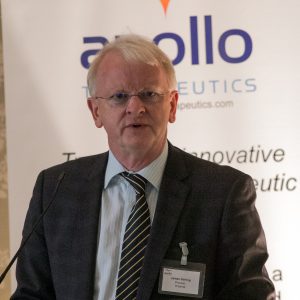 aimed driving forward therapeutic innovation. It is a £40 million fund to drive therapeutic innovation aims to to significantly improve the speed and potential of university research being translated into novel medicines. Apollo will support translational research, shaping projects at an early stage to optimise discovery and delivery of new breakthrough treatments for onward development.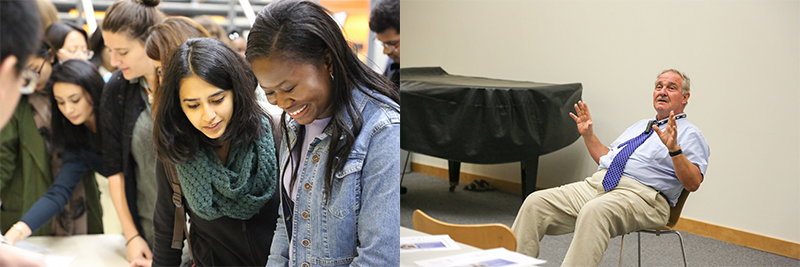
 biomedical research across the College over the past 5 years. The scheme has previously funded numerous internal funding streams targeting the enhancement of multidisciplinary research, the support of early career researchers, strategic initiatives enhancing support for priority themes and public engagement activities. Through strategic allocation of £7.5M funding since 2011/2012, the scheme has supported more than 380 investigators through 185 awards across the College and in turn leveraged a further £53M in follow-on funding.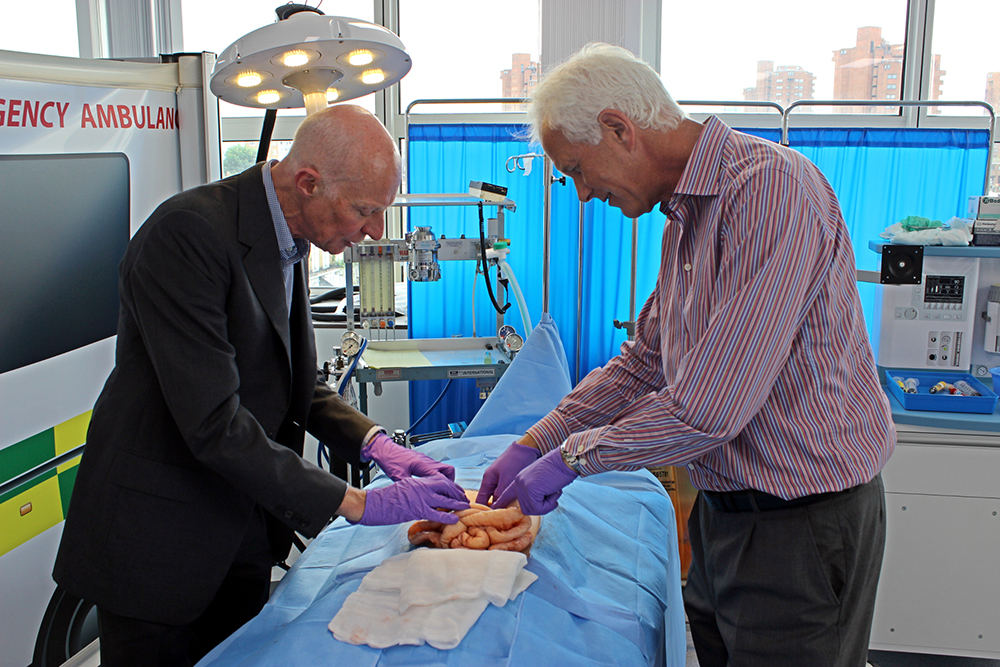
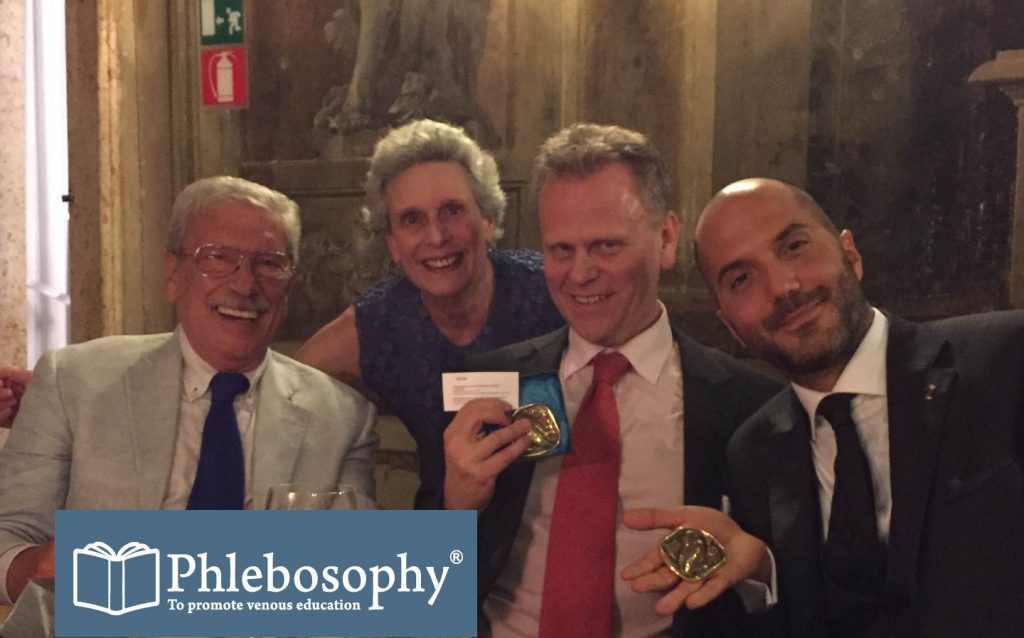 Gala dinner celebrations after the congress. Left to right. Professor Giuseppe Andreozzi (Padova), Dr Evi Kalodiki (Imperial College London), Dr Christopher Lattimer (Imperial College London)
 The Robert Steiner MRI unit, within the MRC Clinical Sciences Centre, is looking for healthy volunteers from west African descent aged 18-80 with no heart-related health problems. The study aims to develop an atlas of the human heart to help scientists to determine the effect of different DNA and genes on heart shape and function.
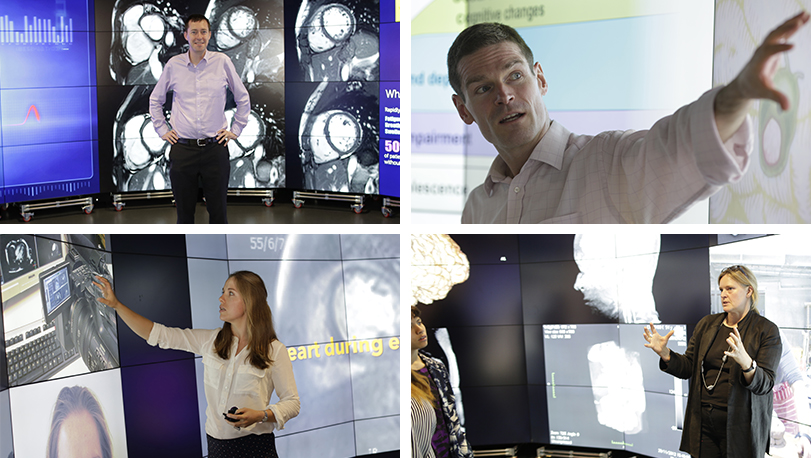
 Advances in technology mean medical scanners can now tell us a lot about our hearts and our brains. The event explored how much we really want to know, particularly from brain scans, about conditions that may not always be treatable, and that might reveal information about our mental health.
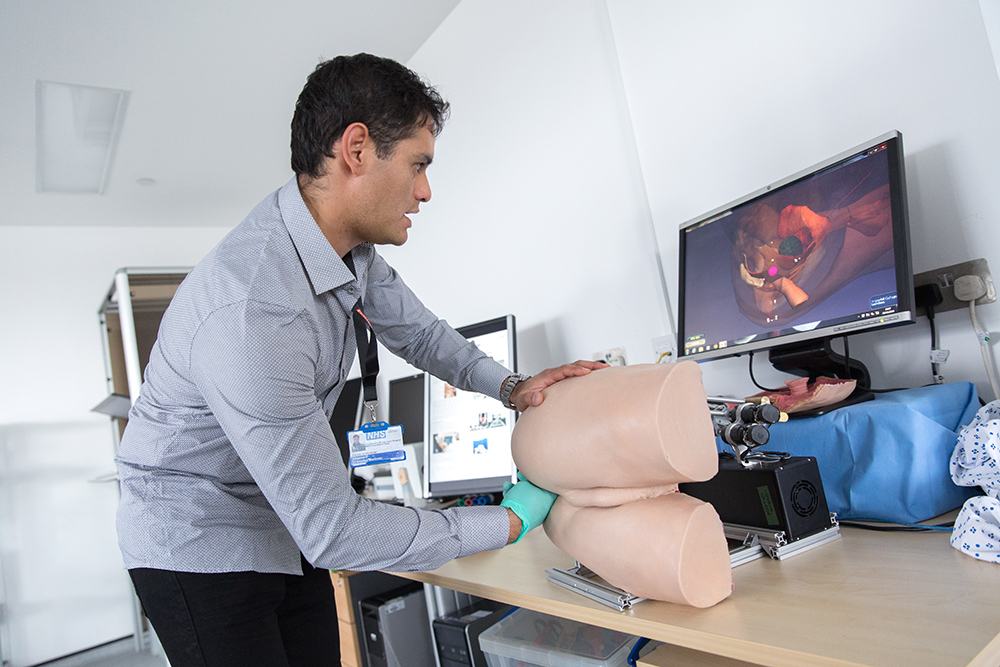
 Imperial College’s Centre for Engagement and Simulation Science (ICCESS) played a leading role in the conference, with Centre Director Dr Fernando Bello as both Programme co-Chair and local co-Chair, and Dr Alejandro Granados-Martinez showcasing the haptic rectal examination trainer he has developed. His innovative device attracted a great deal of media coverage over the conference period, with articles in the Daily Telegraph, Daily Mail and Vice Magazine, to name a few.
 Course Director for MSc Immunology Sophie Rutschmann was awarded the Department’s top award for contribution to postgraduate teaching. On nominating Sophie one student noted “I feel she has a genuine, heartfelt interest in the MSc she coordinates, and that gives an extraordinary positive spirit to the course. The time and thought she has invested into us is greatly appreciated. I am very grateful for her dedication and determination to teach us well.”