Imperial Confidence in Concept (ICiC) Scheme Awards Funding to 26 projects

The Faculty of Medicine is delighted to report the outcome of the sixth Imperial Confidence in Concept (ICiC) competition, which was instigated to support the College-wide development of novel devices, diagnostics and therapeutics for areas of unmet clinical need.
Funding
This year, a fund in excess of £1.6M was made available from the MRC (Confidence in Concept fund), NIHR Imperial BRC, Wellcome Trust Institutional Strategic Support Fund, EPSRC Impact Acceleration Accounts, and HEIF funding, as well as support from NIHR BRC at The Royal Marsden and The Institute of Cancer Research.
For the second year in a row we have also partnered with AstraZeneca to offer the AZ Innovation Fund as part of the ICiC call. The aim of the AZ Innovation Fund is to enable drug discovery by facilitating the development of new technologies and the exploration of disease biology.
Why is the ICiC important?
The aim of the scheme is to strengthen the College’s early translational research portfolio, providing funding to help with the translation of novel therapeutics, devices and diagnostics towards clinical testing and/or a marketable product. This is achieved by providing vital pilot-funding to bridge potential gaps between discovery research and applications for MRC Developmental Pathway Funding Scheme or Developmental Clinical Studies Funding Scheme.
Since its inception in 2012, 117 projects have been funded, leveraging in excess of £61M in follow on funding, transforming the pull-through of discovery science to clinical application across the College.
The 2018 award winners
The cross-College panel, which was chaired by Professor Roberto Solari and included external members, was very impressed with the high quality of applications this year.
Proposals covered the full breadth of biomedical translational research across the College, and examples include:
- Lipid A analysis by MALDI-MS on intact bacteria discriminates chromosomal and plasmidic resistance to last resort antibiotics (Larrouy-Maumus);
- Using novel cytokines to accelerate wound closure (Higgins);
- Development and testing of Novel Bio-orthogonally Modified Viruses as Vaccine Candidates (O’Hare);
- Self-Homing Intelligent Needle Ecosystem (SHINE) (Ferdinando Rodriguez y Baena).
We are also pleased to announce two co-funded projects with our colleagues at the NIHR BRC at The Royal Marsden and Institute of Cancer Research:
- Autologous jejunal mucosal transplantation combined with topical lubiprostone to reduce xerostomia after chemoradiation (JETPROX): a pilot study in 5 patients
- A collaboration between Dr Vinidh Paleri (RMH) and Dr Peter Clarke (Imperial)
- Fluorescent Probes with Exceptional Brightness for Early Diagnosis of Breast Cancer by Direct Imaging
- Led by Imperial’s Dr Fang Xie in collaboration with the Royal Marsden’s Dr Steve Allen and Dr Richard Sidebottom

 World Blood Donor Day: What can you do? Give blood, give now, give often. Read post
  On1 January 2017 MRC London Institute of Medical Sciences (LMS) became the new name of the MRC Clinical Sciences Centre. This is the start of a new chapter of investment in the LMS. After 20 years of outstanding science, we’re building our reputation for excellence in biomedical research. With a mission to build strong links between science and medicine, the LMS will continue to work in close partnership with Imperial College London at its Hammersmith Hospital campus.
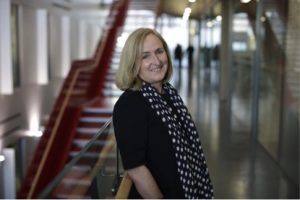 Amanda Fisher, Director of the MRC London Institute of Medical Sciences, has been made a Dame in the New Year’s Honours List for 2017.
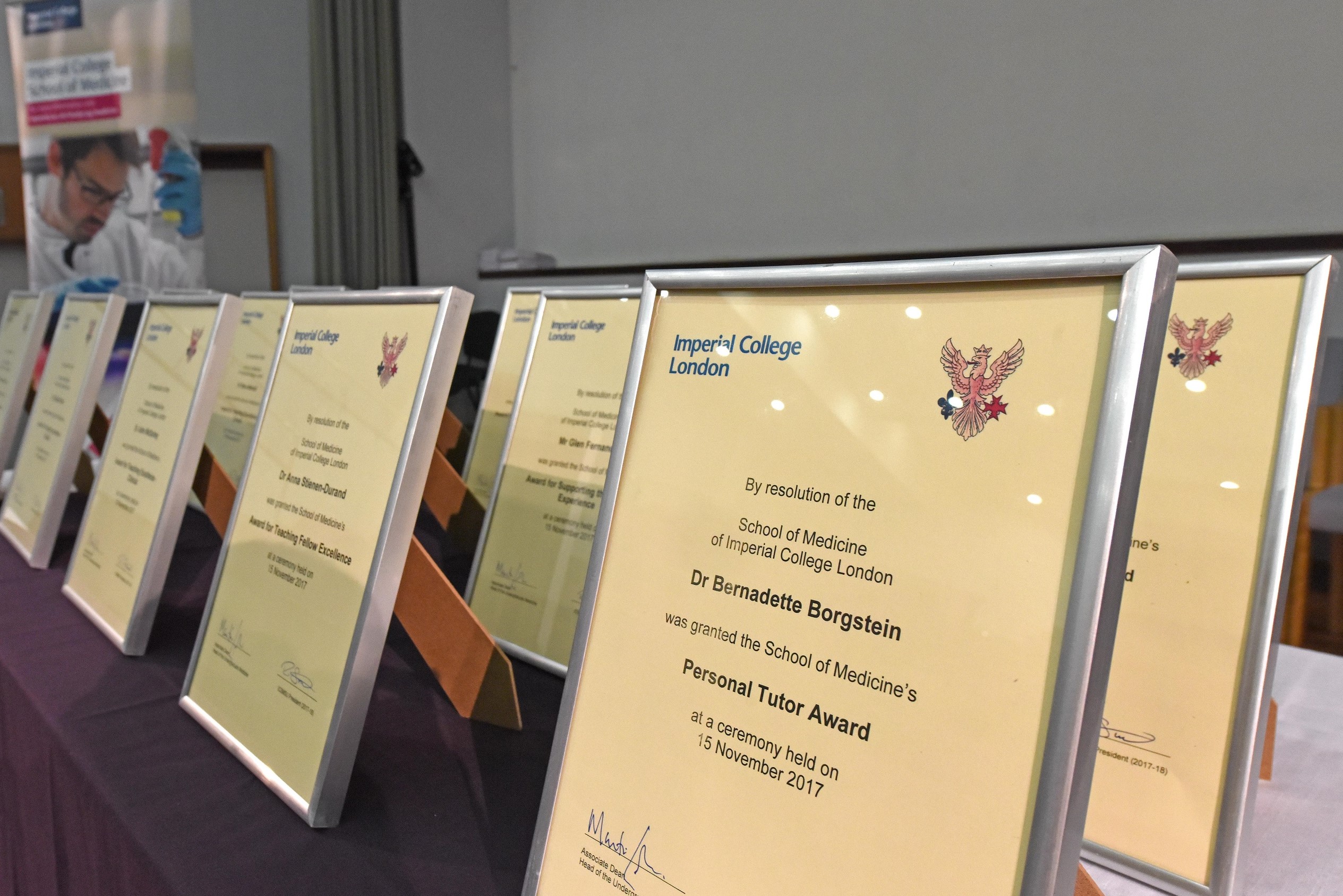
 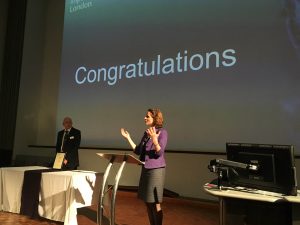 This event took place on Wednesday 16 November at the Drewe Lecture Theatre and was a chance for all our valued NHS teachers to be recognised for all the hard work they put into teaching our medical students. Primary Care was represented by Dr Beena Gohil, who won a Teaching Excellence Award.
 biomedical research across the College over the past 5 years. The scheme has previously funded numerous internal funding streams targeting the enhancement of multidisciplinary research, the support of early career researchers, strategic initiatives enhancing support for priority themes and public engagement activities. Through strategic allocation of £7.5M funding since 2011/2012, the scheme has supported more than 380 investigators through 185 awards across the College and in turn leveraged a further £53M in follow-on funding.
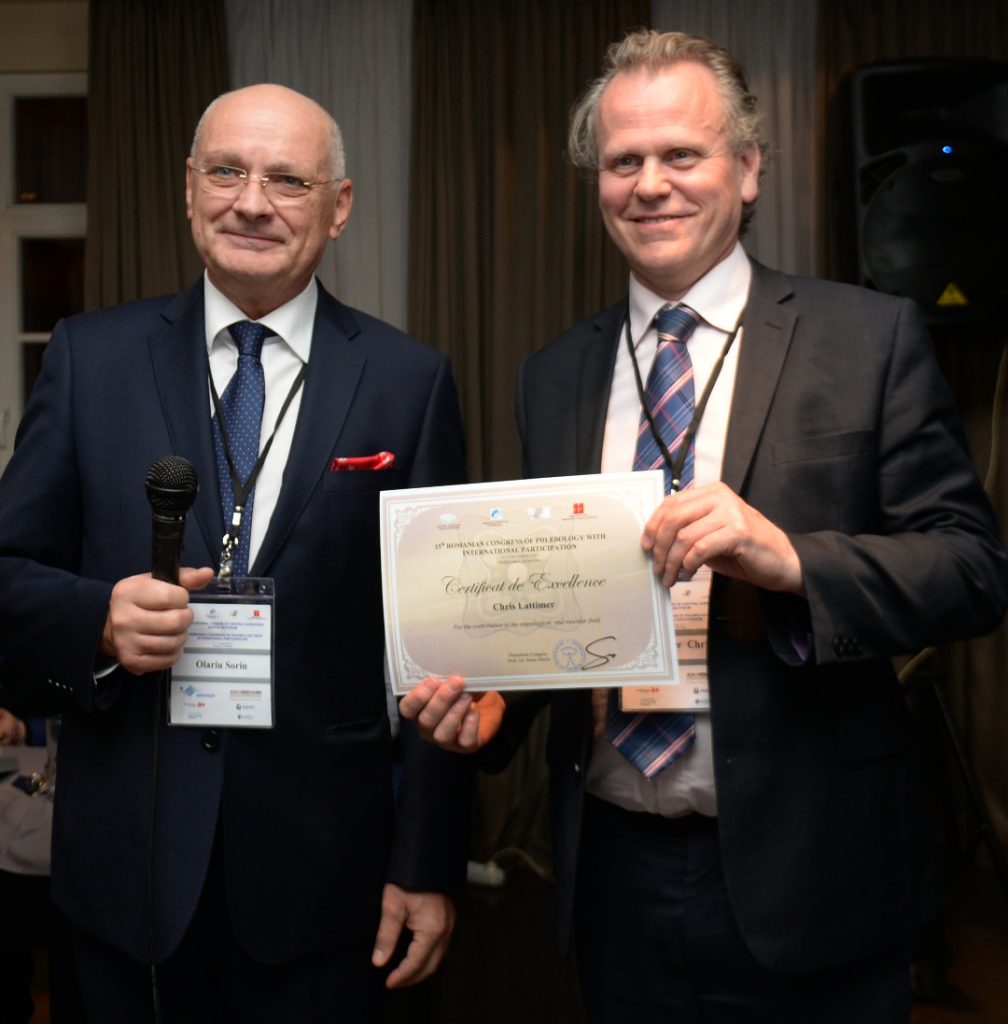
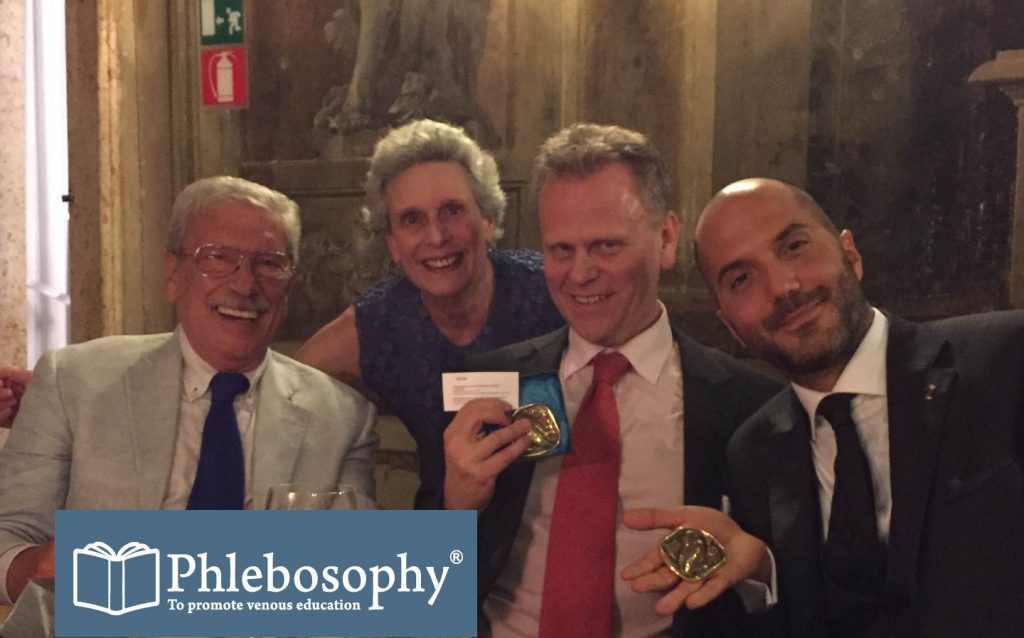 Gala dinner celebrations after the congress. Left to right. Professor Giuseppe Andreozzi (Padova), Dr Evi Kalodiki (Imperial College London), Dr Christopher Lattimer (Imperial College London)
 Course Director for MSc Immunology Sophie Rutschmann was awarded the Department’s top award for contribution to postgraduate teaching. On nominating Sophie one student noted “I feel she has a genuine, heartfelt interest in the MSc she coordinates, and that gives an extraordinary positive spirit to the course. The time and thought she has invested into us is greatly appreciated. I am very grateful for her dedication and determination to teach us well.”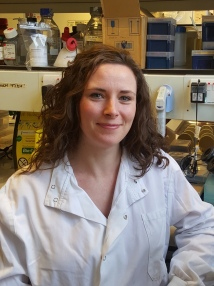

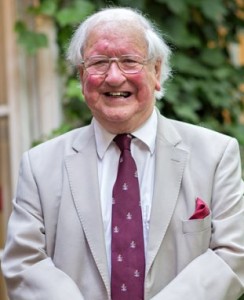 The Department of Surgery and Cancer is delighted that Michael Uren has been knighted in the Queens New Year’s honours list 2016. Michael received the honour in recognition of his philanthropic activities. Over the last 8 years, The Michael Uren Foundation has given an astonishing £100m to good causes, across a wide range of topics, many of them unheralded. His Foundation has been a staunch supporter of the