Imperial Confidence in Concept (ICiC) scheme awards funding to 22 projects
The Faculty is delighted to report the outcome of the third Imperial Confidence in Concept (ICiC) competition to support the College-wide development of novel devices, diagnostics and therapeutics for areas of unmet clinical need. A fund in excess of £1.3million was made available from the MRC (Confidence in Concept fund), NIHR Imperial BRC, Imperial Innovations, Wellcome Trust Institutional Strategic Support Fund, EPSRC Impact Acceleration Account and as well as support from NIHR BRC at The Royal Marsden and The Institute of Cancer Research and Chelsea & Westminster Hospital NHS Foundation Trust. This is the first year that Chelsea & Westminster Hospital NHS Foundation Trust has taken part in the scheme. The ICiC scheme provides vital pilot funding to bridge the potential gap between discovery research and well-developed applications for MRC Developmental Pathway Funding Scheme / Developmental Clinical Studies Funding Scheme support. The Panel, including external members and chaired by Professor Roberto Solari, was delighted with the high quality and wide range of applications. 22 Awards were made.
The investigators who will receive awards of up to £70,000 are:
Professor Andrew Amis (PI), Professor Justin Cobb, & Dr Ferdinando Rodriguez Y Baena (Departments of Mechanical Engineering and Surgery & Cancer)
Dr Reza Bahmanyar (PI, Department of Electrical & Electronic Engineering)
Dr Jeffrey Bamber (PI) & Dr Mengxing Tang (Division of Radiotherapy & Imaging, Institute of Cancer Research and Department of Bioengineering, ICL)
Dr Paul Bentley (PI), Professor Etienne Burdet, & Dr Michael Mace (Departments of Medicine & Bioengineering)
Professor Thomas Brand (PI) & Dr Katie Chapman (National Heart & Ling Institute and Domainex Ltd)
Dr Graham Cooke (PI), Professor Chris Toumazou, & Professor Myra McClure (Departments of Medicine & Bioengineering)
Dr Ernesto Cota Segura (PI), Dr Nathan Brown, Professor Ed Tate, & Dr Chiara Recchi (Departments of Life Sciences, Chemistry, Surgery & Cancer, and CRUK Cancer Therapeutics Unit, Institute of Cancer Research)
Dr Christina Fotopoulou (PI) & Dr Paula Cunnea (Department of Surgery & Cancer)
Professor Gary Frost (PI), Dr Rohini Sharma, Professor Mark Thursz, & Dr Edwards Chambers (Department of Medicine)
Professor George Hanna (PI), Dr Tanzeela Khalid, & Dr Melody Ni (Department of Surgery & Cancer)
Dr David Hodson (PI) & Professor Guy Rutter (Department of Medicine)
Professor David Klug (PI) & Dr Oscar Ces (Department of Chemistry)
Dr Christoph Lees (PI) & Professor Phil Bennett (Department of Surgery & Cancer)
Professor Nicholas Long (PI) & Professor Guy Rutter (Departments of Chemistry & Medicine)
Dr Stepan Lucyszyn (PI) & Professor Anthony Chu (Departments of Electrical & Electronic Engineering and Medicine)
Professor Danilo Mandic (PI) & Dr Sudhin Thayyil (Departments of Electrical & Electronic Engineering and Medicine)
Professor Jane Mitchell (PI), Dr Nicholas Kirkby, & Dr Mark Paul-Clark (National Heart & Lung Institute)
Dr Christopher Rhodes (PI) & Professor Martin Wilkins (Department of Medicine)
Professor Andrew Rice (PI) & Dr Kenji Okuse (Chelsea & Westminster Hospital, Departments of Surgery & Cancer and Life Sciences)
Professor Molly Stevens (PI), Dr Anthony Gordon, & Dr Robert Chapman (Departments of Materials, Bioengineering, and Surgery & Cancer)
Professor Ed Tate (PI), Professor Sebastian Johnston, & Dr Aurelie Mousnier (Department of Chemistry and National Heart & Lung Institute)
Dr Paul Turner (PI), Dr Mohamed Shamji, & Dr Robert Boyle (Department of Medicine and National Heart & Lung Institute)
Dr Kimberley Trim
Research Strategy Coordinator
Faculty of Medicine
 The National Institute for Health Research (NIHR) Health Protection Research Unit (HPRU) in Healthcare Associated Infections and Antimicrobial Resistance at Imperial College London had a great presence at the Imperial Festival over the weekend of the 8th-10th May. Many of our researchers hosted interactive stands in the ‘Superbug Zone’, based in the Flowers Building, which gave visitors the opportunity to journey into the world of ‘superbugs’ find out more about them and discover the impact that these bugs have on our health and wellbeing.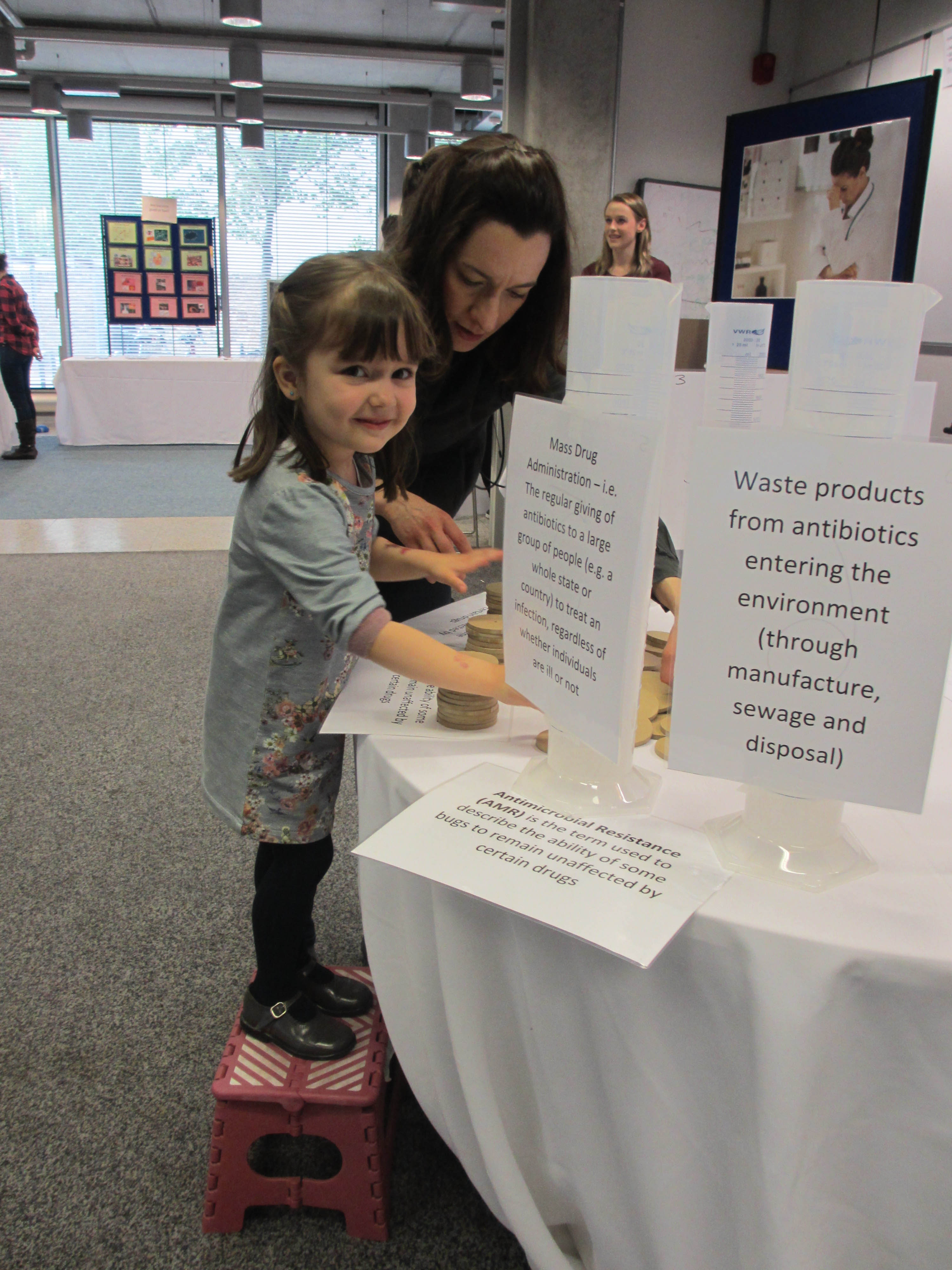
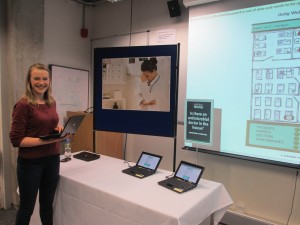 ‘On Call: Antibiotics’ is a serious antibiotic prescribing game targeted at hospital clinicians and healthcare professionals which has recently been developed by researchers at the unit. It aims to ensure the continued engagement of prescribers with optimal antibiotic prescribing behaviours and help to resolve some of the behavioural and social barriers influencing prescribing. It’s showcase at the Imperial Festival was a great success and although it requires clinical knowledge to play, it helped to facilitate many interesting conversations around the importance of appropriate, timely and prudent antibiotic prescribing to help reduce the increasing incidence of drug-resistant infections. It also shed light on the types of competing pressures that doctors face on a busy hospital ward, allowing the public to see firsthand how over-prescribing or inappropriate prescribing may occur. With keen interest (and often quite skilled diagnosing and treating) from some of our younger attendees, we may have some budding doctors in our midst!
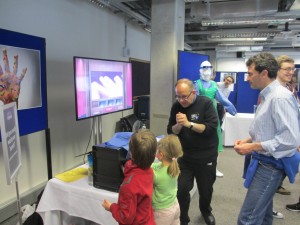 This stand gave visitors the opportunity to find out how well they wash their hands. They rubbed a cream onto their hands that reacts to UV light and the challenge was to wash their hands normally and see how much cream was removed. Children visiting the stand had real fun seeing their hands glow green but took the challenge seriously and often did better than the adults! Many were surprised at the areas of their hands that were sometimes missed during washing and were genuinely interested in being shown the WHO guidance on how to wash thoroughly. We talked with visitors about how essential hand hygiene is for health workers and the public, and they left with an understanding of how important hand hygiene is in controlling the spread of infection.
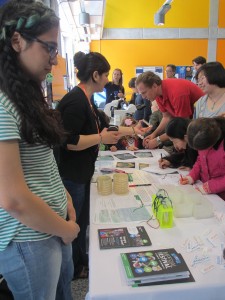 To help the public understand the importance of hand washing and infection control, the team provided Mannitol Salt Agar plates for participants to press their fingers onto to see what bacteria, if any, would grow from their fingertips. Some of the participants also pressed their fingertips onto the Agar plate before washing their hands and then again afterwards. This enabled the public to see how well they washed their hands. With most of the participants there was less or near to none bacteria seen on the plates after handwashing.
 The School of Medicine are very pleased to announce that two of our 5th year Medical students, Zeena Mougammadou-Aribou and Sam Tindall both won prizes at this year’s Royal Society of Medicine Norah Schuster Prize.