Month: September 2015

Second week completed

Over the course of my first week the plan for my project has changed slightly, I originally was going to make a website from scratch, design, text, and code. The only experience in coding that I have is from R, a language and data handling program that we use a lot in Biology for statistical computing and graphics. In the interest of continuity, my supervisor decided that it would be best to leave the designing and coding of the website to professionals who have had instruction and training in this field. When I was told, I was quite disappointed because I was very excited to learn a new skill and be responsible for something so big. Last week, my original pressure of building the website was already lifting, as I was getting the hang of the procedure from tons of information that is available on the internet, which is also all conveniently free.

Despite not being able to be build it, I did get the ball rolling on setting it up. One of the very first steps in building a website is registering a domain name, which is what you put into the address bar at the top of your webpage. I emailed a few domain registrars around the country for quotes and whether they could give any away for charity. Turns out many people were willing to help us, and we were able to secure a few domain names for free from a company in Mustafa’s large network of connections. This company was also able to host our webpage and set up a platform to start building it.

This left the writing of the website pages. I did a lot of thinking on what would be the most important information to include in this website. It needs to have a comprehensive and informative website that shares novel research, has relevant contact information, and allows donations to be made safely and efficiently. As PCRF is a charity, it was necessary for it to have a “Support Us” page, which will include information for donors and volunteers, as well as perspective partners.

At the end of the week, I had very constructive meetings with my supervisor and other members of the research group, where I presented my vision for the website and was able to discuss and process their feedback.
First week at PCRF

Pro-cancer research fund (PCRF) is a registered UK charity that has three main prongs of activity: research, outreach, and patient care. The research side is an integral part of the charity, and is led by Imperial professor Mustafa Djamgoz. Dr. Djamgoz is developing a non-toxic way of treating many different types of cancers, including Prostate, Breast, Colon, and Pancreas. The internationally acclaimed and peer-reviewed research is integral to PCRF’s mission as it gives them the necessary authority, professionalism and trust-worthiness for a supportive drop-in advice centre. PCRF offers a direct link between cutting-edge research and the patients that the research is ultimately meant to help. PCRF engages in multiple outreach talks and programs each year, such as the annual Orchid walk, aimed at making new information more accessible to the people actually affected by cancer. The patient care is delivered through the Amber Care Centre, a free drop in centre located in north London that offers professional help to cancer patients, as well as a free home nurse care program. PCRF is improving the lives of this community through awareness and prevention campaigns, psychological support, and specialist oncology detection and care, at little to no cost.

I chose this charity because its small size allows me the opportunity to take on multiple jobs that would normally be classified into many different sectors. My background is in Biology, and I am particularly interested in molecular biology. As one of the three prongs of activity is research, over the past six weeks, I have been introduced to the lab members, given a stack of seminal papers to read on the topic of “Ion Channels in Cancer”, and adopted many dishes of breast cancer cells, which I have grown and started testing drugs on. These six weeks have prepared me immensely for the second part of my internship this summer, which is the Charity Insights scheme. Having been involved in the research part has given me a significant hands-on experience, and allowed me to fully grasp PCRF’s unique approach to helping people with cancer.

During my internship at PCRF, my project will be to develop their website and assist in fundraising. The website is currently unavailable, which is a major hindrance to the potential of this organization. I will also aid in organizing a conference for 150 researchers in cancer for the 9th and 10th of September. Through the research that I have done in the past six weeks, I have learned enormous amounts about cancer to a much greater scope than has been offered to me in my course. I will use this as a base to build upon and share through the website and the blogs, and to be able to relate to the invited speakers and participants at the “Ion Channels in Cancer” conference PCRF will be hosting.

Centre for Community Development, Week 1

On Monday September 7th, I arrived at the Thulasi Centre in Kingston-upon-Thames home to the Centre for Community Development charity. Though I have been here before, this place never fails to amaze me. It is a small building nestled behind a take-away on the main road, and completely inconspicuous apart from an entrance set into a small side lane.

Yet when you walk inside, this place transforms. The receptionists, while looking at me a little quizzically (they don’t often see students here apart from for designated events), were very friendly and welcoming. When I mentioned the project coordinator’s name, they immediately directed me to the room in which we were to have our first meeting.

The Centre for Community Development charity shares this venue with the Tamil Information Centre and you can instantly notice their presence here. The small room contained two computers and was lined with bookshelves on all four sides, with stacks of books and folders overflowing onto the floor in a few places too! I was able to pick out the folders labelled Tamil Women Development Forum. This is the individual project within the Centre for Community Development that I will be working on for the next few weeks and part of my project is to collate all their documentation, including audio and visual records.

After reviewing the plan for my project in our first meeting, most of my first week was spent analysing the material in these folders. It was quite a humbling experience as I truly appreciated how vital this project was, how effective its work was and the duration of the project. Many of the reports I consulted were as much as ten years old!

One of the main aims of my project is to evaluate the successes and shortfalls of the organisation and to that end I will be conducting interviews with some of the members of the Tamil Women Development Forum next week. I left the Thulasi Centre on Friday evening with an appreciation of how important my project was and a renewed sense of determination!

Week 1-2

According to the project timetable we set ourselves, the first two weeks were dedicated to research and planning. As I’ve only ever visited sensory gardens my knowledge on them was limited, so before drawing up the plan I wanted to see other supported living facility gardens to see how they utilise their space. There was an issue as there weren’t other homes like ours within reach. Instead I contacted several sources which normally provide sensory gardens with the necessary equipment to gain insight on what’s more popular.

I organised several meetings with different gardening agencies to gather their perspective and used that as the foundation to the planning. Some of the advice they gave was impractical due to budgetary or time limitations, for instance, removing some of the paved area in the garden and replacing it with compost was outside our capabilities. I quickly realised smaller scale ideas could be just as effective as the larger ones. One smaller scale project we started was designing murals for the garden walls using bright vivid colours as this was a common feature in sensory gardens. It’s particularly useful to the residents who are visually impaired as large murals with bright colours, which are basic in design, can still translate to them.

I used several programs I have had experience with at university to help visualise the plans. This was done mainly to help the staff and residents picture what I would be doing and to clear my choices with them first.

Wrapping Up

File 09-09-2015 16 11 28

My last week at WildHearts was very much a case of pulling together the work of the past month and making sure that I had left no loose ends.

I was successful in contacting the schools that were signed up for the conference and collecting in the attendee names of the schools that confirmed attendance. With the numbers confirmed, school delegates will make roughly a quarter of the event’s expected attendance of around 280. There were a number of schools that were unable to take up their places for various reasons – therefore it is very pleasing that we managed to maintain a healthy proportion of school delegates.

Additionally I completed the task of acquiring videos and slides from the event speakers. The collected media will be compiled into a single presentation in order to maintain the flow of the event by removing the need to launch each individual presentation between speakers.

I also dealt with some more general logistic tasks for the Edinburgh GEL that included notifying delegates of their allocated parking spaces and preparing the name badges after they were printed.

The research that I had been conducting around models of ambassador networks and methods of increasing campus presence was also finalised and submitted. Hopefully this work will prove useful down the line for WildHearts and their operations.

These past four weeks really have been a fantastic experience, I’ve learned a great deal about the power of social enterprise and the terrific work that WildHearts and it’s people do every day. I have also had the invaluable chance to put my skills to use in a meaningful way and am really looking forward to attending the London GEL and hopefully seeing how my work has contributed towards making it a successful event. For anyone in future years considering undergoing an insights placement I would just say go for it, you won’t regret it.

Bedfont Lakes Country Park; Week 4

In my final week I had the chance to assist in Forest Schooling, a session run by the Community Interest Company Nature Links, which operates in Hounslow and Surrey. This is just one of the fantastic sessions offered by Bedfont Lakes for children and families. Forest Schooling is typically run for children up to the age of eight and is all about encouraging creative play in an outdoor environment in order to build confidence and self-esteem.

Following a brief Health and Safety message at the park entrance, the session commenced by searching for ‘Base Camp’. Base Camp turned out to be a sheltered 30/40m2 section of one of the woody areas in the park, with a small clearing in the centre that contained a seating area made from logs. l was particularly impressed to see how Base Camp was laid out in order to accommodate young children and help them to feel safe in unfamiliar surroundings, for example a make-shift potty area was made using tarpaulins that were cleverly tied to some trees to form a cubicle. Items such as paintbrushes and clay were also provided.

The children then explored Base Camp independently to find materials that they could use to turn into art, for example bird feathers, berries, soil, puddle water and crushed leaves. The idea behind this is that all natural resources have value, even if at first the items seem useless- for example clay can be moulded and twigs can be used draw or provide limbs to an animal in the making! During Forest Schooling every decision made by an individual is celebrated, regardless of whether the outcome is positive (ie painting with crushed blackberries) or not so positive (falling face first into a puddle)! In fact, play in this form is so critical to a child’s development that is was made a basic human right by the UN in the 1989 Convention for the Child Act.

forest


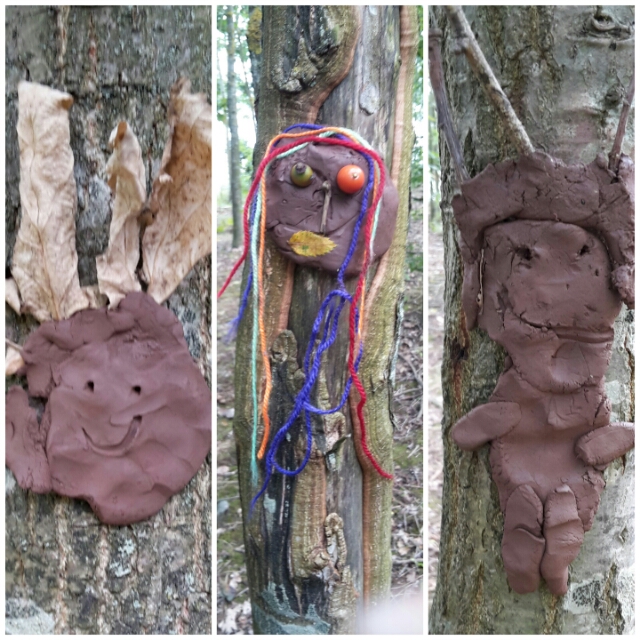
One activity was to make tree people- here is a selection of some!


The Zoologist in me also saw how useful this session was in terms of teaching people the value of the natural environment – a source of raw material, a chance to interact with others during shared experiences and also great fun. After all, valuing the natural world as an adult often begins by kindling this appreciation as a child. Importantly, many of the parents who attended were shown new and exciting ways to engage their children and shown how useful being outdoors is for teaching qualities such as courage, thus encouraging the use of outside spaces in the future and again promoting the respect of nature in young people who will grow up to be the next generation of decision makers.

This drew a conclusion to my four weeks with Bedfont Lakes, which was fantastically rewarding and eye opening. I would recommend the Charity Insights programme to all students, regardless of whether the projects they undertake do or do not directly relate to their degree subject. A massive thank you is due not only to the Countryside Team at the park but also to Imperial Careers Centre for making it possible!

Friends of the Earth – next step

Just a quick summary; I am doing my CI project with Birmingham Friends of the Earth; and I am looking at the waste management strategy in Birmingham and how different/better this can be, so we can ask the city council to make a better deal when the current contract comes to the end. It seems quite logical to expect to benefit more from waste (‘waste isn’t rubbish’); and also get local companies to deal with it (so to keep the money in the region and more jobs, etc.)

I have had some joys focusing on investigation into two things. One is about what other similar (in size, demography, etc.) cities are doing that Birmingham is not and could learn from. There are other cities, like Bristol, that has been doing some quite nice and green initiatives to drive their waste prevention and minimisation; and also reuse and recycling. I am looking at various cities in the country to see what they are doing and what can be learned from them.

recyclewe all remeber to recycle, don’t we? 🙂

The other things is about local capabilities. Of course, the council will need to ensure the waste issue is looked after properly. And if it is to use the local companies to deliver the waste management, it needs to make sure there are capabilities to do this. I am looking at what we have in the region and whether it is possible (of course with required development when the time comes) to undertake the tasks locally.

These tasks have kept me busy for most of my time. But in addition to these, learning from the other volunteers and also workers here is the real learning for me. There are various people with different views and background, but all with passion for what BFEO seeks to achieve.

More is coming next week… 🙂

Bedfont Lakes Country Park, Week 3

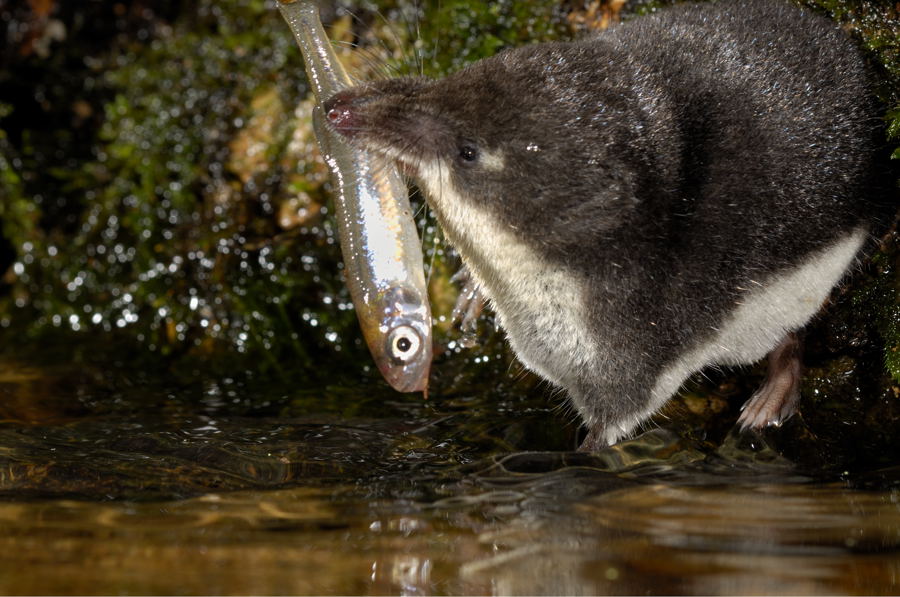
The Eurasian water shrew is an insectivorous rodent that grows to around only 15cm long! Despite its unimpressive size, it has venomous saliva which it uses to temporarily paralyse prey, such as river fly larvae, which it catches by acrobatically diving to river beds. Due to their small size, water shrews have a high metabolism and must consume about half of their own body weight in insects a day or risk starvation!

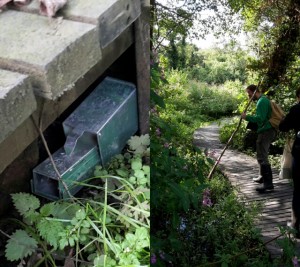
Part of my project with the Ecologist at Bedfont Lakes is to investigate whether these tiny mammals are present along the river banks of some of Hounslow Boroughs nature reserves. This involved setting small mammal bait traps along the River Crane. The traps are essentially cuboidal steel boxes stuffed with meal worms and dead leaves, which have spring loaded doors that close when the shrew brushes a trip wire on its way into the trap (they are completely humane and do not harm the shrew in any way). These are then left in sheltered areas or underneath plants overnight and checked first thing the next day to see if anything has been caught.

wasserspitzmaus_water_shrew_549k2 (For those of you who are wondering what a water shrew looks like! )

It was predicted that water shrews would be absent from the area, due to overly dense vegetation and a pollution event that occurred in 2013, and so far we have found this to be true. The exciting thing about this though is that if this continues to be the case upon further surveying, then we can definitively say that they are absent and look into introducing a number of water shrews to the area in the hope that they will start a local population.

As a Zoology student, I have studied many Ecology modules and it has been fantastic to see Ecology in practise and get away from the realm of theory and textbooks. There are so many practical applications of Zoology and Ecology that lecturers are unable to expose us to in the limited time they have for teaching, so I have really enjoyed being involved in this long process of species introduction. Knowing how to successfully introduce species to either new areas or areas where they have become extinct could become so important in the near future considering the rapid rate at which so many ecosystems are being degraded. The good thing however, is that we (humans!) are getting better and better at habitat restoration and noticing warning signs for when a species population may be in decline, and only through this small scale trial and error experience, such as this example with water shrews, will we really be able learn ways in which we can remedy any damage we have made and live in harmony with nature.


AB

(Left: small mammal bait tube left under footpath by River Crane, right: Bedfont Lakes’s Ecologist Gareth trying to spot a good site to leave the trap in)

Final week at The Long Well Walk

 M y work with the charity has sadly come to an end, and the final product is even better than we expected.

This week we’ve strung together all the lesson plans and ‘water drops’ to actually form a programme pack. This has meant creating the information sheets and pitch ready to send the packs over to the schools, including fundraising materials, thorough explanations of how the scheme will run and outlining the key values of the charity. It’s also meant I’ve made a verrrry long list of things to do for the staff taking over my role, who will be in charge of producing the actual teaching materials: worksheets, presentations and lesson teaching guides.


Working with this charity has been amazing, I’ve been able to work with some brilliant people who are incredibly hard working and it’s really opened my eyes to the possibilities when it comes to international development. It’s undeniably rewarding and there are some fantastic small charities out there – I’ll definitely be looking for more to get involved with when I’m back in London and of course return to The Long Well Walk in the future.

11147125_965158476861679_6119876952805016948_n20300_977505665626960_2968927395651046689_n

Leaving the internship is made all the sweeter by being able to see the amount of work we’ve actually achieved over the past four weeks. We’ve completed everything that we wanted to do and more, and it gives me a really warm feeling to know that the materials and structure that I’ve helped to create will be used over the coming years to raise awareness and money to support people living in sub-Saharan Africa. It goes without saying that taking part in the Charity Insights Scheme has given me invaluable skills, experience and inspiration – I couldn’t recommend it enough and would like to thank everybody at The Long Well Walk for having me. J

Week 3 at The Long Well Walk

It’s the end of week 3 and wow this internship is flying by. Thankfully, all the work we’ve been doing is finally seeming to make some sense and the random lesson activities have now been fleshed out into fully comprehensive lesson plans.


The week has been spent detailing lesson objectives, fighting with table formatting in Wo
rd (complete pet hate) and pinging ideas backwards and forwards to teachers to gain as much feedback as we can.

10500385_908373559206838_2774963130235542067_n

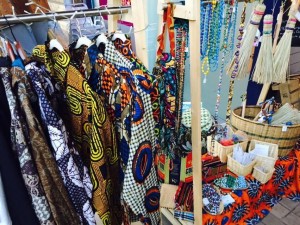
We’ve also spent time creating an enterprise project, designed for secondary school pupils where we will run a competition to engage students in an entrepreneurial challenge. This will involve students creating and carrying out a business plan, selling products from our sister charity Watermade. This is another amazing charity which works with small communities in Africa who produce things such as bracelets and necklaces (made from paper!) which are then sold in the UK for a much higher price than they would in their home country. Income like this really helps to build a community and allows for more investment so that the overall economy grows. The ideas of international development and entrepreneurship are vital for the younger generation, to create more people who, like Liam, can work with improving lives in a sustainable way. hqdefault