Month: August 2015

CDP Blog #3: Chord Diagrams!

For blog #3, I wanted to talk about an graph or visualisation I’ve been working on, to help CDP display their data in a new way. It’s called a chord diagram, looks a bit like a spider’s web and is used to show the strength and range of interconnections in whatever system you are looking at, for example the total imports and exports between different countries (PLEASE click for interactive version-much more fun!). Source: http://www.delimited.io/2014/11/18/interactive-chord-diagrams-in-d3.
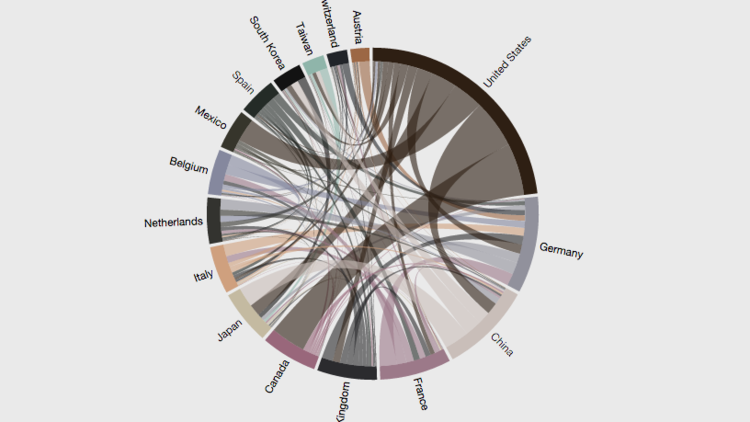
d3-chord-diagram


In short, segments around the edge of the circle represent components of the system you are looking at, in this case countries, lines that link two segments indicate a relationship between the segments, in this case a trade relationship, and the width of the lines shows the strength of the relationship, in this example the total imports and exports between countries.

So how is that applicable to CDP? In the CDP water questionnaire that goes out to the world’s biggest companies, one of the questions CDP asks of the responders is to identify the impacts and risks that water issues have or could have on their business. For example, a company might say that water scarcity in the region where they work has led to an increase in water prices and hence operating costs or that flooding has caused damage to one of their facilities. Companies identify a cause, the effect and how they have or will respond. It is important for CDP to understand the links that companies are making between these 3 elements, as this can make it clear why companies are feeling effects and how they are approaching impacts and risk. By understanding this, CDP can highlight good practice and propose ways in which companies can improve their water policy. And hence, we can use chord diagrams to illustrate the links that companies are making between cause and effect and risk and response.

By using this diagram, hopefully readers of CDP’s Global Water Report or visitors to the water results website can get a quick snapshot of the data and digest the statistics in a unique way that can capture the attention and resonate more than numbers would.

So I used my limited programming expertise I use in my PhD work at Imperial to make a little program that counts the links between cause and effect and risk and response, then put the results into a matrix, something that excel unfortunately can’t do with CDPs’ data. Then I found a makeshift excel workbook (try it yourself) that you can input your data into to make a very basic ‘my first chord diagram’. This was used as a proof of concept, to show what the diagrams can do. Hopefully we can go from my less-good looking excel version, to swanky interactive versions like these:
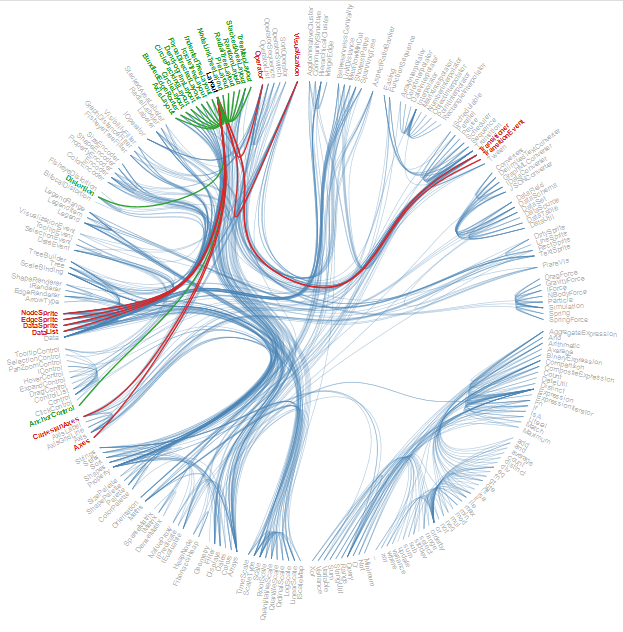
Visualising the composition of a computer program code (goes over my head but the interactivity is really good)

chord2

Uber journeys in San Francisco

SO COOL!

The feedback on the diagrams was really good, and they have been shared with other teams within CDP and could potentially be used with other data!

So I guess for prospective internship applicants I would say try to bring in your expertise to do things in a new way if possible, benefiting your organisation whilst also showing them what you can do. Don’t be afraid to give feedback about how things are done, I think a lot of organisations will appreciate an outside perspective. That has definitely been the case here at CDP, where everyone has supported suggestions and ideas.


Week 3 with Samaritans

This week I’ve met with several Samaritans listening volunteers in person as well as over the phone. These interviews have been quite revealing and in large part provided me with the information that I had hoped they would.

In addition I have received more survey responses, and was pleasantly surprised to find emails from more listening volunteers expressing their interest in being interviewed. I hope to see them as soon as possible, as I’m aware that my remaining time will pass all too quickly!

Since last week I have also conducted more research on advertising techniques employed by Samaritans, and looked into their online presence via their website. There is currently considerable interest (and also controversy) around the role of social media platforms regarding the mental health of their users. Is it their role to look after their users, and would they go so far as to report a potentially at risk individual? I learned that Samaritans recently sought to expand its online presence via the use of an app called Samaritans Radar, which was employed on twitter to connect users who posted potentially worrying tweets (i.e. with phrases such as “depressed”, “so alone” or other related phrases) with friends who could in theory help. However the app was pulled late in 2014 due to serious concerns over privacy issues.

Though an interesting area, it has less to do with recruitment and more with Samaritans’ main aim. I will shortly be meeting with my supervisor with whom I hope to consolidate what I’ve gathered so far, and then produce my report detailing what I’ve found.

It will be a shame to have to leave Hereford again; though a small town, it is where I grew up and has a certain undeniable charm.

Hereford Cathedral and River Wye, Herefordshire

Introduction to WildHearts

08fd24b0afbe333bd933a906b3cae50e

Tomorrow marks the beginning of my charity insights placement with WildHearts. For the next four weeks I will be based in their Glasgow office working on many different and exciting projects. You can follow my progress exclusively and free of charge on this blog!

WildHearts is a charity built on the ethos of promoting and enabling the practice of ethical and sustainable business. The organisation runs a wide selection of enterprises, all centred around these common values.

One of these enterprises is the Micro Tyco challenge, which I took part in last year with my team Quintessential. This is an entrepreneurial competition targeted at schools, universities and businesses in which the objective is to put your business ideas into practice and raise as much money as possible over a month. The money collected by all of the competing teams is used to provide financial support (in the form of micro loans) to people around the world in order to enable them to develop their own businesses and escape the crippling poverty in which they are trapped. The message of the challenge is the to embrace the potential and importance of channelling business as a force for good.

Another important scheme that WildHearts run is the series of Global Entrepreneurial Leaders (GEL) summits – three events scheduled each year in Edinburgh, London and Boston. These summits deliver the message of sustainable businesses through the experience of a range of prominent speakers from highly recognisable businesses such as RBS and Deloitte, as well from social enterprises such as The Big Issue and the Homeless World Cup. The events are targeted at future business leaders and provide a chance to discuss and network with people from a wide range of industries.

These are just two examples of WildHearts’ many initiatives that I will be getting involved with over the course of my internship, so make sure to keep up with these posts!

If you would like to find out more about WildHearts and their activities, their website can be reached at:

http://wildheartsinaction.org.


Week 1 – YMCA White House

I have just completed the first week in my Charity Insights experience at the YMCA London South West.

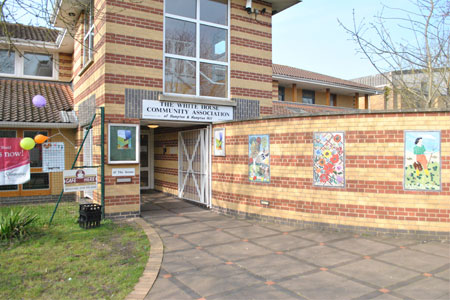
YMCA White House
YMCA White House

My project is based around an evaluation of a new centre: the YMCA White House, following the YMCA’s takeover of the Hampton Community Project’s White House.

So far I have interviewed staff (both new and those transferred under TUPE); started analyzing the new policies and procedures and met with senior management regarding the success of the takeover.

Once I have collated my findings, it’s time to start writing a report, with the guidance of the Director of Human Resources. The project report aims to help senior management with possible future developments at the centre.

Charity Insights Visits #1

I’ve been out on my travels in the last week, getting the opportunity to visit some of our esteemed Charity Insights participants. I was pretty excited to get to see some of the first fruits of 2015 Charity Insights’ labour in full flow; following projects from application form to literal application in a professional setting.

First up was Farzana at London Tigers, just a short hurtle on the Hammersmith & City line away near Westbourne Park.  London Tigers engage with disadvantaged communities, providing employment and training skills programmes and running youth and sports clubs to young people in the capital and beyond.

A tiger
No literal tigers were spotted on this visit…

When I entered London Tigers’ HQ, I was greeted by Farzana and her supervisor, Business Development Director Taj Oberai. As we sat down to have a chat, I was instantly distracted by shelves loaded with hauls of sporting trophies, glimmering in the Westbourne Park sun. I commented that it must be nice to have very visual reminders of the rewards of the work those at the organisation put in, with which Taj agreed. Farzana would be continuing to volunteer with London Tigers on a part-time basis, and clearly valued the experience and skills she had been able to gain so far in her remit sourcing supporters and sponsorship for some of the charity’s events. Taj was also delighted to have had Farzana and her skillset on hand, declaring her an excellent intern  – a Charity Insights success!

Next up, I travelled the shortest of distances to visit Vaibhav, who was completing a comprehensive project report for Asha for Education. Vaibhav was focusing on one of the charity’s main areas: youth unemployment in India, and the subsequent need for setting up programs for skills development. It was clearly an undertaking that required the most of Vaibhav’s analytical and research skills, so as a massive fan of getting those transferable skills developed for your career, I was delighted! Vidhya, who had been supervising Vaibhav, also had only positive things to say about his work ethic, and how the project being done would truly aid Asha’s charitable mission.

My final visit on the first leg of the  ‘Charity Insights World Tour 2015’ was just up the way to our very own St. Mary’s campus, to visit Steph at the Schistosomiasis Control Initiative (SCI). After a period of genuine amazement that my Imperial ID card got me into a campus building I’d never been to before, Steph met me and showed me her workstation, loaded up with some of the mapping software she’d been learning to use.

Imperial's St. Mary's campus
Imperial’s St. Mary’s campus

One of the key things Steph had got from the project was the chance to learn R, and then use it in an applied setting in order to help the SCI map instances of the schistosomiasis disease in different African countries. Michelle, Steph’s supervisor and full-time SCI researcher, said that the code Steph had worked on was something that they’d been hoping to get done for a long time, but it was only because of the Charity Insights scheme and Steph’s being there that had actually got the task completed.

All in all, I was more than suitably impressed by the range of tasks that Farzana, Vaibhav, and Steph had being getting on with in their projects, and the whole host of skills and experience they had developed and used in a work environment. Roll on, the next leg of the tour!

Second week at Rathbone

Today marks the end of my second week at Rathbone, and the halfway point of my placement.

Most of my work this week has focussed on a new fundraising project, a quality assurance scheme for youth clubs which provides them with funding and a badge of excellence that they can show to local authorities, funders and young people to showcase their impact in the wider community.

It consists of three levels, from Bronze to Gold, the first of which the charity already achieved last year. It is now aiming to achieve the remaining two before the end of the year. To this end they will submit proof that they fulfil every one of the requirements, of which there are more than 80 and encompass diversity and equality, monitoring and evaluation, health and safety, and more. I helped identify and collate all relevant evidence and then match it to each requirement, from policy reviews to press releases and accessibility audits.

Halfway through the week, I took a short break from office work and went on a kite flying outing with the youth group in neighbouring Norwood Park. Besides honing my kite flying skills – which, after not practising since I was a child, were a bit rough around the edges – I enjoyed some fantastic views of the City from the top of the hill.

Views of the City of London from Norwood Park.

This week also saw the final preparations for the first session of my programming workshop. As part of the planning, I had a go at completing all of the exercises myself with Scratch; it was surprisingly fun! After a few hours of playing around with coloured blocks and using no syntax at all, I’d unwittingly been introduced to statements, boolean expressions, conditions, loops, variables and more.

The thought crossed my mind that university-level programming courses should start with tools of this sort, to ease the transition for complete beginners, and then apply the concepts in an actual high-level language. It was a surprise, then, to learn that Scratch is used during the first 2 weeks of the Introduction to Computer Science course at no less than Harvard University!

Scratch
The interface of visual programming tool Scratch.